Learn how to test real, complex software written in Go
Large or small, perfect abstractions or global state galore; it doesn't matter what your code looks like, you CAN learn to test it.
Tell me if this sounds familiar - you are learning how to test in Go, and things seem to be going great. The tutorials are all clicking, and you can't wait to start applying what you are learning in your real projects.
You fire up your editor, grab your latest project, create your first
*_test.go
source file, and suddenly it feels like you don't have a clue what you
are doing.
*You hear the sound of glass shattering*
What happened?!?!
Things were going so great. All those examples made sense, but now you don't even know where to start.
It seemed so easy to test that "Hello, world" HTTP handler, but how do you test complex handlers? You know, HTTP handlers that do something realistic like insert a record into a database, or use an API to verify someone's address.
For that matter, how do we verify that our database interactions are
working as we expected? Or maybe your app has a global
DB variable - does that mean testing simply isn't
possible?
What about those APIs we are interacting with? Do we stub them? Do we hit the test API? What happens if we hit API rate limits or there isn't even a test API?
Alright, alright! Take a second to breathe and let me fill you in on a little secret...
Testing isn't hard, but simple tutorials don't do it justice
Testing isn't any harder than writing any other Go code. In fact, if
we wanted we could test our code by just writing a
main package and interacting with our application code.
We could panic when something doesn't act the way we expected, and
viola - we have a test!
But why does it feel so hard? Probably because we simplify the examples to the point that they lose all of their value.
Think about it, when is the last time you wrote a
Palindrome
function?
Never? So why are all these tutorials showing us how to test one?
Why aren't they showing us how to test realistic software? What happened to the example where we test a real HTTP handler that needs access to a data store? Or the tutorial where we build an API client and learn how to test it WITHOUT always hitting the real API. Wouldn't it be great if we could learn how to test a real web app with a real DB and a real integration to a payments API like Stripe?
Test with Go is different.
In this course you will learn how to test REAL software, not palindrome functions.
We will have to look at a few isolated examples in order to learn specific testing techniques, but that isn't enough to solidify a concept so we won't stop there. We will build real projects that teach you how to apply all of these testing skills in real software.
In one project we build a web application which allows us to address the complexities that come up while testing an application that uses a database, third party APIs, and more. In another project we look at how internal testing helps us verify our intermediate steps are correct, while also discussing the downside to testing unexported functions.
You will learn about common pitfalls to avoid in order to write more testable code. You will learn how to incrementally fix code that has already succumbed to many of these pitfalls, allowing you to avoid a massive PR that makes your reviewer cry inside.
When you run into an application with a global DB variable you won't need to give up on testing. You will learn exactly how to make small, manageable changes to the code that allow you to start testing it almost immediately.
The next time you are asked whether the data store should be mocked or if a real SQL database should be used you will be able to discuss the pros and cons of both approaches with your teammates and decide on a proper plan of action.
After completing this course you will have the knowledge and the skills necessary to start testing your own projects. You will still have to put in the work, but the mystery, the confusion, and the frustration will be gone.
In short, you will be on your way to becoming the de facto testing expert on your team. You will be on the path to making your team's software a happier, healthier place to spend your day. Heck, you might even be on your way to a raise or a better offer! 😉
Want a sample of the course?
or learn about the course below
Course Overview
Test with Go is broken into two major sections: Lessons and Projects
Put together, the lessons and projects span 173 videos and total over 33 hours of content.
In the lessons we focus on learning the techniques necessary to test our applications. We will learn the basics, like how to write your first test and what table driven testing is, but we will also cover more advanced testing techniques like:
- Testing race conditions
- Dependency injection
- Mocks, stubs, and fakes
- Testing with HTTP
- And many more!
We will spend some time using small, isolated examples in order to learn each technique, but those will gradually become more realistic as you become familiar with testing. Before long we will be looking at tests that use a real SQL database, test helpers that enable us to test HTTP endpoints that require authentication, and more.
In the projects we will take everything we learned in the lessons and practice applying them while building real software. We will look at some of the most common mistakes you can make when designing an application, as well as how to gradually refactor your code to make it more testable. We will see first-hand how to separate your integration and unit tests, allowing you to write tests for an API client that can both be run locally and online with the real API. We will even look at how to export some of those helper functions, making it easier for others who use your libraries to write tests.
More can be seen in the individual Lessons and Projects sections below.
“
”
I finished my internship this week. The knowledge I got from your book helped me get a better offer (compared to the average around here), and I'm glad. Thank you.
Jonathan B.
Software Engineer

The Lessons
The lessons consist of 88 videos that will gradually walk you from the most basic exercise - like writing your first test - all the way to advanced techniques like interface test suites, dependency injection, and more.
All of the lessons are broken into sections, making it easier to quickly jump to the subject you want to learn or review. That means in a few years when you want a quick reminder on testing subprocesses you can quickly find the section you need and get back to testing your code with minimal downtime.
What is a test?

Why do tests matter?
Writing great tests
Testing with a main package
Testing with Gos testing package
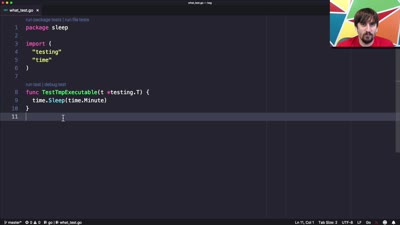
What happens when we run go test
File naming conventions
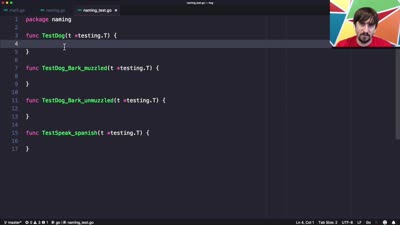
Function naming conventions
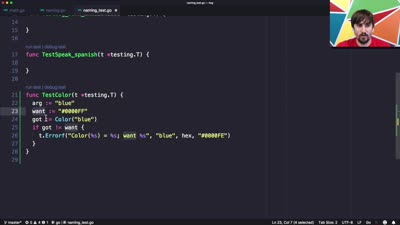
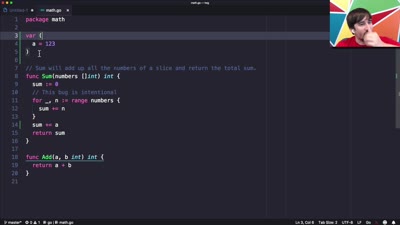
Variable naming conventions
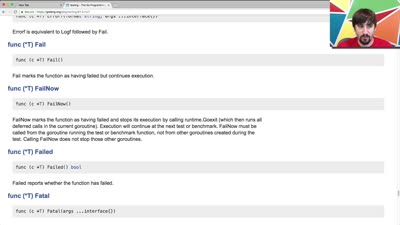
Ways to signal test failure
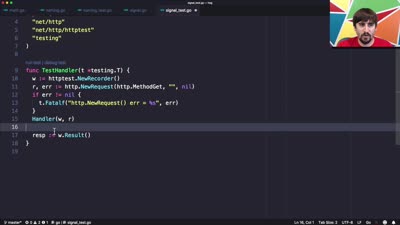
When to use Error vs Fatal
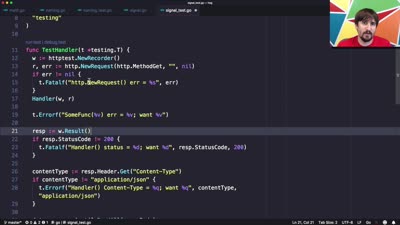
Writing useful failure messages
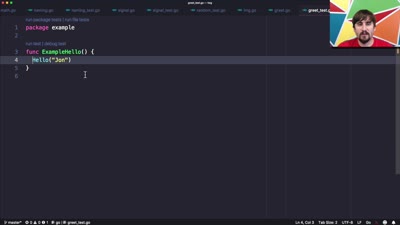
A basic example as a test case
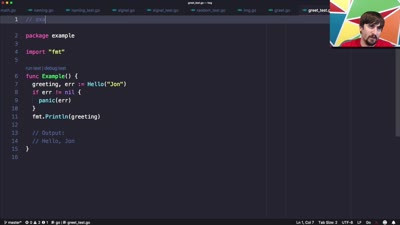
Viewing examples in the docs
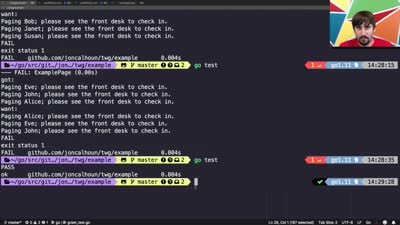
Unordered example output
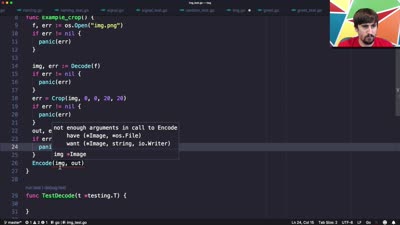
Complex examples
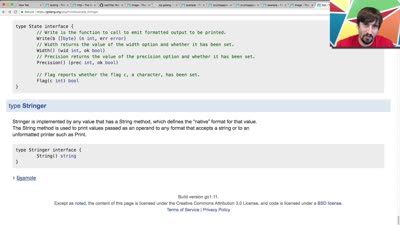
Examples in the standard library
Table driven tests
Generating table driven test code
Subtests
Shared setup and teardown
TestMain
Running tests in parallel
Parallel subtests
Setup and teardown with parallel subtests
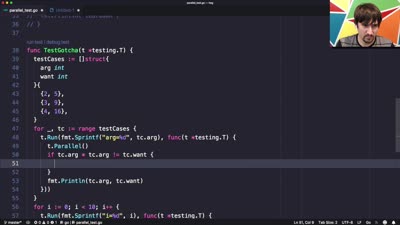
Gotchas with closures and parallel tests
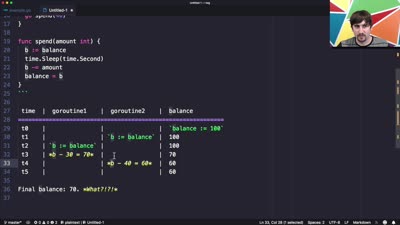
What is a race condition
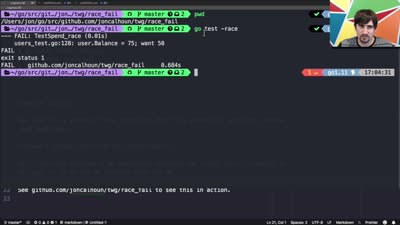
The race detection flag
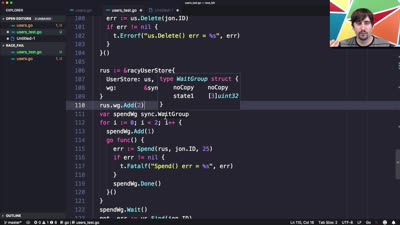
Testing explicitly for race conditions
Simple comparisons
Reflect's DeepEqual function
.thumb.jpg)
Golden files (brief overview)
Helper comparison functions
Building things with helper functions
Generating test data
Gos quick testing package
Public testing utilities
Running specific tests
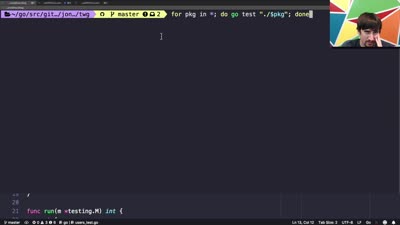
Running tests for subpackages
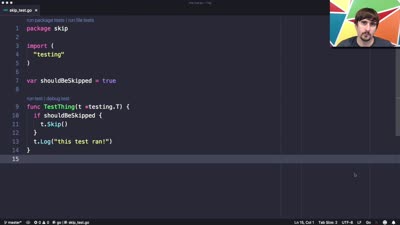
Skipping tests
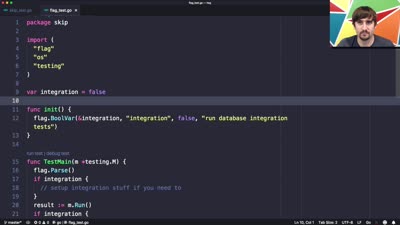
Custom flags
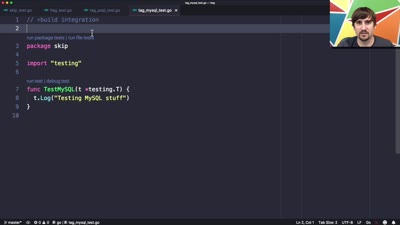
Build tags
Benchmarks
Verbose testing
Code coverage
The timeout flag
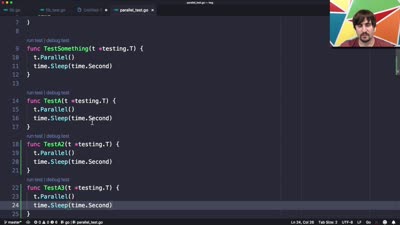
Parallel testing flags
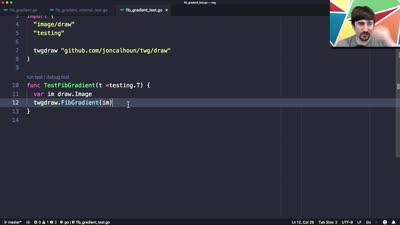
Differences between external and internal
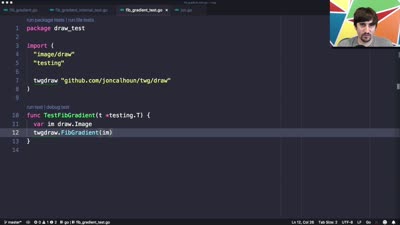
How to write internal and external tests
When to use external tests
Exporting unexported vars, funcs, and types
When to use internal tests
Overview of test types
Unit tests
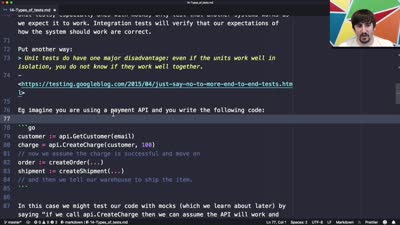
Integration tests
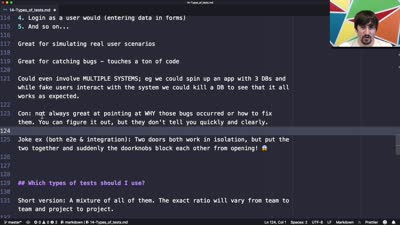
End-to-end tests
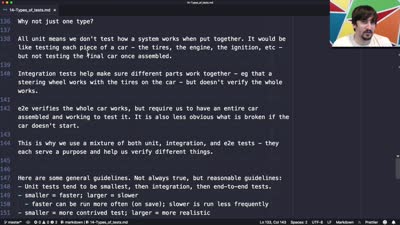
Which test type should I use
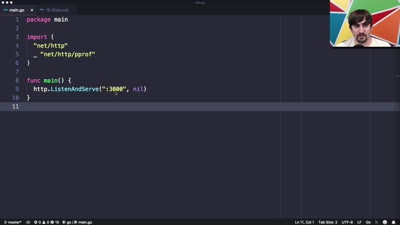
What is global state
.thumb.jpg)
Testing with global state (if you must)
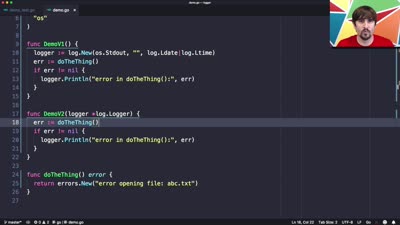
What is dependency injection

DI enables implementation agnostic code
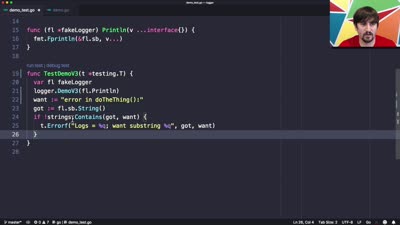
DI makes testing easier
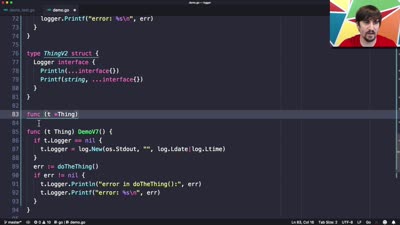
DI and useful zero values
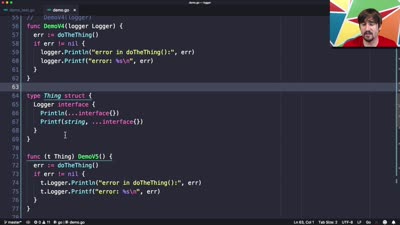
Removing global state with DI
Package level functions
Summary of DI
What is mocking
Types of mock objects
Why do we mock
Third party packages
Faking APIs
What are interface test suites
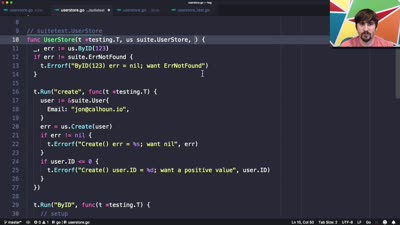
Interface test suite setup and teardown
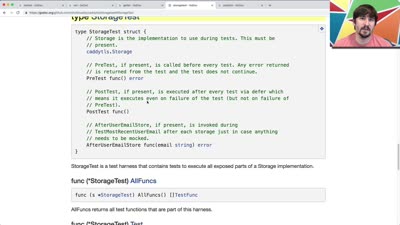
Interface test suites in the wild
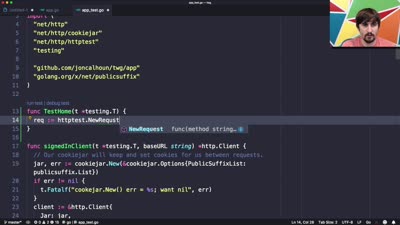
httptest.ResponseRecorder
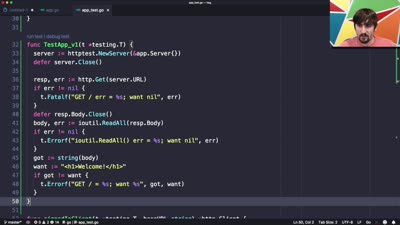
httptest.Server
Build HTTP helpers
What are golden files
Updating golden files
What is a subprocess
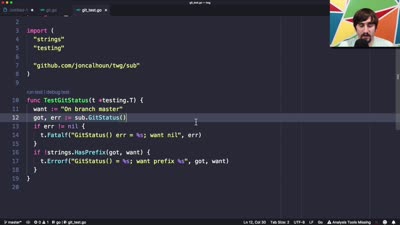
Running the subprocess in tests
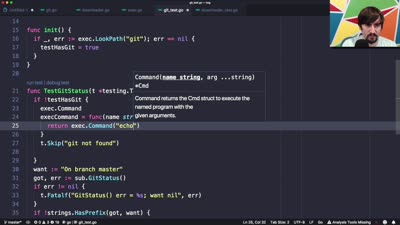
Mocking simple subprocesses
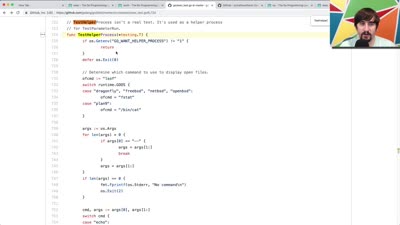
Mocking complex subprocesses
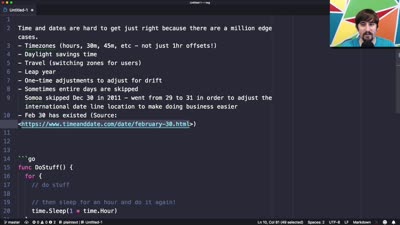
Why are dates and times problematic?
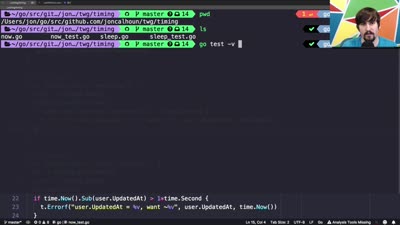
Inject your time and sleep functions
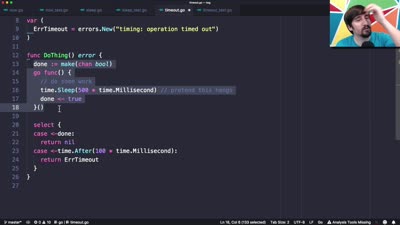
Testing timeouts
Colorizing your terminal output
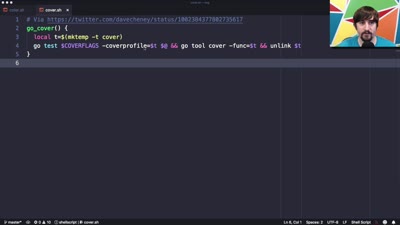
Coverage info function

“
”
I realize you are looking for ways to improve, but I don’t have anything negative to say about the videos you sent me to review. I love your approach in these lessons. Everything is explained well and I can’t wait for the course release!
Nestoras Stefanou
Software Engineer
The Projects
There are three projects in this course:
-
form- a Go package (AKA a library) used to generate HTML forms from Go structs -
stripe- an API client used to interact with a few of the Stripe payment API endpoints -
swag- a web application that allows users to order sticker packs using both theformandstripepackages we create in the first two projects
Each project is built from the ground up with the goal of teaching you about testing in real software. For instance, we will intentionally make mistakes that make our code hard to test then explore ways to make it more testable. Or in other instances we might discuss the tradeoffs of one approach vs another before ultimately moving forward and writing any code.
The videos for each project are shown below, and if you have any questions don't hesitate to reach out and ask.
*The projects are only included in the COMPLETE package
Project 1:
form
A Go package (AKA a library) used to generate HTML forms from Go structs
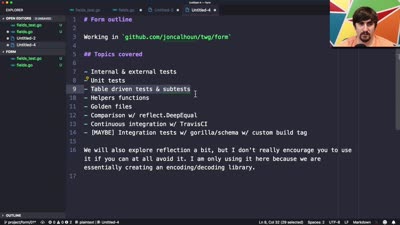
01. Topics covered in the form project
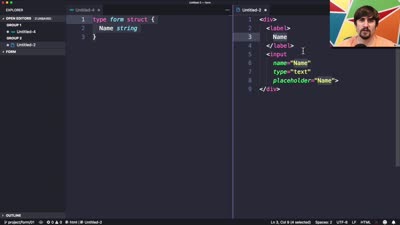
02. The first test
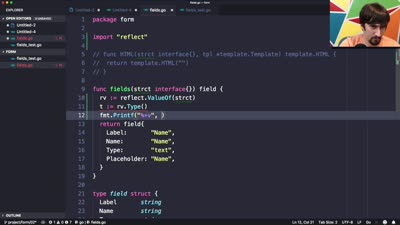
03. Our first bug
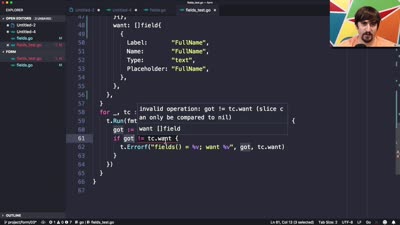
04. Handling multiple fields
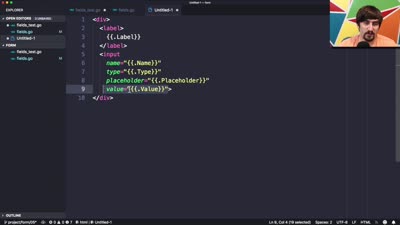
05. Field values
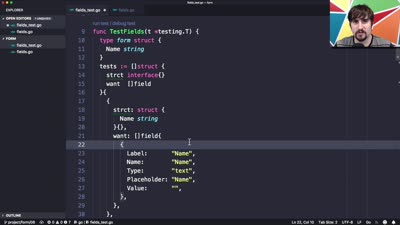
06. Checking for specific attributes in a test
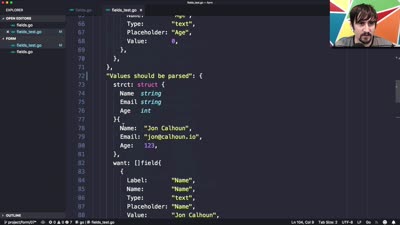
07. Unexported fields
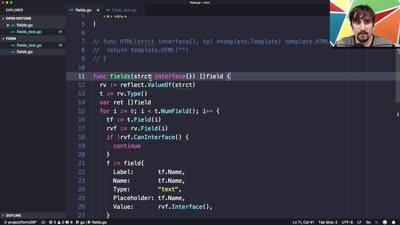
08. Non-structs are invalid
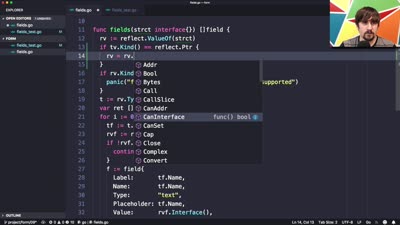
09. Pointers to structs
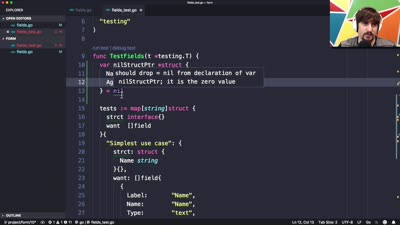
10. Supporting more types
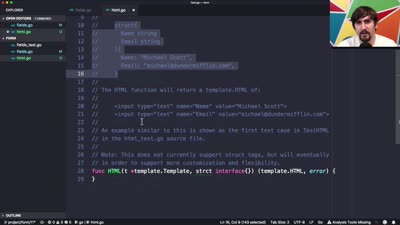
11. Generating HTML
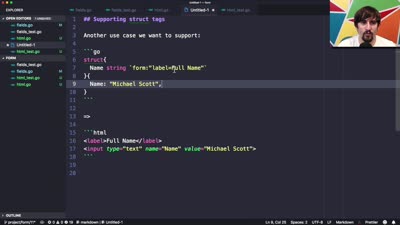
12. Discussing struct tags and tests
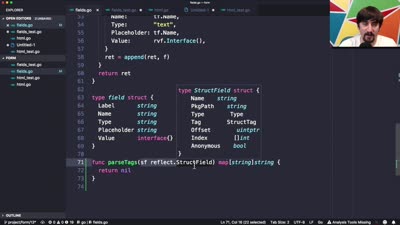
13. Parsing struct tags
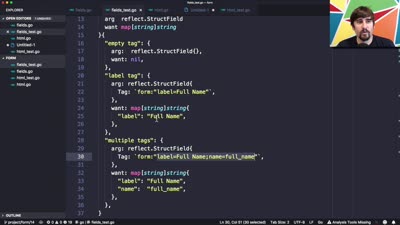
14. Applying struct tags
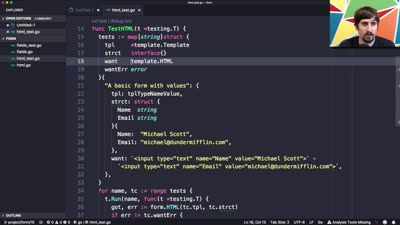
15. Golden test files
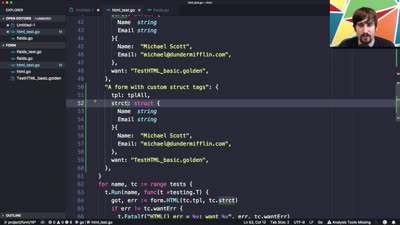
16. Struct tag tests in TestHTML
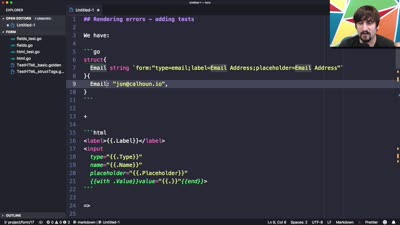
17. Rendering errors
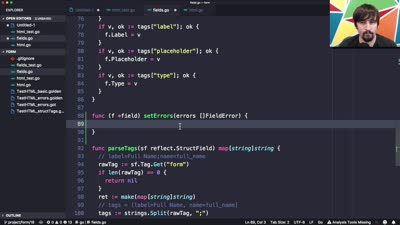
18. Rendering errors
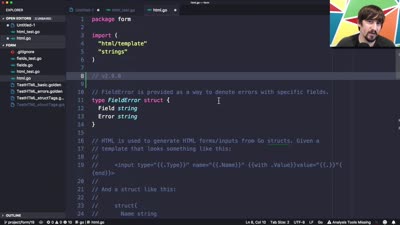
19. Detecting breaking changes with tests
Project 2:
stripe
An API client used to interact with a few of the Stripe payment API endpoints
01. The first test
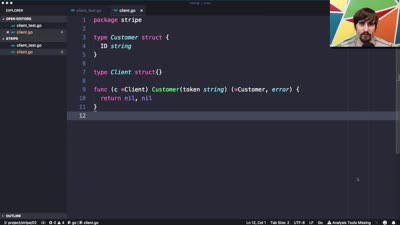
02. Creating a customer
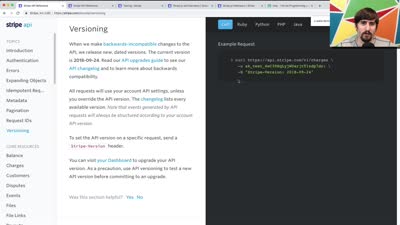
03. Versioning our client
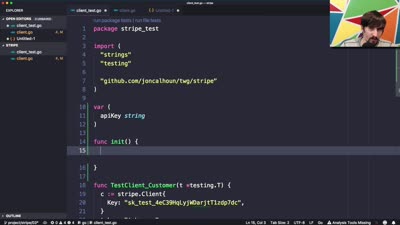
04. Making the API key a flag
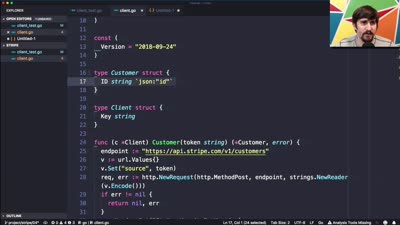
05. Improving our customer data
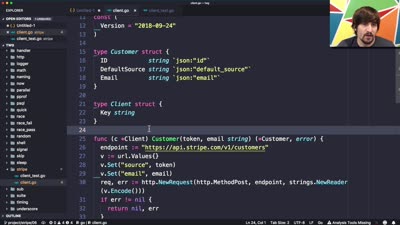
06. The charge endpoint
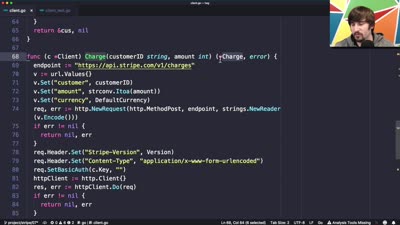
07. Custom error type
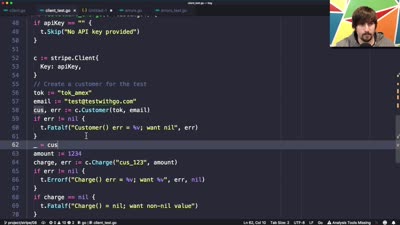
08. Parsing stripe errors
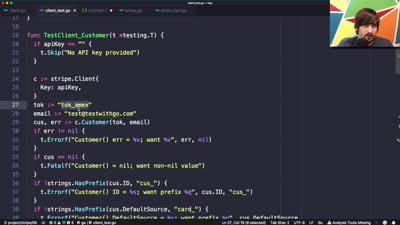
09. Customer endpoint errors
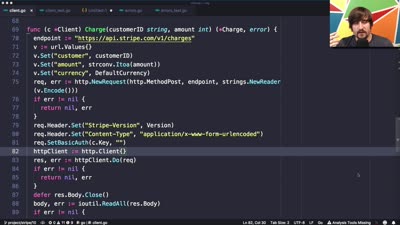
10. Starting on unit tests
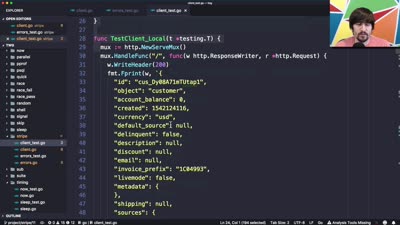
11. Allowing customer http clients
12. Creating a recorder client
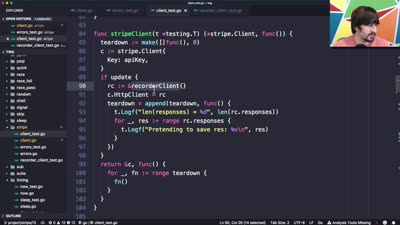
13. Persisting recorded responses
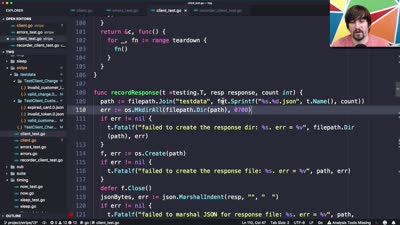
14. Making our tests cross-platform
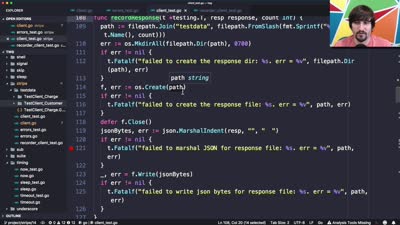
15. Serving recorded responses
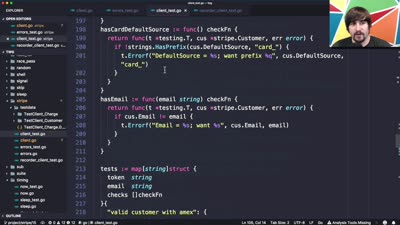
16. Unique customer per charge subtest
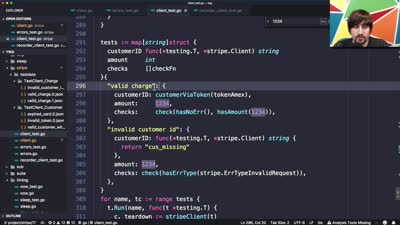
17. Adding tests for specific errors
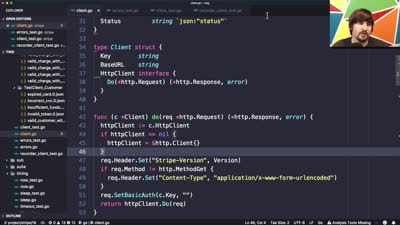
18. Helper functions
Project 3:
swag
In this project we explore how we might approach adding tests and refactoring a web application that wasn't designed with testing in mind. We look at how to incrementally add tests and make changes so we avoid breaking any functionality or needing to make massive overhauls to the code.
The web app we add tests to allows users to order sticker packs
using both the form and
stripe packages we create
in the first two projects
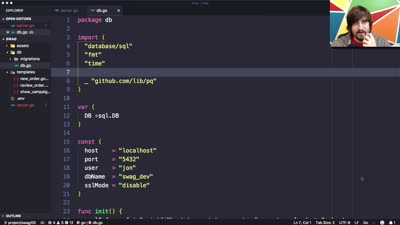
01. What to expect
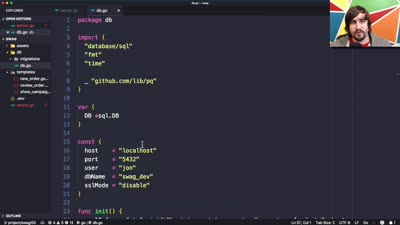
02. App overview
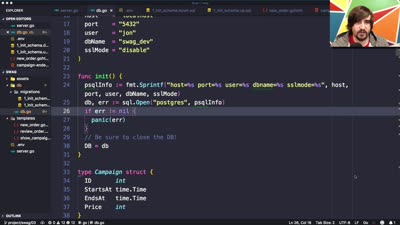
03. Initial db tests
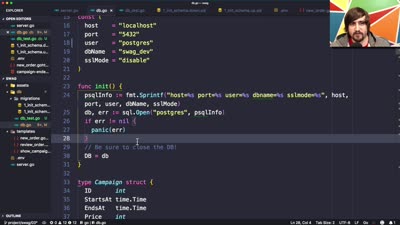
04. Creating the db.Open function
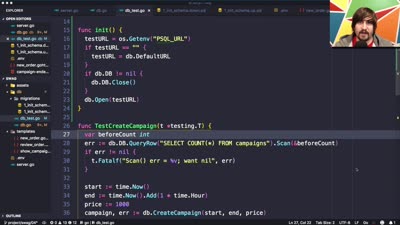
05. What about mocks
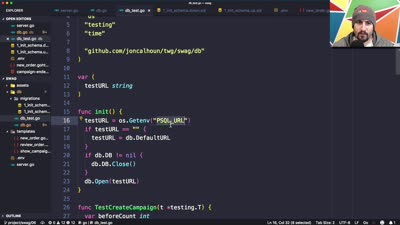
06. Test harnesses and helpers
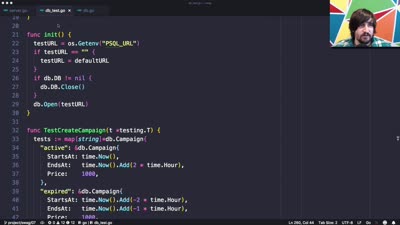
07. Reviewing tests
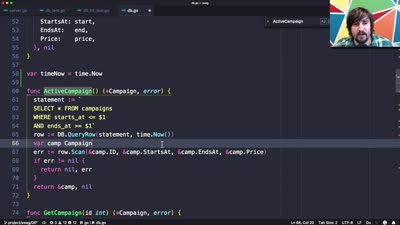
08. Testing specific times
09. First pass at refactoring the db pkg
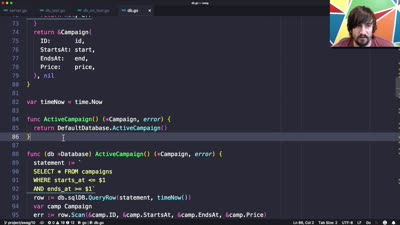
10. Updating db tests
11. Testing the order flow
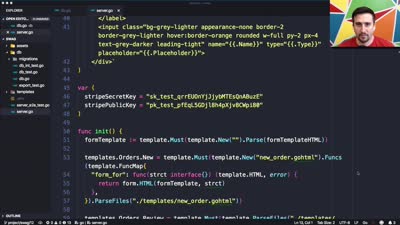
12. Extracting code for unit testing
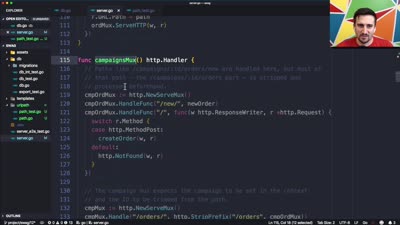
13. Extracting the active campaign handler
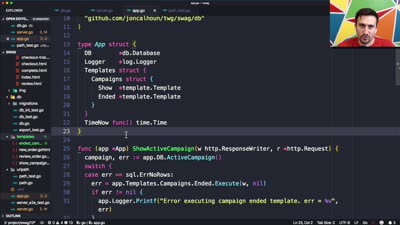
14. Unit testing the active campaign handler
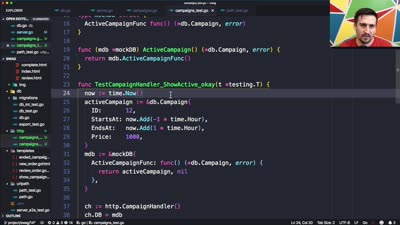
15. Table driven testing the active campaign handler
16. Refactoring campaign middleware
17. Unit testing the campaign middleware
18. Starting the orders handler
19. Testing the new order handler
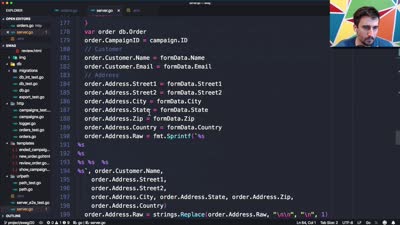
20. Refactor Create order handler
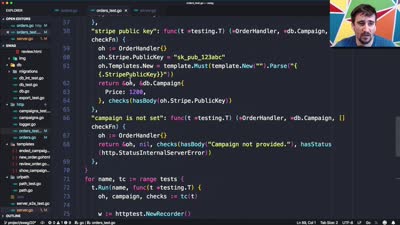
21. Test: Create order handler
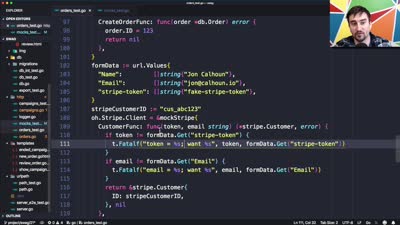
22. Integration testing with Stripe
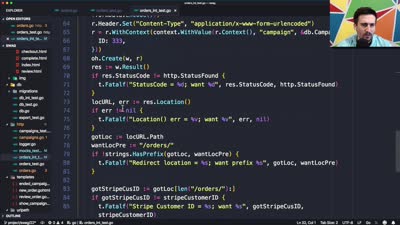
23. Testing for specific Stripe failures
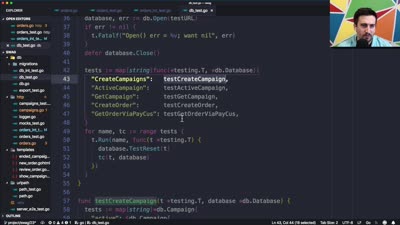
24. Another form of table driven tests
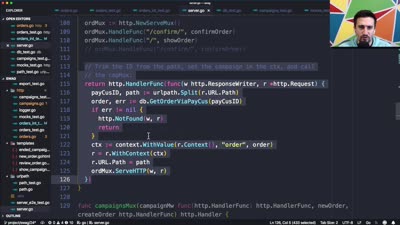
25. Refactor: Order middleware
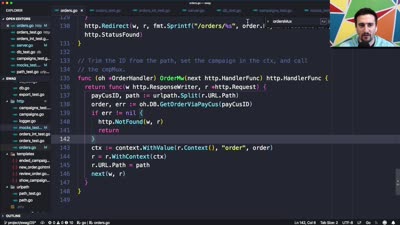
26. Test: Order middleware
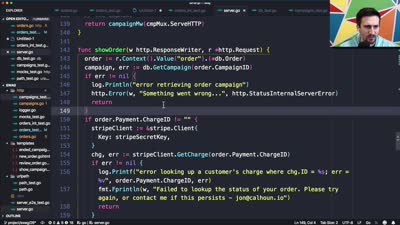
27. Refactor: Show order handler
28. Test: Show order handler
29. Don't get too clever
30. Integration testing the show order handler
31. Removing sql from the confirm order handler
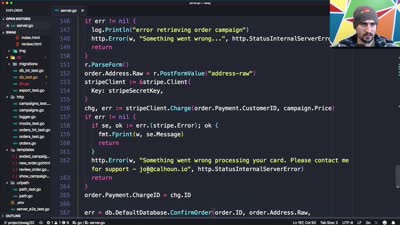
32. Testing the database confirm order function
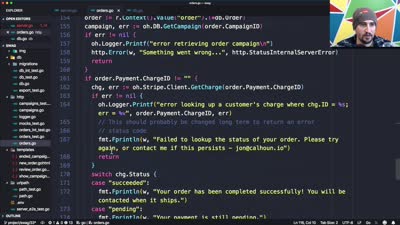
33. Refactor: Confirm order handler
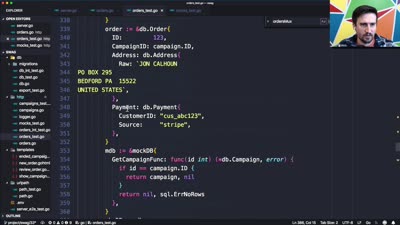
34. Test: Confirm order handler with same address
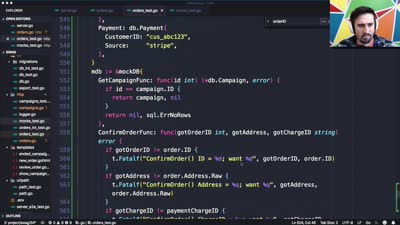
35. Test: Confirm order handler when campaign isnt found
36. Refactoring and finishing the confirm order handler unit tests
37. Integration test: Confirm order handler
38. Setting the stripe secret key via ENV variable
39. Refactoring the routing code in main
40. Testing our asset directory
41. Mocks for testing our router
42. Testing the show order route
43. Table driven router testing
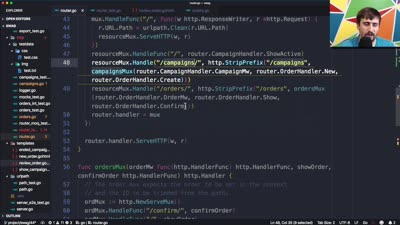
44. Additional router testing
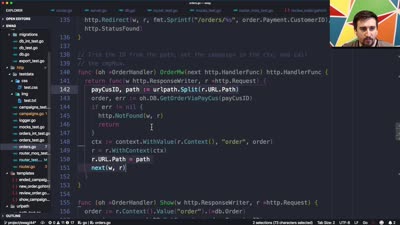
45. Removing the tempDB type
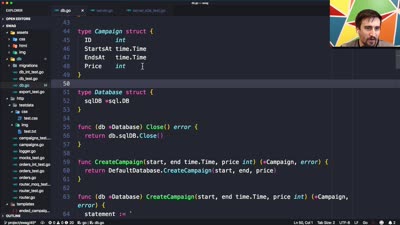
46. Removing the DefaultDatabase package variable
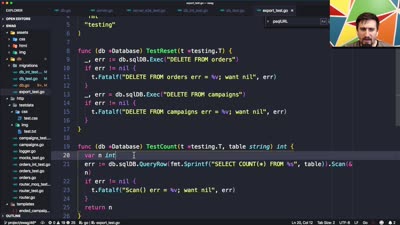
47. Cleanup
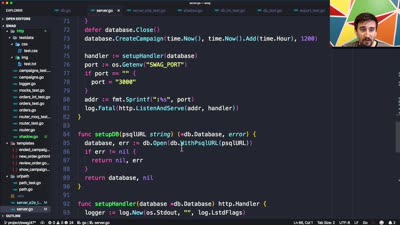
48. Wrapping up

“
”
I expected to learn some useful testing techniques and strategies, which I most definitely did, but thinking about what Jon teaches in this course has begun to change the way I think about writing code in general; an unexpected benefit.
FAQ
Frequently Asked Questions
What if I don't like it?
I offer a 30 day money back guarantee. If you are unsure about the course, I recommend purchasing the package you feel is best and streaming a few of the videos to see if the course is right for you. If it isn't, send me an email within 30 days and I'll issue you a refund.
This only applies to the first time you purchase a course. I do not offer multiple refunds for the same course, so if you purchase a course, request a refund, then purchase it again I will not offer a second refund. This is because I am still charged the CC processing fee on a refund, and it isn't reasonable for me to eat that cost multiple times.
I may also refuse a refund in extreme cases. For instance, if you buy the course, download a large portion of the videos, then request a refund. I have had issues with theft in the past, so I reserve the right to refuse a refund in cases like this.
If you have any questions about this policy, please reach out before purchasing. I am genuinely trying to help people and will try to work with anyone, but a few bad actors have unfortunately made it hard to offer refunds without some restrictions.
How long will I have access to the course?
The course doesn't expire. Once you purchase, you will always have access to the videos.
If you are worried, the complete package includes a way to download all the content so that you can back everything up on your own devices as well. You know, just in case I get hit by a truck or something. 🚛 *beep* *beep*
What formats are the videos in?
The videos are hosted with Vimeo and are streamable through their embedded player. If you purchase the complete package I also offer DRM-free, high quality 1920x1080 mp4s that you can download.
Where is the section on TDD?
The short answer? There isn't one.
We use TDD some in the projects, but it isn't taught as a standalone concept. That said, everything taught in this course can be applied to TDD with relative ease.
Do you offer student discounts?
Yes, students of any kind (high school, college, bootcamp, whatever else) can send me an email with any sort of proof you are a student and I'll send you a link to purchase the course with the student discount.
Do you offer team packages?
Yes, I offer team packages. These include everything in the complete package, but you get a discount for buying multiple copies. Reach out for more info - jon@calhoun.io.
About the Author
Jon Calhoun is a full stack web developer who teaches about Go, web development, testing, algorithms, and anything else he finds interesting. He spoke at the GothamGo conference about focusing on simplicity when writing software and is a panelist on the Go Time podcast.
Previously, Jon founded EasyPost, a shipping API that many fortune 500 companies use to power their shipping infrastructure. Before that he worked at Google as a software engineer. Before that he studied computer science at UCF.
You can find more of Jon's work, including other FREE courses and tutorials he has created, below.