There are 1.1 million people in China named Wang Wei. This essay is about all of them.
His name means “Prestige of Kings.” Or possibly “Mighty Guardian.” Or “Brilliant Defender.” The characters vary. In Mandarin, tones and written forms diverge endlessly, but the pinyin collapses everything into the same two syllables: Wang Wei. It is the most common full name in China. If you called it out in a subway car in Beijing, three people would look up.
This is where we start: with a man who cannot be found in his own name.
Wang Wei is 28. He works at the Foxconn facility in Zhengzhou assembling logic boards that will become iPhones for people in countries where his monthly salary is a dinner out. He lives in a dormitory with seven other men, four of whom are also named Wang Wei. He sends money home to his parents in Henan. He has a phone. He has a Douyin account. He has not, in three years of trying, found a girlfriend.
This is not because he is ugly or unkind. It is because the price of being considered eligible in his home province requires a car (minimum 80,000 RMB), an apartment (minimum 200,000 RMB down payment), and a caili, a bride price, that in rural Henan currently averages around 188,000 RMB. His annual salary is approximately 42,000 RMB.
He did the math once. Then he stopped doing the math.
Instead, every night after his shift, he opens Douyin and watches a girl who calls herself Xiao Tao (“Little Peach”) stream from what appears to be a bedroom in Chengdu. She has good lighting. She has a ring light that makes her eyes look like the surface of a lake at dusk. She calls her regulars “da ge,” big brother. She laughs when they send gifts. The gifts cost real money. A virtual rose is 1 RMB. A virtual sports car is 500 RMB. A virtual cruise ship, the highest tier is 3,000 RMB.
On Thursday, Wang Wei sent Xiao Tao a virtual sports car. He has never owned a real one.
Here’s a translated message from a Chinese woman to a man who confessed his feelings for her, sent via WeChat, which you should read as the mission statement for everything that follows:
“You chose me because of my appearance. I can also reject you because of your appearance. I’m telling you honestly, I’ve never been pursued by someone as ugly as you in my entire life. This isn’t just venting; it’s my genuine feeling, from the bottom of my heart. Ever since you confessed to me, I’ve felt incredibly inferior every day. Do you think Liu Yifei or Fan Bingbing would be pursued by someone like you? You wouldn’t pursue them, because you know those beauties wouldn’t be interested in you. But you’re pursuing me, which means that in your eyes, I’m a match for your looks. My God, just thinking about it gives me a vague urge to kill someone. I beg you to stop liking me. Your pursuit has deeply hurt my self-esteem.”
This woman has, in the space of a paragraph, constructed an entire asset pricing model. She benchmarked herself against celebrity-grade beauty (Liu Yifei, Fan Bingbing), conducted a revealed-preference analysis of the man’s self-assessed market value, and concluded that his bid implies a downgrade to her equity. She is not angry that he likes her. She is angry that his liking her is insulting.
His confession is a short position on her attractiveness.
That is the Chinese dating market. A system where affection and housing prices and parental anxiety and 5,000 years of Confucian shame protocols have been fed into the same blender, and what pours out looks like romance but reads like a term sheet.
There is a Wang Wei on the other end of that message. He doesn’t know yet that this is a gift. He thinks she has rejected him. What she has actually done is handed him the manual.

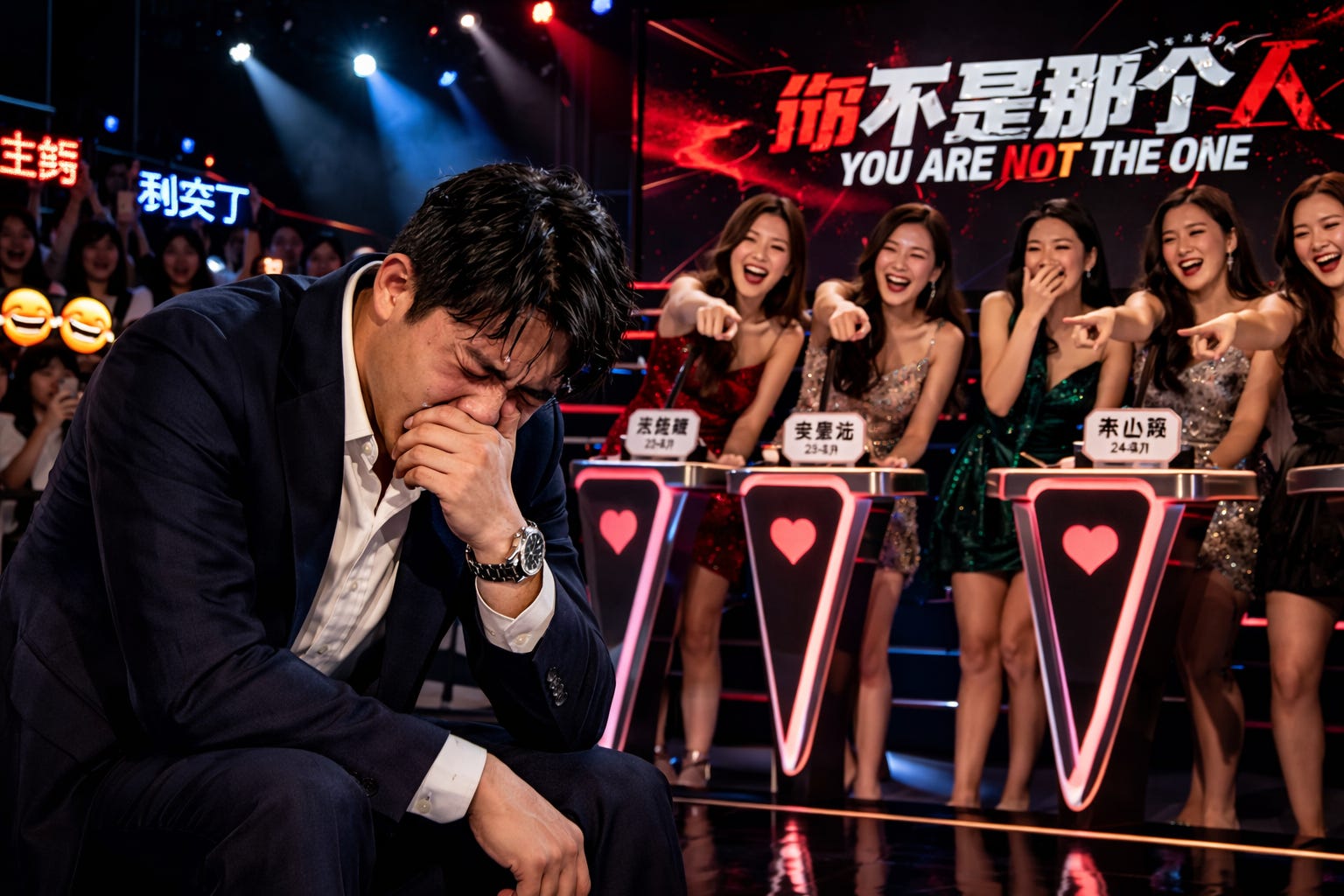
In 2010, a 22-year-old model named Ma Nuo appeared on If You Are the One (非诚勿扰), China’s most-watched dating show: fifty million viewers per episode, second only to the state news broadcast in ratings. An unemployed male contestant asked if she’d ride bicycles with him. She replied, with a small giggle that would become the most replayed giggle in Chinese internet history, that she’d rather cry in a BMW than laugh on the back of a bicycle.
The country detonated. Government censors ordered the show reformatted. The State Administration of Radio, Film and Television issued regulations. A dating show required state intervention in the way that famines and insurrections require state intervention, because it was threatening social stability in exactly the same way.
Wang Wei, who was twenty in 2010, watched this from his parents’ apartment in Henan on a television that had been purchased as part of a bride price negotiation a decade earlier. He watched it and thought: She’s right, though.
Ma Nuo later revealed that the contestant wasn’t actually poor. He was a wealthy second-generation student studying abroad. The production crew had asked her to reject him. The BMW line was a joke she’d read online. She used it on national television because it was funny, because the culture had already written the joke and she was just the one with a microphone.
She wasn’t stating her values. She was performing the culture’s values. And the culture recognized itself so precisely in the joke that it banned the joke.
The man after her bragged about six million yuan in the bank and three sports cars. He was also condemned, then exposed as an aspiring actor pretending to be rich. The show was a funhouse mirror. Nobody could tell which reflections were real. This is the correct metaphor for the entire institution.
A Global Times editorial explained that the BMW obsession reflected a generation that measured worth solely in money rather than knowledge, taste, or kindness. The Global Times is a state propaganda outlet. The state had spent the preceding thirty years engineering the exact conditions that made money the only legible form of worth. They were now publishing editorials about it the way an arsonist publishes think-pieces about fire safety.
You cannot understand why a woman’s dating profile requires “apartment owner (有车有房)” without understanding what China did to housing in 1998.
Before the late 1990s, urban housing was allocated by your danwei, your work unit. You didn’t buy a home. You were assigned one. Housing was a benefit, like a salary. Then, in 1998, the state abolished the system and privatized urban housing. Overnight, a home stopped being a welfare allocation and became the primary store of household wealth, the central vehicle for intergenerational transfer, and crucially the single most important credential in the marriage market.
This happened at the same time that the social safety net was being quietly dismantled. Education costs were privatized. Healthcare costs were privatized. Elder care remained the family’s responsibility because it always had been. The family unit absorbed every shock the state chose not to cushion.
Marriage stopped being about love, or even about family honor, in the traditional sense. Marriage became infrastructure. The apartment was not a gift for newlyweds. The apartment was load-bearing. The apartment was the thing that made the rest of the structure possible.
GDP per capita went from $318 in 1990 to $13,303 in 2024. Forty times richer in a generation. But “richer” didn’t mean “secure,” because wealth had been offloaded onto private households who still carried all the downside risk. Economists called it the “competitive saving motive”: in areas with skewed male-to-female ratios, parents of sons saved more aggressively, trying to improve their son’s marriage market position through visible assets. The rational response to a wife shortage is not romance. It is a down payment.
Wang Wei’s father saved for twelve years. He saved 60,000 RMB. It is not enough. It was not enough the day he started saving.
In Zhengzhou, a Foxconn worker told a researcher: “The groom’s family is expected to provide a car and a new apartment. That’s more than 200,000 yuan. Our average farming income is 5,000 yuan a year.” He paused. “Having two sons,” he said, “is considered bad luck. It means you have to provide two apartments.”
He was joking. It was not a joke. It was a forty-year sentence delivered with a straight face.
The caili (彩礼), the betrothal gift, was originally symbolic: a gesture of respect to the bride’s family. Red envelopes. Dried fruits. Perhaps a pig. It has become, in the 21st century, a structured financial instrument that makes Western engagement rings look like promotional merchandise.
By 2023, the national average caili had risen to 69,000 RMB ($9,500). In Zhejiang province: 183,000 RMB. In rural Jiangxi: 380,000 RMB, not including the apartment, not including the car.
The progression tells you everything. 1970s: a bicycle, a watch, a sewing machine. 1980s: refrigerator, color television, washing machine. 1990s: cash. 2000s: cash plus a car. 2010s: cash plus a car plus an apartment. 2020s: all of the above, negotiated via a family summit that would not be out of place in a Succession episode.
The protocol for the ideal caili package has a name: “ten thousand purple, pink, and green.” This refers to currency denominations. 10,000 five-yuan notes (purple). 1,000 hundred-yuan notes (pink). Dozens of fifty-yuan notes (green).
The state tried to intervene. Jiangsu capped caili at 50,000 RMB. Gansu tried similar limits. One county in Jiangxi tied caili compliance to school enrollment priority for your children, meaning if you paid too much bride price, your kids might not get into the right school. The state was literally bribing (blackmailing) families to accept smaller bribes for their daughters.
The Bank of Jiujiang, a real financial institution, introduced “bride price loans” at subsidized rates. Up to 300,000 RMB. The product was killed by public outcry. Its brief existence is a more complete statement about the problem than anything the People’s Daily has ever printed.
In 2019, a woman in Jiangxi was stabbed to death after she refused her boyfriend’s marriage proposal over a caili dispute.
The market for love has a body count. Revenge against society (a topic for another day, and it’s one hell of a topic).
While you undoubtedly wait for that piece to drop, why not treat yourself to this in the interim:

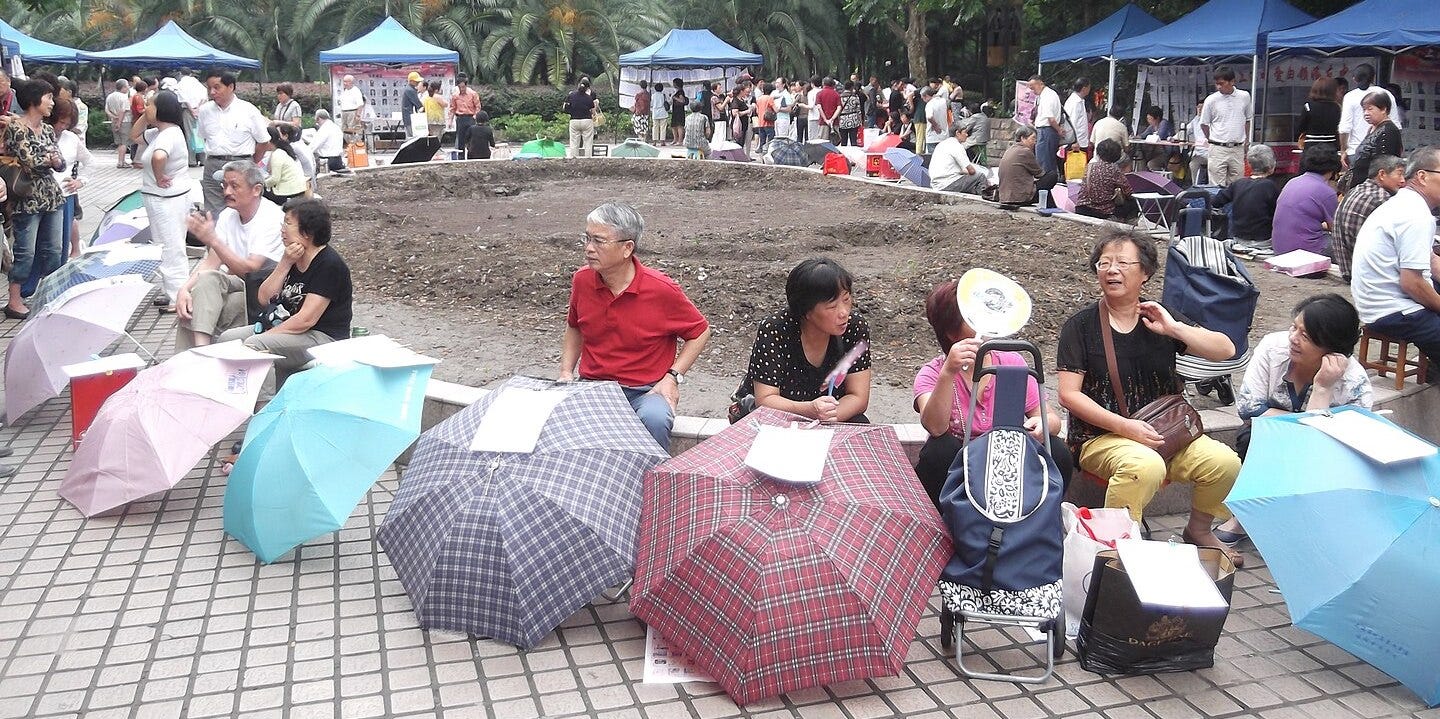
Every Saturday and Sunday, in a corner of People’s Park in Shanghai, hundreds of parents arrive with umbrellas, not because of rain. The umbrellas are bulletin boards.
Clipped to each umbrella is a laminated sheet. It contains: birth year, zodiac sign, height, weight, education level, job, monthly salary, hukou status (household registration, a class signal with the bluntness of a Soviet internal passport), and partner requirements. Sometimes a phone number. Almost never a photograph.
Wang Wei’s mother has been going for three years. Wang Wei does not know. She does not tell him because he would be humiliated, and she cannot afford for him to be humiliated…humiliation does not help his market position. She tells herself she is doing something. This is the real function of the Shanghai Marriage Market. Not matchmaking. Group therapy. It is the only place in Chinese public life where parents can display their private anxieties openly, where the fear of a child dying alone can be admitted out loud. The park does not sell spouses. It sells the feeling that you are not helpless.
His sheet is laminated. It says: 28. Year of the Dog. 175cm. 68kg. High school diploma. Assembly technician. 3,500 RMB/month. Henan hukou. Seeking: patient, family-oriented woman.
It does not say he sends virtual sports cars to women on Douyin at 1am. It does not say he reads Reddit threads about MGTOW in Chinese translation. It does not say he is kind in a way that has gotten him nowhere.
The umbrella has limited surface area.
Eighty percent of the parents in Zhongshan Park in Beijing are looking for husbands for their daughters. This is counterintuitive. China has a surplus of men, until you understand that educated urban women need partners who outrank them, and outranking an educated urban woman in 2026 requires credentials that barely exist in sufficient quantity. The parents know this. They are not optimistic. They come back every week anyway, because stopping would be an admission.
The top five surnames in China: Wang, Li, Zhang, Liu, Chen, account for 30.8% of the registered population. The top 100 surnames cover 85.9% of 1.4 billion people.
Wang Wei shares his full name with approximately 1.1 million other men.
This is clan history, imperial standardization, migration patterns, and demographic scale compressing the namespace across centuries. But as metaphor, it is devastating. In a country where your name locates you within a vast undifferentiated mass, every other signal has to work harder. Education tier. Salary bracket. Apartment address. Car brand. School district for your future child. These are the signals your name cannot provide.
The sociologist Hu Hsien-chin made a distinction between two kinds of face: mianzi (social prestige from visible achievement and display) and lian (moral standing granted by others for your character). You can have high mianzi and no lian, everyone can see your Porsche and also know you’re a fraud. The marriage market optimizes for mianzi because mianzi is legible. Lian is subjective. Subjective things don’t fit on the umbrella sheet.
The proverb infrastructure tells you how deep this runs. 枪打出头鸟: “the shot hits the bird that sticks its head up.” 出头樿e兒先朽烂: “the exposed rafter rots first.” Do not deviate. Do not be the outlier. Do not embarrass the collective by being strange.
But the same culture also demands that you outperform your peers in every authorized metric. Be exceptional, but only in the approved dimensions. Higher salary: yes. Better school: yes. A weird creative project, an unconventional relationship, a life that doesn’t fit the template: no. This is why the marriage market looks, to outsiders, like “money obsession.” It’s not that Chinese people love money more than other people. It’s that money is the one dimension of competition that doesn’t violate the conformity protocol. Money is the nail that doesn’t get hammered because it’s the nail everyone agreed to compete on.
Wang Wei cannot stand out by having an unusual name. He cannot stand out by being eccentric or creative or spiritually distinctive. He can stand out by having an apartment with a parking spot. So that’s the plan. That’s the whole plan. That’s been the plan since his parents had him.
He’s been executing against it for four years. The apartment is still twelve years away at his current savings rate, assuming no medical emergencies, assuming his parents don’t need eldercare, assuming the market doesn’t move further from him.
Assuming a lot of things.
Every night, on Douyin and Kuaishou and half a dozen smaller platforms, approximately 500 million Chinese users watch live streams. A significant fraction of these streams are women performing intimacy at a camera.
They aren’t doing porn. Something stranger. Something more intimate and, in a different way, more transactional.
Xiao Tao (“Little Peach”) streams from 8pm to midnight. She does not take her clothes off. She talks. She plays mobile games while talking. She reads comments aloud and responds to them. She calls her regulars da ge (“big brother”). When a da ge sends a virtual gift, she reacts with what appears to be genuine delight. When a big gift arrives, the animated cruise ship, the rocket, the supercar she gasps and says the sender’s username and thanks them by name, and 200,000 viewers see this, and the man who sent the gift receives, in exchange for 3,000 RMB, approximately forty seconds of being known .
Wang Wei sent her a sports car last Tuesday. It cost him 500 RMB, which is roughly one-seventh of his monthly rent. She said his username, “WangWei198769” and smiled at the camera. His heart melted. He took a screenshot. For a moment, a brief moment, he experienced what he imaged it was like to be wealthy, and happy.
He is not confused about the nature of this transaction. He is very clear about what it is. He just can’t think of a better use for 500 RMB that produces that specific feeling.
The factory worker’s calculus: a real girlfriend requires an apartment he can’t afford, a car he can’t afford, a caili he can’t afford, and years of meeting parents and navigating family politics and performing as a marriage candidate for a board of six people with a collective memory of every financial crisis since the Cultural Revolution. A virtual girlfriend on Douyin costs 500 RMB and is available nightly and calls him big brother and never asks about his hukou status.
The state has started cracking down on “excessive virtual gifting” as a social stability concern. Platforms are now required to cap daily gifting limits. This is not a coincidence. The state understands, even if it won’t say so, that the livestream economy is what happens when you price 30 million men out of the marriage market. They don’t riot. They buy virtual cruise ships for women in Chengdu.
Now consider the other Wang Wei.
The Shanghai one. His parents have an apartment in his name in Jing’an district. He graduated from Fudan. He works in finance. His monthly salary is 45,000 RMB. He also watches Douyin, but differently. He DMs streamers directly. He has what he calls a “portfolio” — three or four women he maintains contact with across platforms, curating his options the way his colleagues curate their stock picks.
He does not find this cynical. He finds it rational. Everyone is optimizing. He is simply more explicit about it than most. The WeChat message woman, the one from the beginning, would understand him completely. They are the same system with different parameters.
The Foxconn Wang Wei and the Fudan Wang Wei have never met. They share a name, a country, a demographic crisis, and absolutely nothing else except the information that the system has transmitted to both of them: you are a product, here is your price, act accordingly.
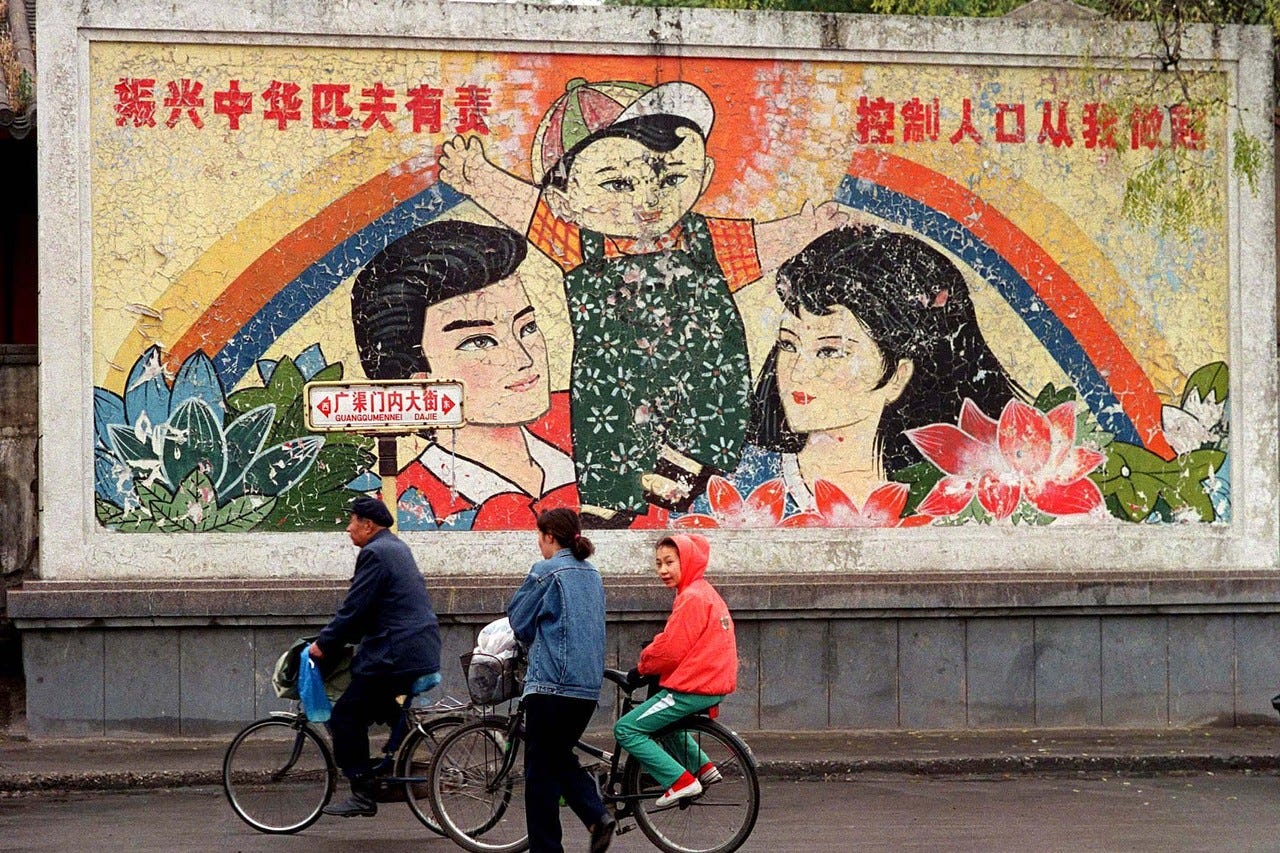
The One-Child Policy ran from 1980 to 2016. Combined with a cultural preference for sons and sex-selective abortion made possible by ultrasound technology arriving in the 1980s, it produced one of the largest deliberate gender imbalances in human history.
Nobel laureate Amartya Sen estimated over 100 million “missing women” globally. China is the largest contributor to that number.
The men who result from this are called guanggun (光棍): “bare branches.” Male branches of the family tree that will bear no fruit because no partner exists for them. The term dates to the Ming Dynasty, where it described demobilized soldiers, vagabonds, people “not engaged in honest work.” The Ming Dynasty used it as a social threat category.
A 2010 census showed 82.44% of Chinese men aged 20-29 had never married, fifteen percentage points above women in the same bracket. Demographers projected 29-33 million surplus males in the coming decades.
Historical records on what happens to surplus male populations are consistent and not reassuring. During the Ming and Qing dynasties, bare branches “tended to drift from their hometowns and form brotherhoods, secret societies, bandit gangs, and military groups.” In extreme cases they toppled dynasties.
A Chinese official wrote in 1827: “Since marrying off women is hard, people raise few women. Since affording to marry is difficult, there are many bachelors.” He noted that the high price of marriage led “homeless bandits” to “kidnap, steal, and feud.”
Two hundred years later that sentence would function as a policy briefing. The government is aware of this. The government has, in fact, been aware of this for longer than they have been willing to admit, which is why the crackdown on virtual gifting is not about protecting young men’s savings. It is about managing, at scale, the distributed frustration of thirty million Wang Weis who cannot afford to be husbands.
Douyin is cheaper than social unrest. Probably.
There is another Wang Wei. Not Foxconn Wang Wei. Not Fudan Wang Wei. This one is 26, in Hangzhou, runs a lifestyle account on Xiaohongshu (Little Red Book, China’s Instagram-Pinterest hybrid aimed at women). He has a girlfriend named Chen Jia.
He knows Chen Jia’s follower count on her Xiaohongshu before he knew her middle name.
Their relationship exists in two registers simultaneously. In the first register, they are two people who met at a mutual friend’s birthday, texted for a month, went on six dates, became official. In the second register, they are a content vertical. Chen Jia posts their dates. She posts his gifts, unboxing format, carefully lit. She posts his birthday message on her feed. When he cooked for her, she filmed it. When he surprised her with a trip to Lijiang, she posted the planning process, the packing, the airport, the sunrise, the return, and a reflective essay captioned “why he is different” that received 4,200 likes.
He does not post much himself. But he understands that the public record of his affection is part of the affection. If he does not do things that can be posted, he is not doing things. This is not a rule that was ever stated. It is simply the grammar of the relationship.
For their six-month anniversary, he bought her a gold necklace. She posted it on Xiaohongshu. Comments: “So lucky,” “He really loves you,” “Where is mine lol,” “What brand,” and approximately 400 variations of those four responses. The post got 8,000 likes. He looked at those 8,000 likes and felt, for the first time in his adult life, the unmistakable sensation of having done something right.
He is not manipulated. He is not being used. He just lives in a country that digitized romance before it finished industrializing it, and the result is a kind of sincerity that would be unrecognizable in a different context but makes complete sense in this one. Love is real. Love is also performed. The performance is real too.
There are men who have been publicly shamed on Weibo for insufficient gift-giving. Birthday posts where the gifts are deemed, in comments, to be “not even trying.” Proposals live-streamed to followers where the ring is evaluated in real time. One man proposed in a restaurant while his girlfriend’s phone filmed it for her followers. The comments started arriving before he’d finished the sentence. The comments were not all positive. He could see them arriving on the phone screen while he was still on one knee.
He is now her husband. Or possibly he is now a cautionary tale. The comments section never agreed.
Every Chinese New Year, the largest annual human migration in recorded history occurs. Hundreds of millions of people return to their hometowns. They eat with their families. They are loved. They are interrogated.
“What’s your monthly salary?” “Have you bought a house?” “When are you getting married?” “Why not yet?” “Your cousin got married last year.” “Your aunt is very worried.” “Your grandmother cries about this.” “Why why why.”
This is cuihun (催婚). Relentless familial pressure to marry. It arrives with seasonal regularity, like the flu, and with roughly similar symptoms.
And it has spawned an industry.
On Taobao, you can rent a boyfriend or girlfriend. Prices: 50 RMB per hour to watch a movie together. 100 RMB if it’s a horror film, because physical contact is implied and must be priced in. 3,000-plus yuan per day for the full meet-the-parents package. During Spring Festival, prices surge to 10,000 yuan per day.
The ads are very specific about what is and isn’t included. “Green services” means no physical intimacy. “I am renting out my time only,” said one 27-year-old woman on a rental platform, “not my body.” This disclaimer is doing a great deal of work.
One man posted an ad for a Spring Festival girlfriend and received 400 applications in three days. Another specified requirements: younger than 25, taller than 5’6”, under 110 pounds, bachelor’s degree, “sweet appearance” and posted photos of himself on a private jet surrounded by cash. He got 5,300 applications. A newspaper ran his photo. He cancelled the arrangement because of “too much pressure.” The 5,300 applicants were not informed of this sentiment by him, having already been selected against.
There was the rental girlfriend who kept forgetting her lines at dinner with his parents. There was the rental girlfriend who refused to return the red envelope money she received at the New Year table, on the grounds that the gifts were given to her personally. The police mediated. Neither party was wrong exactly. This was a contractual dispute about the nature of performance.
These people are not paying for companionship. They are paying for face stabilization. The product is not a partner. The product is a seven-day reduction in familial anxiety. A cease-fire with your mother. An hour of not being the family’s open wound.
Foxconn Wang Wei looked into it. The good packages are out of his price range. He could afford the movie version. He did not think he could maintain the performance. He went back to Douyin.
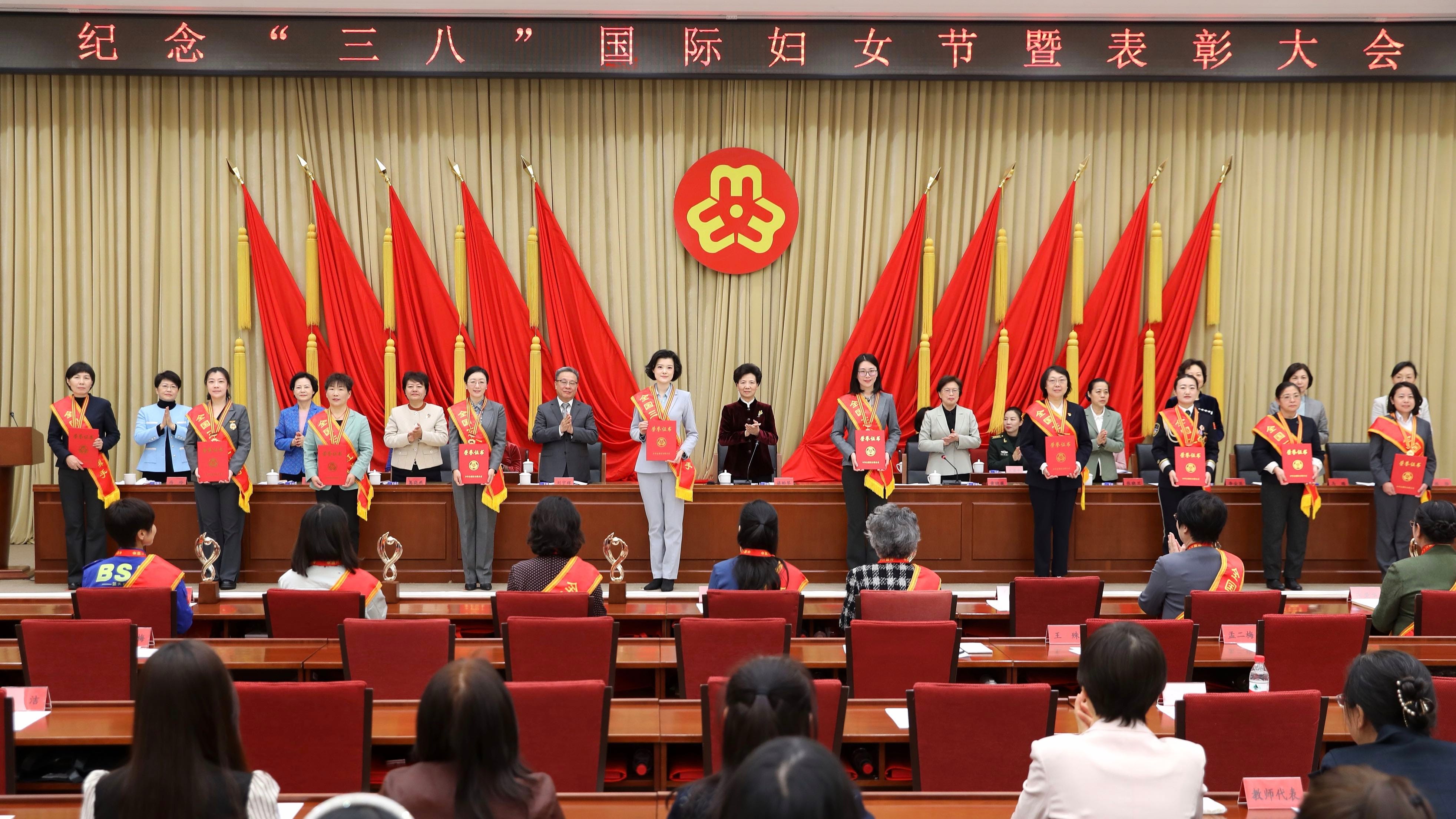
In 2007, the All-China Women’s Federation, a state agency ostensibly created to advance women’s rights (and fully nails the aesthetic of the ‘The Supreme People's Assembly’ in North Korea), officially classified unmarried women over 27 as “sheng nu” (剩女): leftover women. The Ministry of Education added the term to the official lexicon.
The Federation then published taxonomies:
Ages 25-27: “Leftover fighters” (they still have courage!)
Ages 28-30: “The ones who must triumph” (this is a pun on Pizza Hut’s Chinese name, because what Chinese feminist propaganda needs is more fast food wordplay)
Ages 31-35: “Advanced leftover”
Ages 35+: “Master class of leftover women” (a reference to the Monkey King, which is definitely not insulting)
In 2011, the Women’s Federation published “Leftover Women Do Not Deserve Our Sympathy.” It included this sentence: “Pretty girls do not need a lot of education to marry into a rich and powerful family. But girls with an average or ugly appearance will find it difficult. These girls hope to further their education in order to increase their competitiveness.”
A state agency for women’s rights published that. In 2011. Not 1951.
The irony is unmistakable. China had a surplus of men by tens of millions. There were no leftover women demographically. The category was manufactured, a propaganda intervention designed to scare educated urban women into lowering their standards and marrying earlier, because tens of millions of frustrated bare branches posed a social stability problem and the state had decided that the solution was to shame women into solving it for them.
Leta Hong Fincher documented in Leftover Women how thoroughly the propaganda worked. Women transferred assets to boyfriends and husbands for home purchases registered only in the man’s name. They married down. They gave up careers. They internalized the fear.
Then it backfired.
Marriage registrations fell to 6.1 million in 2024, down a fifth year-over-year. Births fell to 7.92 million in 2025 as deaths rose to 11.31 million. China’s population is now actively shrinking. The fertility rate is 1.0 and falling.
The women called “leftover” turned out to be the ones who could afford to say no. They looked at the umbrella market, looked at the caili negotiations, looked at the 4-2-1 family board of directors, looked at the virtual sports car economy, looked at the bride price loan product from the Bank of Jiujiang, looked at the whole elaborate apparatus of the Chinese marriage market.
And said: Actually, i’m good.
Under the One-Child Policy, Chinese family structure compressed into what demographers call the 4-2-1: four grandparents, two parents, one child.
When that child goes on a date, they are not going on a date. They are presenting a candidate to a six-person board of directors. The board has pension anxieties. The board has legacy concerns. The board has strong opinions about hukou and zodiac compatibility and whether the candidate’s family has a history of illness. The board has veto power, enforced through a form of emotional leverage that would make a venture capitalist respect its execution.
This is why the umbrella market exists. This is why parents go without their children’s knowledge. This is why a dating show required state censorship. The family is a corporation. The child is the sole asset. Marriage is the most important M&A transaction the corporation will ever execute.
Love is acceptable if it occurs. The deal still has to close.
When the Shanghai Wang Wei brought a woman home to meet his parents, his mother asked, in order: which district her family’s apartment was in, what her father did for work, whether her parents were still together, what her salary was, and whether she had siblings who might require financial support from her parents later in life, thereby competing with the Wang family for her economic attention.
She did not ask the woman’s name until the third question.
This was efficient. They had limited time and needed the relevant data.
China’s GDP is the second largest on earth. Its cities have skylines that make Manhattan look modest. Its tech firms compete with Silicon Valley. It sent a rover to the far side of the moon. Its e-commerce infrastructure is so advanced that Western logistics people study it like scripture.
I have a whole essay on this topic:

And its citizens are buying virtual cruise ships for streamers in Chengdu at 3,000 RMB each. And its parents are laminating spreadsheets and clipping them to umbrellas in public parks. And its government is publishing taxonomies of leftover women and trying to cap bride prices and creating financial products for men to borrow money to afford the privilege of being rejected.
This is the central contradiction, and it is the only thing that actually needs explaining. China is no longer poor. But it behaves, in the intimate sphere, like a country that expects the famine to return. Houses are hoarded like grain. Children are invested in like they’re the last crop before winter. Partners are evaluated like wartime rations. The marriage market runs on the logic of scarcity even amid abundance, because the nervous system was built during scarcity and nervous systems don’t update when the spreadsheet does.
There is a Singaporean commenter on X @hoeflatoor who wrote:
“We are +10 IQ, +10 social conformity, -10 risk taking, -10 love/happiness/romance. We have a deficit in the genes for soul and expression.”
(beautiful piece you can find in full here Singaporean Love).
He said this provocatively. He said it reductively. He also said it accurately, about the output of what happens when Han Chinese cultural software runs under sustained modernization pressure without an update to the parts that handle intimacy.
The woman in the WeChat message is not a sociopath. She is running the software she was given. She is benchmarking her attractiveness the way her parents benchmarked apartments. She is responding to a confession of love the way a market responds to a lowball offer: as an insult to the asset. This is a completely rational response to a system that taught her, from birth, that her worth was subject to continuous comparative evaluation by an audience that would not be sympathetic to sentiment.
Wang Wei (Foxconn Wang Wei) read her message the morning after he sent the sports car. It was about a different man, posted by a different woman, going viral on Weibo. He read it and thought two things simultaneously. He thought: this is brutal. He thought: she’s right, though.
Then he went to his shift.
His mother went to the park on Sunday. She stood with her umbrella in the late morning, scanning the other sheets. A woman in her sixties stopped and read Wang Wei’s sheet carefully, nodding at some things and not others.
“What does he do?” the woman asked.
“Manufacturing,” his mother said. “Stable.”
“Henan hukou?”
“Yes.”
The woman moved on. His mother stayed another two hours. She talked to six other parents. She came home on the subway. She did not call Wang Wei because there was nothing to report.
She will go back next Sunday.
The sheet says: 28. Dog year. 175cm. 68kg. High school diploma. Assembly technician. 3,500 RMB/month. Seeking: patient, family-oriented woman.
It doesn’t say he is the most patient man his dormitory mates have ever met. It doesn’t say he learns things quickly and reads constantly on his phone. It doesn’t say he laughs at himself. It doesn’t say that when one of his dormitory mates got sick last winter, Wang Wei covered his shifts without being asked and didn’t mention it afterward.
Those things don’t fit on the sheet. The sheet wouldn’t fit onto the umbrella. The umbrella would be too dense to capture the 3 seconds of attention it grab from eligible parents.
And somewhere in Chengdu, Xiao Tao is going live at 8pm. She sets up her ring light. She applies her makeup. She pins her good-luck charm above the camera. She opens the stream.
“Okay, big brothers,” she says. “Let’s have a good night.”
Two hundred thousand people are watching.
One of them is already reaching for his phone.
China’s marriage market is not proof that people don’t want love. It is proof that they want love and survival and family honor and escape from relentless comparison all at once, and the system they’ve built can only optimize for one variable at a time. It chose the measurable one.
Wang Wei’s mother is still hoping. That part hasn’t been optimized away.
Not yet.
if you enjoyed this piece, you would likely enjoy these similar essays:
Narrative driven story (similar style to this essay) about the fictional nature of money seen through the eyes of a North Korean hacker

Why doesn’t Cyberpunk evoke visions of a Shanghai skyline? What is the west afraid of depicting?
This one may upset a few people.