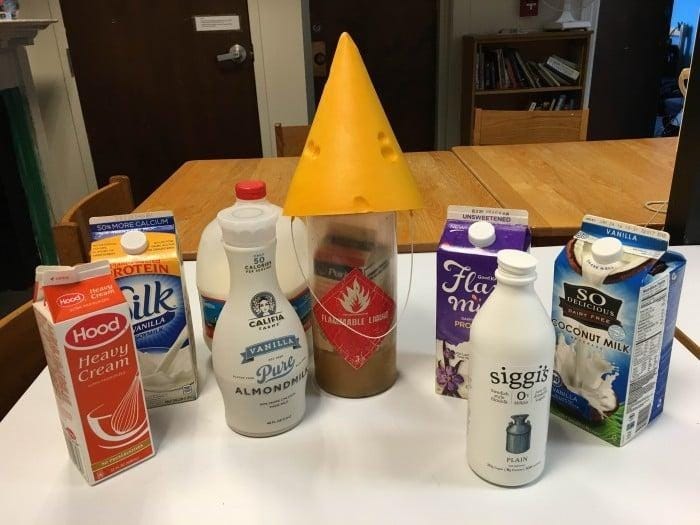
The story of MIT’s most notorious milk carton begins, as many good stories do, in a college dorm.
The milk in question was purchased in 1994 and rediscovered in 1995 by an undergrad named Justin Cave. By that point, the reportedly lactose-intolerant Cave had even less use for the milk he had abandoned in his fridge ten months earlier. For reasons lost to history, he did not throw the milk away. He threw it a birthday party.
The Milk lived the rest of its life unrefrigerated, stored in a tall, single-walled jar. For twenty-seven years, the residents of Random Hall dorm gathered faithfully to celebrate its birthday. At age 20, the Milk applied to, and was rejected from, MIT1. The jar was periodically “burped” to release the gas pressure inside, until the Milk reached its stable final form – a cloudy brown liquid. When asked why the Milk was never thrown away, one resident of Random Hall replied: “Why throw something away when you can tell a story about it?”

“Stuff I learned from things that normally get thrown away” could be the title of many scientists’ memoirs, including Louis Pasteur’s. Winemaking produces, well, wine, but it also produces acidic crystals on the walls of the vats. These byproducts were not discarded – they were studied by Pasteur and his contemporaries. Pasteur’s observations both revolutionized our understanding of chemistry and led him to the phenomenon that would define his career and lay the foundation of modern food safety: fermentation.
The microorganisms responsible for fermentation are visible to our naked senses only through the textures, colors and smells resulting from their collective efforts. From Aristotle through the 1850s, it was assumed that some intrinsic property of a non-living starting substance (like grain or milk) enabled its spontaneous fermentation into something useful (like beer or yogurt) or its eventual spoilage.
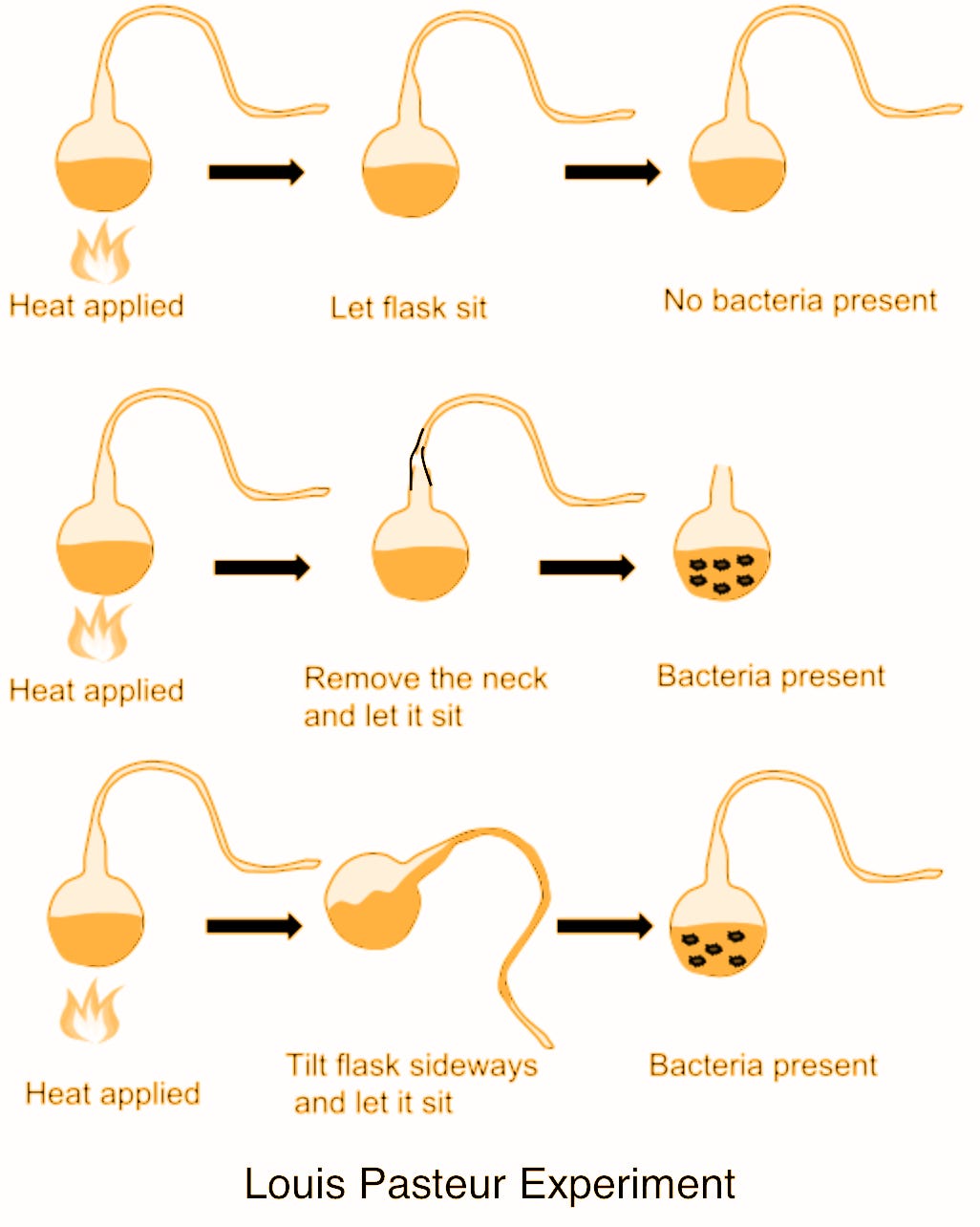
It was Pasteur who proved that living organisms were required for the transformations that took place during fermentation. He heated up nutrient-rich broths in custom flasks that let gases, but not microbes, flow in and out of the flasks. Pasteur then broke the neck off of one of the flasks to expose the broth to the air. If the boiled broth could spontaneously transform, it would do so with or without exposure to microbes in the air and environment.
The flask with the neck broken off grew cloudy and fermented as bacteria bloomed, but the sterile one remained clear.
This finding was great news for Napoleon. The French were losing money, and perhaps more alarmingly, their reputation, exporting wine to the British – the wine would “spontaneously” go bad during shipping. The French government offered a prize for a scientist to solve the case of the spoiled wine. With the knowledge of the microorganism-driven process of fermentation in hand, Pasteur did to the wine what he did to the broth, just more gently – he heated the wine enough to kill microbes without damaging the wine’s flavor. Immortalized as pasteurization, this process was adapted shortly after its invention in 1865 to let us safely drink stored milk2.
Killing bacteria thus became a major preoccupation of modern life. Its most visible manifestation today might be taking antibiotics (first available in the 1940s): there were ~700 antibiotic prescriptions per 1000 people3 in 2024 according to CDC data. A close second might be the dizzying array of disinfectant products found in U.S. grocery stores.
What’s less visible is the sanitization infrastructure that makes things like grocery stores or medicine possible at all. The company Steris, one maker of high temperature, pressurized sterilization equipment and other medical instruments, is a $5 billion annual revenue company, with a $21 billion market cap. The U.S. pasteurizes around 50 billion liters of fluid milk every year. To package salad greens like spinach, the greens are washed in a dilute bleach solution to kill any lingering soil microbes. I could go on.
But our war on bacteria has its own warring industry. This industry has captured the imaginations of scientists, the food and beverage industry, pharma companies and doctors along with influencers, marketing gurus and opportunists of all flavors. This industry emphasizes that some microbes are friends, not foe, (true) and you should be eating them in large quantities, on purpose, all the time, and preferably paying more for products that contain them (dubious). This is the probiotics industry.
“Probiotic” is a bit of a misnomer – it means for life, or promoting life, but the formal definition of a probiotic is an actual living microorganism. In simple terms: taking a probiotic is just eating bacteria on purpose. I say on purpose because we consume microbes accidentally all the time from our environment, largely oblivious to their existence or effects. The bacteria we spend much of our time and energy trying to kill are outnumbered, at a species level, at least 1000 to 1 by a combination of harmless and beneficial bacteria living in and on our bodies. It’s this latter property of beneficialness that probiotics are trying to exploit.
I say exploit because of a recent trip I took to the grocery store. I had a cold and was in search of lemon ginger tea. I bought a box of Bigelow, went home, boiled some water, poured it over a tea bag, waited a bit, added honey, took a sip, and almost spit it out. The tea had its expected notes of ginger, a hint of lemon, and some powdery, alkaline aftertaste that I couldn’t place. Frankly, it tasted terrible. (Sorry, Bigelow).
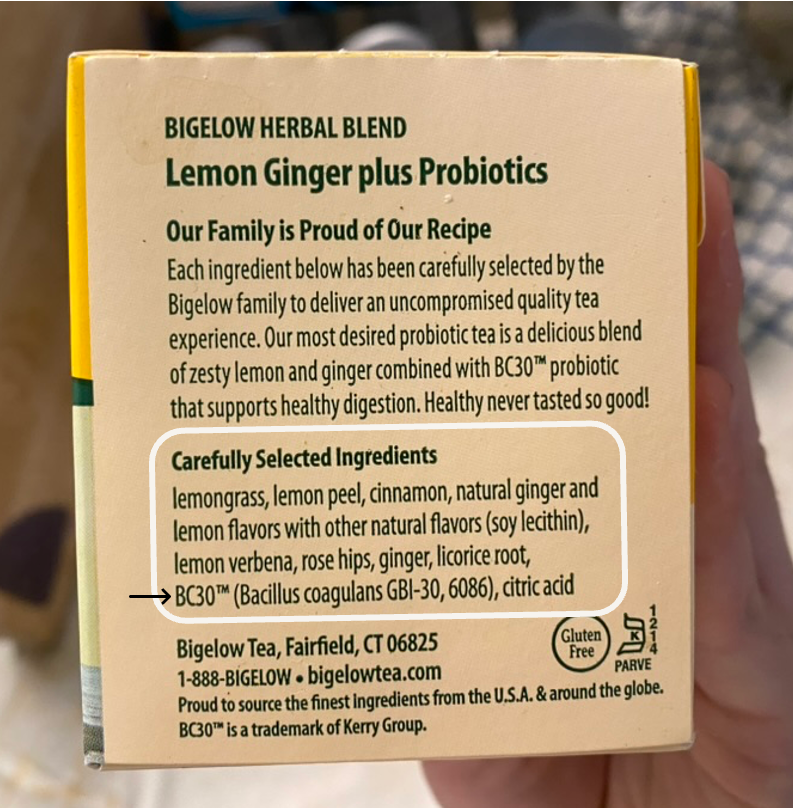
I inspected the box again. In my congested state, I had unwittingly purchased a new offering from the tea company – Bigelow Lemon Ginger, with probiotics. What made this tea different from all the other teas I happily sipped on was that in addition to nice-sounding things like lemongrass and cinnamon, it contained bacteria. Bacteria which I had just boiled, at a temperature 40oC hotter than pasteurization.
Did the tea taste bad because I was drinking dead bacteria water? And if that was the ultimate outcome of the normal brewing process, why bother putting bacteria in the tea at all?
I was at a lab happy hour when I mentioned this to my PhD thesis advisor. “I know, right?” she said, suddenly animated. “Probiotic teas taste SO BAD.” I was thrilled to have another witness. “Doesn’t it seem crazy to add in bacteria that you’re just going to boil and kill anyway?” I asked. “Is it all a scam?” She was already nodding. “You have to wonder whether the bacteria in the tea make it to the gut at all, and whether they do anything helpful once they get there,” she said.
I’d be lying if I said I remembered exactly what happened next, or who suggested what. All I remember is an idea. An idea to test this seemingly paradoxical marketing tactic like the microbiologists we are. The idea was simple: What if we tried to grow the bacteria from the tea bag, in the lab?
I went home. I stared at the box of bacteria tea.
Why throw something away when you can tell a story about it?
BC30™, the bacterial strain in the tea, is short for Bacillus coagulans GBI-30, 6086®. It received the FDA’s GRAS (Generally Recognized as Safe4) designation in 2012 and is found in over a thousand “leading food, beverage and pet food products worldwide” according to the probiotic’s website.
To coax these bacteria to grow out of steeped tea, I needed to know three things:
Is this species safe to grow in the lab?
What does it like to eat?
What are its preferred growth conditions?
In general, I try not to ingest the bacteria I grow in the lab -- even ones with the lowest safety designation, BSL-1. By nature of it being a commercial probiotic, BC30 is both BSL-1 (safe to grow under normal lab precautions) and edible.
But, I still wouldn’t try this at home or eat bacteria off of a culture plate. Why? BC30’s preferred food source is not that different from the preferred food source of many other microorganisms: a sugar- and amino acid-rich nutrient medium called MRS (De Man, Rogosa and Sharpe) agar.
While MRS agar has some adjustments to make it preferentially appetizing to BC30 and its relatives, those relatives also include Streptococcus pyogenes (causes strep throat) and Bacillus cereus (causes food poisoning). Without sterile technique and rigorous species-level confirmation, you cannot know for sure what is growing on your plate.
With that said, the American Society for Microbiology’s blog suggested that were I successful in culturing BC30, I would see growth of translucent white colonies on MRS agar plates after 48 hours of incubation at 30-33oC in the presence of oxygen.
First, I needed to make tea.
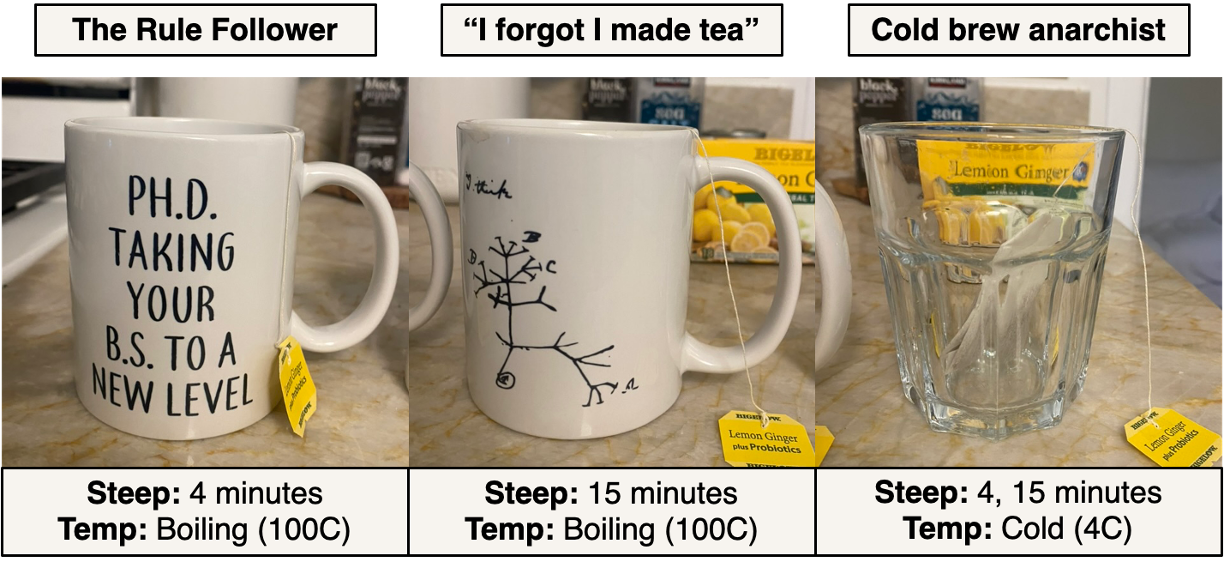
I wanted the conditions of the experiment to represent a range of realistic tea-drinking scenarios, from intended use to flagrant improvisation, and set up three steeps:
The Rule Follower -- Brewed as directed for 4 minutes in boiling water.
“I forgot I made tea” – We’ve all been there. 15 minutes, boiling water.
Cold brew anarchist – Self-explanatory.
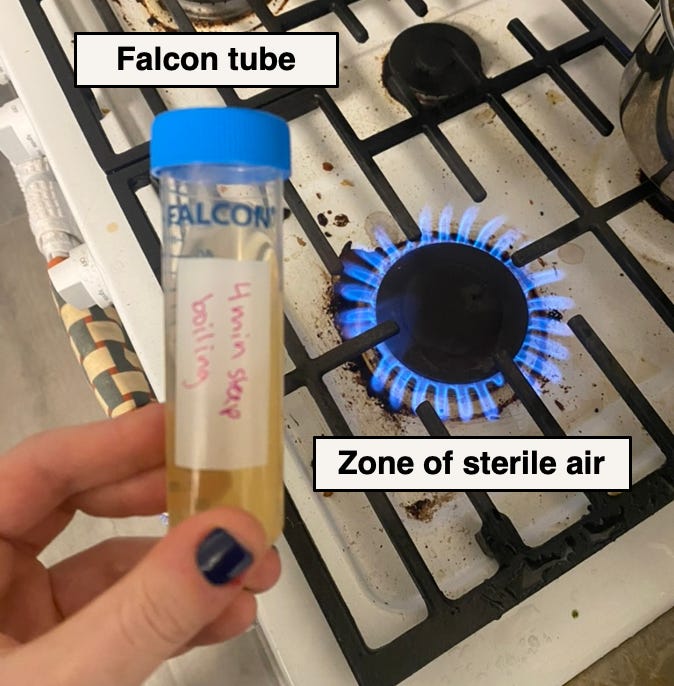
It was at this point I realized I needed a sterile-ish way to transport the steeped tea and tea bags from my house to the lab. Luckily, I had recently run a blindfolded volume pouring accuracy competition at our departmental retreat and had leftover Falcon tubes still in their original package. While the tea was definitely not sterile, I reasoned that a little extra aseptic technique wouldn’t hurt. I poured the tea into the tubes over my kitchen stove, using the open flame as a makeshift Bunsen burner.
In reality, lab came first. I had to make MRS agar plates before I steeped the tea. Our lab does not use MRS broth very often, and when I first looked for some all I found was a 10-year-old solidified block of MRS powder in our stock cabinet that was growing large green spots inside of its glass container. Behind it was one that looked mercifully normal.
I mixed broth powder, agar and water in a glass bottle, loosely capped it, put it in a water bath and took it to the autoclave. “Autoclave” is a nice word for giant pressure cooker. Ours is made by the aforementioned Steris. It rattled and hissed as its jaws opened to accept my tray of culture media, which it then heated to 121oC for 45 minutes, sterilizing the liquid.
Back at my lab bench, when the molten MRS agar had cooled enough to handle, I lit a Bunsen burner next to a stack of empty plastic petri dishes and poured a layer of agar into each one. Left overnight, the plates solidified into nutrient-dense beds for BC30.
The next day, I took my tubes of tea to lab. I pipetted 400 microliters (0.4mL) of each liquid tea condition onto a plate next to the Bunsen burner. I spread the liquid evenly across the plate with a hockey stick-shaped plastic spreader5 and left the lids on the plates cracked open to dry near the flame.
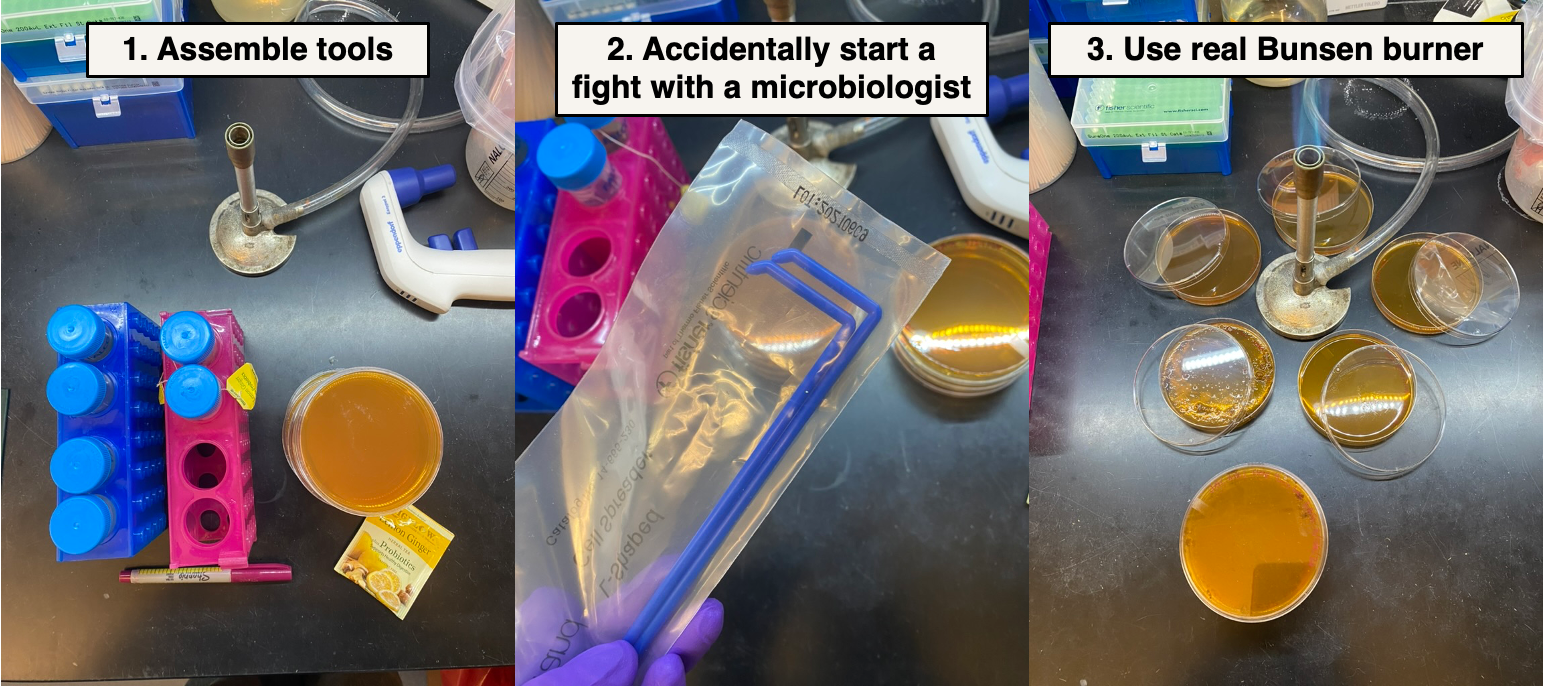
But to answer my question, I needed one more test. If there were bacteria in the tea bag initially, but they died when boiled, then I might see bacterial growth by plating the dry ingredients of an unsteeped tea bag, or the tea bag steeped in cold water. I cut open the tea bags and shook some of their contents onto the agar. I put my full set of plates, including a plain MRS plate to check its sterility, into the incubator at 37oC – a standard growth temperature, but a little warmer than recommended. I was skeptical that anything would grow. For the next two days, all I could do was wait and see.
The first thing I noticed when I took the plates out of the incubator was the smell. I was in disbelief when I saw little white colonies dotting almost all the plates and opened one to get a closer look. A sickly sweet, gingery aroma wafted from the plate as I inspected the translucent colonies – a byproduct of the bacteria metabolizing the sugars in the MRS plate. By all accounts, I was looking at BC30.
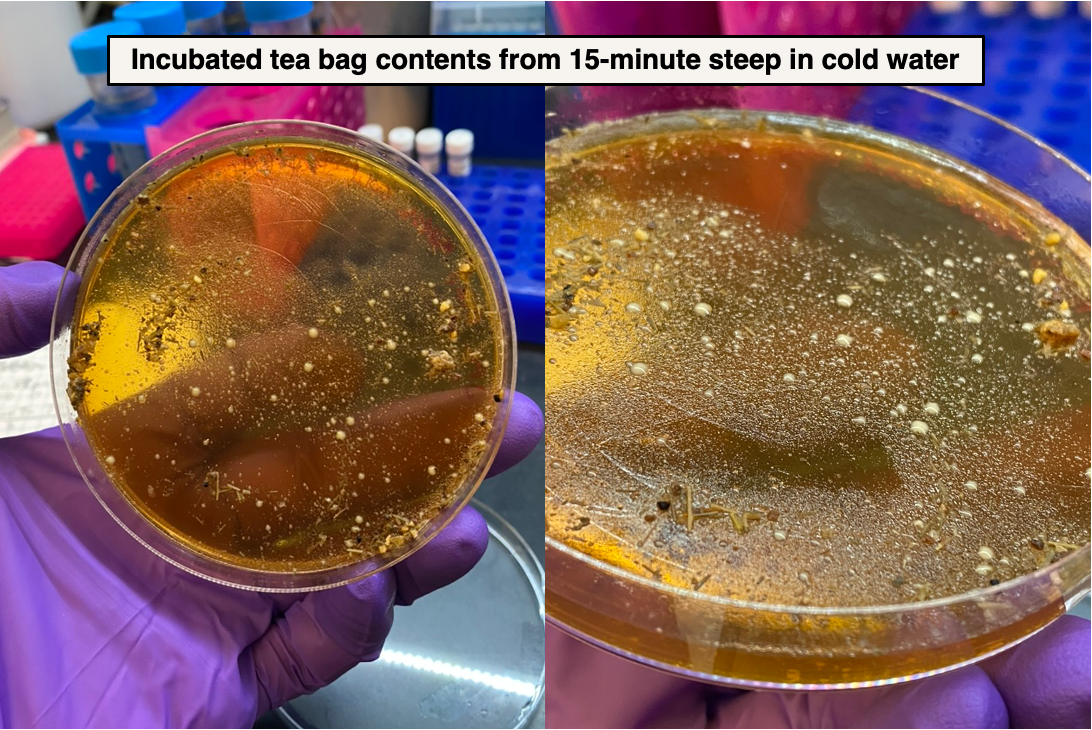
Colonies grew on all of the tea and tea bag plates, while my sterile control plate remained bacteria-free. The colonies from the boiling-water steeps and the tea bags were a variety of sizes, including some that were significantly larger than others, while the colonies from the cold-water tea were uniformly small.
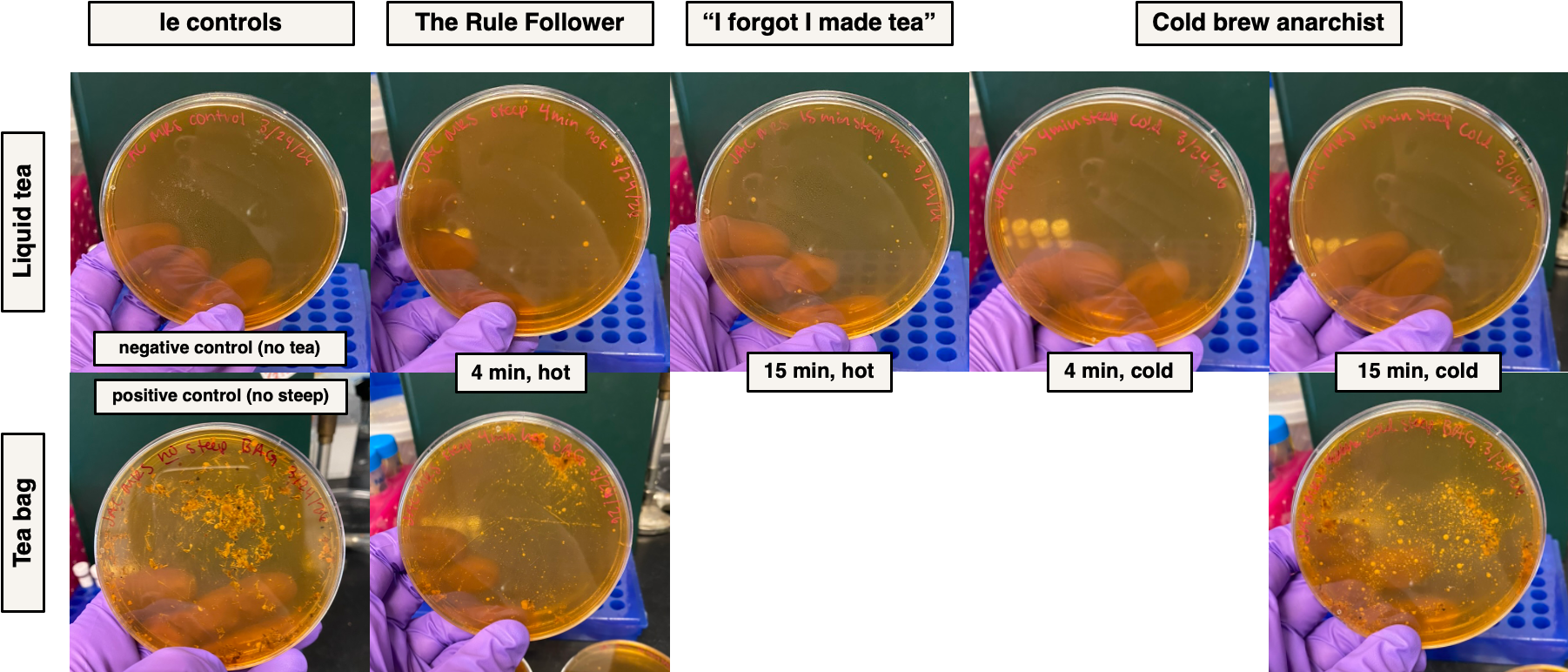
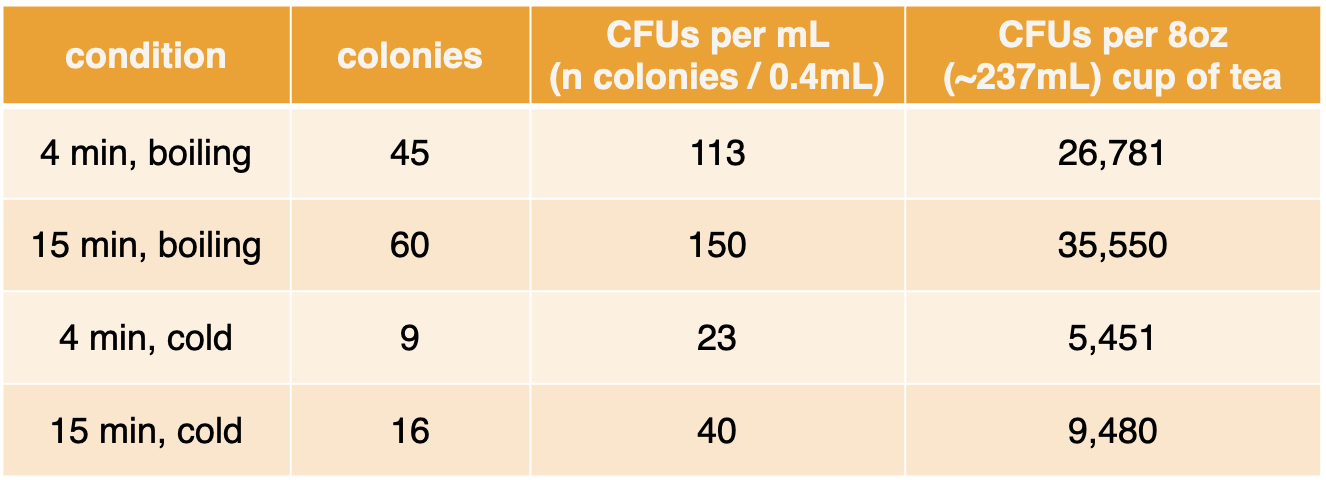
Because I knew the volume of tea I had put on each plate, I could calculate a standard measurement of bacterial density: colony-forming units (CFUs) per milliliter. Contradictory to my expectations, I saw a five-fold increase in colonies from the tea steeped in boiling water relative to the tea steeped in cold water for the four-minute condition. I saw the same pattern in the fifteen-minute condition, with a nearly four-fold increase in boiling vs cold.
Before I could draw any conclusions, I needed to know, for sure, that these colonies were Bacillus coagulans. The most robust way to check is by sequencing their DNA, but sequencing is expensive. A simpler, cheaper way to check is with PCR, which amplifies small regions of DNA unique to a species. I downloaded the BC30 genome and selected two regions of its genome that didn’t match other species in the NCBI database. Using Primer3, I generated two pairs of PCR primers, short stretches of DNA to bind to either side of my region of interest.
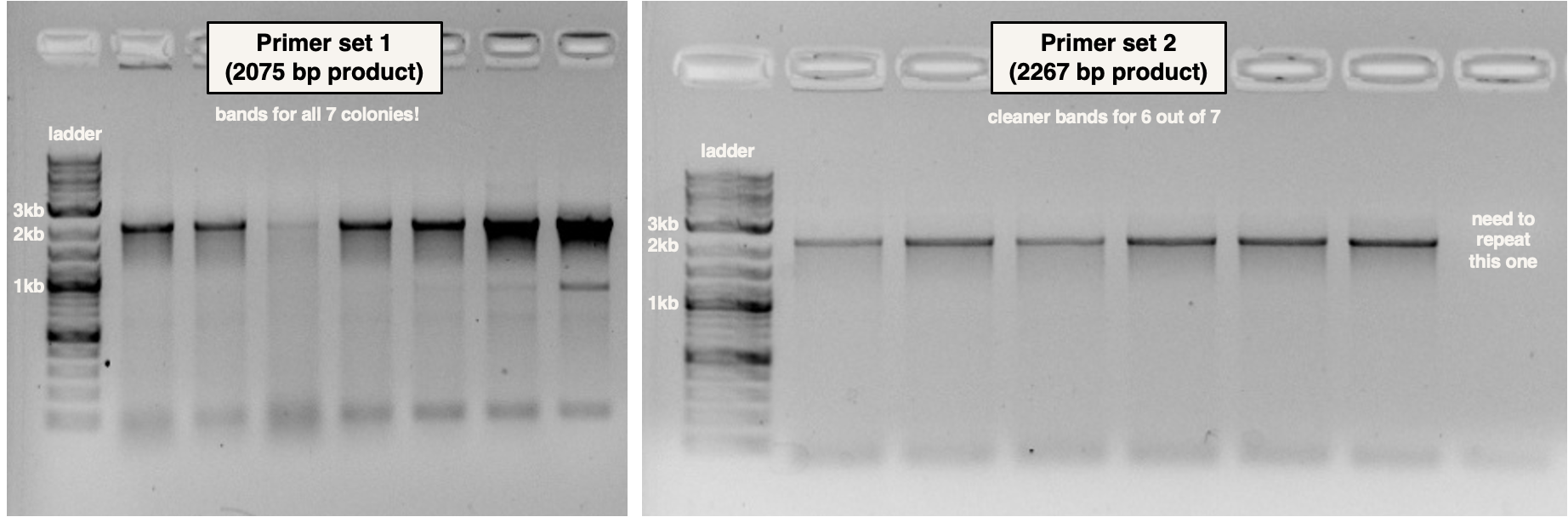
I picked the largest colony I could see from each plate (seven total), suspended the cells in a small volume of water, and set up standard colony PCR reactions. The heat during the reaction bursts the cells, making the DNA available for amplification. The completed reaction was run through a porous gel with an electric current and visualized with UV. If I saw bands on the gel for both primer sets, from totally different parts of the BC30 genome, I could be confident that this was, in fact, BC30.
I loaded the gel into the imager and hit run. There, in black relief against the grey background of the gel, were my bands.
Bigelow knew something I didn’t6. It turns out that BC30, like many of its relatives, is a spore-forming bacterium. When starved of nutrients, Bacillus coagulans divides asymmetrically, packing its basic cellular information into a spore with a thick protective coat. These spores are resistant to dessication, nutrient starvation, radiation, chemical disinfectants and extreme heat. It was these spores that were in the tea bag — spores that are perfectly comfortable being steeped in boiling water.
Like the seeds of plants, when the spores find themselves in favorable conditions for growth – say, on an MRS agar plate at a balmy 37oC – they germinate back into actively growing cells. This is the premise of their ability to function as a probiotic. The spores are dormant and shelf-stable in a tea bag, or any of the thousand products advertised to contain BC30, and will, in theory, germinate upon arrival in the GI tract, where they can exert some sort of effect on the host that consumed them.
To produce spores at scale, manufacturers grow bacteria in vats of nutrient-rich broth. If the nutrients are not replenished, the bacteria eventually start to starve, triggering the sporulation process. Around 24 hours later, the bacterial broth is treated with enzymes to kill any remaining, non-sporulated cells. The mixture is concentrated, washed with water, and finally, in a fantastic twist of irony, pasteurized.
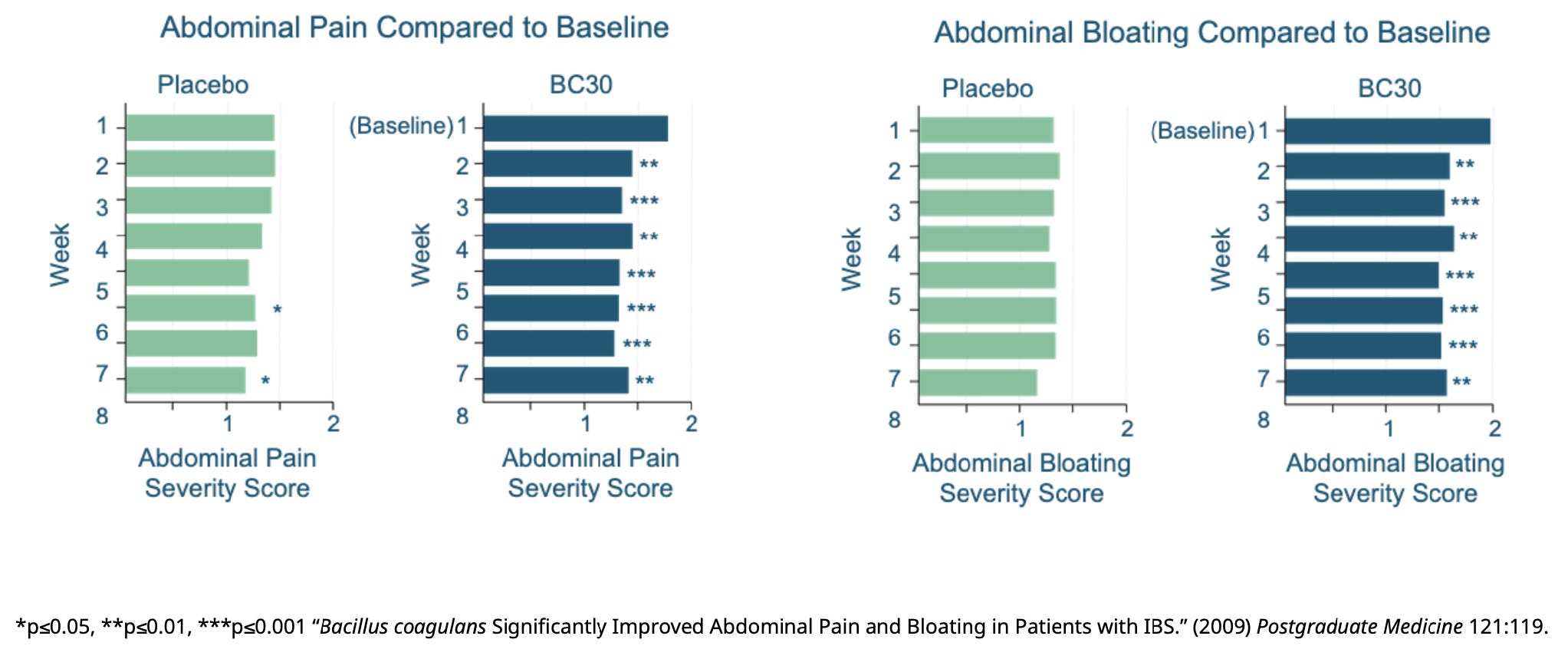
The pitch for BC30 is that it improves “digestive health” and “protein absorption.” The reported endpoints for digestive health on BC30’s website are reductions in bowel movement frequency, abdominal pain and abdominal bloating in adults with IBS. In the study promoted on the site, the baseline for the placebo group for abdominal pain and bloating is, mysteriously and respectively, 12.5% and 30% higher than the baseline for the BC30 treatment group. The placebo group experienced no change in severity scores over the subsequent course of treatment, while the BC30 group dropped to placebo levels after a week and stabilized.
For one of the protein absorption studies, there is a small but statistically significant difference in amino acid levels in the blood, including when BC30 is paired with another one of its parent company’s products, a “nutritional milk protein concentrate” called Ultranor.
If these results hold, they beg the question -- could a product like Bigelow’s probiotic tea be able to produce these beneficial effects? Most of the clinical trials I could find, including the IBS study above, dosed people daily over the course of one to eight weeks with 1 billion CFUs (spores) of BC30. Per my calculations, a properly steeped cup of probiotic tea yields around 30,000 CFUs: 0.003% of the clinically tested dose.
Granted, I am one person and this is one experiment. But there are independent, conflicting reports on whether BC30 survives the GI tract at all. One study suggests that Bacillus probiotics don’t make it, while another reports about half of the initial dose of spores surviving transit through an artificial human gut system. Other research suggests that the effect of the probiotic is not even due to the cells coming back to life, but due to an immune response against the dormant or vegetative cells.
These observations have consequences for consumers being parted from their money by unsubstantiated health claims. But they are interesting observations in their own right. Sporulating organisms’ imperviousness to heat, while useful for commercial biotech applications, causes problems for the food industry. The food-poisoning agent Bacillus cereus is a species normally found in the soil. It can release heat-resistant toxins if it multiplies in food, and live bacteria can produce toxins when they reach the small intestine. Even pasteurized milk spoils eventually as heat-resistant spores, mostly soil Bacillus, begin to multiply.
Bacillus coagulans is also a soil bacterium by nature7, and not a typical resident of the community of microbes in our gut (called the gut microbiome). It was discovered in 1915, in canned milk that had spoiled and coagulated. In spite of its origins, BC30 seems inert as a pathogen, and reports of it causing infection are vanishingly rare. BC30’s safety track record is remarkable.
But safety is only the first step on the quest to use probiotics for good. New probiotic companies like Pendulum and Seed market the fact that they are backed by clinical trial data – Pendulum for blood sugar control in Type II diabetes, and Seed for gas, bloating and regularity in healthy adults. The backbones of Pendulum and Seed’s products are organisms found more commonly in the gut, and, interestingly, both companies focus on multi-species products, dosing patients with miniature microbial communities.
One focus of my PhD lab is on abnormal pathogenic behavior of normally harmless bacterial residents of the gut, most commonly in people who are already quite sick. While unhappy microbiomes can be unhappy in their own way, we do not have a consensus on what a “healthy” gut microbiome looks like, either. In collaboration with a continent-wide consortium in Africa, our lab helped catalogue the species found in healthy adult women across the continent. We found over 1,000 new species relative to what had been previously described in studies focused on Western countries.
Companies trying to introduce targeted combinations of microbes into the gut are thus forever shooting at a moving target. Outside of specific indications for GI infections, determining whether to give (or take) a probiotic is a grey area. And for the common GI complaints focused on by the probiotic market, targeting the microbiome with additional organisms may not be the answer at all. Rather, by understanding how bacteria work together in the microbiome, solutions may favor changing the metabolic environment of the gut to drive the formation of species-agnostic “guilds” that perform specific functions, likely via dietary interventions.
I never get tired of growing bacteria. For a colony to be visible on a plate, it consists of at least a million, often closer to a billion, individual cells. Learning how bacteria grow and adapt does not diminish the sense of wonder I feel when I observe them – it only enhances it. I like to think this same sense of wonder animated the scientist who first cultured Bacillus coagulans out of canned milk that had spoiled. And I have to imagine some mixture of wonder, awe and horror kept the Random Hall Milk alive for twenty-seven years.
The next Louis Pasteur could be a lactose-intolerant undergrad, or a procrastinating PhD student. It could be you. Pausing to look a little longer, to ask why the world is the way it is – this is how we upend assumptions of what is valuable. What is worth looking at. Because in the end, trash is in the eye of the beholder.