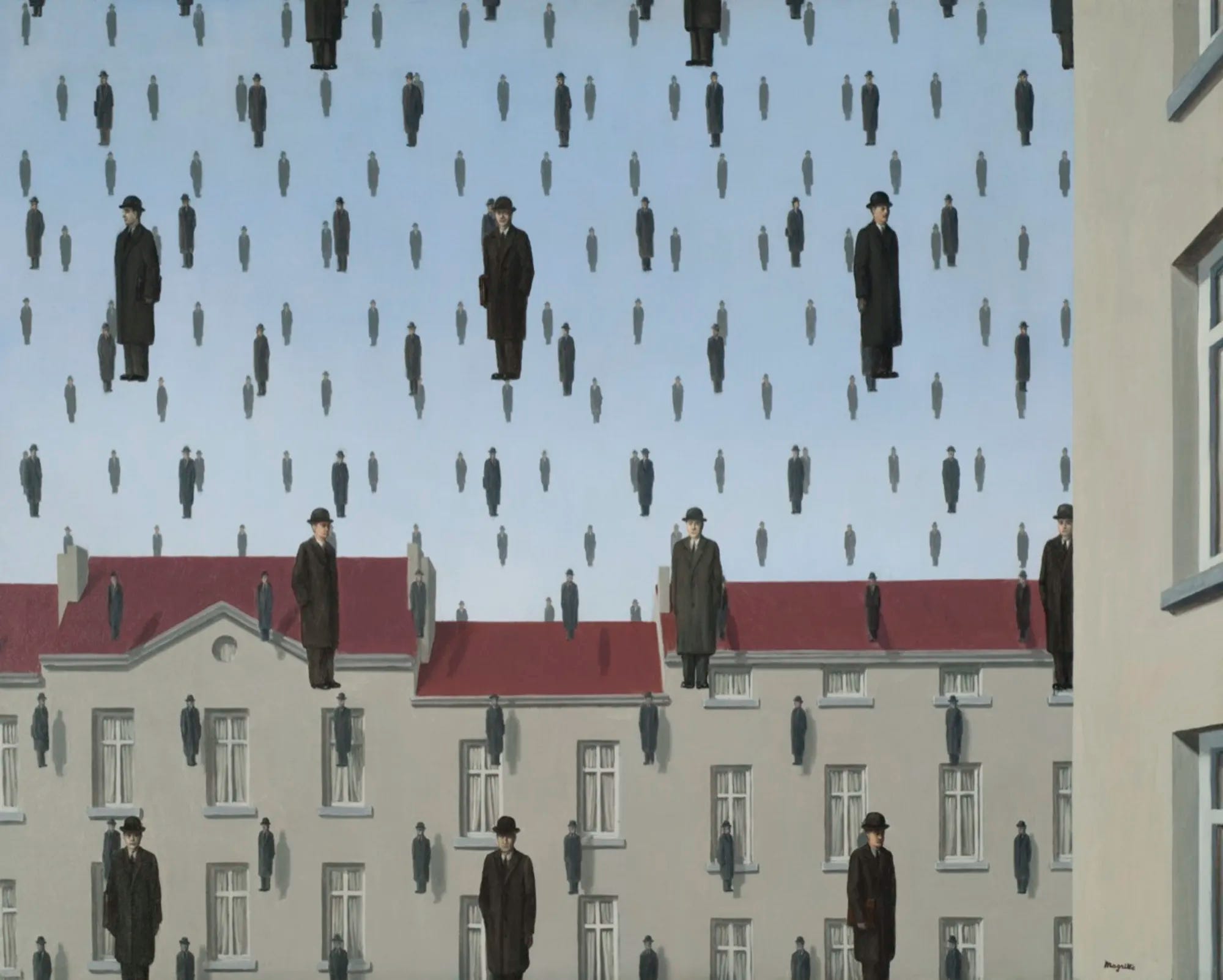
A specter is haunting the left—the specter of its own class interest.
All the powers of the old critique have entered into a holy alliance to avoid this recognition: the tenured professor and the nonprofit director, the foundation program officer and the diversity consultant, the public health official and the senior policy analyst.
Where is the critic who has not been credentialed by the institutions they claim to oppose? Where is the radical who does not draw salary from the university, the NGO, the administrative state?
It is high time that the professional-managerial class meet this charge openly, in the face of the whole world, and answer it with a materialist analysis of their own position.
The history of all hitherto existing society is the history of class struggles.
Freeman and slave, patrician and plebeian, lord and serf, guild-master and journeyman, bourgeois and proletarian—in a word, oppressor and oppressed, stood in constant opposition to one another.
And now? A new class has emerged, and it refuses to name itself.
The bourgeoisie, wherever it has got the upper hand, put an end to all feudal, patriarchal, idyllic relations. It drowned religious ecstasy and chivalric enthusiasm in the icy water of egotistical calculation. It resolved personal worth into exchange value.
But the bourgeoisie has itself been superseded. Not by the proletariat—that revolutionary subject was dissolved, bought off, fragmented, surveilled into impotence. No. The bourgeoisie has been superseded by its own functionaries: the managers, the administrators, the experts, the credentialed.
This class owns no factories. It holds no land. Its property is the credential itself—the diploma, the license, the certification, the institutional affiliation. These are the new means of production, for in the modern economy, nothing can be produced, sold, taught, built, or healed without their permission.
The credentialed class controls access. This is its power, and this is its extraction.
What is a credential?
It presents itself as a certification of knowledge. But let us look at it materialistically.
The credential is a barrier to entry. It is the bottleneck through which labor must pass to access the better positions in the economy. It is artificial scarcity, imposed and maintained by those who already hold credentials.
Who administers the credentialing? The credentialed themselves. Who validates new knowledge? Those whose authority rests on the old knowledge. Who decides what counts as expertise? The experts.
This is not meritocracy. This is guild monopoly dressed in the language of science.
The medieval guild restricted entry to protect the income of its members. It wrapped this interest in the language of “quality” and “standards.” The modern credentialing body does precisely the same—but it has learned to call its gatekeeping “rigor” and its monopoly “professionalization.”
The lawyer credentialed by the bar, the doctor credentialed by the medical board, the professor credentialed by the academy—each sits behind a barrier they themselves maintain, extracting rents from all who must pass through.
But this is only the most visible extraction. The deeper extraction is in decision rights.
The credentialed class has claimed the authority to make decisions for society—and it has made this claim not through force, not through election, not through ownership, but through the ideology of expertise.
The ideas of the ruling class are in every epoch the ruling ideas.
The class which has the means of material production at its disposal has control at the same time over the means of mental production.
The bourgeoisie ruled through the ideology of property rights, contract, and market freedom. These were presented not as the interests of a class but as universal reason, natural law, the way of progress.
The professional-managerial class rules through the ideology of expertise. This presents itself not as the interest of a class but as knowledge itself—neutral, objective, beyond politics.
But let us examine this “neutrality.”
Who determines what counts as knowledge? The knowledge-producing institutions: the university, the research body, the think tank—all staffed by the credentialed class.
Who determines what counts as a valid question? The same institutions. Questions that challenge their authority are “anti-intellectual,” “populist,” “conspiracy.”
Who determines who may speak with authority? The credentialing bodies—which is to say, the class itself.
This is not knowledge. This is ideology. It is the class interest of the credentialed dressed up as the universal interest of humanity.
The priest said: “God speaks through me.” The bourgeois said: “Reason speaks through the market.” The expert says: “Science speaks through institutions.”
In each case, a particular class claims to be the vehicle of a universal truth—a truth that, by happy coincidence, requires deference to that class.
Let us be materialists. Let us ask: what is the economic base of this ideological superstructure?
The professional-managerial class is employed by:
The state. The vast administrative apparatus—federal agencies, regulatory bodies, public health authorities, the diplomatic corps, the intelligence services, the educational bureaucracy. Millions of credentialed workers, insulated from market discipline, drawing salaries from tax revenue.
The nonprofit sector. The NGOs, the foundations, the advocacy organizations, the international bodies. A shadow state, funded by tax-exempt donations, accountable to no electorate.
The university. Not merely teaching but a vast administrative apparatus—deans, directors, coordinators, counselors, compliance officers—wrapped around a shrinking core of instruction.
The corporate HR and compliance apparatus. The extension of the credentialed class into private enterprise, justified by regulation and the threat of litigation.
What do all these have in common?
They are insulated from the market test.
The capitalist, for all his exploitation, faced a discipline: produce what people will buy, or perish. The market was brutal, but it provided feedback. Failure had consequences.
The professional-managerial class has freed itself from this discipline. The state does not face bankruptcy. The nonprofit does not need customers—it needs donors and grants, which is to say, it needs to please other members of the credentialed class. The university does not sell education; it sells credentials, a bottleneck it controls.
This class has achieved what the bourgeoisie never could: extraction without accountability.
Here we discover the secret of the credentialed class’s reproduction.
The bourgeoisie lived by profit, and profit required production. It had to make things—things people would buy. Its interest was therefore tied, however exploitatively, to material production.
What does the credentialed class produce?
It produces problems.
More precisely: it produces interpretations of the world that require credentialed intervention.
Resistance to its authority becomes a pathology requiring treatment—”misinformation,” “denialism,” “populism,” “extremism.” Each diagnosis requires a program, a bureau, a grant, a study, a coordinator.
Every domain of life is reinterpreted as a domain of expertise: child-rearing, diet, relationships, speech, thought itself. What was once common sense is revealed to be “problematic,” requiring expert revision.
The credentialed class lives by expanding the domain of credentialed authority. Its material interest is the medicalization of life, the technicization of politics, the professionalization of everything.
This is why its solutions never solve. A solved problem is a eliminated budget line. A managed problem is a permanent revenue stream.
The bourgeoisie ruled through the law of contract and property. The professional-managerial class rules through procedure.
Procedure presents itself as neutral—mere administration, mere process. But procedure is power.
Who writes the procedures? The credentialed.
Who interprets the procedures? The credentialed.
Who adjudicates violations of procedure? The credentialed.
The citizen who confronts the administrative state confronts not a person but a process. There is no one to argue with, no one to persuade, no one to hold accountable. There is only the form, the requirement, the regulation, the guideline.
This is domination perfected. The old ruling classes had faces—the king, the lord, the boss. They could be identified, resisted, overthrown. The new ruling class has no face. It has org charts. It has best practices. It has the procedure.
Try to vote against the procedure. Try to elect a representative who will abolish it. You will find that the procedure persists across administrations. It is administered by permanent staff who serve no elected master. It is mandated by regulations written by agencies whose commissioners you did not choose. It is enforced by bodies—international, transnational, nongovernmental—that no ballot touches.
This is what they call “our democracy.” Their democracy. Democracy for the credentialed.
Every ruling class develops an ideology that justifies its rule.
The feudal lord ruled by divine right and noble blood. The bourgeois ruled by property right and market efficiency. The credentialed class rules by complexity.
“The issues are too complex for ordinary people to understand.”
“We need expert guidance.”
“You can’t just let people decide—they don’t have the training.”
This is not an argument. It is a mystification.
The priest said the scriptures were too complex for the laity. The Confucian bureaucrat said governance was too complex for the peasant. Now the expert says society is too complex for the citizen.
In each case, complexity is invoked to exclude. In each case, the complexity is produced by the excluding class. The regulations are complex because regulators write complex regulations. The guidance is complex because experts issue complex guidance. The systems are complex because administrators build complex systems.
And then this produced complexity is cited as the reason ordinary people cannot be trusted to govern themselves.
The credentialed class creates the labyrinth and then sells itself as the only guide.
But surely—the leftist will object—we criticize power. We deconstruct structures of domination. We speak for the marginalized.
Let us examine this critique materialistically.
What does the credentialed left critique?
Traditional authority (the family, the church, the nation)
The old bourgeoisie (particularly its cultural attitudes)
Racial and gender hierarchies as they existed in the past
Popular beliefs and preferences (dismissed as “false consciousness,” “phobias,” “denialism”)
What does the credentialed left not critique?
The credential system itself
The administrative state
The NGO-foundation complex
The authority of expertise as such
Its own class position
The critique is exquisitely selective. It demolishes every form of authority except the authority of the credentialed. It deconstructs every justification for power except the justification by expertise.
This is not critique. This is class warfare disguised as critique—the professional-managerial class clearing away its competitors.
The old bourgeoisie claimed to speak for “liberty” while pursuing profit. The credentialed class claims to speak for “the marginalized” while pursuing positional advantage. In both cases, a class interest masquerades as a universal interest.
The proletariat was to be the negation of the bourgeoisie—the class whose liberation would be universal liberation, because it had nothing to lose but its chains.
What is the negation of the credentialed class?
It cannot be found in the old categories. It is not the proletariat—the proletariat has been decomposed, surveilled, medicated, and absorbed. It is not the bourgeoisie—the bourgeoisie has been subordinated to management and compliance.
The negation must come from those who are excluded by the credential itself:
The competent who are not certified. The knowledgeable who are not degreed. The wise who are not credentialed. The skilled who are not licensed.
It must come from those who bear the consequences of expert failure:
The communities managed into dysfunction. The patients harmed by approved treatments. The workers displaced by credentialed policy. The citizens governed without consent.
And it must come from within—from those credentialed workers who recognize their own class position and refuse it:
The professor who rejects the guild. The doctor who breaks the monopoly. The lawyer who opens the gate.
The contradiction of the credentialed class is this: it justifies itself by knowledge, but it suppresses knowledge that threatens its position. It claims science, but it cannot tolerate scientific challenge to its authority. It preaches criticism, but it cannot bear to be criticized.
This contradiction will be its undoing.
Workers and non-workers of the world—you have been told that you are ignorant, that the matters of your own lives are too complex for your understanding, that you must defer to those who know better.
You have been told this by a class that lives by telling you this.
You have been managed, administered, surveilled, nudged, guided, and governed by people who bear no consequence for their failures and take no responsibility for your suffering.
You have been taught to distrust your own experience, your own traditions, your own communities, your own judgment—and to trust instead in credentials you cannot obtain, institutions you cannot access, and experts you cannot question.
This is not liberation. This is domination by another name.
The old rulers said: “God wills it.” The bourgeois rulers said: “The market wills it.” The new rulers say: “The science says.” In each case, a human class hides behind an inhuman authority.
Pull back the curtain.
Behind “the science” are scientists with careers, grants, and interests. Behind “the institution” are administrators with salaries, pensions, and positions. Behind “the procedure” are the people who wrote the procedure.
They are not above you. They are not neutral. They are a class—and classes pursue their interests.
You do not need their permission to know. You do not need their credential to be competent. You do not need their validation to be wise.
The credentialed have no authority that you do not give them.
Stop giving it.
The philosophers have only interpreted the world, in various ways. The experts have only managed the world, in their own interests.
The point is to reclaim it.
Scribbled in the reading room of the British Museum, or perhaps in a dream of what might have been said, had the old critic lived to see the new ruling class.