Today we will
- Look at why we need package management in Go
- Introduce Go modules
- Work through a number of examples
- See how you can get started using modules
- Contribute back to the Go project in the process
Why do we need package management in Go?
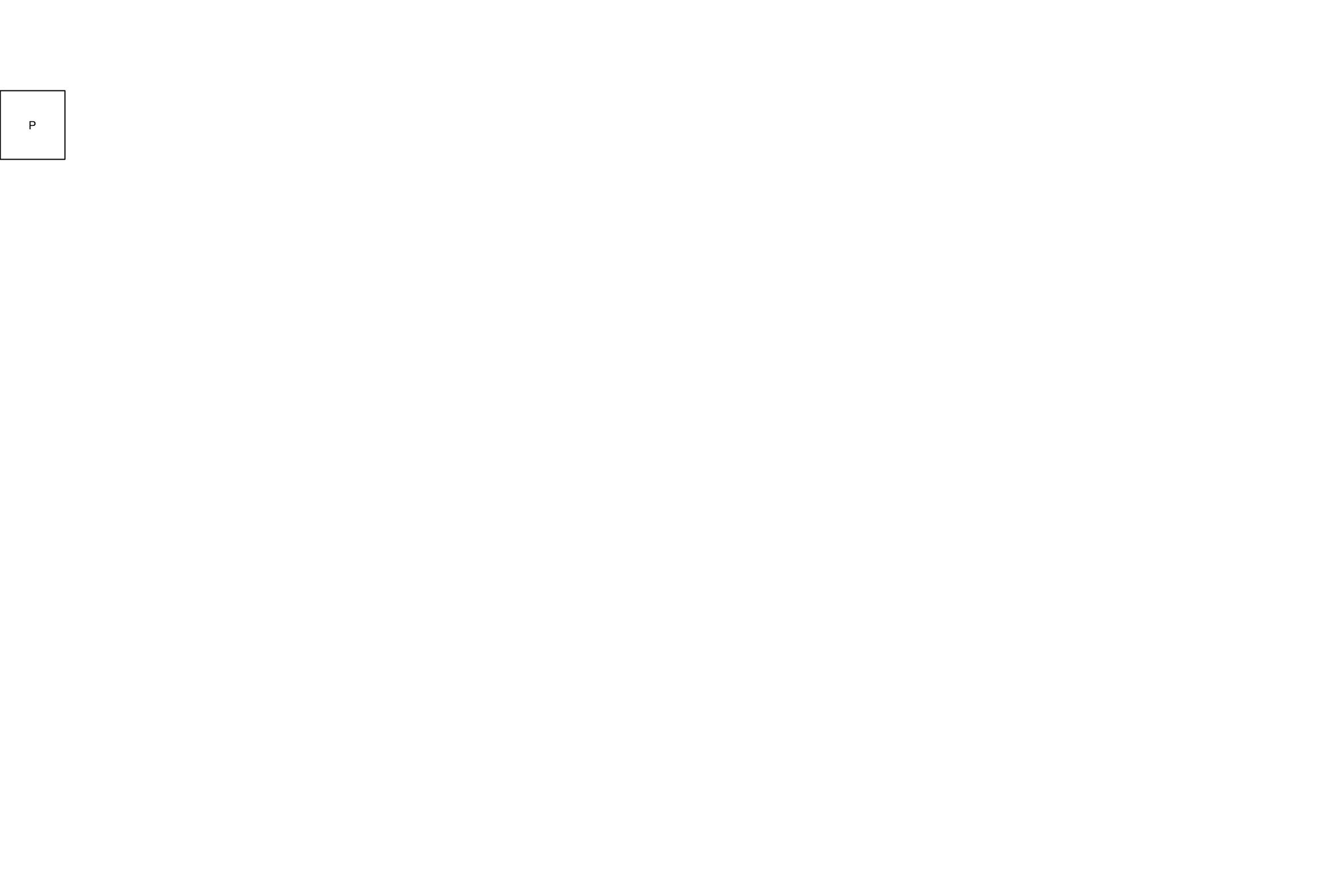
3t0: we start to write program P
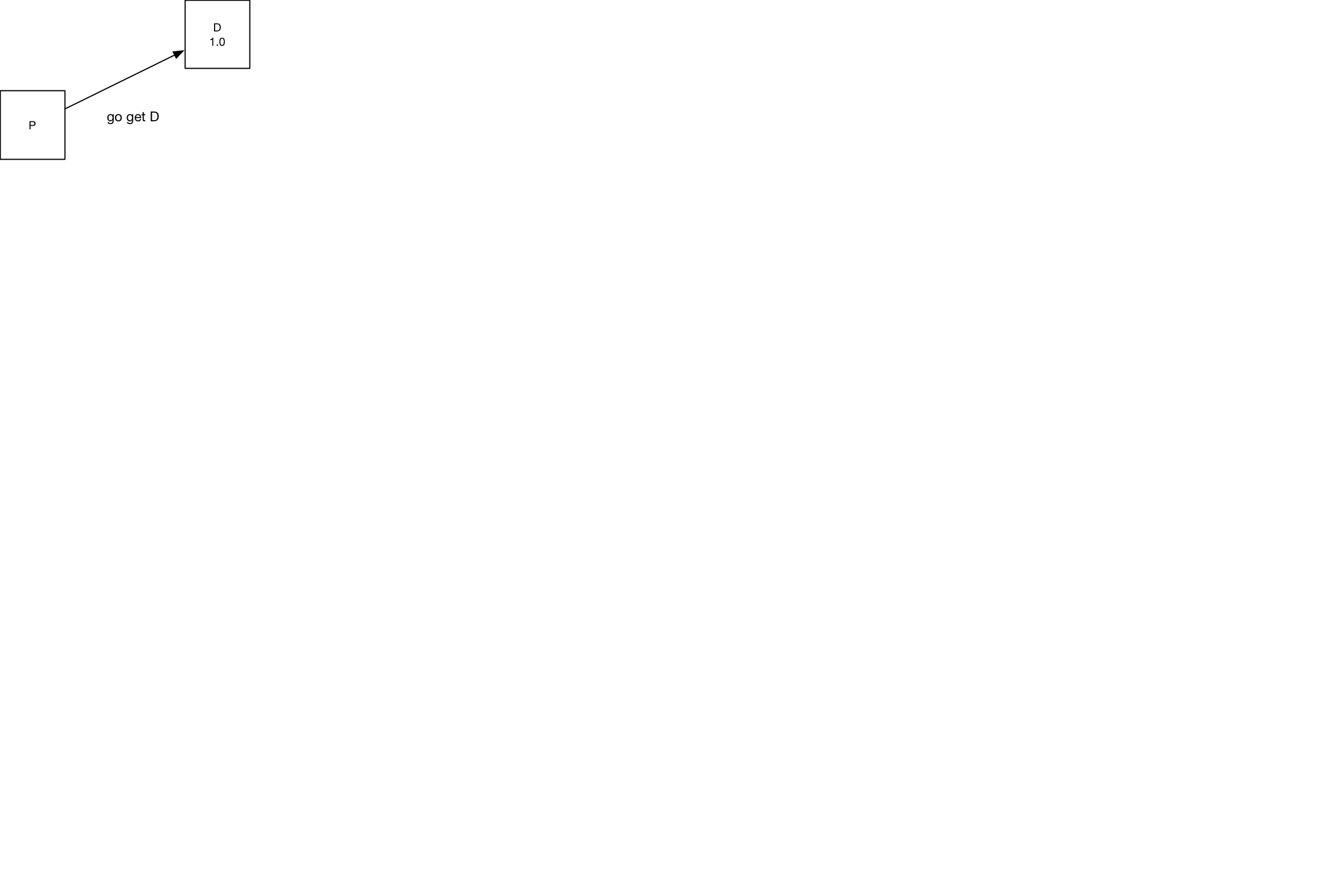
t1: we add a dependency on D
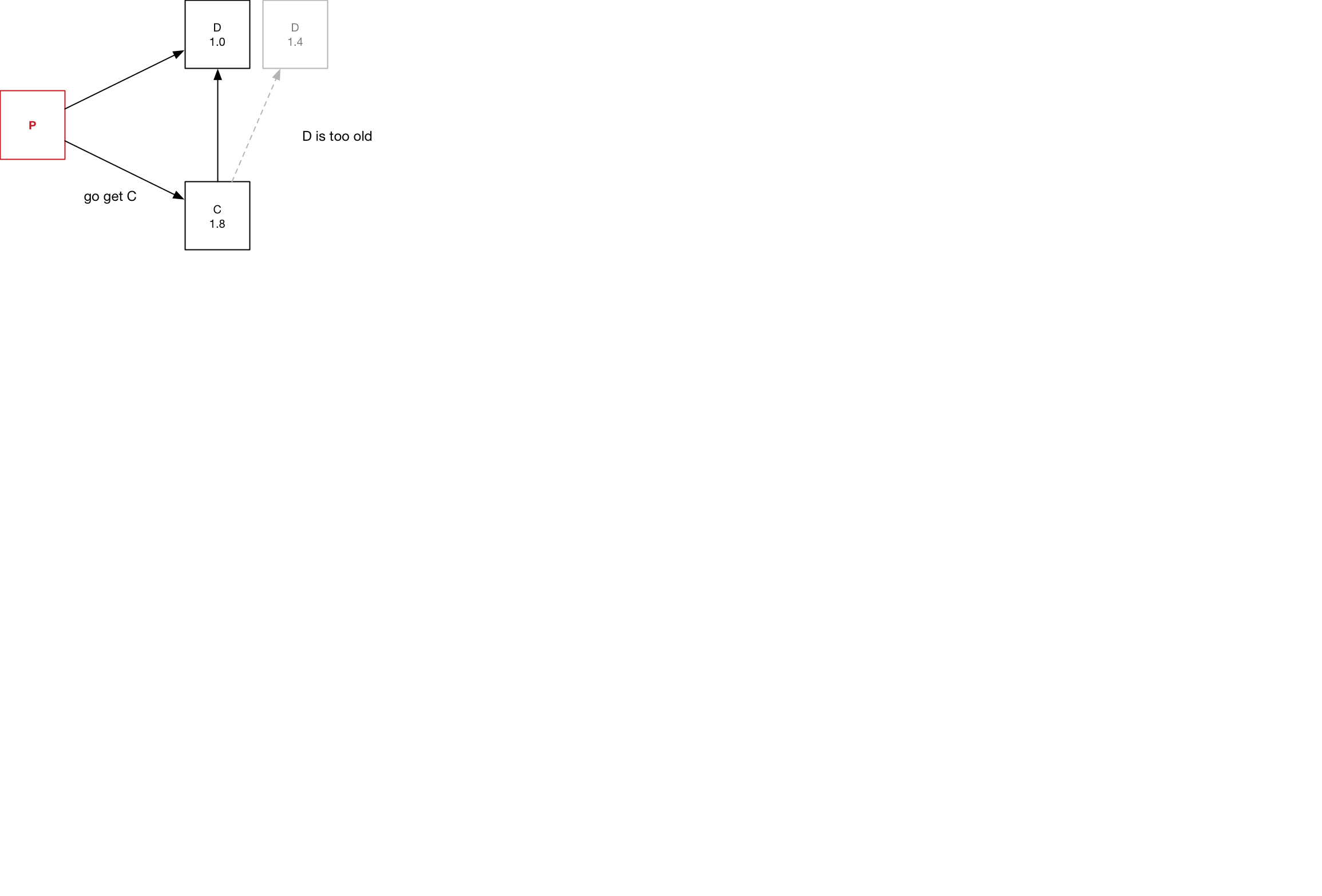
t2: we add a dependency on C
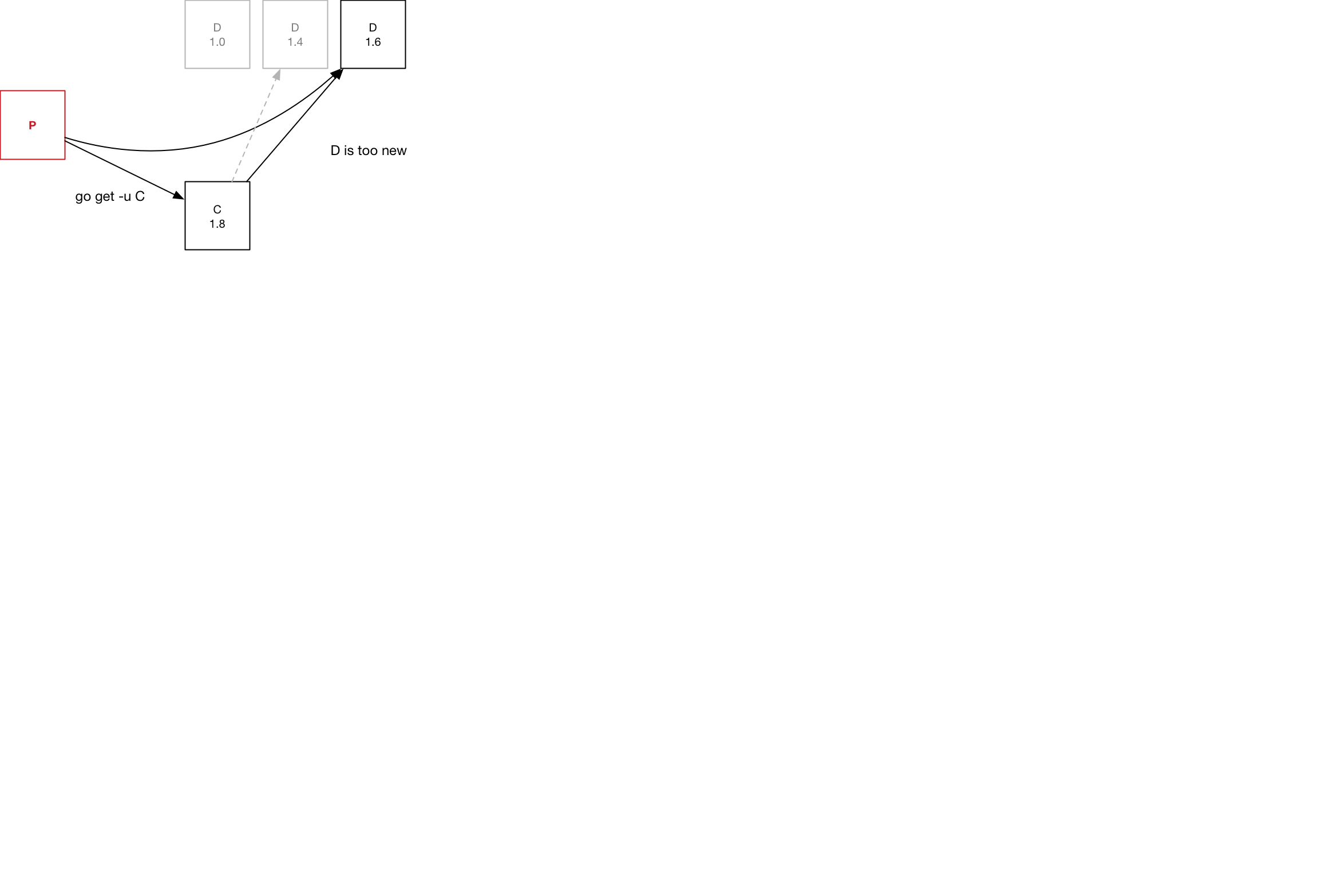
t3: we update C (and its dependencies)
History
- Various tools/approaches to help specify version requirements
- GOPATH, goven, godeps, godep, gopkg.in, glide, gb, govendor, vendor dir, dep
- All approaches vary somewhat
- Cannot create other version-aware tools
Introducing Go modules
9Go 1.11 introduces Go modules
- A module is a collection of related Go packages
- Modules are the unit of source code interchange and versioning
- The go command has direct support for working with modules
- Modules replace the old GOPATH-based approach to specifying which source files are used in a given build
The principles of versioning in Go
Compatibility
Import compatibility rule - if an old package and a new package have the same import path, the new package must be backwards-compatible with the old package
Repeatability
The result of a build of a given version of a package should not change over time
Cooperation
We must all work together to maintain the Go package ecosystem. Tools cannot work around a lack of cooperation.
11Semantic Import Versioning

Worked Example 1: creating a module
13Example 1: creating a module
$ mkdir /tmp/hello
$ cd /tmp/hello
$ go mod init github.com/myitcv/hello
go: creating new go.mod: module github.com/myitcv/hello
$ ls
go.mod
$ cat go.mod
module github.com/myitcv/hello
Example 1: adding a dependency
$ cat hello.go
package main

import (
    "fmt"
    "rsc.io/quote"
)

func main() {
    fmt.Println(quote.Hello())
}
$ go build
go: finding rsc.io/quote v1.5.2
go: downloading rsc.io/quote v1.5.2
go: finding rsc.io/sampler v1.3.0
go: finding golang.org/x/text v0.0.0-20170915032832-14c0d48ead0c
go: downloading rsc.io/sampler v1.3.0
go: downloading golang.org/x/text v0.0.0-20170915032832-14c0d48ead0c
$ ./hello
Hello, world.Example 1: examine dependencies
$ cat go.mod
module github.com/myitcv/hello

require rsc.io/quote v1.5.2
$ go list -m all
github.com/myitcv/hello
golang.org/x/text v0.0.0-20170915032832-14c0d48ead0c
rsc.io/quote v1.5.2
rsc.io/sampler v1.3.0
Example 1: rebuild
$ go build
$ ./hello
Hello, world.
$ LANG=fr ./hello
Bonjour le monde.
Example 1: upgrading modules
$ go list -m -u all
go: finding rsc.io/sampler v1.99.99
go: finding golang.org/x/text v0.3.0
github.com/myitcv/hello
golang.org/x/text v0.0.0-20170915032832-14c0d48ead0c [v0.3.0]
rsc.io/quote v1.5.2
rsc.io/sampler v1.3.0 [v1.99.99]
$ go get -u golang.org/x/text
go: downloading golang.org/x/text v0.3.0
$ cat go.mod
module github.com/myitcv/hello

require (
    golang.org/x/text v0.3.0 // indirect
    rsc.io/quote v1.5.2
)
$ go list -m all
github.com/myitcv/hello
golang.org/x/text v0.3.0
rsc.io/quote v1.5.2
rsc.io/sampler v1.3.0Example 1: testing
$ go test -short all
?       github.com/myitcv/hello    [no test files]
ok      fmt    0.120s
ok      rsc.io/quote    0.011s
ok      errors    0.017s
ok      io    0.031s
ok      math    0.018s
ok      os    1.208s
ok      reflect    0.402s
ok      strconv    0.657s
...
Example 1: module packages
$ go test rsc.io/quote/...
ok      rsc.io/quote    0.003s
--- FAIL: Test (0.00s)
    buggy_test.go:10: buggy!
FAIL
FAIL rsc.io/quote/buggy 0.001sExample 1: upgrade all modules
$ go get -u
go: downloading rsc.io/sampler v1.99.99
$ cat go.mod
module github.com/myitcv/hello

require (
    golang.org/x/text v0.3.0 // indirect
    rsc.io/quote v1.5.2
    rsc.io/sampler v1.99.99 // indirect
)Example 1: retest
$ go test -short all
?       github.com/myitcv/hello    [no test files]
ok      fmt    (cached)
--- FAIL: TestHello (0.00s)
    quote_test.go:19: Hello() = "99 bottles of beer on the wall, 99 bottles of beer, ...", want "Hello, world."
FAIL
FAIL    rsc.io/quote    0.015s
ok      errors    (cached)
ok      io    (cached)
ok      math    (cached)
...Example 1: check behaviour
$ go build
$ ./hello
99 bottles of beer on the wall, 99 bottles of beer, ...
Example 1: downgrading
$ go list -m -versions rsc.io/sampler
rsc.io/sampler v1.0.0 v1.2.0 v1.2.1 v1.3.0 v1.3.1 v1.99.99
$ go get rsc.io/sampler@v1.3.1
go: finding rsc.io/sampler v1.3.1
go: downloading rsc.io/sampler v1.3.1
$ go list -m all
github.com/myitcv/hello
golang.org/x/text v0.3.0
rsc.io/quote v1.5.2
rsc.io/sampler v1.3.1
$ cat go.mod
module github.com/myitcv/hello

require (
    golang.org/x/text v0.3.0 // indirect
    rsc.io/quote v1.5.2
    rsc.io/sampler v1.3.1 // indirect
)Example 1: retest post downgrade
$ go test -short all
?       github.com/myitcv/hello    [no test files]
ok      fmt    (cached)
ok      rsc.io/quote    0.014s
ok      errors    (cached)
ok      io    (cached)
ok      math    (cached)
ok      os    0.716s
ok      reflect    (cached)
ok      strconv    (cached)
...
Example 1: fork quote
$ git clone https://github.com/rsc/quote /tmp/quote
Cloning into '/tmp/quote'...
$ cd /tmp/quote
$ quoteVer=$(cd /tmp/hello && go list -m -f "{{.Version}}" rsc.io/quote)
$ echo $quoteVer
v1.5.2
$ git checkout -b quote_fix $quoteVer
Switched to a new branch 'quote_fix'
Edit quote.go.
Example 1: use local changes
$ cd /tmp/hello
$ go mod edit -replace 'rsc.io/quote=../quote'
$ go list -m all
github.com/myitcv/hello
golang.org/x/text v0.3.0
rsc.io/quote v1.5.2 => ../quote
rsc.io/sampler v1.3.1
$ go build
$ ./hello
I can eat glass and it doesn't hurt me.
Example 1: push our local changes to remote fork
$ cd /tmp/quote
$ git remote add myitcv https://github.com/myitcv/london-gophers-quote-fork
$ git commit -a -m 'my fork'
[quote_fix 66b4fab] my fork
 1 file changed, 1 insertion(+), 1 deletion(-)
$ git push myitcv
To https://github.com/myitcv/london-gophers-quote-fork
 * [new branch]      quote_fix -> quote_fix
$ git tag v0.0.0-myfork
$ git push myitcv v0.0.0-myfork
To https://github.com/myitcv/london-gophers-quote-fork
 * [new tag]         v0.0.0-myfork -> v0.0.0-myfork
Example 1: use remote version
$ cd /tmp/hello
$ go mod edit -replace 'rsc.io/quote=github.com/myitcv/london-gophers-quote-fork@v0.0.0-myfork'
$ go list -m all
go: finding github.com/myitcv/london-gophers-quote-fork v0.0.0-myfork
github.com/myitcv/hello
golang.org/x/text v0.3.0
rsc.io/quote v1.5.2 => github.com/myitcv/london-gophers-quote-fork v0.0.0-myfork
rsc.io/sampler v1.3.1
$ go build
go: downloading github.com/myitcv/london-gophers-quote-fork v0.0.0-myfork
$ LANG=fr ./hello
Je peux manger du verre, ça ne me fait pas mal.
Worked Example 2: converting an existing project
30Example 2: converting an existing project
$ git clone https://github.com/juju/juju
Cloning into 'juju'...
$ cd juju
$ go mod init
go: creating new go.mod: module github.com/juju/juju
go: copying requirements from Gopkg.lock
$ go mod tidy
go: finding github.com/coreos/go-systemd v0.0.0-20160202211425-7b2428fec400
go: finding github.com/rogpeppe/fastuuid v0.0.0-20150106093220-6724a57986af
go: finding github.com/juju/gojsonschema v0.0.0-20150312170016-e1ad140384f2
go: finding github.com/dgrijalva/jwt-go v0.0.0-20160705203006-01aeca54ebda
go: finding github.com/juju/description v0.0.0-20180530031750-25349c35a6b1
go: finding github.com/juju/packaging v0.0.0-20180516203043-ba21344fff20
go: finding github.com/gosuri/uitable v0.0.0-20160404203958-36ee7e946282
go: finding github.com/hashicorp/raft v0.0.0-20180117202925-077966dbc90f
...
Much more
- Publishing modules
- Proxy support for published modules (github.com/gomods/athens)
- Tooling built atop go modules (github.com/rogpeppe/gohack)
- Full support for custom import paths
- Go submodules natively supported (mono repos)
More subcommands
Usage:

      go mod <command> [arguments]

The commands are:

      download    download modules to local cache
      edit        edit go.mod from tools or scripts
      fix         make go.mod semantically consistent
      graph       print module requirement graph
      init        initialize new module in current directory
      tidy        add missing and remove unused modules
      vendor      make vendored copy of dependencies
      verify      verify dependencies have expected content
why explain why packages or modules are neededGreat: how/where do I get started?
34Use Go 1.11rc1
- Two days ago Go 1.11rc1 was released
- Download or install
- Has module support
- Work outside GOPATH or set GO111MODULE=on inside GOPATH
go get http://golang.org/dl/go1.11rc1
go1.11rc1 download
go1.11rc1 help modules
Try out modules
- Start new projects using Go modules
- Convert existing projects
- Ask questions: golang-nuts, Gophers Slack, Stack Overflow... (github.com/golang/go/wiki/Questions)
- Report Github issues for bugs or (a lack of) docuemtation (github.com/golang/go/issues/new)
- Create experience reports (github.com/golang/go/wiki/ExperienceReports)
Success stories
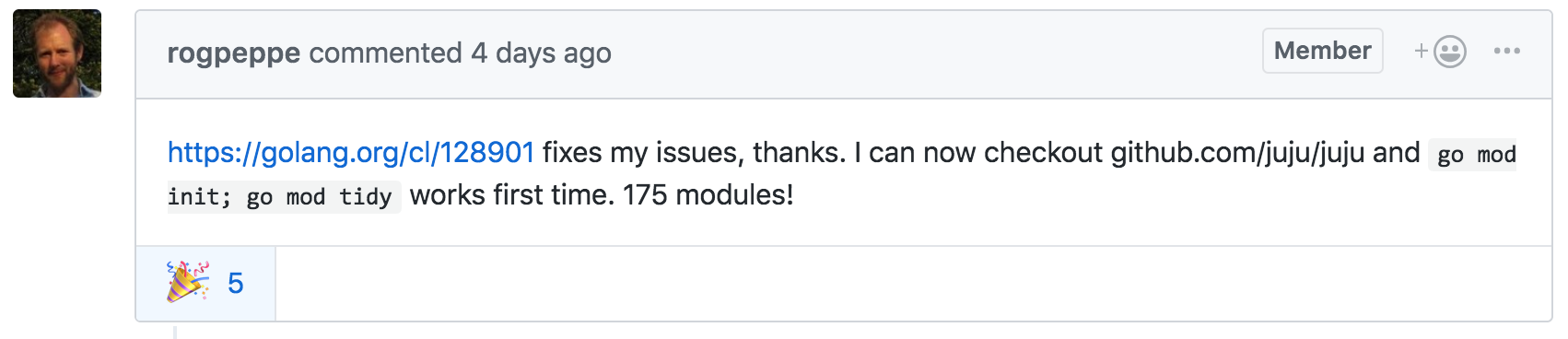
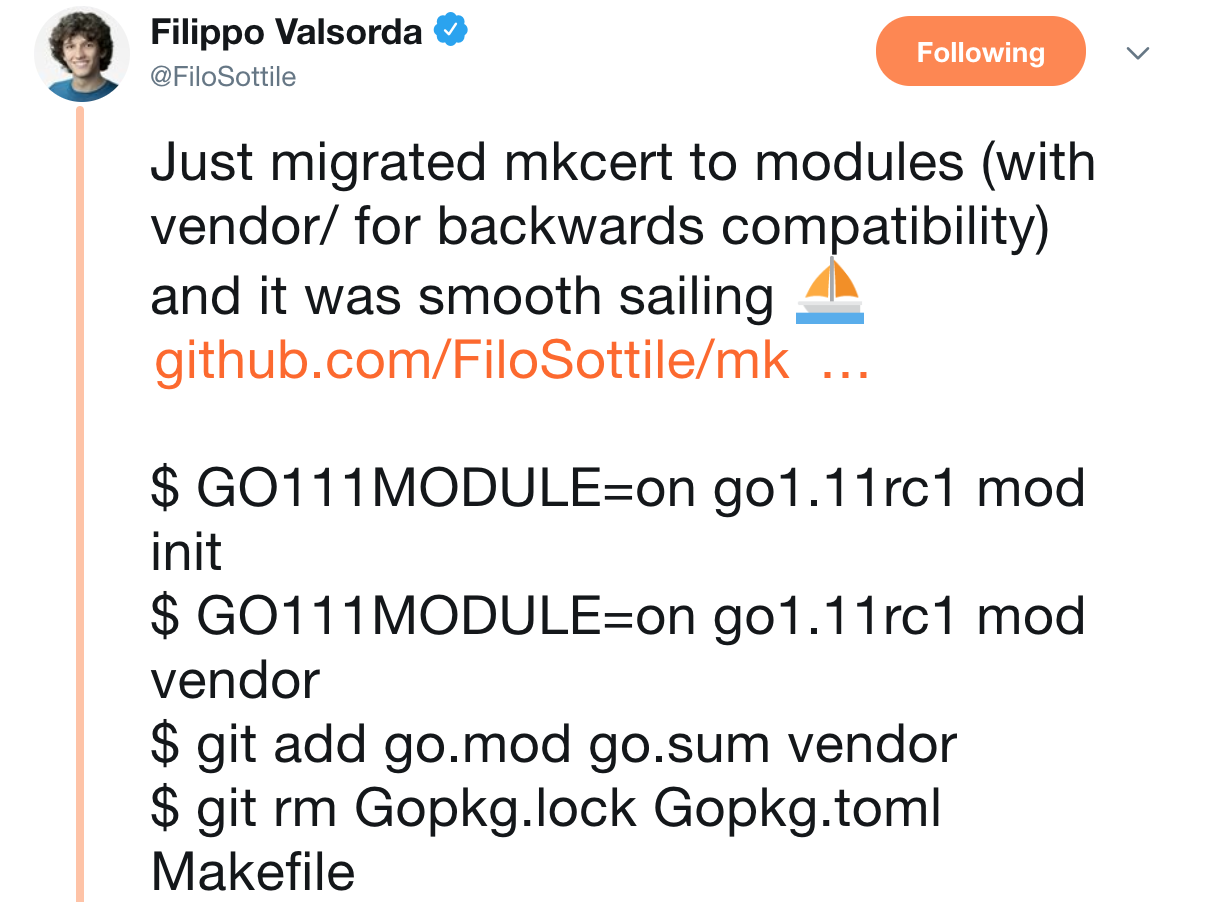
FAQ
- should we replace
depwith modules? - should we wait to start using modules?
- should we still be vendoring dependencies?
- how can we convert a
v>=2project to a Go module without breaking import paths?
Credits
- Russ Cox and Bryan Mills for their work in making Go modules happen
- Numerous people in the Go community, both inside and out of Google, who have helped to get modules to where they are today
- Daniel Martí, Roger Peppe and Axel Wagner for sharing thoughts/giving feedback on these slides and Go modules topics more broadly
Links
cmd/godocumentation (tip.golang.org/cmd/go)- Modules wiki (github.com/golang/go/wiki/Modules)
- Russ Cox's GopherCon Singapore Keynote (www.youtube.com/watch?v=F8nrpe0XWRg)
- Russ Cox's original
vgoseries (research.swtch.com/vgo)
Thank you
Use the left and right arrow keys or click the left and right
edges of the page to navigate between slides.
(Press 'H' or navigate to hide this message.)