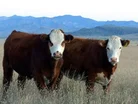
McDonald’s USA has launched the Grassland Resilience and Conservation Initiative, investing US$200m to scale regenerative ranching across 38 states
For 70 years, beef has been central to McDonald’s menu and identity.
McDonald’s USA has launched its largest regenerative agriculture investment to date to preserve
The Grassland Resilience and Conservation Initiative is McDonald’s new commitment in collaboration with the National Fish and Wildlife Foundation (NFWF), USDA’s Natural Resources Conservation Service (NRCS) and key US suppliers.
Scaling regenerative ranching across America
Over the next seven years, the initiative is set to invest more than US$200m to promote regenerative grazing, habitat restoration and water and wildlife conservation across up to 4 million acres of cattle ranches in as many as 38 states.
Through the Grassland Resilience and Conservation Initiative, participating ranchers will gain tools and technical resources to improve wildlife habitat, conserve water and enhance soil health.
These measures can strengthen supply chain resilience.
The effort includes economic incentives for ranchers adopting these practices, recognising the vital role producers play in safeguarding working lands while feeding communities.
Powering progress through cross-sector partnership
Funding partners including:
- Cargill
- Golden State Foods
- Lopez Foods
- OSI
- The Coca-Cola Company has joined McDonald’s USA in supporting NFWF.
These partners will independently award competitive grants to on-the-ground organisations assisting ranchers in implementing regenerative and wildlife-friendly practices.
“As a brand that serves more than 90% of Americans every year, we recognise the responsibility we have to help safeguard our food systems for long-term vitality,” says Cesar Piña, McDonald's Senior Vice President and Chief Supply Chain Officer, North America.
“Through our support of this initiative, McDonald’s USA is demonstrating the power of partnership between the public and private sectors and that feeding the population and stewarding our natural resources can coexist.”
With NRCS and conservation partners, the initiative aims to help improve grazing management, restore grasslands and other ecosystems, safeguard water and upgrade ranch infrastructure such as fencing and water systems.
Measuring impact and delivering long-term benefits
Building on ranchers’ long-standing stewardship, the initiative is aiming to create new pathways to scale practices that benefit livelihoods and landscapes.
“The benefits of grassland conservation are far-reaching,” says Jeff Trandahl, Executive Director and Chief Executive Officer at NFWF and Board Member of the Arcus Foundation.
“When cattle are managed to optimise multiple ecological and economic values, the land holds more water, grows better grass and supports more wildlife.
“Conservation practices voluntarily adopted by ranchers can improve the productivity of grasslands, increase ranching profitability and strengthen the vitality of rural communities across the United States.”
NFWF is set to manage and invest conservation funding in landscape-scale projects that deliver measurable gains for wildlife and the productivity of US ranch lands, with the first competitive grant awards expected in January 2026.
On behalf of McDonald’s USA, Kateri and Carbon Yield aim to provide independent monitoring and quantification of any improvements to soil health.