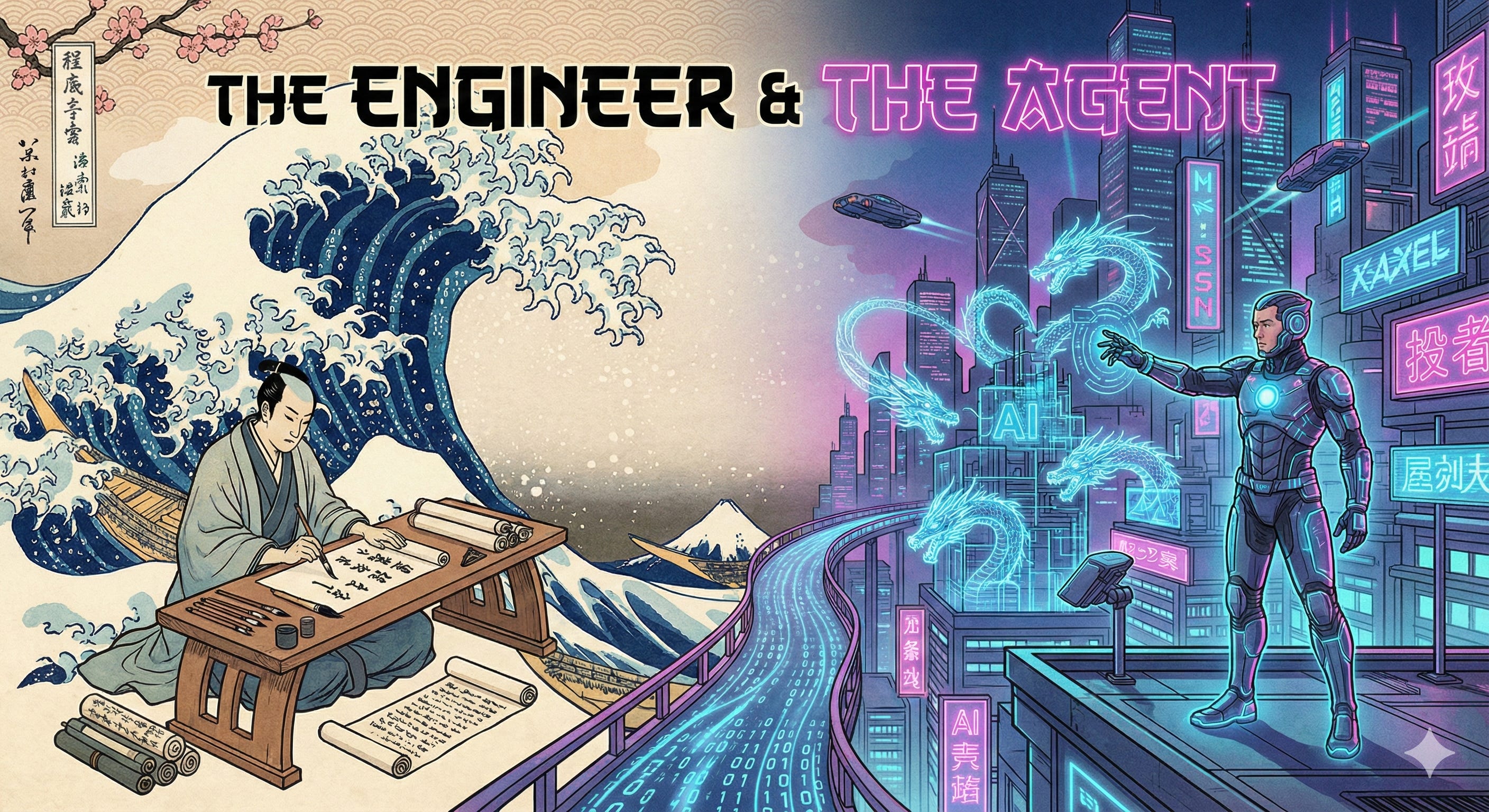
In the early days of my career, you had no choice but to work out how to build things yourself - to be an engineer first, programmer second. There weren’t enough instructions, and much of the field hadn’t really been sorted out. If you weren’t able to be resourceful, think from fundamentals, iterate and experiment, and be self-starting, you couldn’t do the job1.
This is where agentic coding is now. It’s a powerful set of tools, with some guidelines and best practices, but lots of challenges. To be successful at it, you have to think like an engineer and interact with it accordingly. If you do, there are huge rewards. If not (if you yolo or vibe code), it doesn’t work. You can’t flail.
There is a difference between being an engineer and being a coder. Coders are good at … coding. They can follow instructions, read APIs and specs, learn languages and libraries, and build things, slowly. After the early days of the industry, we realized we needed a lot more software being built, so we learned how to train coders. And that’s what most of the people in the technical industry are now.
Engineers have higher level skills. They can break problems down from first principles, invent new techniques, debug complex systems, decompose problems into robust separate concerns, etc.
Agentic coding is about to expose this difference in a really stark way. There lots of people making a living in the technical field whose main job requirement is “Can follow complex technical instructions well”. That’s not really as valuable now - we have AI agents that can follow those instructions as well or better. If your job devolves to just pushing a button for the AI, you’re not adding much value.
I can see this already with different people trying to use agentic tools. The engineers hit the same problems as the coders at first but then start to decompose the problem and build up tools and approaches that work better. Once they’ve invested in that, being able to think at a higher level gives them much more leverage. It used to be that good engineers were “10x” the average. I think it’s literally true that they’re more like 50x now and heading upward. I routinely see people build full experiences and tools in a day that would have taken months just a year ago.
I strongly suspect that code is just leading the way for all knowledge work, and that whatever happens in code will happen in other fields shortly. Which means there are a lot of people out there whose job descriptions boil down to “follows instructions well”. Those roles are going to become less valuable.
The real value is the higher order thinking. If you think that AI tools aren’t very useful, it’s quite possible at this point that you haven’t learned to use them well, or you are thinking very simplistically and not strategically about how you are using them. Or, perhaps, you want them to not be useful, so you use them in ways that assure that.
That might sound like I’m saying, “you’re not holding it right” and that’s a legit criticism. But it’s still true today. Perhaps we will encode more and more of that higher level thinking, to the point that this distinction doesn’t matter, and we can all just express intention and have things happen. But even there, there’s value in expressing clear intention that is well thought out.
Which means this effect is here to stay. “Just follow instructions” is going to become less valuable, and thinking like an engineer is going to become a critical skill.