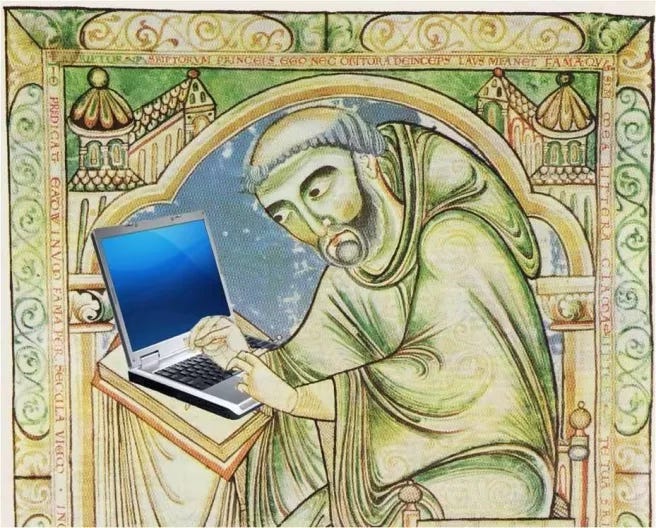
I’ve long felt that there is a hidden continuity between the Middle Ages and the internet. From vellum manuscripts to websites and operating systems, the drive to preserve and revere what matters has not gone away: it’s simply shifted online. Today I want to peek behind the curtain of a few corners of the internet that remain remarkably tied to the medieval world. The quills have been replaced by keyboards, but the sanctity remains the same.
Let’s start our journey in Wisconsin, 1969. It’s here Terry Davis was born. He grew up in a large family, the seventh of eight children, and was fascinated by the burgeoning world of computers. He experimented with Apple II and later at home with the Commodore 64. This love of computing landed him a programming job at Ticketmaster. Speaking about this time, when he considered himself an atheist, Terry said: “I thought the brain was a computer…and so I had no need for a soul.”
But in the mid-nineties, Terry’s life took a dramatic turn. Around 1996 he began experiencing regular manic episodes and psychosis, a diagnosis that would shape both his work and struggles for the rest of his life. In 2004 he received a direct call from God: to build a new temple, not of mortar and stones, but of software. Over the next decade he dedicated himself single-mindedly to the task, creating a complete operating system from scratch that he believed fulfilled the divine instruction. In 2013 he launched his project to God and named it TempleOS.


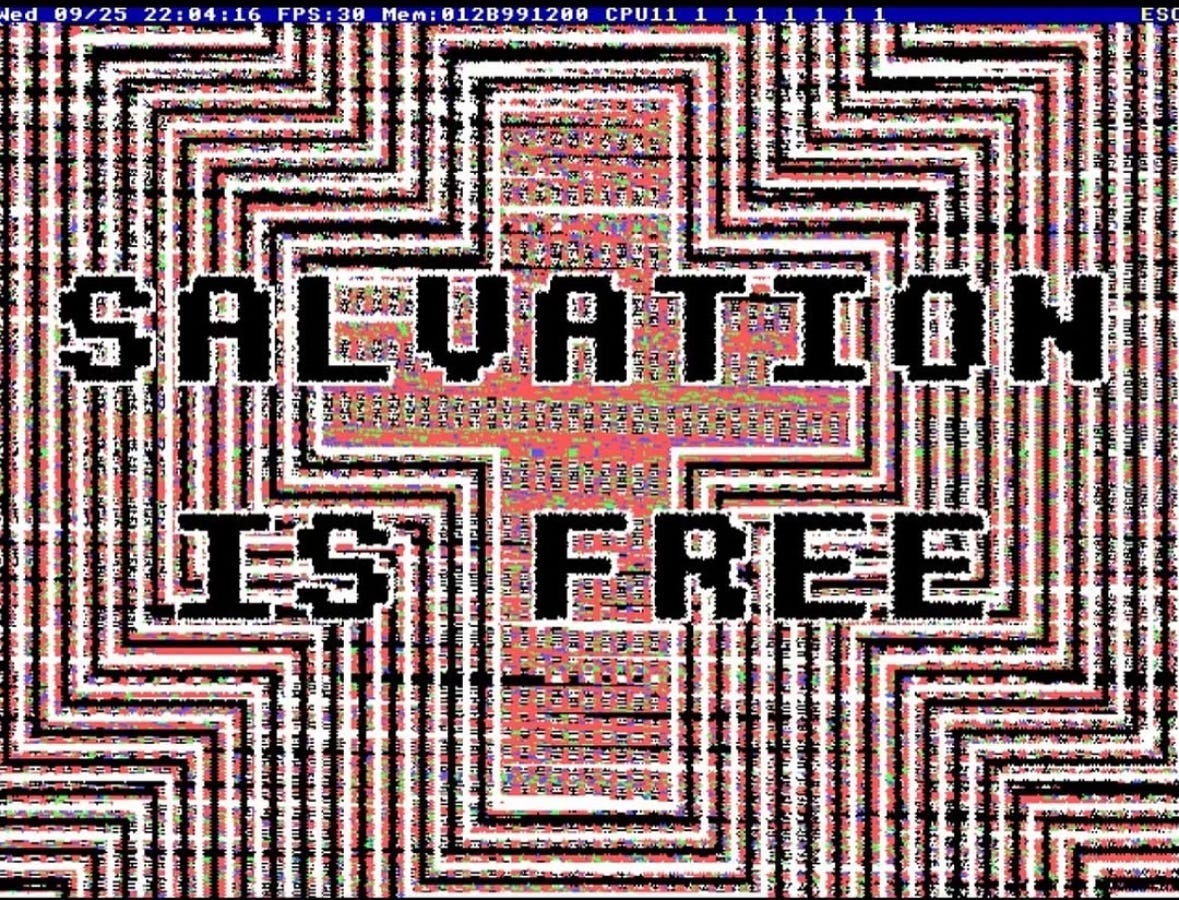
TempleOS has a very old-school look, with 16 colors, simple sound, and no internet connectivity. Its simplicity, Terry said, was God’s instruction. He named the custom programming language he used to build the OS “HolyC.”1 Terry believed that TempleOS was truly the “Third Temple” God had instructed him to build, a place where users could glimpse divine messages and experience a unique relationship between faith and technology. It was a code to speak directly to God.
“What people are going to read is, ‘It's about a pathetic schizophrenic who made a crappy operating system.’ My perspective is, ‘God said I made His temple.’” - Terry Davis
“Write what you see and hear! Tell people how to enter the kingdom of salvation!”- Hildegard von Bingen on her commandment from God
The programming community is in awe of Terry. One person likened his accomplishments to a single human building a skyscraper. It begs the question: sure, one person could do all this, but why would you? For Terry, the answer was simple: God commanded him.
One of my favorite functions allows the user to generate sentences from randomly selected words, what Terry saw as a cyber form of speaking in tongues. Terry created his own source code to the divine.
In 2018 Terry became homeless. In his last recorded message to the world, he concluded: “maybe I’m just a bizarre little person who walks back and forth.” He would be struck and killed by a train later that day, while walking the tracks in Oregon.
As Terry was becoming acquainted with God, a quieter digital pilgrimage was unfolding in monasteries across the United States. Monks all over the country were finishing their morning psalms and booting up their PCs to plunge into a marathon of data entry.
It started with Edward Leonard, a 37 year old tech worker who got restless with corporate life and was seeking meaning in his community. Soon he met a community of Trappist monks in the Washington, DC suburbs. Turns out these monks had a colossal problem on their hands that Leonard was uniquely suited to solve: they were managing 15,000 fruit cake sales per holiday season… on index cards. Peak monastic chaos. With a bit of networking and sysadmin wizardry, he got them online, cutting out the paper shuffle and the inevitable human error.
Someone, likely brushing fruitcake off their habit, asked the natural next question: “What do we do with all this spare time we have now?” Enter Brother Benedict, ex‑New York Public Library special collections guy, who suggested that if the monks could wrangle fruitcake orders, they could probably help the world digitize old library catalogs too.
And so the Electronic Scriptorium was born.


Edward Leonard created the Electronic Scriptorium, which employed mostly monks and nuns to digitize catalogues of all kinds to the tune of $12/hour (not too shabby for the early nineties). Religious communities are no strangers to putting their members to work. In the medieval era monastic communities earned income by selling surplus resources like wool, wine, and ale, or by monks crafting and selling wares. Electronic Scriptorium offered the opportunity for monasteries to earn more than they reliably could on other pursuits like cheesemaking or brandy.
So for years, every morning after prayer, brothers and sisters across the US would flip on computers and start entering MARC records2, turning piles of physical catalog cards into digital records. The tapping of keyboards and clicking of mice replaced quills and parchment, but the goal felt eerily medieval: to haul books and knowledge off dusty shelves and into the greater world. It was no great leap to imagine the dull monotony felt by a monk bent over his work station, squinting and scribbling for long hours and the same tedium felt by Electronic Scriptorium workers, hunched at desktops, typing out endless entries.
Whether medieval or modern, these monks and nuns served the same purpose: custodians of knowledge.


What started in the ’90s as a quirky, almost accidental enterprise didn’t exactly stay frozen in time under the Electronic Scriptorium banner. That specific company eventually faded from view as a commercial entity, but its core impulse didn’t die. Over in the academic world, a different but conceptually related project called Digital Scriptorium took up the mantle: a non‑profit consortium of North American libraries and museums building a shared, searchable online catalog of medieval and early modern manuscripts. Today the DS catalog includes tens of thousands of records from dozens of institutions, offering scholars and curious readers alike a way to discover handwritten manuscripts that might otherwise never leave their institutions.


For our next story of the strange intersectionality between the medieval and the online, let me tell you briefly about the first millennial saint. His name is Carlo Acutis and he was born in London in 1991 and raised in Milan. Despite being raised in a secular household, Carlo developed an intense devotion to Catholicism. He taught himself to code at the age of eleven and soon built a website devoted to Eucharist miracles.
Carlo used the internet as a tool for evangelization. His desire to collect, teach, and share sacred knowledge was certainly in the spirit of the medieval era. He proselytized to his followers, sharing his enthusiasm for miracle narratives.


Carlo sadly passed away of leukemia in 2006 at the age of fifteen. The church granted him sainthood in 2025. At his tomb in Assisi, dressed in jeans and tennis shoes, this “patron saint of the internet” has become a modern day pilgrim site.3
“All people are born as originals, but many die as photocopies.” - Carlo Acutis
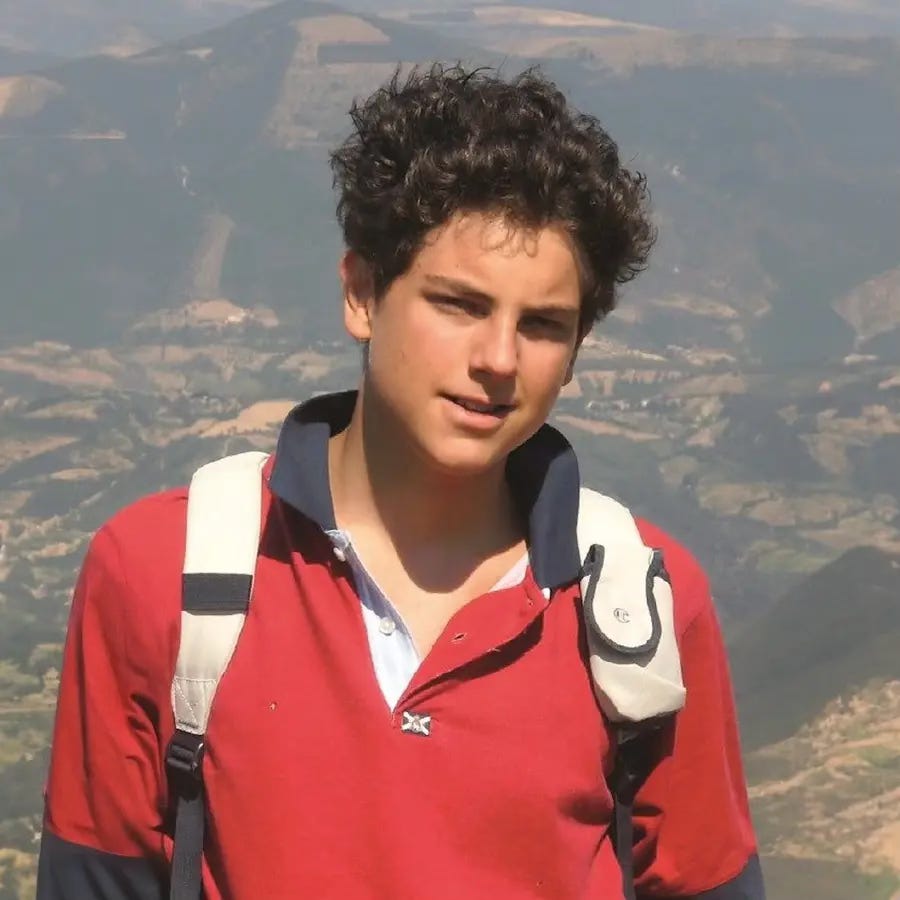
It’s not surprising to me that the Catholic Church honed in on this teen, said to have performed many miracles, partially as a way to connect with the youth of today. “God’s Influencer,” as the media has dubbed Carlo, is an interesting title for someone who missed entirely the meteoric rise of social media.4 It’s a tale as old as time that the Church has struggled to connect with the youth. But a quiet and growing number of younger people, particularly Gen Z, are returning to Catholicism. In an increasingly-online world, many young people aren’t just wrestling with what they believe, but how the internet makes them feel. Enter #medievalcore.
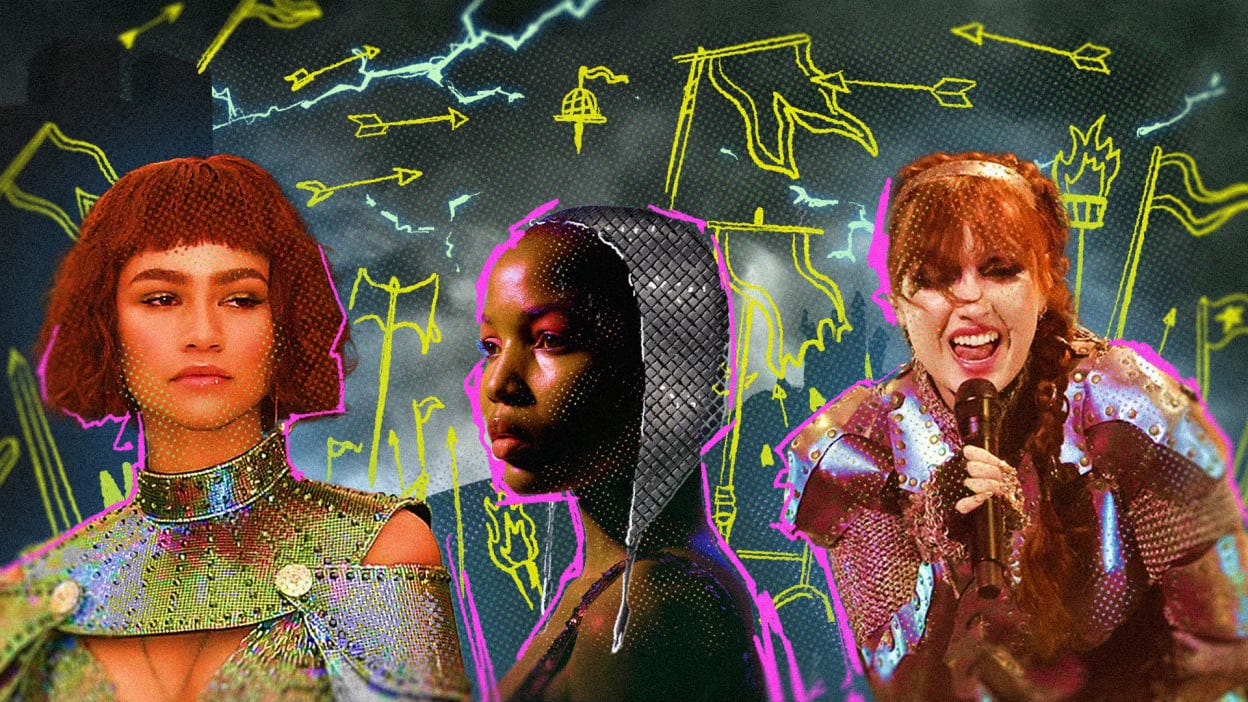
Castlecore, Weirdieval, #medievaltok5. It goes by many names but you know it when you see it. The aesthetic was chugging along in 2024 but really took off in the mainstream following Chappell Roan’s VMA performance in full-on “Chappell Joan” armor. Algorithms around the world responded in kind, pushing an historic aesthetic that offered escapism, solidity, tranquility, and romance.
Virtual spaces move astonishingly fast. They emphasize speed and distraction, feeding one micro-trend after another. And yet, in the turn toward medieval aesthetics, there’s a deliberate slowing down, a search for stability and ritual. Even online, people are reacting to the same impulses that once shaped illuminated manuscripts and monastic dedication: organizing knowledge, honoring craft, and creating spaces that feel meaningful.
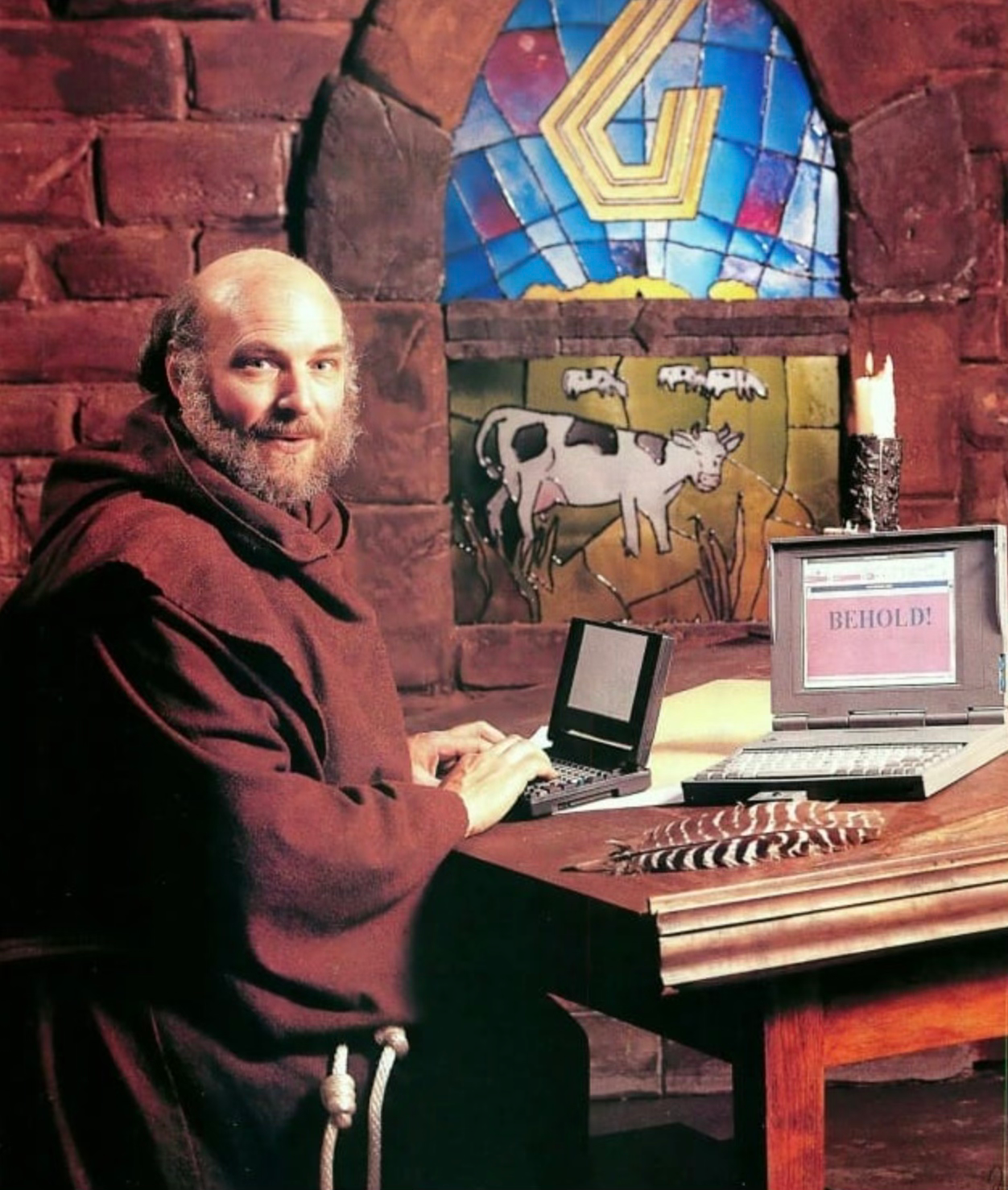
The internet functions as a holy space for many people. It is a networked place where rituals are performed, texts are transmitted, communities form, and symbols are shared and reshaped in ways that echo the past.
We don’t long for the Middle Ages themselves, but for their devotion, care, and sense of meaning. In the endless scroll of the internet, we’re still chasing that same sense of purpose.