Instead of "Can you build this?" they were asking "Should we build this?" and "What does this mean for our users?" The technical implementation had become the easy part—the hard part was figuring out what any of it meant.
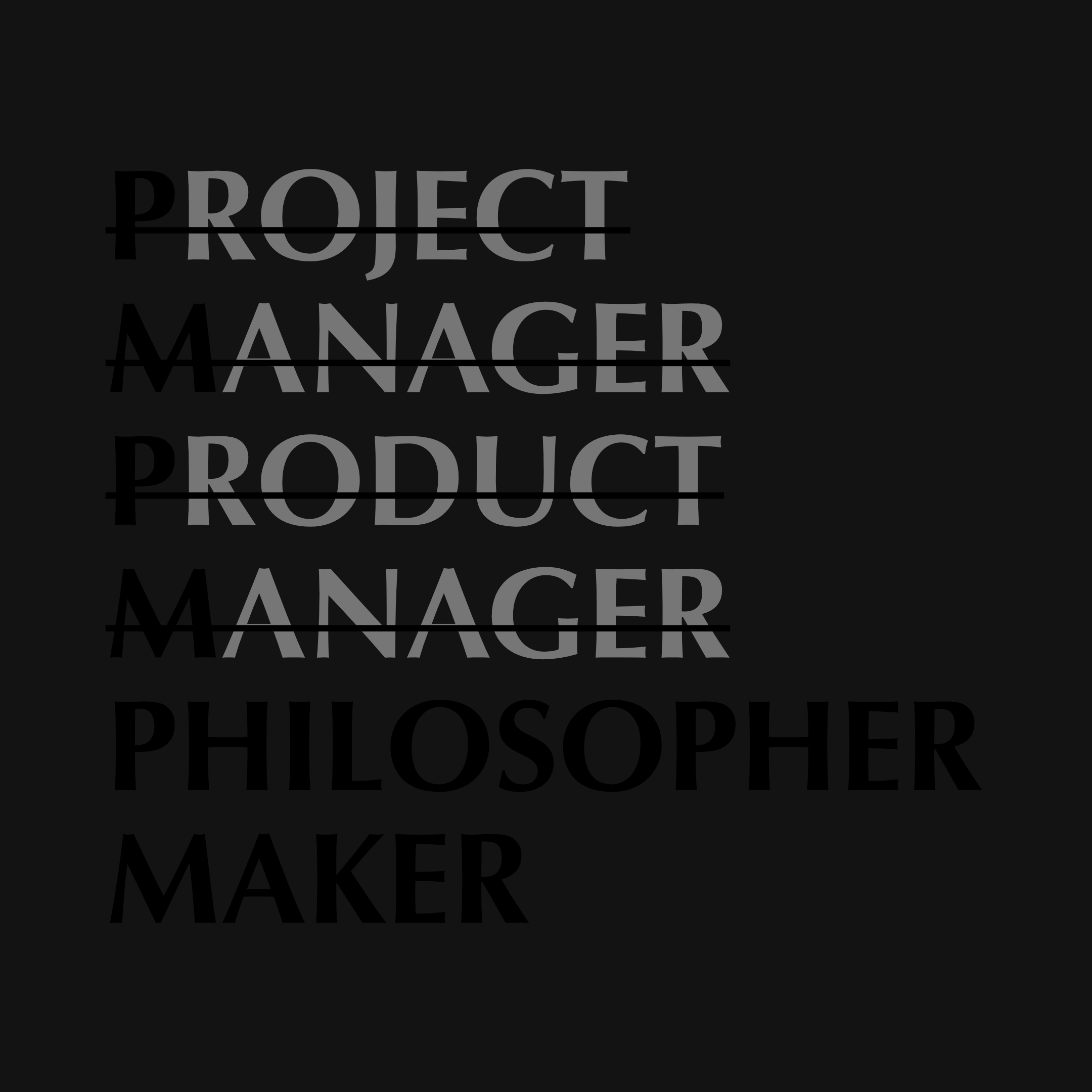
For more than a decade, I've watched startups succeed or fail based on a simple pattern: those that listened to my advice about product strategy and user experience thrived, while those that focused purely on technical execution struggled. What struck me wasn't that my coding skills made the difference—plenty of engineers could implement their ideas. Rather, it was how I thought about problems, connecting technical possibilities with human needs and cultural context.
But it took the generative AI explosion to make me realize I was witnessing the end of an era where technical execution alone could drive success, and the beginning of something fundamentally different.
We're living through a profound cultural shift that most people haven't fully grasped yet. For twenty years, technology has led culture. The people who could code, who understood algorithms, who could build scalable systems—they held disproportionate power in shaping how we live, work, and think. Silicon Valley's "move fast and break things" mentality didn't just describe software development; it became a cultural paradigm.
But generative AI changes everything. When artificial intelligence can write code, design interfaces, create art, and generate content at superhuman speed, the bottleneck shifts. Technical execution becomes commoditized. The scarce resource is no longer the ability to build, but the wisdom to know what's worth building—and why.
We're witnessing culture reclaiming the driver's seat from technology.
This isn't just another tech trend. It's a fundamental reordering of value creation. When anyone can prompt an AI to generate code, write copy, or create designs, the competitive advantage moves upstream to conceptual thinking, cultural understanding, and philosophical depth.
Consider what's happening in creative industries. A graphic designer's value no longer lies primarily in their Photoshop skills—AI can manipulate images with unprecedented sophistication. Instead, their value lies in understanding what images should communicate, how they fit into cultural contexts, and what emotional responses they should evoke.
The same pattern emerges across fields. Architects will be valued less for their drafting abilities and more for their understanding of how spaces shape human behavior. Software engineers will be valued less for their coding speed and more for their ability to envision systems that serve genuine human needs.
This is why philosopher-makers become essential.
A philosopher-maker is someone who combines deep conceptual thinking with practical building experience. They understand both the "what if" and the "how to." They can navigate between abstract ideas and concrete implementation, between cultural implications and technical possibilities.
This combination becomes crucial in an AI-driven world for several reasons:
Technical Literacy Without Technical Tunnel Vision: Philosopher-makers understand what technology can do without being seduced by technological solutionism. They've built enough systems to know when technical complexity is justified and when it's just intellectual masturbation.
Systems Thinking at Multiple Scales: Having worked across disciplines—philosophy, technology, art, business—they can see connections and implications that specialists miss. They understand how technical decisions ripple through cultural and social systems.
Comfort with Ambiguity: While pure technologists often seek definititive solutions and pure philosophers can remain comfortably abstract, philosopher-makers are comfortable operating in the messy middle ground where most real problems live.
Historical and Cultural Context: They bring perspective that transcends immediate technical trends. A philosopher-maker asks not just "can we build this?" but "should we build this?" and "what does building this say about who we're becoming?"
Three convergent forces make philosopher-makers especially valuable today:
The Commoditization of Technical Skills: AI democratizes technical execution, shifting value to conceptual and strategic thinking. Companies no longer need to choose between good ideas and good execution—they can have both, if they start with good ideas.
The Complexity of AI Ethics: As AI systems become more powerful, the philosophical questions become more urgent. How do we maintain human agency in an AI-driven world? What does creativity mean when machines can create? These aren't technical problems with technical solutions.
The Physical-Digital Convergence: We're entering an era where digital intelligence will be embedded in physical spaces, objects, and experiences. Understanding this convergence requires people who can think across traditional boundaries between virtual and physical, abstract and concrete.
It's no coincidence that many technologists are finding themselves drawn to architecture. The field has always embodied the philosopher-maker ideal—architects don't just design buildings; they think about how spaces shape human behavior, how form relates to function, how structures embody cultural values.
Consider Japanese architect Tadao Ando, who moved from professional boxing to becoming a self-taught architect, bringing a unique perspective to his practice that pure architectural training might not have provided. Or Christopher Alexander, whose "Pattern Language" influenced both architects and software engineers by identifying recurring solutions to human problems in built environments.
There's something in the zeitgeist pulling people toward fields that integrate thinking and making, abstract and concrete. The same forces that make philosopher-makers valuable in technology make architectural thinking relevant across disciplines. We need people who can design not just buildings, but systems, experiences, and cultural frameworks that support human flourishing.
I wonder if the growing interest in architecture and design among some technologists reflects this deeper shift—an intuitive recognition that the skills needed for the future look more like traditional architectural practice than traditional software development. Whether or not this represents a broader trend, the parallel is instructive.
This shift represents more than a change in economic value—it's a cultural maturation. The era of "tech bro" dominance, with its emphasis on growth hacking, disruption for its own sake, and technical solutions to human problems, is giving way to something more thoughtful.
Organizations are beginning to recognize that they need advisors who can think critically about the implications of what they're building. They need people who understand technology without being blinded by it, who can navigate the human consequences of technical decisions.
This isn't anti-technology sentiment. It's pro-human technology—technology developed with deep consideration of its cultural, philosophical, and practical implications.
For individuals navigating this transition, the message is clear: technical skills remain important, but they're no longer sufficient. The people who will thrive are those who can combine technical literacy with broader intellectual capabilities.
For organizations, the imperative is equally clear: as AI democratizes technical execution, competitive advantage will increasingly come from the quality of thinking that guides that execution. Companies will need to identify and empower their philosopher-makers—the people who can bridge technical possibilities with human wisdom.
This isn't a future possibility. The transition is happening now. The question isn't whether to adapt, but how quickly you can recognize the new landscape and position yourself accordingly.
The age of philosopher-makers has begun. The only question is whether you're ready to embrace it.
This essay inaugurates The Philosopher-Maker — a space where I explore how rigorous thinking can guide meaningful action in an age of accelerating change. If you want to follow this conversation, subscribe here or share this with others who think beyond execution.
I’m a philosopher-maker, engineer, designer and consultant with 20 years of experience helping organizations think strategically about technology, creativity, and human experience. This essay explores themes that will be central to my upcoming work on AI, creativity, and culture.