I finished watching a lot of Edison and Lumière movies. This films where made at the end of the nineteenth and the beginning of the twentieth century.
There are two main things that I would like to highlight. First, the framing impressed me. A lot of the time it feels clumsy. Like what I would see from my moms recording. But then, you see a couple of brilliant strokes of genius. Especially from the Lumière Brother films. Second, they made me feel like I was watching a TikTok from the beginning of the 1900s. Where every single video is about 10 to 30 seconds long and you are changing subjects.
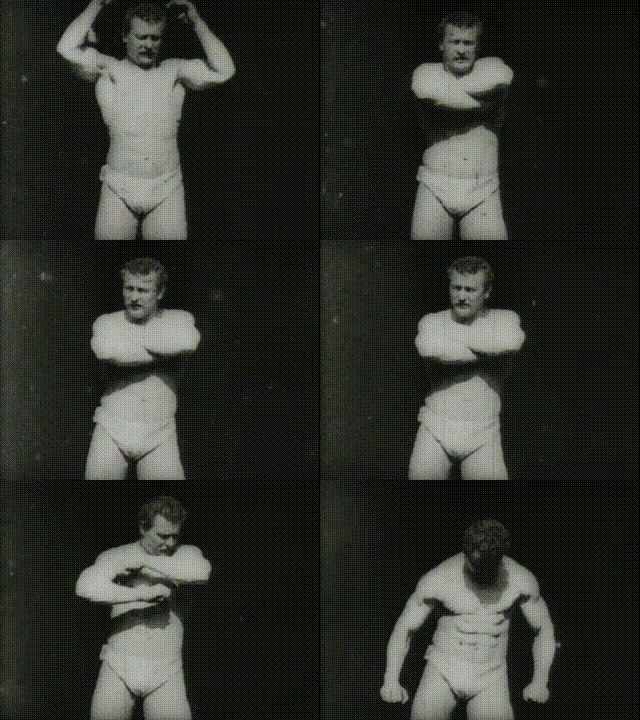
I had a realization once I got into the grub of watching these videos. It was when I saw a tiny movie about a bodybuilder. You know, the first bodybuilder, Eugen Sandow. I realized that I was watching the first of everything here. He was the first recorded person flexing his muscles in front of a camera. And although at first I found these scenes from life a bit boring. I realized that more than films, these are scenes and memory capsules of our own history.
Before filming, all representations of time in other mediums were imperfect. But then, there were films. Now, you could manipulate time. These films are a window to another time. They are experiments and vignettes of another style of entertainment.
Most of the time, these movies feel more like my random videos. But, there are a couple of moments where you can see that they are making some connections. For example in the film “The execution of Mary Queen of Scots” you can see how they make a cut and use “special effects” to show how they “behead” the queen.
There is also another tiny film that Edison Lab made. Called “Wash day in Mexico”. Which I thought was the first movie made in my home country. But, as sometimes I do. I decided to go on a bit of a rabbit-hole with this one.
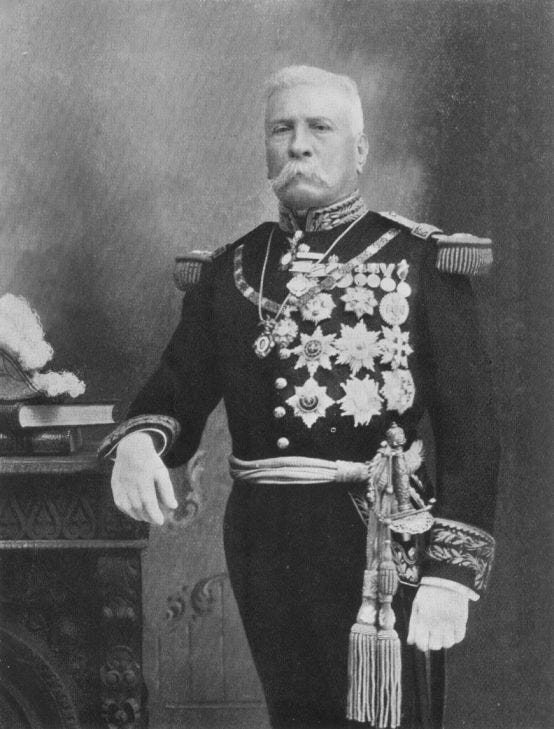
Porfirio Díaz is a controversial figure in Mexican history. He was a dictator that ruled over the country from 1884 to 1911. He modernized the country and also made Mexico a stable economy. But the Mexican Revolution removed him from power in 1911 due to his authoritarian rule. Also, he was a weeb for France.
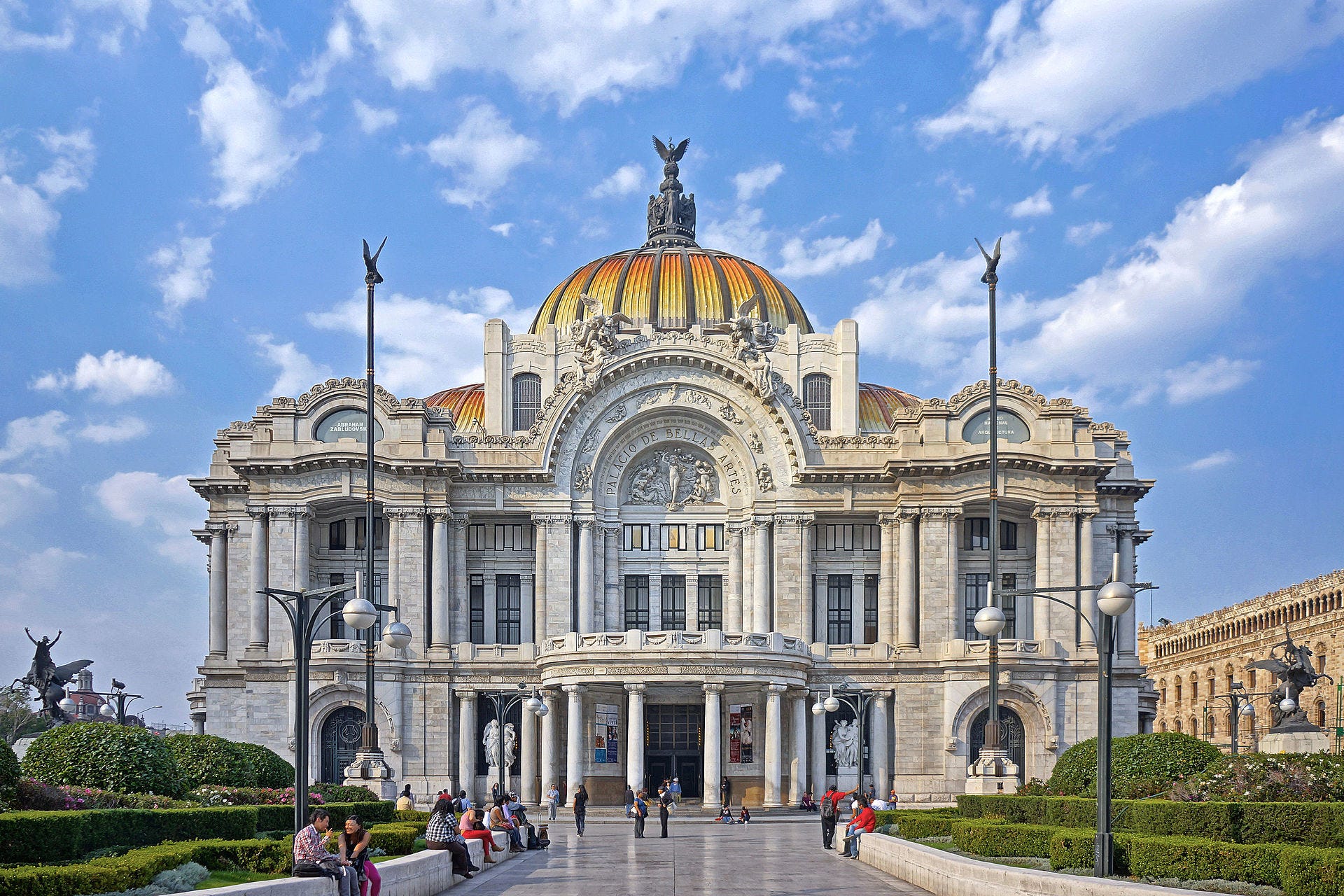
I associate the idea of people obsessed with cultures with Japanese weebs. But in this case, Porfirio was a superfan of the French. Rebuilding the downtown of Mexico City to the image of French culture. Having places like the Palace of Fine Arts or the Angel of Independence ripped straight up from Paris.
Gabriel Veyre was a pharmacologist by trade. He studied pharmacology to help his mother and five other brothers and sisters. But, as far as we know, he met and associated with the Lumiere Brothers in Lyon. There they convinced him to go and travel the world and make some money at the same time. He soon became an operator, director and projector of films.
Veyre went to Mexico. Down there they managed to meet with the general of the Mexican army. Which in turn ended up presenting them the president.
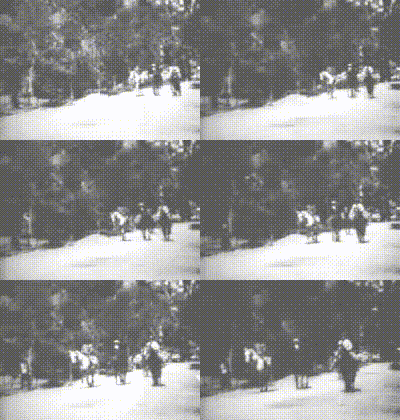
The meeting happened and Gabriel ended up recorded Porfirio riding his horse. Creating the first film in Mexico and making the dictator the main “actor”. For the screening, Gabriel presented the movie in the Palace of Chapultepec.
I was not expecting to enjoy these films as much as I did. Especially once I started to think about them in their proper context. They were the building blocks to a proper language and what we now know as the language of film.
I am starting to make this a series! I'll be writing tiny essays for each of the films of the the The Ultimate Film Studies Watchlist. Which seems to be like a great list! This is the first set of movies from the watchlist.
I am making a tiny website that I want to be the best place for movie discussions called the moviemovie.club. Creating an account and making some discussion on there would be great!
If you would like reading more about the history of the first film in Mexico. The main source for this essay is a paper by Aurelio de los Reyes called: Gabriel Veyre y Fernand Bon Bernard, representantes de los hermanos Lumiere, en México. Also, you can watch both Edison and Lumière films on the Internet Archive.