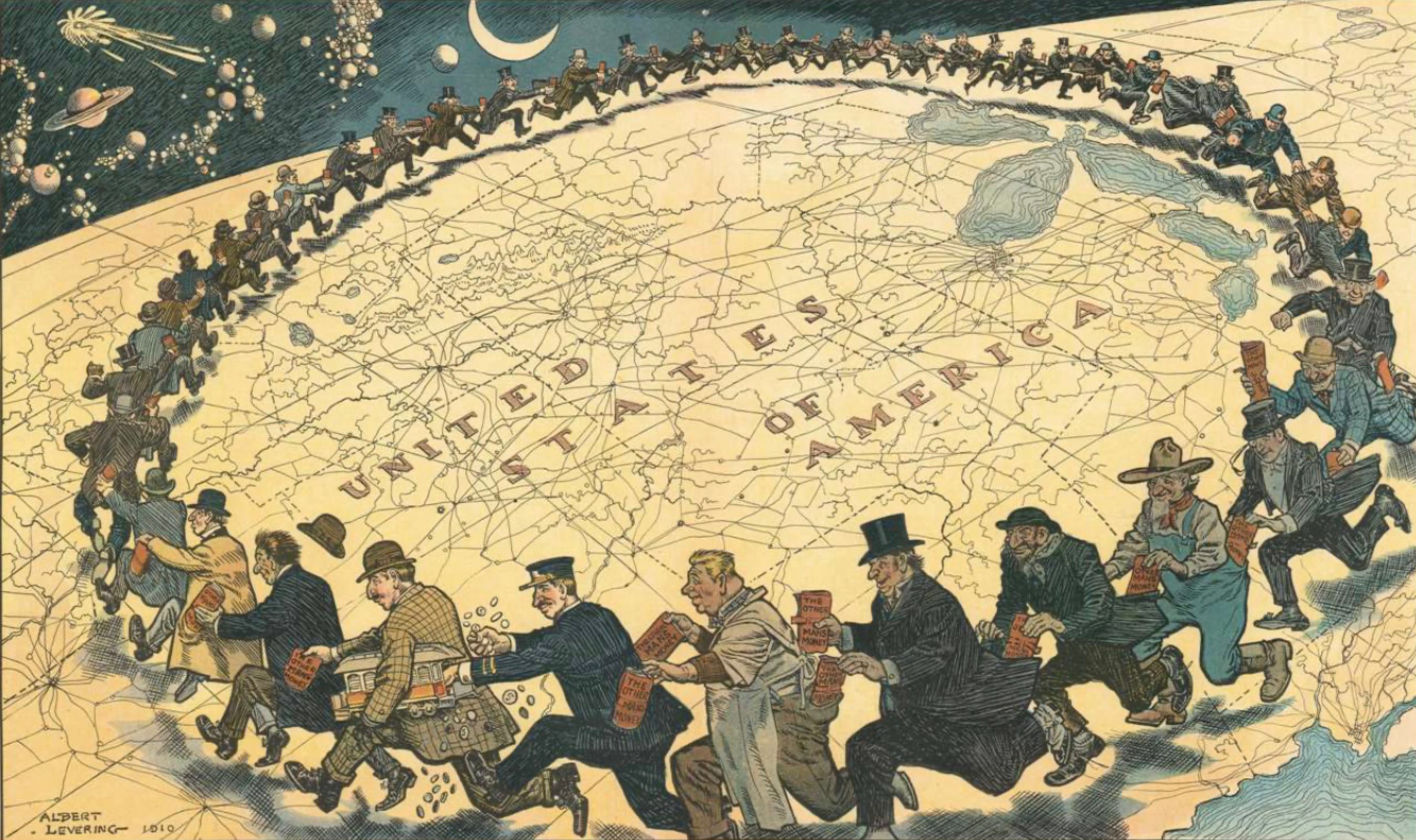
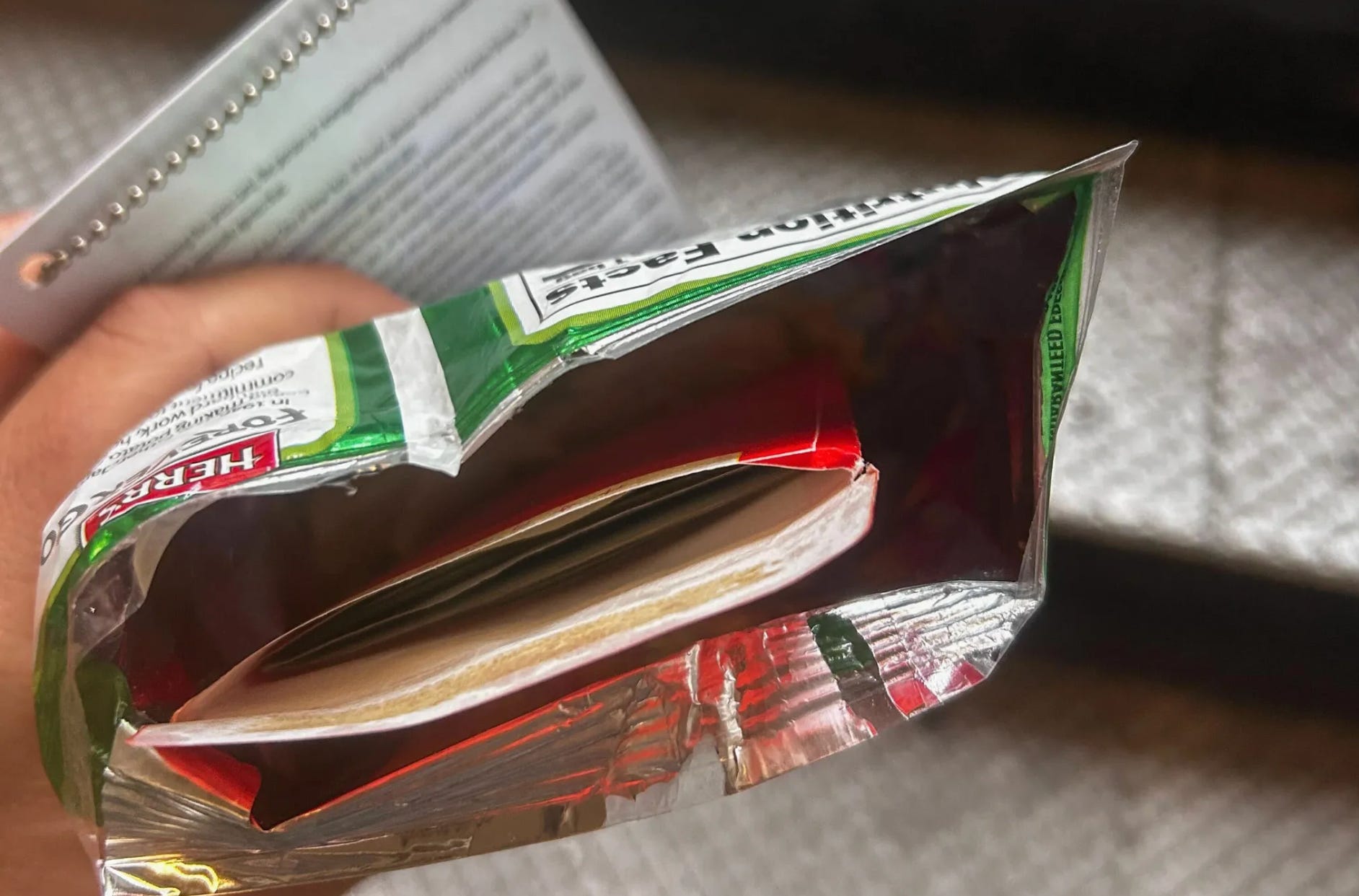
America has become an intensely corrupt country. Our president runs crypto scams and accepts bribes from foreign countries while selling Trump brand Bibles, watches, perfumes, and shoes. A senator took gold bars from the Egyptian government, while New York’s mayor gave himself up for airline tickets. But the real story of our decline can be told through a bag of chips. Earlier this year, the former NYC mayoral aide, Winnie Greco handed a few hundred dollars in a chip bag to Katie Honan, a journalist at The City. In other words, an unknown bureaucrat failed to cheaply bribe an irrelevant journalist at an unread news site. The sheer pointlessness of the bribe is itself evidence of its normalization.
Ordinary Americans have gotten in on this fun at an astonishing rate. Almost half a trillion dollars were stolen, wasted or misspent during covid and the majority of New York City’s post-pandemic job increase comes from a medicare program its governor called a racket. Meanwhile, veterans routinely abuse and defraud the disability program. Unnoticed, these ongoing crimes cost more than the Korean War. But tolerating or ignoring this behavior among neighbors and elites required a massive cultural change.
A cultural shift, not a legal one, drives the majority of this behavior. It has been legal for congress to trade on insider information, to take NY state money for fake homecare, or sell courses on how to trick doctors for disability. Yet these activities only became widespread once the culture stopped treating the way people make their money as a moral question. “Get that bag” became the defining economic mantra. This retreat emerged from shifts in technical and economic relationships that created an adversarial narrative to economic relationships. Agorithms, platforms, and incentive structures pushed people to see others as obstacles or data points to extract from, normalizing the mindset necessary for corruption to thrive. Once this mindset took hold, it began hollowing out our material culture itself, reshaping institutions, relationships, and expectations around the logic of exploitation rather than cooperation.
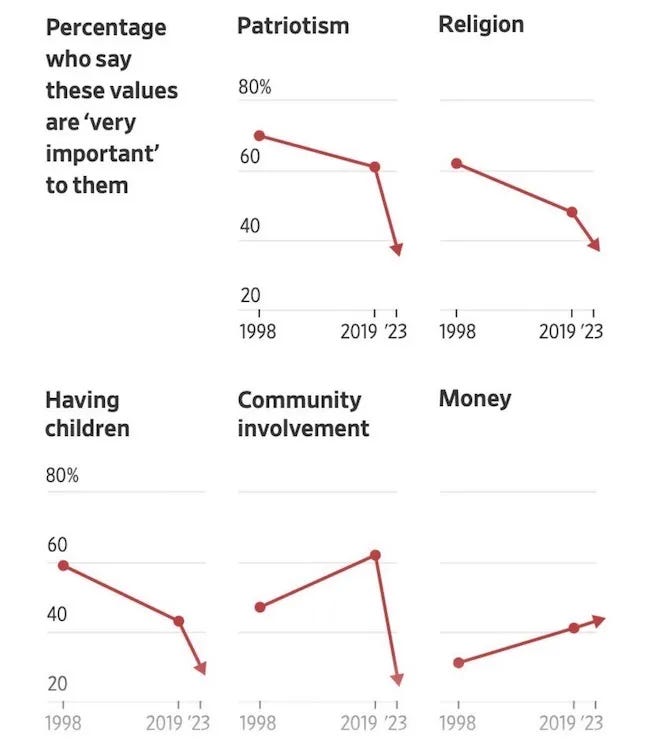
While economic relationships are mutually beneficial, public perception may see them as zero sum. Electing a president who promises tariffs exemplifies a public losing faith in mutualism. Within that environment, coercive relations become more widely acceptable. American corruption accelerates under this view for two reasons. Firstly, the rise of influencers and secondly, the algorithmically driven transformation of economic relationships.
Influencers basically trained the public to accept bribery. In order to survive influencers must monetize relationships albeit -- parasocial ones. Typically this just meant secretly selling users random stuff. In the darker cases this meant pushing unregulated crypto, with the preferred scam shifting from shitcoins, to smart contract fraud, to fake securities. Although there have always been celebrity salesmen, the nature of the influencer is dramatically more personal. Because of their targeted audiences, their relationships are more direct. They feed on your insecurities and interests because you chose them. When they sell to you, its more similar to a friend than someone from Hollywood. This monetization of the relationships has become the background radiation of the internet and therefore our society. Ironically, monetized relationships are born of algorithmic depersonalization. The same logic of reducing people to data points also governs pricing.
Algorithmic control of economic relationships extends beyond social media. Algorithmic pricing has concentrated pricing power in institutions capable of deploying highly accurate models. The accuracy of these models is predicated on group behavior and flattening individual incentives. Companies like realpage calculate highly accurate models to predict the highest extractable rent for a given unit. Corporations pay to access equifax data to ensure they pay the lowest acceptable rates. While profit seeking is the norm, the level of sophistication and efficacy now available is not. S&P 500 has seen significant long term margin expansion from around 9% to around 12%, or a 25% increase over less than 15 years. The mechanisms behind these profits—precision extraction at scale—have shifted public perception toward an adversarial economic worldview. People imitate the systems that exploit them. Population-level fraud relies on abusing system tolerance. Companies are selling courses on how veterans can fake disabilities for checks while others sell the path to homecare cash.
The political implications of corruption are obvious, but the more lasting damage is wrought upon our culture. As it spreads corruption first becomes an expectation, and soon after a requirement. When relationships become gateways to victimization, people retreat inward, avoiding the necessary work of life. Those that remain become committed players, preying upon one another. Life in the corrupt world becomes theatre, with each action serving as a pretext for theft.
This is already becoming apparent within sports. Although sports betting has only widely been legal for a few years, it has begun to break the games it relies upon. Just this year, Cleveland Guardian pitchers threw balls to rig bets while an NBA player making 100 million a year sabotaged his teammates in order to make a few hundred thousand. Each pitch, stolen base, or foul is a moment to be sold. While this is all illegal, it’s all predicated on the predictable liquidity of legal sports betting markets. Sports become structrually unstable as the corruption spreads.
Once upon a time, America dreamed that it was a society of an infinite middle class. Our great inventions, the Model T, telephone, Coca-Cola were built for this society. So was our republic. Corruption breaks us into victims and abusers. In order to drive past this, we will need outward legal reforms, whose specifics exceed my expertise. First, we must accept how corrupt our society has become. American corruption often exists within formal legal settings; confronting it requires more than the law. Remember yourself, and be disgusted by the vanities of our time. Demand the same of others.
Thanks for reading to the end, feel free to share!