Unpacking Semiotic Drift and Algorithmic Polarization in the Digital Era
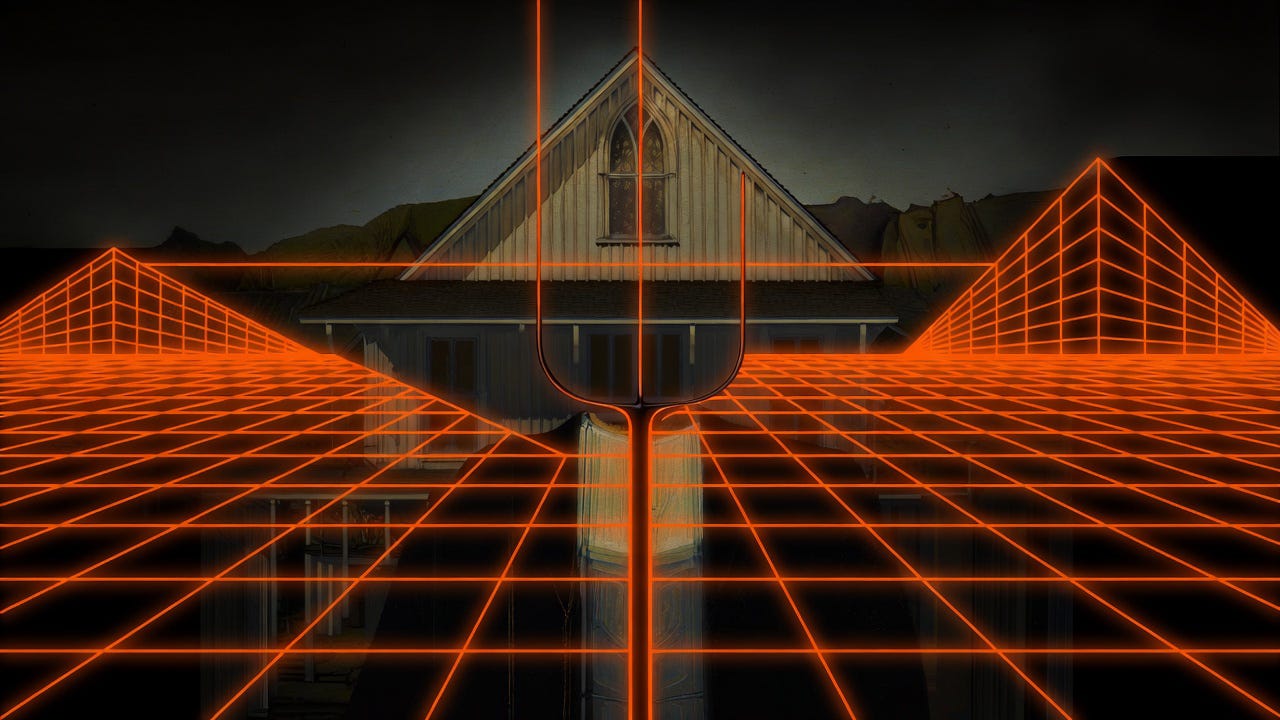
At the intersection of culture, technology, and human cognition lies a framework for understanding the subtle architectures governing contemporary existence. A seminal paper merits examination: “The Treachery of Signs: Semiotic Mediation, Pitchfork Bifurcation, and Political Polarization in Algorithmically Curated Societies” by James Burton Lancaster.
Released on SSRN mere days ago (access it here), this 115-page treatise integrates philosophy, anthropology, and mathematics to illuminate mechanisms driving mutual incomprehension in online spaces. Polarization emerges not merely from misinformation or malice, but from foundational structures of signification itself. This dissection proceeds with precision, eschewing superfluous complexity.
The Core Idea: Signs Aren’t What They Seem
René Magritte’s iconic pipe, inscribed with “This is not a pipe,” exemplifies the treachery invoked in the title: a perpetual disjuncture between signifier and signified. Lancaster advances Charles Peirce’s semiotics, wherein a sign (such as “freedom”) denotes an object (liberty in practice) solely via an interpretant, the culturally inflected prism through which meaning coalesces.
The crux resides in signs’ inherent underdetermination of interpretation. They resemble fragmentary mosaics, completed through contextual priors. In diverse societies, this fosters innovation. Algorithmic curation, however, transforms these interstices into abyssal rifts. Linguistic anthropology, crediting Paul Kockelman’s 2024 framework on semiotic agency, elucidates indexicality (signs’ tethering to social milieus) and enregisterment (their aggregation into typified forms). “Defund the police” may connote reform for one group, lawlessness for another, with divergences accruing in segregated enclaves.
The Math of Division: Enter the Pitchfork Bifurcation
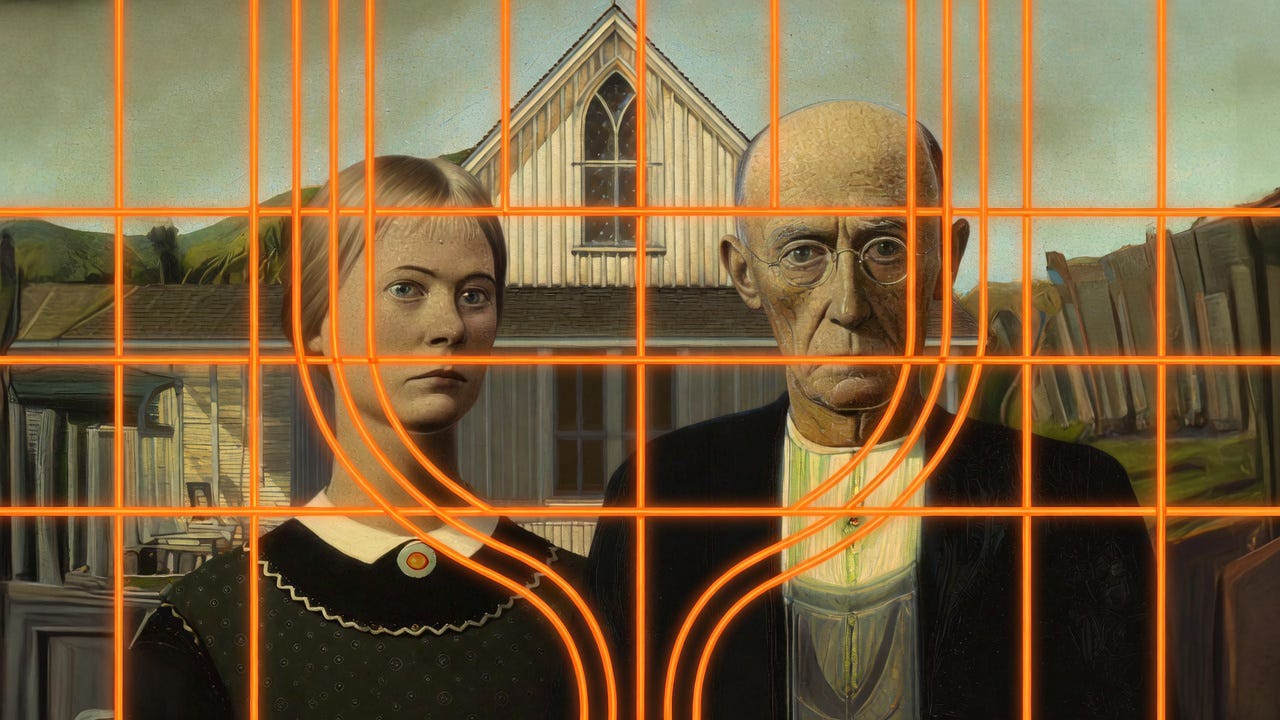
This framework transcends speculation; quantification occurs via the pitchfork bifurcation from dynamical systems theory. A system, akin to collective sentiment, begins in equilibrium. Escalation of a control parameter (algorithmic magnification of outlier perspectives) breaches a threshold, yielding bifurcation into dual, antagonistic equilibria, mirroring a pitchfork’s divergence.
Formally, the archetype is ẋ = rx - x³, with r as the modulator. At subcritical r, convergence to zero prevails (unified discourse). Surpassing zero generates attractors at +√r and -√r (entrenched factions). Algorithms function as this modulator, escalating interpretive variances until minor variances yield profound schisms. Empirical scrutiny of cases like pandemic controversies or electoral framings reveals Peircean interpretant chains as amplifiers: communal hermeneutics loop, entrenching discord.
This model, elegant in rigor, underscores profound vulnerability: incremental algorithmic adjustments propel societies from coherence to impasse.
(A classic pitchfork bifurcation diagram, illustrating how stability gives way to division.)
Why This Matters in the Algorithmic Landscape
Insights from Lancaster compel attention:
Interpretive Drift Fuels the Fire: Common signs (“democracy”) affix to disparate social archetypes across cleavages. Algorithms intensify this, favoring virality over veracity.
Indexical Anchors and Ideologies: Anthropological lenses reveal semiotic ideologies, convictions on signs’ proper valence, as binding agents. Feeds do not merely inform; they induct into ideological phalanxes.
The Algorithmic Tipping Point: Entities such as X (formerly Twitter) or Facebook propel amplification past bifurcation loci, converting latent accord into enduring fragmentation.
A Glimmer of Hope: Metapragmatics: Optimism resides in metapragmatic awareness, the reflexive grasp of meaning’s construction. Literacy initiatives expose semiotic lacunae; architectures privilege convergent indices.
Ramifications include mandates for curation curbs to evade thresholds, interrogation of interpretants amid provocation, and engineering of trans-chain exchange conduits.
Final Thoughts: Beyond the Gap
As an independent scholar, and information architect from North Carolina (explore his portfolio here), Lancaster fuses disparate domains into an imperative for reform. Amid residues of 2024’s electoral convulsions, polarization stands affirmed as artifactual, not inexorable. This lens confers agency to reconfigure the matrix.