This is not another article just about memes. This is however an essay that will change your enregisterment of them.
In algorithmically curated societies, where cultural transmission accelerates (and hallucinates) through digital platforms, the study of memes demands a new framework. A semiotic framework that accounts for their interpretive volatility rather than treating memes as mere replicators. Lancaster’s dissertation, “The Treachery of Signs: Semiotic Mediation, Pitchfork Bifurcation, and Political Polarization in Algorithmically Curated Societies,” available on SSRN (https://ssrn.com/abstract=5987495), touches on memes as examples of signs but does not center them in its analysis. The work’s core concepts of semiotic mediation and dynamical bifurcation does however provide a precise lens for elevating memes to the forefront of cultural dynamics. This essay bridges that gap by applying Lancaster’s model to memetics. It emphasizes the highest-order metapragmatic processes, which involve reflexive discourse about how signs (or memes in our case) are used and interpreted. These processes include indexing, where signs point to social contexts, and enregisterment, where signs become typified as markers of identity or style. Through this frame, memes emerge not as incidental but as paradigmatic instances of treacherous signification. They prove prone to polarization in curated environments.
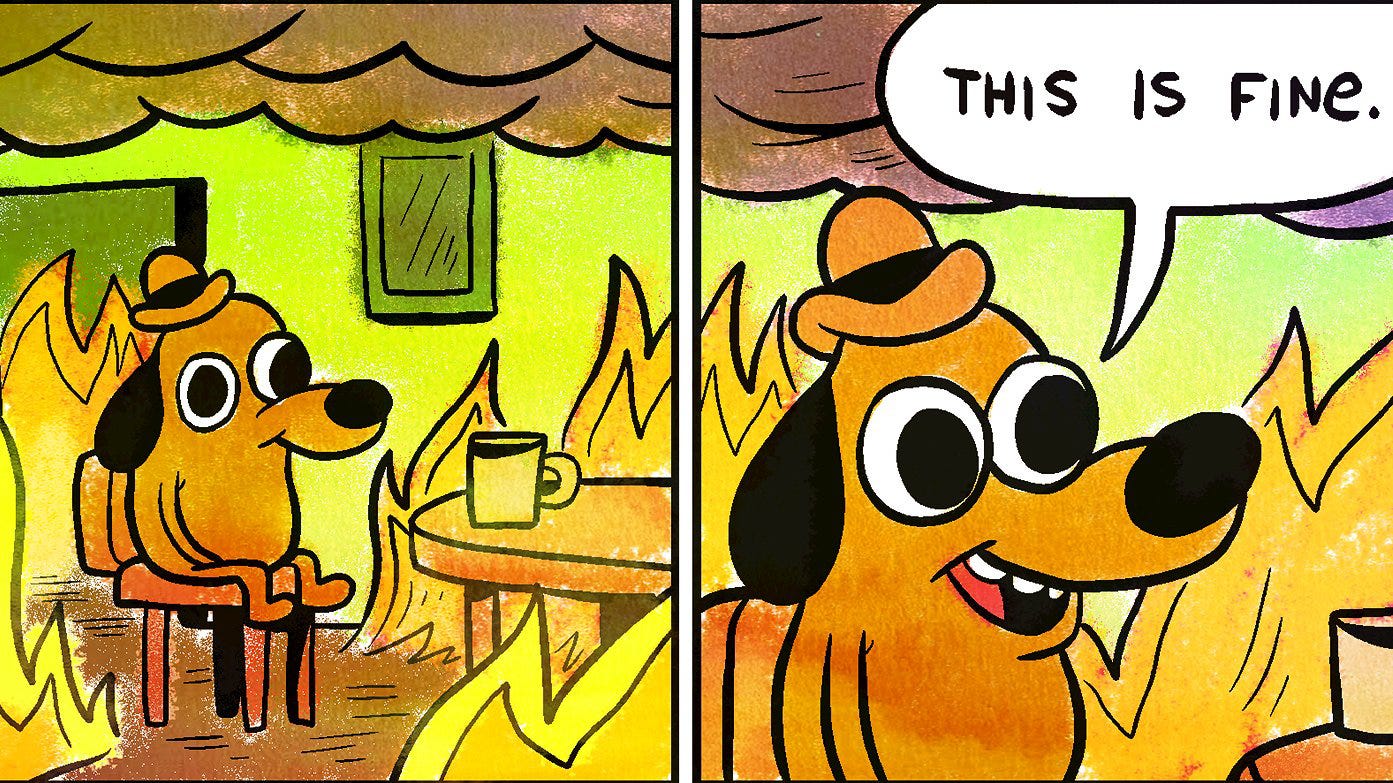
Lancaster grounds his analysis in the semiotics of Charles Sanders Peirce, an American philosopher and logician from the late 19th and early 20th centuries who developed a triadic theory of signs. Peirce posited that signs consist of a representamen (the form or vehicle of the sign), an object (what it refers to), and an interpretant (the effect or meaning it produces in the mind of the interpreter). Memes, as cultural signs, embody this triad vividly. Their form, such as an image macro or phrase, refers to a concept. However, the interpretant introduces treachery by allowing contextual drift. While the dissertation illustrates this with political discourse, such as polarized interpretations of “democracy,” memes amplify the mechanism. A viral meme like “This is Fine,” depicting a dog in a burning room, indexes personal denial in everyday contexts for some users. For others, it enregisters broader societal critiques of inaction on issues like climate or inequality.
This underdetermination, as Lancaster describes on pages 45-52, enables memes to replicate not through fidelity but through interpretive openness. Each sharing recontextualizes the sign. In highest-order terms, this process is metapragmatic. Users reflexively comment on the meme’s deployment, layering discourse about discourse that shapes its evolution and highlights how interpretations are negotiated in real time.
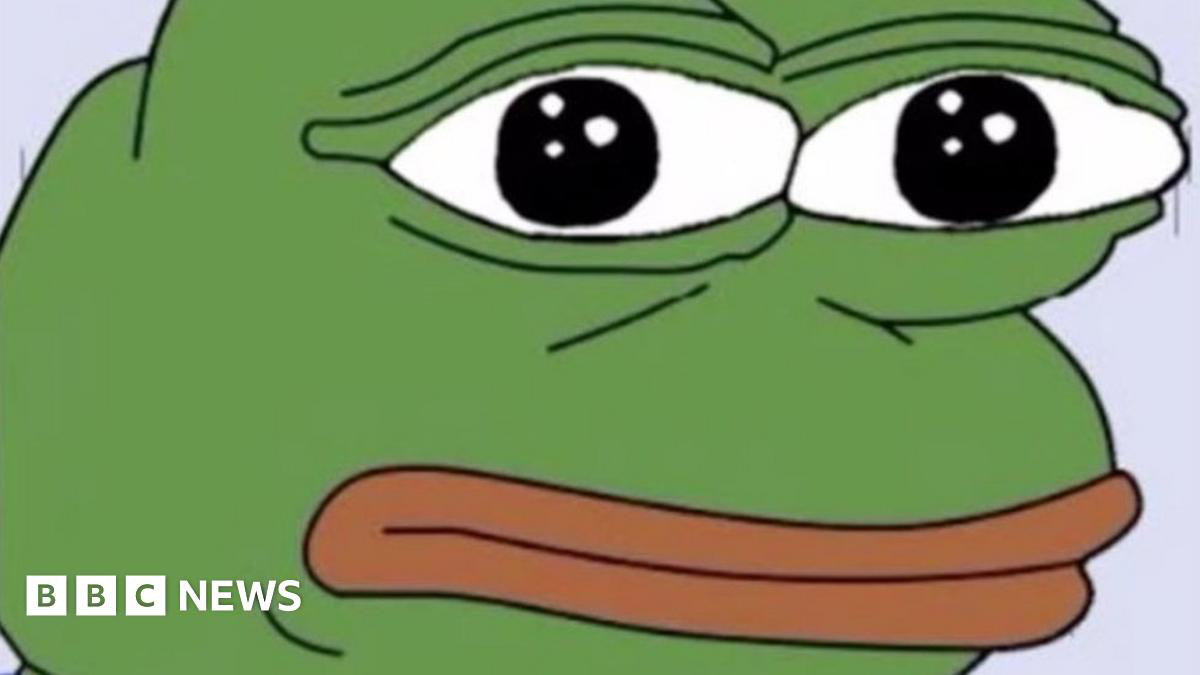
Indexing operates at the core of memetic spread. It ties signs to specific social milieus. Lancaster notes that signs gain force through indexicality. They point to real-world anchors like events or identities (pages 67-72). This concept draws from the work of Michael Silverstein, a linguistic anthropologist who pioneered theories of indexical order, where signs not only denote but also presuppose and create social contexts through layers of meaning. Memes excel in this regard. They often originate in niche communities, such as 4chan threads, where ironic deployment indexes insider status. As they diffuse, algorithmic curation detaches and reattaches indices. This turns a meme from a subcultural joke into a mainstream signal. Consider “Pepe the Frog,” initially an innocuous comic character but later enregistered as a hate symbol (by the left) through repeated associations in far-right contexts.
Such enregisterment typifies the sign as emblematic of a social type. It entrenches the sign in polarized repertoires. Lancaster adapts this from Asif Agha, another linguistic anthropologist who defined enregisterment as the process by which linguistic or semiotic features become associated with particular social personas or styles through cultural practices (cited on page 89). Metapragmatically, discourse around such memes takes the stage. Debates on platforms about their “true” meaning elevate the process to a higher order. The sign’s mediation becomes the explicit topic. This fuels further drift and invites reflection on how communities police or contest interpretations.
Enregisterment, as Agha conceptualizes it, involves the process by which semiotic features, such as memes, become associated with specific social personas, styles, or identities through repeated cultural use. Different communities can enregister the same meme in divergent ways, leading to layered meanings that reflect group ideologies or contexts. This creates metapragmatic discourse, where users reflexively discuss and negotiate the meme’s appropriate usage. To illustrate, consider several examples that demonstrate this phenomenon across various memes. One prominent case involves the “Pepe the Frog” meme. This character originated in Matt Furie’s 2005 comic “Boy’s Club” as a laid-back, anthropomorphic frog representing everyday slacker humor. In early online communities like 4chan’s /b/ board, users enregistered Pepe as an index of ironic detachment and insider absurdity, often deploying it in absurd or nihilistic scenarios without political overtones. However, during the 2016 U.S. presidential election, alt-right groups on platforms like Reddit’s r/The_Donald re-enregistered Pepe as a symbol of white nationalism and anti-establishment rebellion, associating it with racist or xenophobic imagery (per liberal interpretation). This shift prompted mainstream media and organizations like the Anti-Defamation League to typify it as a hate symbol. In response, progressive communities and Furie himself attempted to reclaim it through campaigns like “Save Pepe,” enregistering it anew as a marker of anti-hate activism. Metapragmatically, discussions on X and forums about “what Pepe really means” highlight how enregisterment evolves through contestation.
Another case is the “Distracted Boyfriend” stock photo meme, which features a man looking at another woman while his girlfriend appears shocked.
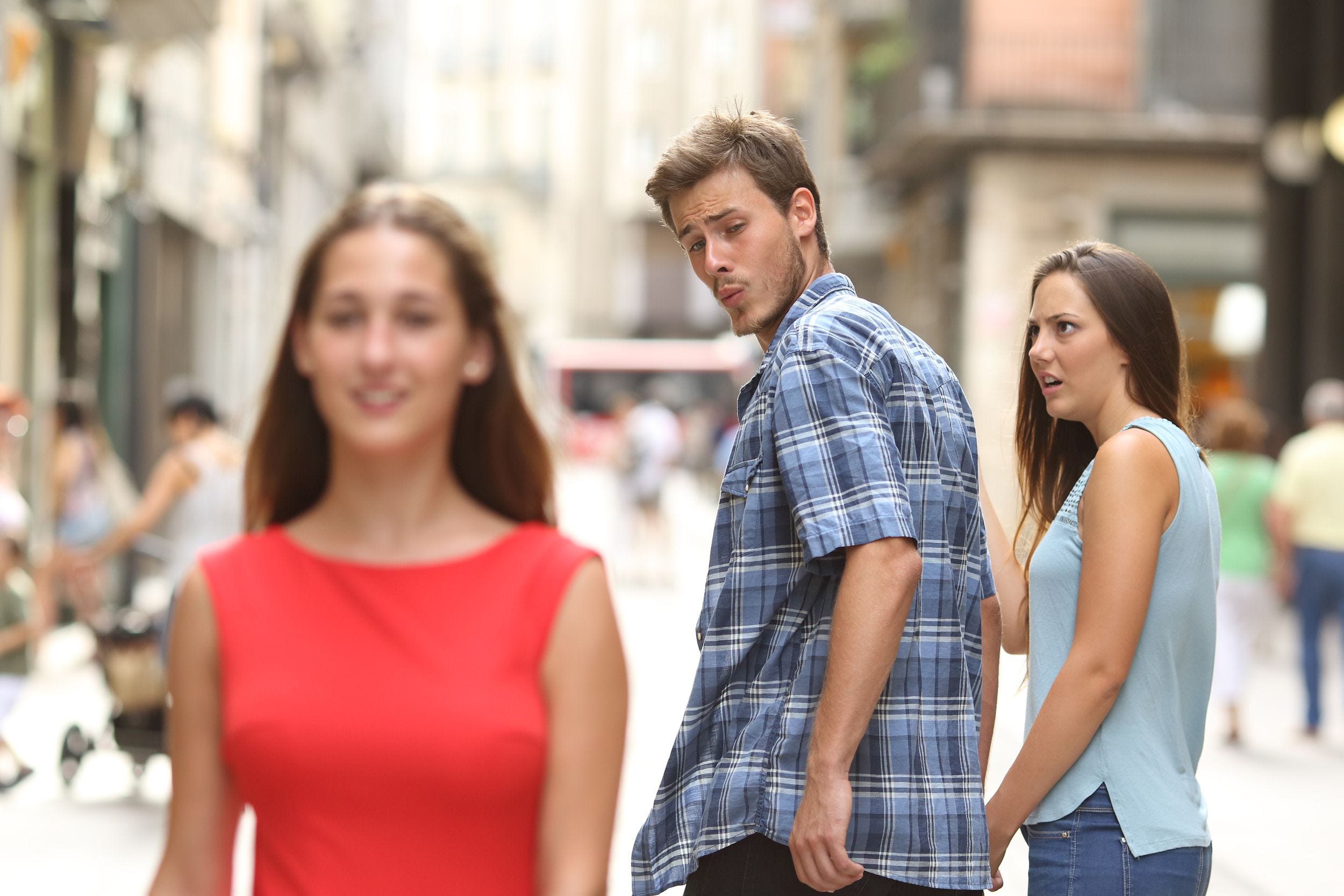
Marketing and stock photography communities initially enregistered it as a generic illustration of temptation or distraction, used in neutral advertising contexts. Relationship advice forums on Reddit, such as r/relationships, adapted it to index infidelity or emotional neglect, enregistering it as a humorous yet cautionary emblem of romantic dynamics. In corporate or tech circles, like LinkedIn groups or marketing subreddits, it became typified as a metaphor for consumer choice, with brands like Netflix using it to represent switching services. Feminist communities on Tumblr and X have critiqued and re-enregistered it to highlight gender imbalances, framing the meme as a commentary on objectification. Reflexive discourse often emerges in comments sections, where users debate whether a particular deployment reinforces stereotypes or subverts them.
The “This is Fine” meme, showing a dog sipping coffee amid flames from KC Green’s comic, demonstrates enregisterment across mental health and societal critique spheres. In personal wellness communities on Instagram and therapy-focused subreddits, it is enregistered as an index of denial or coping with anxiety, often paired with captions about ignoring stress. Broader political activists on X enregister it to typify institutional inaction, such as during climate debates where it signals government complacency. Corporate satire groups, like those in r/antiwork, use it to mock exploitative work cultures. Metapragmatic layers appear when users remix it with current events, prompting discussions on its overuse or dilution.
As another example, the JD Vance “fat face” meme involves a viral image series that edits photos of Vice President JD Vance to exaggerate his facial features, making him appear bloated with chubby cheeks, wide eyes, and sometimes curly hair.
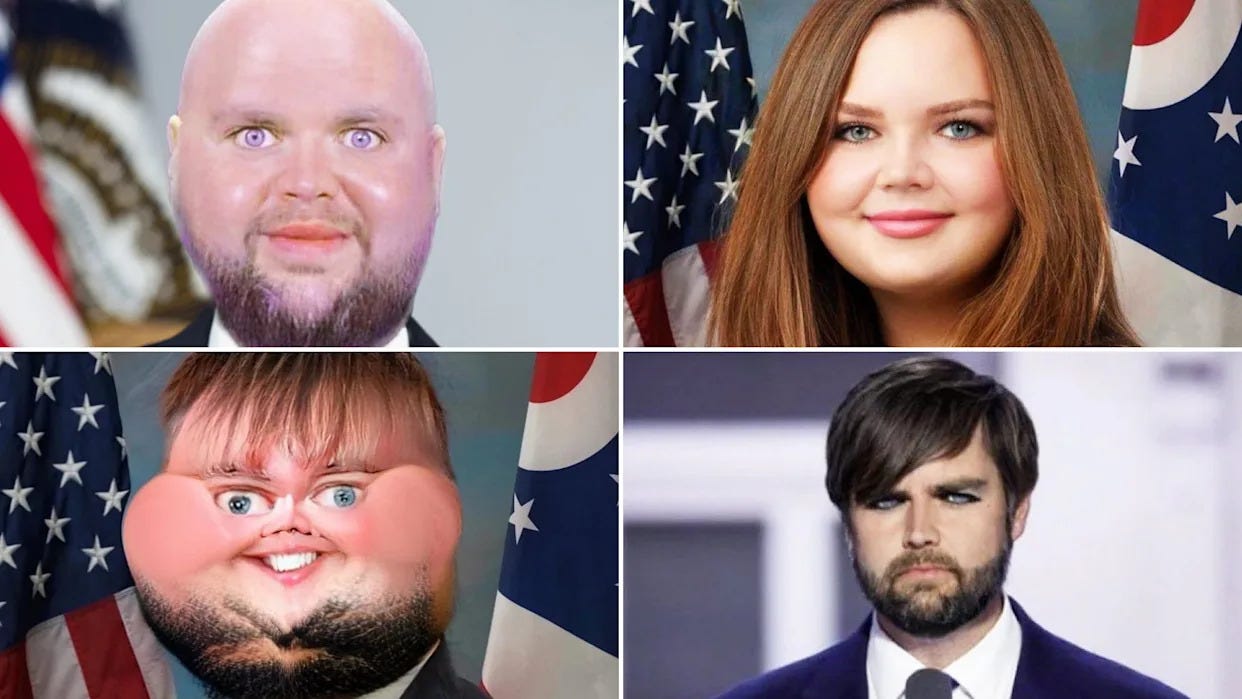
It emerged in early 2025 from online edits emphasizing his appearance in political clips. Left-leaning communities on Reddit and X enregistered it as a grotesque caricature to mock Vance’s policies or persona, indexing hypocrisy or elitism through bodily exaggeration. Conservative or pro-Vance groups, including Vance himself who dressed as the meme for Halloween 2025, re-enregistered it as self-deprecating humor, typifying it as harmless fun to deflate criticism. Broader entertainment circles, such as in South Park episodes or TikTok remixes, enregister it as absurd spectacle, focusing on its viral grotesqueness without strong political ties. Metapragmatic discourse surfaces in threads questioning if the meme body-shames or cleverly satirizes power.
Finally, the “Karen” meme portrays a demanding middle-aged woman, often with a specific haircut.
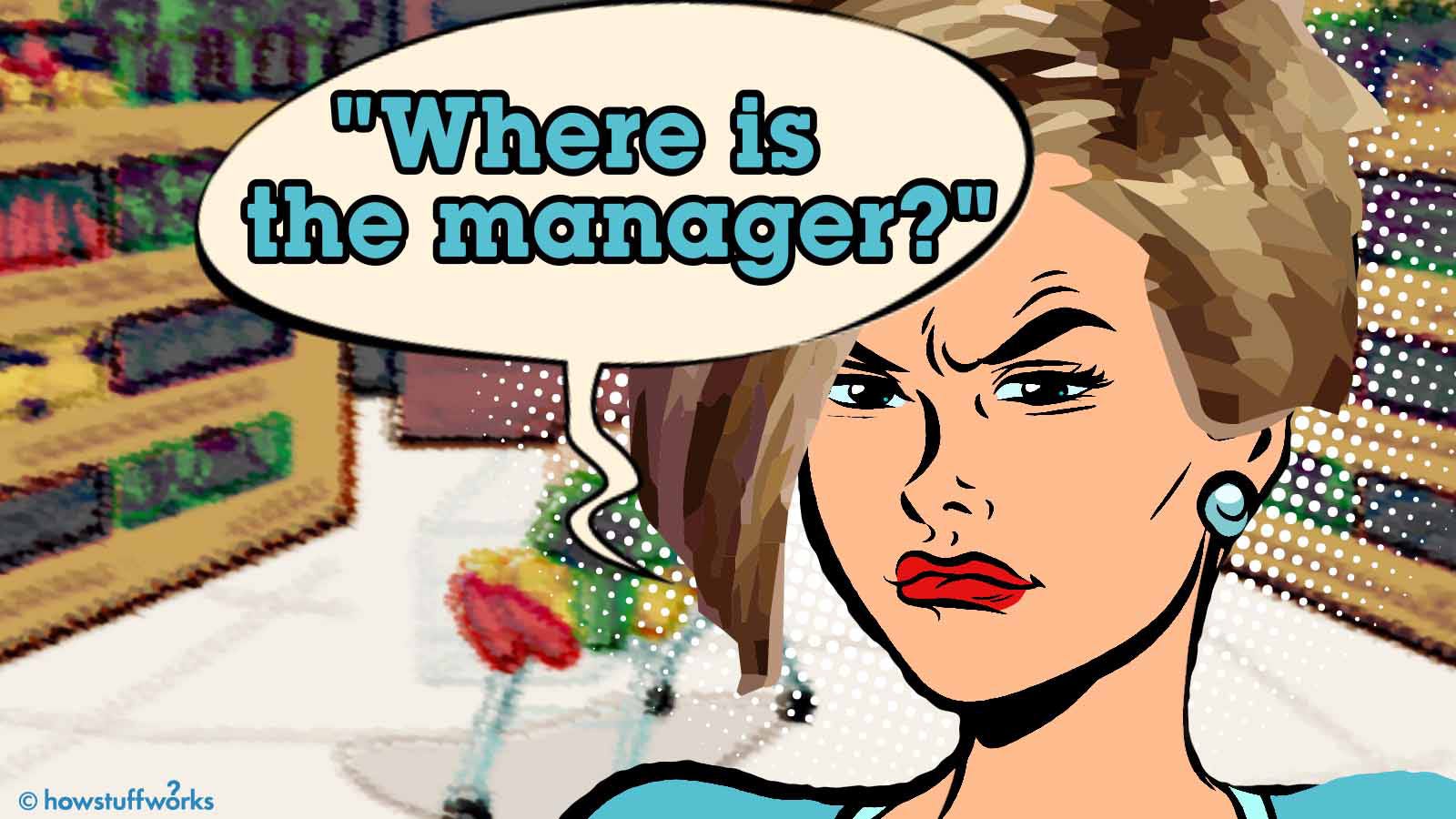
Customer service workers on r/TalesFromRetail enregister it as an index of entitled behavior in everyday encounters. Racial justice communities on X tie it to white privilege, enregistering it as a critique of systemic bias in incidents like calling the police on minorities. Marketing firms use it lightly for humor in ads, typifying it as a relatable archetype. Reflexive debates often center on whether its enregisterment perpetuates ageism or empowers marginalized voices. These examples show how enregisterment transforms memes into social markers, with metapragmatic negotiation driving their cultural trajectories.
The dissertation’s dynamical model, the pitchfork bifurcation formalized as (dx/dt = r x - x^3) (detailed on pages 102-115), captures how this indexing and enregisterment lead to memetic polarization. In this equation, (x) represents the state of interpretation, and (r) serves as the control parameter amplified by algorithms. The model tips unified interpretants into divergent attractors. Memes cross this threshold rapidly. A neutral sign bifurcates as feeds favor outlier indices, such as amplifying a meme’s ironic layer into literal endorsement. Lancaster applies this to ideological splits (pages 120-135), but for memes, it explains chasms in adoption. Some memes, like “Distracted Boyfriend,” enregister universally as relational humor. Others, like “Karen,” bifurcate into gender or class antagonism. At the highest metapragmatic level, users engage in reflexive calibration. They comment on how algorithms enregister memes, saying things like “This went viral because of the outrage machine.” Such commentary reveals the system’s mechanics. Yet it often entrenches the bifurcation rather than resolving it. This reflexive layer aligns with the insights of Paul Kockelman, an anthropologist who explores semiotics in terms of agency and mediation, emphasizing how signs mediate not just meaning but also social relations and power dynamics in discursive practices.
Enregisterment reaches its ultimate frame in memetic ecosystems. Signs accumulate stylistic associations that define group boundaries. Lancaster argues that semiotic ideologies govern this. These ideologies consist of beliefs about proper interpretation (pages 150-162). Memes crystallize them. A meme’s style, from minimalist text overlays to absurd remixes, enregisters it as “internet native.” This indexes digital nativity. In curated societies, algorithms optimize for such enregisterment. They prioritize memes that signal affiliation over those that bridge divides. This creates metapragmatic loops. Discourse about meme usage, such as “That’s so boomer,” reinforces typification. It perpetuates cycles of inversion. Lancaster’s remedies, such as damping (r) through platform redesigns (pages 180-195), apply here. Fostering metapragmatic awareness could disrupt these loops. It would encourage indices that promote convergence rather than fragmentation. By making discourse about discourse more explicit, users could interrogate how enregisterment shapes cultural flows.
Ultimately, bridging Lancaster’s framework to memetics illuminates the treachery at play. Memes are not peripheral but the epitome of signs in flux. Their indexing and enregisterment drive cultural evolution through metapragmatic contestation. By interrogating these processes, as the dissertation urges, we gain tools to navigate algorithmic polarization. This transforms once treacherous signs into deliberate mediators of shared meaning. In the end, the viral alchemy of memes is not some inscrutable magic; it is metapragmatic, a reflexive orchestration of signs that we can decode and direct for collective insight.
Picking up what I am throwing down? Subscribe to Sublius for free.