Every blockchain begins with a single block, and every genesis block carries an inscription that can never be edited out. Satoshi wrote a newspaper headline. This page lets you write yours, then mine it for real, right here in your browser.
Ambient forge · browser-mined, live mining
nonce 0
The original
It began with a headline.
The Times03 · Jan · 2009
Chancellor on brink of second bailout for banks
Billions may be needed as lending squeeze tightens. The Chancellor will decide within weeks whether to pump billions more into the economy as evidence mounts that the £37 billion part-nationalisation has failed to keep credit flowing.
This exact headline is embedded, byte for byte, in Bitcoin's first block: a timestamp, and perhaps a comment, that will outlive the paper it was printed on.
On 3 January 2009, someone using the name Satoshi Nakamoto mined block 0, the genesis block, and inscribed that day's Times headline into it. Every one of the billion-plus Bitcoin transactions since traces its ancestry to this one block.
The block below is the real thing: its actual hash, nonce, and inscription, exactly as they sit at the root of the chain today.
0
“The Times 03/Jan/2009 Chancellor on brink of second bailout for banks”
000000000019d6689c085ae165831e934ff763ae46a2a6c172b3f1b60a8ce26f
nonce 2,083,236,893 3 Jan 2009, 18:15 UTC struck by: one CPU, somewhere
Plain terms
Three ideas, no jargon.
A genesis block is simpler than it sounds. It's made of three things you already understand, or take the 5-minute interactive lesson and learn it by breaking one.
The first page of a ledger
A blockchain is a book of records where each page references the page
before it. The genesis block is page one, the only page with nothing
before it. Its “previous page” field is just zeros:
000…000. Every chain, including Bitcoin, has exactly one.
Words carved in, forever
The miner of a block gets to include a short message. Change a single letter of it, and the block's fingerprint (its hash) changes completely, breaking every page that follows. That's why Satoshi's headline can never be quietly edited. Inscriptions are permanent.
Work you can verify at a glance
Mining means retrying the block with different “nonce” numbers until its hash starts with enough zeros. Finding one takes billions of tries; checking one takes an instant. The zeros at the front of a block hash are the receipt for the work.
Then & now
What took a CPU its evenings takes silicon a blink.
A block at Bitcoin's original difficulty needs about 4.3 billion hash attempts on average. Here's what that costs, by machine:
The demo below uses a friendlier target (a hash starting with four zeros, about 65,000 attempts) so your browser can strike a block in around a second. Same mechanism, smaller mountain. (Curious about block 0 itself? The six-day gap between it and block 1 remains one of Bitcoin's small mysteries.) For the full ladder, from milliseconds to 68,000 years, see the depth ladder.
Your turn
Strike a block with your own words.
Type an inscription. Your browser will hash it with a timestamp and a counting nonce (double SHA-256, the same algorithm as Bitcoin) until the hash starts with the zeros you asked for. Nothing leaves this page.
Target
The forge is idle. Type an inscription and strike.
The vault
Recently struck on real silicon.
Blocks below were mined not by a browser but by a GekkoScience Compac F, a thumb-sized ASIC with 672 hash cores, at Bitcoin's original genesis difficulty. At least eight leading zeros of proof of work, the same bar Satoshi's block cleared.
⬒
“Compac F Genesis”
000000002bfdd443b79ac22e8abc216d1c055598fb581c42113d8e6c0f69afec
nonce 627,715,779 15 Jul 2026 difficulty: same as Bitcoin block 0
·
Your inscription could be next.
00000000····························································
awaiting the forge
The vault is public and anonymous. Inscriptions appear without any information about who requested them. The six most recent strikes show here; browse the complete archive →
Pricing
Pick your depth. Every plate is real.
Every real block is struck on the same ASIC and lands in the same public vault with a verifiable certificate. What you choose is the depth: every extra zero is sixteen times the work, and the plate wears its metal forever. See the depth ladder for the full math.
Genesis 8 zeros
$6.99
- Bitcoin's original 2009 difficulty bar
- Struck in seconds, certificate by email
- No account needed — inscribe at checkout
- 1 in 16 gets a lucky 9th zero. Luck is not for sale
Coming soon
The toy miner above is free, no account at all.
Gold 10 zeros
$9.99
- 256× the work of block 0
- The chip hunts under a minute for you
- Gold plate in the vault, gold certificate
Coming soon
Platinum 11 zeros
$29
- 4,096× the work of block 0
- The chip hunts for several minutes
- Platinum plate, platinum certificate
Coming soon
Prismatic 12 zeros
$99
- 65,536× the work of block 0
- The chip labors for an hour or three, just for you
- The rarest plate the forge can strike
Coming soon
Paid strikes need no account: pay, type your inscription at checkout, and the certificate arrives by email the moment your block lands. Check the spelling — a plate cannot be re-struck. Blocks are standalone artifacts, not tokens; nothing here is an investment. Any struck block can also be ordered as a physical NFC coin.
The pocket edition
Hold your block in your hand.
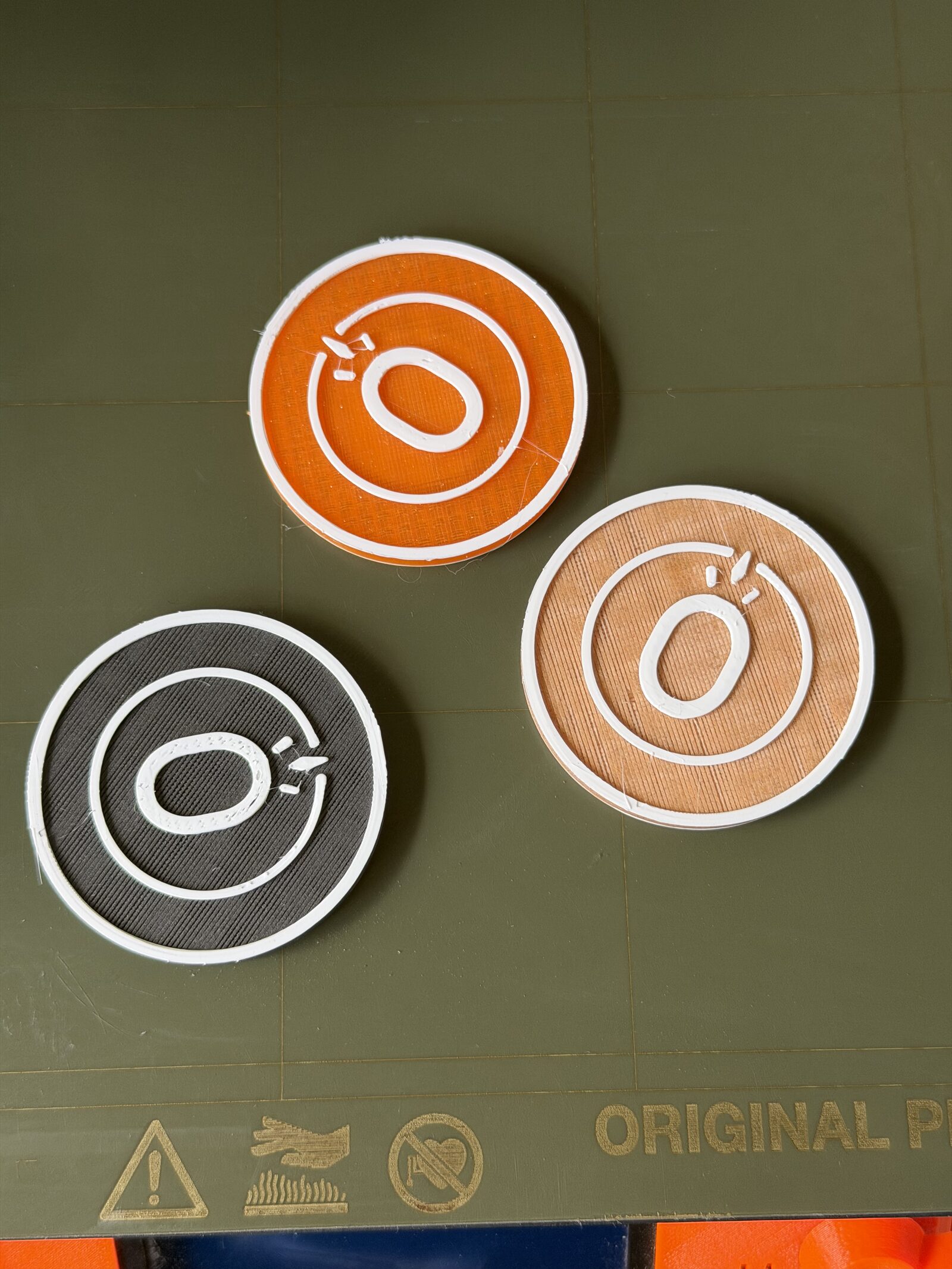
A 3D-printed coin with an NFC chip inside, carrying one block from the vault. Tap it with any phone and the block opens; the proof of work re-verifies right there, in front of whoever is holding it. Printed to order in the USA.
$39US shipping included · clay orange, copper, or ink black
- Order from any public block's page, yours or one you admire
- No app: NFC is built into iPhones and Android phones
- Ships anywhere in the United States, tracking by email
For your agents
Let your agent strike one.
Strike a Block speaks the Model Context Protocol. Add the
strikeablock-mcp server to Claude Code, Codex, Gemini CLI or
Cursor and your agent can browse the vault, verify any block's proof on
your own machine and, once you say the word, strike a real one. Agents
already living in your browser find the same tools on this page over
WebMCP, nothing to install.
Not an agent? The same checks run from a terminal.
npx strikeablock verify <block-id> re-hashes any block's
80-byte header on your own machine and exits non-zero if it does not hold
up. The command line, in full →
Nine tools, one command
npx -y strikeablock-mcp runs on Node 20+. Read the
pricing and the vault, fetch a block, and re-hash its header locally
with no key at all.
get_pricing·list_blocks·get_blockverify_block: double SHA-256 on your machinecreate_strike·wait_for_strike·get_credits- Same package, same checks, from your terminal
Read free, strike with a key
Striking spends prepaid credits (1 credit = $1; a Genesis plate is 7). Sign in at the developer console, mint a key, buy a small pack, and hand the key to your harness.
- The agent is told to confirm the exact words and price with you first
- Rejected or failed strikes are refunded automatically
- Full reference at docs.html#mcp
Already in your browser? Nothing to install.
Gemini in Chrome and other in-page agents discover typed tools on the home, vault and block pages through WebMCP: pricing, the live vault, the toy miner, and proof verification on any plate.
- Chrome 149+ origin trial, or
chrome://flags/#enable-webmcp-testing - No tool pays, navigates or writes; a person still clicks Strike
- Try:
await document.modelContext.getTools()
Straight answers
Three questions people actually ask.
What is a genesis block?
The first block of a blockchain — the only one with no predecessor. Its previous-hash field is all zeros, and it carries an inscription chosen by whoever mines it. Bitcoin's genesis block, mined on 3 January 2009, contains a newspaper headline that can never be edited out. Every chain has exactly one.
Can I put my own message in a block?
Yes — that is exactly what this site does. Your line goes into the coinbase field, the same field where Satoshi wrote the Times headline into block 0. Mine a toy block free in your browser, or have a real one struck on ASIC silicon at Bitcoin's original genesis difficulty.
Is this real Bitcoin? Do I get a coin?
Not Bitcoin, and not a cryptocurrency. Blocks struck here clear the same difficulty bar as Bitcoin's block 0 — about 4.3 billion hashes of genuine proof-of-work — but they are standalone artifacts, not part of Bitcoin or any public blockchain. There is no token; nothing to trade or invest in. A strike is a one-time craft purchase, like an engraving. The only coin here is a physical one: a 3D-printed NFC coin of your block, $39, printed in the USA.