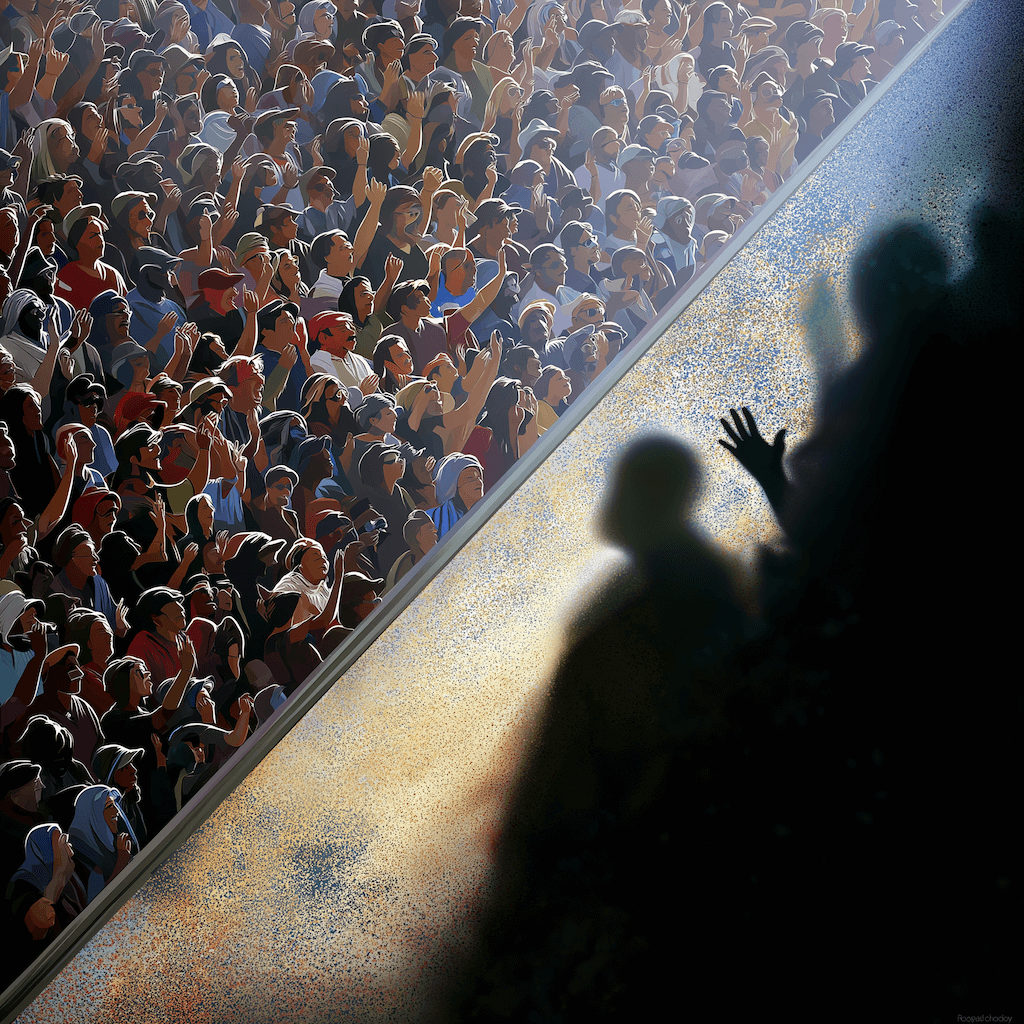
You probably don’t think mental illnesses are contagious. Thankfully, many are not. Some, however, spread quite easily. You may have already been infected.
We normally imagine that mental illnesses are internal to individuals. If someone suffers from anxiety, say, we think of it as a pathology contained within them. Perhaps their genetics, or their brain chemistry, makes them prone to anxiety. That certainly may be so. Their anxiety probably feels pretty personal.
But if they were raised by an anxious parent, it’s not hard to imagine that anxiety getting passed down from one generation to the next. To make matters worse, both generations have excellent cause to harbor anxiety. The world can be a terrifying place, and people often do terrible things to one another. It’s a wonder we’re not all paralyzed by fear.
Our basic model of mental illness places it inside of individuals. The cause of your illness is internal to you, and the only way to fix it, if indeed that’s possible, is by changing your brain, or your mind, or both.
I am going to make the bold claim that, if we already had a decent understanding of mental illness, there would be a lot less of it. While current methods in psychology and psychiatry are life saving for many people, they are next to useless for many others.
To expand our understanding, we need to recognize the forms of mental illness that we choose, even embrace. We need to observe ourselves deliberately infecting the people we love with mental illness, in order to make them more like us. We need to see how we spread certain mental illnesses far and wide.
I’m going to focus on a particular species of contagious mental illness, on the beliefs and practices that cause it to spread, and on how we might immunize ourselves against it. You won’t find this particular pathology in the DSM. There’s no drug for it, though some very potent therapy is available.
The mental illness I’m referring to is commonly called “ideology”. It is not only the most contagious mental illness there is. It is also the deadliest.
Ideology is not merely the result of holding strong beliefs. Ideology is the inability to question or change beliefs, coupled with alienation from everyone who does not share your beliefs.
Before I say more, let me take a few minutes to discuss how I think about mental health and mental illness, and why the latter is often contagious. Then I’ll lay out a working definition of ideology, discuss why it qualifies as pathology, and make some suggestions about diagnosis, prevention, and perhaps even a cure.
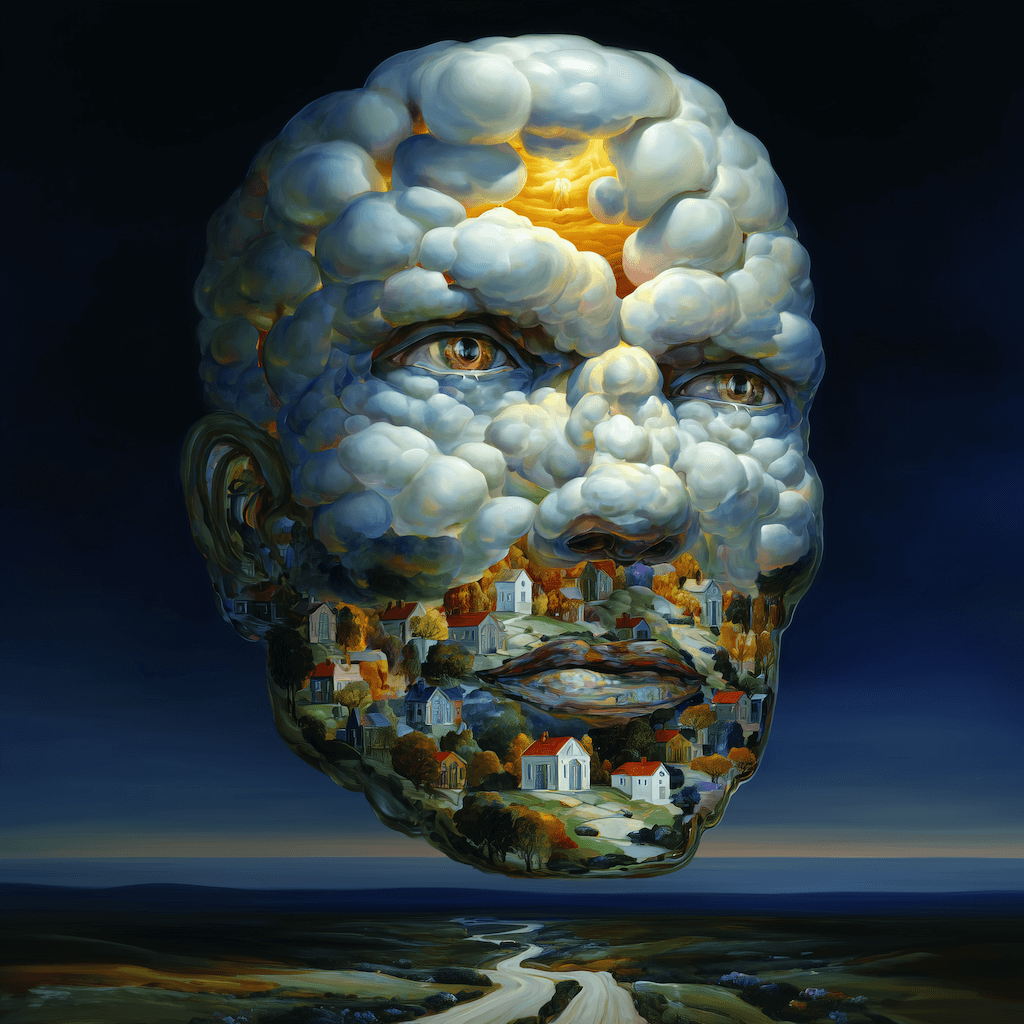
To understand mental illness, you need some picture of mental health. What does it mean to have a healthy mind?
Here are my basic qualifications:
As a bare minimum, I wish my mind to be both functional and peaceful. I want to use my mind to accurately perceive reality (as much as such a thing is possible), to contemplate, discriminate, solve problems creatively, and think new and imaginative thoughts. I don’t want to be plagued by mental disturbances, invasive thoughts, or an overactive inner critic.
I wish to be able to shift states of consciousness at will. That one may seem obscure, but it’s what you do every time you quiet your mind in order to fall asleep, engage it to focus on a goal, or relax it to let go of something that’s no longer important. It’s fundamental.
Just as a healthy brain regulates biology, a healthy mind regulates my capacity to support my overall well-being. It allows me to manage my energy, recognize my body’s needs and limits, and sense my somatic responses to people and events. Crucially, it allows me to inhibit the pursuit of activities I know will harm me.
A healthy relationship with feelings may not be something you associate with the mind, but mental health clearly has a lot to do with emotions. I want to be able to feel things fully, release emotional tensions (rather than accumulate them), and have some choice about which emotions I entertain (rather than being dominated by shame or anger or despair or any persistent aversive mood). I want to develop resilience in the face of inevitable hardship, and have the capacity to learn from life’s challenges.
As fundamentally relational beings, our mental health also requires healthy navigation of interpersonal interactions. That means I need to be able to create close relationships, set boundaries, and overall balance my needs for intimacy and autonomy. Key to this is my ability to feel empathy and take the perspective of others. I should be able to understand the social rules of my communities and be at choice about whether to conform, in order to belong, or find ways to risk being my more authentic self.
Does this seem like too much to ask of mental health?
Consider the difference between someone in peak physical condition, and someone ravaged by illness. Many forces, from within and without, can damage physical health. To become healthy in the first place, and to maintain health over time, we need to learn how to take care of ourselves, and create healthy environments in which to thrive.
The same range exists in mental health. On the illness side, many dysfunctions can disrupt the basic capacities of the mind and emotions. On the health side, there may be no upper limit to how developed our inner resources can become.
I find it helpful to start with a picture of glowing mental health, so that mental illnesses are always seen as a contrast to what we’re striving for. Many things can interfere with our ability to think clearly. Many things can disrupt emotional well-being. Because not all of these fall into clear categories of diagnosis, we have to go beyond the limitations of the medical model to more fully understand what undermines mental health.
In order for us to recognize ideology as a mental illness, I wish to challenge three common assumptions about mental illness here. Let’s take a brief look at how mental illness can be normal, desirable, and contagious.
How would you know if you were schizophrenic? You would need to discover that something in your experience diverges from consensus reality. You’re hearing things that no one else seems to be hearing. You believe something to be true that everyone else thinks you’re imagining. We’re not talking about a minority opinion. We’re talking about a singular, anomalous perception when everyone else’s seem to align.
Because psychosis is our central archetype of insanity, we tend to define consensus reality as normal, and any deviation from consensus reality as abnormal. When it comes to obvious delusions, such clear delineations are possible. But most mental illnesses are not so binary. They’re a matter of statistics, straddling the line between normal and abnormal.
Diagnosing someone as clinically depressed, for instance, is a question of degree. Much depression is of lower intensity or lesser frequency, so it doesn’t merit a diagnosis, but it definitely compromises your mental health. Diagnosing someone with narcissistic personality disorder is a similar enterprise. It means we think they’ve crossed a boundary beyond the range of narcissism common amongst the rest of us. Depression and narcissism are hardly abnormal, even though past a certain point, either one becomes unmanageable. They are only official “illnesses” once their expression crosses the quantitative threshold necessary for an insurance company to cover “treatment”.
There are also countless normal ways of thinking that compromise mental health. Think about the socially-acceptable belief systems that contribute to perfectionism, insecurity, obsessive goal-orientation, self-sacrifice, codependency, reactivity, meanness, territoriality, social pretense, grudges, power tripping, trolling, constant social comparison, or over-identification with things that don’t really matter. We could make lists all day of the subtle forms of madness and irrationality that are woven into daily life.
Some mental illnesses are distinct and relatively rare amongst the population. Others are hard to tell apart from the disruptions of mental health we consider to be “sanity”.
You’d be hard pressed to find a depressed person who wants to stay depressed. When you’re dealing with depression, you identify it as the source of considerable suffering. No one wants to suffer. That’s why we all wish for pills that can take the suffering away. If the pills work, we’re relieved to be free of a burden. If they don’t, we keep seeking other ways to suffer less.
Most of what we think of as “mental illness” is ego dystonic. We don’t want it to be happening. We would prefer for it to go away. But it turns out there’s quite a bit of mental illness we’re just fine with.
Narcissism is the classic example of an ego syntonic mental illness. I would argue that, in addition to making the people around them miserable, true narcissists are also causing themselves ongoing suffering. They, however, would be unlikely to share my assessment. Instead, they blame others for their suffering. In general, people with personality disorders don’t think there’s anything wrong with them, and are likely to defend their dysfunctional behaviors.
All personality disorders, however, are just extreme versions of the ego defenses we take for granted. If I can’t accept something about myself, I may project my negative judgement onto other people, imagining they’re the problem. If I can’t explain my own behaviors, I may rationalize them, even to myself, to convince myself I’m in control. If I can’t deal with my insecurity about something, I may over-compensate by fixating on something I feel confident about.
These sorts of defense strategies (projecting, rationalizing, and over-compensating - in the examples above) probably won’t seem to me like the considerable malfunctions that they are. They’ll seem like natural strategies for maintaining my sense of self. Why would I want to stop doing something that seems integral to my sense of safety or sense of belonging?
The madness we defend is so common as to be unremarkable. Here are a few mundane examples:
When your romantic partner tells you you’re being irrational, or too aggressive, do you thank them for their feedback and adjust accordingly? Or do you tell a story about how wrong they are and stand by your (hopefully momentary) departure from sanity?
When short-term sources of relief, like scrolling or smoking or judging or hiding, are obviously contributing to your long-term suffering, do you seek help, or justify the necessity of your self-sabotaging behavior?
When you fail, over and over, to live up to some standard you have of how you’re supposed to be, do you identify that standard as obviously, totally whack? Or do you continue to defend the delusion?
Achieving mental health, and maintaining it, is no mean feat. Sometimes, we’d rather take the easy road and stay a little crazy (or a lot).
Some mental illnesses are famously contagious. Bulimia can make the rounds in sororities. Teenagers can inspire each other to self-harm in online forums. Even more extreme afflictions, such as dissociative identity disorder, often begin as forms of imitation.
We are cultural animals, born with special cognitive infrastructure for learning through imitation. We absorb the best and worst that the people around us have to offer.
This means it’s easy to pick up anxiety, for instance, from our parents. It also means we’re easily conditioned into feeling shame for just being who we are, which is an active ingredient in many forms of mental disturbance. Even worse, we propagate trauma. People with unresolved PTSD (in both standard and complex varieties), are the most likely to pass on trauma to others.
I just described three interpersonal transmission vectors for mental illness: role modelling, conditioning, and harm. These facilitate mental illness getting passed down from one generation to the next, and from one individual to another.
Some physical illnesses can be passed from one person to another. Others, however, we acquire from the unhealthy environments we live inside of. It’s the same with mental illness.
Addiction may be the most obvious example of a breakdown in mental health that comes from an unhealthy social environment. It’s hard to be addicted to a substance, or a behavior, that’s not readily available. Rehab centers exist in the hope that people will recover in an environment where they simply can’t feed their addiction. 12-step programs are effective because they create alternative communities built around healthier practices. You need a change in environment to produce a change in yourself.
Some years back, one of the most effective treatments for eating disorders for young American women was to send them abroad for a year. Almost no country outside the Western world maintains the social pathology that makes body dysmorphia so prevalent here. Simply being transplanted into a more sane cultural context, for an extended period of time, can make all the difference. Unfortunately, the internet is a wildly effective transmission vector, so many other countries have become more similar to the West when it comes to obsession with weight and unrealistic beauty standards.
How many young people really suffer from ADHD, and how many just suffer from school? School systems expect young people to manage their energy and attention in ways that feel impossible to a significant percentage of children. As a result, those kids manifest the symptoms of a mismatch between their nature and the structure of the institution. The mental illness is social, not merely individual, distributed throughout interactions between children and the adults who are trying to shape them.
In the examples I’m offering, people aren’t usually trying to make each other crazy. As a result, not everyone “catches” mental illnesses. Some people are more susceptible than others.
To increase the rate of transmission, you need a kind of mental illness that people deliberately spread. It has to be a community effort. You can only be a part of our group if you share our mental illness. That’s where ideology comes in.
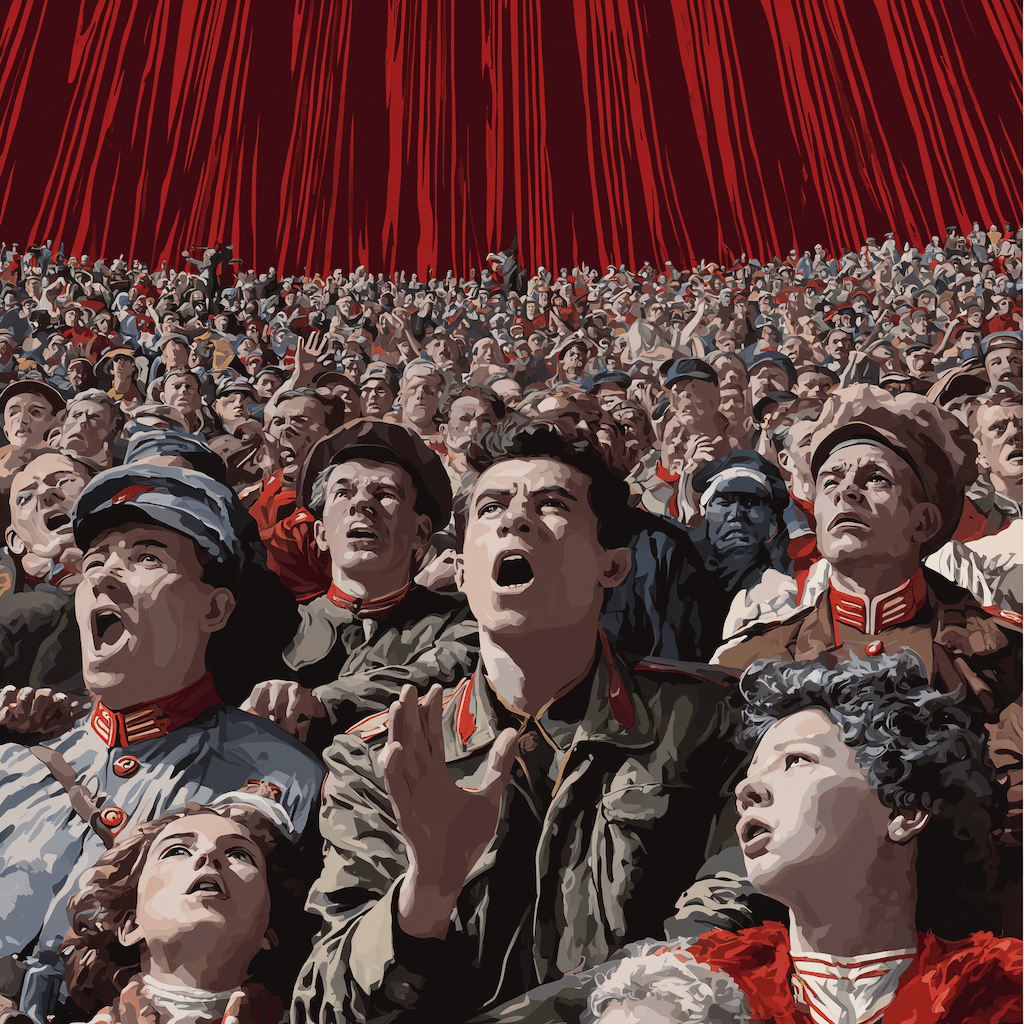
Everyone has beliefs. Our entire world view is made of them. In optimal conditions, our beliefs do a decent job representing reality. They help us navigate the complexities of life on Earth. In less optimal conditions, there’s only a tenuous match between belief and reality. These beliefs cause no end of trouble.
A subset of beliefs are about society and religion, about what form governments should take, how people should treat one another, and what traditions should guide our behaviors. Once you hold such a political or religious belief, it’s immediately clear that it exists only in contrast to differing beliefs. There’s an ingroup that shares your orientation, and an outgroup that does not.
Being rooted in strong religious or political beliefs does not necessarily make you ideological. Ideology depends on how you hold those beliefs, how you relate to the group that shares them, and how you engage with everyone else who doesn’t.
I think of ideology as being defined by four characteristics:
Ideology involves subscription to a set of conclusions about the nature of society or reality.
Adherence to those conclusions is the basic requirement of belonging to a group.
The group maintains its identity through intolerance of outgroup members, or asserting its superiority to outgroups.
Beliefs are oversimplified into propaganda in order to spread them further.
Let me unpack each of these, and discuss why it makes ideology into a form of mental illness. By the time I’m done, it should be obvious why this particular mental illness is so contagious.
Some beliefs are subject to revision. Some are not.
Have you ever defended one of your beliefs in a discussion or debate? To compete with opposing beliefs, you need to back yours up with arguments and evidence. You may discover, in such a dialogue, that your belief is wrong, or lacking nuance, or in need of deeper interrogation. If your world view is open-ended, such discoveries are exciting. You have the opportunity to grow by evolving your belief system.
I’m sure you’ve noticed, however, that many people never discover anything new in the process of dialogue. Any logic they use is selective, or slippery, ultimately supporting the conclusion they already had. Only supportive evidence is considered valid. Counter-arguments serve only to strengthen their resolve.
When you start with an open-ended inquiry, you can come to an unexpected conclusion. When you start with a conclusion, there’s nowhere else to go. All logic, analysis, and consideration of evidence must bend back toward pre-established conclusions. Logic is used to justify, not to explain. This is a basic feature of ideological thinking.
There’s a version of this phenomenon in many religions. Religious leaders encourage followers to think for themselves, even to question the religion’s basic tenets. The assumption is that, by going through the process of doubting, the doubters will eventually come to understand for themselves what had previously only been an article of faith. In other words, they will take a long and winding road back to the place they began, arming themselves along the way with arguments in support of whatever they had originally doubted. You are free to think for yourself, as long as you come to the correct conclusion by the time you’re done.
When someone is in the throes of a paranoid delusion, they are subject to an extreme form of this conclusion-first thinking. They may be certain that people are watching them, or after them, or that everything anyone around them says or does is about them. If you demonstrate that there are no actual cameras where they are pointing, they’ll tell you the cameras are invisible. If you remind them about all the people who care about them and wish to protect them, they’ll generate a narrative about how those people are in on it, or only testing them, or under the effects of mind control. They distort any empirical evidence and spin self-consistent logic to support their subjective sense of certainty.
When people believe a conclusion is true,
they are also very likely to believe arguments
that appear to support it,
even when these arguments are unsound.
--
Daniel Kahneman
If nothing can make you change your mind, your mind may be in trouble. There’s a reason they call them “chains” of logic.
The inability to ever come to a new conclusion has two sources. The first is that membership in a community depends upon you sharing the community’s conclusions. We’ll talk about that in a minute. The other is that we tend to have moral intuitions first, and only wrap them in reasons afterward.
A moral intuition is a gut feeling that precedes thought. These reactions are far from universal. Depending on your cultural background, your conditioning, and your emotional triggers, your moral intuitions may be very different from mine.
Imagine if you will, a confrontation between police and civilians. Without knowing anything about the circumstances, your pre-existing feelings about police probably color your sense of what’s going on. If you associate police with feeling overpowered, or corruption, or brutality, that feeling will dominate. If you associate police with feeling safe, or order, or service, a very different feeling will guide you.
Intuitions come first,
strategic reasoning second.
--
Jonathan Haidt
Is it valid to start with feelings of outrage, or disgust, or protectiveness, or loyalty, rather than with rationality? Valid or not, it’s what we do. Something just feels right, or feels wrong. An inability to question one’s feelings, however, will mean that thinking is rarely in the driver’s seat.
Ideology is not merely based on beliefs. It is based on pre-established conclusions. It impairs your ability to think, while masquerading as rationality.
Everyone needs community, and all communities are organized around commonality. Shared practices bring our efforts together, and shared values ensure we take care of each other. We are social animals. None of us can manage alone.
Sometimes, the community you rely on includes all your family, friends, and coworkers. If everyone around you shares the same coherent community, the cost of not belonging is very high.
For better or worse, in order to belong you probably need to share your community’s beliefs. Depending on the group, there might not be a lot of wiggle room. Holding the “correct” beliefs might be the cost of admission. That means you risk exclusion if your beliefs change. In order to keep those beliefs fixed in place, you might need to sacrifice your ability to reason, or to question, or think for yourself. You might need to impair your own mind in order to belong.
The fact that millions of people
share the same vices
does not make these vices virtues,
the fact that they share so many errors
does not make the errors to be truths,
and the fact that millions of people
share the same forms of mental pathology
does not make these people sane.
--
Erich Fromm
Consider a common, benign form of shared madness. When you watch competitive, team sports, do you watch with a kind of neutrality - just an open curiosity about which team will do better? Or do you root for “your” team? The team that winds up being “yours” doesn’t have much to do with anything objective (besides, perhaps, their proximity to your hometown). You’re meant to take their wins and losses personally, feeling defeated or victorious, enraged or elated, depending. It’s a form of tribal affiliation. What happens if you jump sides and start rooting for the other team? People may rib you and call you crazy, but they probably won’t exclude you. It’s not (usually) as serious as all that. It can even be more fun when there’s a detractor in the group, or two camps heckling each other.
For a far more serious example, look at some of the more culty religions. Breaking with tradition in those communities is not an option. It can mean being shunned, ostracized, disowned, excommunicated: genuinely losing your entire family and support system. You’re no longer one of us, because common beliefs, in these communities, are more important than shared history or blood ties.
What about you? Have you ever cut ties with a family member because they don’t share your political affiliation? Or been cut off by someone else? This has been an especially popular move with American liberals over the past decade. It’s even a badge of pride to declare that you’ve alienated friends, or made enemies of family members, because they don’t share your position on a political matter.
Once you’ve witnessed people being exiled due to “incorrect” beliefs, you know that ideological conformity is the cost of belonging. There’s never really true uniformity within an ideological group, but there seems to be. The group members with the strongest beliefs and most ideologically-consistent positions are the most vocal. They appear to represent the entire group. Meanwhile, the many group members with less conviction, or more nuanced perspectives, are unlikely to be forthcoming. They know the risk of having a dissenting opinion, or even of having no particular interest in something the group has declared to be important.
If you’re reading this article, I assume you’re a thinking person willing to reflect on your own beliefs and assumptions. The majority of people never get that far.
A psychologist I knew was interested in people who seem to hold multiple conflicting identities at the same time. He interviewed a gay Republican a year before same-sex marriage was legalized in the first state to recognize it. At the time, Republicans were likely to represent anti-gay political positions, though that has since changed significantly. He asked the guy, “Given that you were born gay, and the Republican party doesn’t support gay rights, why would you choose to be Republican?” His answer: “Well, I don’t know if I was born gay. But I was definitely born Republican!”
Most of us are born into our political affiliations. We didn’t choose them, and we wouldn’t know how to choose otherwise. This is certainly true of religions. You start off in an environment where most of the adults you’re exposed to share beliefs, moral intuitions, and reactions to current events.
For some of us, the question is whether to conform to keep from losing our communities. For others, there has never been any separation. Identification as a group member is indistinguishable from identification as an individual.
The stronger an ideology, the greater the intolerance for those who don’t share it. The group is defined by who is excluded. Because the beliefs held by the ingroup are considered correct, the outgroup must be incorrect. Sometimes the outgroup is a local minority. More often, it is a similarly-sized group on the other side of a political or religious divide. Sometimes the outgroup is the rest of the world - the vast majority of humankind.
Ideology tends to be adversarial. There are sides. To maintain ingroup identity, we form narratives explaining how the unbelievers in the outgroup manage to be so clearly wrong.
A common strategy is to imagine that the people on the other side are simply dumb. It’s an almost compassionate perspective. It’s not their fault that they’re wrong. If they were only a little bit smarter, they would agree with us. Hard as it may be to imagine, there’s a good chance people over there on the other side are saying the same thing about you!
This assertion of superiority appears righteous to insiders, but arrogant to outsiders. Positioning your side as superior appears to be a necessary tactic in the war of ideas. How else can you sway voters to your side? When both sides adopt this strategy, however, you wind up with polarization, something we’re all increasingly familiar with. Turns out that people don’t like being talked down to. It’s a sure way to escalate animosity, which then seals in mutual misunderstanding.
Mere arrogance, however, toward people who don’t share your orientation, is on the peaceful end of the intolerance spectrum.
Moving a step toward the less-peaceful end of the spectrum, we find people with dispositional hostility. They are always against something or someone, though the issues and characters change over time. Cancel culture comes from this position on the spectrum. It’s understandable, because destructive power is a lot easier to wield than creative power. Most people don’t like to think of themselves as oppressors, but oppressive power is the goal of this approach. That’s what it takes to dominate people who are different from you, or to destroy what they have created.
What emerges is a kind of negative solidarity:
bound together through animosity,
they attack or disparage an outgroup.
The individual now belongs
to a group of people who share outrage
and recognise the same enemies.
The chaos and turmoil of life is organised
into a clear narrative of righteousness:
in opposing the enemy, we become good.
--
Paul Katsafanas
As we make our way to the more violent end of the intolerance spectrum, we find a general welcoming of sadism. People are no more likely to identify themselves as sadistic than they are to recognize themselves being arrogant. But you see it every time someone tears into someone else in the comments on a social media post. If it feels good to see someone else suffer, or to humiliate them, or to attack their character, you are, for better or worse, a sadist. If you feel better when people in the outgroup feel bad, that’s sadism. If you wish to make the world less safe for people in the outgroup, that’s violence.
This kind of sadism is often encouraged. Of course, you’re supposed to rejoice in the defeat of your enemies, and the greater their loss, the better. In the long term, though, those whose suffering you enjoy are likely to retaliate. Extreme political swings in one direction are often corrected for by extremes in the other direction.
Finally, when we reach the most violent end of the intolerance spectrum, we wish, either quietly or vocally, for the total obliteration of people who are different from us. Do you believe the world would be better if only we could erase some sizable group of people? Maybe we can. It has been tried before, and will no doubt be tried again.
Moving, then, from one side of the intolerance spectrum to the other, we find arrogance, dispositional hostility, everyday sadism, and genocidal tendencies. These are increasingly anti-social forms of mental illness, all of which are fairly common. You can find them on most social media platforms every day of the week.
No doubt there is some role for primal, tribal emotion in politics. Perhaps we need aggression, outrage, protectiveness, even hate. Unless those potent internal forces are brought under control by some balanced process of thinking, however, we risk becoming sociopaths.
Some ideological communities speak the language of tolerance, while practicing intolerance. Over recent years, it has been heartbreaking for me to witness the breakdown of inclusivity among many of my friends who purport to care about social justice. From within a group that claims to value inclusion, they exclude anyone who thinks differently from them. While yearning for diversity, they become increasingly segregated. Some people try to logic this hypocrisy by saying they’re only intolerant of intolerance. That’s a flavor of irony present in many varieties of madness.
We only think of ourselves as mentally ill if we can tell our thoughts or emotions are causing us pain. When it comes to ideology, we can’t tell. Ideology teaches us to outsource the locus of our suffering. We are sure that those others, out there, are the cause of our pain. As a result, instead of trying to eliminate the madness that is hurting us, we try to eliminate other people.
We gain solidarity and community from sharing an ideology. But when that ideology is built on intolerance of everyone else, we also become alienated from most of humanity. We fail to understand how painful our alienation, against-ness, and loss of connection really is, because we blame the outgroup for the pain we feel.
Polarization doesn’t only disconnect us from each other. It causes us to lose touch with reality. We come to believe that entire groups of people are inferior. We believe the issues that have been manufactured to capture our attention are the things that matter most. We believe issues really have only two sides. Throughout all this, we become less capable of thinking for ourselves, more reliant on others for our opinions, and unable to take more than one perspective at a time, in what is most certainly a multi-perspectival world.
Losing touch with reality is a key component of mental illness. The deeper a person becomes immersed in the distorted world view of their ideology, the harder it is to grasp the complexity of reality.
Taking complexity into account is hard for everyone. When you’re under the influence of propaganda, it’s impossible.
Propaganda is the deadliest force on earth.
Actually, that’s not true, or, at least I don’t think it’s true. But it makes for a pretty good slogan if your goal is to infect people with oversimplified thinking.
Nearly everything in life is more complex than our internal models of it can account for. This makes us susceptible to slogans, sound bites, simplifications, and stereotypes. It’s hard for complex ideas to go viral. Real thought is hard to spread, but cartoons, caricatures, and catchphrases easily make the rounds.
Propaganda is a substitute for thinking. Marketers use it to convince you to spend your money. Institutions use it to secure compliance with their rules. Ideologies use it to recruit people to their ingroup, and turn people against the outgroup.
The conscious and intelligent manipulation
of the organized habits and opinions of the masses
is an important element in democratic society.
Those who manipulate
this unseen mechanism of society
constitute an invisible government
which is the true ruling power of our country.
--
Edward Bernays
The framing of political issues nearly always serves a propaganda function. Consider, for instance, the two sides of the abortion debate. If you identify yourself as “pro-life”, you are trying to make the other side seem like baby killers. If you identify yourself as “pro-choice”, you are trying to make the other side seem sexist and authoritarian. No one is likely to agree with how the other side characterizes them, so the labels will never promote greater mutual understanding. That’s not their purpose. Their purpose is to bolster one side by dehumanizing the other side.
When it comes to how we think of other people, both individuals and groups, our oversimplifications come at a cost. We all know, for instance, that racial stereotypes harm people in the group being stereotyped. But stereotypes of racists also do tremendous damage. They disregard diversity, lumping White Supremacists, for instance, in with people who merely promote colorblindness as their strategy for overcoming racism. They create the impression that we are more divided than we actually are, alienating people who might otherwise be allies.
Ideas that evoke strong emotion are more likely to take hold. If you teach children that an invisible man loves them, that might get you somewhere. If you tell them that man is the only thing protecting them from being tortured by demons for the rest of time, that will get you a lot further.
Propaganda always promotes a sense of urgency. It always wants us to think we’re at war, and it always wants us to think we have enemies. Propaganda discourages temperance, patience, nuance, and openness. It convinces us there are sides, and that we have to choose between them.
A reliable way to make people believe in falsehoods
is frequent repetition,
because familiarity is not easily distinguished from truth.
Authoritarian institutions and marketers
have always known this fact.
--
Daniel Kahneman
Full participation in an ideological community requires you to become a propaganda peddler. We are all familiar now with the concept of virtue signaling. Each time the news feeds us a relevant event, you are expected to declare for a side so we know you’re still one of us. The slogan ‘Silence is Violence” is a particularly disturbing example of this mandate. It tells you that if you don’t actively signal your alignment with the ideologically correct position, we will treat you as if you are the enemy. Abstaining is not allowed. You can’t simply say, “That’s not my issue.” Neutrality is the same as opposition.
Ideological beliefs, or the conclusions group members are required to adhere to, tend to stick if they are easy to grasp and easy to convey. The subtleties of nuanced thinking get swallowed up in the oversimplified and divisive proclamations of propaganda.
If you believe the world will be better if more people share your beliefs, you will do your best to spread them around. If those beliefs distort reality, and people are required to adopt those distortions in order to belong, then your efforts to recruit people will also be efforts to infect them with a community-supported form of mental illness.

I’d like you to meet Boray: a young man, raised in a loving family of farmers. Everyone who meets Boray considers him friendly and good-natured. He doesn’t front or act tough like so many teenage boys are trained to do. He loves his mother, and helps to care for his younger siblings. No one has any reason to suspect he will soon become a serial killer.
Yet here he is, a year later, blindfolding his victims one by one, smashing them in the back of the skull with an iron bar, and allowing their broken bodies to plummet through a hole in the ground, onto the stones of a deep cave below.
The madness that overcame Boray, turning him into a cruel and ruthless murderer, did not come from a malfunction in his perfectly normal brain. It was not the result of trauma inflicted on him by his kind and gracious family. No. He was the victim of a communicable disease.
This disease led him to believe that a new world was possible, one in which all people would be equal. His many victims, he believed, were enemies of this dream, necessary sacrifices to a better future for all.
The vision that inspired Boray to murder was first outlined by Marx, violently implemented by Lenin in the formation of the Soviet Union, and then far more brutally imposed on its people by Stalin. Mao, inspired by Stalin’s purging of political opponents and supposed dissenters, reshaped China through mass executions and forced labor. Pol Pot, in an effort to more comprehensively apply Mao’s principles, declared a complete reset of the country of Cambodia, during which he managed to slaughter one out of every four people in the country over a span of four short years.
Boray was a willing participant in Pol Pot’s army. Perhaps he joined because he was afraid of the alternative. No doubt he began his service with an aversion to killing his fellow Cambodians. Eventually, however, he needed to believe. In order to kill so many, up close and personal, he needed to believe he was on the side of good.
I have often visited the cave where Boray and his compatriots did their killing. It is only one of many mass grave sites across the Cambodian countryside. For about 20 years, the cave hosted a vast heap of bones, below the hole where the bodies were dropped. Eventually, they were cleaned up, and only a neatly arranged pile of skulls remains, in a glass case by a giant reclining Buddha. An old man sits by the memorial and ties a piece of red yarn around the wrist of anyone who wants a reminder - of what we are capable of doing to each other. I am wearing one right now.
I sometimes hike to the top of the cave and meditate on the edge of the hole, imagining what it was like to be Boray.
I put myself in the position of a young Cambodian soldier, recently infected by Pol Pot’s ideology. What might it be like? As someone raised in a loving community, how would violent propaganda, repeated over and over, change my inner world? How would it feel to embrace such violent thoughts? I tell myself, in this imagined scenario, that I am helping my family. It is right to kill these dissenters, these rich landowners, these intellectuals. I am clearing the way for a glorious future of fairness.
I suspect every military force employs a few true sadists, but almost no one starts out that way. On the contrary, the people who implemented Pol Pot’s ideology - as soldiers, labor camp enforcers, wardens, torturers, and executioners - were normal, corruptible people, under the influence of a deadly virus.
Is this scenario too extreme, or too alien, for you to relate? Does it seem far removed from the ideologies you encounter on social media every day, the ones you take for granted? Perhaps it is, but consider the following questions.
Have you ever imagined that the world would be better if only you could eliminate the people who don’t share your beliefs? Have you ever felt that those others are inferior to you? Have you believed that you, and people like you, should be making decisions on behalf of everyone else?
If you can answer yes to any of those questions, you may have been infected with ideology - an ideology not so many steps away from Boray’s killing cave.
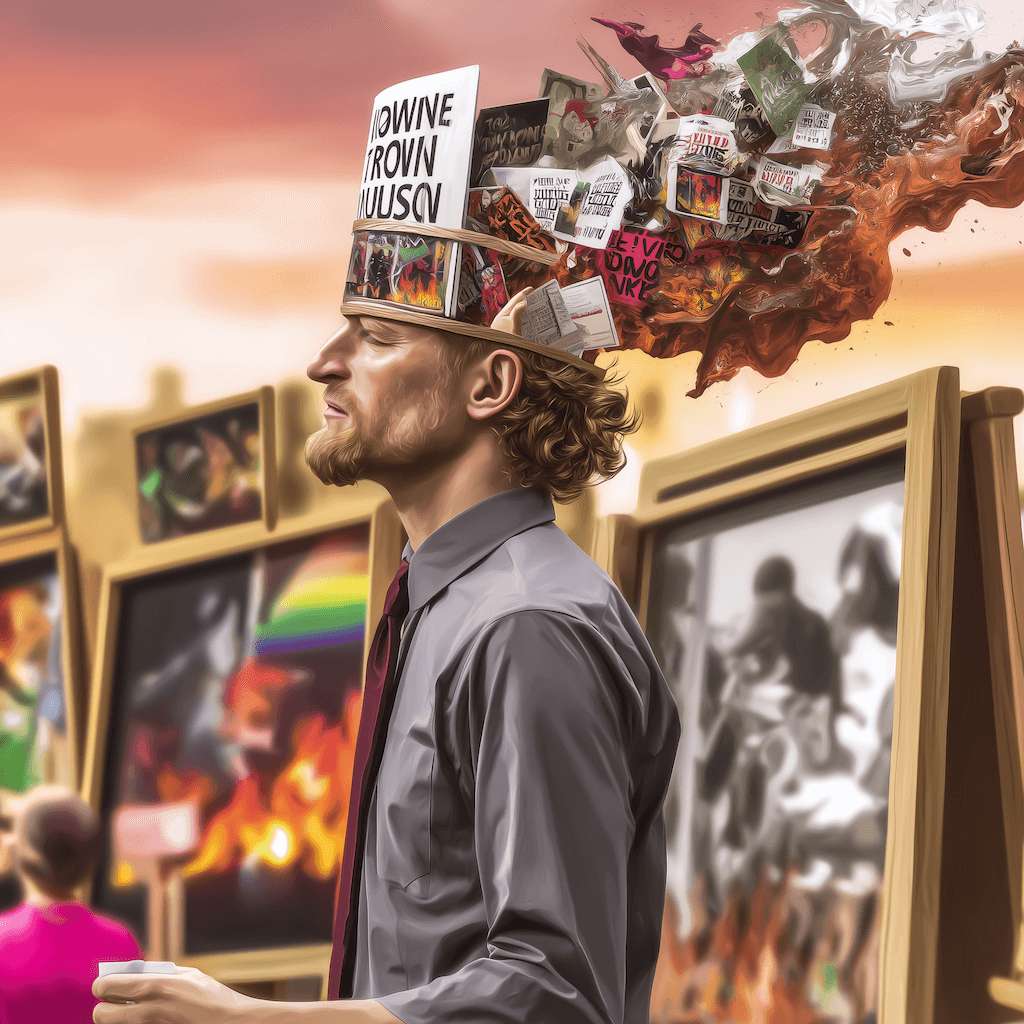
Here’s the story so far.
Many forms of mental illness do not fit the pattern we’ve learned from the medical model. Mental illness can be a normal part of life in society; we may stand by and defend our dysfunctions; and we can pass some of them on to one another.
Ideology is one such form of mental illness. It’s particularly contagious, because we need to adopt it in order to belong. It impedes our ability to think, locking us into beliefs which have been distorted in order to make them contagious. It encourages us to be intolerant and segregate ourselves from people who are different from us. It makes us into one of its agents: recruiting people with propaganda and policing the people close to us to maintain conformity. All of these features of ideology cause us to suffer, but we imagine the outgroup to be the source of our suffering.
You may have caught this mental illness and not know it. You may suffer from it every day without recognizing the cause of your suffering. If you were suffering from ideology, how would you know?
I want to ask you a few diagnostic questions, so you can find out whether you have this mental illness.
First, however, let me give a contrasting example of non-ideological belief.
A number of my Christian friends belong to a sect that subscribes to a literal interpretation of the King James Bible. Putting aside the oxymoron of the phrase “literal interpretation” for a moment, there are some beliefs I know they hold. Specifically, they believe in an afterlife of eternal hell for anyone who does not embrace Christ, according to the rules of their sect. I have asked a few of these friends whether they believe my Jewish mother will therefore go to hell after she dies.
Inevitably, they respond in the affirmative, and I suggest that there must be something wrong with their interpretation of scripture, as it’s hard to believe in a God that would eternally punish someone as benign as my mother. Their responses remain rooted in their firm beliefs, but are not, from my perspective, ideological. They always say something along the lines of, “Hey - I didn’t make the rules. I’m just telling you how it seems to be. I’m sure your mother is a lovely person. I hope she chooses to join us and be saved!”
This, to me, is a lovely response. It’s not ideological because no one I’ve had this dialogue with celebrates the idea of me, or my mother, going to hell. No one smiles righteously and tells me she deserves whatever she gets for not joining their religion. In other words, they continue to treat outgroup members with love and respect. They offer an open invitation to dinner, during which we can talk about our differing views with genuine, mutual curiosity. They do not assert superiority or wish to punish anyone.
I offer up this example because it’s a contrast to how many people deal with religious differences. We hear a lot about conflicts between religious groups, even ones that want to wipe each other out. We don’t hear as much about the many parts of the world where people live in mutual respect for their neighbors’ differing cultural practices and religious beliefs. It is possible to be for without being against.
I want to invite you to make this personal. I’ll ask you a series of questions for self-diagnosis. They’ll require a kind of determined honesty on your part. The goal is to learn whether you’ve contracted ideology, and how bad a case you might have. In examining all these questions, you want to ask yourself two things:
Is it possible that my sense of reality has become more distorted than I realize?
Has my mental well-being or mental functioning been compromised?
I’ve broken up these self-diagnostic questions into a few themes, but they’re all related.
Can you think of someone in your life, whom you love and respect, who does not share your ideological orientation? Even just one person. I mean that you respect their thinking, and genuinely validate their choices, even though they have come to different conclusions than you.
If there is no such person, I would ask you to reflect on how that kind of social rupture has affected your mental health and sense of well-being.
If you have strong religious beliefs, do those make room for the possibility of someone else’s religion being as valid as yours? The question is the same for avowed atheists. If someone in your life is resolute in their religious beliefs, how do you feel about them?
Many of us are pluralistic when it comes to religiosity, but monolithic when it comes to politics, so let’s extend these questions a little further.
How do you feel, overall, about people who don’t share your political or religious affiliation? Do you categorically dislike them? Do you hold them to be inferior to you? Or do you consider them to be of equal status to you, simply different? Do you imagine the outgroup to be homogenous? Or can you perceive the range of variation among them? Are you against the entire outgroup, or just the small percentage who represent the most egregious (in your mind) position within their group?
Who have you lost because of differences in belief, or differences in expression, or differences in priorities? If you’re honest with yourself, did it hurt to lose them? Did it hurt to become the kind of person who would separate yourself from them?
Are you a separatist? We all need to take refuge in solidarity with people who are like us. But the world, for the most part, consists of people who are different from us. Figuring out how to all get along is the challenge. Have you organized your life, more than momentarily, to make sure you are only around other people who are like you? If so, how might that have impaired your well-being?
Is there any group, or subgroup, for which you reserve your hate? Are there individuals who represent those groups for you, who are your favorite targets for hate?
Do you suffer from hate? What does hating do to you? If you could somehow be free of it, would your life be better? Or are you committed to hating?
Are you a sadist? Really give a moment to this question. I’m not talking about consensual kink here. I’m asking whether you take pleasure in the pain of others. When someone has, from your perspective, “incorrect” beliefs, do you enjoy shaming them for it? Do you take pleasure in spreading gossip about them or damaging their reputation? Do you get excited when you deliver a particularly scathing criticism of them on social media? Do you fantasize about hurting them, or enjoy watching them be hurt? If you can answer yes to any of these questions, can you recognize ways the short-term thrill of hurting others may have long-term detrimental effects on your personal relationships, on your inner world, on your soul?
If possible, ask these questions of yourself without judgment. We’re talking about a mental illness here. It’s not your fault if you’ve been infected with it. It may be possible to heal it, but only if you can first be honest with yourself about it.
How much of your energy is tied up in establishing how wrong other people are? How much goes into defending or justifying your own positions?
Those questions, about right and wrong, are particularly important. Despite the picture I’ve been painting of ideology as mental illness, you may still hold that your position is the only possible ethical one. I’m by no means suggesting that all positions are equally ethical, or that you should become a moral relativist. I’m suggesting that it might be hurting you to hold on so tight to being right and making others wrong.
If you have lived a life of being against something or someone, what kind of stress has that put on you? What effect has that stress had on other areas of your life? Are you always seeking something new to be against? Has against-ness become a part of your identity?
Are you angry about injustice? While anger is a natural reaction to oppression and domination, all reactions are temporary. At some point, you need to find a sustainable relationship with the unfairness of the world. Arcing toward justice takes a long time, too long to live as a function of outrage. If your inner world, or your relationships, are chronically colored red by anger, you can’t be mentally healthy.
The same goes for chronic righteousness, dispositional hostility, and prejudice against people with privilege. Fighting for what you believe in does not require any of those things. I would argue that they make you less effective, burn you out, and destroy creative thinking. But ultimately, that’s for you to inquire into. Could those anger-based conditions be a form of mental illness that you wish to heal from?
Have you come to conflate justice and revenge? Do you wish to punish the people you think are wrong? Do you imagine yourself to be the ultimate arbiter of who should be punished for their ideological sins?
Have you compromised your own values in order to remain a part of a group? Have you given in to the pressure to conform? How have you given into that pressure? Have you become a mouthpiece for something you’re actually not so sure about? Have you lost your voice? Are you afraid to show your true feelings? What have you given up in order to belong?
As a curious experiment, think for a moment, about what the world is like. Do this for a few seconds before continuing to read.
The world is immense, complex, multi-layered, always changing. To imagine something so vast, you probably riffle through a rapid-fire series of images from news reports, travels to different countries (if you’ve ever traveled), movies, history lessons - faces and places and events. The process of assembling these images is highly selective, and necessarily biased. There’s just too much to choose from.
When you put together all those fragments, to make up your conception of “the world”, what do you wind up with? Does the whole thing feel similar throughout, or is there unimaginable variety? Does life on Earth feel tinged with hope, or despair? Threat, or opportunity? Beauty, or malice?
If your model of “the world” is ideologically-skewed, it may feel like an ongoing battle, a dangerous place, a race against time, a disaster waiting to happen. How does living in such a world impact your mental health?
Whatever you came up with may have been your world, but it was not the world.
Go sit by a stream and watch it meander along on its own schedule. Find some kids playing in the street and see how they make joy out of nothing. When a car drives past, marvel at the speed the wheels are spinning, and at the collective human ingenuity and industry that makes such technological wonders possible. All those things are the world, too. Is that what you imagined?
Are there other questions you wish I’d asked? What do you need to look at to determine whether your mental health is compromised by your ideology? What do you imagine peak mental health might look like for you? How might ideology be preventing it?
Belonging to an ideological community provides solidarity, meaning, and purpose. Those aren’t things you have to give up. There are ways to get all those things without succumbing to the mental illness of ideology.
I want to suggest two sets of practices that strengthen your immunity against ideology. One is about empathy. The other is about humility. If your mind has already been taken over by ideology, these same practices can help you deprogram yourself.
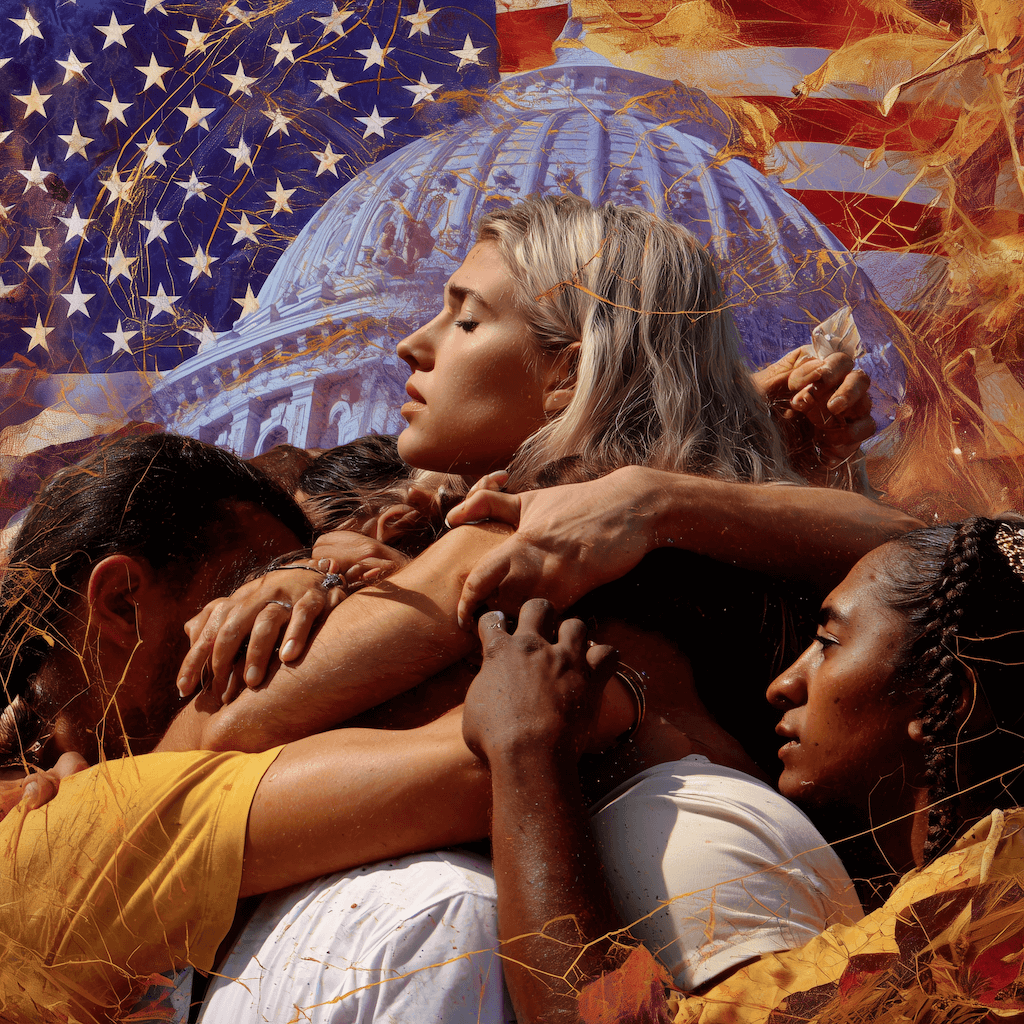
What is it like to be someone who is different from you? You can never know for sure, but it is your duty as a human to try to find out.
Why? For one thing, because everyone is different from you. For another, because healthy relationships and healthy societies are only possible when we can take each other’s perspectives.
How good are you at getting inside someone else’s experience? This is, across the board, the fundamental relational skill. If you’ve been cut off from everyone outside your ideological ingroup, it is also the skill that restores your connection to the rest of humanity.
This process will be different for you, depending on how locked you are into an ideology.
If you are positional, you need to be able to temporarily step out of your position. Those people, over there, on the other side of the political divide, are not aliens. They are like you. If they seem to you like a different species, that is only because your capacity for empathy has been stunted. You need to get your empathy back.
If you are not on any side, empathy is still your friend. Keep in mind, however, that I am not asking you to validate anyone’s ideology. Just as it is valuable to try to understand the experiences of anyone with a mental illness, it is valuable to understand what it’s like for people who are trapped in an ideology. Compared to them, you are already relatively healthy. Nonetheless, it behooves you to comprehend what kinds of worlds your more ideological neighbors are living in.
A little while ago, I asked you to think about what the world is like. The world you imagined is different from the one I imagine. In a certain sense, we are living in different worlds.
Your world is determined, in part, by your circumstances, the range of experiences you’ve had, how things feel to you, what you focus on, what you fear, what you cherish, how you contend with the inevitable challenges of being a person.
To get someone else’s world, you have to guess about how each of those factors differs for them, and then imagine how those pieces fit together into a whole.
Anyone who has studied debate knows that to win, you need to understand the other side’s arguments. Getting how people on the other side reason about their own position is the minimum starting point for understanding. Most people who are locked into an ideological position don’t even do this very well.
Understanding their logic is not enough, however. It is necessary, but insufficient by itself, because ideology co-opts logic and commandeers reasoning. The logic we invent to justify our feelings may have little to do with our true, underlying motivations.
We do moral reasoning
not to reconstruct the actual reasons
why we ourselves came to a judgment;
we reason to find the best possible reasons
why somebody else
ought to join us in our judgment.
--
Jonathan Haidt
If you want to get someone else’s world, you have to empathize, rather than merely understand. Empathy means being able to imagine what feelings underlie their beliefs.
Do you want to understand what it’s like to be against abortion? Imagine that your neighbor has a young child that she is about to murder. You can just look the other way, or you can stop this horrifying tragedy from happening. Worse, it’s not just that one neighbor. There’s an entire neighborhood of women who might murder their kids at any moment.
Do you want to understand what it’s like to be a proponent of abortion. Imagine that you’ve been infected with a parasite that is going to grow to massive size inside you, causing vast discomfort, permanently changing your body, and limiting your life opportunities from now on. There’s a safe, reliable, and inexpensive cure, but unfortunately, it’s illegal. The people who made it illegal think anyone who manages to get infected deserves to suffer the consequences, even though the lawmakers themselves are immune to the parasite.
You will probably protest. No - abortion is not the same as murdering children! No - pregnancy is not the same as a parasite! Of course they’re not the same.
The point is for you to try to feel what people on the other side are feeling. If it felt to you like what I’m describing, you might be on their side as well. Understanding their logic will never be enough. You need to feel what it’s like to want to protect unborn children. You need to feel what it’s like to have someone else decide your fate for you against your will.
When you more fully grasp someone else’s experience, you get why it makes sense for them to feel the way they feel, and believe what they believe. You understand their priorities and their motivations. You do them the basic respect of validating their humanity.
There’s a common stumbling block here. As we all know, we live in informational bubbles. Even if you’re living in a country with freedom of the press, the media that reaches you will be tailored to support the conclusions you have already reached. Just stop any stranger on the street and ask them to see their social media feeds. You’ll quickly find out that they’re being fed very different media than you are. Your ability to guess about what someone else’s experience is like will be throttled by your lack of exposure to their world.
You just may have to ask them. You may even have to ask with genuine curiosity.
I’ve always loved when Jehovah’s Witnesses, or Mormons, come knocking on my door. Here are people with such strong convictions, that they will endure people slamming doors in their faces in order to share what they believe. I welcome the opportunity to find out more about what makes them so passionate. I’m very unlikely to join their sects, but I enjoy learning what’s moving about their belief systems. Every religion has its own uniquely beautiful forms of understanding. We are blessed to live at a time when we can learn from all of them.
Could you do the same with someone who is on the other side from you of a political divide? With an open mind, could you get to know why that person’s opinions are so important to them? Could you assume good intent on their part, give them the benefit of the doubt, and be willing to discover things you don’t already know? You might find that you share some basic values. You might discover a perspective that you didn’t realize you were lacking.
The hypothesis here is that humans are more similar than different. Finding commonalities is important, because the systems we are embedded in encourage us to amplify the differences. Like it or not, we’re all in this thing together. To evolve as societies and cultures, we will need to find new solutions that work for everyone. Fighting and competing are a necessary part of the process, but they can take us backward just as easily as forward. Collaborating is harder. It requires more creativity, more social intelligence, and a higher regard for complexity.
It probably benefits society for you to get other people’s worlds, but it definitely benefits you.
Ideology is one of those conditions that we don’t realize is compromising our mental health. If you are cut off from people who are different from you, you’ll miss out on much of what humanity has to offer. If you are chronically against people, you’ll let aggression and hate take over your personality. If you blame the outgroup for your suffering, you may never discover its true cause. If you believe your current community is the only place you could ever belong, you risk sacrificing your very ability to think on the altar of acceptance.

What do you believe to be true? How would you know if you were wrong?
When I went to school, they taught me that questions had correct answers. I was rewarded for getting it right and punished for not knowing. Then I grew up and entered a world where there were not pre-established correct answers, where there was a multiplicity of perspectives, ambiguity about what’s true, and an ever-shifting landscape. In adult life, knowing when you don’t know is a fundamental cognitive skill. But it’s a skill you’ll never develop if you are shamed for not knowing throughout your childhood. Part of our social pathology comes from this training.
This same pattern is at work whenever AI agents “hallucinate”, unable to tell the difference between a correct answer and an invented one. This tendency to lie is a direct result of how models are trained. Correct responses are positively reinforced. Not having any answer is negatively reinforced. As a result, the models learn that any answer is better than no answer. Not knowing is punished.
We, as a society, have lost our humility. We are supposed to know, and to know with conviction. As a result, we often can’t tell the difference between reality and rationalization. Without humility, our minds don’t work correctly. The basic cognitive malfunction of ideological thinking is the inability to reach new conclusions. That’s mental illness, plain and simple. Humility is the cure.
Intellectual honesty means simply
not being willing to lie to oneself.
It is closely related to old-fashioned values
such as propriety, integrity and sincerity,
to a certain form of ‘inner decency’.
Perhaps one could say
that it is a very conservative way
of being truly subversive.
--
Thomas Metzinger
Ideological beliefs suffer from oversimplification. One form of oversimplification common to all ideologies is a kind of primitive thinking that says, “We’re right, and they’re wrong!”
Consider a war happening in a far off part of the world, somewhere you’ve never been, perhaps somewhere you didn’t know much about before the war started appearing on the news.
What’s really going on over there? Is it colonization of the sort that formed most countries on Earth? Is it unchecked empire building that needs to be reigned in? Is it a land grab or attempt to control natural resources? Is it the inevitable retaliation of one group against another? Is one group just trying to ensure its own survival? Does one group want to wipe out another because of racial or religious hatred? Is it pure evil, or a righteous reclaiming of homeland, or economic necessity, or a puppet dictator acting in service of a superpower funding their every move, or an oppressed minority finally establishing independence?
None of the partial explanations I just suggested are facts. Rather, they are frames through which something complex is made to seem simpler than it is. As someone with limited knowledge, you will always be looking through one frame or another. The question you should be asking is, “Who framed it this way and why?”
Propaganda is a tool of power, designed to recruit people to a side and to maintain loyalty to a position. It always appeals to emotion; it always oversimplifies; and it always does this by framing an issue. Framing, by its nature, focuses you on the aspects of a situation inside the frame, by disregarding everything outside the frame.
To reclaim your ability to think for yourself, cultivate skepticism about propaganda and the ways it frames issues.
Be skeptical when everyone starts parroting the same conclusions. They may not realize it, but they are serving some larger power game. Every time you join the propaganda chorus, your mental well-being is at stake. If you’re not thinking for yourself, you’re not thinking at all.
Evil comes from a failure to think.
--
Hannah Arendt
Be skeptical when tens of millions of thinking people don’t share your perspective. Most people play the polarization game, and hold on tighter in the face of an opposing viewpoint. You can do better. Allow the presence of an opposition to cast doubt on the conclusions you’ve been told to adhere to. Your conclusions may not be wrong, but they are probably incomplete. Your beliefs make sense through a certain framing of the issues, but any complete solution is likely to reside somewhere outside the frame.
Most of all, be skeptical when you’ve come to a conclusion without knowing much. The handful of data points you are working with are probably insufficient to warrant any conclusion at all, and they are likely to be based on propaganda. It is far healthier to admit how little you really know.
Having an open mind means being honest about the limits of your knowledge. This brings us back to the importance of learning from people who are different from you. They probably have clues to offer, pieces of the puzzle that you’re missing. They can help you develop a more complex, nuanced, and open-ended viewpoint.
Humility engenders curiosity. When you know how little you know, it’s natural to want to find out more. Instead of clinging to “right” answers and condemning “wrong” ones, you treat all answers as incomplete. There are fundamental problems we have not yet solved: how to live in harmony despite our differences, how to make sure everyone gets what they need, how governments and institutions can keep evolving. If we haven’t even worked out the basics, we probably have a lot left to discover.
False humility is not the objective here. You know what you know. Developing strong convictions about your beliefs does not, by itself, mean you’ve fallen prey to ideology. If you can genuinely understand and easily recognize the validity of differing viewpoints, you have a massive mental health advantage! You’re choosing a belief system that’s right for you, without imposing those beliefs on everyone else, or condemning them for choosing a different belief system.
Maybe you’d prefer to be intellectually dishonest. There are some real advantages! It feels a lot more solid and secure than humility. You feel less alone when you share the exact same viewpoint as everyone around you. It provides an artificial sense of power over things you otherwise have no influence over. You can enjoy passing judgment on others and revel in the feeling of being right.
But the impact on your mental health is unmeasurable. How can you have a healthy mind if you never learn to use it?
I am framing ideology as a mental illness, because I hope that will give you some tools to become healthier as an individual. Your very mind is at stake.
Clearly, however, this is not an illness that is contained within individuals. It is located within communities. It persists through networks of interaction, algorithms for disseminating information, rituals of inclusion and expulsion. If our communities are mentally ill, we will be, too.
My hope is that this framework will help you cultivate a distaste for ideology within your own communities. When you see ideology at work, I hope you will see an illness preying on the people you care about. I hope you will care enough about those people to find courage in the face of conformity. If you can cultivate empathy and humility yourself, you can help the people around you to do the same.
We are living at a time when the very concepts of “truth” and “reality” are changing. Propaganda spreads easily, but other kinds of information spread easily as well. There are more powerful forces at play trying to divide us against one another, but there is also unprecedented opportunity to learn from each other.
There will be many moments when you have a choice between madness and sanity. Ideology will invite you, once again, to join its cause, whatever the cost to your well-being. Will you choose instead to think for yourself, with skepticism about propaganda, humility about what you don’t know, and a willingness to revise your beliefs? Will you choose instead to repair division, seek commonality, and move toward mutual understanding? Will you choose mental health, for yourself, and for your community?