According to IBM's Cost of a Data Breach Report 2024, the global average cost of a data breach reached $4.88 million, and breaches involving stolen or compromised credentials took an average of 292 days to identify and contain. If your access controls are still built on spreadsheets, shared admin logins, or a patchwork of point solutions, that 292-day window is the gap an attacker lives in.
This guide ranks the 12 identity and access management platforms worth evaluating in 2026, from B2B SaaS-focused SSO accelerators like SSOJet to enterprise governance suites like SailPoint and privileged access specialists like CyberArk. We selected these based on market position, breadth of protocol support, and how clearly each one serves a distinct buyer: startup, mid-market, or large enterprise.
Identity and Access Management (IAM): IAM is the category of security technology that verifies who a user is and controls what they can access, spanning authentication (SSO, MFA), authorization, and lifecycle management across an organization's applications and infrastructure.
Key Takeaways
IAM is not one product category. It splits into workforce identity (Okta, Entra ID), identity governance and administration or IGA (SailPoint), privileged access management or PAM (CyberArk), and embedded B2B SSO for SaaS products (SSOJet).
According to IBM's 2024 report, organizations that extensively used AI and automation in security operations averaged $3.84 million per breach versus $5.72 million for those that didn't, a $1.88 million difference.
Enterprise buyers increasingly treat SSO and SCIM support as a contract requirement, not a nice-to-have, which is why SaaS companies without native SSO often turn to accelerators rather than building it in-house.
Pricing models vary enormously: SSOJet starts at a flat $49/month with unlimited monthly active users, while most workforce IAM platforms charge $2 to $9 per user per month, and governance/PAM suites are typically custom enterprise quotes.
The market is converging: Okta and Microsoft are adding governance features, while CyberArk is adding core workforce SSO, so your choice today should account for where each vendor's roadmap is headed.
Quick Comparison
Platform | Starting Price | SAML/SCIM | Pricing Model | Best For |
|---|---|---|---|---|
SSOJet | $49/month | Yes / Yes | Flat rate, unlimited MAUs | B2B SaaS needing fast enterprise SSO |
Okta Workforce Identity | ~$2 to $5/user/month | Yes / Yes | Per user, per module | Broad workforce IAM |
Microsoft Entra ID | $6/user/month (P1) | Yes / Yes | Per user, tiered (P1/P2) | Microsoft/Azure-native orgs |
SailPoint | Custom quote | Yes (via integration) | Custom, identity-based | Identity governance at scale |
CyberArk Workforce Identity | Custom quote | Partial | Custom, module-based | Privileged access management |
What to Look for in an IAM Platform
Start with your actual bottleneck, not a feature checklist. According to NIST's Digital Identity Guidelines (SP 800-63), authentication assurance level should match the risk of what's being protected, which means a customer-facing SaaS product closing enterprise deals has fundamentally different requirements than an internal IT team managing 3,000 employee accounts.
If you're a B2B SaaS company, your buyers will ask about SAML and SCIM support before they ask about anything else. That single requirement kills more enterprise deals in procurement than any other security gap, which is exactly the gap accelerators like SSOJet exist to close without a multi-month engineering project. If you're managing internal workforce identity, you're choosing between deep Microsoft integration (Entra ID) or a vendor-agnostic platform with the largest app catalog (Okta). If your primary pain is compliance audits and access certification, you need IGA, and SailPoint is the category standard. If your primary risk is compromised admin credentials, you need PAM, and that's CyberArk's entire reason for existing.
The 13 Best IAM Platforms, Ranked
1. SSOJet
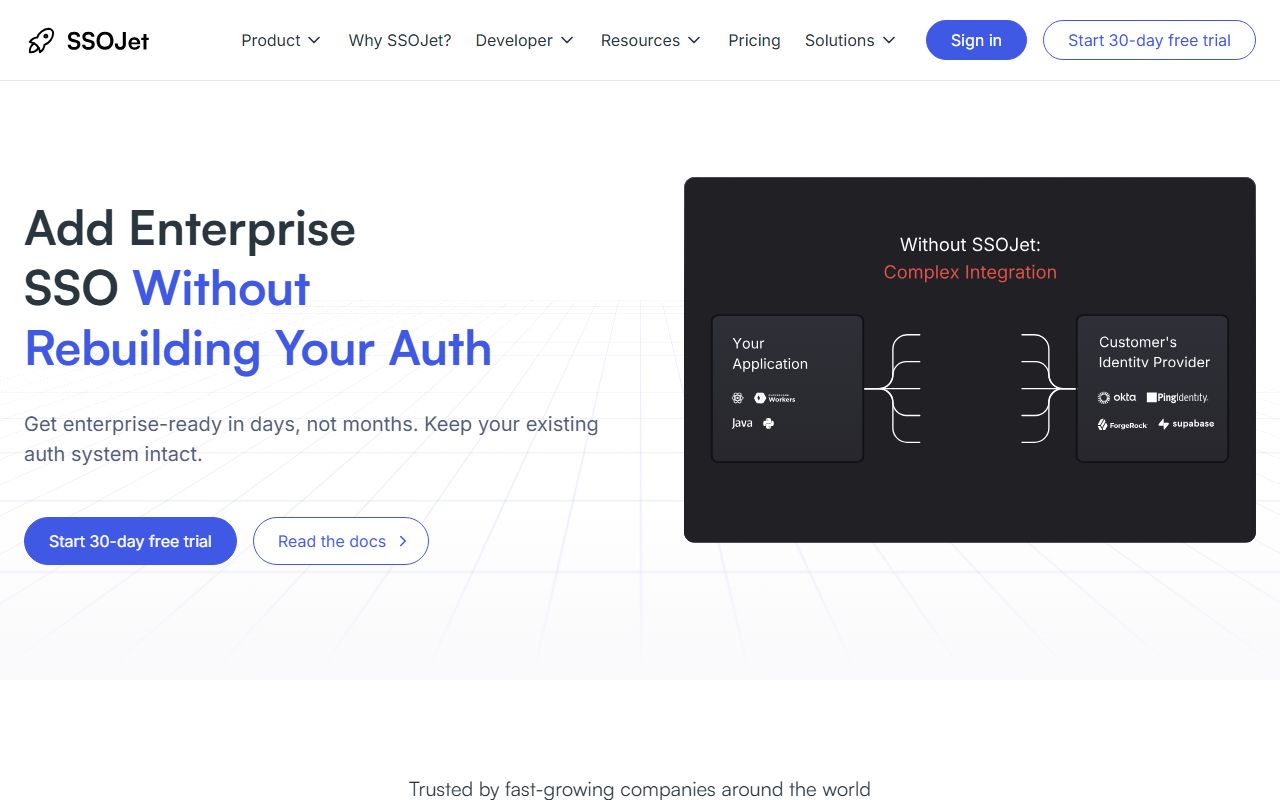
SSOJet is the best pick for B2B SaaS companies that need enterprise SSO and SCIM live in days, not the two to three months a custom build typically takes.
Best for: B2B SaaS teams closing enterprise deals that require SSO/SCIM
Starting price: $49/month, unlimited MAUs, no per-user charges
Key differentiator: Flat pricing with no per-user fees, unlike nearly every competitor on this list
SSOJet sits as an integration layer alongside your existing auth stack (Auth0, Firebase, or a custom database) rather than replacing it, so engineering teams don't have to refactor core authentication logic to support enterprise SSO. It handles SAML 2.0 and OIDC/OAuth 2.0 with both SP-initiated and IdP-initiated flows, connects to 100+ identity providers through a single API, and includes SCIM 2.0 for automated user provisioning and deprovisioning, MFA as standard, and a pre-built Team Management widget that lets customer IT admins self-serve their own IdP configuration. It's aligned to ISO 27001, 27017, and 27018, with SOC 2 certification in progress. The honest limitation: it's purpose-built for embedded B2B SSO, so if you need broad internal workforce identity governance, this isn't the tool. [Compare SSOJet against other SSO/SCIM providers](INTERNAL-LINK: best SSO/SCIM providers ranked guide for B2B SaaS) for a deeper breakdown.
2. Okta Workforce Identity
Okta is the strongest choice for organizations that need broad, vendor-agnostic workforce IAM with the deepest application catalog on the market.
Best for: Companies needing wide SaaS and on-premise app coverage
Starting price: Approximately $2 to $5 per user/month per module
Key differentiator: Okta's Application Network includes more than 7,000 pre-built integrations, according to Okta
Okta centralizes SSO across corporate resources and pairs it with adaptive MFA that adjusts requirements based on location, device health, and network context. Lifecycle management automates provisioning and deprovisioning by syncing with HR systems like Workday, which closes one of the more common security gaps: former employees retaining access after departure. The tradeoff is cost. Pricing is modular, so a full-featured deployment covering SSO, adaptive MFA, and lifecycle management adds up quickly compared to flat-rate alternatives.
3. Microsoft Entra ID (Azure AD)
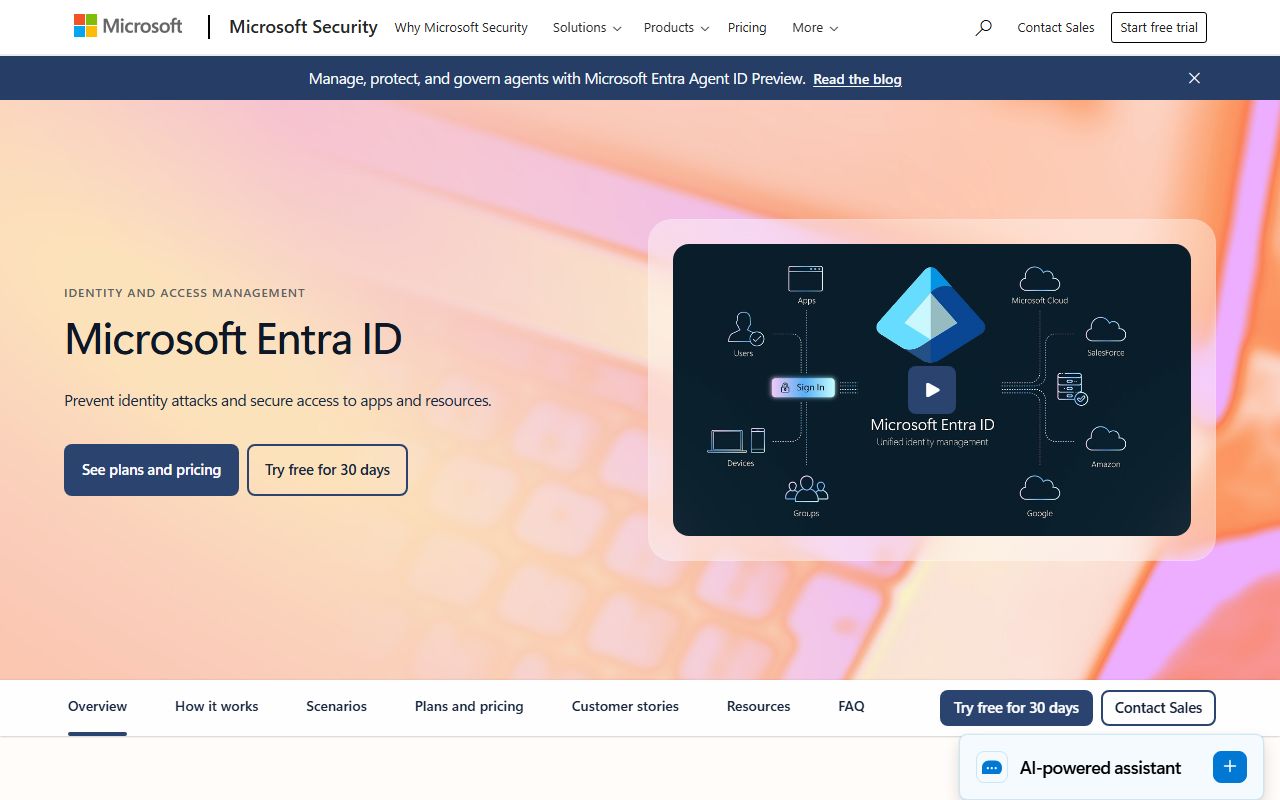
Entra ID is the default choice for organizations already running on Microsoft 365 and Azure, where its native integration outperforms any third-party platform.
Best for: Microsoft/Azure-native organizations
Starting price: $6/user/month for P1; $9/user/month for P2
Key differentiator: Conditional Access Policies that enforce Zero Trust rules based on device compliance, location, and real-time risk
Entra ID's Conditional Access engine lets IT teams require MFA only in specific risk conditions, such as login attempts from outside the corporate network, rather than applying blanket rules everywhere. P2 licensing adds Privileged Identity Management for just-in-time admin access and identity governance features like access certifications. The catch is licensing complexity: features are split across P1, P2, and the newer Entra Suite tier, which makes total cost of ownership harder to predict than a flat-rate competitor, and integration with non-Microsoft apps, while improving, still lags behind Okta.
4. SailPoint
SailPoint is the category leader for identity governance and administration, built for organizations that need to prove who has access to what and why.
Best for: Large, regulated enterprises managing audit and compliance requirements
Starting price: Custom enterprise quote
Key differentiator: AI-driven peer group analysis that flags toxic access combinations before they cause a breach
SailPoint automates access certifications, the recurring manager reviews required under regulations like SOX and HIPAA, and uses machine learning to compare a user's entitlements against their peer group to catch anomalies. This is governance, not authentication: SailPoint typically sits above an SSO provider like Okta or Entra ID rather than replacing it. Implementation is a genuine undertaking, often requiring specialized consultants and months of configuration, which is the tradeoff for the audit depth it delivers.
5. CyberArk Workforce Identity
CyberArk is the standard for privileged access management, focused specifically on the admin and service accounts that carry the highest breach risk.
Best for: Securing privileged/admin accounts
Starting price: Custom enterprise quote
Key differentiator: Secure credential vaulting that removes the need for admins to know high-privilege passwords at all
CyberArk vaults credentials and injects them on request rather than letting administrators store or memorize them, and it records full privileged sessions, keystrokes included, for forensic review. Just-in-time access grants elevation only for the duration a task requires. The limitation is scope: CyberArk has expanded into general workforce SSO/MFA, but it's still primarily a PAM tool, not a full workforce IAM replacement, and it comes with enterprise-level implementation costs to match.
6. Ping Identity
Ping Identity fits large enterprises with high transaction volumes and complex partner or customer identity needs.
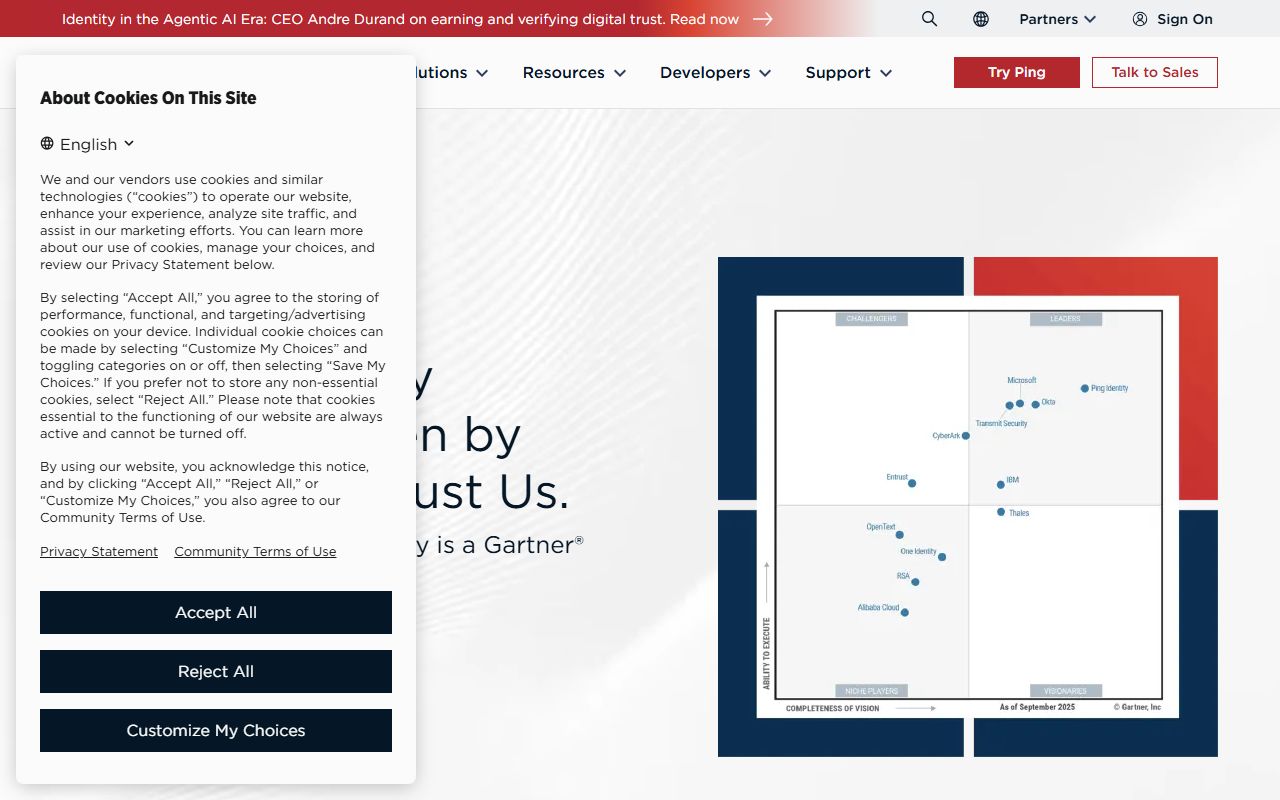
Best for: High-scale enterprise and partner/vendor access management
Starting price: $3/user/month (PingOne for Workforce, 5,000-user minimum)
Key differentiator: Deep CIAM support for onboarding large partner and customer populations with custom login journeys
PingFederate and PingAccess run continuous risk assessment on user behavior and device context, stepping up authentication only when risk crosses a threshold. Ping's strength in Customer IAM makes it a common choice for financial institutions managing millions of external identities. Setup complexity is the real cost here: it typically requires more specialized technical resources to configure than cloud-native competitors.
7. Infisign
Infisign is worth evaluating if you want to move toward true passwordless, Zero-Knowledge authentication rather than layering MFA onto existing passwords.
Best for: Organizations eliminating passwords entirely
Starting price: Custom quote (subscription model)
Key differentiator: Zero-Knowledge authentication where login credentials never touch company servers
According to Infisign, its AI Access Assist feature can cut IT administrative workload by up to 60% by automating routine access approvals. The platform supports over 6,000 integrations, including legacy application support that many cloud-first competitors have dropped. As a newer entrant, its adoption base and community support are smaller than decades-old competitors, and migrating a workforce off passwords entirely requires real change management.
8. OneLogin (by One Identity)
OneLogin is a strong fit for mid-market companies that want enterprise-grade SSO and MFA without the implementation timeline of the largest suites.
Best for: Mid-market companies wanting fast deployment
Starting price: $2/user/month (SSO module)
Key differentiator: Real-time directory sync across AD, LDAP, and HR systems
OneLogin's modular pricing lets you add Advanced Directory, MFA, or Lifecycle Management as needed rather than buying a full suite upfront. Its interface is consistently rated as more approachable than competitors, which shortens onboarding. It has fewer pre-built integrations than Okta, so niche or highly custom applications may need additional API work.
9. IBM Security Verify
IBM Security Verify is built for large enterprises running hybrid infrastructure that spans legacy on-premise systems and modern cloud.
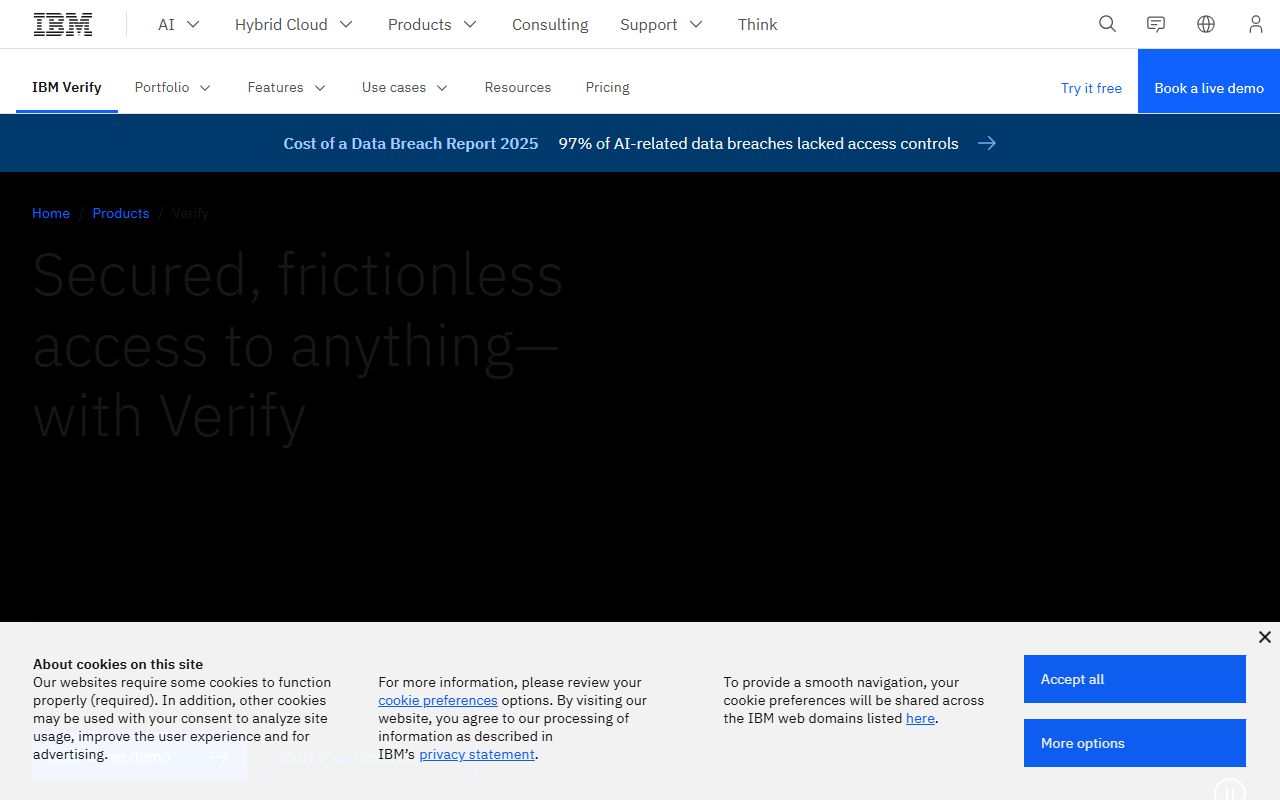
Best for: Complex hybrid cloud and on-premise environments
Starting price: Custom enterprise quote
Key differentiator: Behavioral analytics drawing on IBM's global threat intelligence
Security Verify extends modern authentication to older on-premise systems that lack native SSO support, which matters for enterprises that can't fully migrate to the cloud on a reasonable timeline. It requires meaningful budget and specialized expertise, and the admin interface is less approachable for non-technical staff than newer cloud-native platforms.
10. ManageEngine AD360
AD360 is the practical choice for IT teams managing Windows-heavy environments built around Active Directory.
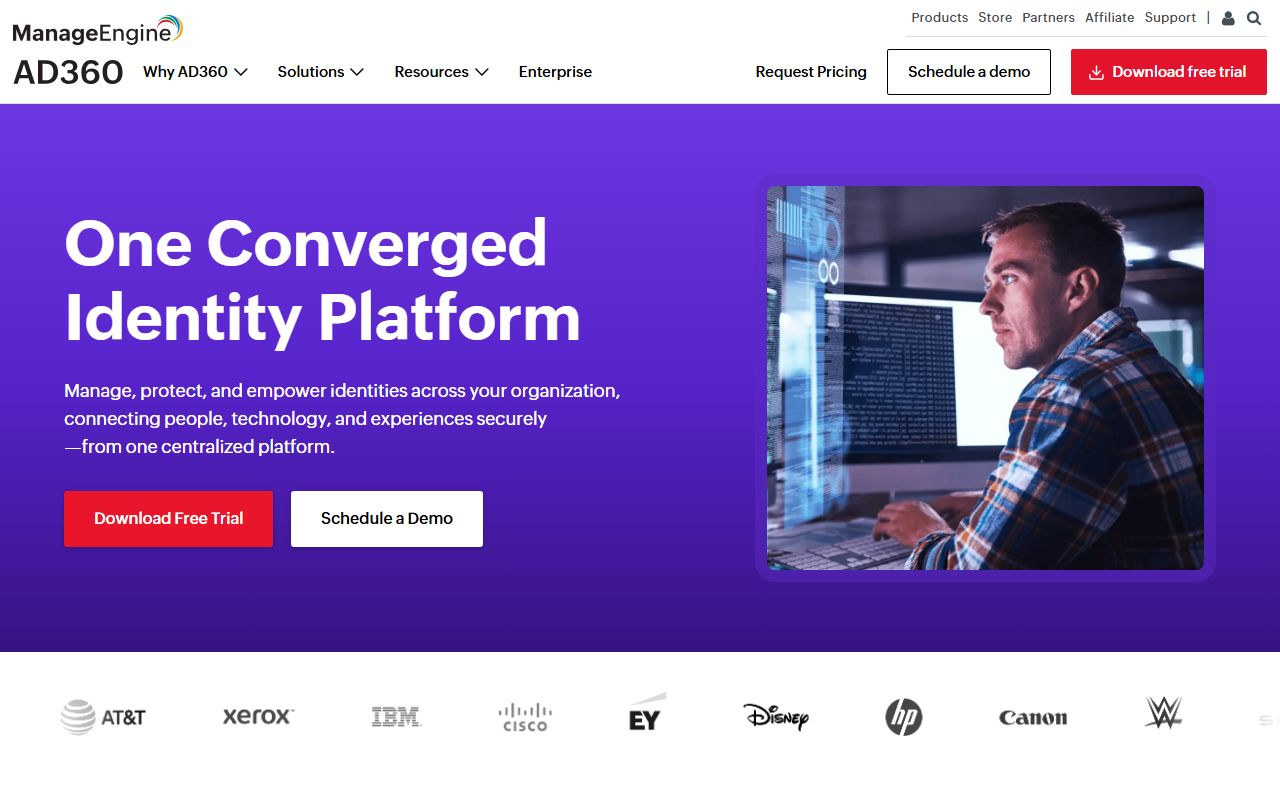
Best for: Windows/Active Directory-centric IT teams
Starting price: Around $595/year (Standard edition)
Key differentiator: Bulk user operations across AD, Exchange, and Microsoft 365 from one console
AD360 automates provisioning and deprovisioning across connected Microsoft services and includes self-service password reset to cut help desk volume. It's a management and governance layer on top of AD, not a cloud-native IAM platform, so organizations without heavy Windows infrastructure won't get much value from it.
11. Oracle Identity Management
Oracle Identity Management suits large organizations already committed to the Oracle ecosystem that need enterprise-scale identity governance.
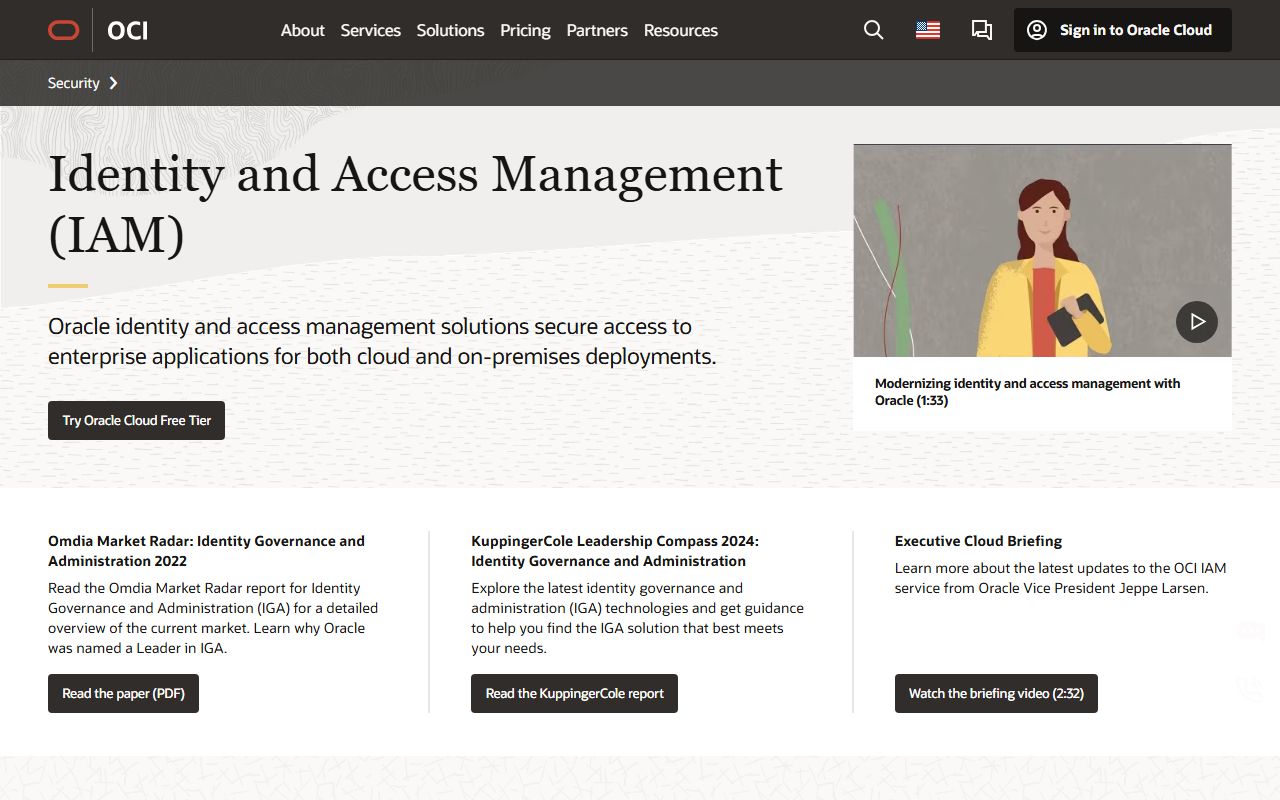
Best for: Oracle-centric enterprises needing flexible deployment
Starting price: Custom enterprise quote
Key differentiator: Attribute-Based Access Control (ABAC) for dynamic, context-aware permissions
ABAC lets policies factor in attributes like department, clearance level, or time of day, offering finer control than role-based access alone. Oracle's native integration with its own application stack is a real advantage for existing Oracle shops. Implementation requires specialized Oracle expertise and often external consulting, and the admin console feels dated next to cloud-first competitors.
12. SecureAuth
SecureAuth is designed for large organizations that need one platform to handle both workforce and customer identity under a single adaptive risk engine.
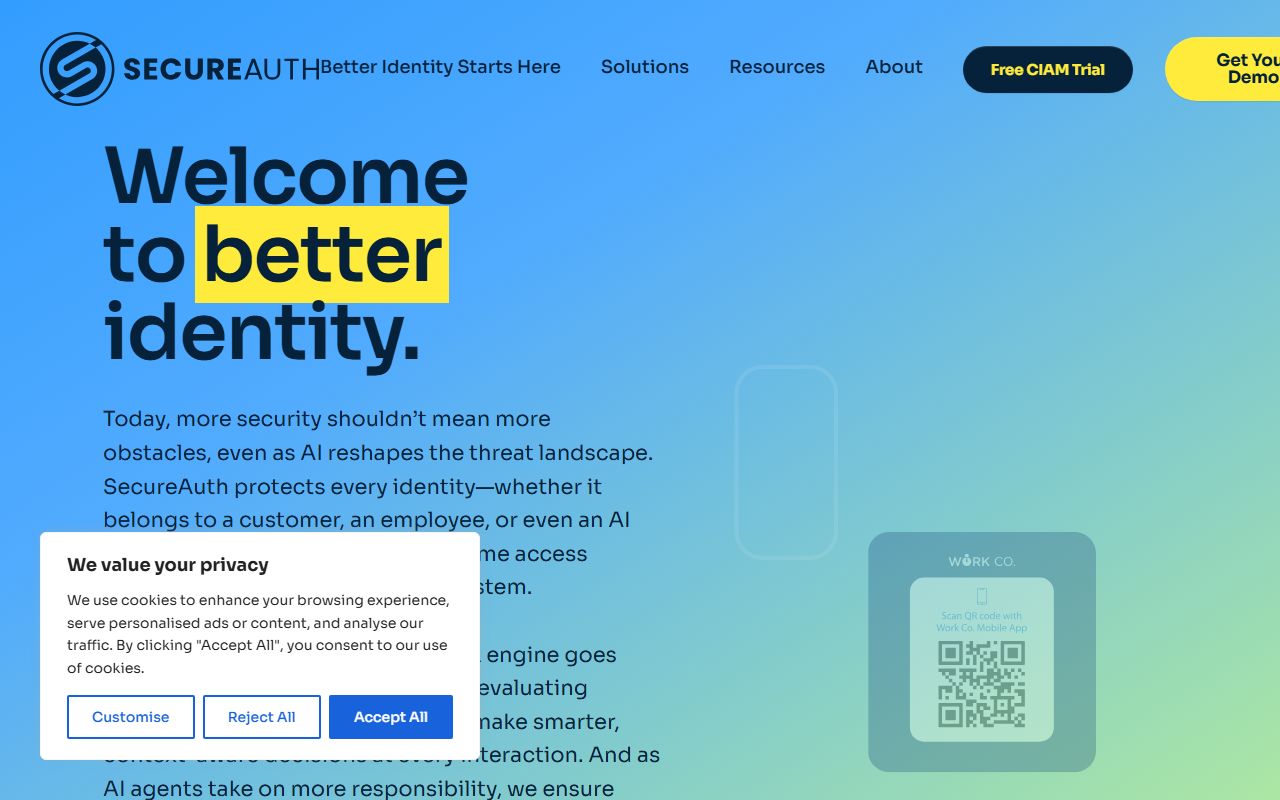
Best for: Unified workforce and customer identity at scale
Starting price: Custom enterprise quote
Key differentiator: Continuous, real-time risk scoring using behavioral biometrics and device intelligence
SecureAuth analyzes geo-velocity, IP reputation, and device posture on every access attempt, adjusting friction based on risk rather than applying uniform rules. Converging workforce and customer identity into one system removes the blind spots that come from running separate platforms. It's priced and built for large enterprises, so smaller organizations will likely find it more complexity than they need.
13. Mamori.io
Mamori covers both halves of the identity story under one platform: M4APP handles application-layer
SSO and 2FA, while M4PAM extends the same identity model into servers, SSH/RDP, and databases.
Best for: Organizations that want one identity layer covering both applications and
infrastructure/database access
Starting price: Free tier for qualifying small businesses; enterprise pricing on request
Key differentiator: One identity model spanning application SSO down to database-level access control
Mamori runs its own SAML provider for cloud and local apps, plus a code-free HTTP/S proxy for legacy
apps that don't support SAML or OAuth. M4PAM extends that same identity model to infrastructure:SSO/2FA on every RDP, SSH, and database connection, with access enforced down to the row and column level, plus real-time session logging. It deploys alongside an existing IAM/PAM stack or runs standalone.
The tradeoff: no marketplace of pre-built app integrations like Okta, and it isn't a workforce SSO tool for arbitrary SaaS apps.
How to Choose the Right IAM Platform for Your Situation
If you're a B2B SaaS company and enterprise prospects are asking about SAML or SCIM during procurement, don't start a multi-month internal build. SSOJet or a similar accelerator gets you compliant in days at a flat monthly cost, which is usually cheaper than the engineering time alone. If you're managing internal workforce identity and you're a Microsoft shop, Entra ID's native integration will beat any third-party platform on total cost of ownership. If you're vendor-agnostic or run a heterogeneous app stack, Okta's integration catalog is the safer long-term bet.
If your driving problem is compliance audits, not authentication, you need SailPoint's governance layer sitting above whatever SSO provider you already have. If your driving problem is privileged accounts, admin logins, service accounts, DevOps secrets, CyberArk is close to mandatory in regulated industries. And if you're running hybrid infrastructure with meaningful on-premise investment, IBM Security Verify or Oracle Identity Management will handle the legacy side better than cloud-native-only competitors.
One trend worth planning around: according to the vendors' own roadmaps, workforce and governance categories are converging. Okta and Microsoft are both building out governance and PAM features to compete with specialists, and CyberArk has added core workforce SSO. Whatever you pick today, check where the roadmap is headed before you're locked into a platform that can't grow with your compliance requirements.
Frequently Asked Questions
What is the difference between IAM, IGA, and PAM?
IAM is the umbrella category covering identity verification and access control generally. IGA, led by platforms like SailPoint, focuses specifically on lifecycle management, auditing, and access certification, essentially proving that access is still appropriate. PAM, led by CyberArk, secures high-risk administrative and service accounts specifically. Most modern platforms are bundling these together over time.
How much does IAM software cost?
Pricing ranges widely by category. SSOJet starts at a flat $49/month with unlimited MAUs. Workforce platforms like Okta and Entra ID typically charge $2 to $9 per user per month, layered by feature module. Specialized platforms like SailPoint, CyberArk, and Ping Identity are usually custom enterprise quotes based on identity volume and deployment complexity.
What's the fastest way for a SaaS company to add enterprise SSO?
Using an SSO accelerator like SSOJet is typically the fastest path, since it integrates alongside your existing authentication system rather than requiring a rebuild. According to SSOJet, this turns what's normally a two-to-three-month engineering project into a same-day or same-week deployment, which matters directly for closing enterprise deals that require SSO/SCIM as a contract condition.
Is Microsoft Entra ID the same as Okta?
No. Entra ID is deeply integrated with Microsoft 365 and Azure and is the natural choice for Windows-heavy organizations. Okta is vendor-agnostic with a broader integration catalog, making it a better fit for multi-cloud or heterogeneous application environments outside the Microsoft ecosystem.
Why does Zero Trust matter for IAM?
Zero Trust replaces the old model of trusting anyone inside the network perimeter with continuous verification of identity, device health, and context before granting access. This matters because, according to IBM's 2024 Cost of a Data Breach Report, credential-based breaches took an average of 292 days to identify and contain, longer than any other attack vector studied, which reflects how much damage a single compromised login can do inside a perimeter-based model.
When should a company use a dedicated PAM tool instead of general IAM?
Dedicated PAM makes sense once an organization is managing sensitive infrastructure like financial systems or critical databases, or faces meaningful regulatory or insider-threat exposure. General IAM platforms offer basic privilege controls, but dedicated PAM tools add credential vaulting, detailed session recording, and audit depth that general IAM doesn't match.
Final Thoughts
Most IAM decisions come down to one question: what's actually blocking you right now? For B2B SaaS teams, that's usually a stalled enterprise deal waiting on SSO. For everyone else, it's workforce access, governance, or privileged accounts, and each has a clear category leader on this list.