Sally…placed a marble into her basket. Then she left…, and the marble was transferred by Anne and hidden in her box. Then, when Sally returned, the experimenter asked… “Where will Sally look for her marble?”
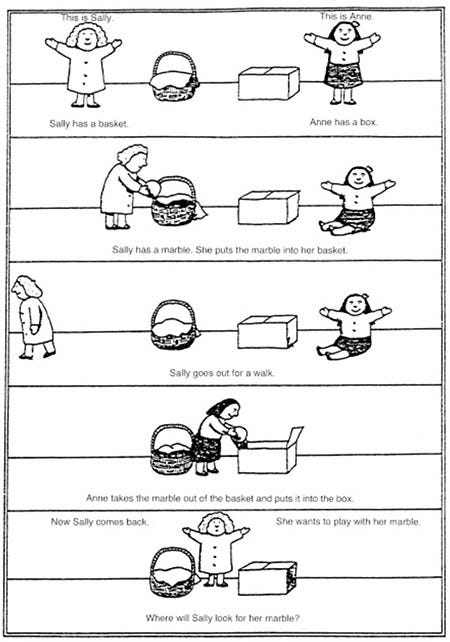
If you’re at least five years old, you probably won’t have any trouble passing this classic example of a “false-belief test”: Of course Sally looks in the basket, because that’s where she left her marble, and as far as she knows, that’s where it still is! Getting this right shows that you can “read minds” by putting yourself in the shoes of another person and figuring out what they know and what they don’t – that is, that you have a working theory of mind (TOM), along with chimpanzees, ravens, and goats. But I’m sorry to say that far too many of you stay in your own shoes and turn off your prefrontal cortex when you talk to customers.
I’ve encountered plenty of CEOs, investors, and product executives who blithely announce that consumers just don’t understand their thrilling new product, that slumping sales are temporary and as soon as users really look at the exciting new features they’ll be queueing round the block. This is the most dangerous product delusion I know of! History is littered with optimistic leaders assuring the press that Real Soon Now, people are going to fall in love with the Zune for its song sharing, or Juicero for its $6 shredded carrots, or NebuAd for its “relevant ads”. If you catch yourself or your product marketers saying, like Bob Dykes, that “we just need to educate users about the limits of what we’re tracking”, check yourself in for some serious TOM therapy.
The reality is that if buyers don’t buy, you’ve misunderstood their thinking. That’s true even if your solution is higher quality (Betamax) or faster (Concorde) or just plain true (Galileo). Emerson notwithstanding, a better mousetrap does not lead inevitably to a beaten path; sometimes, being popular or cheap or politically expedient beats being good, which is why I tell all my clients there is no universal “better” and always ban the phrase “best practice”.
Ironically, your engineers are among those who most need to develop customer empathy in order to build profitable software products, but many techies may just be wired in a way that interferes with effective “mind reading”. That’s one reason I’m always telling you to pry coders’ hands off their keyboards and get them talking to real customers, and to whiz round the OODA loop just as fast as you can to maximise real user feedback. Your clients aren’t hiding marbles in baskets, but they do need you to help amplify their wishes so us techies understand – at least until Mr. Musk perfects his telepathy headset!
P.S. Those of you following the rapid improvement of AI might want to know that our future robot overlords have gone from flubbing the Sally-Anne test to acing it in just three years. I tried to confuse GPT-4.5 with a second-order TOM test involving “reading” the minds of three people, and it barely broke a sweat. You aren’t going to be hiring a mechanical product managers anytime soon, but the quality of bot research and analysis keeps getting closer to human all the time.
This first appeared in my weekly Insanely Profitable Tech Newsletter which is received as part of the Squirrel Squadron every Monday, and was originally posted on 10th March 2025. To get my provocative thoughts and tips direct to your inbox first, sign up here: https://squirrelsquadron.com/