In September of this year, the Land Transport Authority said that three new autonomous bus services would start plying passengers in Punggol. Acting Transport Minister Jeffrey Siow was emphatic that autonomous vehicles would “not speed, … not drink drive, … not tailgate [and] … do not road rage”. But when he made the announcement, safety wasn’t the headline. Manpower was. The main justification was that autonomous buses would ease Singapore’s manpower crunch in bus services. And fair enough, the shortage is real.
But is the driver shortage really the largest problem autonomous vehicles solve? And are buses really the right way to solve that problem? I argue that along with autonomous buses which are helpful to reduce manpower shortages, self-driving cars (or called robotaxis when served as a taxi) are a front where Singapore should push ahead with urgency.
142 people died on Singapore’s roads last year in motor vehicle accidents, up from 136 in 20231. And in the first half of this year, 79 died, an increase of nearly 10% from last year.2 That’s before counting the survivors: the young rider who won’t walk again, the breadwinner who can’t work and the 9,000 others injured last year. To put this in context, more Singaporeans are injured on our roads each year than contract tuberculosis, salmonellosis, HIV/AIDS, all forms of hepatitis, pertussis, mpox, invasive pneumococcal disease, and melioidosis combined. The vast majority of these fatalities involve private vehicles and taxis, not public buses. Singapore’s bus safety record is already excellent. There were five deaths on buses in the last decade, four of which were elderly passengers who fell. Each of these is a tragedy, and best addressed with better education to commuters, better grab bars and non-slip flooring. The carnage mostly comes from cars and motorcycles.
Children are especially vulnerable to this. According to KKH, there were 4,472 cases of children injured in road traffic accidents from 2012 to 2023. That is one child injured in a road traffic accident every day, about as many as those who get measles, mumps, and pertussis combined. And between 2016 and 2022, half of child passengers were unrestrained at the time of injury. In taxis, three quarters were unrestrained.
These numbers in any other context, would be a public health emergency. Any disease killing more people every year would demand government intervention. And to the government’s credit, they’re trying. Fines and demerit points for speeding will go up next year. But as Home Affairs Minister Shanmugam noted in February, increased enforcement has “not been enough.” Traditional tools like fines and demerit points can only do so much when the issue is that humans have poor judgement.
Given these alarming numbers, we should move with urgency on allowing self-driving cars in Singapore. This complements the government’s existing approach on buses which ease manpower constraints, but leaves the larger public health opportunity of motor vehicle injuries unaddressed.
Why aren’t we up in arms about this, as we would be for any disease that killed and maimed so many people? It is because road deaths are invisible. They happen anonymously one at a time, reported on the back pages of a newspaper. There’s no aggregated crisis, no headline and no public outcry.
Many accidents are caused by human errors. We know it is wrong to speed, or drink and drive and run red lights. These are thoroughly emphasized in both the theory tests drivers take, public messaging from the traffic police and heavy fines and demerit points. Even then, in 2024, speeding, drink-driving, and red-light running caused 64 fatal accidents and injured at least 745 people. Self-driving cars by construction cannot do any of these things. To extend the minister’s argument, they don’t get drunk, they don’t speed, they don’t run red lights, and they don’t suffer from road rage.
How much of this would self driving cars actually solve? There are multiple companies that run self driving car services commercially in both the West and China. Of those, Waymo has published detailed safety data from 56.7 million miles of fully autonomous commercial operation across Phoenix, San Francisco, Los Angeles, and Austin.
The study compared Waymo’s crash rates to police-reported crash data from human drivers in the same geographic areas. Waymo’s autonomous vehicles experienced 85% fewer crashes resulting in serious injury or death compared to human drivers over equivalent mileage. For injury crashes more broadly, the technology showed particularly strong performance in preventing intersection collisions (96% reduction), pedestrian crashes (92% reduction), and motorcycle crashes (82% reduction). To be clear, these are Waymo’s results. Not all self driving cars have the same safety profile, and neither should Singapore extrapolate these statistics blindly when deploying them here. But they provide the actual numbers needed to start a discussion.
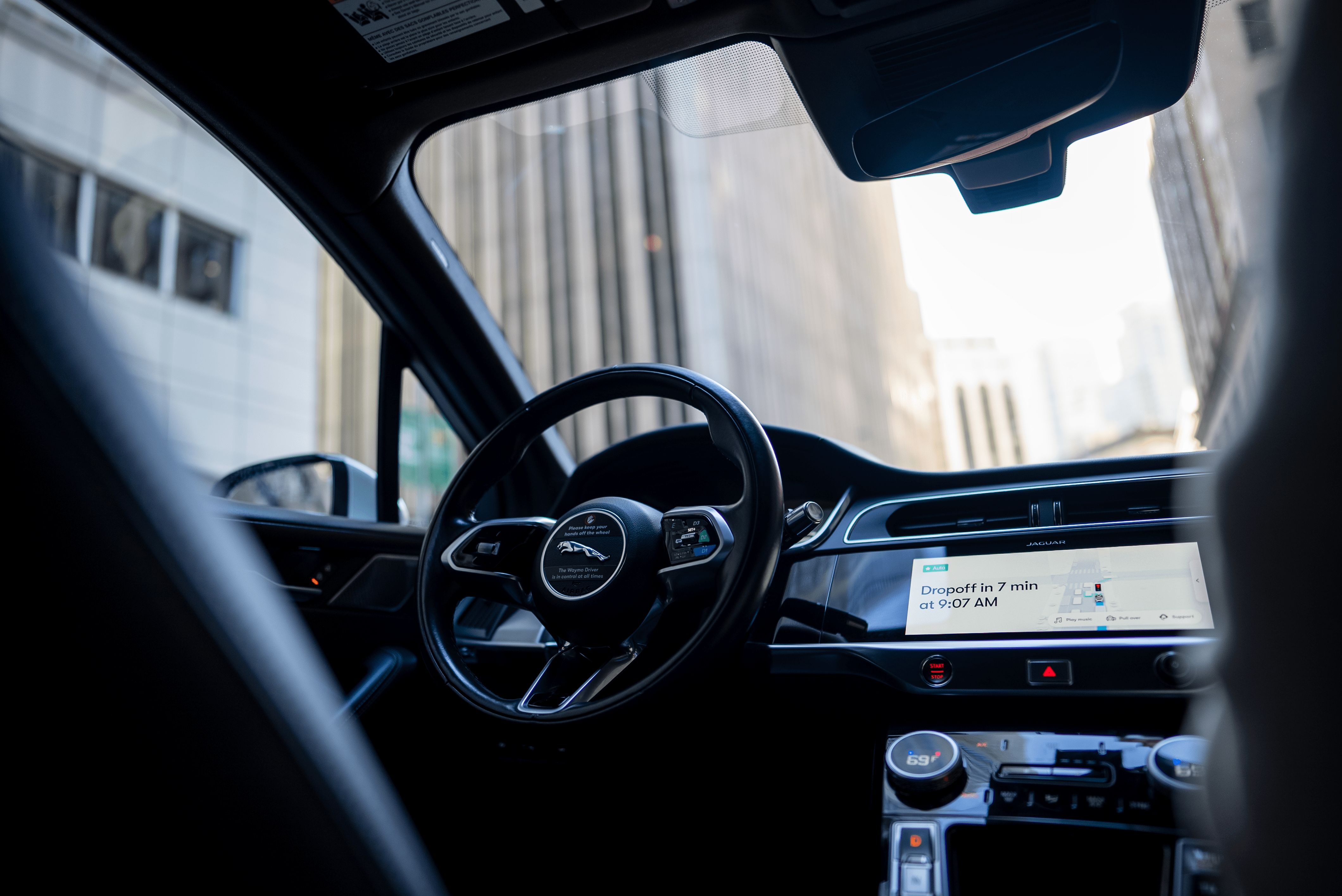
A Photo of a Waymo driving itself (Source: Waymo)
These vehicles aren’t perfect. But the relevant alternative isn’t perfection. It is the thousands of drivers actually existing on the roads, who misjudge distances, get distracted, despite knowing the rules, still speed, skip red lights and cut someone off. The relevant alternative is the actual existing system which killed 142 people in 2024.
In a hypothetical world where all rides were done with motor vehicles as safe as the ones in Waymo’s study, what would the statistics have looked like? One thing is for sure. Those 64 fatal accidents and 745 injuries3 due to the easily preventable category of not speeding, driving drunk and skipping red lights. Beyond that, applying the 85% reduction in serious injury crashes to the remaining fatalities except motorcycle self-skidding, and the 79% reduction in injury crashes to remaining injuries, would prevent roughly another 34 deaths and 5,100 injuries. In total, this would prevent roughly 98 deaths and 5,900 injuries annually - nearly 70% of Singapore’s current road toll. Even if one were to take these numbers with a grain of salt and assume the effect was only halved, that’s still 50 deaths and 3,000 injuries prevented annually4.
Singaporean decision makers aren’t blind to these publicly accessible numbers from our own police and hospitals. But despite the clear safety case and proven technology operating commercially in multiple cities, robotaxis remain on the distant horizon according to CNA. Transport Minister Chee Hong Tat acknowledged in November 2024 that ‘we do want to move faster’ and that the comparison benchmark for AVs ‘cannot be zero-accident’. He rightly noted that insisting on perfection would mean Singapore falls behind other cities. Acting Transport Minister Jeffrey Siow has announced a ‘really big push’ for AVs, with ‘many’ expected on roads within five years. Both ministers understand the right framework that autonomous vehicles should be judged against human drivers, not against an impossible standard of perfection.
Yet despite this clarity, despite accepting the right comparison, despite Waymo’s demonstrated 85% reduction in serious crashes and Singapore’s own rising road injuries, policymakers still justify AVs primarily as a fix for driver shortages. There is no doubt that solving the manpower crunch is important for Singapore. But robotaxis which could prevent nearly a hundred deaths and 6,000 injuries are nowhere to be seen in public statements?
The answer is in how visible certain types of deaths are to the public. Here’s a Yes Minister dialogue I generated with Claude Opus, a large language model.
Hacker: But Humphrey, the statistics are clear! Autonomous vehicles would save a hundred lives a year!
Sir Humphrey: Minister, those are statistical lives.
Hacker: As opposed to what, fictional lives?
Sir Humphrey: As opposed to identifiable lives, Minister. Statistical lives are saved quietly, anonymously, in incidents that never occur. No one writes to their MP saying “thank you for the car crash I didn’t have today.” But identifiable lives, Minister - those come with grieving widows on television, inquests, and opposition MPs demanding to know why the government allowed experimental robots to roam the streets.
Hacker: So we let a hundred people die to avoid being blamed for one?
Sir Humphrey: We allow a hundred people to die in traditional ways, Minister. Road deaths are a tragedy. Robot deaths are a scandal. A tragedy is a statistic for the Department of Transport. A scandal is a resignation for the Minister of Transport.
One can hardly blame policymakers for being cautious in the face of political asymmetry. The consequences of even minor accidents are immediate, while the benefits of prevented deaths are not even mentioned in the newspapers.
Contrast this with another novel technology which had growing but limited evidence on safety and efficacy when Singapore committed to advance purchases in late 2020: COVID-19 vaccines. Based on Phase 3 trial data and early real-world deployment, Singapore signed advance purchase agreements long before long term safety data for the vaccines was available. The rational calculation was that the visible cost of inaction, daily cases and fatalities, ICUs being flooded and economic paralysis justified acting on promising but early data rather than waiting years for complete certainty.
One might think, looking at Singapore’s cold feet on robotaxis, that we are a risk averse nation. But the more appropriate conclusion is that when the costs of inaction are visible, Singapore can move with urgency despite uncertainty. In this case caution unfortunately prevails due to the invisibility of these costs.
So what stands in the way of deployment? Of course, deploying robotaxis in Singapore has its own set of challenges. Our road markings are different, we drive on the left side of the road, our weather is different and we are much more dense in population compared to San Francisco or Phoenix. No responsible policymaker would import this without testing it here, and adapting it if necessary. There will also be disruption to both taxi drivers and those earning from ride sharing platforms. Singapore is not going to go from zero AVs to all rides being AVs in a day, week, month or even a year. The process, like it is in San Francisco or Phoenix, is likely to be gradual, and the government should dampen the income impact with retraining grants.
But, Singapore has been preparing for this. The opening line of this Straits Times article from 2015 goes: “Singapore is embarking on a series of real-life trials to prepare for the day when driverless vehicles become as ubiquitous as smartphones.” Driverless car trials were run in 2015 and 2016. The government passed legislation on regulating autonomous vehicles in 2017 and set up the “Centre of Excellence for Testing & Research of AVs” at NTU in 2016. This is to say, the infrastructure to validate safety under local conditions already exists!
My hope is that Singapore moves away from a presumption of caution, to a presumption of urgency. Delay itself is a policy choice. My ask is that in the next 18 months we have multiple robotaxi companies starting commercial pilots with transparent metrics on safety and expansion contingent on meeting pre-registered safety metrics.
Singapore has spent a decade building exactly the infrastructure needed to deploy robotaxis safely. The question is whether we’ll use it while other cities race ahead. Chee Hong Tat was right when he said that insisting on perfection means we fall behind other cities. San Francisco has commercial Waymo operations. Beijing, Guangzhou, and Shenzhen have thousands of autonomous vehicles. London and Tokyo are now testing Waymo’s technology. These cities all judged that the technology was ready, that the benefits justified moving forward despite incomplete data.
Singapore has the testing infrastructure, the regulatory framework, and a decade of preparation. What we need is the action to eliminate the dozens of deaths and thousands of injuries every year that this technology promises to eradicate.