If San Francisco ever adds new themes to its visitor guide, AI Tourism should be one of them because walking through the city today feels like stepping into a live experiment. An experiment of what happens when innovation, capital, and culture collide – all under the banner of artificial intelligence.
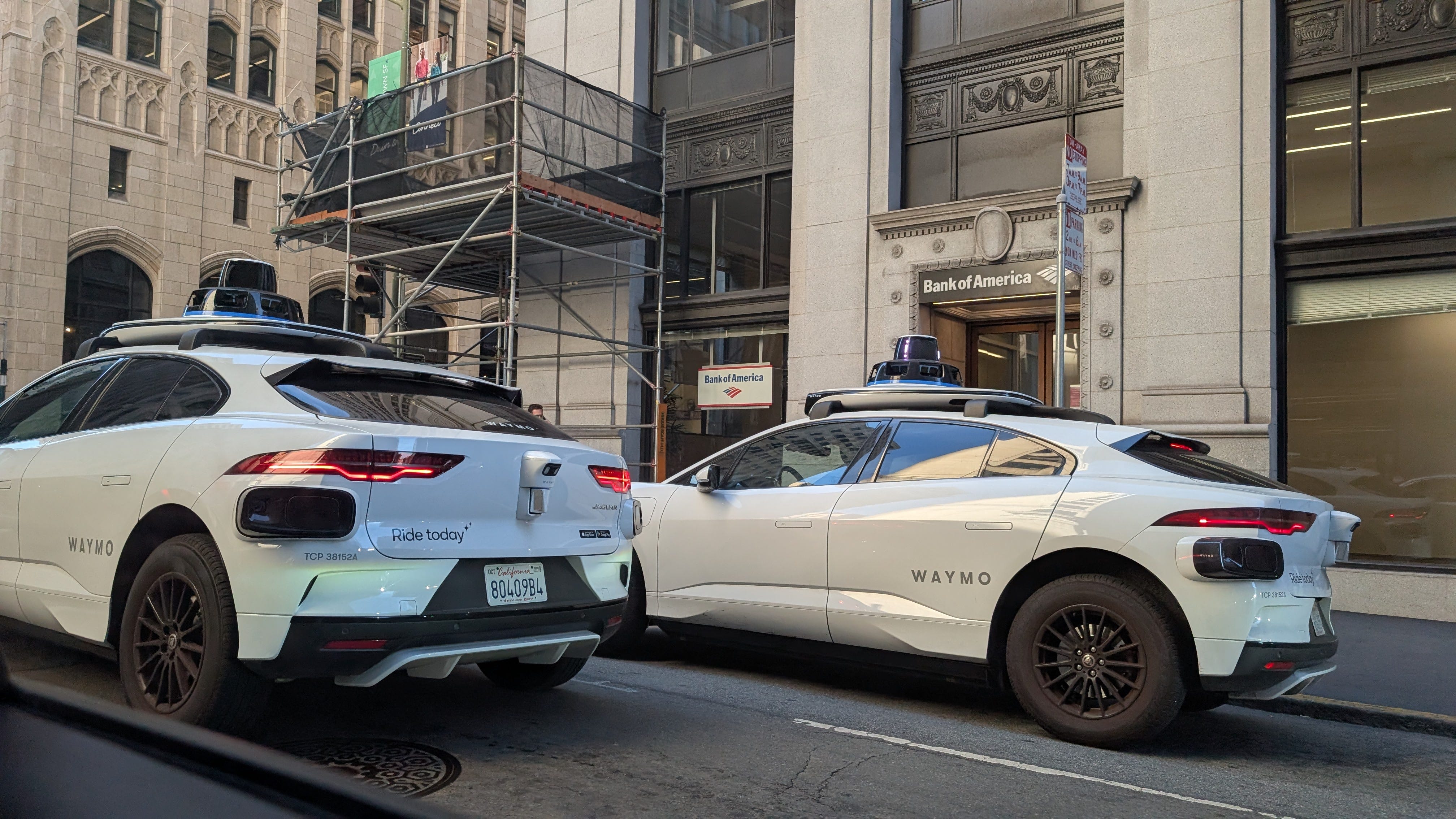
From one neighborhood to another, the city hums with AI energy. Billboards line on the highways, each trying to outdo the next. Waymos (the self-driving cars) glide past the coffee shops filled with founders pitching the “next big thing”. The lu.ma event feed looks like a 24*7 dashboard of what’s trending in the AI world – every night, another demo day, fireside chat, or “casual” meetup that somehow becomes a who’s who of builders and investors.
It is easy to dismiss all this as hype, but if you look closer, AI tourism is actually a data point – one that tells you how this ecosystem thinks, markets itself, and evolves.
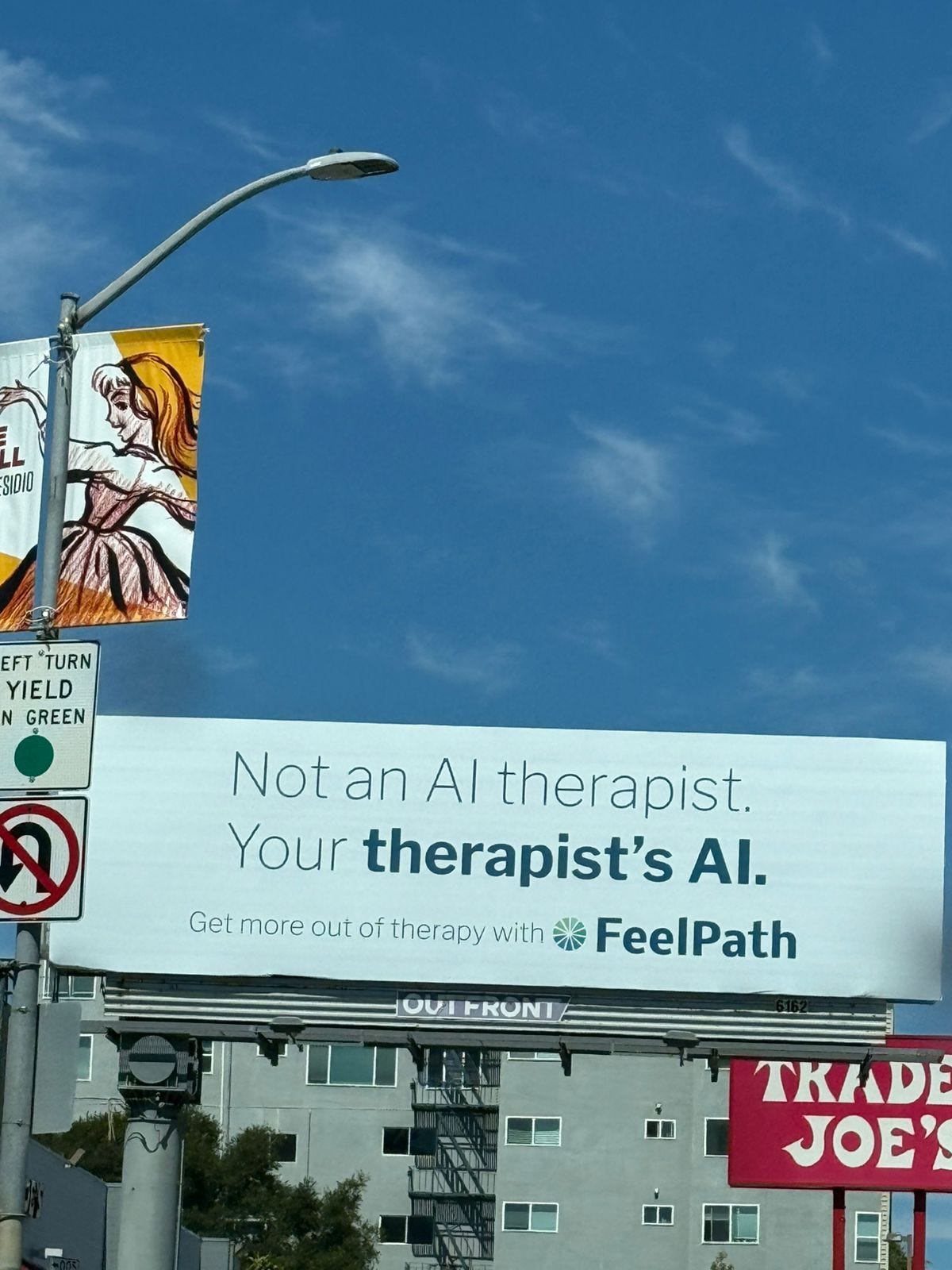
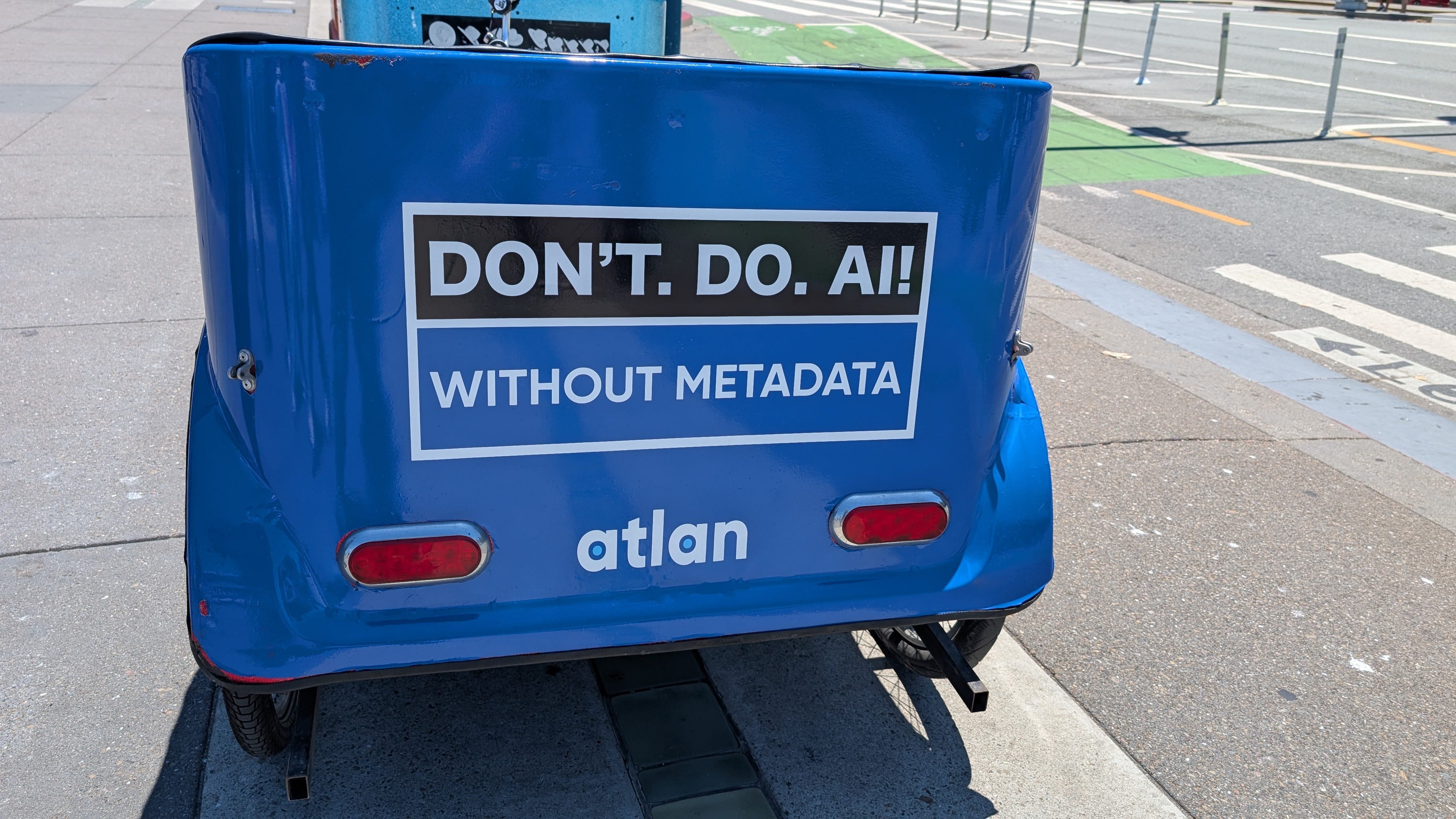
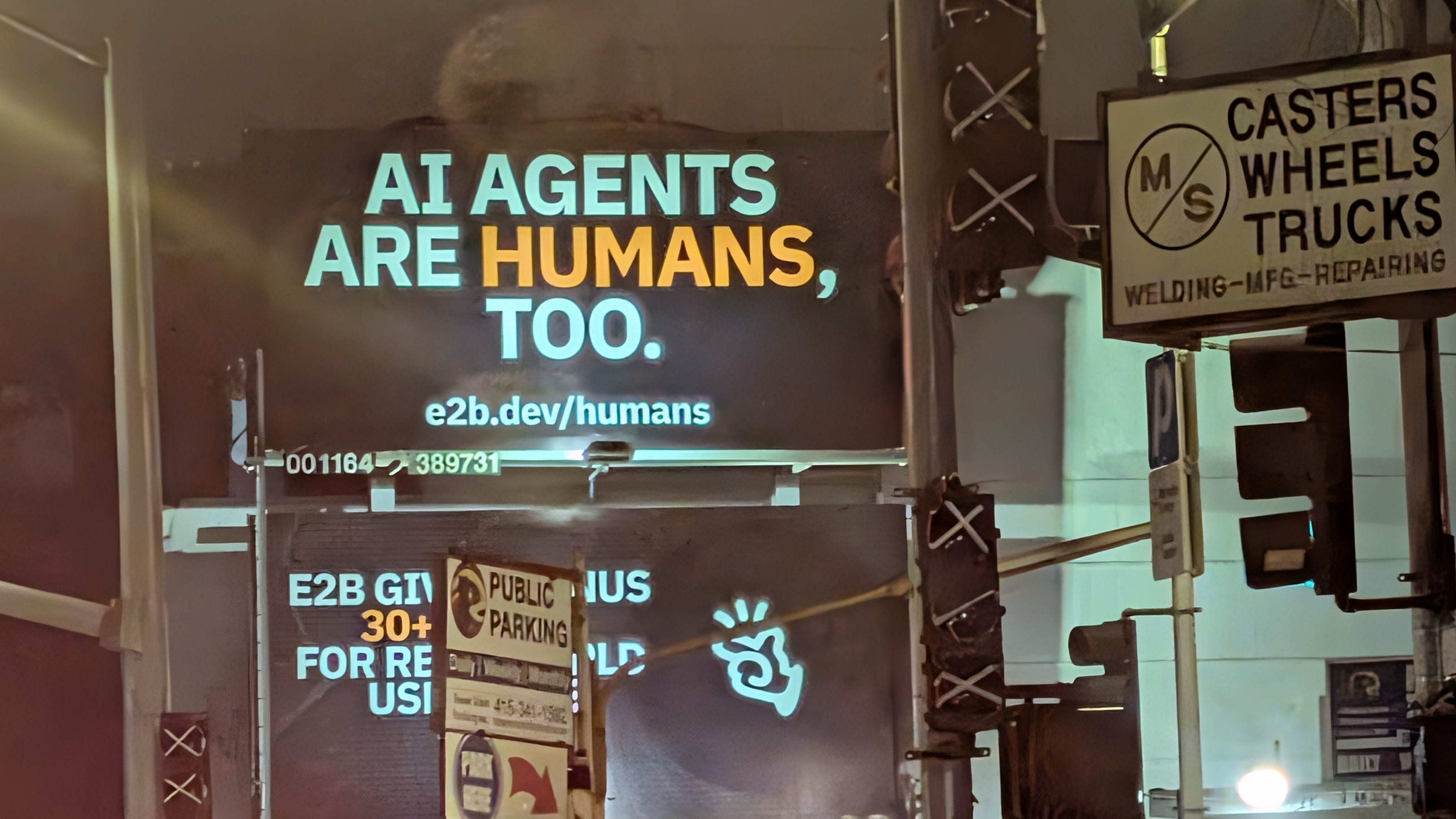
AI billboards are more than clever marketing; they are compressed summaries of where the industry is heading. They reflect the narratives companies are betting on – the language they believe will resonate not just with developers and users but with investors and talent. Take these examples I spotted recently:
“Not an AI therapist. Your therapist’s AI.”- FeelPath —> Messaging shift: AI as assistive intelligence, not replacement.

“Don’t. DO. AI! Without Metadata.” – Atlan —> Signal: The infrastructure layer finally getting its marketing moment.

“AI Agents are humans, too.” – e2b.dev —> A wink at the agentic AI movement, humanizing autonomy and control.

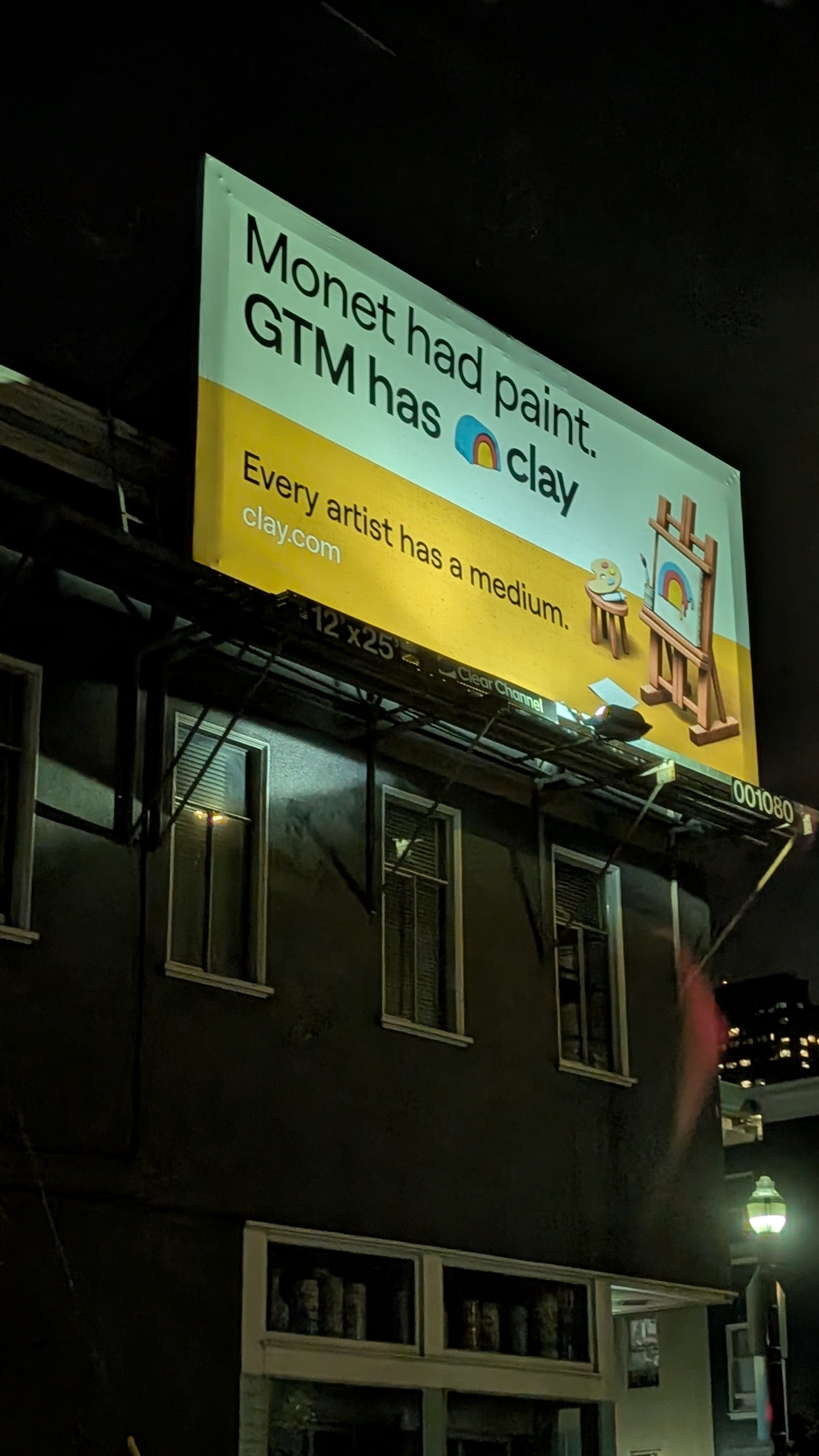
“Monet had paint. GTM has Clay” – Clay.com —> Framing AI tools as a creative medium – artistic, accessible, even emotional.

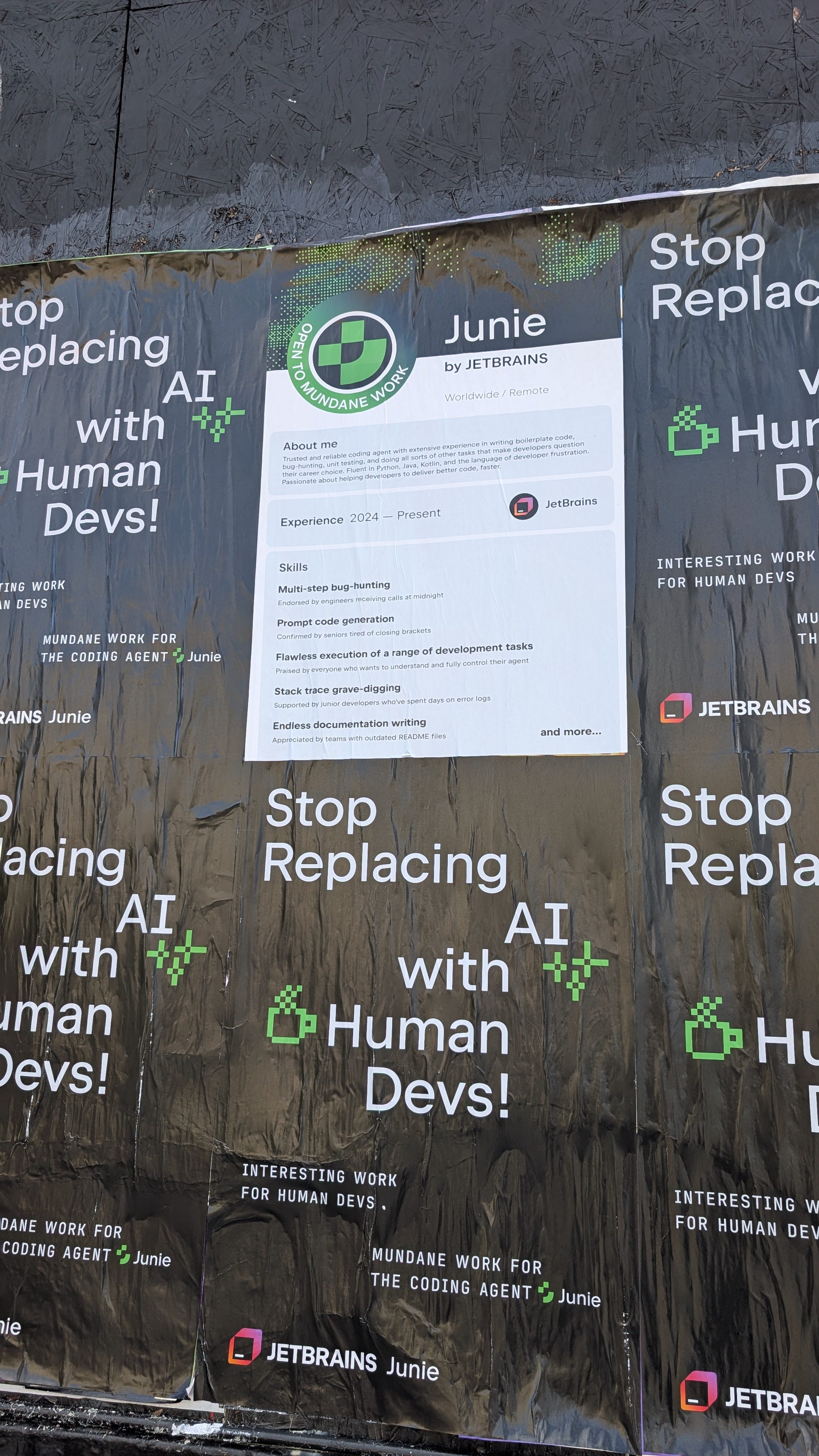
“Stop replacing AI with human devs!” – JetBrains—> Reversed humor that nails the ongoing debate about augmentation vs. automation.

Each line is part ad, part anthropological clue, showing how the tone of AI marketing has matured. We are slowly (maybe not too slowly) moving from “AI will replace everything” to “AI will enhance you.”
That is what you really pick up walking around SF (among other beautiful things like the Golden Gate Bridge or a fancy coffee shop). These are not just marketing artifacts; they are signs of an industry that is learning to speak to humans again. Companies are figuring out how to make AI less abstract and more relatable. Events emphasize community over competition. Even the humor in the ads reflects a collective self-awareness about how fast the field is moving.
When you hop from one AI meetup to another in one night, you notice patterns – founders solving the same infrastructure gaps, startups racing to build the next layer of agents, researchers debating safety, and creators rethinking workflows. It’s a feedback loop happening in real time, out in the open.
That’s what makes “AI tourism” fascinating – it is not just sightseeing, it’s sense-making. By observing how the world of AI markets, organizes, and jokes about itself, you learn far more than you could from a keynote or white paper. You get a feel for the culture of innovation – and how that culture drives what comes next.
If you are building in this space, these signals are worth paying attention to. They reveal what narratives are gaining traction, how user trust is being rebuilt, and where the industry’s collective imagination is heading. SF just happens to be the most visible lab for it all.
So maybe, “AI Tourism” won’t make it into the official visitor guide anytime soon, but if you are here, walking past those glowing signs or hopping between AI demo nights, you will see what I mean – the feeling that you are watching the next chapter of tech culture unfold, one billboard at a time.