Evolution was historically studied by examining changes in phenotype
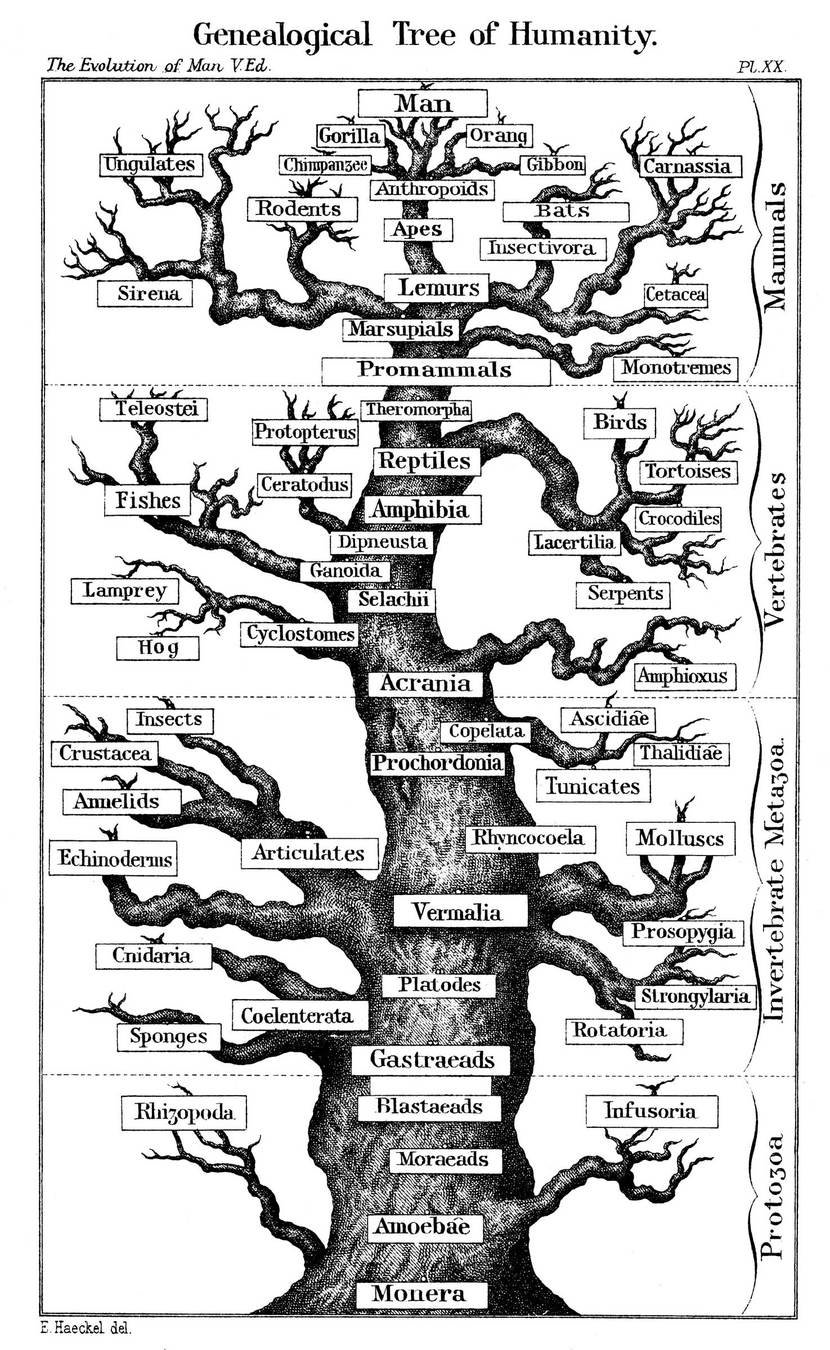
~55 years ago, it became possible to also study evolution in terms of genotype
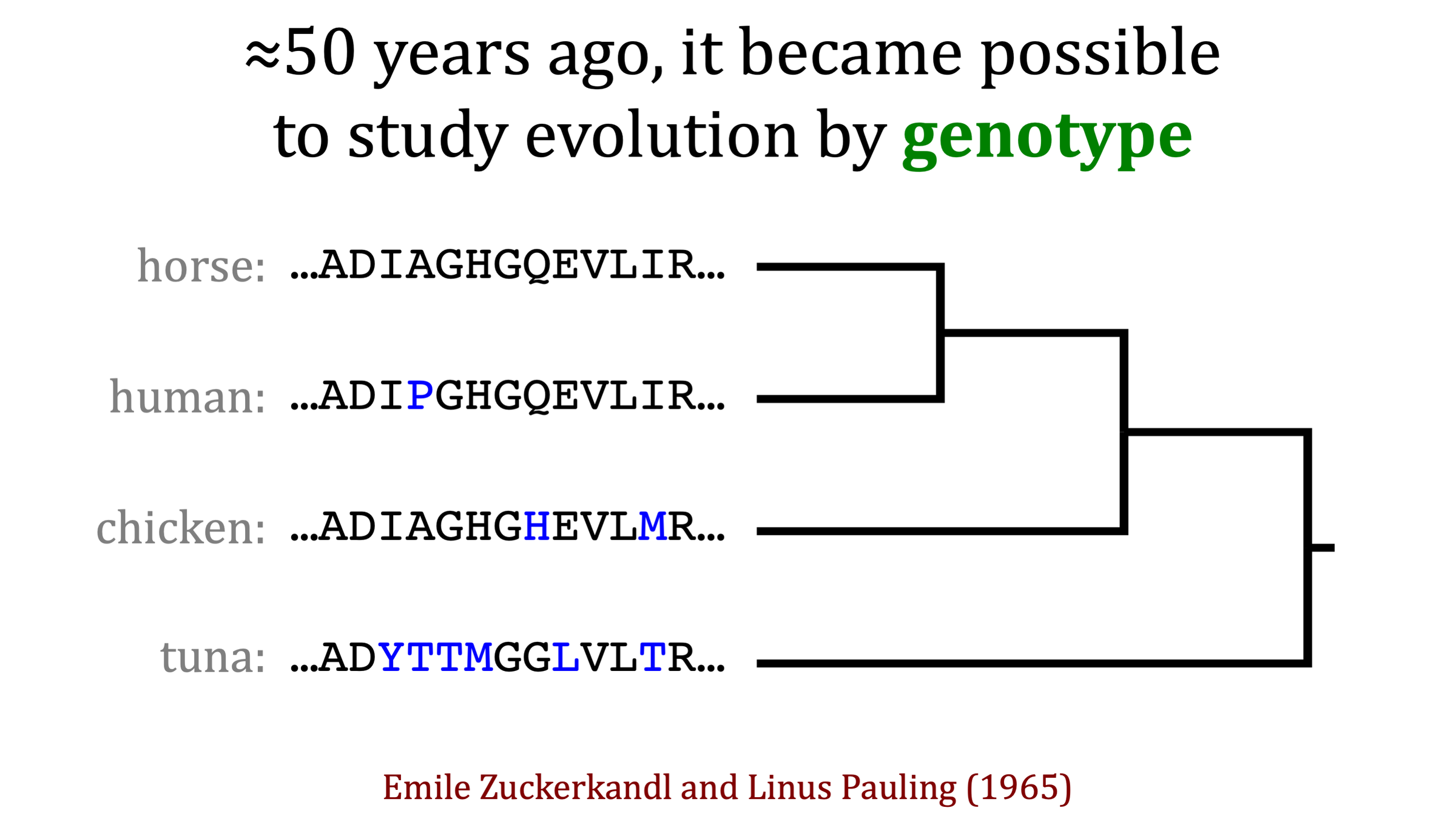
How changes in genotype affect phenotype is complex
"There is no reason to expect that the extent of functional change in a polypeptide chain is proportional to the number of amino-acid substitutions... It is the type rather than the number of substitutions that is decisive."
We can now characterize evolution of genotype at high resolution
Phylogenetic tree of 2,734,215 full-length SARS-CoV-2 genomes provided by GISAID
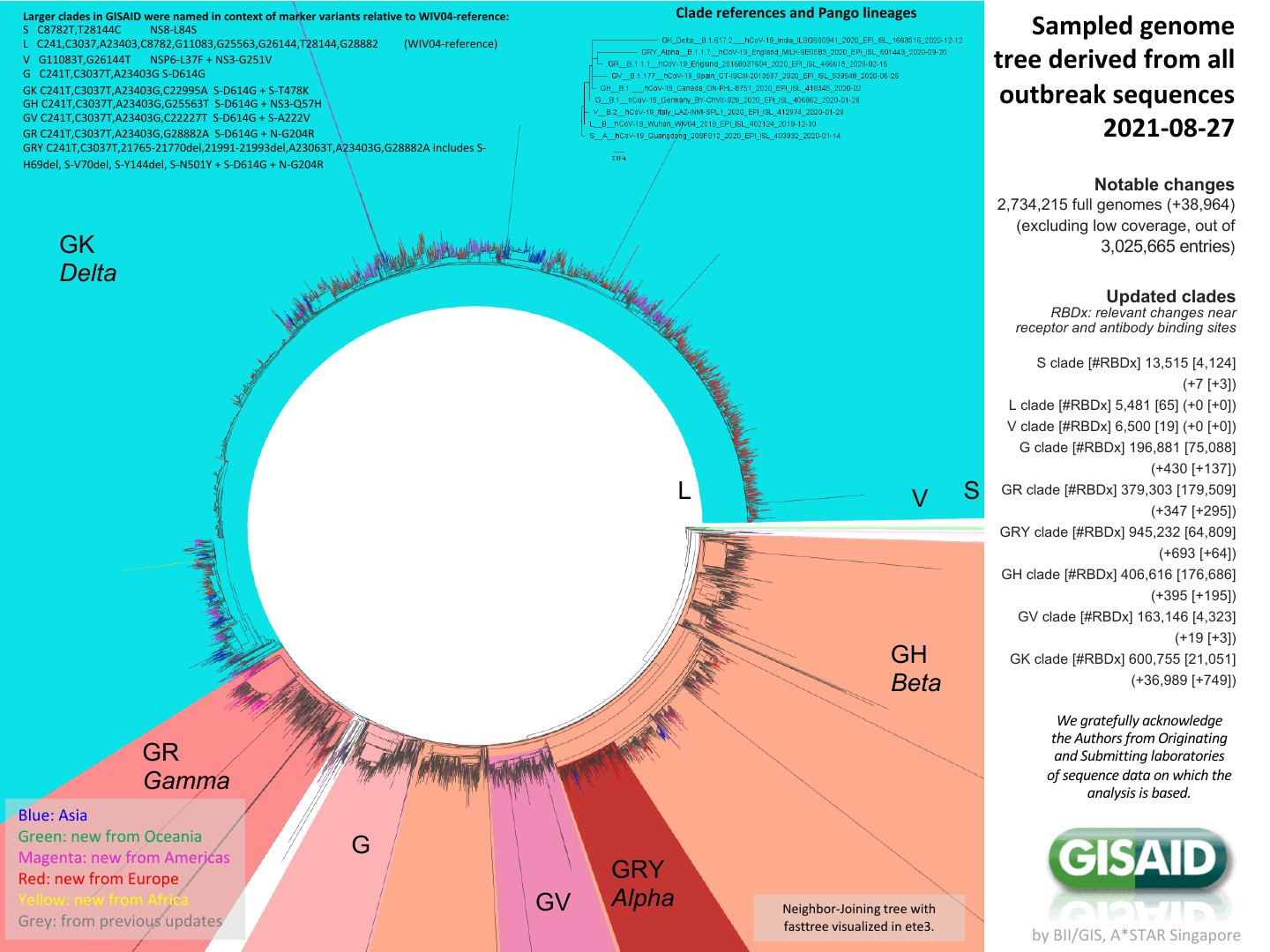
We want to know how changes in genotype affect phenotype
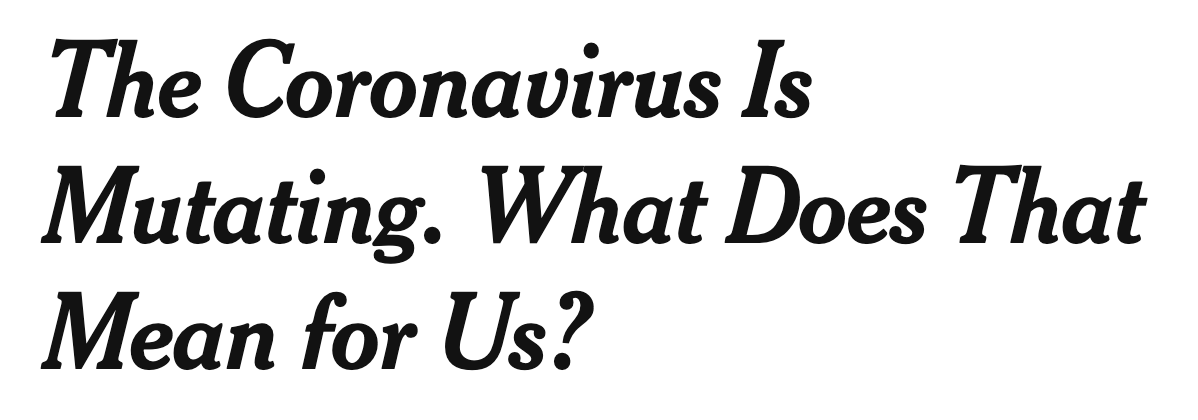

The Coronavirus Is Mutating. What Does That Mean For Us?
The Coronavirus Is Mutating. What Does That Mean For Us?
"There is no reason to expect that the extent of functional change in a polypeptide chain is proportional to the number of amino-acid substitutions... It is the type rather than the number of substitutions that is decisive."
biochemical phenotypes
- protein folding
- affinity for ACE2
- binding by antibodies
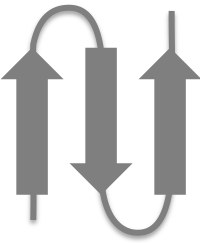
Protein structure matters implicitly, as it largely determines mapping from mutation to phenotype.
My lab studies how changes in genotype affect phenotype for viral proteins
Outline
Outline
- SARS-CoV-2 spike and its receptor-binding domain (RBD)
Outline
- SARS-CoV-2 spike and its receptor-binding domain (RBD)
- How do coronavirus spikes evolve?
Outline
- SARS-CoV-2 spike and its receptor-binding domain (RBD)
- How do coronavirus spikes evolve?
- How mutations affect function of RBD
Outline
- SARS-CoV-2 spike and its receptor-binding domain (RBD)
- How do coronavirus spikes evolve?
- How mutations affect function of RBD
- How mutations affect antibody recognition of RBD
Outline
- SARS-CoV-2 spike and its receptor-binding domain (RBD)
- How do coronavirus spikes evolve?
- How mutations affect function of RBD
- How mutations affect antibody recognition of RBD
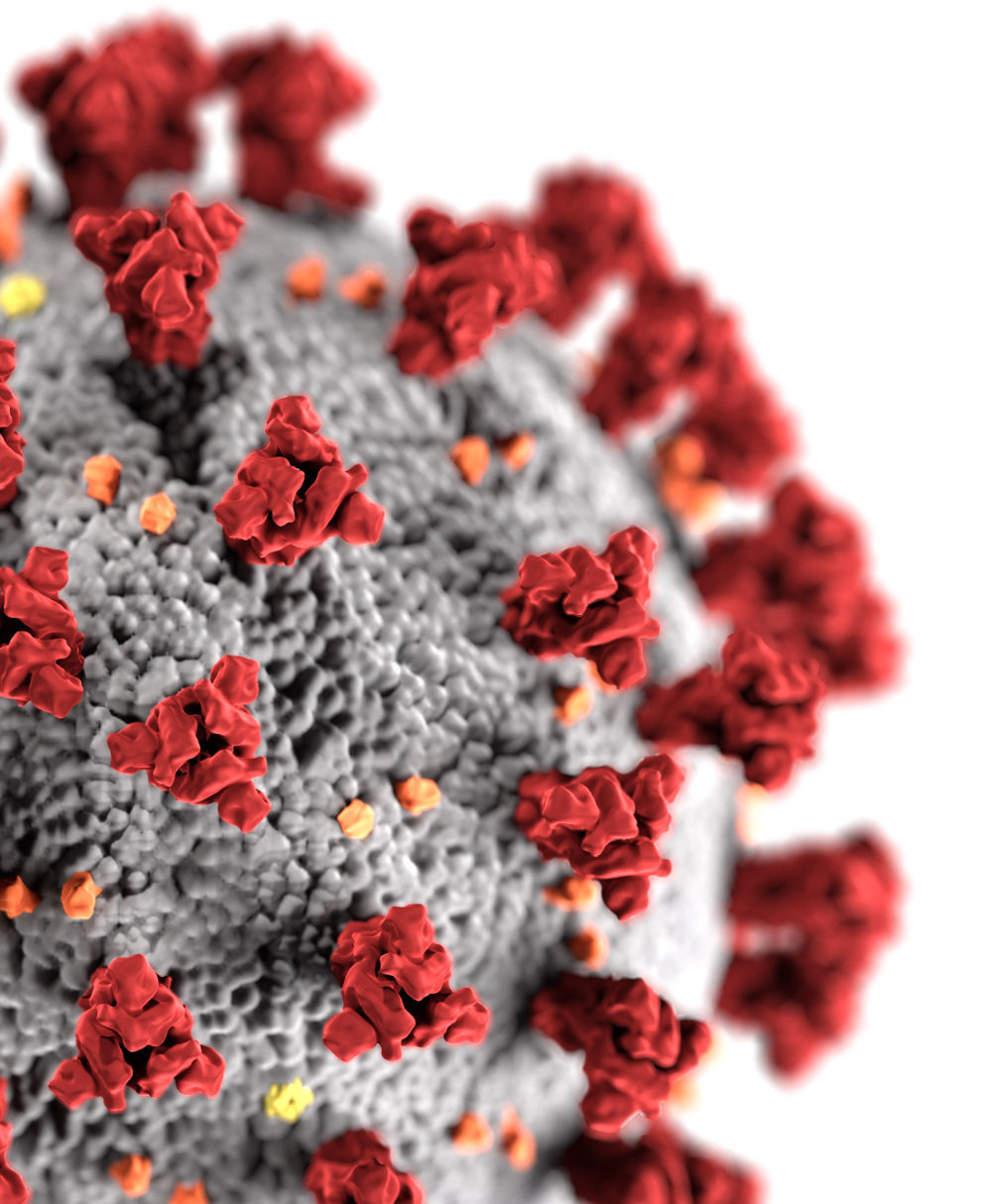
SARS-CoV-2 virions are decorated by spike proteins that mediate viral entry
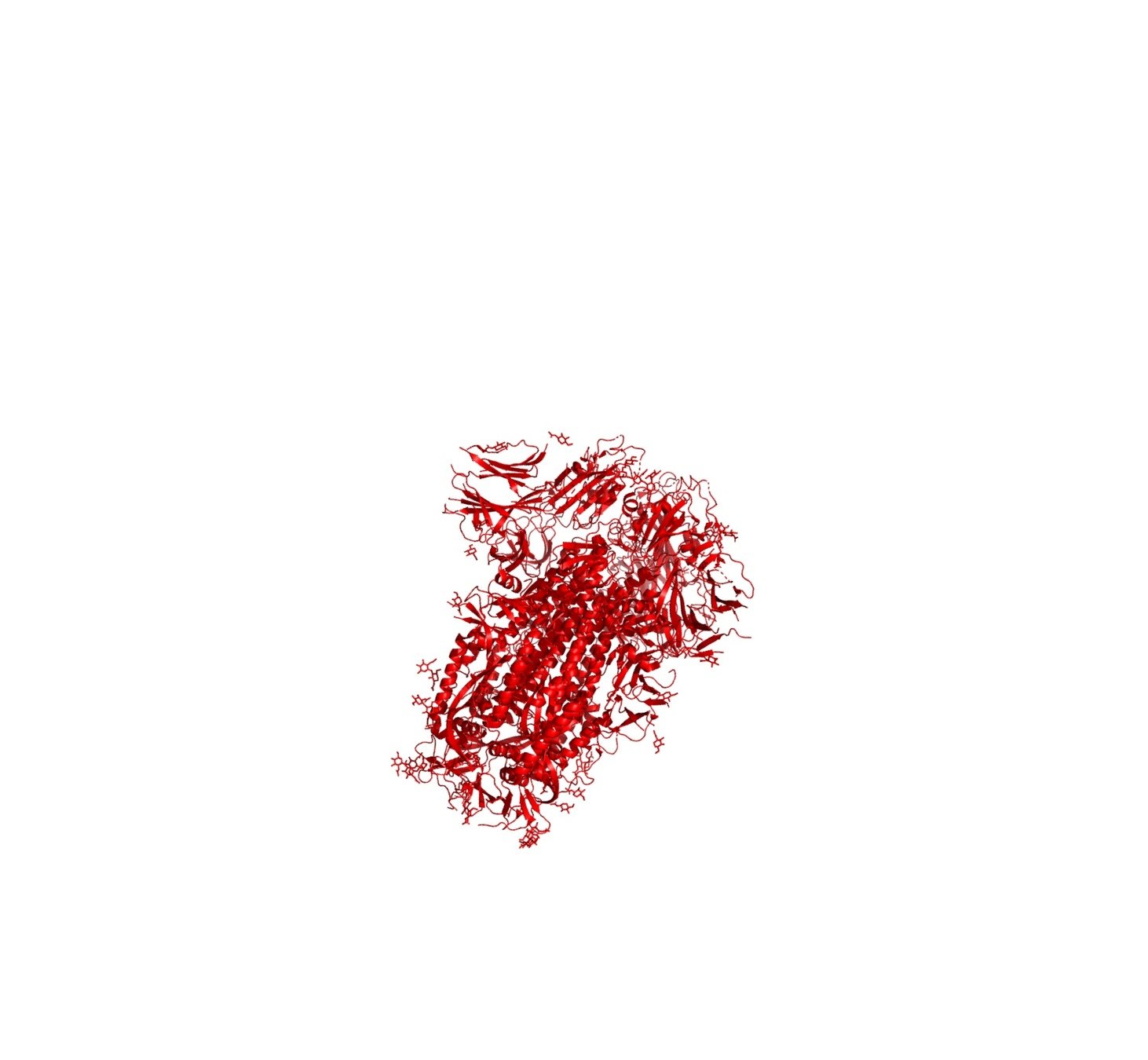
A key portion of the spike is the receptor-binding domain (RBD)
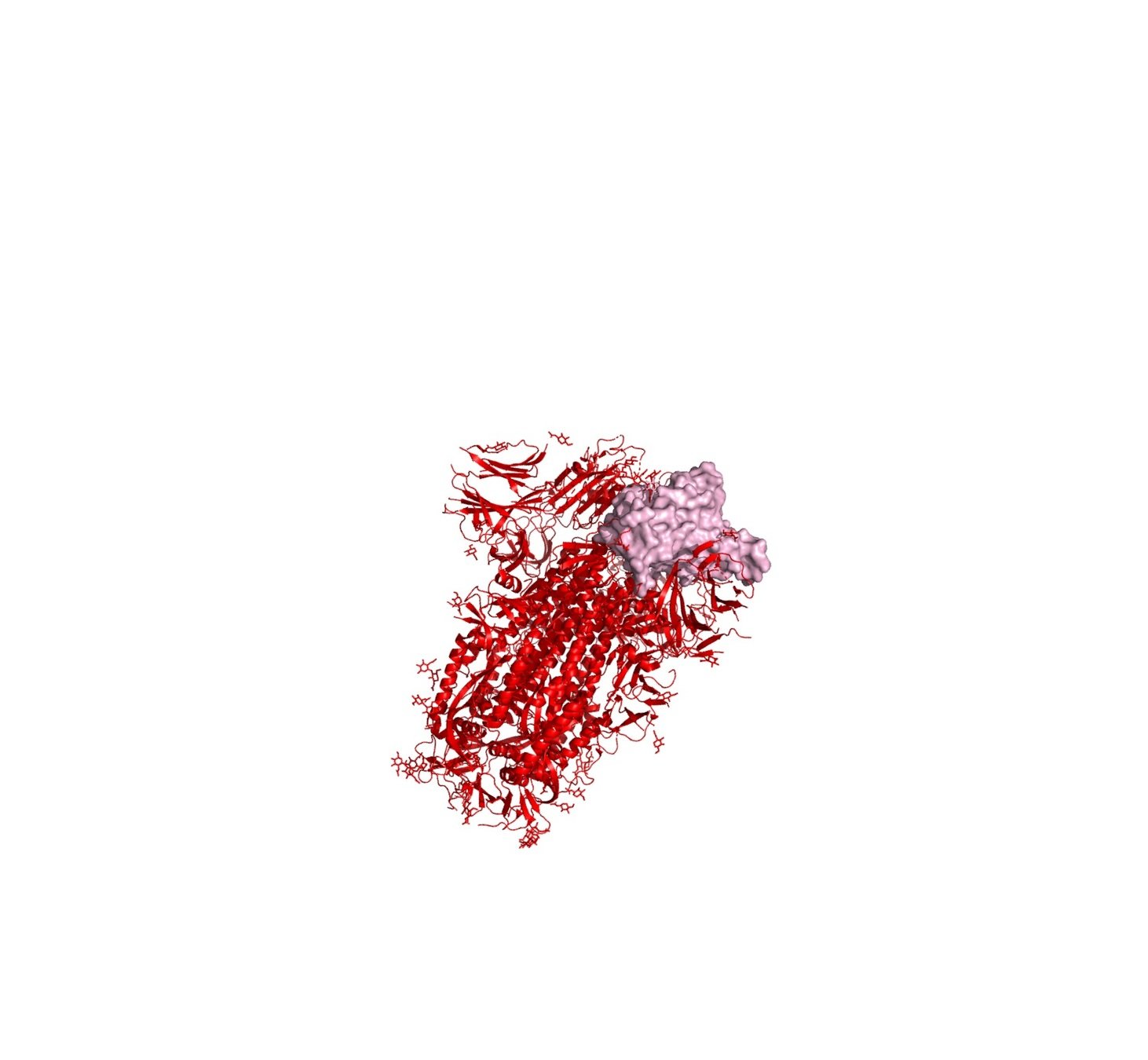
The RBD binds ACE2 receptor on cells
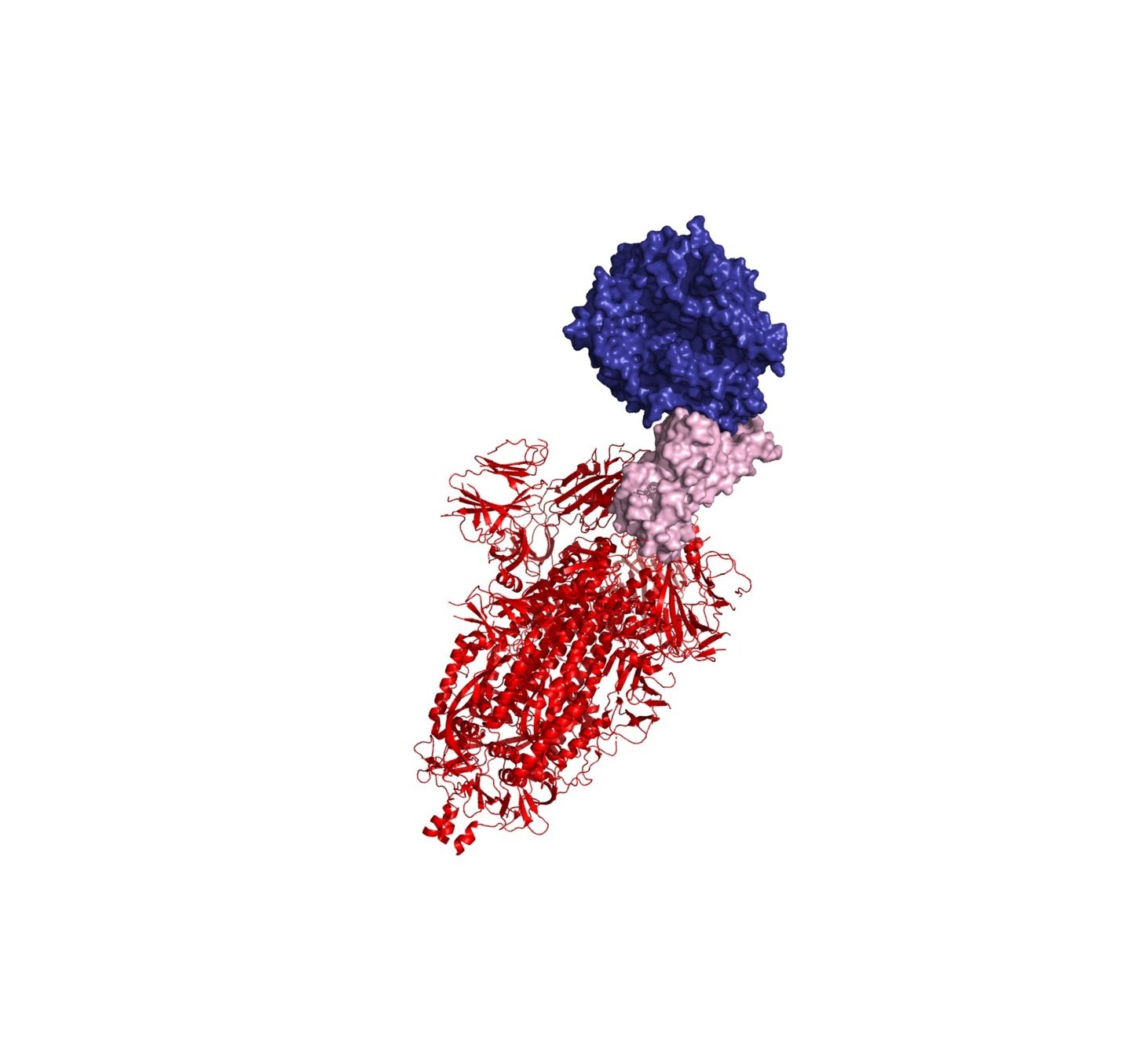
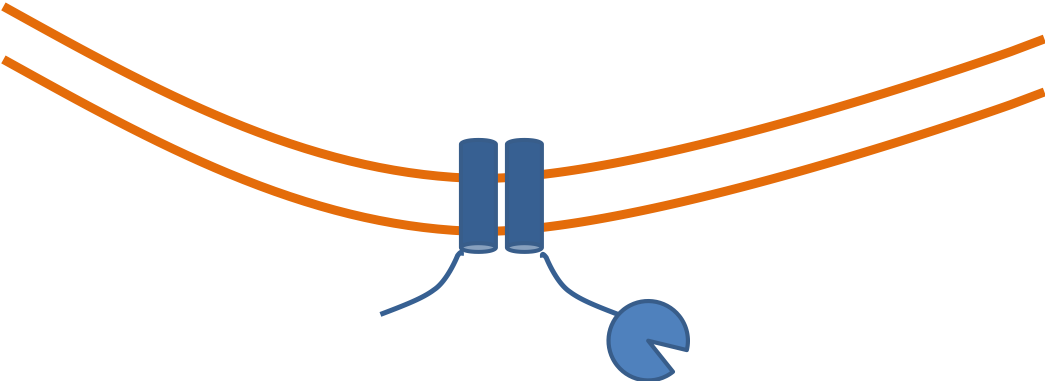
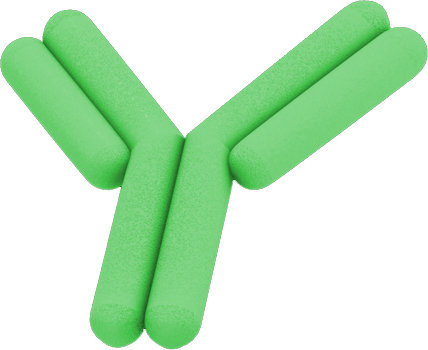
Neutralizing antibodies target spike; often bind RBD and block interaction with ACE2
Outline
- SARS-CoV-2 spike and its receptor-binding domain (RBD)
- How do coronavirus spikes evolve?
- How mutations affect function of RBD
- How mutations affect antibody recognition of RBD
Only sometimes does virus evolution lead to changes in antigenic phenotype
- Measles virus: Does not evolve to escape immunity. People are infected at most once in their lives. A vaccine developed in the 1960s still works today.
- Influenza virus: Evolves to escape immunity. People are infected every ~5 years. The vaccine needs to be updated annually.
Initially, many people suggested coronaviruses didn't evolve antigenically

Coronaviruses are the only RNA viruses with a proofreading polymerase (Denison et al, 2011), meaning they have a lower mutation rate than influenza or measles virus
Not a good argument
Evolution isn't just mutation. Rather, it involves three related factors:
- The rate at which mutations arise.
- The phenotypic impact of these mutations.
- How selection (and drift) act on these mutations.
"The best predictor of future behavior is past behavior."
There is no past behavior of SARS-CoV-2 to study, but we can look to its relatives
We studied CoV-229E, a coronavirus that causes common colds and has been circulating in humans since at least the 1960s.
Reconstructing evolution of CoV-229E spike

We experimentally generated CoV-229E spikes at ~8 year intervals so we could study them in the lab:
- 1984
- 1992
- 2001
- 2008
- 2016
Evolution of CoV-229E spike erodes neutralization by human antibody immunity
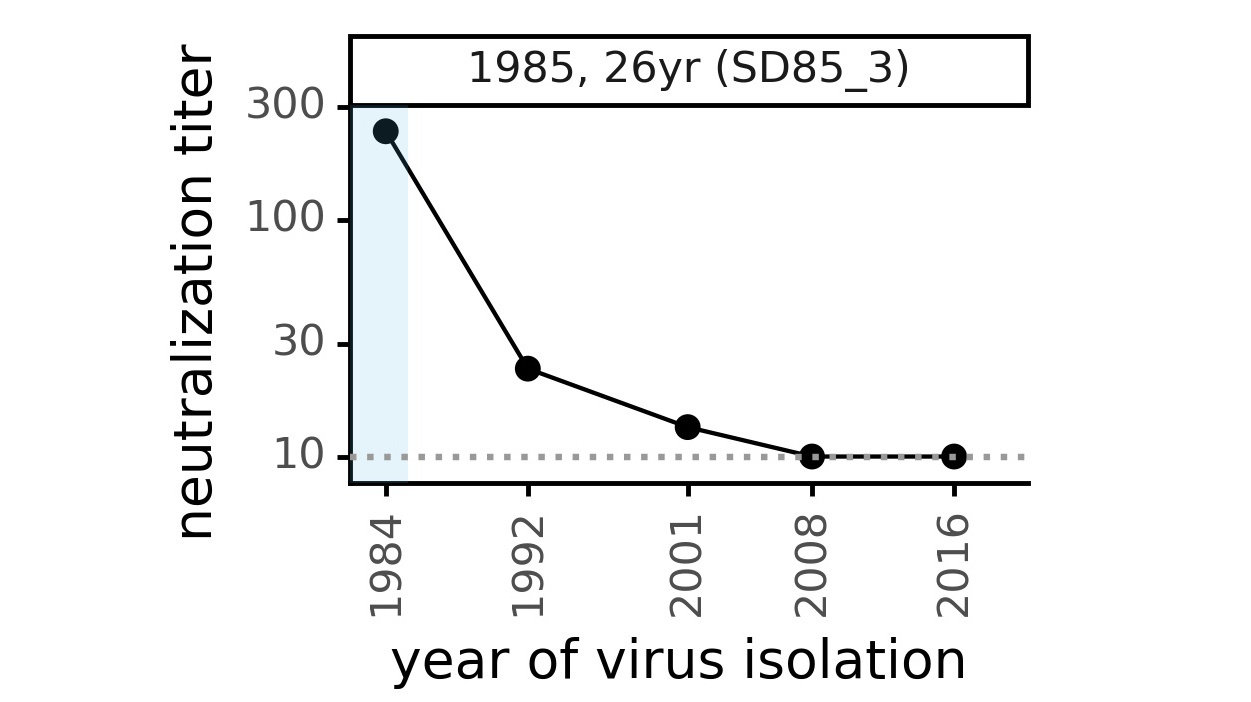
Serum collected in 1985 neutralizes virus with spike from 1984, but less effective against more recent viruses.
Viral evolution erodes antibody immunity of different people at different rates
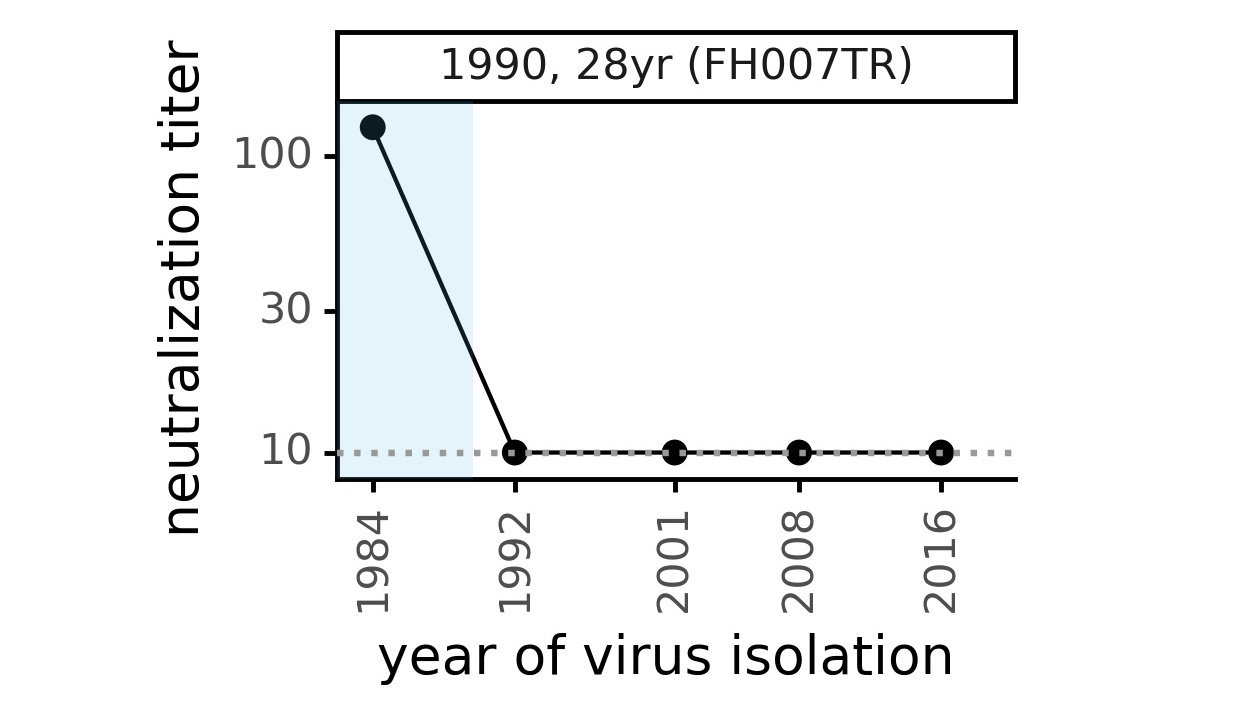
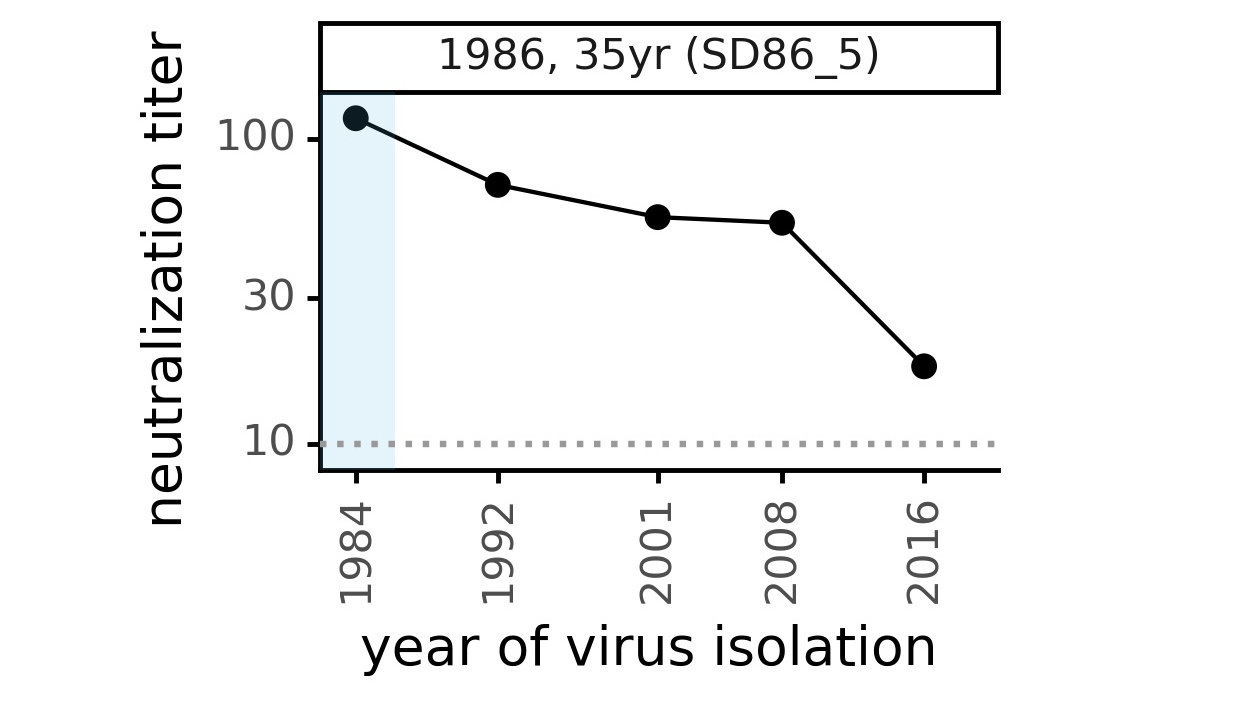
We are studying basis of these differences, as ideally vaccines would elicit more evolution-resistant sera as on the right.
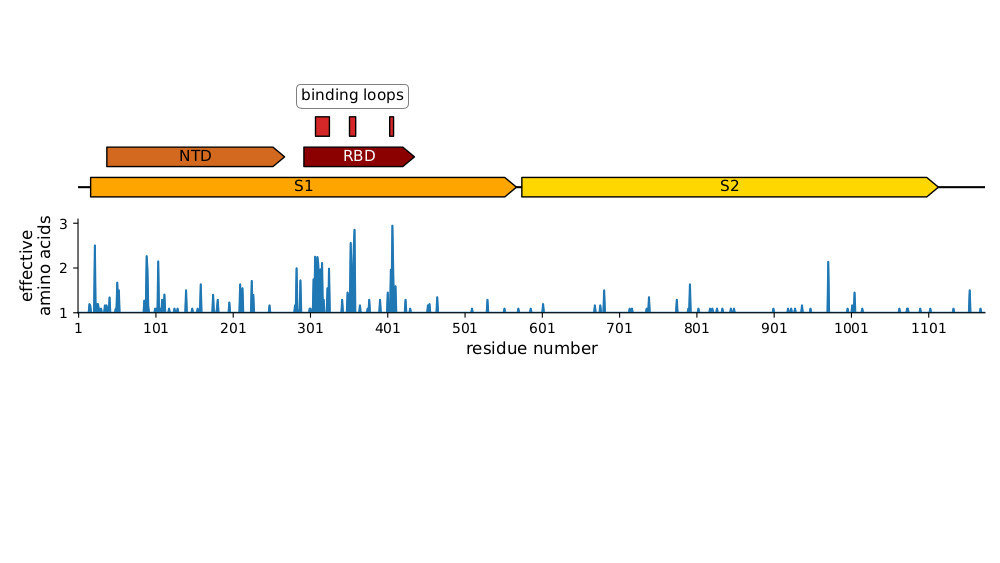
Most mutations in RBD & NTD
Outline
- SARS-CoV-2 spike and its receptor-binding domain (RBD)
- How do coronavirus spikes evolve?
- How mutations affect function of RBD
- How mutations affect antibody recognition of RBD
For SARS-CoV-2 RBD, want to prospectively map how each mutation affects phenotype
Impossible to measure true viral fitness in the lab, so we focus on three biochemical phenotypes that contribute to fitness:
1) Does RBD fold properly?
2) Does RBD bind ACE2 with high affinity?
3) Is RBD bound by anti-viral antibodies?
For SARS-CoV-2 RBD, want to prospectively map how each mutation affects phenotype
Impossible to measure true viral fitness in the lab, so we focus on three biochemical phenotypes that contribute to fitness:
1) Does RBD fold properly?
2) Does RBD bind ACE2 with high affinity?
3) Is RBD bound by anti-viral antibodies?
Evolutionary pressure is to maintain these two phenotypes...
... while changing this phenotype.
We use yeast display to enable high-throughput experiments
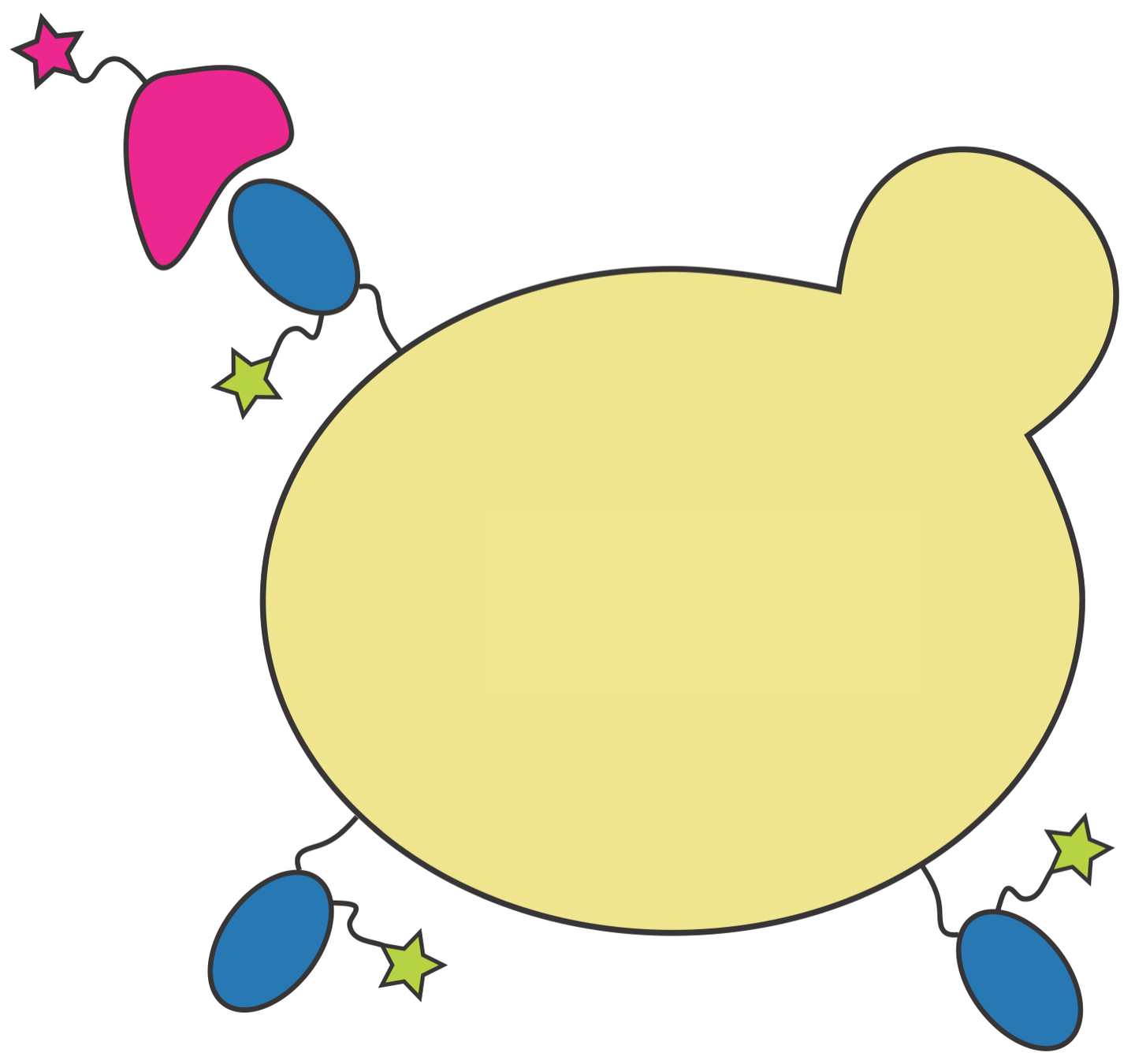
Importantly, we use ACE2 titrations to measure true affinities, not just relative FACS binding signal; see here for details.
Library of yeast, each expressing different RBD mutant with identifying 16 nt barcode

Phenotypic maps of how mutations affect RBD folding & ACE2 affinity
Outline
- SARS-CoV-2 spike and its receptor-binding domain (RBD)
- How do coronavirus spikes evolve?
- How mutations affect function of RBD
- How mutations affect antibody recognition of RBD
We map escape mutations by sorting for RBD variants that don't bind antibody
fluorescently labeled antibody
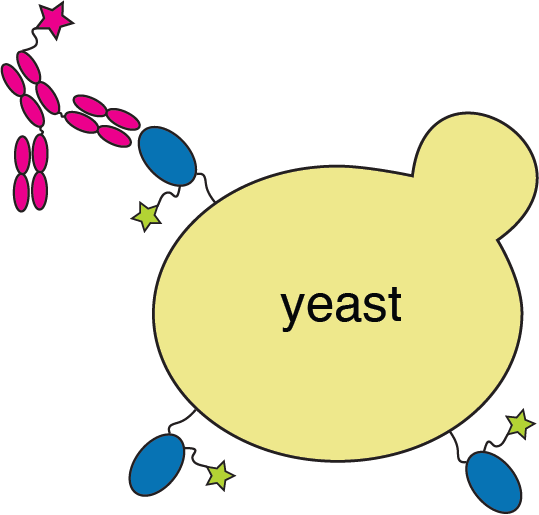
Escape map from a single antibody
Escape maps from lots of antibodies
Infection / vaccination elicit polyclonal antibodies that can bind many epitopes
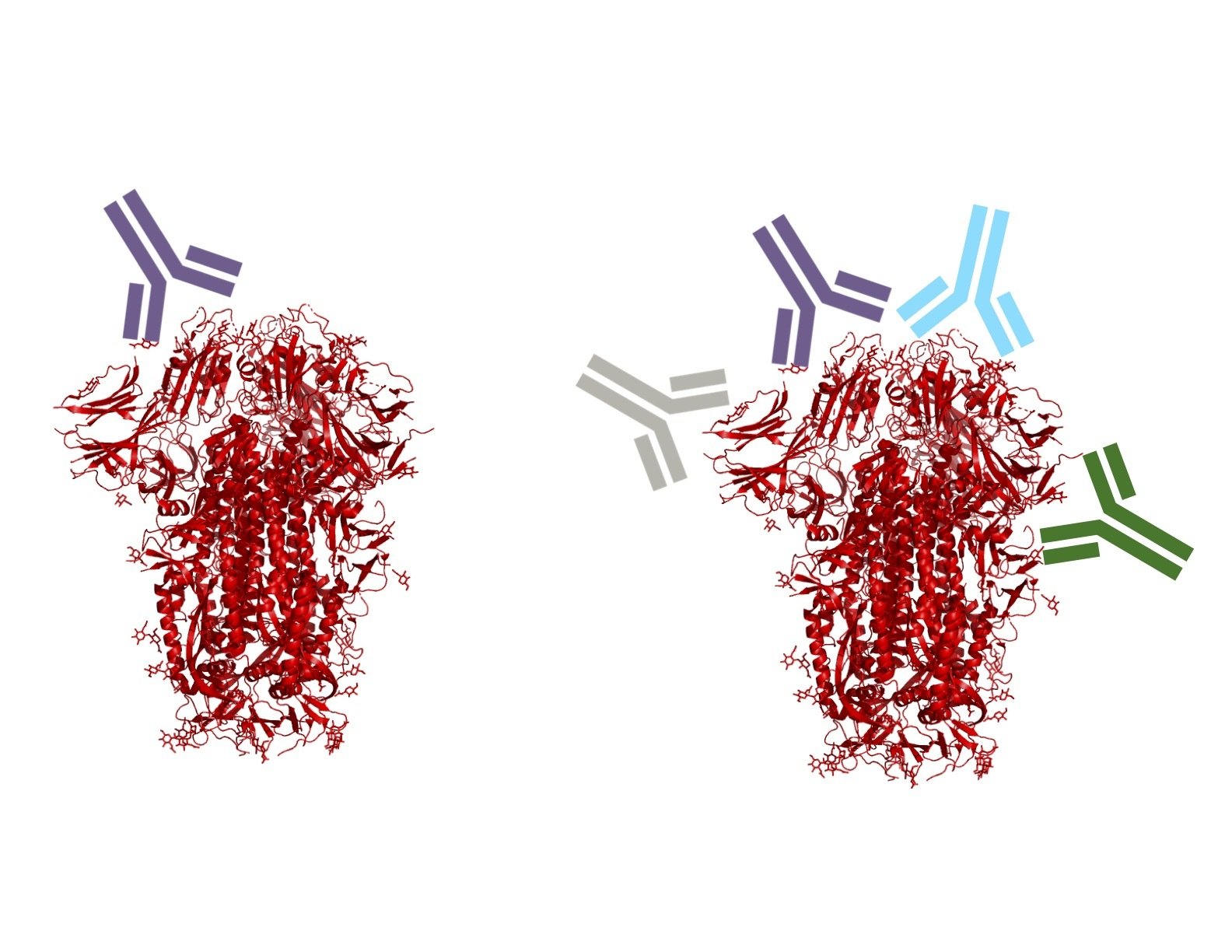
Monoclonal antibodies bind one epitope, so can usually be escaped by single mutation
Polyclonal antibodies can bind many epitopes, so often more resistant to escape
Extent of focusing of polyclonal antibodies shapes antigenic evolution
- For influenza virus, human polyclonal antibody immunity often highly focused, such that single mutations can reduce neutralization by >10 fold. (Lee et al, eLife, 2019)
- For measles virus, polyclonal antibodies target many epitopes with similar potency, so no single mutation has a large effect. (Munoz-Alia, Cell Rep. Med., 2021)
RBD-binding antibodies are responsible for most neutralizing activity
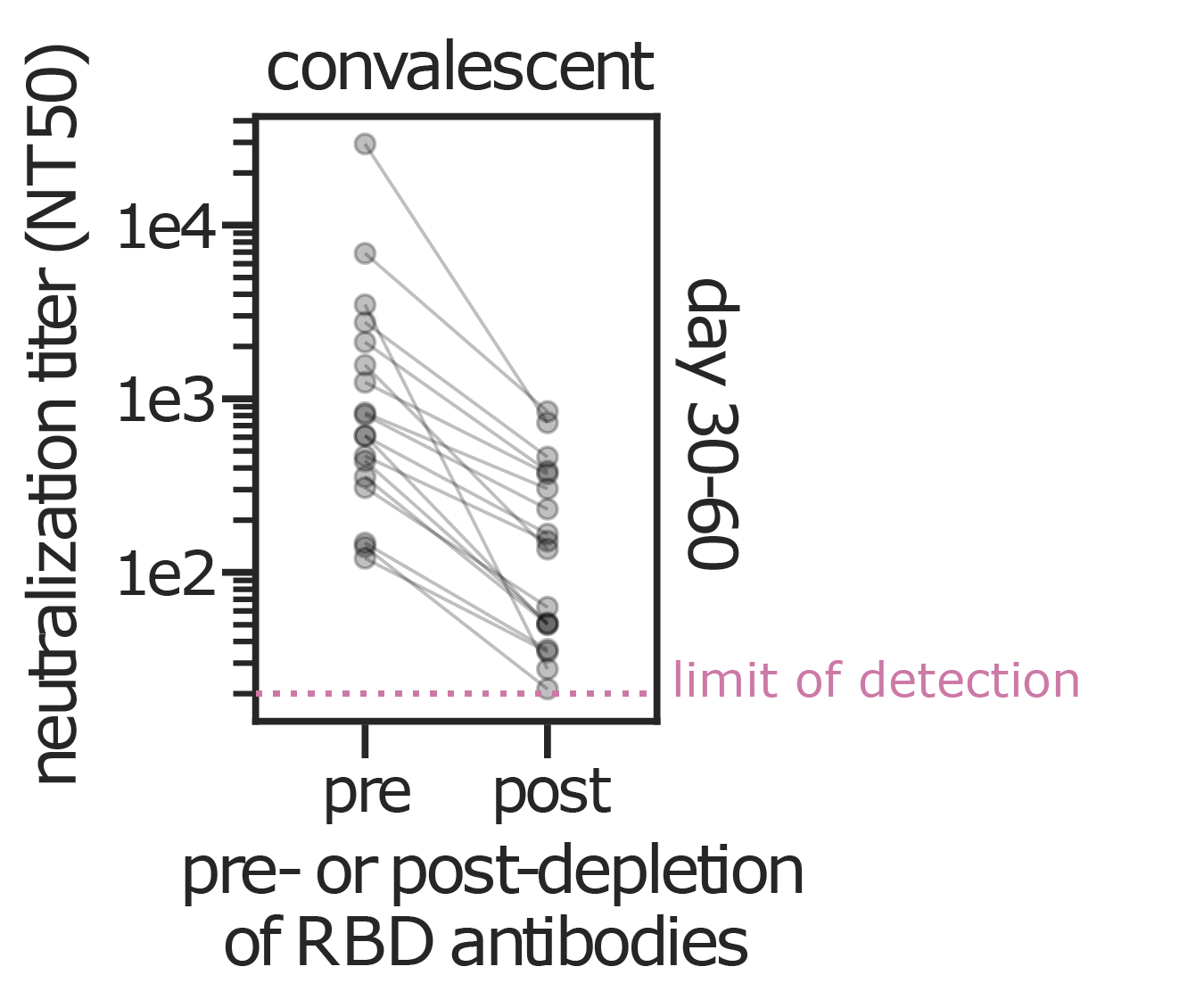
RBD-binding antibodies are responsible for most neutralizing activity
RBD-binding antibodies are responsible for most neutralizing activity
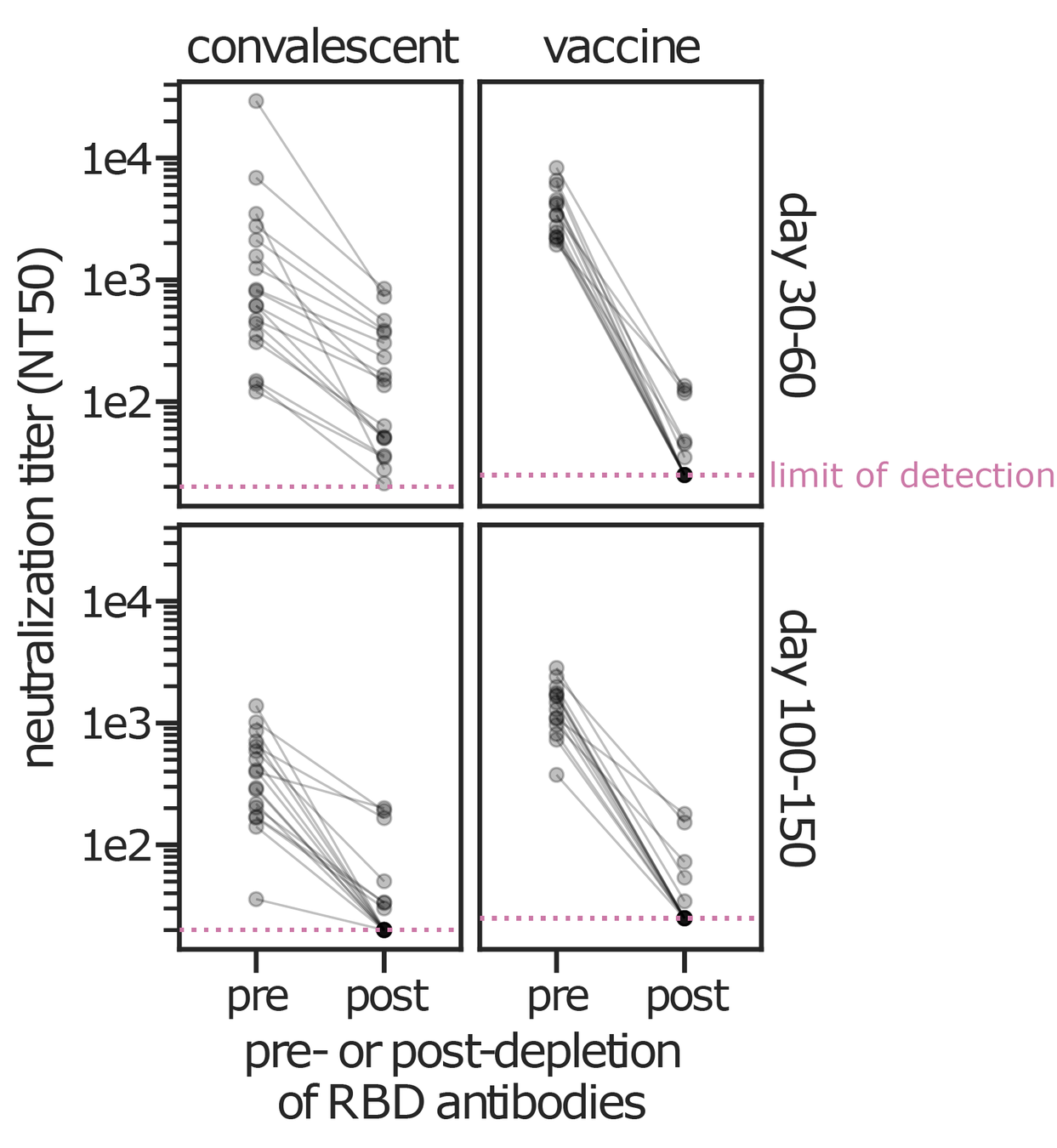
Single antibody class makes largest contribution, and mRNA vaccine induces broader binding
If polyclonal antibodies bind multiple epitopes, escape needs multiple mutations
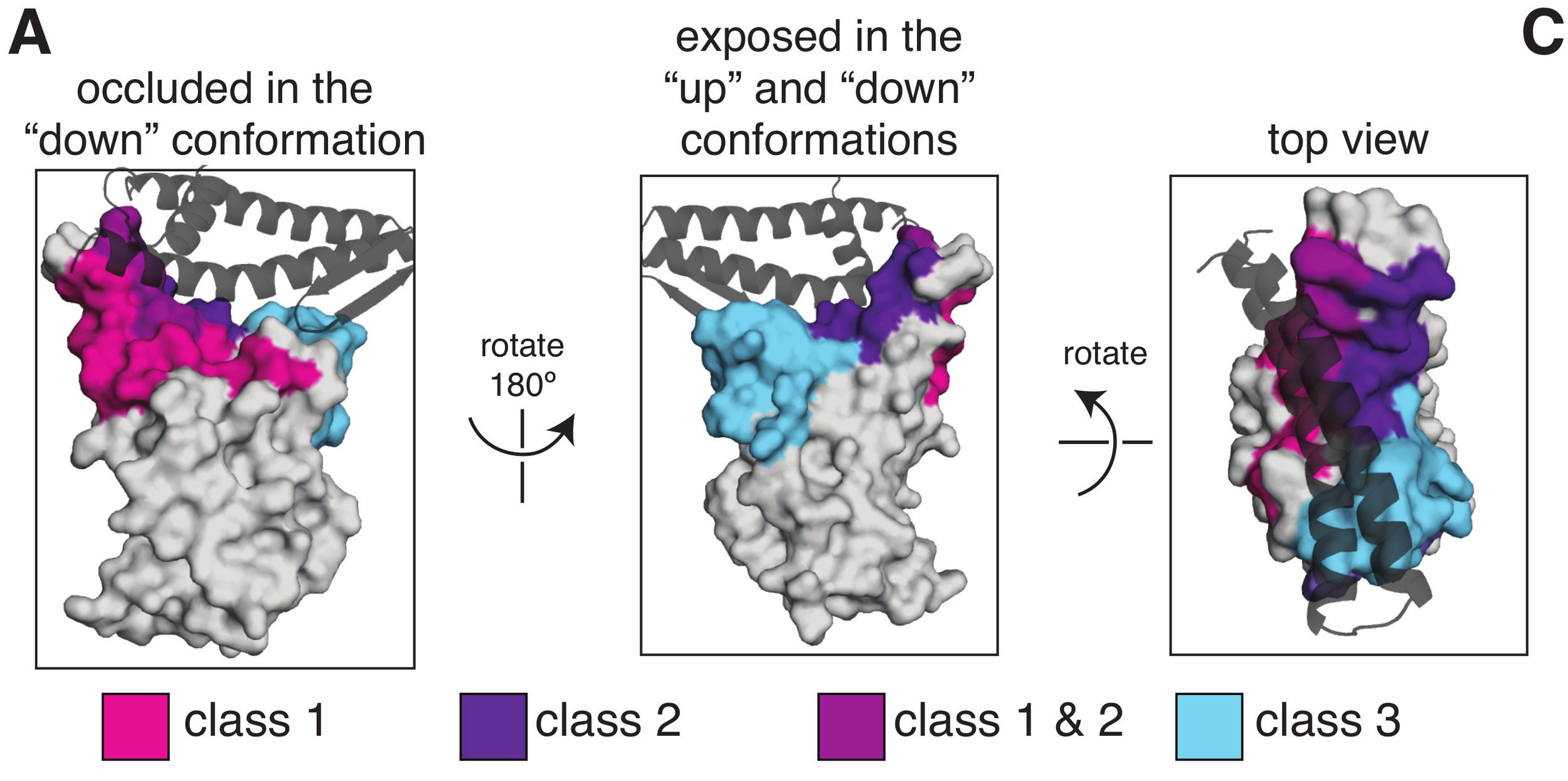
We can visualize escape from different antibody classes
Conclusions
Relating change in genotype to phenotype is an old challenge in evolutionary biology
"There is no reason to expect that the extent of functional change in a polypeptide chain is proportional to the number of amino-acid substitutions... It is the type rather than the number of substitutions that is decisive."
Relating change in genotype to phenotype is an old challenge in evolutionary biology
The Coronavirus Is Mutating. What Does That Mean For Us?
Relating change in genotype to phenotype is an old challenge in evolutionary biology
"There is no reason to expect that the extent of functional change in a polypeptide chain is proportional to the number of amino-acid substitutions... It is the type rather than the number of substitutions that is decisive."
It's increasingly the bottleneck, since we've gotten good at obtaining genotypes
Phylogenetic tree of 2,734,215 full-length SARS-CoV-2 genomes provided by GISAID
We are working to characterize phenotype at comparable scale
Crowe lab (Vanderbilt): James Crowe, Seth Zost, Pavlo Gilchuk
Chu lab (Univ Wash): Helen Chu, Caitlin Wolf
Veesler lab (Univ Wash): David Veesler, Alexandra Walls, Ale Tortorici
King lab (Univ Wash): Neil King, Dan Ellis
Li lab (Brigham & Women's): Jonathan Li, Manish Choudhary
Whelan lab (Wash U)
Boeckh lab (Fred Hutch): Terry Stevens-Ayers
Alex Greninger (Univ Wash)
Janet Englund (Seattle Children's)




-
Adam Dingens
-
Will Hannon
-
Amin Addetia
-
Keara Malone