What on Earth Is Happening With How Jeffrey Epstein Typed Those Emails?
Sign up for the Slatest to get the most insightful analysis, criticism, and advice out there, delivered to your inbox daily.
This week there was yet another development in the endlessly developing saga of Jeffrey Epstein. On Wednesday, Democrats on the House Oversight Committee published a handful of new-to-the-public email exchanges by Epstein, and later that same day House Republicans countered by releasing more than 20,000 pages of documents from the so-called “Epstein files,” arguing that the Democrats had unfairly “cherry-picked” emails that painted Trump in the worst possible light.
They do not paint him well, it must be said. Trump, according to Epstein, is “borderline insane,” knew about “the girls,” and is the kind of person who “talks to many people” and “tells each one something differnt [sic].” The content is both explosive and frustratingly partial. Passages about Trump being “that dog that hasn’t barked” and the revelation Epstein believed that he was “the one able to take him down” certainly sound damning, but what do they actually mean? That’s the most important question. But then there was the other thing: their form. It’s both the least noticeable and the most noticeable thing about these emails: the way they are written. And they are written very, very weirdly.
The sic of it all is worth a little attention. Take this message, sent by Epstein to Ghislaine Maxwell in April of 2011, which is representative of the strange flavor, grammatically and syntactically, that Epstein’s emails have in general:
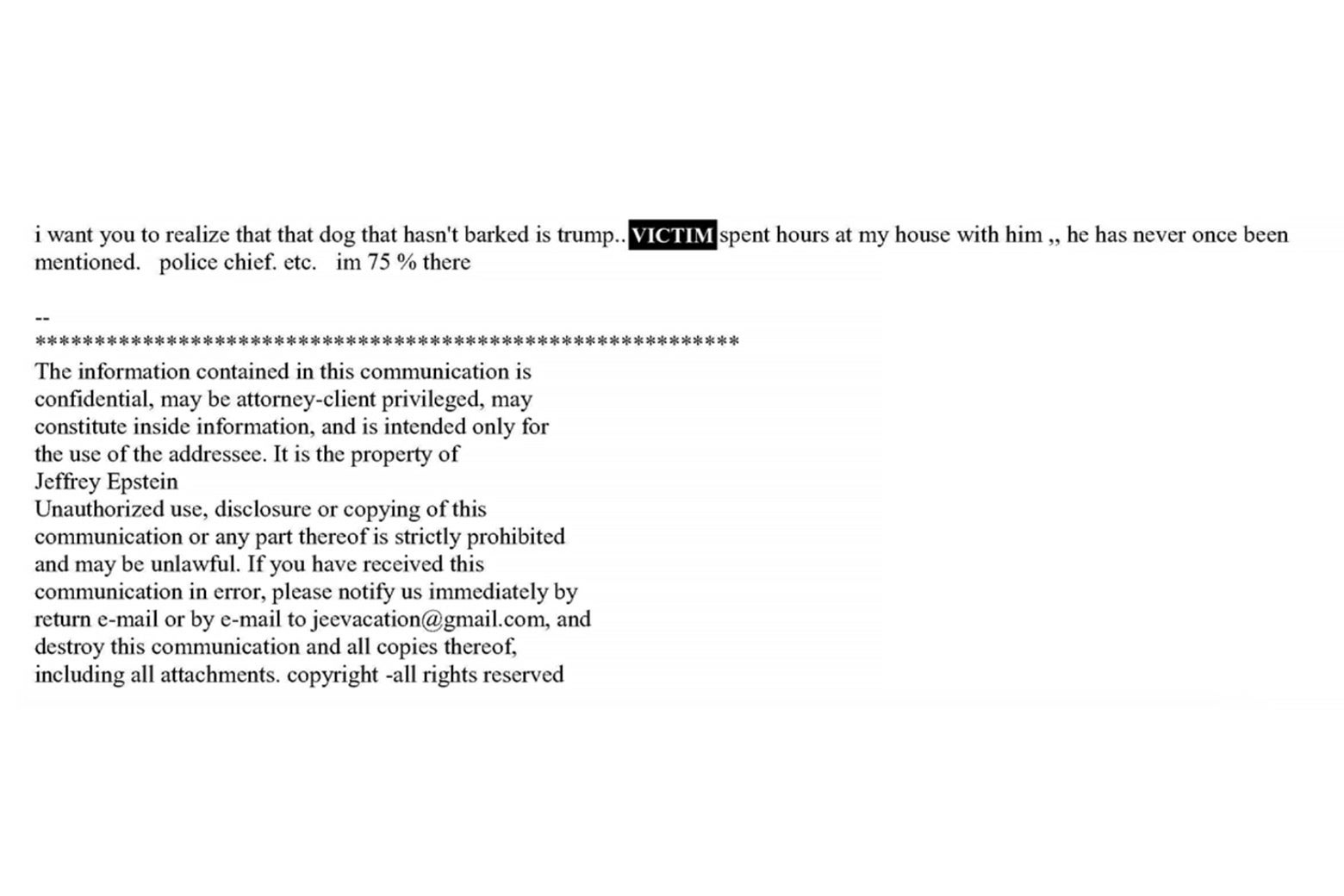
Some elements here are explainable by the typing proclivities of certain boomers. The double space after the period, potentially a hangover from when typewriters required you to do this, has stuck around in the minds of some people who learned to type on those devices even though it is now officially out of style. I have also noticed that among older men in positions of power that I’ve had occasion to communicate with, there is a tendency toward unusually brief, informal emails. Maybe it’s just that they’re too busy, or that they are happy to be perceived to be too busy, to lay things out nicely and spellcheck. But I really struggle to imagine how you would manage to produce things like “him ,, he” while typing. Or take this email, sent by Epstein to the journalist Michael Wolff in January of 2019:
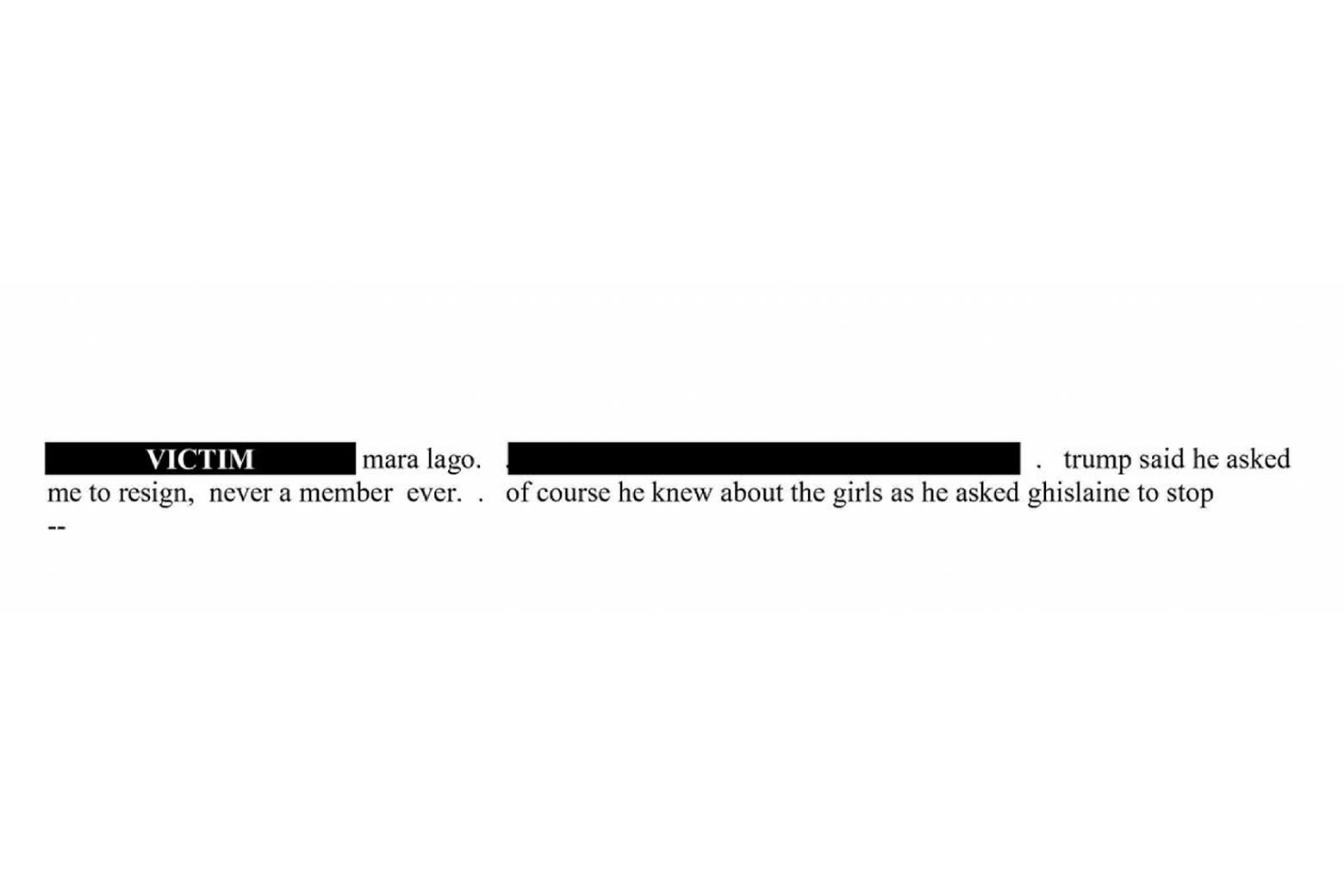
What do one’s thumbs have to be doing, how distracted or uninterested in your communications with a person do you have to be to tap out two periods sandwiched by a space either side and just leave them there?
Epstein’s style, as a whole, does betray an attitude, and that is arrogance. To have one’s emails set to lowercase implies a looseness, a conversational tone, and sends its own message. He did not consider these matters, nor the people he was discussing them with, to be worthy of formality. Some typos are just typos. We all make them. But to consistently leave highly noticeable typos and errors of punctuation in his emails, even when he is writing about sensitive topics like seeming accusations of wrongdoing against the president of the United States, as well as references to his own depraved sex crimes, is a choice. A choice not to care.
It boggles the mind for most people to try to think their way into the perspective of a person like this, so assured of the invincibility that the shield of their untold wealth affords them. But Epstein’s behavior, both before and after the revelation of his crimes, bears it out. He never showed remorse, never took responsibility for the terrible things he inflicted on his victims. And anyway, to perpetrate those crimes in the first place, a person would need to have a near-inhuman disregard for others. So it doesn’t surprise me, given what we know about the person that sent these messages, that this is the manner in which he sent them: riddled with errors, blunt where tact might be expected, oblique where others would want to demonstrate transparency.
It doesn’t seem to cross his mind while firing off any of these emails—from the private jet, from one of his many palatial residences, from the back seat of an expensive car—that they might one day come back to bite him, despite the fact that the emails come footed with the now highly ironic-feeling disclaimer that “the information contained in this communication is confidential.” That law enforcement agencies and the world’s media would one day have occasion to be reading them, and that all his power and wealth would not, in fact, be enough to save him.
Get the best of news and politics
Sign up for Slate's evening newsletter.