This is Part 1 in a series of 5 articles about how me and Rob are creating a Paid Skill business.
Rob writes The Physics of Startups to help founders find PMF, has a book called PULL and of course a paid skill which you can find here.
A paid skill is a guide for AI agents to do a task like an expert. Skillfully helps authors sell these and rapidly improve them.
When I met Rob he already had a skill he was giving out to his consulting clients. This skill reviewed calls; calls founders of startups were having with prospective clients in particular.
You see, Rob advocates for finding market pull as opposed to what many founders typically do: push their solution onto customers. Being a founder myself, this is harder to do than it sounds in a call. After all, you want people to buy, use and get value out of your product. So you might run a call like:
Small talk then introduce yourself, company & product
Handle objections
Set up another call or tell pricing on the spot
This is what many of the sales calls I’ve been a customer in sounds like anyway. Rob says this is wrong.
You see, in an early stage company you get to change what you are selling. So it makes more sense to focus on what people want to buy as opposed to what you want to sell.
Rob’s v0 skill educatd founders about not pitching first, reviewed their calls in order to train them to be better interviewers; in hopes that this would result in founders finding market pull more effectively.
All to say Rob had a free skill he was giving to his consulting clients that provided them with some small but specific value.
First, a skill is a guide written for AI agents (like ChatGPT) to do a specific task. It becomes a paid skill when you sell, improve and maintain it like a product. Read Rob’s v0 skill here.
If you are evaluating whether you should make a paid skill, check out my article on why you should (totally 0 bias).
To make a v0 skill you need to focus on one specific task people such as readers, consulting clients, course takers, podcast listeners etc. come to you with. In Rob’s case that task was reviewing a founder’s calls with potential clients.
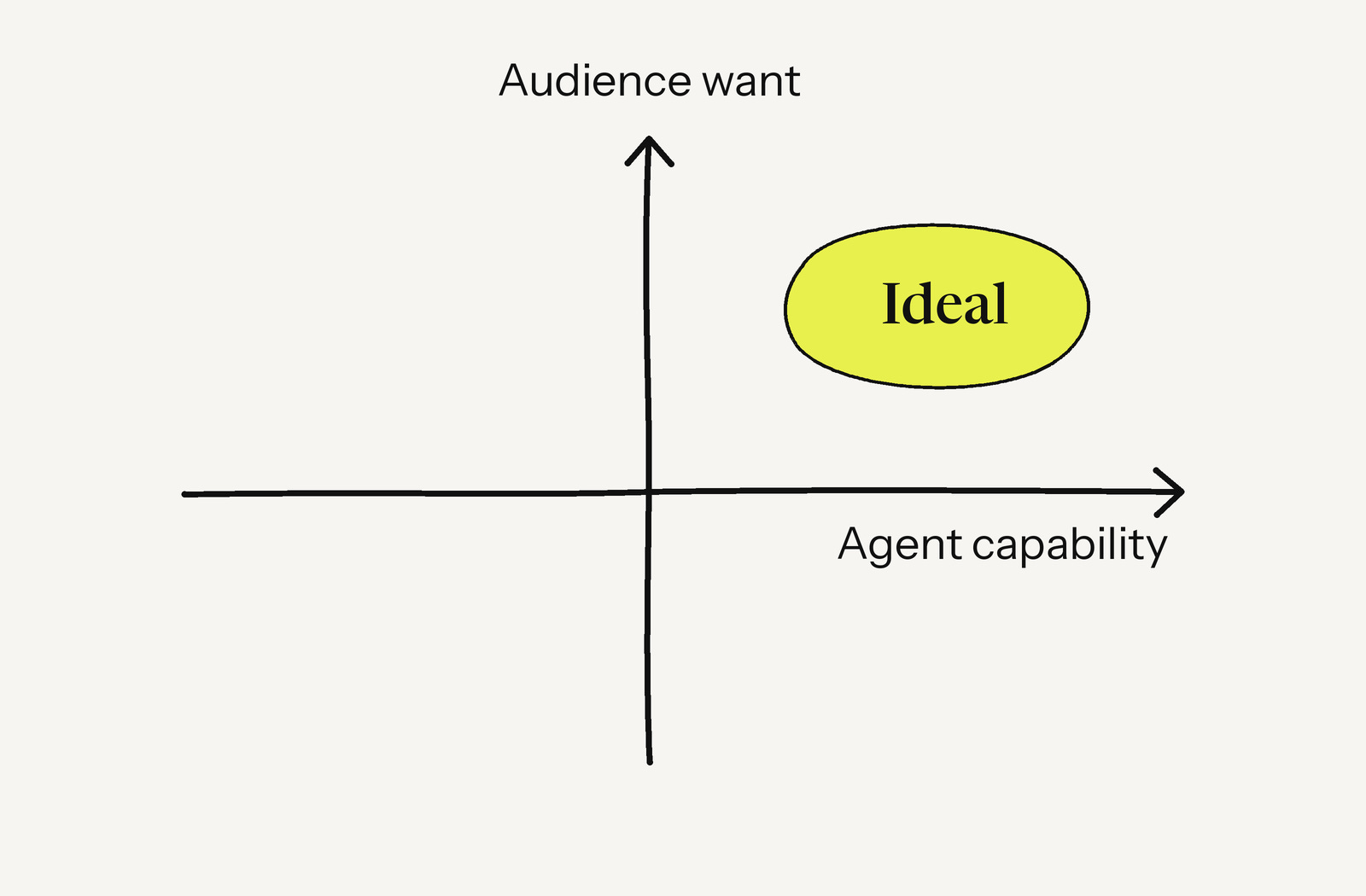
When selecting a task evaluate it along two dimensions:
Can an AI agent do this? Most people tend to be too conservative along this dimension. Agents can do a TON. But they cannot do vague or broad processes (they’ll become a yes-man). They can connect to external systems and follow specific steps.
Does my audience want this? You know your audience best
After you select a task you still need two things:
Why do those people come to you with this task? These are their goals.
What do you do to help them achieve it? This is your process.
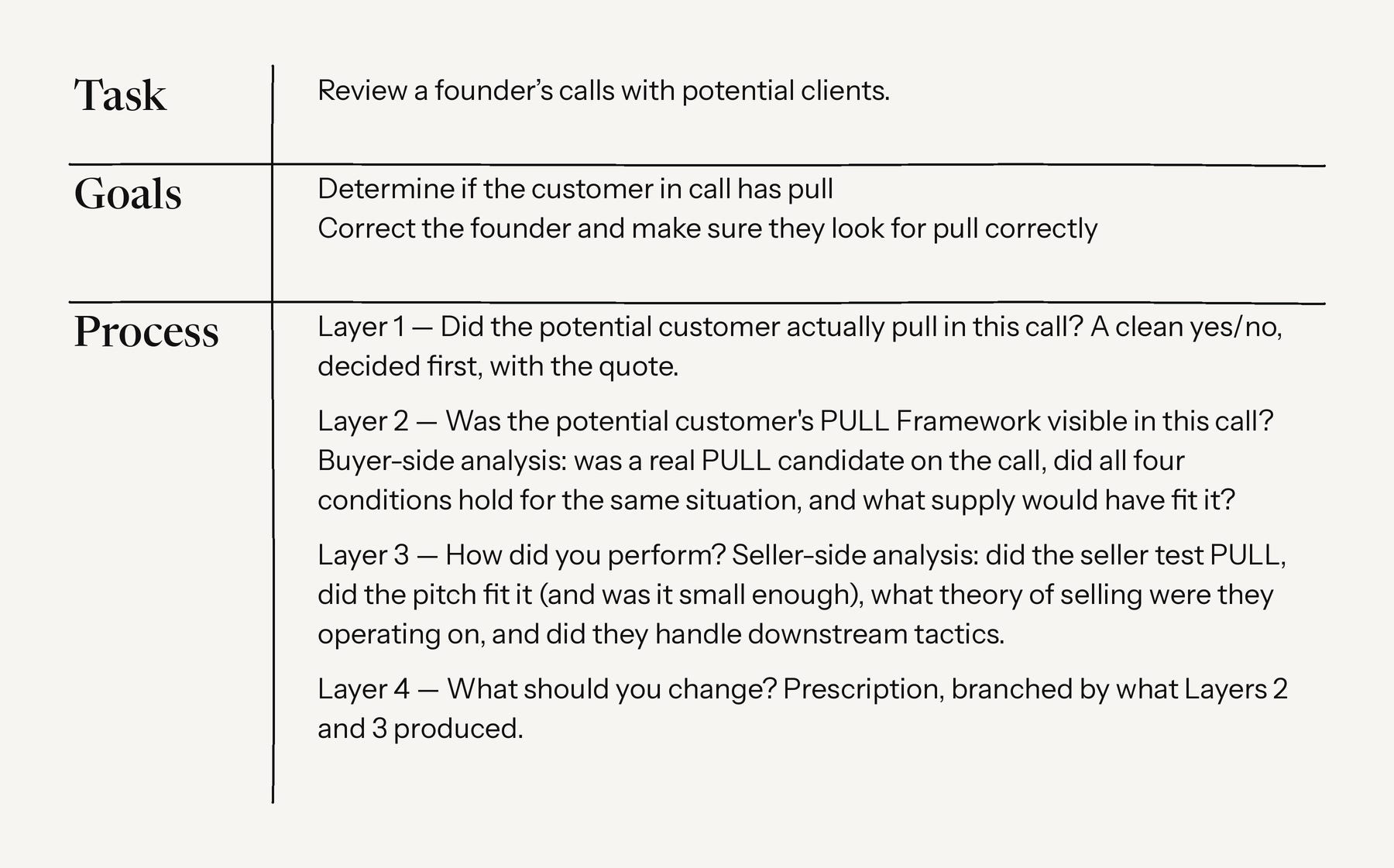
Again, the task should not be broad. It should not cover your whole area of expertise. Just one specific thing people tend to come to you with that you have a specific process with well defined steps for.
Once you have your task, goals and process; you can start chatting with your favourite AI tool: Claude, ChatGPT (work mode & Codex), Grok all have support for using and creating agent skills.
Literally write: “I want to build an agent skill” and explain your task, goals and process.
Rob found his first users through his consulting clients, gave them his skill and they used it in their AI chat tools. It was < 10 people but that’s all you need to get serious feedback.
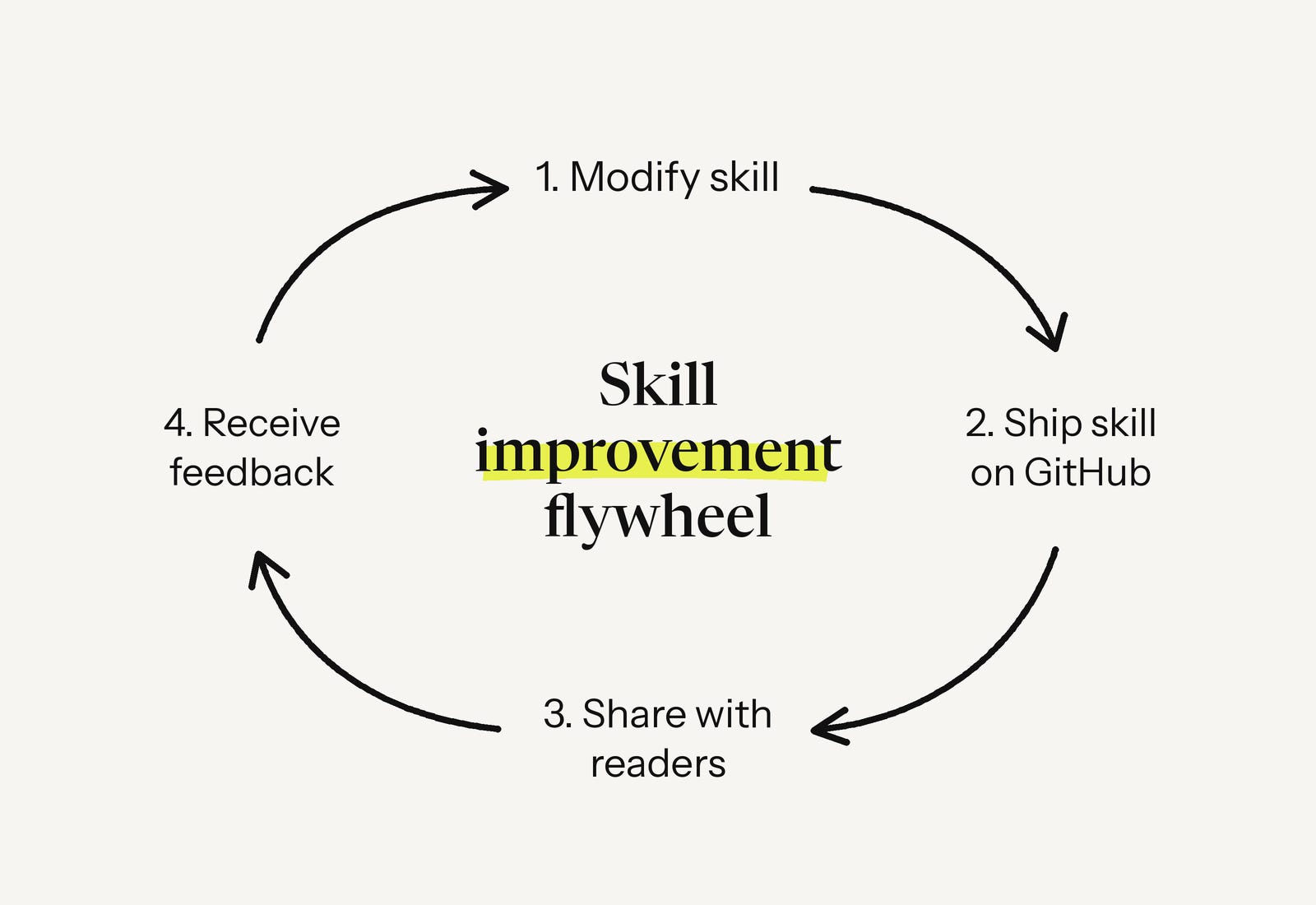
He did a couple of rounds of feedback and improved the skill. There are a few ways to “improve a skill”:
Broaden the scope to include other tasks after a successful v0.
Rob added “deal review” and “do outreach”
Deepen the task
There are many different “inputs” - calls in Rob’s case. Increase the types of calls it can handle accurately.
Not to toot my own horn but Skillfully has a really good analytics engine. It shows you real time feedback and usage data from your readers’ agents so you can do this at scale when the time comes :)
Rob also created a Slack channel with me and his skill subscribers so we can be in constant contact which makes a ton of sense to shorten the feedback loop.
What you want to do in this stage is to go through this wheel until your skill is sufficiently good: good enough that you agree with it’s advice in most cases.
You could say Rob was lucky because he had consulting clients who were excited to try his new AI thingy. Here are some more ideas on how to find people to try out your agent skill:
your email list
social media followers
friends, colleagues, family
You want to avoid a big launch at this stage. Just get a few interested people and put it in their hands to rapidly improve the skill.
Hey, thanks for reading this article! I’m not the best author and want your feedback. Email me at eren [at] skillfully [dot] sh.
Skillfully is accepting author applications! Apply here.
Thanks for reading Skills That Sell! This post is public so feel free to share it.