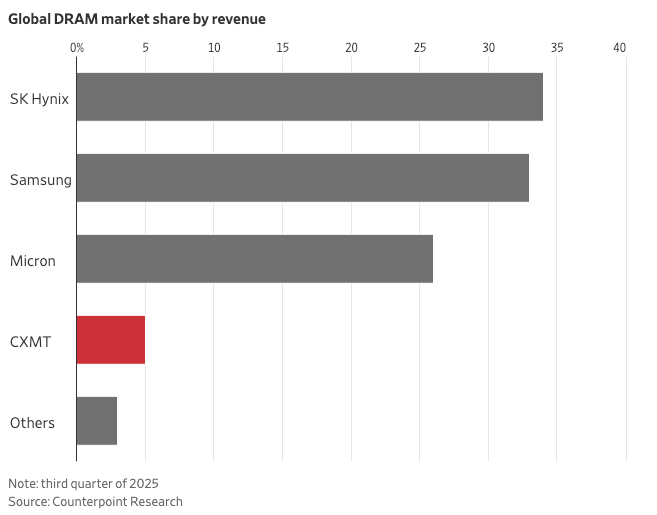
DRAM are the steel-mini mills of our era. As the DRAM market tightens, incumbents are moving up-market and a Chinese entrant is quietly moving in underneath them. Micron, Samsung, and SK Hynix have all focused on high-end memory for AI applications, giving CXMT a window to emerge as a serious player.
This is straight out of The Innovator’s Dilemma.
I recently re-watched a lecture by Clay Christensen (author of Innovators Dilemma and a few other masterpieces.
Clay Christensen’s used the steel mini-mills Japan used to take over the steel market to illustrate how incumbents retreat to high-margin activities when new entrants emerge. In his classic steel mini-mills example, Clay Christensen showed how incumbents don’t lose because they’re dumb; they lose because they’re rational. When low-margin entrants attack the bottom of the market, incumbents flee to higher-margin segments. Each move looks smart on a quarterly basis. Collectively, it’s fatal.
As Christen points out, US Steel managers weren’t stupid: Every time a low margin mini-mill came into a market, they were motivated to flee to higher margin markets. If you’re David (mini-mills), you’ve created a situation where Goliath (US Steel) is motivated to run away from you rather than fight you. This is especially true if you’re timeline is quarterly: as a manager, you’re making the smart move away from a highly competitive market.
Today, we see the incumbent DRAM manufacturers starting to retreat to high-margin DRAM products while emergents (CXMT) start with low-margin products and shove high-margin makers out of the market.
But if current memory prices are driven by OpenAi shenanigans, when the bottom falls out of the AI market, which DRAM maker is going to survive? My guess: the state-supported trailing-technology provider will survive, while SK Hynix, Samsung, and Micron become the US-Steels of yesteryear. Still large, but strategically hollowed out.
Free Link to WSJ Article covering CXMT.