Have we entered an age in which the only real way to change the world is to start a company?
Today, business leaders increasingly shape the direction of society. This is self-evident in the United States, but the same tendency is becoming increasingly visible even in South Korea.
Prime Minister Han Seong-sook is a former CEO of Naver. Kim Jung-kwan—the “very tough negotiator”—was originally a career bureaucrat, but he also served as president of Doosan Enerbility.
Deputy Prime Minister and Minister of Science and ICT Bae Kyung-hoon previously served as an executive vice president and head of LG AI Research. Minister of Culture, Sports and Tourism Choi Hwi-young was formerly the CEO of Nol Universe
.
Twenty-one years ago, the president of South Korea gathered the heads of the country’s conglomerates and its most promising venture companies and declared, “Power has shifted to the market.”
The point is that this is not a temporary phenomenon. It is part of a much larger transformation that has been unfolding for decades.
Over the past several decades, it was not politics that fundamentally changed the world. It was technology.
Of course, building something simply because it looks impressive or “cool” will not change the world. But it is difficult to deny that great technology is a tool with the potential to create a greater world. In fact, the only force capable of transforming not merely an industry, but education and life itself, may be the invention and application of great technology

.
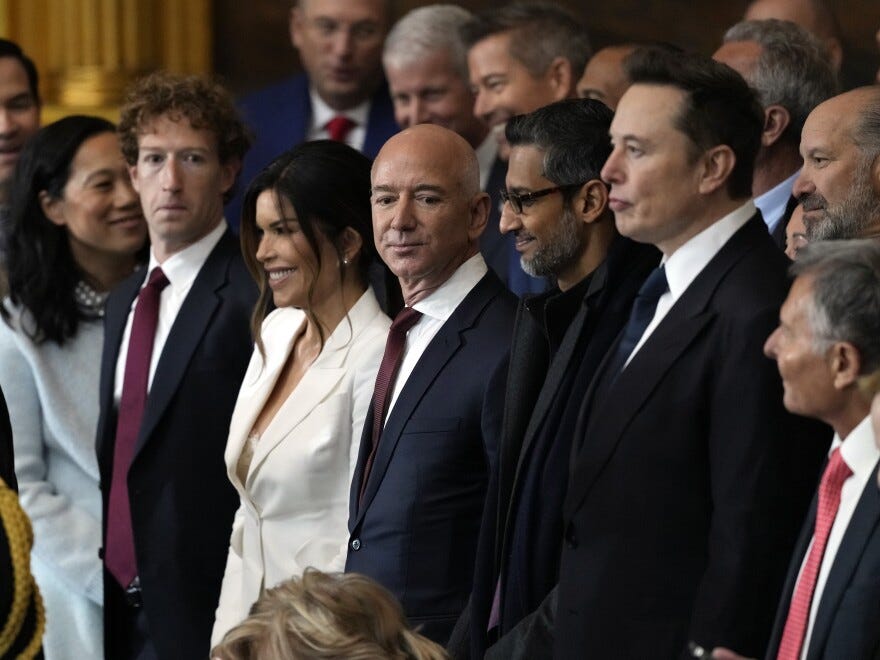
Some people looked at the Big Tech CEOs attending Donald Trump’s inauguration in January 2025 and worried that America was returning to the age of J. P. Morgan and the great industrial magnates of a century ago. It was a spectacle rarely seen in the United States in recent decades, although such scenes have long been common in South Korea
.
Others interpreted it as evidence that Donald Trump’s power had grown unusually strong. His attacks on the media have reinforced that fear.
But this interpretation is wrong. The opposite is closer to the truth.
The power of the American presidency has weakened. What we are witnessing is the beginning of the age of American Big Tech. From this perspective, Trump’s conduct may represent the final struggle—or the final spasm—of presidential power before its decline.
I expect this trend to continue for some time.
The age of artificial intelligence has only just begun, and we are now entering the opening phase of a genuine technological singularity in AI.
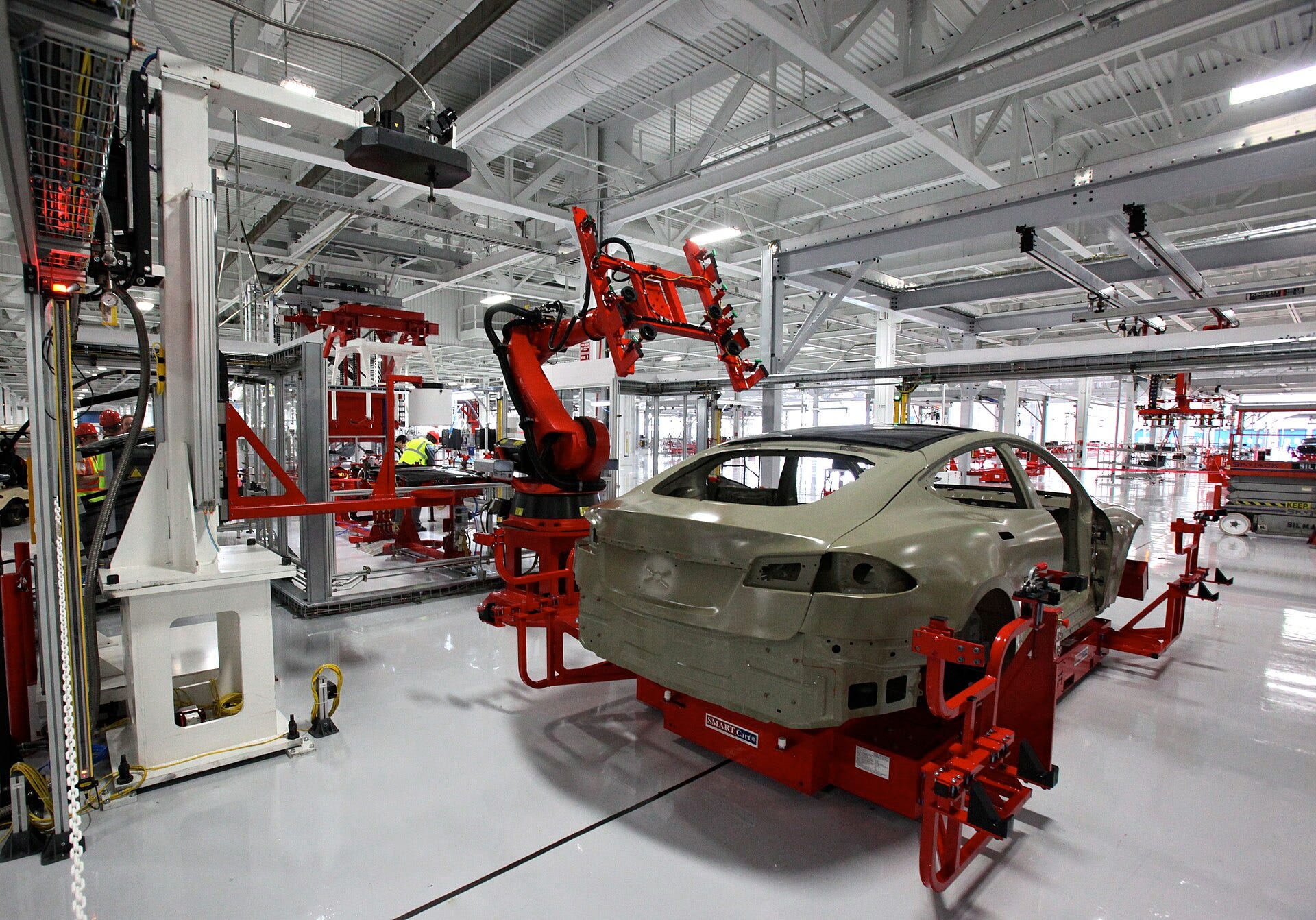
Every major technology has promised liberation from labor. To some extent, those promises were fulfilled
.
Across society, average working hours have declined. Yet something strange has happened. Outside the United States, most developed countries now face a growing population of young people who are neither working nor actively seeking work—young people officially classified as simply “resting.”
About a decade ago, some people imagined a future in which minimum wages would rise, working hours would fall, and one eight-hour job would be divided between two people working four hours each. The movement to raise the minimum wage partly contained this aspiration.
Reality moved in the opposite direction.
While the news constantly warns of recession and hardship, some families are traveling abroad for vacations. At the same time, others complain that young people today are simply sitting idle.
All of this is happening within the same era, the same species, and the same society.
The expression itself first appeared in the early or mid-2000s, but around a decade ago, a particular slang term became popular in South Korea: *guk-ryul*.
Literally meaning “the national rule,” it referred to an unwritten rule supposedly understood and accepted by everyone.
At some point, however, the expression began to lose its meaning.
Today, for almost any proposition or event, one person loudly insists that it is wrong while another insists just as loudly that it is right. Society has always had a tendency to reward whoever shouts the loudest, but even that mechanism no longer works. People simply keep raising their voices until they exhaust themselves and collapse.
The popularity of the term *guk-ryul* was, in fact, the death certificate of *guk-ryul*.
Yet the people who continue shouting seem unaware of this. They enter anonymous online communities and social-media platforms and ask questions such as, “Am I the only one who finds this offensive?” or “Who do you think was more at fault?”
They convene popular tribunals and witch trials.
Someone appoints himself judge and delivers a verdict: “Both sides were wrong,” or “One of them is clearly insane.” The spectators cheer or boo.
The world has fragmented into countless opposing pairs.
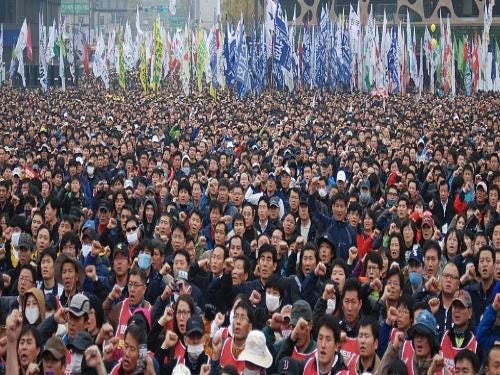
I call this condition **the age of the polarization of everything**
.
From a capitalist perspective, none of this is particularly strange.
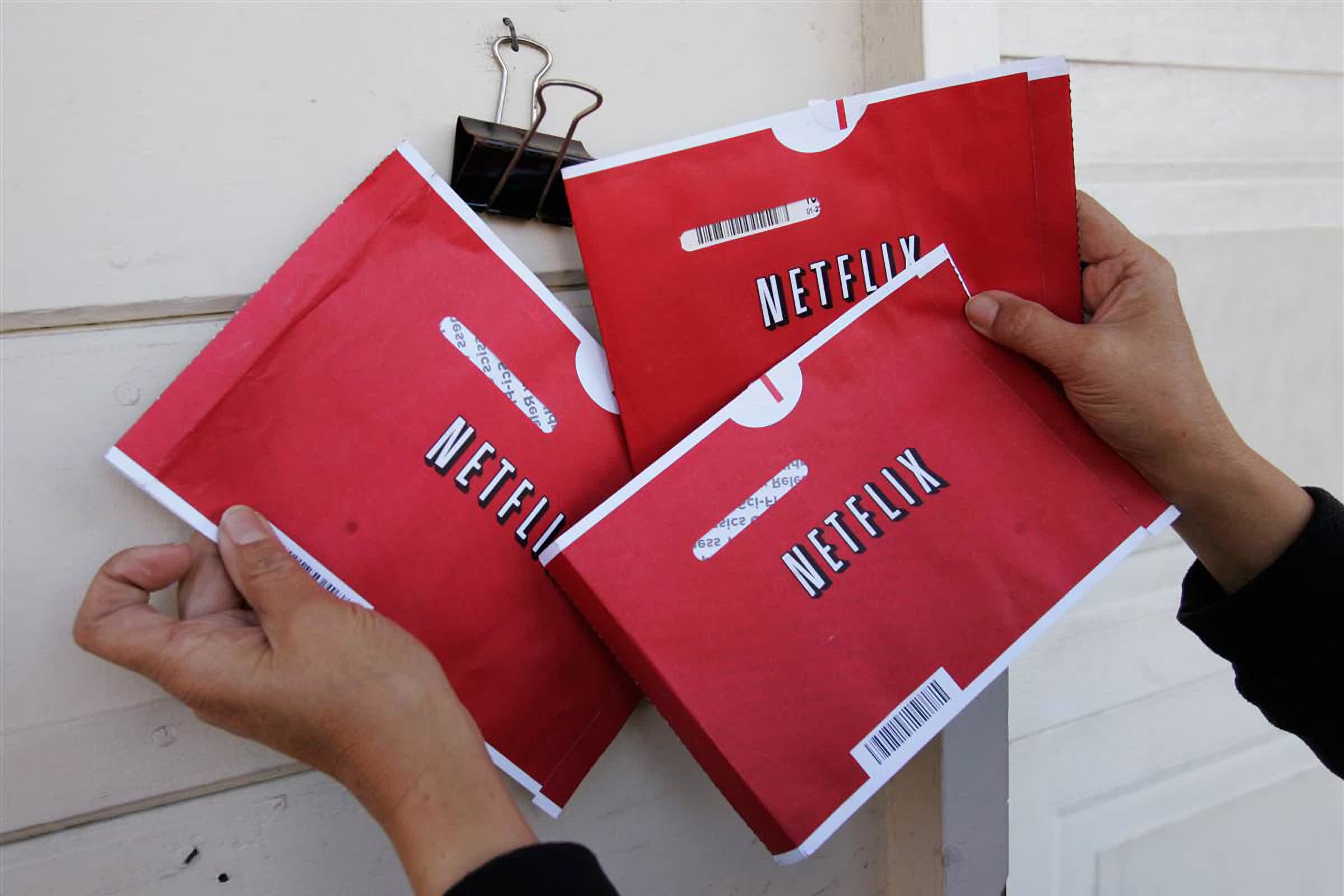
As early as the 1980s, highly personalized business models such as Subway were already thriving in the United States. Amazon and Netflix introduced machine-learning-based recommendation systems during the dot-com era of the 1990s and early 2000s
.
Why, then, did Korean companies such as Naver and Kakao not embrace recommendation systems during the same period?
Why was Naver’s homepage dominated by content manually selected by human editors?
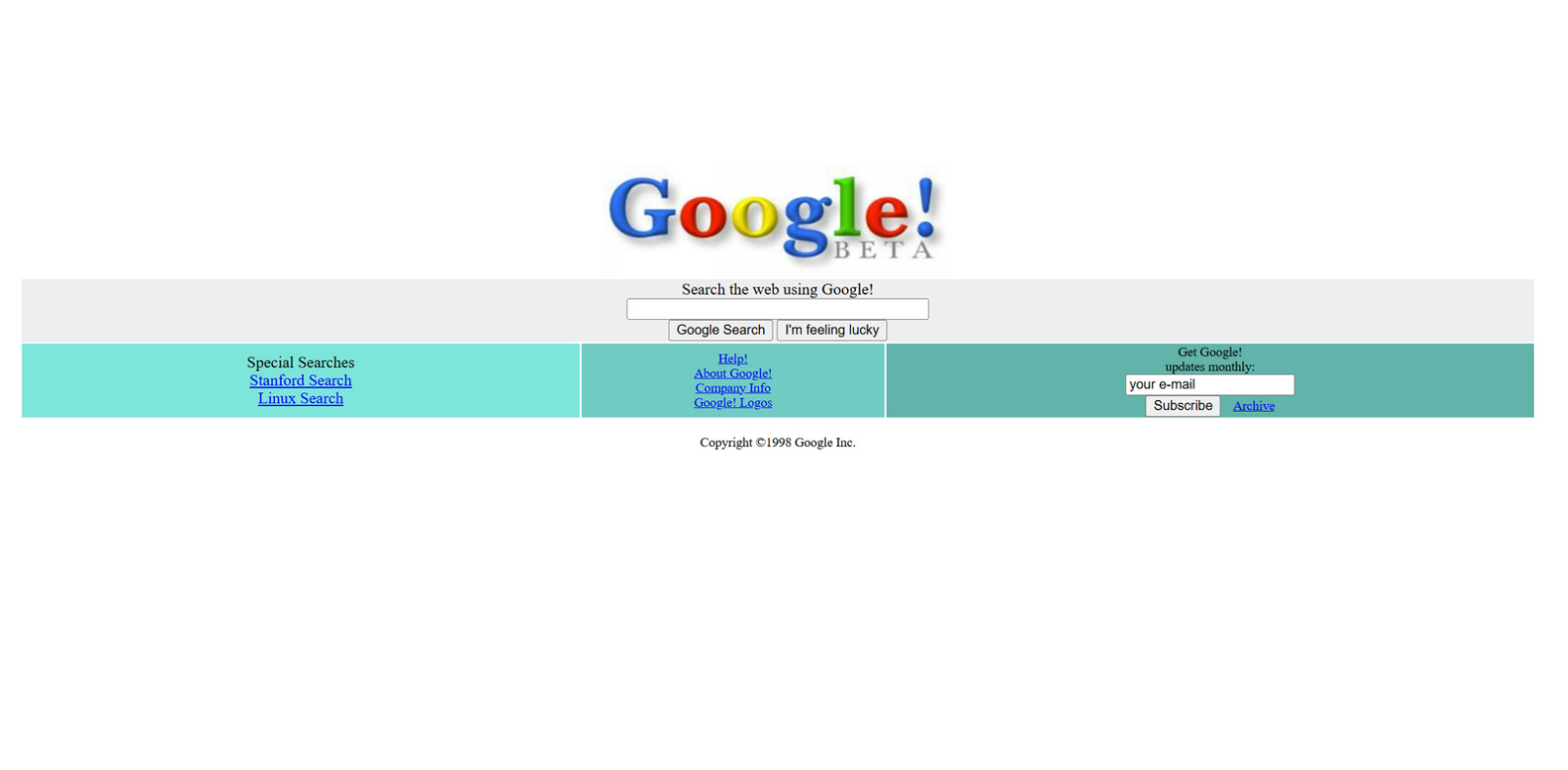
And why did Google present users with nothing but a single search box
?
What explains the difference between the two countries?
The answer is simple.
Half of South Korea’s population lives in Seoul or its surrounding metropolitan area. Because the public transportation system is so highly developed, the region functions almost like a single city

.
Within this small territory, we were taught that “we are one people with five thousand years of history.”
We wore the same school uniforms and the same coats. We lived beneath the same flag. We were instructed not to stand out, to remain somewhere in the middle, and to become the kind of person described by the old saying: “Stay in the middle, and at least you will not fail.”
Most people obeyed.
Not everyone truly agreed, but each person who disagreed felt as though they were the only strange one.
My family did not agree with me. My friends did not agree with me. No one seemed to share my thoughts.
People carried these private doubts with them and moved on.
Then the economy developed. Technology advanced. And strange foreign species invaded our carefully ordered society.
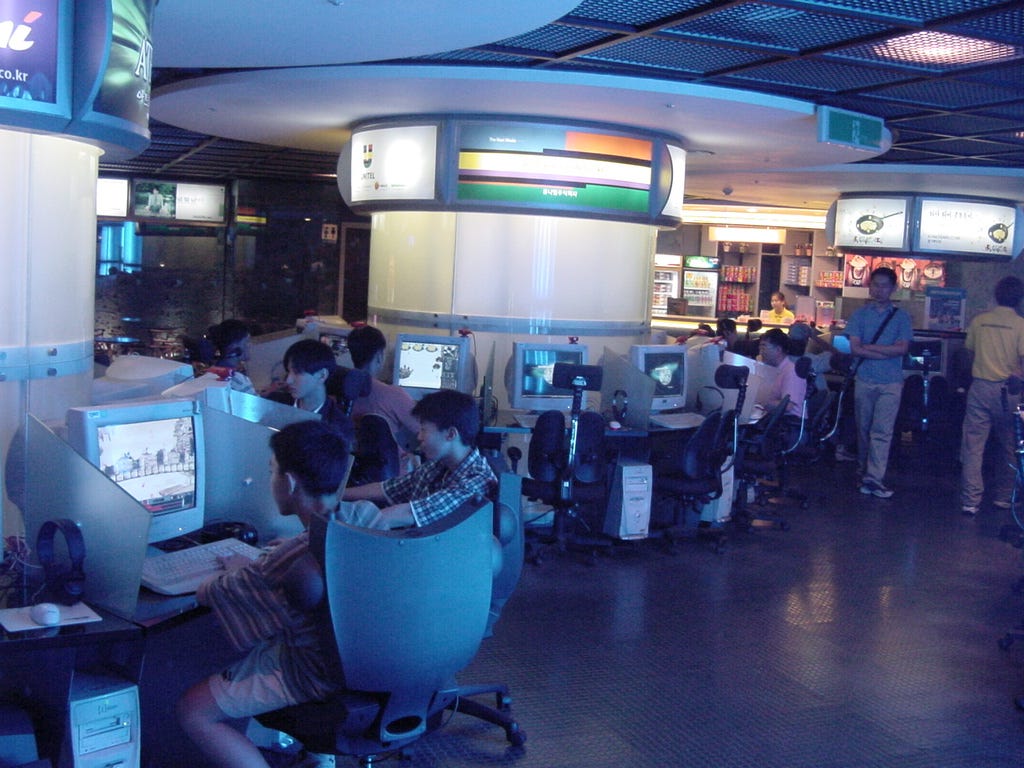
The internet arrived.
Online communities arrived.
YouTube arrived
.
Only then did minorities begin to realize something:
I was not the only person who thought this way.
I was not the strange one.
Perhaps it was everyone else who was strange.
The minorities gathered.
Among fifty million people, even a tiny minority could number tens of thousands, hundreds of thousands, or even millions.
Groups emerged that interpreted the same proposition in completely opposite ways.
In reality, there were many different groups. But no one paid attention to them except for the two largest camps.
That is the central irony of this era and this society.
Minorities found one another, creating many small communities—and two enormous opposing blocs.
The ideology of “one people with five thousand years of history” collapsed.
The ideology of “one nation” collapsed.
And this is precisely why Silicon Valley was able to win.