Any opinions are my own.
Anthropic recently rolled out identity verification for some Claude users. The discourse on Hacker News and Twitter had been fairly muted: some are concerned about the overreach and privacy invasion, and some got caught in the crosshairs mistakenly, but overall it was a non-event.
The Chinese internet was in a state of panic.
Claude is not offered in China, but I didn’t realize the distance people are willing to go to access it, and how mature the supply chain is for tokens from a frontier American LLM.
I ran into this long-form article on WeChat (by the account “AI Stories Project” titled “72-hour storm after Claude real-name verification”). The article profiled many users, some of which are truly power users of Claude, even by our standards in the US where it’s easily accessible. An AI entrepreneur had been banned twice previously, and still pays for a $200 Claude Max subscription; a software engineer working in a big Chinese tech company burned through 5.6 billion tokens over 2 weeks. But the most interesting and confusing case is [Mr.] Zhang:
[Mr.] Zhang is from Shanxi and works in Beijing. But to Claude, he is “a Japanese person working in Taiwan.” That is the identity he constructed to reduce the risk of getting banned. To keep up the act, he has long kept his IP pinned to Taiwan, bought Japan-region Apple gift cards on Amazon Japan with foreign-currency credit cards, and then used these gift cards to subscribe to Claude through the Apple Store.
And Zhang is no exception. Chinese internet calls this 养号, “cultivating the account” so it appears less like a policy violation. It’s filled with similar anecdotes:
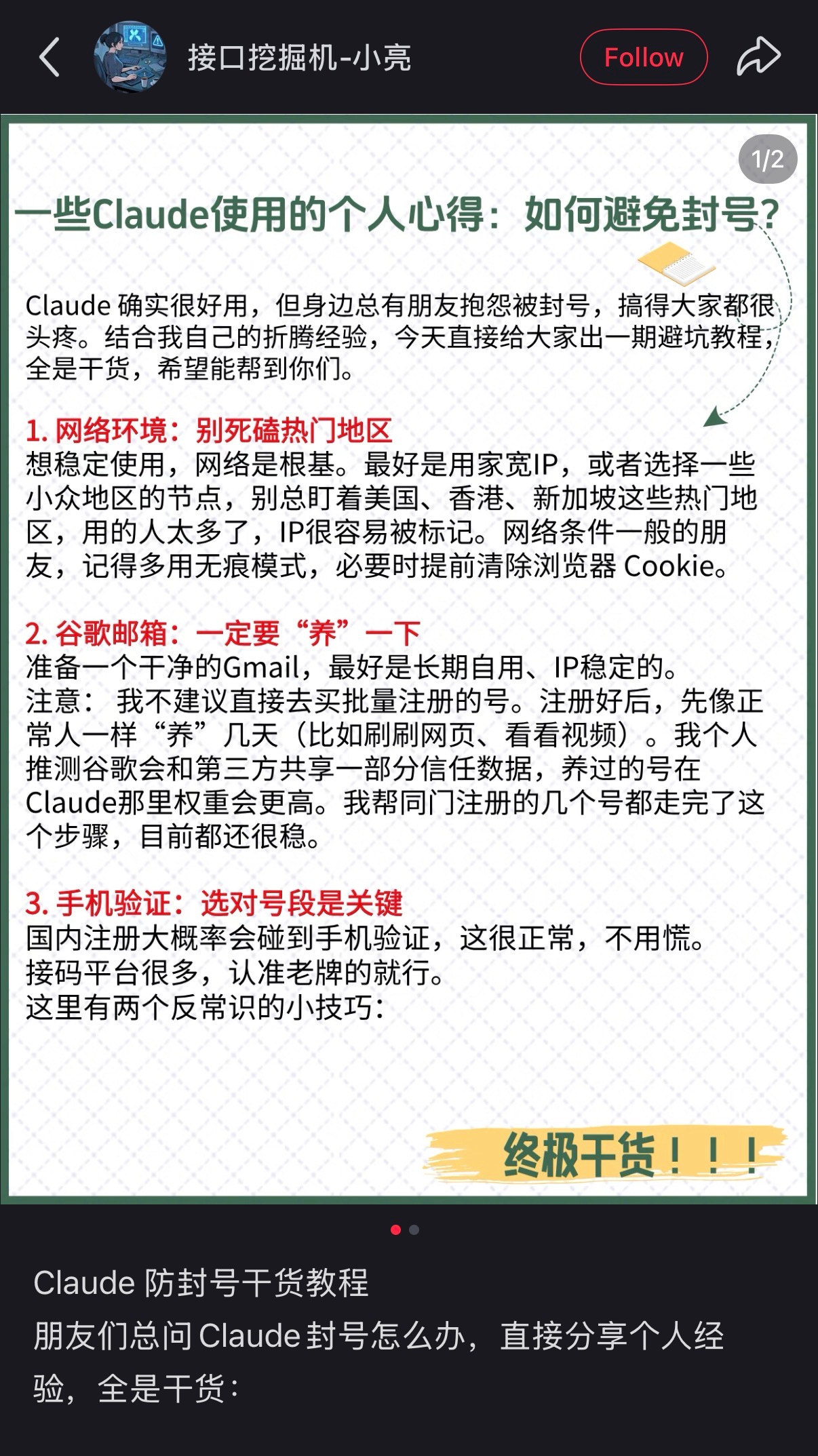
This post suggests “make sure to prepare a clean Gmail account, don’t buy ones that are bulk registered [by brokers]; after registering, cultivate it for a few days by surfing the internet and watching videos.”
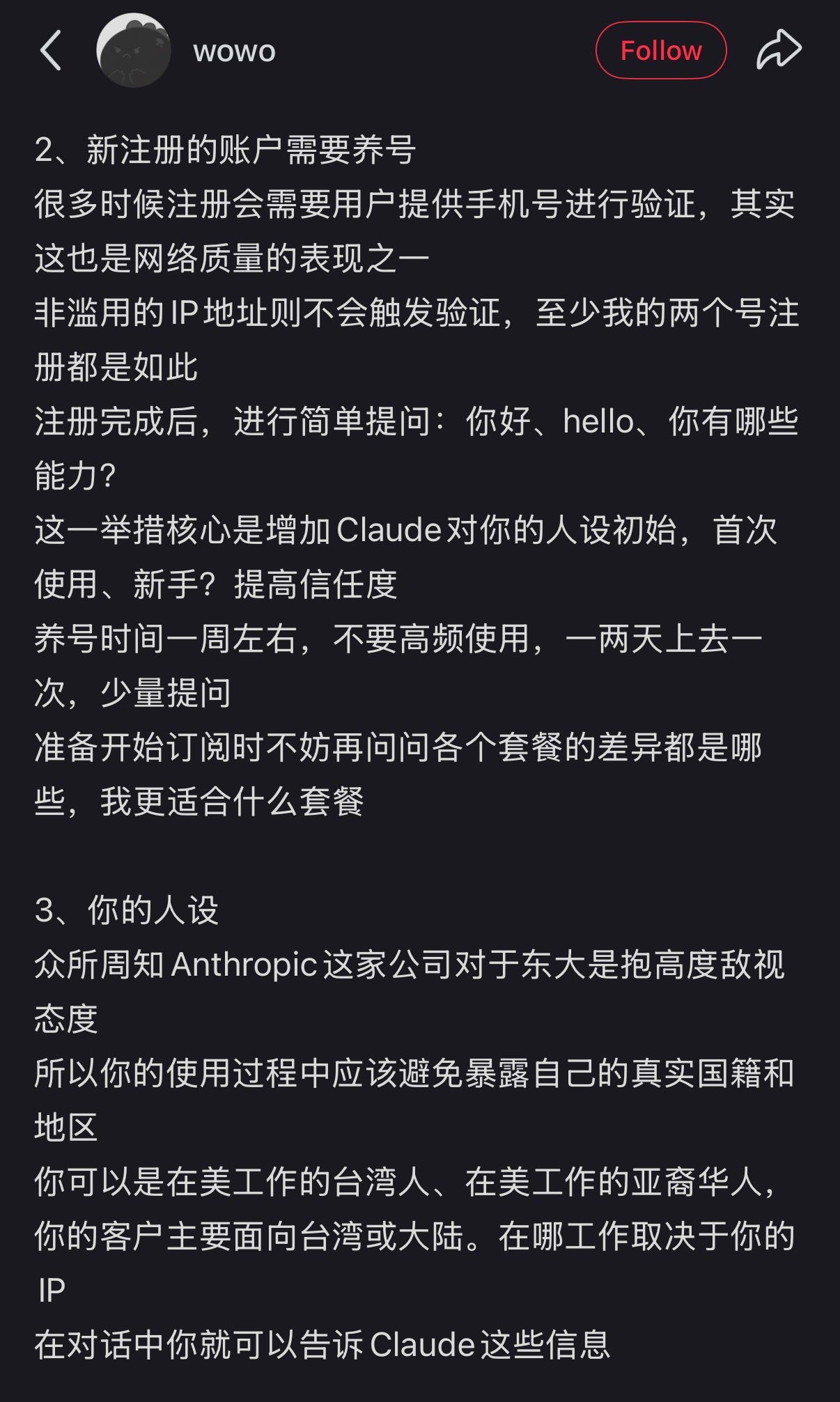
This one recommends asking Claude some simple questions after account registration, like “hello, what can you do”, to improve your trustworthiness: Claude would think you’re a newbie and it’s your first time using it. Spend a week cultivating; use it sparingly in that period. Ask about subscription plans when you’re ready to pay. Also, avoid telling Claude your real nationality and location: pretend you’re Taiwanese or Chinese-American working in the US, and your clients are in China or Taiwan. Pick your “work location” based on your IP address.
There are countless other tips and tricks from early adopters on how to evade detection and keep your account alive. Most seem superstitious to some degree, and some conflict with each other: behaviors that cause suspicion include switching devices or IP frequently, logging in on mobile, and paying with Chinese or virtual credit cards; don’t subscribe to Claude Max on day 1 and reach usage limit immediately; increase usage gradually, so it looks like you’re discovering the value of these tools over time; pay with App Store or Google Play because these platforms lend credibility; don’t work 24/7, because normal people eat and sleep and relax on weekends.
The bottom line is to show that you’re a normal person.
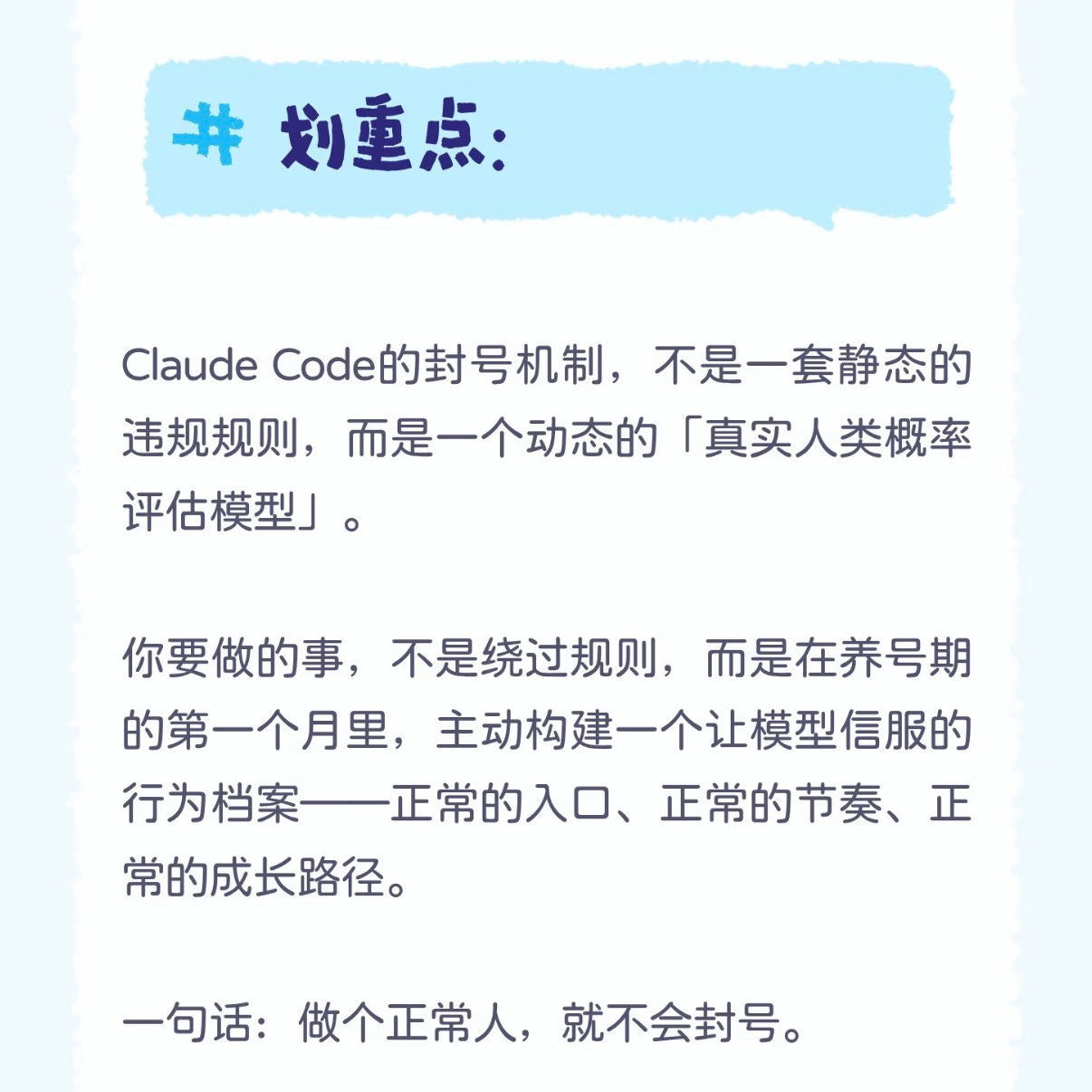
It appears that despite Anthropic’s best effort, Claude has unintentionally taken off in China, and has bred a whole industry designed to counter these restrictions.
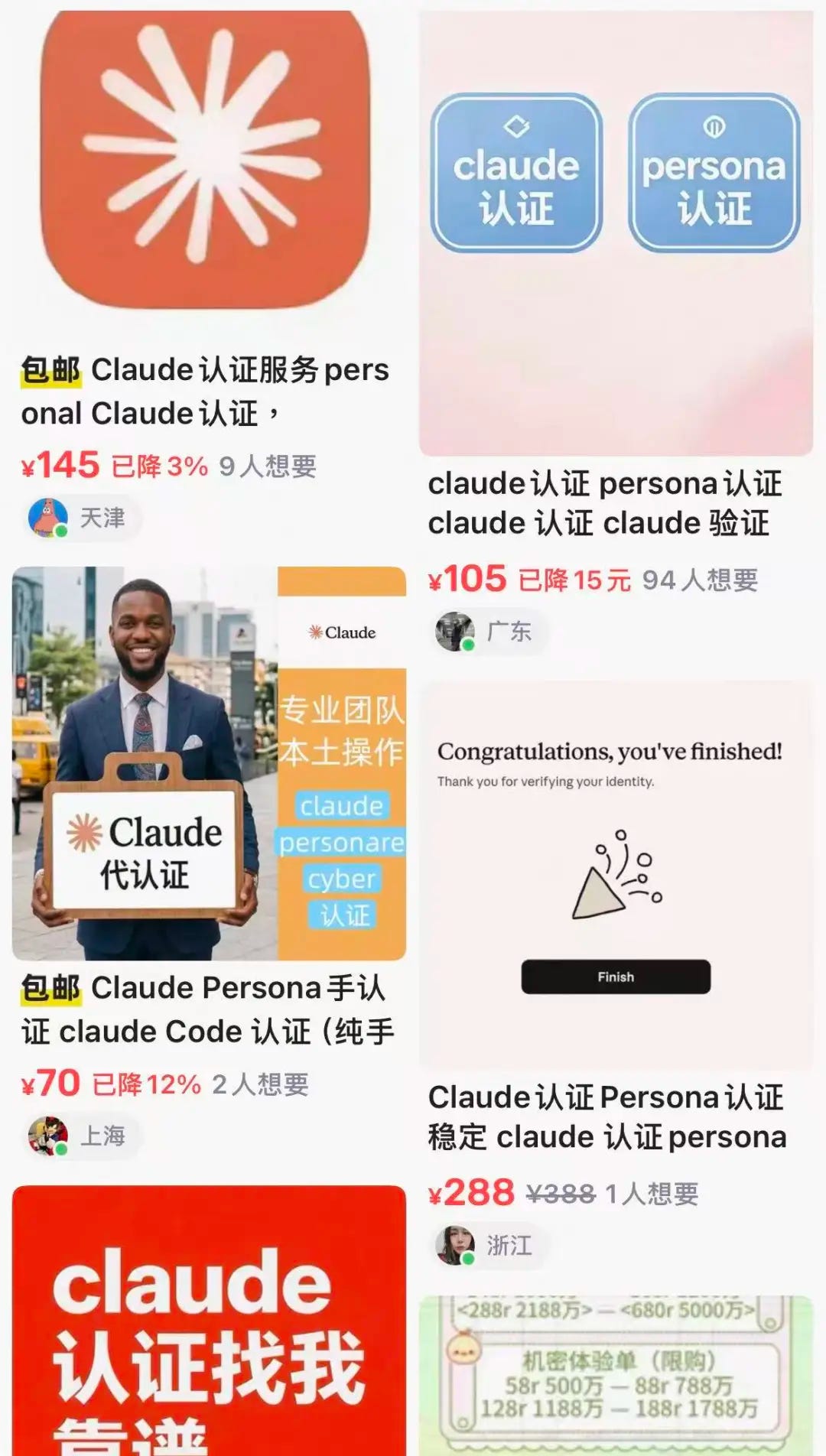
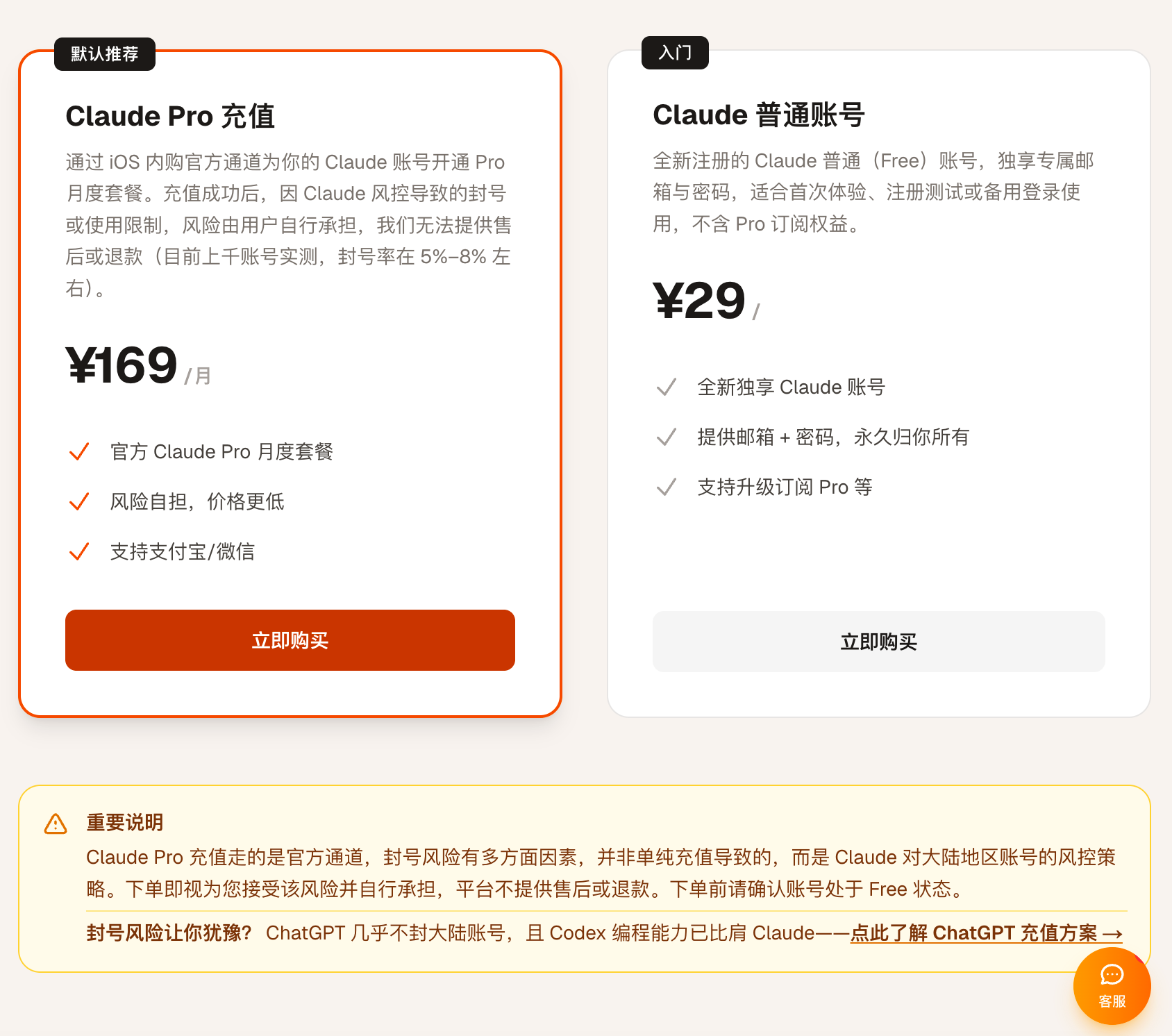
Look at the online second-hand markets, and there’s a plethora of individuals selling “manual identity verification service”. I also found middleman websites that charges 29 Chinese Yuan/RMB (about $4.25) for a free Claude account, and lets users pay for Claude subscriptions in RMB for a 25% markup. Their tagline is “make productivity within reach”.
There are aggregator LLM gateways that proxies to American models including Claude, browsers advertising their infrastructure to evade fingerprinting and provision and manage multiple (50!) Claude accounts for employees, and even guides to deploying Claude Code in enterprise networks.
To be fair, I don’t think these are the people distilling Claude for open source models (to start, they would not be talking about their experiences publicly). Chinese internet users are a resourceful and resilient bunch; despite the Great Firewall, they are routinely posting on Twitter and Instagram, and Google is a mainstay in academic settings. If they decide Claude is valuable, they would look for ways to access it.
What is Chinese internet doing about the crackdown from Anthropic?
Users are calling Claude 供应链风险问题, “supply chain risk”, and calling for diversification. The conclusion from most articles I’ve seen, including the original article that sparked my interest, was that it’s time to consider ChatGPT and Codex.
On the middleman website for Claude, just below the Yuan-denominated subscription pricing, the website hedges its bet. “Hesitating because you’re concerned about account bans? ChatGPT almost never blocks Mainland Chinese accounts, and Codex is as good as Claude at programming.” It links out to another website advertising Yuan-denominated ChatGPT subscriptions. (I’d bet good money these have the same owner.)
ChatGPT is also not available in China. I wonder how much account cultivation people need to perform to use it, and how ChatGPT decides whether someone is a normal person.