What happens if there is mass upzoning, relaxed land-use regulations, or a reduction in taxes and other burdens on development?
Supply skepticism is the belief that changes like these would not reduce housing prices.
Some of the things supply skeptics say are:
“Building stops when prices fall”
“Why would developers build if it lowers prices”
“Prices falling would be disastrous for the economy”
“We’re building a lot and prices are still going up”
“The densest places are the most expensive”
“Housing supply actually kept up with population”
All of these stem from not fully understanding certain aspects of the supply and demand model.
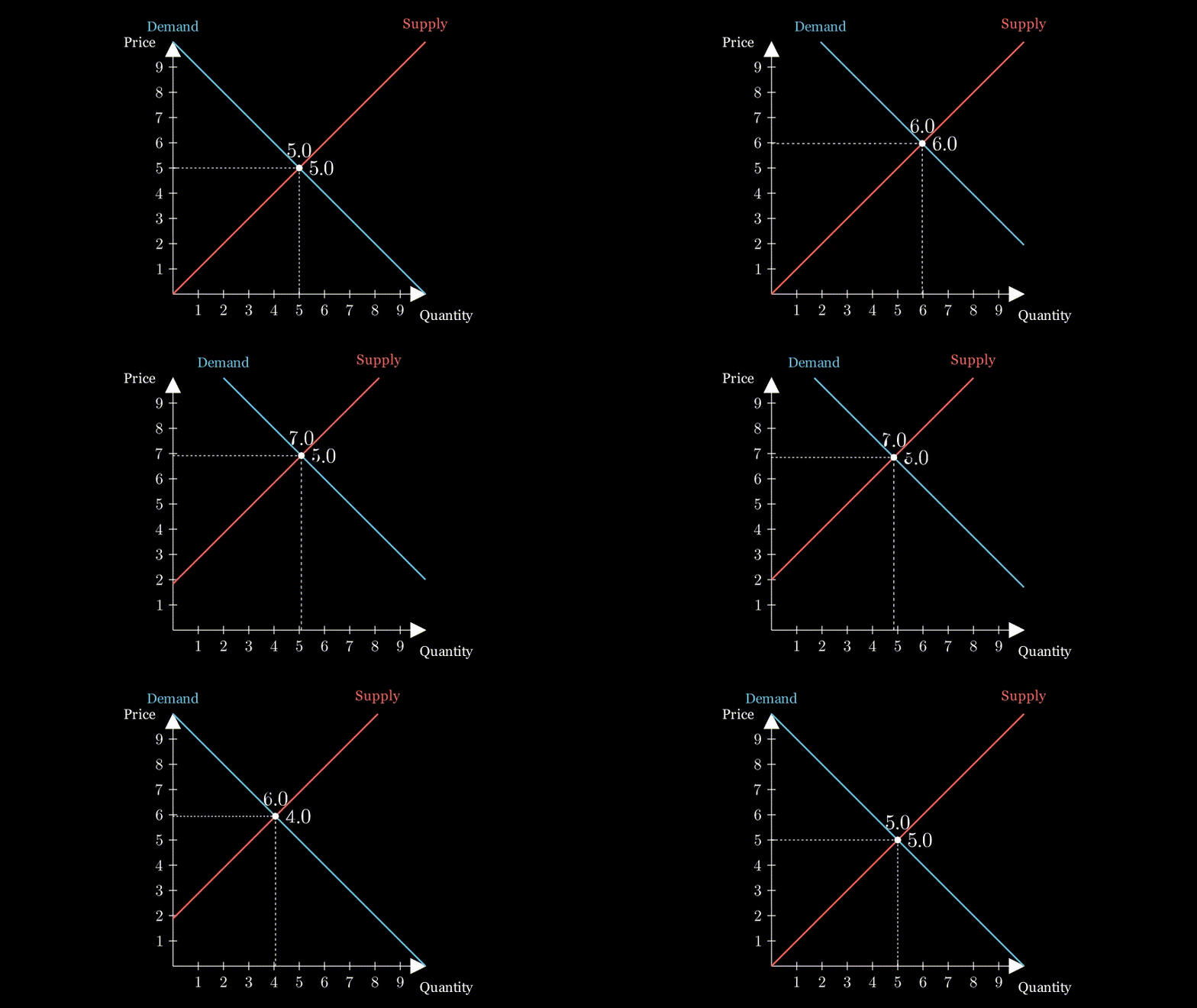
The difficulty in refuting these ideas, and why they align with lived experience, is because they are partially true. They result from shifts in the demand curve.
Reduced prices and reduced construction are the responses to a leftward shift in demand. Increased prices and increased construction are the responses to a rightward shift in demand.
If you have lived through periods where demand was reduced due to recessions or increased due to increases in immigration then you have likely observed these relationships yourself.
What supply skeptics selectively ignore however, is the other half of the model: Supply.
“Building stops when prices fall”
Chuck Marohn:
“Price Drops Don’t Lead to Supply. They Kill It.”
John Pasalis:
“When prices fall, financing becomes harder to secure, pre-construction sales slow, and developers pause new projects.”
https://www.movesmartly.com/articles/why-housing-starts-are-falling-in-toronto-and-vancouver-while-montreal-is-still-building
Cameron Murray:
“In a declining market, developers will pull back and supply less new housing.”
“Why would developers build if it lowers prices”
Toby Lloyd, Neal Hudson, and Rose Grayston:
“Housebuilders do not want lower prices… Maintaining headline sales prices is important for housebuilders seeking to keep profit rates up — even if this means selling fewer homes in the short term.”
https://www.ft.com/content/e54c01fb-59cb-4064-997f-6c77546543fa
“Prices falling would be disastrous for the economy”
Murtaza Haider:
“Nothing could be more disastrous for the economy than a plunge in housing prices.”
https://financialpost.com/real-estate/why-stable-housing-prices-and-affordability-arent-mutually-exclusive
“we’re building and prices are still going up”
MPP Jessica Bell:
“It can never just be all about supply… housing has never been more expensive even though we have a record number of cranes.”
“The densest places are the most expensive”
Joel Kotkin:
“Generally speaking, the most expensive regions — Los Angeles, San Francisco, Toronto — also tend to be the densest.”
“Housing supply actually kept up with population”
Erika Morris (CBC):
“Over the last 20 years the number of homes built was actually higher than the number of new households”
https://youtube.com/shorts/bcYmU6aVJlo?si=VgAROc4VzdMNVgFF
There is a lot of evidence that commentators do not understand the supply and demand model.
Chuck Marohn:
“Supply and demand curves suggest that, when prices increase, demand will decrease when supply stays constant.”
https://archive.strongtowns.org/journal/2016/10/11/whats-the-matter-with-portland
This is the classic mistake of reasoning from a price change.
(See https://www.themoneyillusion.com/never-reason-from-a-price-change/ and https://www.econlib.org/econlog/dont-reason-from-a-quantity-change-either)
To use the supply and demand model, you’re supposed to reason from curve shifts. Changes in prices and quantities are the outputs of the model, not the inputs.
In the supply and demand model, there are two ways price can increase. If the demand curve shifts rightwards, price increases and quantity increases. That’s not compatible with Chuck’s statement that demand decreases. If the supply curve shifts leftwards, price increases and quantity decreases. That’s not compatible with Chuck’s statement that supply stays constant.
“Building stops when prices fall”
“Why would developers build if it lowers prices”
“Prices falling would be disastrous for the economy”
People that think developers maximize prices are wrong. They maximize profits, and that is not the same thing. When per-unit costs are reduced, more building happens because it makes them more money despite the lower prices it also causes.
These people think falling prices necessarily mean builders stop building, and people stop buying. The reality is that policies that cause rightward shifts in the supply curve reduce prices, increase building, and increase housing sales.
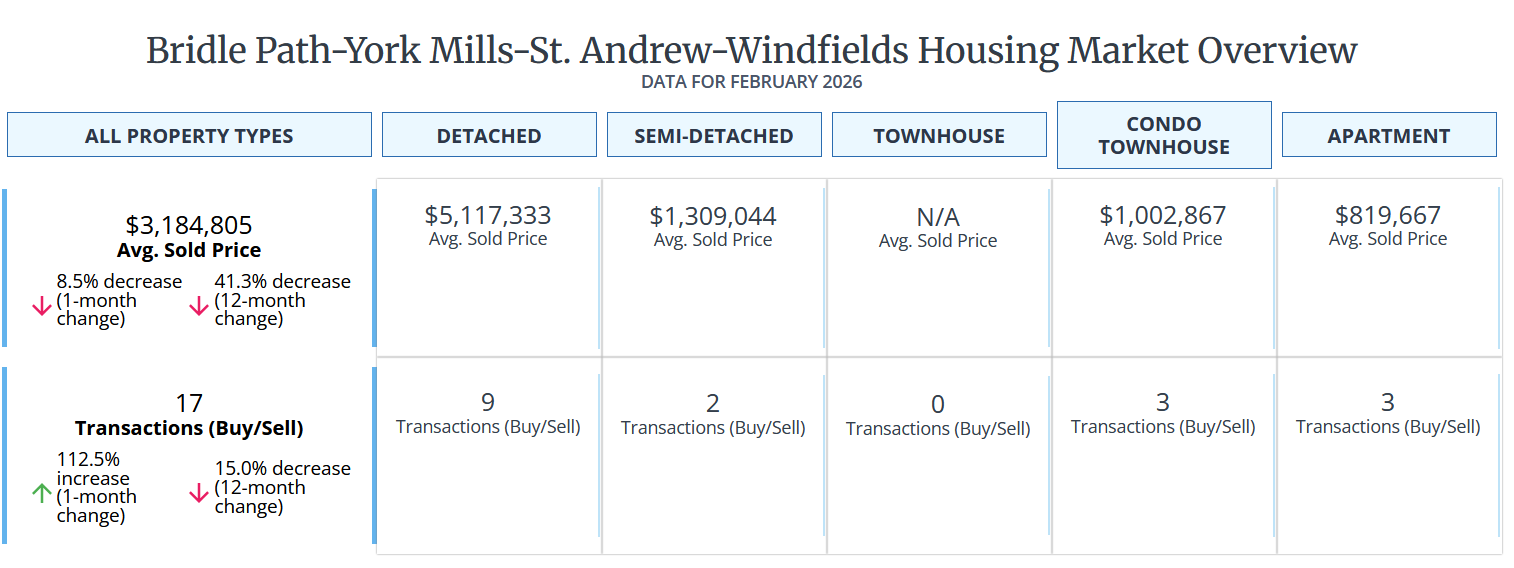
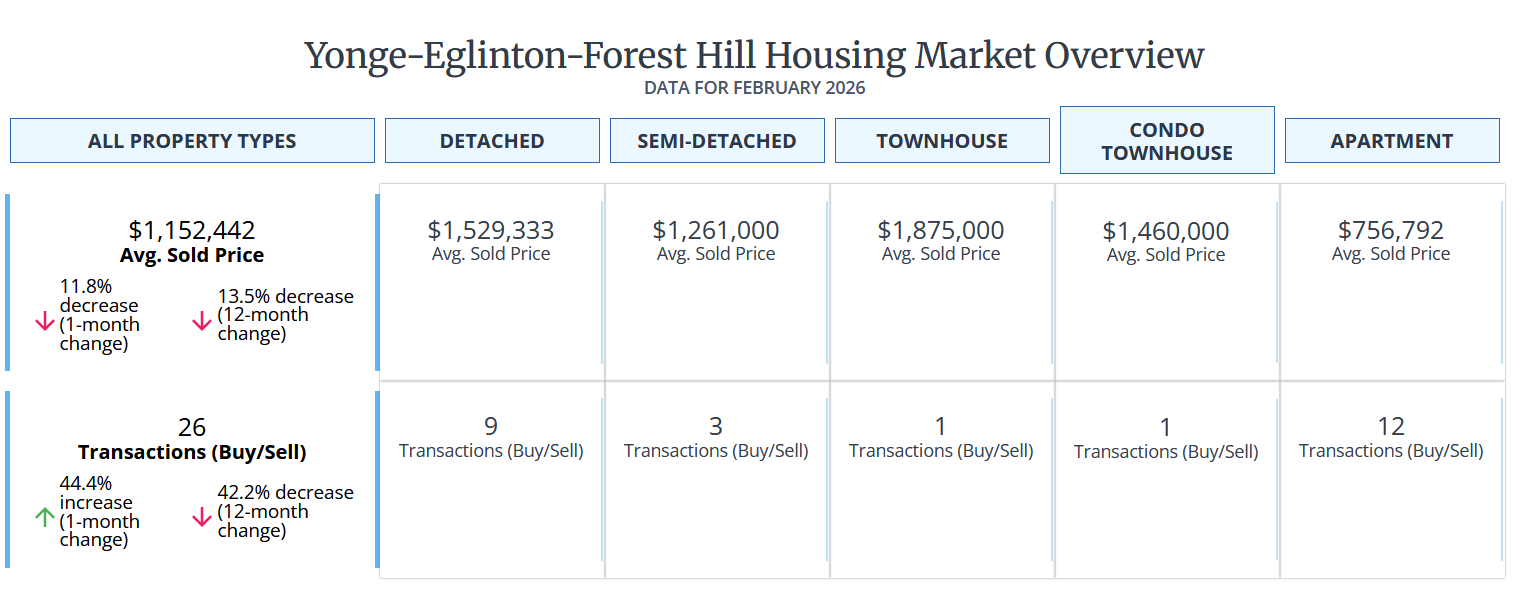
For example, detached homes sell for far more than apartments in the same neighbourhoods. Yet developers have built large numbers of apartments, where allowed. They do this because apartments are profitable to build despite lower prices.
“We’re building a lot and prices are still going up”
“The densest places are the most expensive”
“Housing supply kept up with population”
Another common mistake is confusing supply and quantity supplied. A record number of cranes is not evidence of a rightward shift in the supply curve. It’s an increase in quantity, which is sufficiently explained by a rightward shift in the demand curve.
The idea that high density causes high prices is wrong for this reason. Density can be thought of as quantity. So this idea is just an example of reasoning from quantity. High demand is a common cause of high density and high prices. But using this to argue against rightward shifts in the supply curve is incorrect. A rightward shift in the supply curve is a common cause of higher density and lower prices.
The idea that shifting the supply curve will not help because housing supply kept up with the number of households is also wrong for the same reason. The quantity supplied kept up with the population. Of course it does. New households require new homes. No new homes, no new households. Observing that the quantity of new houses matches the quantity of new households tells you nothing. New housing isn’t indicative of a supply shift. It’s a change in quantity. The demand curve shifting rightwards is consistent with price increasing, housing quantity increasing, and of course people living in those houses.
Law of demand: quantity demanded falls when prices rise.
Law of supply: quantity supplied rises when prices rise.
These relationships are embodied in supply and demand curves. Actual prices and quantities are determined by their intersection.
Shifts in the demand curve happen when things like the following change:
Local incomes
Amenities (e.g. subways) or disamenities (e.g. crime)
Homeownership taxes
Immigration policies
Shifts in the supply curve happen when things like these change:
Construction costs
Burdensome regulations and timelines
Taxes or other burdens are placed on development
Putting it together:
Leftward shifts of demand (e.g., incomes fall, higher housing taxes) → lower prices + lower quantity
Rightward shifts of demand (e.g. incomes increase, a new subway is built) → higher prices + higher quantity
Rightward shifts of supply (e.g., lower construction costs, fewer regulations) → more housing + lower prices
Leftward shifts of supply (e.g., stricter regulations, increased burdens on developers) → less housing + higher prices
The GIF below illustrates how supply and demand interact over a series of shifts:
A plausible sequence of events corresponding to the GIF might be:
Demand curve shifts rightward (e.g. the province announces a new subway) → higher prices + higher quantity
Supply curve shifts leftward (e.g. the city bans apartments) → higher prices + lower quantity
Demand curve shifts leftward (e.g. immigration is restricted) → lower prices + lower quantity
Supply curve shifts rightward (e.g. the city allows apartments) → lower prices + higher quantity
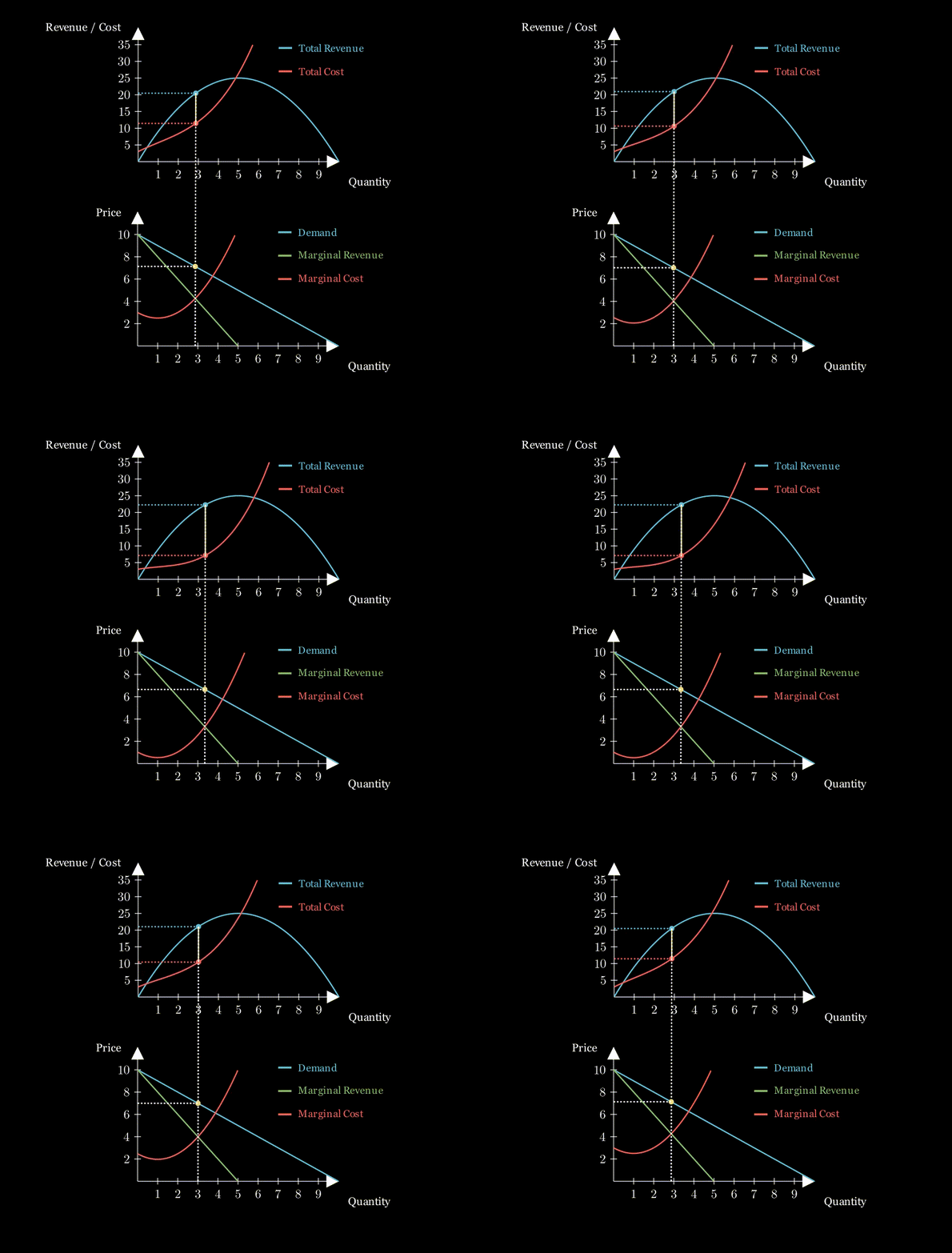
Some people argue that the supply and demand model incorrectly assumes perfect competition. Cost reductions causing price decreases is however still present at the other extreme of a monopoly.
Monopolistic firms are typically described as solving a simple profit maximization problem:
Maximize
p(q)q − C(q) with respect to q
Where:
p(q) is the price the market pays for quantity q
C(q) is the total cost of producing q homes
A leftward demand shift lowers p(q).
A rightward supply shift lowers costs which lowers C(q).
Improved construction technologies, lower development charges, and zoning reforms that allow more density all reduce the cost of producing housing.
When costs fall, the profit-maximizing quantity increases and prices fall.
That means it is possible for developers to build more housing even as prices fall.