In the 1972 film “The Godfather” when mob boss Vito “The Godfather” Corleone wants something from you he makes “an offer you can’t refuse”. It appears negotiable, even courteous. In reality, refusal would bring severe negative consequences. In short, “an offer you can’t refuse” is about coercion and extraction, not incentives. If you do what he wants, you won’t die. But remember, it’s him you have to worry about killing you. It’s not an incentive. It’s extortion.
NIMBYs in North America want many things as well. They want less traffic and they want to preserve property values of the homes they own. NIMBYs oppose new housing in their neighbourhoods trying to achieve both. Fewer homes means fewer people. If you ignore that people living further will just drive through your neighbourhood anyway, then fewer homes means less traffic. Admittedly, building fewer homes does preserve their property values.
The connection NIMBYs have with “The Godfather” is how NIMBYs weaponize urban planners and cities against developers to extract concessions in the name of “incentives”.
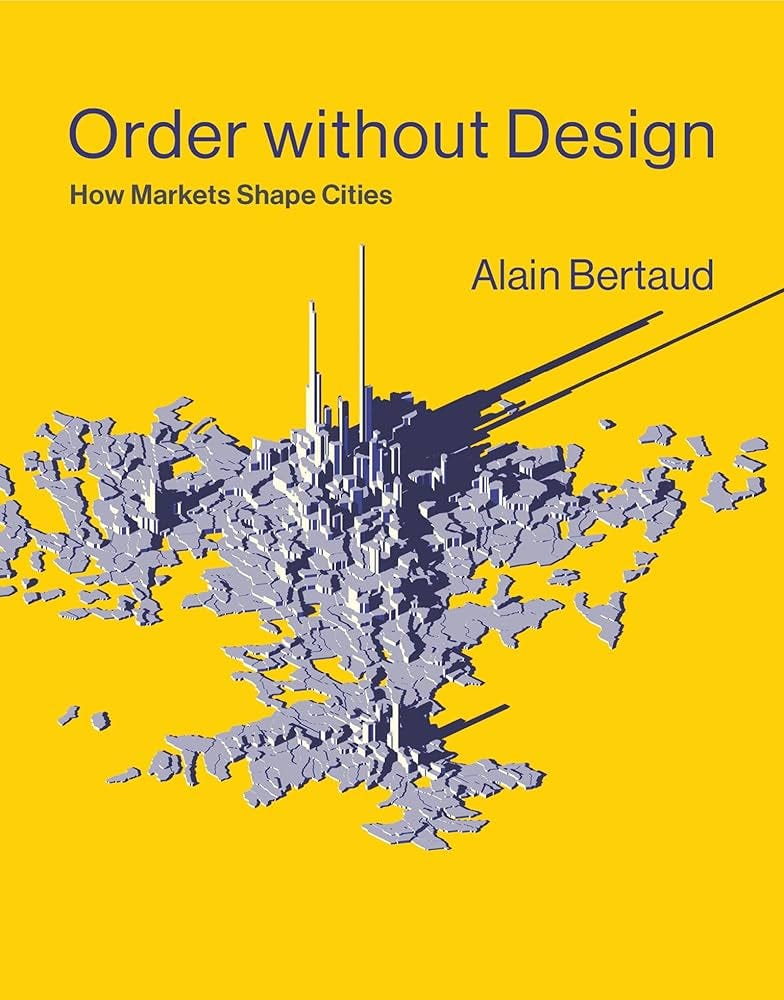
In his book Order Without Design, former urban planner at the World Bank Alain Bertaud, explains the dynamic:
“A government using regulatory constraints limiting FAR [Floor Area Ratio, or basically height restrictions] to negotiate with developers has a strong incentive to increase these constraints to the point of making development financially infeasible, so that developers are forced to negotiate with the city.”
Homeowners themselves usually lack direct power to stop development. Instead, they delegate coercion to zoning codes, planning commissions, environmental review, parking minimums, height limits, affordable housing and endless “consultation” processes. These tools are presented as neutral governance. In practice, they create veto points.
Developers are then told by the city to,
Add parks and public space
Add daycares
Add parking
Set aside a certain percentage of units to sell or rent at non-market, affordable prices (inclusionary zoning or IZ)
Many NIMBYs frame these as mitigations, or community benefits.
Cities and planners offer “incentives” for the developers to listen to the NIMBYs. They might offer additional building height, exempt or delay development charges, or offer subsidized loans for the non-market housing.
But consider that a precondition for height bonuses is height limits. A precondition for a development charge exemption being valuable is high development charges. A precondition for the subsidized loan is the developer building non-market housing units.
The city is the one limiting building height, taxing development, and requiring developers to build non-market housing in the first place. Relaxing these policies, or partially compensating for them is not an incentive program. It’s an extortion program. The developer can comply, or face years of delay, lawsuits, carrying costs, or outright rejection.
In Toronto, there are “Community Benefits Charges” on developments five storeys or more. Development charges can be up to $140k per unit for semi-detached and $80k per unit for condos. But if you make 20% of your units non-market as per inclusionary zoning, then you get an indefinite ongoing development charge deferral (~$37 k/unit) among other financial incentives.
https://www.cadcr.com/toronto-approves-incentive-plan-for-developers-building-affordable-rental-housing/?utm_source=chatgpt.com
The bottom line is: The city and NIMBYs don’t get what they want through incentive programs. They get what they want by wielding the power to kill developments.
This leads to three predictable outcomes:
Housing scarcity is engineered, not accidental - Constraints raise costs and reduce supply. That protects incumbent property values and keeps new housing out of their neighbourhoods—the core NIMBY objective.
Costs are passed on, never absorbed - Fees and concessions don’t punish developers; they raise rents and prices for future residents, who have no voice.
Moral laundering of coercion - Because the extraction happens through “process,” it’s perceived as ethical—even civic-minded—while producing antisocial outcomes.
This is why calling these concessions “incentives” is incorrect. An incentive expands options. This system narrows options until compliance is the only rational choice.
Thankfully Ontario is currently proposing a pause on “inclusionary zoning” (IZ). “The changes recognized that setting IZ rates too high could stall the development of both affordable and market units.”
https://www.regulatoryregistry.gov.on.ca/proposal/53094
Until developers are free to build to the heights they want without something in return, prices and rents will continue to be too high. This just means the NIMBYs are winning.