This was my very first science-fiction read, when I was around ten or twelve years old, and it never left me.
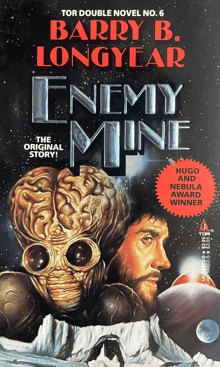
I was deeply shaken by the bond that grew between two sworn enemies who initially wanted nothing more than to kill each other. I was afraid for them, stranded on a hostile, alien planet, and I cried not only when Jerry died, but also when Samis tried to imitate Willis, lifting his three fingers and staring at the human’s five, asking if more would grow.
What stayed with me most was the moment when the human went to the Drac world to bear witness for Jerry and Samis. Since then, I’ve carried one line like a personal mantra: “Go ahead! Go ahead and blow, you kizlode sonofabitch! You haven’t killed me yet!”
This book taught me, very early, that humanity can survive even where ideology insists it shouldn’t.
This version is the original award winning novella that inspired the 20th Century Fox motion picture ENEMY MINE starring Dennis Quaid and Lou Gossett, Jr. It is the story of a human combat pilot, incomplete in himself, taught to be a human by the sworn enemy with which he is stranded, an alien who leaves with the human its most important possession: its future. This version of "Enemy Mine" is the winner of the Hugo, Nebula, and Locus awards for best novella (1980). Other versions available are expansions of this version.
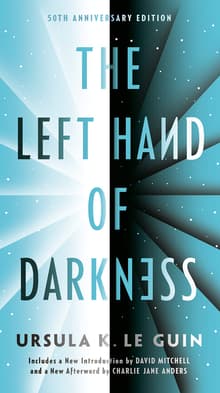
Reading this book reminded me that understanding another person is a continuous struggle, and that we lose the most when we mistake appearances for truth. Even for someone like Genly, an emissary whose role is to bridge cultures, truly understanding Estraven proves painfully difficult.
What stayed with me was the tragedy of that gap: how insight often arrives too late.
Estraven’s sacrifice, made so that Genly could reach safety, and Genly’s decision to visit Estraven’s family afterward, left me with a lingering sense that remembrance itself carries moral weight. Sometimes understanding cannot undo loss, but memory—how the living choose to carry it—can still salvage a trace of good from tragedy.
Le Guin’s novel taught me that empathy is not a destination, but an act that must be fought for, again and again.
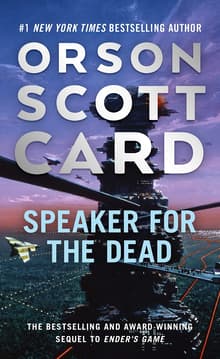
After reading Ender’s Game, I didn’t expect Speaker for the Dead to change register so completely. New characters, new worlds, new species… almost nothing feels the same.
And yet, when you look closer, the core questions remain: how we communicate across difference, how quickly we judge, how often we interpret others through our own narrow lens. Suddenly, Lusitania doesn’t feel so alien after all.
This book was a very different reading experience for me. Deeper, more mature, and far more demanding. Beneath its often gray imagery, something universal emerges. I would call it “human,” but that would miss the point.
What Speaker teaches is precisely that love, friendship, life, death, and memory are not human concepts—they are fundamental to life itself.
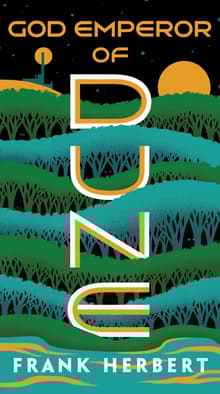
This is my favorite book in the Dune series because it feels like a monumental leap from the human frame to an almost godlike view.
And yet, Leto II remains deeply vulnerable in profoundly human ways: the need to love, the fear of solitude, the longing to be understood. What struck me most is how a character gifted with prescience willingly becomes an antagonist in order to save those who will hate him for it.
Leto’s repeated attempts to bring Duncan back felt less like control and more like longing for a companion, for memory, or for a link to a past only he remembers. He carries an entire history inside himself while the world around him distorts that past through its present suffering.
That Leto is misunderstood, despised, and yet fully aware that he will die for others makes the novel both tragic and unsettling.
Book Four in the Magnificent Dune Chronicles—the Bestselling Science Fiction Adventure of All Time
Millennia have passed on Arrakis, and the once-desert planet is green with life. Leto Atreides, the son of the world’s savior, the Emperor Paul Muad’Dib, is still alive but far from human. To preserve humanity’s future, he sacrificed his own by merging with a sandworm, granting him near immortality as God Emperor of Dune for the past thirty-five hundred years.
Leto’s rule is not a benevolent one. His transformation has made not only his appearance but his morality inhuman. A rebellion, led by Siona, a member…
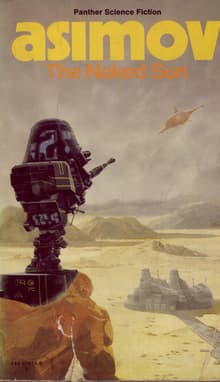
What fascinated me most about The Naked Sun was the vision of a culture built on radical separation: people interacting almost exclusively through holograms, recoiling from physical presence as something repellent. That estrangement felt unsettling rather than overtly dystopian.
I was also struck by how easily a motivated individual could turn robots—beings designed to make killing impossible—into weapons, simply by exploiting the gaps between intention and interpretation.
Baley’s investigation resonated with me because it isn’t just a logical puzzle; it’s a personal struggle. He has to confront his own discomfort, fears, and limitations while trying to understand a society fundamentally unlike his own.
The novel made me think deeply about how culture shapes morality, and how fragile our assumptions become when removed from familiar human norms.