It’s a science fiction dream: Climb into a self-driving car, fall asleep in the back seat, and wake up in the snowy mountains for a day of skiing or at a national park for a majestic hike.
For decades, that future seemed far off. But in the Bay Area, it suddenly feels closer. Waymo’s driverless cars zip down Bay Area freeways, seemingly driving with the same confidence — and sometimes aggression — as human motorists. Is a road trip that far away?
Experts say we shouldn’t expect to head out to Tahoe or Yosemite anytime soon. The same things that can make those destinations appealing — windy mountain roads, extreme weather, and time off the grid — also make them especially challenging environments for AVs to navigate. And the economics of running robotaxi fleets far from dense urban centers don’t help.
“The technology is still immature,” said Steven Shladover, a research engineer at the Institute of Transportation Studies at UC Berkeley. The problem, he says, is “a combination of technological advancement and the expense of setting up all the supporting infrastructure in a place where demand may not be as dense as in the heart of San Francisco.”
Only one company currently offers fully autonomous rides to the public: Waymo. Its vehicles operate at what’s known as Level 4 autonomy, meaning the car can drive itself without human intervention — but only when geofenced within a carefully mapped area and under specific conditions. A trip to Tahoe, today, would require Level 5 autonomy, when vehicles are able to drive anywhere, anytime, and under any conditions.
That helps explain why Waymo has focused on dense urban markets in cities with mild climates such as San Francisco, Phoenix and Los Angeles, where the environment is well-mapped and the weather is relatively consistent day to day. The vehicles rely on sensors including lidar, cameras, and radar to build a detailed 3D model of their surroundings. Rain, fog, and snow can interfere with those sensors, scattering lidar signals and reducing camera visibility.
Snow is the easy part
Expanding into rural and mountainous areas has not been a priority for Waymo. Co-CEO Tekedra Mawakana said last year that the company’s “path to profitability (opens in new tab)” is driven by rapid expansion, increasing the number of rides, and lowering the cost of technology.
Still, snow has long been on the company’s road map, so to speak.
In 2017, then-Waymo CEO John Krafcik posted a photo of a Chrysler Pacifica equipped with Waymo’s signature spinning sensor from South Lake Tahoe. “Snow practice!” Krafcik captioned the photo on Twitter. (opens in new tab)
Nearly a decade later, snowy conditions remain an active area of development. Earlier this month, Waymo co-CEO Dmitri Dolgov said the company is testing vehicles in multiple snowy cities.
“Driving in multiple snowy cities, we are now refining the rider experience and logistics required for consistent service in snow,” he wrote on X (opens in new tab), sharing a video of a Waymo navigating icy streets.
But snowy mountain highways present a far more difficult challenge. Mountain driving introduces hazards rarely seen in cities — tight curves, steep grades, wildlife crossings and sudden blind spots.
“Some of the problems are not solved yet, like severe weather condition problems or the really challenging road geometry problems,” Shladover said. “Nobody is doing driverless operations on winding mountain roads, as far as I know.”
And at the current level of technology, Waymo would have to thoroughly map the area in advance. That would take significant time across large rural areas — an expensive proposition.
“Once you have a map in front of you, you solve a huge percentage of all the cases that vehicles have to deal with,” said Matt Fisch, CEO of AEye, a company that develops lidar technology. “Then it’s a matter of filling in the last 1% of unlikely conditions.”
But Fisch said today’s systems still struggle with edge cases. Instead of reasoning through unfamiliar situations, they largely match what they see to known scenarios — a challenge when wildlife crosses the road, construction zones shift lanes or weather changes suddenly.
“Humans are really good at handling cases they have never seen before and don’t expect. But this is where machines need to grow up and more closely resemble the human brain,” Fisch said.
Car manufacturers are also pursuing autonomy, though automakers are still far from offering truly driverless trips to consumers. General Motors plans to introduce an “eyes-off” highway system in 2028 (opens in new tab) that would allow drivers to stop watching the road on certain mapped highways.
And Rivian has said that in the near future, its cars will include a “universal hands-free” (opens in new tab) capability that will enable hands-free driving on the vast majority of U.S. roads.
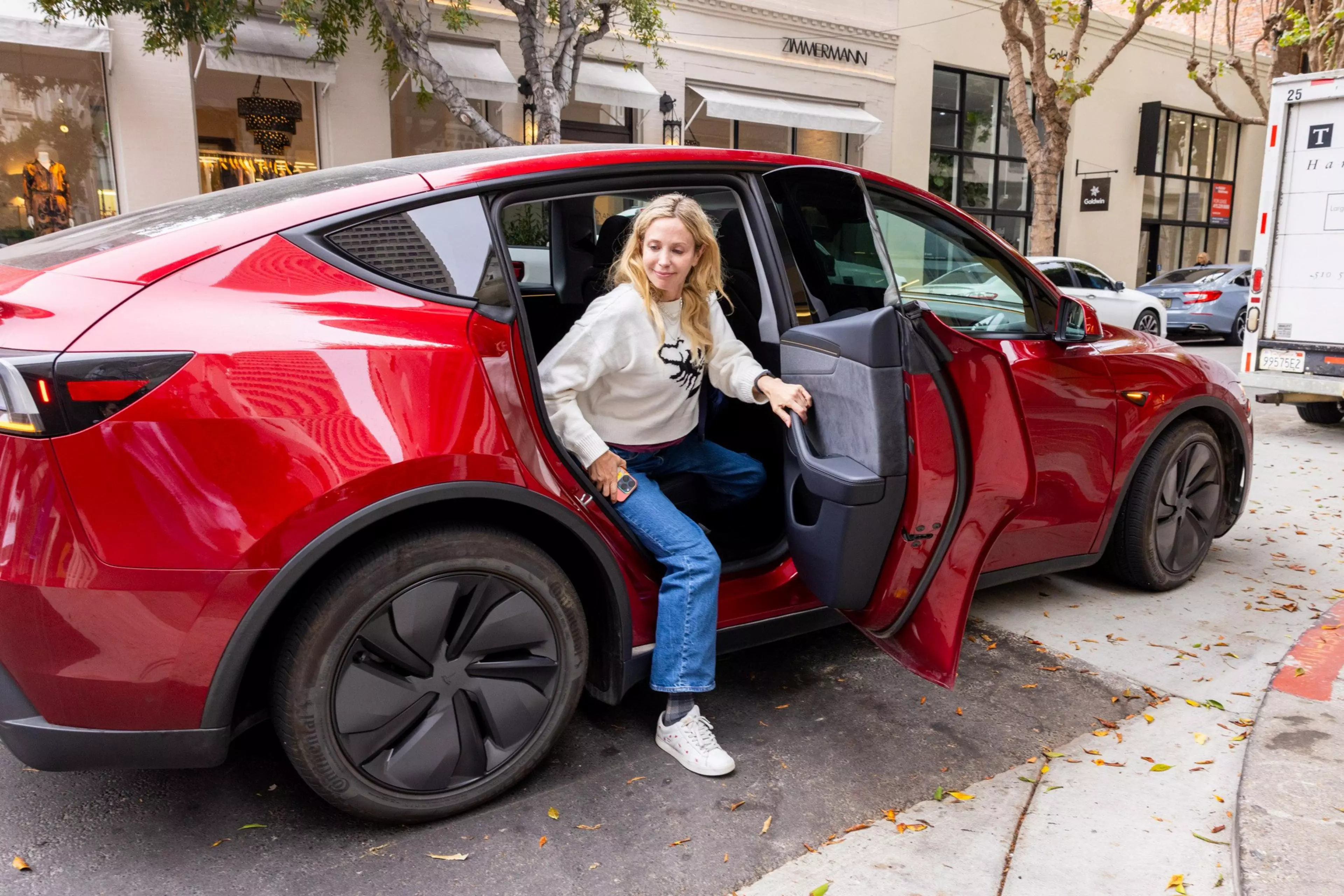
But those systems still require a human behind the wheel, ready to take over — a far cry from lounging in the back seat while the robot handles the mountain drive.
Elon Musk has long sketched out a future in which Teslas — which rely primarily on cameras instead of lidar — can drive themselves anywhere under any conditions. But experts say Tesla’s “Full Self-Driving” system, despite the name, still requires constant driver supervision.
Even so, some Tesla owners say they have made the trip from the Bay Area to Tahoe with the system engaged the entire way. Among them is billionaire early Tesla investor Steve Jurvetson.
“I let the car drive me from Silicon Valley to Lake Tahoe, and it was joyful and stress free,” Jurvetson wrote last weekend. (opens in new tab) “I enjoyed the beauty of the voyage for the first time, and with a podcast playing, I arrived refreshed.”
The road-trip problem
Even if autonomous technology advances enough for people to own self-driving cars — or hail one — a trip to Tahoe would still require significant new infrastructure along rural interstate routes like Interstate 80. Electric vehicles lose range more quickly when climbing mountain passes, driving at highway speeds, or operating in cold weather.
“One hundred miles of stop-and-go traffic is not the same as 100 miles of going 65 miles per hour up mountain passes,” said Erin Galiger, director of North American markets at ROCSYS, a company building autonomous charging for electric vehicles.
Significantly more charging stations and service hubs would be needed along the route. Companies like ROCSYS are developing “dark depots,” where vehicles could be charged, cleaned, and inspected without human staff.
But long-distance robotaxi travel raises another challenge: What about when something goes wrong? Autonomous vehicles often rely on remote operators when they encounter an accident, whiteout snow conditions, or other situations they cannot resolve on their own. But mountains are full of dead zones. Without cell coverage, a vehicle that gets stuck could simply have to stop and wait.
“We will need the equivalent of AAA for these vehicles,” Fisch said. “You don’t want somebody sitting in a car stuck for hours waiting for help, especially if a vehicle loses power during cold weather.”
Some companies are exploring satellite connectivity, such as Starlink, as a backup. But building that kind of support network across remote highways would take time.
So for now, autonomous vehicles will stay focused on dense urban areas, where demand is high and operations are easier to manage.
“I think it will be a patchwork of deployment for quite a long time,” Berkeley research engineer Shladover said. “It’s not going to be everywhere.”