“You’re never going to believe what just happened to me.”
If there is one thing people can’t resist—its gossip.
So when your friend Rachel calls you up with a juicy story about her coworker Matt, you’re all ears.
But reading a scientific paper? Bo-ring.
Why waste thirty minutes reading a paper could have spent listening to Rachel? Here’s the real tea: Scientific papers are exactly the same thing as listening to Rachel.
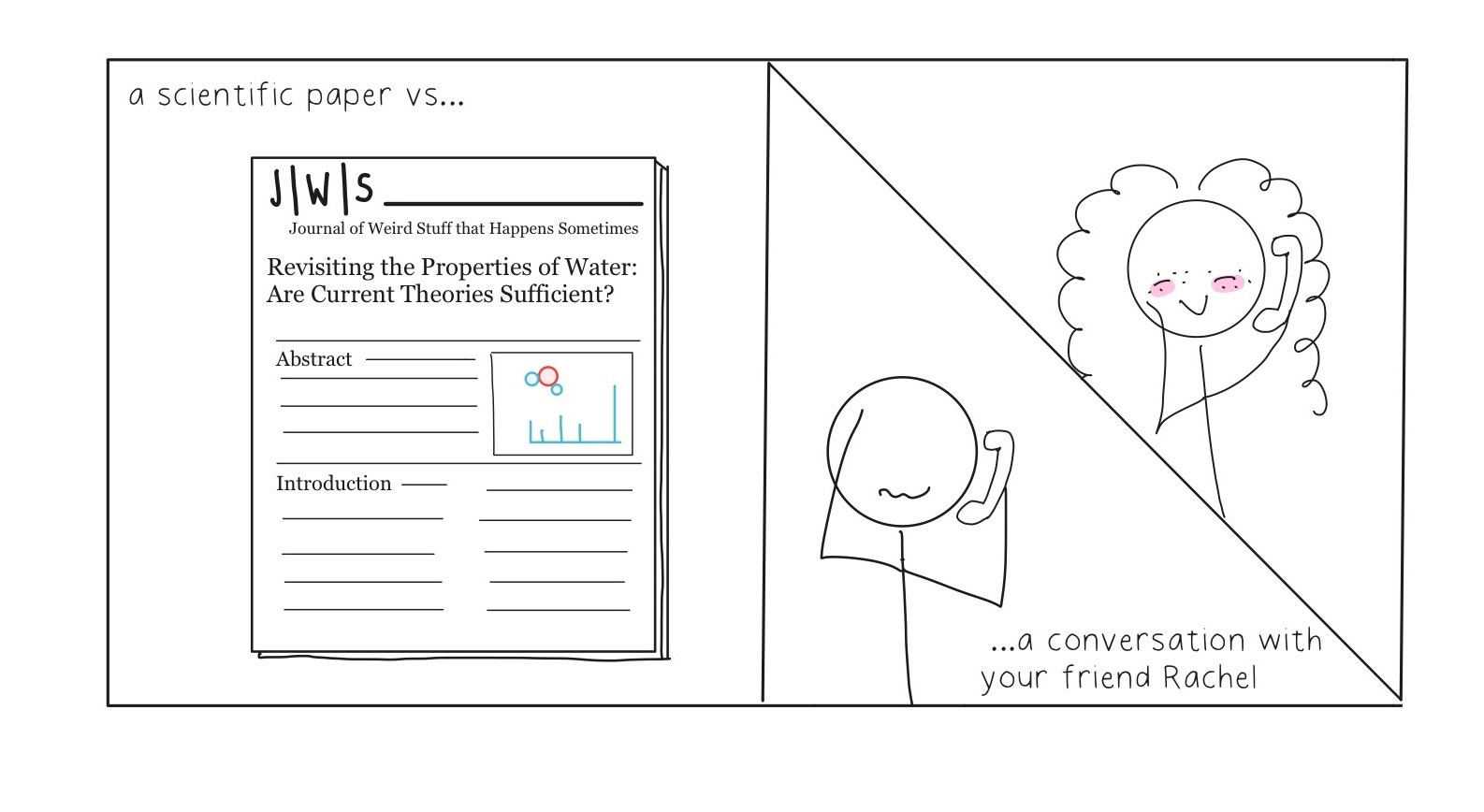
It’s true.
The conversation you’re about to have debating Rachel’s latest theory about her coworker Matt is exactly the same conversation a group of scientists is having over whether a new molecule is “novel”.
You think scientists are above calling up their besties with the latest piece of news to see if they’re right or delusional? Not so. It’s called a peer review.
So, instead of Love Island, why not indulge in the drama of scientific paper? If you’d like to, but don’t know where to start: you’re in the right place.
They’re not scary—trust me. You’ve already this kind of conversation before.
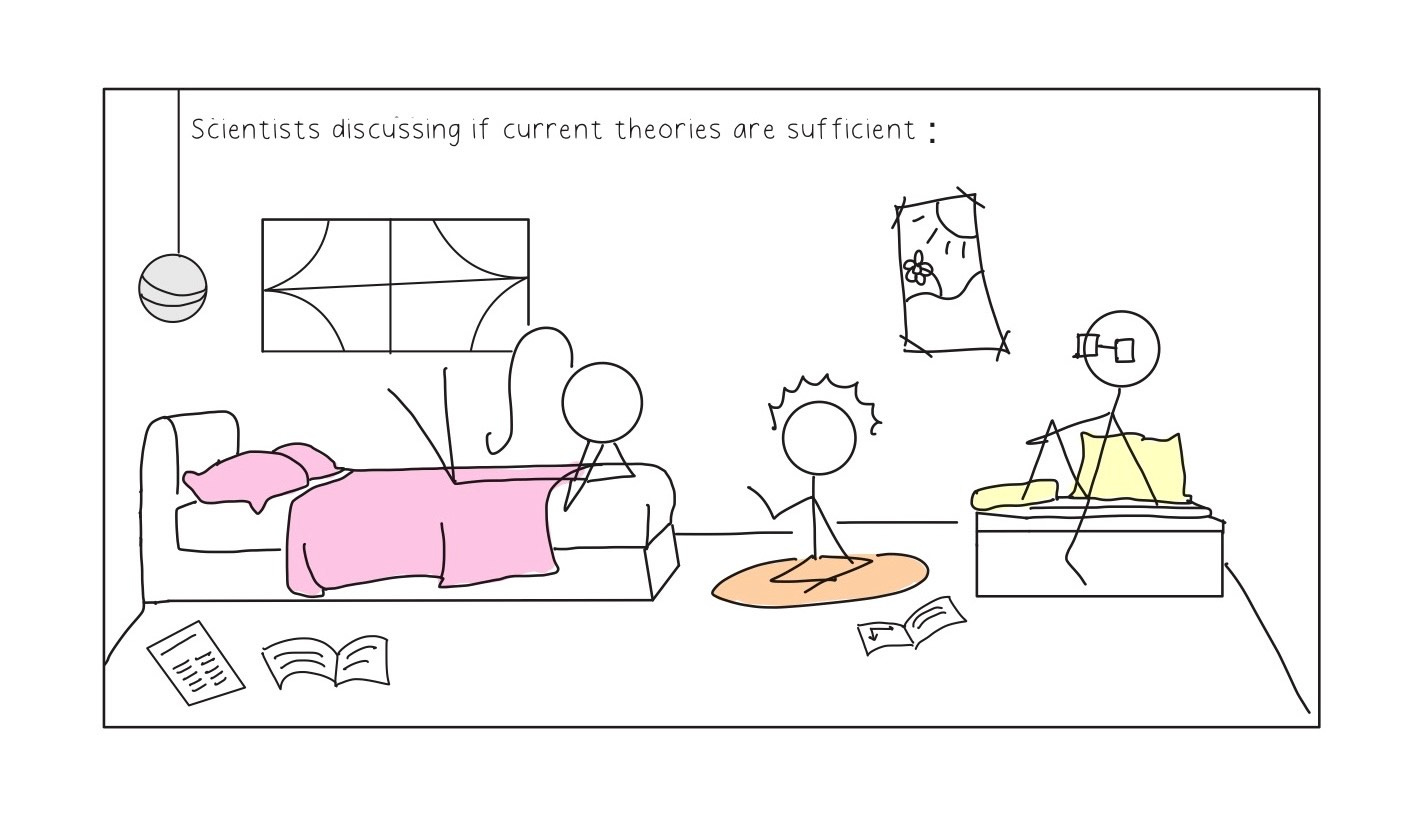
Don’t believe me? Let’s get into it.
“…hello?”
“Oh my GOD, you are not going to believe what just happened to me. I got a date! Matt from work asked for my number at the coffee shop yesterday; he said he wanted to ‘follow up’ about a party next week. You know what that means??”
“Yes! A date! Wait—what? Who’s Matt?”
“You know, Matt from work. He’s on my team; he sits at the desk next to me and is always offering to get me coffee when he goes. He’s really sweet and always agrees with me in meetings. We’re having this party-work-thing next weekend and…I think he wants to bring me!”
“Oh, okay! Is that what happened at the coffee shop? Tell me everything.”
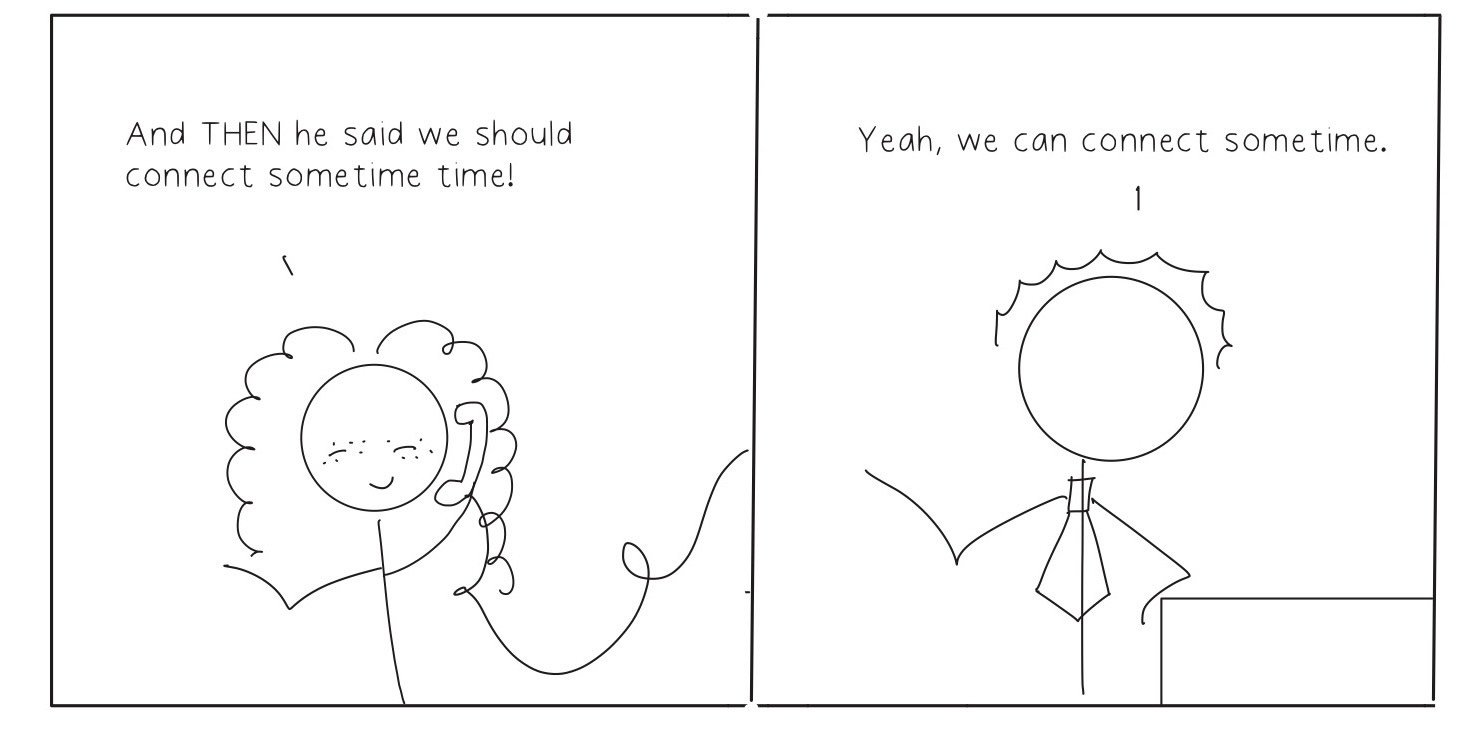
“Well, first he offered to get me a coffee (like always), but I said I would just go with him so he shrugged and said okay. Then, we’re standing waiting in line when he brings up the work-party-thing again and asks me if I plan on going. I say I’m still thinking about it and he says okay. Then, get this, he says he wants to ‘follow up’ about the party and asks to connect!”
“So…”
“So it’s a date! He wants me to go to party as his date! I’m sure of it. First, he wanted to get coffee with me, then he brought up the party, and then he asked to follow up about it. That means he wanted to spend time with me outside of work and was thinking about the party the whole time. If he wanted to follow up in a work way, he would have just used my email. It’s totally because he wants it to be a date!”
“He texted you that??”
“Well, no. I didn’t know what he meant by ‘follow up’ so I offered my number, but he hasn’t texted anything other than his name yet. But I know he’s going to. Oh, this is so exciting! What should I text him?”
PAUSE.
Record scratch.
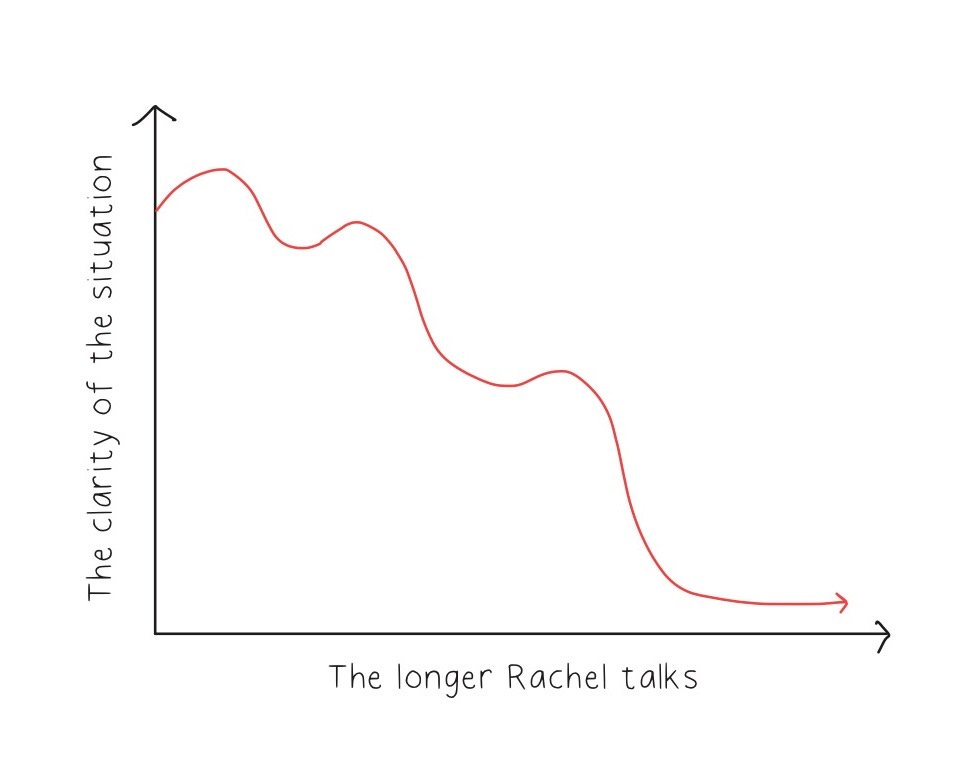
She offered her number? Hmmm. That wasn’t what she said before.
What should we say here? We want to be a good friend, of course, but we also want to give good advice.
Time to approach this like a scientist.
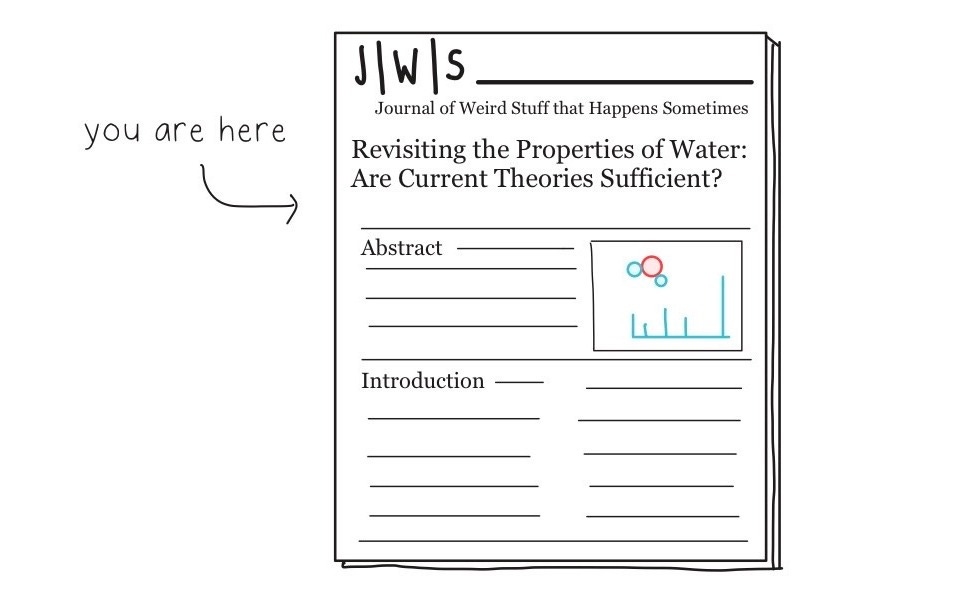
As soon as we pick up the phone, Rachel is ready to go.
In one breath she’s already told us everything we need to know about the story She clues us in on the important bits like what happened (Matt asked for her number), how it happened (at the coffee shop) and why its important (to ‘follow up’ about the party).
Now we’re hooked.
The title and abstract of a scientific paper do the same thing: they’re a short summary of the entire work meant to help the reader decide whether to keep reading. Papers are specific, so unless you decide they’re relevant to you, you probably won’t read all the way through. That’s what the abstract is for—to keep you hooked.
And Rachel got me—I want to know. Let’s keep reading.
Who is Matt? Why does his coffee habit matter?
Background is the first thing we want. Why something matters depends on what has happened before it. If Matt had been ignoring her before he asked for her number, she might have viewed it differently. But, according to Rachel, Matt has always been sweet to her. He offers to get her coffee.
The Introduction section of a scientific article provides the similar context we need to understand the research the authors are going to present. Research doesn’t appear in isolation: it’s always an evolution or transformation to build bridges toward future research.
That’s what Rachel is doing too—she’s looking at the background (Matt offering coffee) through the lens of what she sees now (asking for her number) and uses it to make a inference about what’s coming (a date!).
Is it accurate? As they say…
Wait, wait, wait. Back up.
Did he say he wanted to get coffee with you or did you ask? How did he phrase it: I want to connect, or can I have you number?
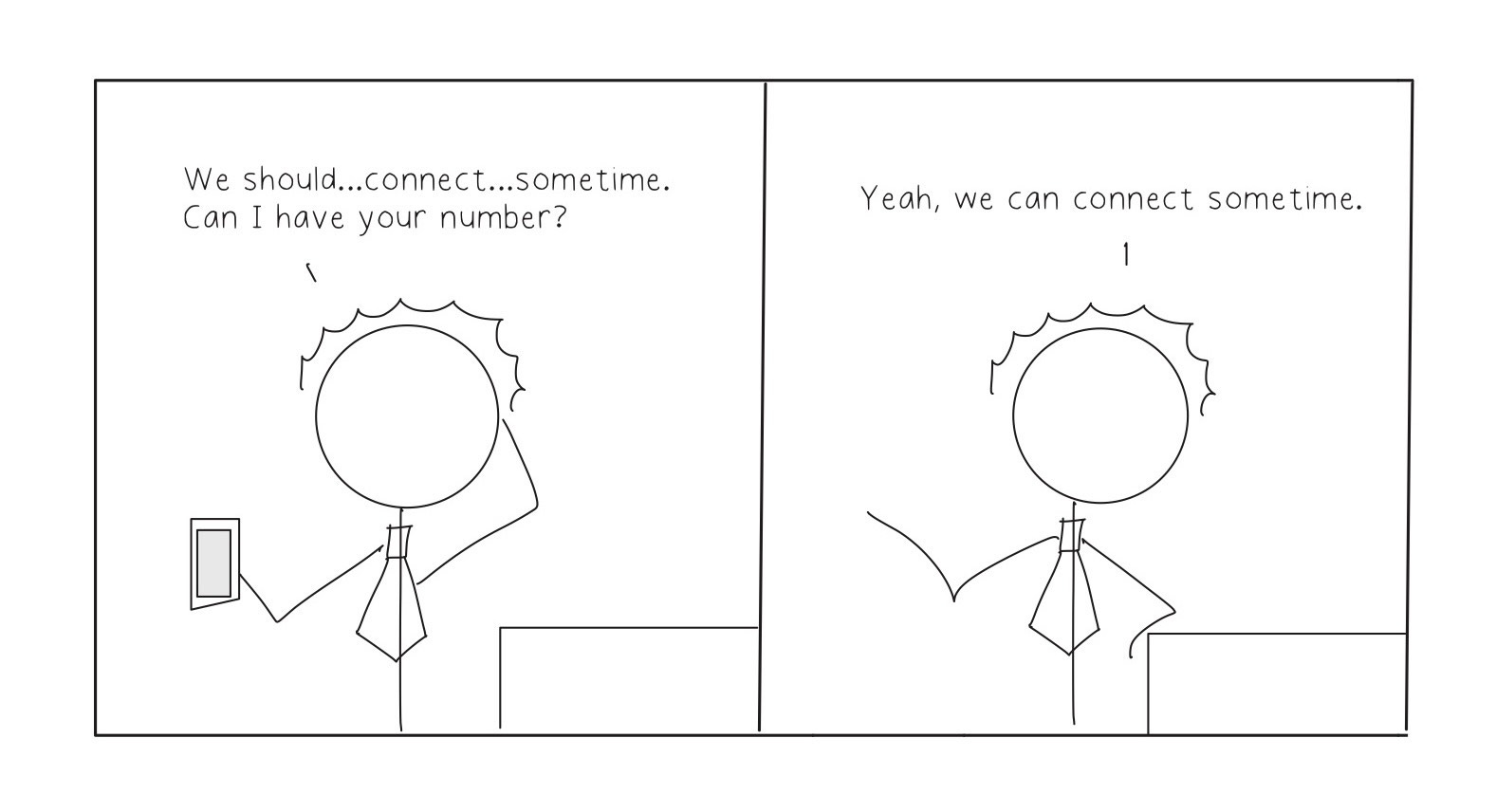
We ask these questions because it matters.
Whether Matt was smiling or frowning when he asked could change the whole story. Rachel needs to tell you exactly what happened down to the look on his face so you can properly determine for yourself whether what she’s telling you makes sense.
It’s the same in the Methods section. You have to pay attention. Everything should be as specific as possible so you can make your own judgements about what happened. Watch for vague language as well. It might mean something is being hidden, which is never good.
For example, Rachel told us he asked for her number, but here she said connect.
What could that mean…
This is where Rachel tells you exactly what she thinks it all means. In this part of the conversation, Rachel will tell you the results of the situation and then interpret them.
For example, Matt asked to connect with her, even though he already had her work email; Rachel interprets that to mean he wants to connect with her outside of work. Like a date? Maybe. But he also didn’t necessarily even plan for her to be in the coffee shop. There are a lot of angles and a lot of ways to interpret the results—Rachel’s is just one.
In a scientific paper, the Results and Discussion section (which are often separated) do the same thing. Just like Rachel, they take they facts they observed and interpret them to support their case. For Rachel, she interprets that Matt likes her and wants to take her as his date to the party.
But this is where we need to pay attention. Rachel obviously wants this to be a date, so she could be interpreting in her favor. This is an important marker to watch for in scientific papers. Scientists often spend years and thousands of dollars on a hypothesis, so they usually want it to be true. Doesn’t always mean it is though.
Our job is to ask: do these results really support this case, or is Matt just nice?
After Rachel looked at the background, gathered evidence, considered the results, and discussed her interpretation, she’s ready to defend her case and come to a conclusion: Matt is going to ask her on a date.
That’s what the Conclusion is for. Summing up everything we just witnessed into a short and sweet section. Sometimes scientific papers also include where they might have been wrong or need more research, or in some cases, plan of action.
Which is what Rachel also decided—she should text him.
But wait!!!! Should she actually? Is there enough evidence for that conclusion?
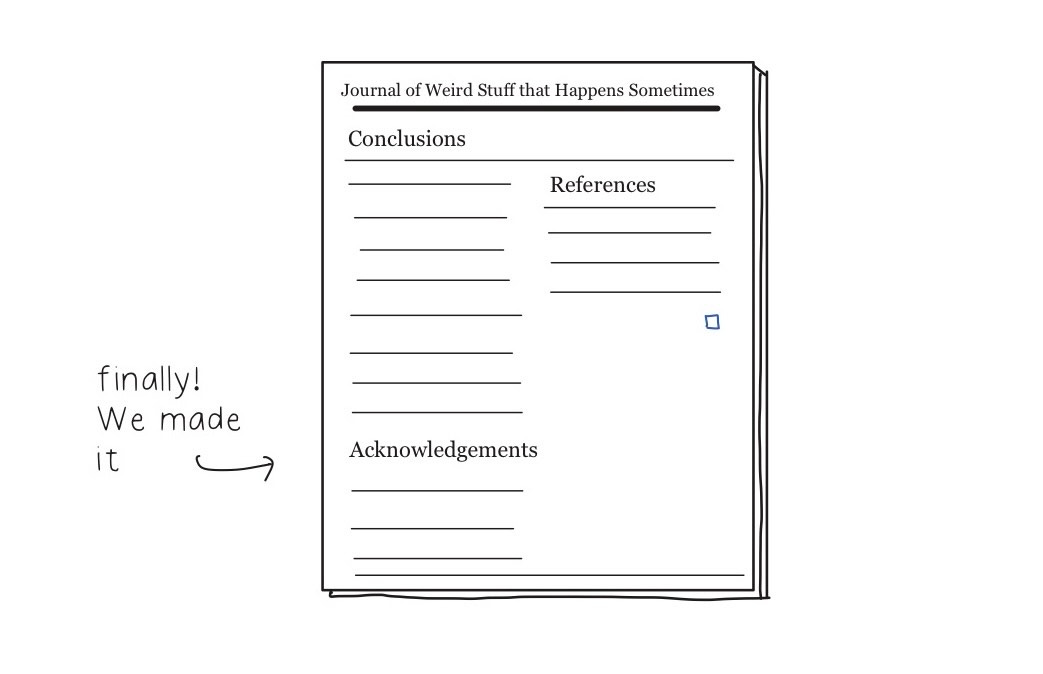
Now it’s our turn to decide.
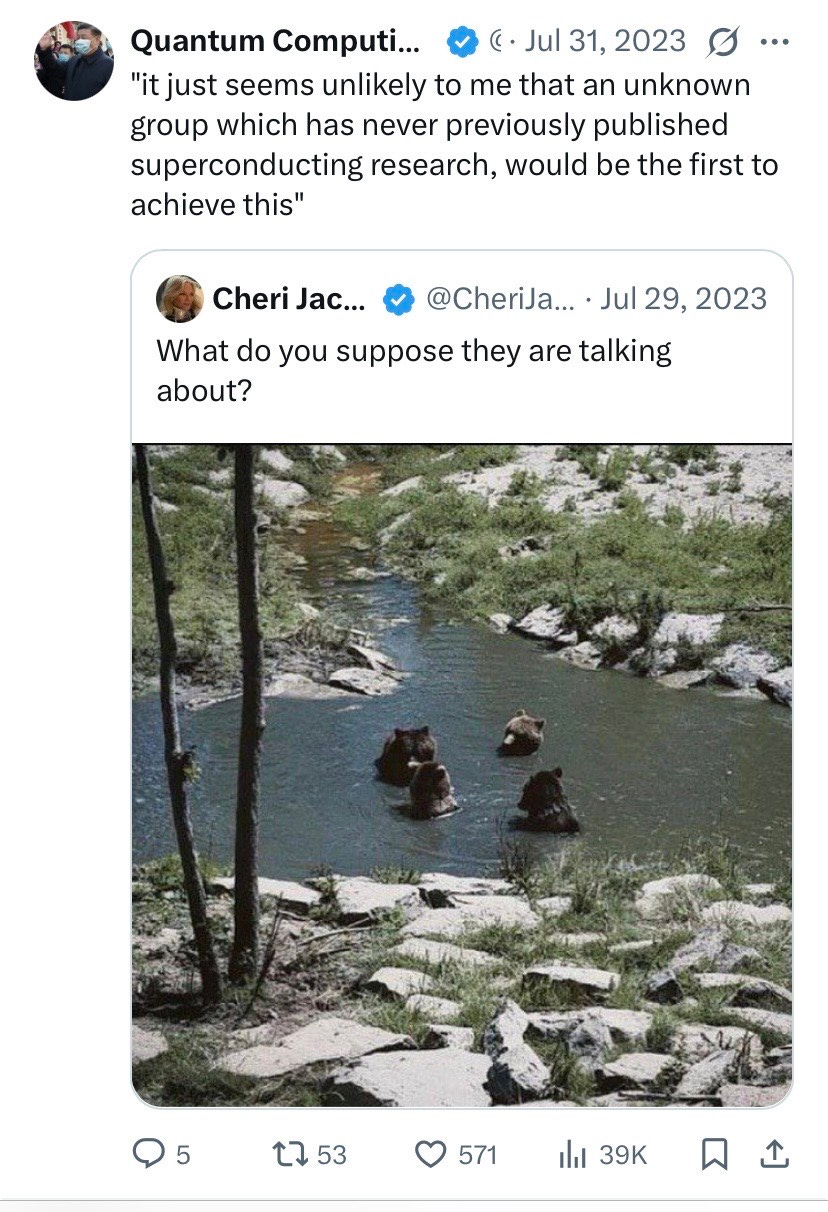
Scientific papers are meant to be critiqued. They are published so the community can review everything and decide if it makes sense or not. Does the background really lead up to this? Is what happened even likely? Do the conclusions—and the plan of action, god forbid—really make sense?
To be a good friend giving the best advice, we need to answer these questions for Rachel.
Matt’s demeanor toward Rachel is friendly; it’s clear he does like her, at least as a person, but he wasn’t exactly head over heels as she made it sound. He was cool with her coming to the coffee shop and wanted to know if she was going to the party, but there wasn’t anything necessarily flirty about that. Even if he didn’t specify what, he did want some non-work contact, so he probably is interested in a more personal relationship.
But a date? I would tell Rachel to slow her roll. If Matt does like her, the way he’s going about this would mean he’s probably on the shy side of trying to navigate the awkward work-crush balance.
Don’t text like your waiting for a date, just genuinely follow up.
And I’d say what every scientific paper says: we need more research.
Now its your turn. Date or no date?
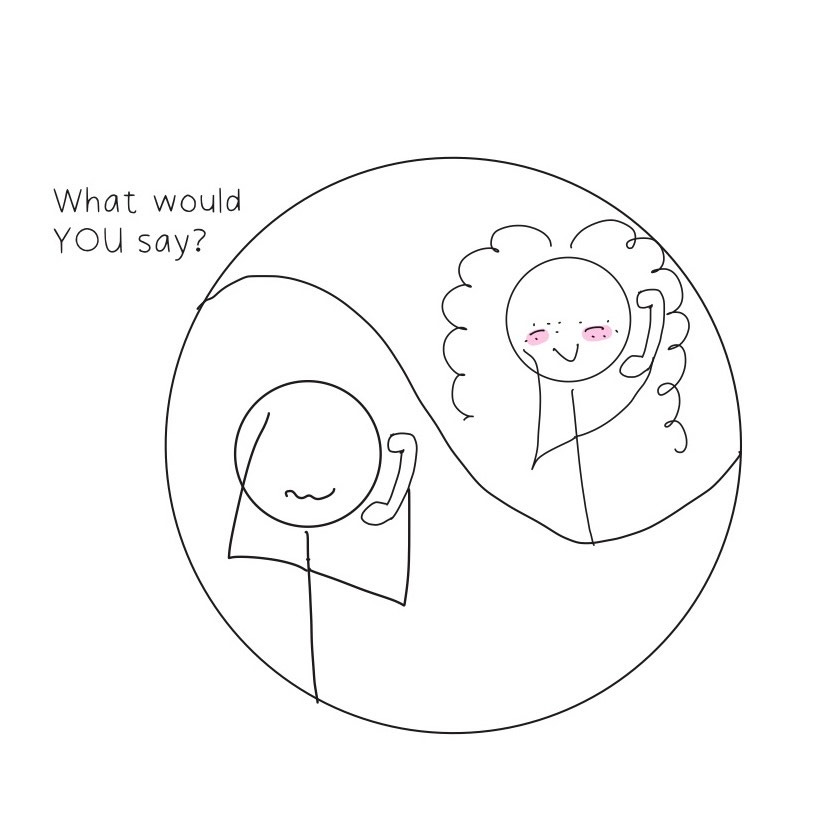
Giving your friends good dating can seem as challenging as reading scientific papers, but the truth is neither is so scary.
It’s just like talking to your friend Rachel.
Thanks for reading The Quantum Notebook; if you laughed or learned something, subscribe so you get the next post!
Until then, I’ve got a few phone calls to make…
If you enjoyed this piece or it helped you see scientific papers in a way you haven’t before consider sending to a friend.
Thanks for reading The Quantum Notebook! Its our responsibility as a community to understand & partake in science conversations. Share this post with a friend.
Or, if you really enjoyed this piece and are astounded at what you learned consider buying me a coffee here!