Stingray II IMSI-catcher
Source: U.S. Patent and Trademark Office/AP
Modern cellphones are vulnerable to attacks by governments and hackers using rogue cellular transmitters called IMSI-catchers. These surveillance devices can precisely locate phones, and sometimes eavesdrop on communications, send spam, or inject malware into phones.
Recent leaks and public records requests have revealed that U.S. law enforcement in Baltimore, Milwaukee, New York, Tacoma, Anaheim, Tucson, and others have used IMSI-catchers extensively in vehicles or aircraft to identify and locate suspects.
These powerful surveillance devices have often been used with little to no judicial oversight. To provide transparency and accountability, we need independent information on who uses them, how often, and when.
For more details on the SeaGlass sensors, data collection system, detection algorithms, and results see our technical paper published at Privacy Enhancing Technology Symposium 2017. Sensor code is available on Github.
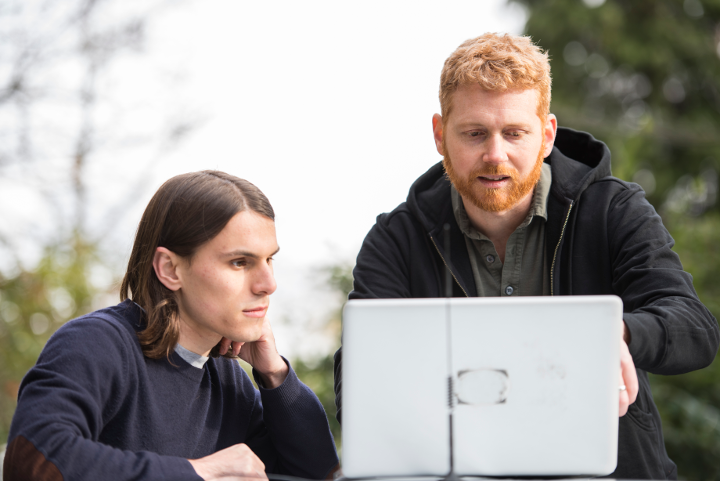

Peter Ney (left)
Computer Science and Engineering Ph.D. student at University of Washington
Ian Smith (right)
Research Scientist in Computer Science and Engineering at University of Washington

Tadayoshi Kohno
Professor of Computer Science and Engineering at University of Washington

Gabriel Cadamuro
Computer Science and Engineering Ph.D. student at University of Washington
We can be reached for questions and comments at
seaglassjunk@cs.washington.edu
GPG fingerprint: 767A EAD9 0CA3 CD32 59E0 99F2 2CFB 213D D78C 351A
This project was supported by a grant from the John S. and James L. Knight Foundation and with help from the University of Washington’s Tech Policy Lab.


We also want to thank our volunteer drivers in Seattle and Milwaukee for their help collecting data for this project. Thank you!