Kim Stanley Robinson is one of human civilization’s greatest living science fiction writers. Author of genre-defining works such as the Hugo Award-winning Mars trilogy, Locus Award-winning The Years of Rice and Salt, Nebula Award-winning 2312, Aurora, and the highly influential cli-fi novel The Ministry for the Future, he was invited to speak at the 2021 UN Climate Change Conference (COP26). Asteroid 72432 is named “Kimrobinson” after him.
I’ve had the great pleasure and privilege of previously interviewing Mr. Robinson in both early 2024 and early 2025. Now, I get to speak with him again in early 2026!


In the interview below, this writer’s questions and comments are in bold, Mr. Robinson’s words are in regular text, and extra clarification (links, etc) added after the interview are in bold italics or footnotes.
I think we’re increasingly seeing that social media apps are sort of a novel cognitive drug. Online radicalization spirals can clearly captivate big chunks of the population. Very successful people can be highly vulnerable to this.
It’s an interesting validation of the way that we are all trying to supply ourselves stories. We’re now likely to overdose.
That’s a powerful way of putting it.
I’m so ignorant of these sites, having never joined them. I’ve never joined any social media at all. Just email. And Substack, which comes through email. I don’t feel like I need to speak through the various new Internet and social media things. I’ve got my novels. They are my speech. I want people to read the novels as if they have some autonomy of their own.
I rarely do editorials or op-eds. It’s not my forte. I do the novels. It saves me time to spend more time outdoors. In the garden, or running. I can write outdoors, and now I do, but it’s still sitting down and looking at screens. I do read a lot, both onscreen and off.
It’s not so much a philosophy as a mixture of practical habits for my own personal life.
I mean, really, I’m an outsider to social media and I don’t participate in it. You can quickly stupid-ify or enshittify your own information stream. Everybody’s got to make those decisions now. We’re all editors of our own information stream, but with algorithms forcing the issue on us.
I think that this is really a fundamental driver of the craziness we’re seeing in the second Trump presidency. That exact thing, their information stream and that of their voters is fundamentally enshittified. You’ve got policy actions that are clearly driven by and for social media, and a lot of it’s deliberate cruelty or insanity. Stuff that is just cartoonishly evil. The dichotomy of this is that you’ve simultaneously got horrifying stuff like ICE invading America cities one by one, like what’s happening in Minneapolis, but at any given time, most Americans are still reading about all these horrors through their phone and not seeing the government goons in their neighborhood.
ICE is doing horrible illegal stuff and murdering people and sending people to El Salvador without trial, but they appear to be not even deporting that many more people than usual, very far from the “millions” Trump threatened. They’re attacking city by city because they can’t hire enough people to beseige more than one at once. It’s an oppression roadshow. They don’t have enough goons.
It’s almost a performance of fascism more than actual fascism. Which is still bad and evil! But, they almost seem to be making Gestapo-themed videos in which they do Gestapo things rather than actually implementing a Gestapo everywhere, if that makes any sense. There’s a performativity to this that is just insane. A creature of the social media age.
Yes, I recognize what you’re saying, and I agree completely. I’ve had that same sense myself. In the science fiction field, we call it cosplay, costume play.
They’re cosplay fascists. But with real murders. An outrage, every day. It has to be daily. As Steve Bannon said, “Flood the zone with shit.” They have to get more and more inventive, or repetitive, or stupid, in finding something to do that will shock the liberals and delight their followers. It’s performance for consumption as media.
You can say “These are evil idiots. They’ll be gone eventually. I won’t let them take over my mental life.”
I don’t completely cut off the news. I scroll the headlines. I get a sense of what’s happening. I try to hold that down to about 10 minutes in the morning over breakfast. And then I focus my life on other things.
I think it’s impossible for anyone to completely escape world news, national news, but you can reduce it to trusted feeds. You can focus in on the sciences and what they’re doing, and you can just keep in control. Reality-based, rather than society’s spectacle.
The real reality, of course, does include some real ugliness. The attack on science is particularly crazy and dangerous, and it has ramifications that will last for years and even decades. The Trump administration’s attack on medical research, on cures, on life extension, profoundly and in a real way harms everyone.
These people who are attacking science, they will run to a doctor the moment that they feel scared for their physical life. They’re hypocrites, and we’re all hypocrites to one degree or another, but this particular hypocrisy is incredibly bad for humans now and for future humans. Reducing human suffering is one of the main positive goals of human efforts on this world. And it’s one of the main goals of science to reduce human suffering, increase our powers over adversity and suffering. So to attack that…
I think you need to begin to think of the Trump administration as a kind of a death cult.
Yeah.
The Gotterdammerung, Ragnarok. Old white men saying if we’re going down, we’re going to take the world down with us. This is a narcissism and a megalomania. If I have to die, I’m killing everybody too.
One thing that I’m really trying to share with people through my newsletter, and one thing that has really provided me with a lot of comfort, is that this death cult is not in charge of the whole world. In a way, we’re really lucky that it’s happening now and not at a different time.
If McCarthyism had taken power and evolved into this kind of death cult, if there had been a President McCarthy in the 1950s, it could have been so much worse because the U.S. was basically the center of science and industry for the world then. It would have blown up, like, almost all medical research. It would have devastated so much more of humanity’s scientific capacity. Even in the 1990s, the U.S. unipolar moment, it would have been, I think, worse than now.
But as it stands, there’s tons and tons of medical research coming out of China, and Europe, and India.
The Serum Institute of India is now mass-producing malaria vaccines for Africa! They don’t give a damn what RFK Junior says. In the age of globalization, science is more resilient. The rest of the world was not just blown up by world wars. There’s tons of labs and doctors and clean energy factories running elsewhere that are not under the jurisdiction of this death cult. That’s a lot of what I try to write about.
Yeah, and it’s so good to read it and be reminded of it. I mean, the United States is like 2% of the Earth’s surface and 5% of the Earth’s population.
There is an outsized power that comes out of the end of World War II. To take it back to World War II, what was obvious to people in World War II is that science had won the war. I’m talking about penicillin, radar, and the atom bomb. Science had an outsized influence in the American psyche as being these weird guys, who were inventing things out of nowhere that were profound influences on winning an actual war.
Then Vannevar Bush, George Kennan, a few others in the post-war American intellectual hierarchy said, we need to institutionalize a federal research program. So then you’ve got DARPA, NSF, National Institute of Health, everything.
The current White House does seem intent on blowing up the imperial power that America established for itself in the post-war period. So it’s perverse and bizarre, but if we keep our eye on the prize and try to look for the slender silver lining, to go back to what you were talking about, the world is bigger than the United States’ internal dysfunctions. There’s a lot going on! First of all, 95% of the world’s population is outside of the United States. Those people are interested in their own advancement, their own health and safety.
The current United States leadership may be, instead of making America greater again, it’s more or less the suicide of American hegemony, of empire. The dollar as the benchmark financial figure might or might not survive this. We might already going from petrodollars to…
Yeah, exactly. And indeed, you’re going to be fascinated to see what you can see as an individual in your upcoming trip to China. It will, of course, just be the tail of the elephant, because no one person can see that giant system. But you’re going to see more of the rest of the world. You already have in your visits to India, your work in Madagascar. This is a big, various world, and in many ways, it’s got better mental health than America with its dreams of American glory.
On some level, I think that a lot of people in the U.S. just really don’t think the world can move on without America. But as the U.S. has pulled out of all these international organizations, the rest of the world’s still in them! And building more.
Like, a huge new treaty was just signed last year, the BBNJ Treaty, Biodiversity Beyond National Jurisdiction, which allows the creation of international marine protected areas on the high seas. I’m super excited about it.
The U.S. signed under Biden, but it’s not ratified by the Senate. The U.S. didn’t even show up to the final talks. Big chunks of the world, including China, are on board.
There are so many more examples. The EU/Mercosur trade deal.
The Hefei nuclear fusion research collaboration. The new EU/China deal on Chinese EV imports.
The rest of the world keeps doing stuff even if America decides to flame out and not be part of any international accommodation. What they’re essentially doing is just just handing sort of leadership to China by default.
Well, that is happening. There’s a moral hazard that leads into complacency, parochialism. When you’re in the heart of the empire, you’re strangely provincial because you don’t know the rest of the world very well.
But even in America, the Trump administration is unpopular. A majority of the people are saying this isn’t what our country is about. And presumably with a wicked political fight to come, we will take back the vision of an America that is made up of immigrants from across the world.
What happens if you bring together everyone in one country? A sense that we all made it together, coming from everywhere else. If you keep to the oft-announced American ideals of democracy, you’ve got an America you can be proud of. Everywhere there are the problems of these forces, and you don’t want to, especially as an American, give up on America.
Following this line of thought, I am so happy to be a Californian. It is the American experiment going way better than much of the rest of America right now. More progressive, more multilingual, more multicultural. And the fourth biggest economy on Earth! America is special. California is special. It’s comforting to be here. We’re more realistic.
And reality bites. It’s the thing that doesn’t go away even if you don’t believe in it, and it can kill you. So facing up to reality is part of the project here. I like that California is doing a better job of that.
How we deal with decarbonizing in California will be instructive. Fossil fuel economies that desire to also be virtuous — Canada, Australia, Norway, the list could be extended — are trapped in the need to sell that energy. They haven’t yet completed the technological transformation to clean energy, but their people want to do it, their elected governments want to do it, at least in part.
Following like you do the good things that are being accomplished, you see the way that clean energy is now cheaper than dirty energy. That’s a crucial turning point in the decarbonization battle. It’s actually cheaper now! There’s no longer a green premium. You don’t have to pay more to go green. The game has been won. It’s just not over yet.
“The game has been won. It’s just not over yet.”
— Kim Stanley Robinson
Bill McKibben’s recent book, Here Comes the Sun, was about this.
He said basically what you have just said. The energy transition game’s not over, but it has been won. This technology is now the cheapest source of electricity in history, and it’s just kind of inevitably going to be the vast majority of all new stuff built for the foreseeable future.
That is something which would have seemed like a utopian dream just 10, 15 years ago! Now it’s just sheer economics just driving this forward no matter how crazy the politics gets.
Yeah, I agree. And McKibben’s great, I learned from him a lot.
The discourse space gets into ferocious arguments about the minutiae between different projects. You want to remember there’s a bigger enemy out there, which is simply the fossil fuel dinosaur power trying to stay alive when its time has passed and wrecking the atmosphere, and therefore the rest of us by way of their efforts. So the battle is clear.
Yeah. Don’t shrink the tent.
And what’s interesting about that is just the lag time. It’s like Wile E. Coyote running off a cliff. The number of major actors that’ll just continue acting as if it’s still an unending fossil fuel era, even when it’s so clearly not. One huge example of this was the military intervention in Venezuela, which sort of claimed to be an invasion and takeover “for the oil” but looked more like a kidnapping of Maduro that then left Maduro’s number two in charge. Delcy Rodriguez.
And the whole Republican apparatus is like, “Ooh, there’s more oil in Venezuela than Saudi Arabia.” But there’s no universe where it will be economical to extract that anymore. The world’s already in an oil glut!
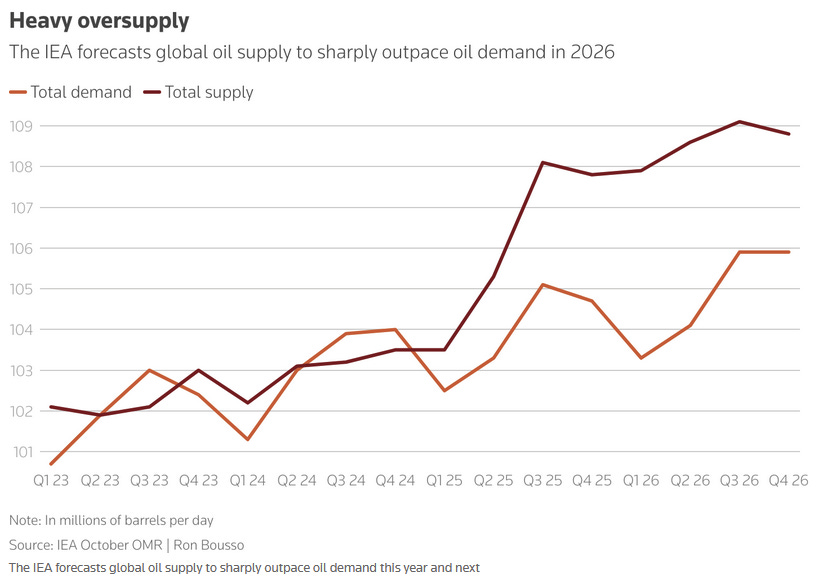
Those huge Venezuelan oil deposits in the Orinoco Shield that everyone points to are tar sands oil, the consistency of cold peanut butter. Harder to refine than even the Canadian stuff.
They’re not like Texas or Saudi Arabia crude that’s easy to extract. It would cost hundreds of billions to develop this, and there’s no market for it. Even the ExxonMobil CEO just said that Venezuela’s uninvestable. It’s crappy oil, and the market already has too much oil anyway.
It’s a war for oil without even getting much oil! It’s a war for the memory of oil. And that social media performativity nonsense.
Well, again, it’s cosplay. And the unfortunate thing is about 70 people got killed. The White House is making snuff movies.
Yeah, that’s exactly what it is.
So this is ugly stuff and death cult stuff and irrelevant in the larger energy picture. You gotta just kind of set those people aside as being insane and try to overthrow them in the most efficient and legal way possible. As for the energy picture, it’s getting better and better.
That reminds me, though, Sam, I went to COP30, and I want to describe it as a utopian space. Really, you ought to go to one of these.
At COP30 in Belém, the city only had about 20,000 hotel beds, so they had to make up a lot of space for people to stay. The average age was much more your age than mine. I would say the average age was perhaps 40 to 45. There were more women than men by a slight margin amongst the delegates. There were a lot of indigenous people there from the Amazon. And they were all on fire with the exhilaration of talking about saving the world, talking about clean energy and the decarbonization effort that the Paris Agreement represents. So for me, it was a beautiful thing to see.
As a utopian writer, I think of it as like Brigadoon in reverse. For two weeks every year, a utopian space pops into existence somewhere in the world, focused on the cleaning up of the biosphere by getting rid of burning fossil fuels. And then it disappears. It has its utopian performative space. Again, in the society of the spectacle, it’s a beautiful thing.
In realpolitik terms, it is a cracked mirror we hold up to ourselves. We go, oh, my God, the COP system isn’t working, the COP system is stupid. That’s like complaining about the mirror for what the mirror is showing you of your own dysfunction. Several petrostates that are signatories of the Paris Agreement do not want to, and in financial terms cannot, stop selling their fossil fuels to other nations and therefore burning them. So they’ve got stranded assets but they’re not stranded yet and they’re going into fire-sale mode and they’re getting desperate.
Indeed Russia’s invasion of Ukraine can be argued to be seen as a petrostate grabbing a neighboring breadbasket to feed itself after it can no longer sell its fossil fuels. There’s an energy explanation for world history right now that is very materialistic in the sense of being about the realities of food, of shelter, of electricity.
In a sense, COP is merely a mirror that shows us that we’re not succeeding fast enough. So you can’t complain about the COP system. It’s not going to be the result in itself. Even if at one COP all the nations on Earth signed really ambitious commitments to stop burning carbon, even then, it would be the stuff that happens back in the national legislatures and central banks and energy industries that would be the crucial parts of it. Not the promises, but the actual actions.
So COP is both structurally flawed and not relevant, and also at the same time crucially important and a beautiful sign that the world knows that it needs to decarbonize fast. It’s both at once. This is why the world press can’t report on it adequately, because they can’t handle that kind of a contradiction, that dual action of success and failure in the same room for two weeks.
It is really exciting and worth going to. The more people report on it, the better. No individual can comprehend the whole of it. It was just back in November, and it kind of blew my mind. I had to go home and think about what had happened to me and what I had seen. I’m not going to say the COP system is a huge success or the solution, but it is important and beautiful and inspiring. That’s what it’s for, and that’s what we have to pay attention to.
Fascinating. That’s a really powerful statement.
You don’t have to stay the whole two weeks to get a sense of it. What I did was stayed one week that was the middle of it. The opening tends to be ceremonial, the ending tends to be diplomatic and behind closed doors. I think it would do you good and it would do your reporting good to see this. I encourage you to go!
The Oxford Ministry for the Future is going to do an event in November called Utopia Now. That’s their idea, but I like it very much. This is a group of people at Oxford who are very energetic and dynamic, and they’re doing events about three times a year to bring to life and elaborate on ideas that have popped up subsequently to the publication of the book that are good ideas for making the world better. I love these people!
And now there’s going to be an Uppsala Ministry for the Future, at the university in Uppsala, Sweden. It’s not exactly a franchise, but it is an idea to work harder to defend the rights of the people of the future in this world of now.
The UN in September 2024 declared their Pact for the Future. Rather like Martin Luther’s 95 Theses, it’s a long list, an extremely long program of things we need to do to protect the rights of the people of the future from our own actions, to make sure that we hand on a healthy world to the generations to come. This is an idea where obviously its time has arrived. People want this idea, they want to talk about it more. They want to try to institutionalize and then create some legal safeguards for the people of the future.
So that’s one thing that’s going on. And then the other thing I want to talk about, another idea in Ministry for the Future that’s being followed up on, is the preservation of the cryosphere.
Yes!
We need the Arctic sea ice in order to keep the Earth’s albedo as high as it is, because if we lose that sea ice, then that sunlight lances into the ocean and heats it up, and we get a very bad positive feedback loop.
So the Arctic sea ice is actually severely problematical compared to the Antarctic. Because the Antarctic ice is on land and stacked up really, really high, the problem down there is not that it will melt fast, because it won’t melt fast, but that it will slide into the sea fast and then melt in the ocean. These are two different ice preservation problems.
I’m associated with a non-profit in the United States, an organization called Ice Preservation Institute. Their focus is on glaciers in the Antarctic. But now I’m talking to people at the University of Cambridge and a UK project called ARIA to fund research into all kinds of climate interventions. Not just solar radiation management, but more local, regional, and focused in on on keeping the ice around while we solve the larger CO2 problem.
So these are preservation projects, and I’m super interested in them. When I do my next novel, I’m thinking of doing something about the Arctic. And that will match up with my Antarctic work. I will have done both poles! I’ve never really written much about the Arctic, but now I’ve visited Svalbard and I’m doing the research to think about these things
I’d love to visit and write about either of the polar regions of Earth someday! That sounds like an amazing thing.
People think, Antarctica, it’s ice and only ice. There’s no wildlife. But of course, that’s not true because of the fringe. The aquatic life, the penguins, the seals. I certainly have seen more wild creatures in Antarctica than I probably have anywhere else on Earth. Around the fringes. Once you get into the continent proper, it’s another thing.
I do have a new non-fiction book about Antarctica that is done now and that will come out in November.
Oh man, I was about to ask about that! I’ve been super excited for that one I will 100% absolutely read and review it, I can’t wait
It’s fun! It’s called The Best Journey in the World.
A reference to Apsley Cherry-Gerard?
Yeah. It’s not just Cherry’s story, but all of the historical stories, and then the new story about trying to slow those glaciers down.
Well, calling them glaciers is wrong. These are ice streams. They’re the biggest glaciers on earth, but they’re often not running on rock beds. The reason the ice streams are moving so fast relative to their ice banks is under-ice movement by water streams.
There’s a natural precedent for stopping this movement, when the water underneath these big ice streams goes away by way of an oxbow breaking or something like that under the ice. Probably because the water underneath it was stolen, they call it, by some other watershed. The Kamb Ice Stream was going gangbusters over a hundred years ago until this happened and it slowed down, almost stopped.
If we could go down there and remove the water underneath some of these ice streams that feed into the Thwaites Glacier, the famous Doomsday Glacier,all around West Antarctica, you might be able to slow the fastest ice streams and even bring them close to a dead halt by human intervention!
“You might be able to slow the fastest ice streams and even bring them close to a dead halt by human intervention!”
— Kim Stanley Robinson
We channel rivers all over the earth. Indeed, it’s a special thing to be a wild and scenic river that’s left alone from the headwaters to the mouth. There are very few of those on earth. We engineer our rivers and now we’re going to need to engineer our glaciers. Because the sea level rise, if we don’t, could be really severe. And by that I mean, say, four meters. The West Antarctic Ice Sheet, a lot of it’s resting on ground right now but that ground is well below sea level, so it’s quite unstable. And it has been gone in the past, even three million years ago. If the West Antarctic Ice Sheet were to come apart, detach, float away. I don’t know what humanity would do. We wouldn’t go extinct, but we would be hammered. It would be so bad.
But, however, if you could slow those ice streams down and buy ourselves some time, we could do the decarbonization of the atmosphere properly, which will take decades and even centuries. At the end of that time, we could still have an Antarctica in place, as ice!
It’s a big project. It isn’t clear that it’s physically possible, but because of that natural precedent, it seems like it might be. It’s within our technological capacities right now to pump the necessary amounts of water. In fact, we drill through the ice in Antarctica to get to the bottom of the ice sheets quite often, so we know how to do it. It’s not like you have to invent something new. So this is why I’m enthusiastic about it
That is amazing! That is incredibly exciting on a number of levels! That sort of century-scale planning, the adaptation of a natural precedent. People talk about biomimicry. That’s geomimicry. That is so brilliant.
I like that. I’m going to keep that, Sam, “geomimicry,” because it’s true.
Now, this project idea is relatively innocuous. There’s no particular downside if this ice slowdown project doesn’t work. There’s not ramifications to the monsoon or any such side effects. There’s no downside to it. It’s definitely worth trying.
But it gets thrown into that same conceptual basket of “geoengineering” ourselves into the Earth’s natural systems. As if we haven’t been doing that our entire history as a species!
Exactly. We’re fully involved. “Not intervening to help” at this point doesn’t mean “not involved,” it’s just “involved in a worse way.”
Yeah, and your newsletter is often very pro-interventionist, “let’s do things!” The Anthropocene means we’ve got to do things to keep the biosphere healthy. You get my point. But the world in general and my fellow leftists and environmentalists in particular, they often have a knee-jerk reaction against interventions that attempt to repair the damage! So I need to argue to my own ideological crowd that they are making a fundamental category error.
We are interventionists at all points in human history. Agriculture! Women’s rights are a geoengineering move, because it reduces human population as a side effect!
“Women’s rights are a geoengineering move.”
— Kim Stanley Robinson
You begin to hammer on the concept of “geoengineering” and say, let’s pay attention to each one of these methods and evaluate it for its own costs and benefits and values and dangers. Not put them all in one basket. Reflecting sunlight away from the earth up in the stratosphere is perhaps a dangerous thing to do, which in itself is worth contesting and arguing about, but just because that one is flagrantly global and spectacular doesn’t mean that these little regional efforts should all be judged the same. We need to take each one of these proposed methodologies and study it in detail on its own merits!
Next up for me is the Arctic sea ice to learn more about. because the Arctic sea ice is way harder. You can’t just go to one ice stream and pump water out. That is a very sensitive system that we could melt.
So I’m interested in studying now these efforts in the Arctic, which I don’t know much about, but I know there are people who are intensely interested in studying it. That’s my next pursuit.
That is brilliant! That is totally true, and it’s a great paradigm shift that people should think about.
Yeah, paradigm shifts are important now. One thing I agree with you on completely, and that’s why I so much enjoy reading you, is this sense of practicality and also an abjuration of purity. What the heck is purity? Nothing’s pure.
There should be a leftist geoengineering theory, of course. But you have to create that space, because it doesn’t match the ideological purity tests of the 1990s.
What was a moral hazard in the 1990s is now a practical necessity.
We have to learn from the past and say, oh, yes, that was true then. Now it’s different.
When your house is on fire, you don’t argue about the ethics of having a fire extinguisher!
“When your house is on fire, you don’t argue about the ethics of having a fire extinguisher!”
— Kim Stanley Robinson
I agree with you wholeheartedly! I am constantly writing about stuff like this. There were two articles just recently in the biodiversity realm that are about exactly this.
There was one great article on how researchers trying to save the last corals in Florida from warming seas are blocked by regulations intended to protect coral genetic purity.
A scientist trying to save frogs in Australia is also hampered by some similar limits. And both of those were to do with concerns about the concept of “genetic pollution” which is such an abstract thing, preventing more heat or disease-resistant strains.
Yes, let’s make sure we can do the right things and make sure to revise the regulations appropriately so that they still protect us and yet allow us to do the things that we have to do. Let’s just put it that way.
I feel like that’s what the emerging Abundance movement is about, switching over to the policy realm. It reminded me of your work, actually. It reminded me of the politics of Saxifrage Russell in your Mars trilogy, that sort of practical humanism.
Honestly, I love it. I call myself an Abundance Democrat. I try to use the word abundance as much as I can. I think it’s really positive.

I love Ezra Klein, he’s a fantastic interviewer and a good thinker and so on and so forth. So I don’t want to complain too much, but I will say this in terms of branding. Abundance is the wrong phrase in a world where people are starving in the richest country in the world. I’m really arguing with the branding. I think “abundance” does look like a kind of moderate business group saying “let’s just do more and we’ll be better and be even richer than ever.” I don’t like the word “abundance.”
I don’t mind the political project that Klein and his colleague are trying to express! I just think, let’s keep it to what makes the most powerful argument. Doing the necessary to get us saving the biosphere!
I get where you’re coming from. But we just got Trump elected two years after the Inflation Reduction Act. Clearly, a large chunk of voters are not on board with the idea of doing whatever is necessary to save the biosphere and are more about what’s in it for them.
I think that the hope is that “Abundance” gives a more friendly branding, for people who really don’t share our values. I think what they’re trying to do is point out stuff like how voting for climate action also means your electricity bill will go down because there’s more energy.
I think the idea is to evoke not a great struggle but a prosperous future, good for you and your family. I think the idea is to brand it as something that’s maybe less appealing to leftists but more appealing to a swing voter.
Yeah, I take your point, and that may be true in American politics.
What if you had adequacy as the measure rather than abundance? The income gap in the United States, the inequality levels are spectacularly bad. Really, corporate executives make 1000 times as much as the entry level workers. The emphasis should be on enough for all. You say a word like “abundance,” you’re talking like cornucopia-land, the land of Cockaigne.
But we kind of do have that relative to pre-industrial times. Like, a supermarket is Cockaigne.
Oh, yes, indeed. On their Substack, Andrew Dressler wrote a wonderful essay that every modern middle class American has the energy equivalent of 100 slaves working full time for them. That’s what electricity gives us.
Yeah, that’s what I mean.
I still think that it’d be better to talk about adequacy for all, get everybody to adequacy and then put a cap on wealth. Because once you get to 10 times adequacy you don’t need more. A 1 to 10 wage ratio, 1 to 10 wealth ratio. The 1 is adequate, enough to have a decent life. And then you can have 10 times that and you’re the wealthiest person on Earth. Beyond that, you get progressive taxation.
I’m certainly open to that idea. I think it could have a lot of positive societal effects, but I think that’s really not what “Abundance” is about. What you’re talking about is sort of about dividing the pie, making sure there isn’t someone with half the pie and then a couple hundred people sharing tiny thin slices. Abundance is about making the pie bigger. It’s about having the pie include more electricity and more cleaner electricity and better batteries and more medicine and stuff.
And you say “Abundance” is an American thing, and it’s certainly an American published book. But my read of the book was that they were kind of describing the political/economic concept as mostly something that’s in practice happening more in China and that America should be doing more of, that America’s kind of ceded.
I still think “enough for all,” would be a better slogan by far. Much of the American populace is living paycheck to paycheck in the sense that they don’t have savings, they don’t have capital. They have nothing but their labor power. And if they don’t have a job, then they’ve got nothing, including no social safety net.
So here, even in beautiful Davis, California, a university town, prosperous and calm, a middle class town, we have about 250 homeless people. Once you drop into the cracks of the American system, and you don’t have a job, you don’t have a home, then your average lifetime is in five years from he moment you are homeless.
That’s actually a perfect example of what Abundance is about. California has much more homelessness than West Virginia, even though West Virginia is worse on kind of every other metric, like poverty and drug abuse and stuff, in large part because of single-family zoning and restrictions on building homes.
I think that a targeted and focused deregulation of the housing market would be immensely good for America right now. There’s huge swathes of the country where you can only build single-family homes! Just allowing the building of more apartment buildings there could really change the housing market for the better.
In many cases I think targeted and strategic deregulation allows redistribution because it allows you to build more of the thing that you can then redistribute.
Well, it isn’t deregulation to just change zoning codes. That’s one code changing out for another. That’s one regulation changed by another.
Well, whatever you call it —
Yeah. But whatever you call it matters. It matters what you call it. I would resist “deregulation.” I would say “zoning reform.” I would say “affordable housing.” But abundance crosses a line for me into a zone of “cornucopia.” It has connotations that just look bad. I think it’s the wrong word. Kind of like how I would argue against a leftist term, “degrowth.”
Oh, I would argue against that. That’s a terrible word.
But at this point, I guess we’re at the level of paradigms and slogans and words rather than actions in the world. Let’s take it back to the practical level of, “We’ve got a biosphere problem, we’ve got a human problem, what can we do to solve it in policy A, B, C, and D?”
And so the big slogans are often dangerous and I will never be happy about this term abundance.
That’s a really interesting perspective. To me, it sounds less cornucopian than practical. Also, stuff that seems cornucopian to one generation can soon become normal. Imagine you told someone in the 1700s that in the 2020s hundreds of millions of people each have the equivalent of a hundred servants made of tamed lightning? That’s insane. That is cornucopian!
But yeah, it depends on what you have abundance of. I really, really want abundance of solar panels very, very fast, and degrowth in anthropogenic carbon dioxide emissions. Like you said, I think we agree on the policies here.
Well, it’s interesting. I’m going to take all this in and try to be more generous to the idea. Different brands for different purposes. We’ll see what happens. I’m gonna try my best to keep making distinctions and suggestions.
It is a peculiar thing to be a novelist who is suddenly cast as a public intellectual, because these are not the same jobs by any means. I’ve been living in a different world since Ministry for the Future came out. The 2020s have been quite bizarre for me, but they’ve been quite bizarre for everybody. I’ve had to be learning a new skill set.
One of the novelist skills that is very transferable to the public intellectual is to keep listening, and keep imagining that you’re the other person. What would that feel like? Because that’s what the novelist has to do, sentence after sentence. So I’ll keep trying to stay that flexible in my public life, where you can end up saying the same things over and over again just because the same questions keep getting asked. And the proper answer in 2021 might not be the proper answer in 2026. Things are changing fast.
I agree. One example is permitting reform. Back in 2024 under Biden there was an option to pass the Manchin-Barrasso permitting reform bill that would have more or less unilaterally all energy projects from NEPA review. And in practice, at that point, already like 80 percent of the new energy projects being built in America were clean energy. This would have benefited clean energy disproportionately, more so every year, and it would have already unleashed tons of clean energy stuck in a weaponized permitting process where fossil fuel interests astroturf opposition.
But like you said, a permitting bill like that in 2004, or even 2014, would have overwhelmingly helped fossil fuels. In 2024, it overwhelmingly helps renewable energy. Maybe by 2034, it’s only helping renewable energy!
Well, that’s a good point, I have to go now, because I suddenly realize I’m taking my wife to the dentist.
It’s so fascinating talking with you! It’s been great. I’ve loved your books since I was a kid. I almost feel like an upstart chatting with you and debating with you like this.
We’re colleagues! We’re somewhat intergenerational colleagues in the same cause. I’m learning from you, and I learn from you and your columns every week, and so I’m loving it.
I always love talking with you! Thank you so much.