How does S3-FIFO work?
Simple and Scalable caching with three Static FIFO queues
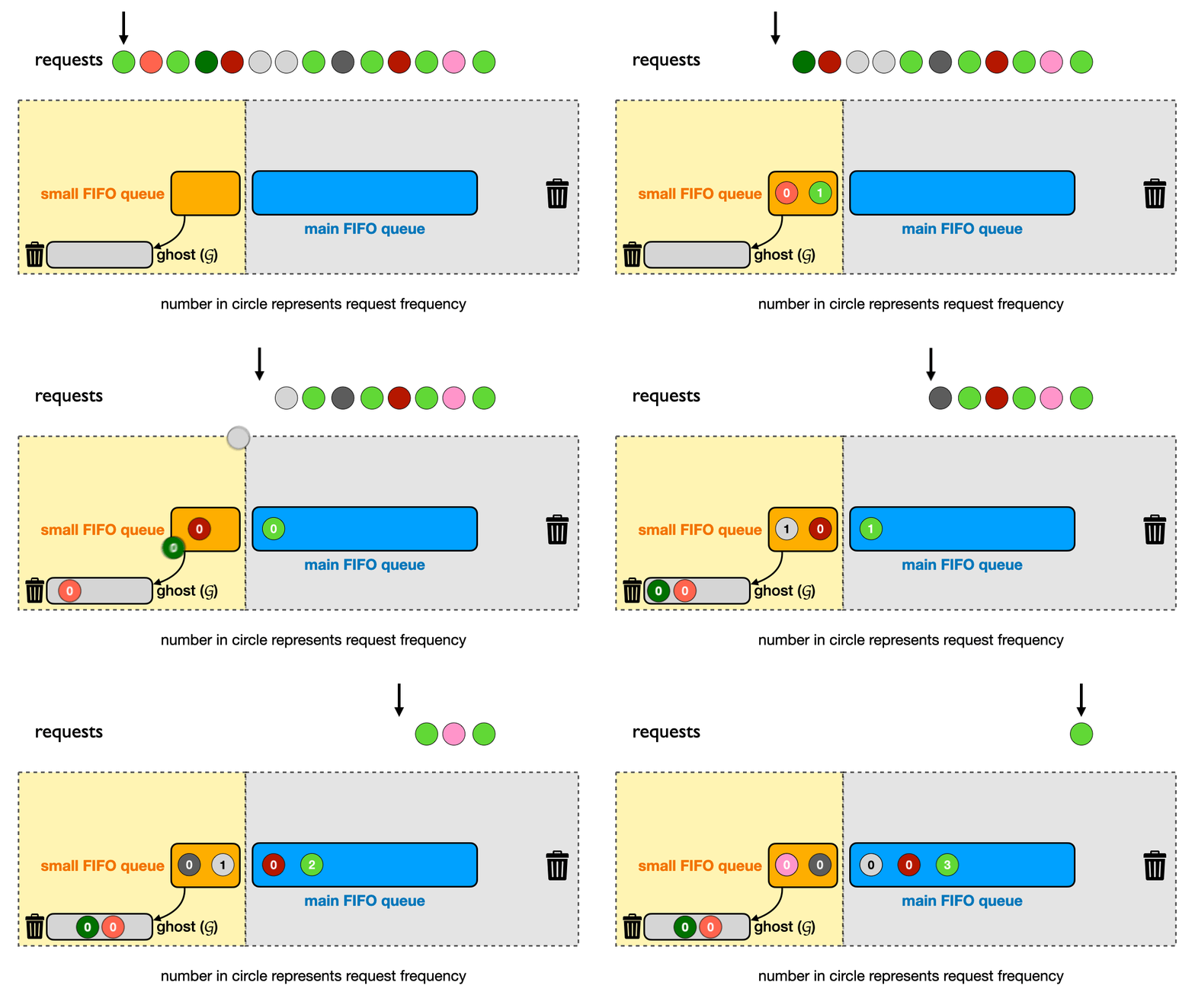
How good is S3-FIFO?
S3-FIFO reduces your LRU cache size by 46% and improves the throughput by 6x
* target miss ratio 10%, 16 threads
How to use
from cachemonCache import S3FIFO

# Create a cache backed by DRAM
cache = S3FIFO(size=10) # or cache=LRU(size=10)

# Add an object to the cache
cache.put("key", "value", ttl=10)

# Get an object from the cache
cache.get("key")
print(value) # Outputs: "value" or None

# Remove an object from the cache
cache.delete("key")

# Check if an object is in the cache
cache.has("key")
print(exists)  # Outputs: False
const { S3FIFO } = require('cachemonCache');

// Create a cache backed by DRAM
const cache = new S3FIFO({ size: 10 });

// Add an object to the cache
cache.put("key", "value", { ttl: 10 });

// Get an object from the cache
const value = cache.get("key");
console.log(value); // Outputs: "value"

// Remove an object from the cache
cache.delete("key");

// Check if an object is in the cache
const exists = cache.has("key");
console.log(exists); // Outputs: false
More languages to come!
Contact us if you're interested
Why does S3-FIFO work?
A huge number of objects accessed once (called one-hit wonders) calling for quick demotion:
S3-FIFO quickly removes objects that will not be accessed in the future
Adoption
Google, VMware, Redpanda, Cloudflare, Risingwave, Deep Graph Library, MatrixOne, and uap-python,
mulitple large open-source libraries, such as otter (Golang), surrealkv (Rust), quick-cache (Rust), spica (Javascript), foyer (Rust),
and many other cache libraries in Golang [1], [2], Python [1], Rust [1], [2], [3], [4], C++ [1], [2], Java [1], [2], Zig [1], Javascript [1].
Discussed in Aleksey's Online Reading Group, UIUC CS525.
Covered in blog [1], [2], [3], [4] in Korean, [5] in Japanese, [6] in Russian, newsletters [1], [2], conference in Korea, [2]
let us know if you would like to be featured here.
Acknowledgement
Sponsors:
Carnegie Mellon University Parallel Data Laboratory Emory University SimBioSys Lab
Meta, Google Cloud, AWS, Microsoft Azure, CloudLab, Sloan Foundation VMware, and NSF
Dataset source:
Twitter, Meta, Tencent, Microsoft, Wikimedia, CloudPhysics
Contact Us