As someone who has been struggling to get side projects off the ground, I'm finding the latest iterations of AI-generated code to be a great help. I read a lot about this topic - especially on the negative side. I'm a software development manager, so it's been a lot of what I hear at work or around the blogs I read. This tool may spell doom for our careers eventually! Maybe. Hopefully not.
But take this from a hobby game dev who, with a full-time job, does not have a ton of time to put into side projects: AI game development has been a pretty fun and interesting ride so far. Color me impressed by what we can do. I got into experimenting with AI development back in July, and indeed, the tools have gotten better even in the span of about six months. Look what I've been able to create in the last 2 weeks!
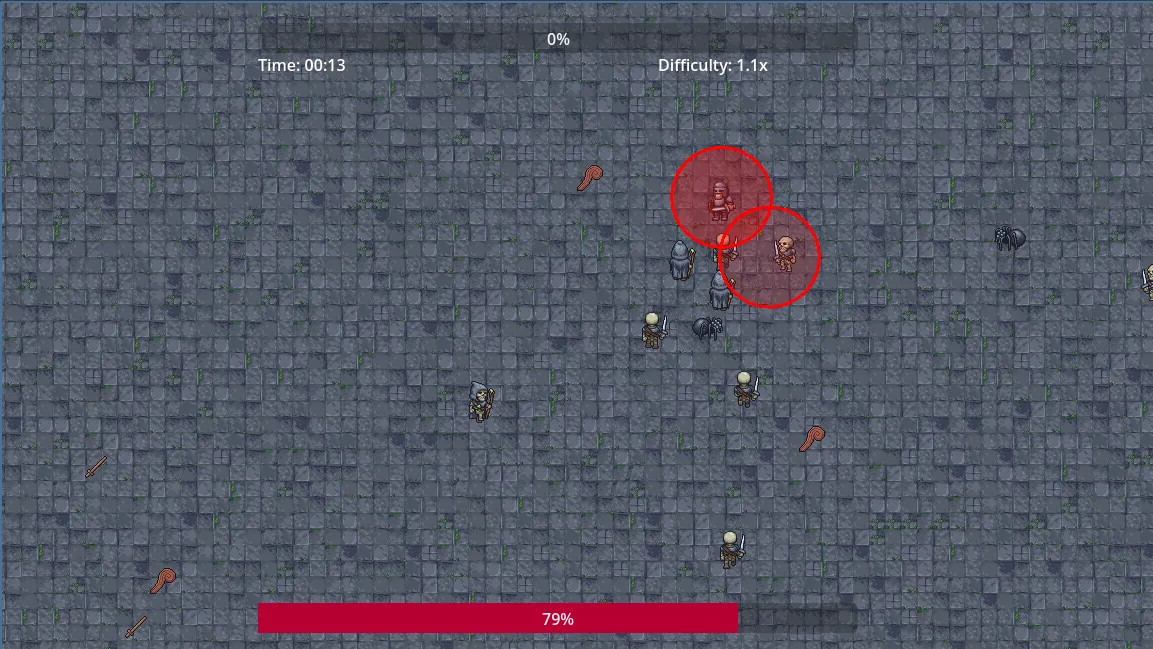
This is a "bullet heaven" game in the vein of Vampire Survivors
When I try to do game dev projects - or really most side projects I take on -I'm usually hit with roadblocks in time and momentum. I get stuck on where to start. I also get stuck on where to take a project past the initial setup phase. AI seems to be helping me across those humps, and I appreciate that for what its worth right now.
The Custom Tutorial
One problem I see many bemoaning with the advent of AI coding is that it takes away much of the learning process. I couldn't agree more. I've already experienced it with a few projects. There is a loop of learning, doing, learning more, and doing more that I think is essential to programming in any space. So, I don't advocate for complete vibe coding just yet. As I get more confident in what I'm writing and what the agent can write then I'll lean on it more, but its not quite there yet.
Since I was starting a new project in Godot, which I haven't used for several years, I thought it was best to stick with a chatbot approach. Like asking it to help outline the project. Then asking it to break down problems into smaller chunks that are easier to understand. Take my initial prompt in Gemini with this game I'm currently working on:
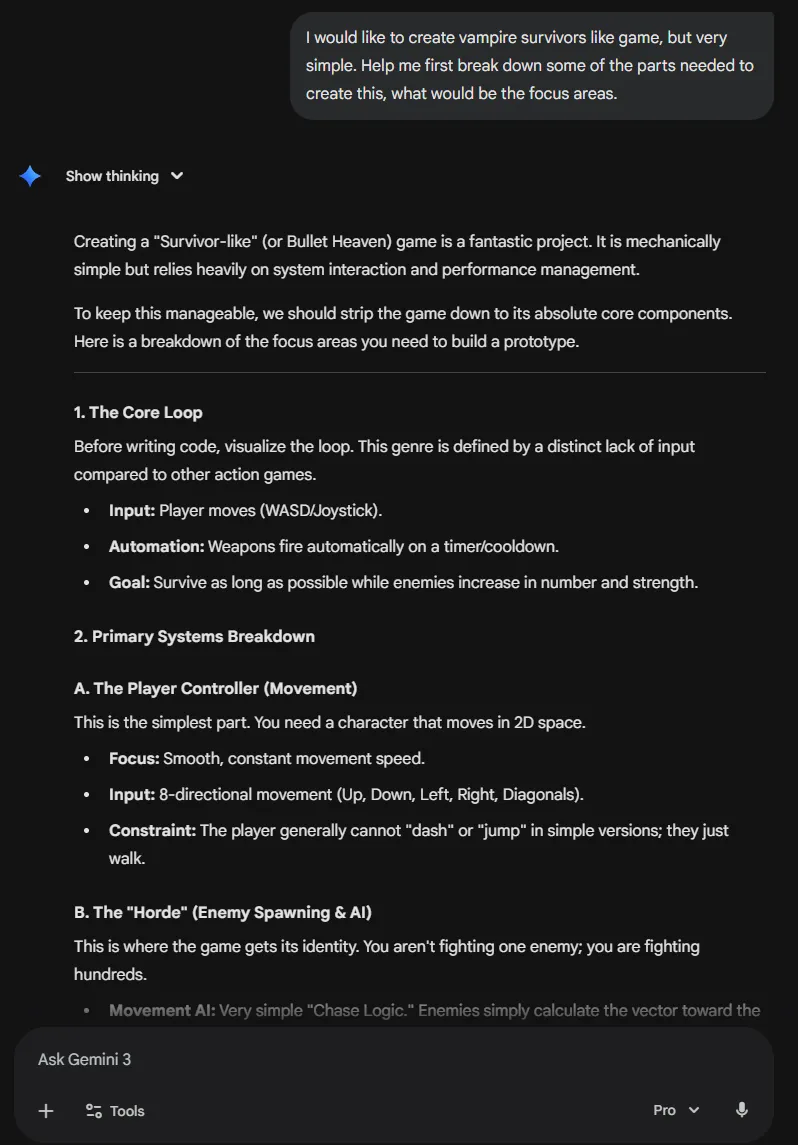
I had done some Godot development years ago and really liked it; I enjoy using it more than Unity or Unreal, which are the more conventional tools in the space, but GDScript just feels a lot more like writing Python to me. So I asked Gemini to get me started in Godot and tell me how to build the specific parts of my game. It gave me a very easy-to-follow tutorial.
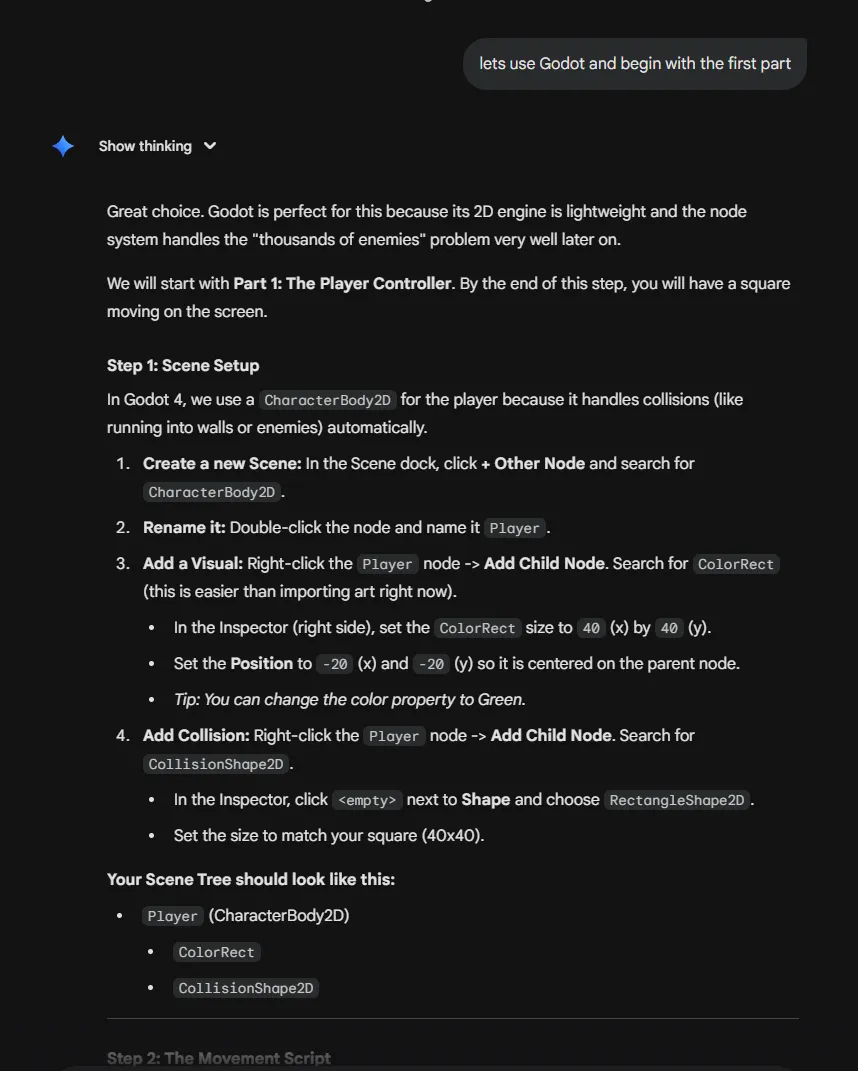
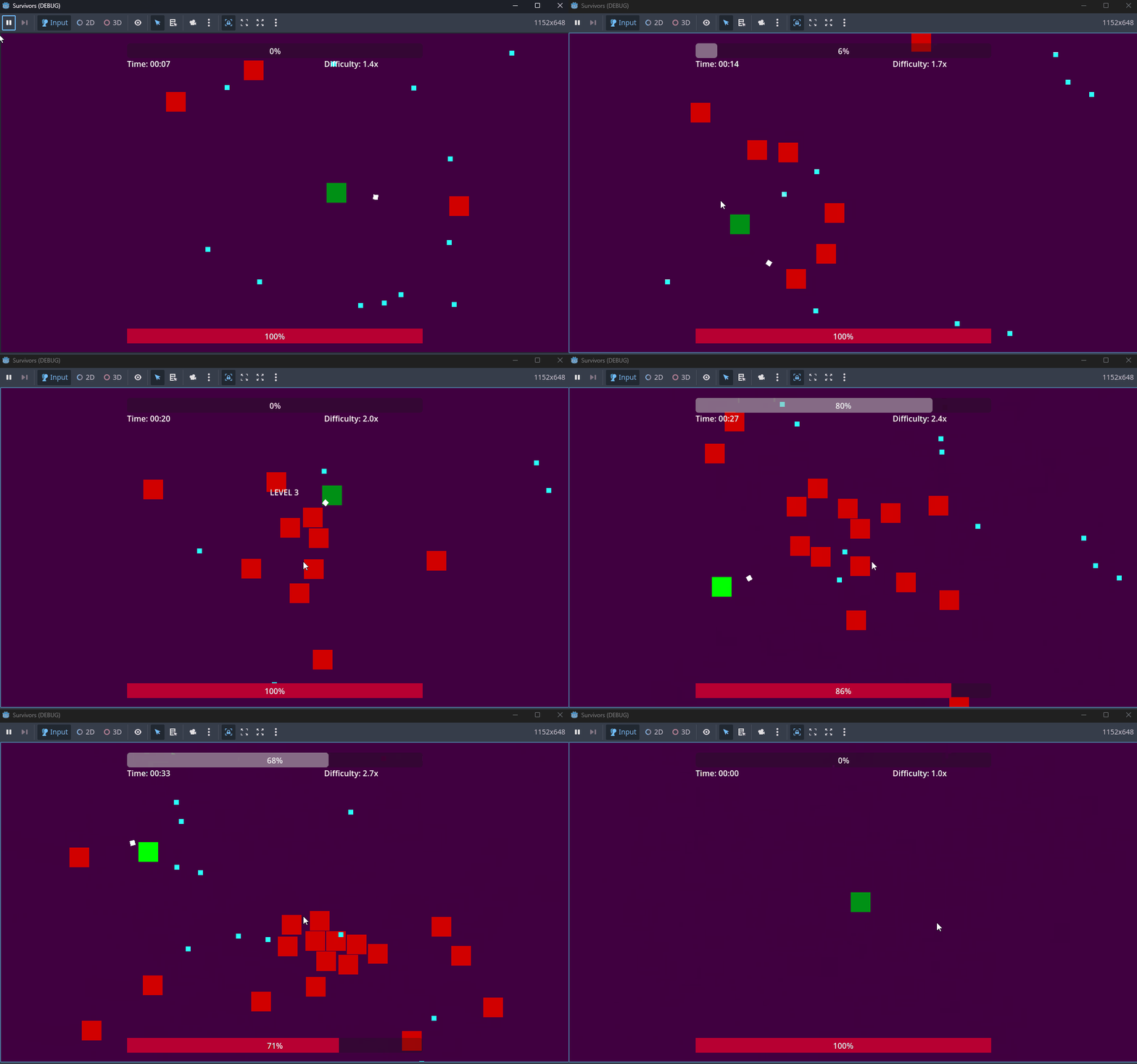
I used this method to get through a lot of the initial game setup. Super helpful. Without it, I probably would've flailed around for a few weeks before giving up. I'd tweak some of the asks along the way, add some more ideas, or ask it to repeat instructions I didn't understand. By the end of that, I got a working bullet heaven prototype!
Agent Power
This stage is the part of game dev where things usually start to slow down. If I have a few people I'm working with I can lean on them to keep the process moving. It becomes all about iteratively adding more and more features to flesh things out. So, this is where I tried out "agentic mode".
I've been impressed with how well agents can code with Godot. Even though a lot of the system is managed with a GUI, every save file is simple text and very readable, so agents were very capable of writing out the nodes involved.
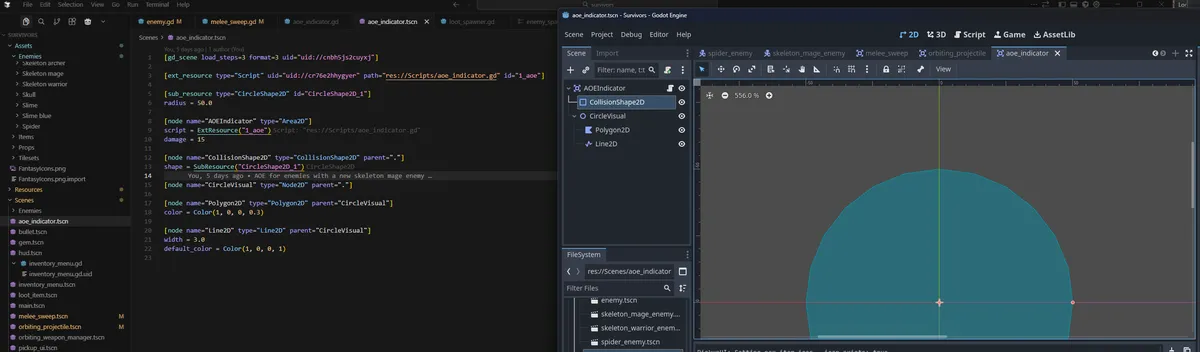
Turns out Godot scenes are very read-and-writeable for AI Agents
I mostly used Cursor's agent, and it is impressive what it can do with simple prompts. I used "create a simple inventory system" and "create a spinning weapon" as just a couple of examples, and it was able to create working prototypes immediately.
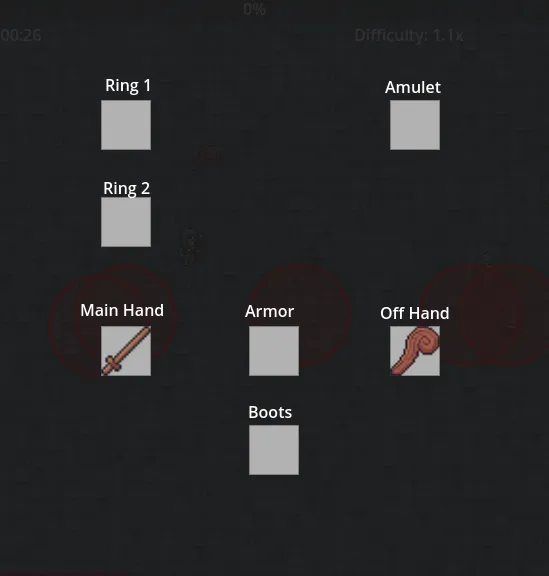
An inventory system created mostly by the Cursor agent
However, "steering docs" (custom instructions) are very important. The agent tends to use its own style and can be a little verbose with the output. I'd prefer solutions with a little more DRY code upfront. But they also say - at least in game dev - that you should focus more on getting the features done and iterating quickly, so maybe this isn't a bad approach. Another thing that annoyed me early on was that Cursor preferred to create all of its nodes within the scripts instead of in the GUI, so I had to write my steering docs to try to keep it away from that style.
This is definitely where things can get dicey learning-wise. If you let the agent take the steering wheel fully, you get into that "losing competency" spiral we talked about earlier: trusting the agent to do too much of the work. The sweet spot is having the agent build out areas that you've already pretty much outlined, then letting it flesh them out more in a way you probably would have done yourself.
When it takes on entirely new systems, it's not that the output is bad; it's that I don't always understand what it did very well. That hampers success down the road when I need to expand on it.
The Verdict
And so far I would say working with AI on these projects has really restored my confidence in doing game dev side projects again. If you are stuck on a side project, I recommend using the tutorial approach for a bit just to get out of the gate. Use the Chatbot to learn what you don't know, then use the Agent to speed up what you do know.