It was the summer of 2017. My husband and I had tagged along on my sister and brother-in-law’s honeymoon, driving near Shiraz, Iran, on one of those dog days when you see shimmering water on hot roads — inferior mirage! Until the optical illusion gave way to the ice-cold reality of intercity police, pulling us over, claiming the car had been flagged for bad hijabi or improper hijab. They said cameras had detected an incident of bad hijabi in Mazandaran, a province nearly 1,000 kilometers from Shiraz, dated to my sister’s wedding day.
Almost nine years forward, 11,000 kilometers farther, I’m sitting in Santa Cruz, California, reading that Ali Khamenei has been killed. Iran’s supreme leader, dead from the bombing of Beyt-e Rahbari, his official residence.
Media has written a lot about the role of AI in the ongoing Israel/USA war against Iran, from Claude being used for U.S. military intelligence purposes, including target selection and battlefield simulations, to Iran’s strikes knocking Amazon Web Services data centers in the UAE and Bahrain offline, exposing how the Gulf’s trillions dollars AI investment was built on security frameworks designed for supply chain control, not actual war. The Islamic Republic also weaponized AI-generated disinformation during the January 2026 uprising, claiming that protest footage was fabricated by AI, using the very existence of deepfake technology to cast doubt on authentic documentation of regime violence, sowing doubt and divisions among people.
But what caught my attention was a Financial Times article disrobing the way the Israelis could actually kill Khamenei. According to the article, Israeli intelligence had hacked into nearly all of Tehran’s traffic cameras. The footage was encrypted and routed to servers in Tel Aviv and southern Israel. The data fed into AI-powered algorithms that built what intelligence officials call “pattern of life” profiles: addresses, bodyguards’ duty schedules, travel routes, protection assignments.
Because besides the personal anecdote I told you about at the beginning of this post, in 2021 I conducted research on the digitization of public spaces in Iran and how technologies such as traffic cameras, facial recognition systems, biking apps, metro cards’ purchase stations, and centralized digital identity databases became tools of suppression: enforcing mandatory hijab, chilling freedom of assembly and freedom of movement, penalizing religious minorities, and restricting refugees’ economic and social rights.
You see how the tools used as a system of oppression become a fragility for the oppressor?
According to an Amnesty International report published in July 2023, in the aftermath of Women, Life, Freedom protests, police repeatedly sent warning messages to women captured without headscarf in their cars warning that their vehicles could be confiscated.
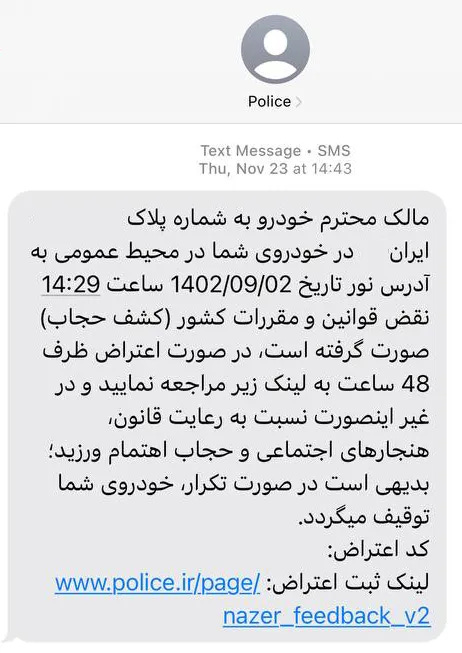
Countless examples of such messages have been shared by Iranian social media users, but it also looks like the regime wanted people to know they were being watched — that the visibility of surveillance systems itself was a signal of power. Here are more examples of such surveillance systems:
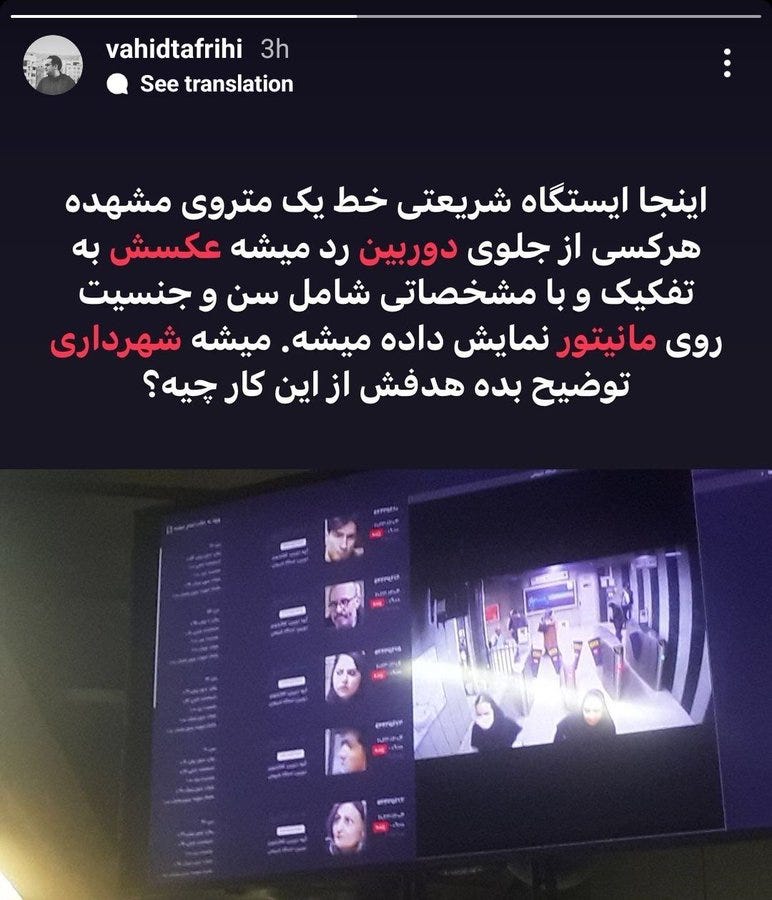
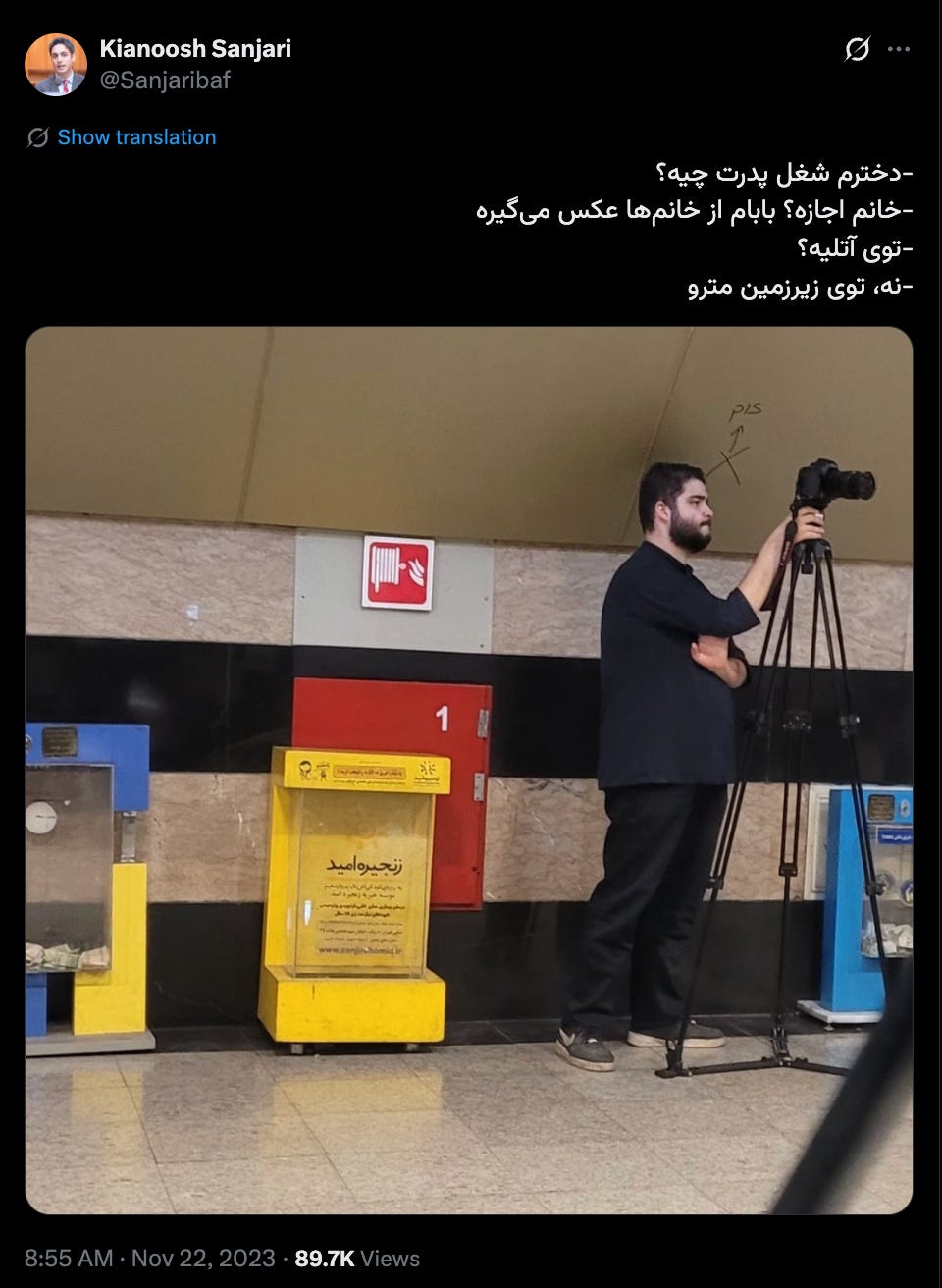
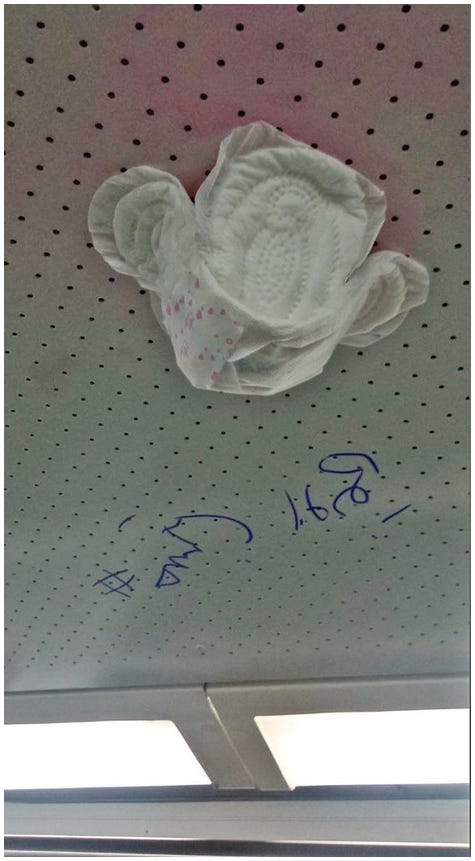
Beyond sharing on social media platforms, Iranians also showed acts of resistance to cameras by other means. In one of the most symbolic acts of defiance, women placed menstrual pads over surveillance cameras, turning an instrument of bodily control into a surface for bodily protest. Azadeh Akbari’s work on “The Birth of Code/Body” captures this dynamic.
Others went further, physically destroying cameras during protests in January 2026.
The cameras that had surveilled women for showing their hair, that had tracked protesters through city streets, that had sent threatening text messages to millions, those same cameras led the strike team to Khamenei’s door.
Sitting in Santa Cruz, while we just scored a success on another surveillance camera front (the Get the Flock Out campaign), and watching scarily as this war unfolds — who knows how many innocent lives it will take — I keep coming back to that roadside stop near Shiraz in 2017. A camera saw my family. The state reached out and touched us. Nine years later, a camera saw Khamenei’s bodyguards parking their cars, and the state that had deployed that camera paid the ultimate price.
If the human rights argument alone doesn’t convince the states to stop deploying surveillance systems and policing behavior, Iran’s case can be a lesson to them that the fragility of oppressive systems eventually comes back for the oppressor itself.
And I thought perhaps Khamenei wouldn’t have minded if one of the protesters had broken one of the cameras on Pasteur Street — where the key footage and analysis of his compound came from — or put a menstrual pad on it, or kicked it, smashed it, thrown things at it and broke it into pieces. In fact, he probably would have been very thankful to that very protester.
So, on behalf of the brave Iranian protesters whose lives you have taken throughout your years of tyranny, I would say: you’re welcome, Mr. Supreme Leader. Enjoy hell.