
Scopus is the world’s largest database of abstracts and citations, and calls itself “comprehensive,” “curated,” and “enriched.” But my recent experience with it suggests its curation could use some work.
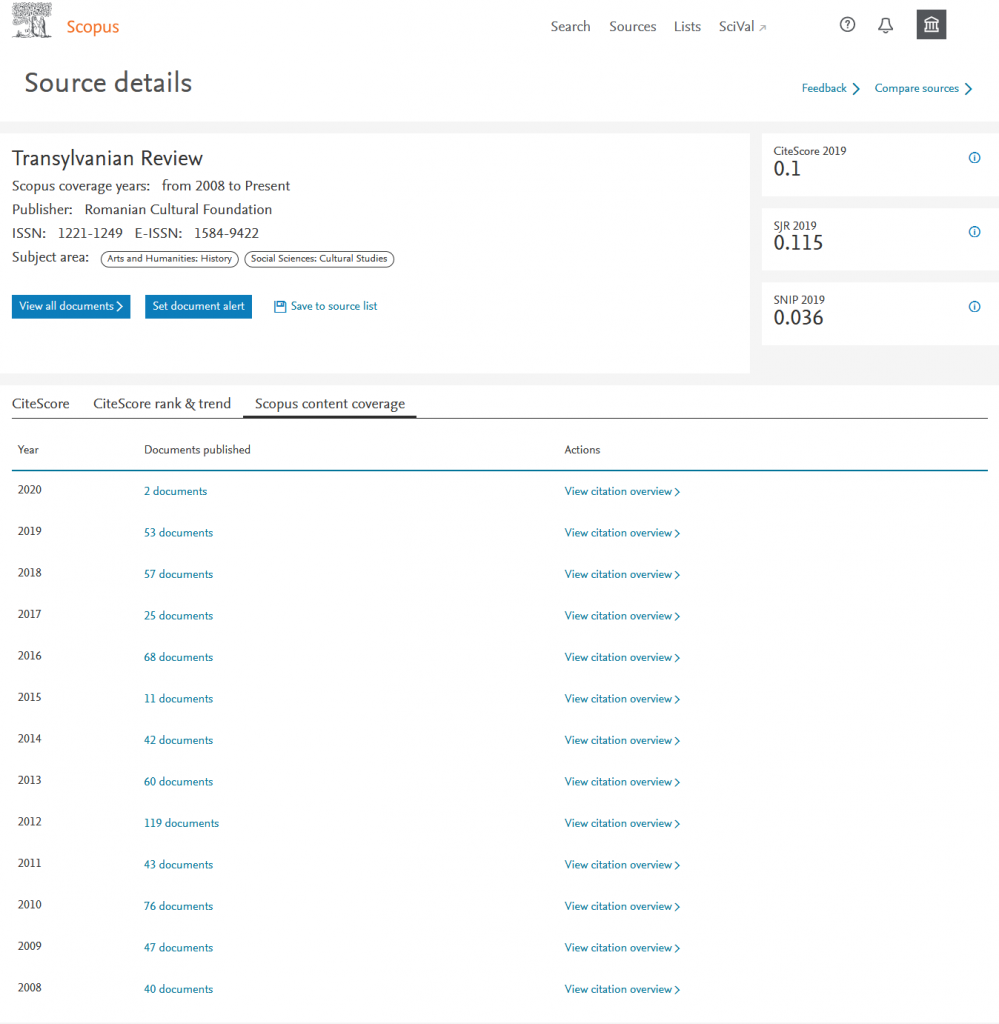
In October 2019, I discovered that the Scopus profile of the journal Transylvanian Review contained numerous faked articles. How did I know? A few years ago, a legitimate Scopus indexed journal, Transylvanian Review, was hijacked and listed on the well-known — but controversial — Beall’s List of predatory and unscrupulous publishers.
Many of these articles appeared on the cloned website and were authored by Iraqi researchers.
I decided to contact the Scopus support team to draw their attention on this matter. Praveena S, Content Service Desk, responded as follows:
I would like to thank you for the time in the investigation about the journal: “Transylvanian Review ” ISSN: 1221-1249E and providing us with a lot of details about its quality. As you aware that the journal is selected for the coverage in Scopus, but it has not made available online yet.
I can understand that you have been contacting us with your own interest and value towards the Scopus for its quality, so that I have requested the content selection board to re-evaluate the quality of the journal.
This Re-evaluation process will happen shortly and if they are found to be poor, the Scopus would surely discontinue the agreement. Also I have provided your contact details and if they require any update from your side, they may be contacting you.
I also contacted the publisher, Romanian Cultural Foundation, about this matter, but have had no response.
By July 2020, nothing had happened. That meant the CiteScore 2019 and earlier values for the journal were improperly calculated, as the faked articles were taken into account. I decided to contact Tracy Chen, the Scopus product manager, to follow up. She responded as follows:
Thank you for your feedbacks. I learnt from our colleagues this ticket was resolved and all content from the unauthentic sources have been removed. Will double check internally.
After 12 days, she wrote:
Thank you again for your feedbacks on unauthentic contents indexed in Scopus. We have processed the mentioned title and currently indexed content should come from the authentic website.
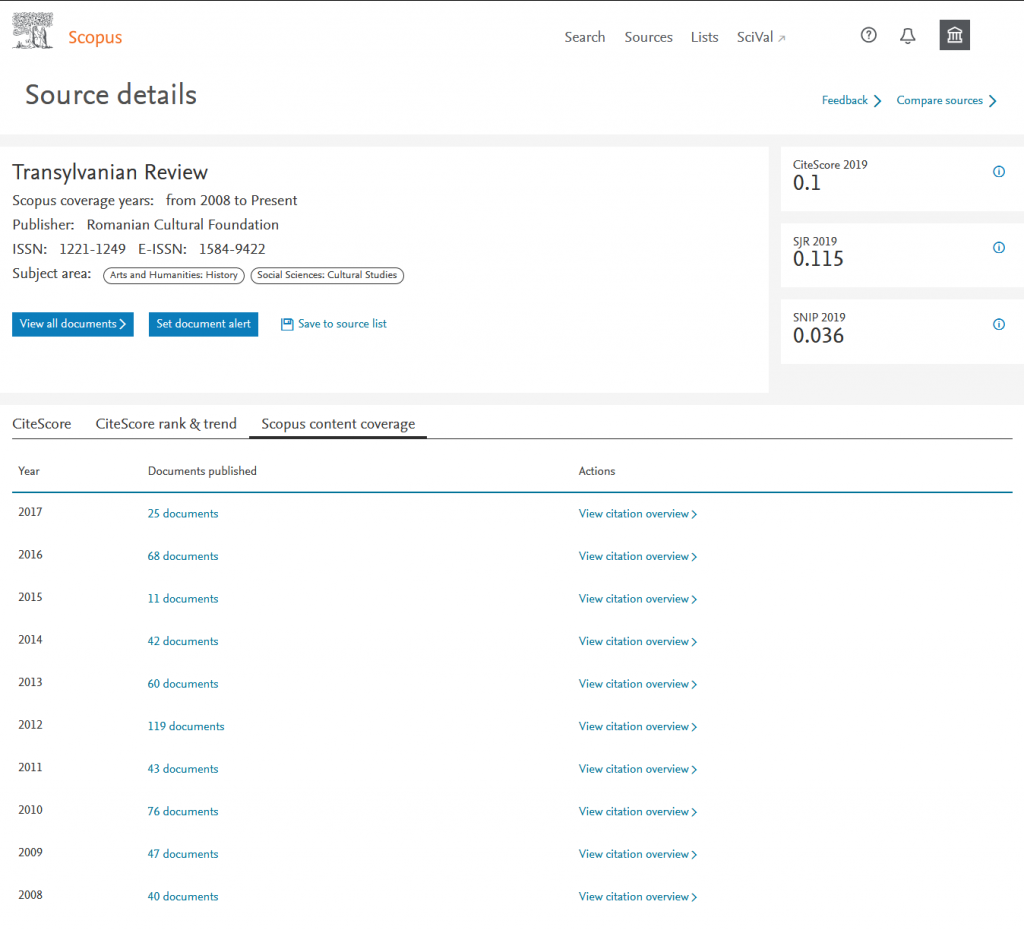
Meanwhile, I noticed that 112 articles published from 2018 to 2020 were removed from Scopus. A few days later, I discovered that a new faked article had been added to the database:
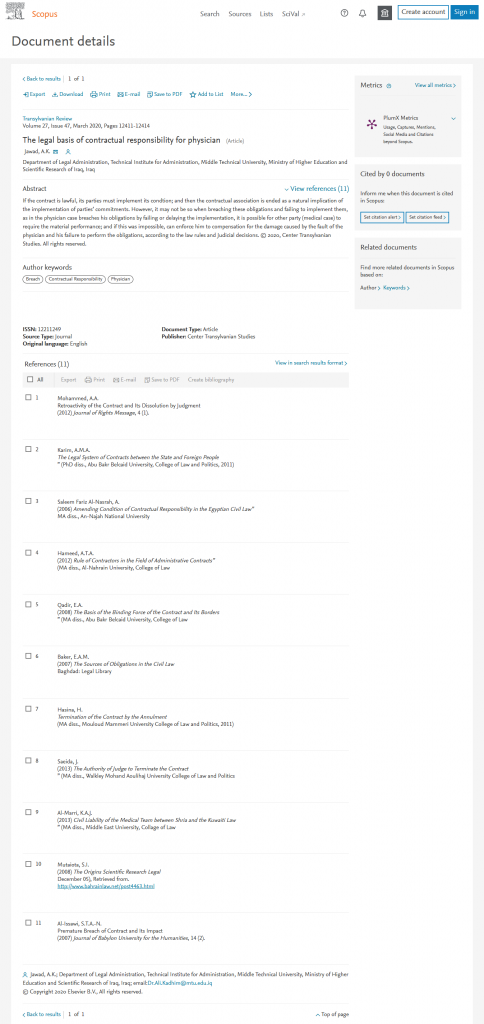
I contacted Chen again. This time, she wrote:
Thank you for your feedbacks. Really sorry for the slip. My colleagues will make sure this unauthentic paper will be removed.
The article was removed a few days later, but the database still contains many fake articles from this journal published in 2017 and earlier. It seems that Scopus managers are removing the contents of specific years rather than checking the indexed articles one by one.
It’s hard to believe that anyone can add faked content to the Scopus database so easily. I would urge Elsevier to reconsider this process, to ensure its reliability. Otherwise, it’s likely that we will see many such unfortunate cases in the future.
Mohammed O. Al-Amr is a lecturer in the department of mathematics in the College of Computer Sciences and Mathematics at the University of Mosul in Iraq.
Like Retraction Watch? You can make a tax-deductible contribution to support our work, follow us on Twitter, like us on Facebook, add us to your RSS reader, or subscribe to our daily digest. If you find a retraction that’s not in our database, you can let us know here. For comments or feedback, email us at [email protected].