On a warm night last May, Nikhil Somwanshi sent his roommate a WhatsApp message asking him to tell his family that what was about to happen next was an accident.
The message triggered a frantic search for the 24-year-old machine-learning engineer in southeast Bengaluru, the city of 13 million known as India’s Silicon Valley.
Somwanshi was a star student from a small village in the farm-dotted countryside. Nine months prior, he’d landed a coveted job at OlaiOlaOla is a transportation company, founded in 2010 by Bhavish Agarwal, which offers ride-hailing services and sells electric scooters.READ MORE Krutrim, an artificial intelligence startup worth $1 billion. He was among the ranks of India’s globally renowned tech industry, which is estimated to be worth around $280 billion and employs more than 5 million people. The industry runs the spectrum from top-end firms like Krutrim to massive consulting and outsourcing companies.
Getting a job at Krutrim was a big deal for Somwanshi and his community. Banners went up in his village, congratulating him. He sent funds from his first paycheck to his parents, who built a small temple on their land in gratitude for their son’s good fortune. His salary of 3.7 million rupees ($41,000) was nearly 10 times what his family earned from farming.
But something has gone awry in the industry Somwanshi was entering. Eighty-three percent of India’s tech workers suffer from burnout, according to one recent survey. One in four clocks over 70 hours a week. In Karnataka state, home to Bengaluru, tech workers account for a starkly disproportionate 20% of patients seeking transplants due to organ failure, according to a leading regional newspaper. A study of tech employees in the IT hub of Hyderabad found that 84% had a liver disease linked to long hours of sedentary work and high stress.
Some of India’s tech leaders, meanwhile, are advocating 70-hour and even 90-hour workweeks, instead of the national legal maximum of 48.
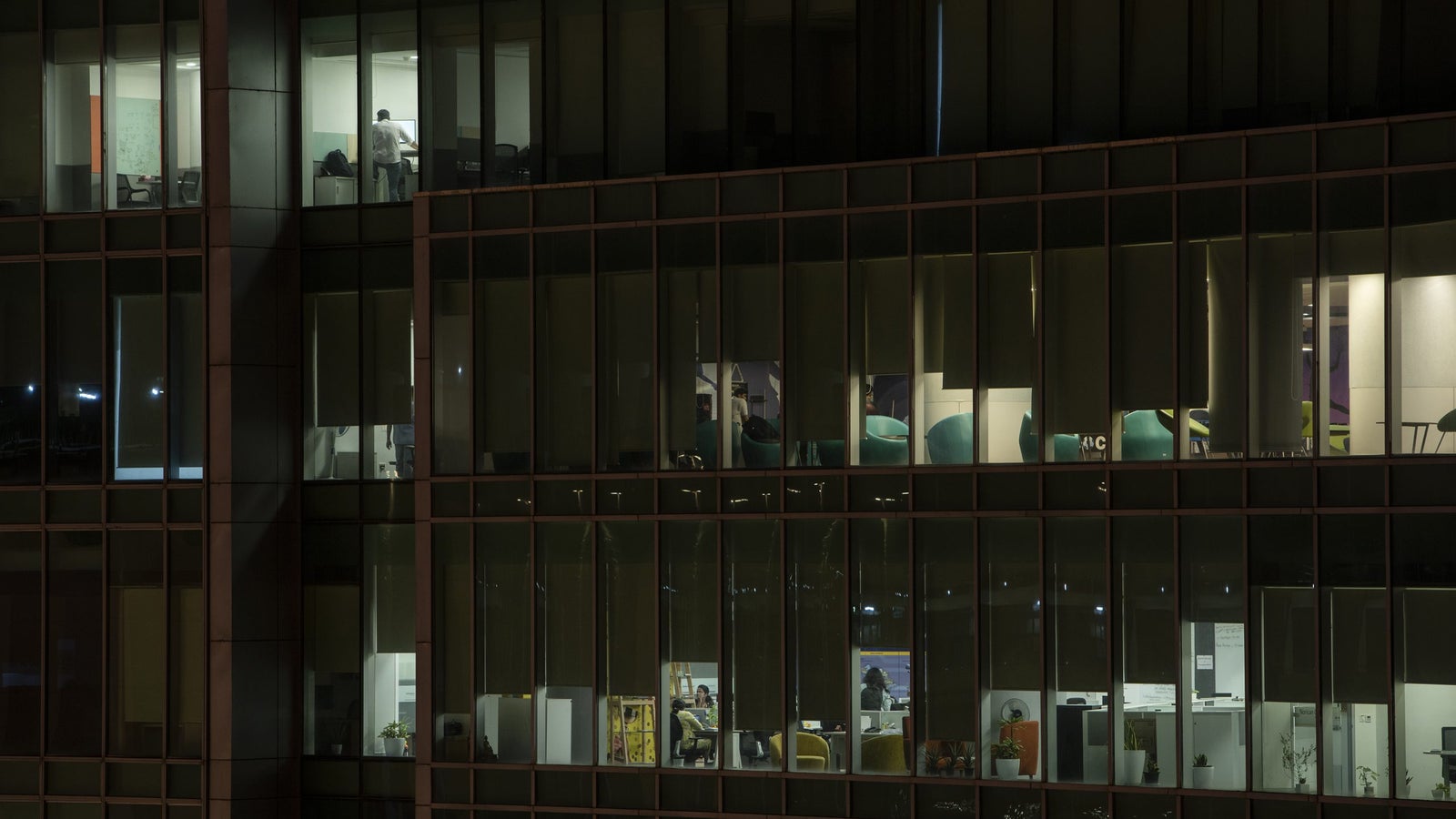
Tech workers paint a picture of mounting anxiety. From junior software engineers to senior project managers, workers at firms across the industry told Rest of World they were buckling under the burden of deadlines. They had little time for themselves or their families, and worried about layoffs. Most said they feared conditions would only worsen with the rise of AI.
The fate of India’s tech workers may foreshadow the future of a global workforce reckoning with the advent of AI. For decades, the country’s massive pool of outsourced tech workers have helped power global tech giants — the U.S. accounts for 62% of India’s IT outsourcing revenue. As employees worry that AI will threaten their jobs and demands for efficiency rise, an industry long known for 24/7 schedules and intense workloads is reaching a breaking point.
Employees and union leaders point to a series of suicides among tech workers as further evidence of a workforce in distress. Suicides are linked to multiple factors and can’t be traced to a single cause — but the cases have added to the sense of crisis within the industry.
A Rest of World analysis of local news articles found 227 reported cases of suicides among Indian tech workers between 2017 and 2025. The reported deaths include a 48-year-old manager at a software company in Chennai who jumped to his death from his office building, which police later said was due to work pressure, and a 36-year-old IT worker who dove into a riverbed in Pune, prompting his sister to file a police complaint against his employer. A 38-year-old software engineer electrocuted himself to death after reportedly complaining of “depression due to work pressure.” In April, a 23-year-old computer engineer at a product development company in Kerala reportedly sent a video message to his mother, saying he could no longer deal with the stress of his job, then jumped from his apartment building. His passing, a local tech union said, “reflects a deeply rooted problem in the corporate culture of the IT sector.”
Our reality is very harsh. We are locked in the glass door, suppressing on a daily basis.”
A staffer at a major outsourcing firm told Rest of World that employees were losing jobs thanks to AI. She regularly works unpaid overtime to keep up with demands. A woman in her mid-20s, she described being questioned about her commitment to the role and potential plans to start a family — while also expressing remorse over her own treatment of team members. An IT worker in an adjacent office tower had recently died by suicide. “These are all very scary things happening in front of my eyes,” she said. “Our reality is very harsh. We are locked in the glass door, suppressing on a daily basis.”
India has long struggled with suicides, especially in its declining agrarian class. In 2022, according to the most current government data, the country marked its highest-ever recorded suicide rate of 12.4 per 100,000 people. (The global rate is 9.2.) Sanjeev Jain, a professor of psychiatry at the National Institute of Mental Health and Neurosciences in Bengaluru, told Rest of World that suicides have traditionally been linked to cases of extreme poverty in India. But they are expanding, he said, within a professional class that feels they “increasingly have precarious jobs.” This is magnified, said Jain, for white-collar employees from poorer backgrounds who count on their jobs for economic mobility.
-

Nikhil Somwanshi’s name on the honors board at his high school. -
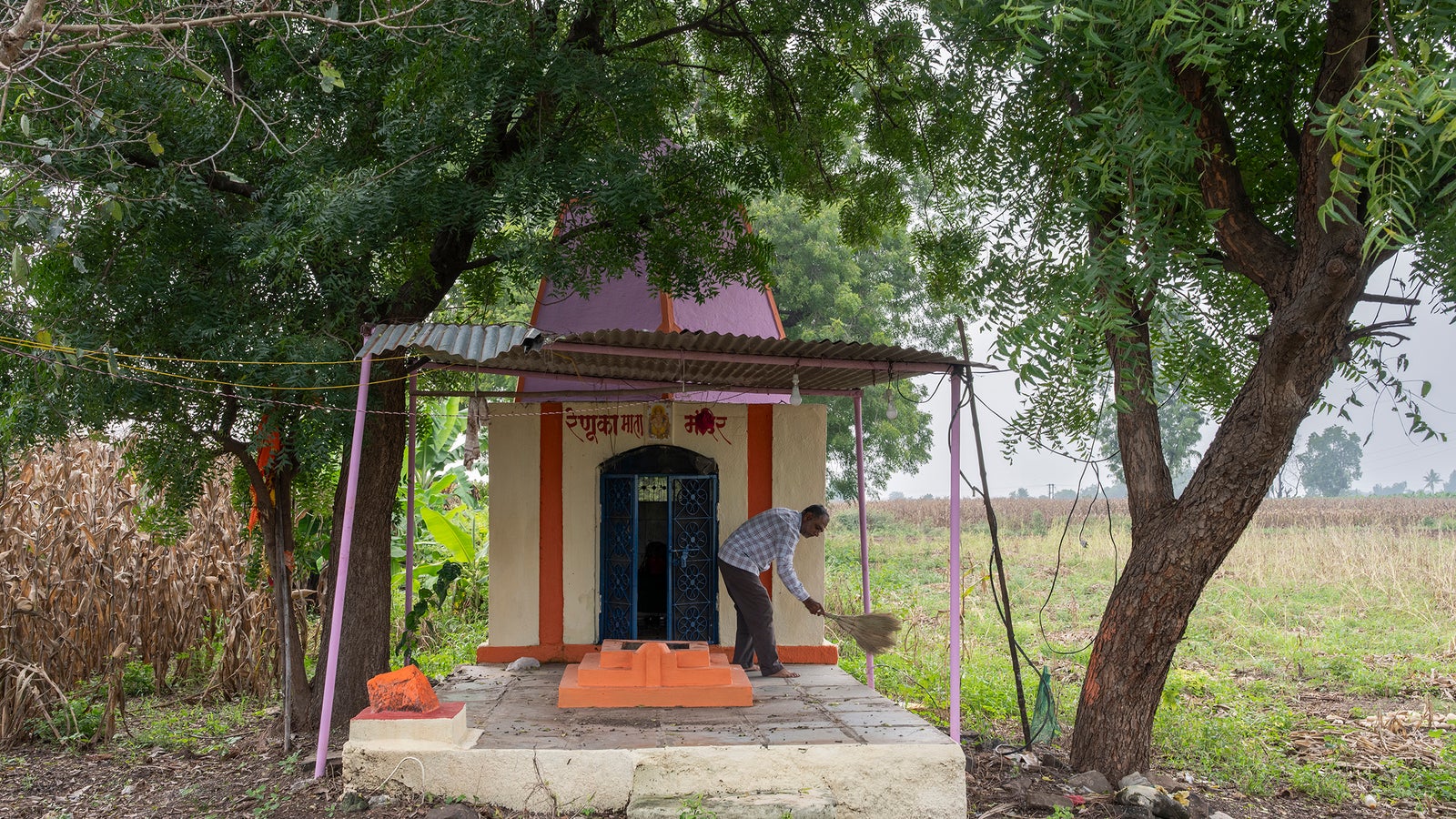
Kailash Somwanshi, Nikhil’s uncle, at the family temple funded by his Krutrim salary. Sameer Raichur for Rest of World
India’s government data on suicides isn’t categorized by profession. Whether the suicide rate is higher among IT workers is hard to tell, said Jayanta Mukhopadhyay, a senior professor of computer science and engineering at IIT Kharagpur, the first of the country’s prestigious technology institutes. But he called the mental health situation among tech workers “very alarming” — and the suicides “a reflection” of the state of the industry.
Mukhopadhyay stays in touch with former students in the sector and has noticed a change since the Covid-19 pandemic, when an already intense work culture went into overdrive. The rise of working from home saw professional boundaries blur further into workers’ personal lives. Job insecurity has since worsened with AI, he said, with lower-level tasks easily automated away. This disruption comes amid a labor surplus: According to one 2024 report, only 10% of India’s 1.5 million engineering graduates that year were likely to secure a job. Tech workers are facing “a huge uncertainty about their jobs,” Mukhopadhyay said. “And they are very stressed.”
After starting the Krutrim job, Somwanshi soon found himself working 15 hours a day, according to Sachin Somwanshi, his cousin. He told his family he doubted he’d even make it home for Diwali, a widely celebrated holiday when many Indian families typically come together. The job, Sachin said, “broke his spirit.”
By last May, Somwanshi had taken leave from work. His call logs showed unanswered phone calls from his boss and human resources, members of his family said. On the night he sent the WhatsApp message to his roommate, security footage showed him pacing his Bengaluru apartment complex, according to family members who later viewed the video. Then he headed toward a nearby lake, where the police would eventually find his body.
In 2025, the U.S. tech sector announced 150,000 job cuts — the sharpest loss in the economy. Meanwhile, hiring dropped: In July 2025, tech job postings in the U.S. were down 36% compared with early 2020. The American tech slump reflected a global trend: Around the world, tech giants including Intel, Microsoft, and Meta laid off tens of thousands last year.
Some of the turmoil in the global industry is likely a correction from the pandemic-era tech boom, Fabian Stephany, a University of Oxford scholar who studies AI and labor markets, told Rest of World. But AI disruption could also be contributing, he said, with entry-level roles in coding likely the most vulnerable, though he stressed that it’s still early to assess AI’s effects.
In August, researchers at Stanford University released a landmark study that analyzed the payroll data of millions of Americans. It found a “13% relative decline in employment for early-career workers in the most AI-exposed jobs,” such as software engineering and customer service. A month later, data from the U.S. Bureau of Labor Statistics largely supported that analysis, prompting one economist to tell Fortune that “AI is automating away tech jobs.”
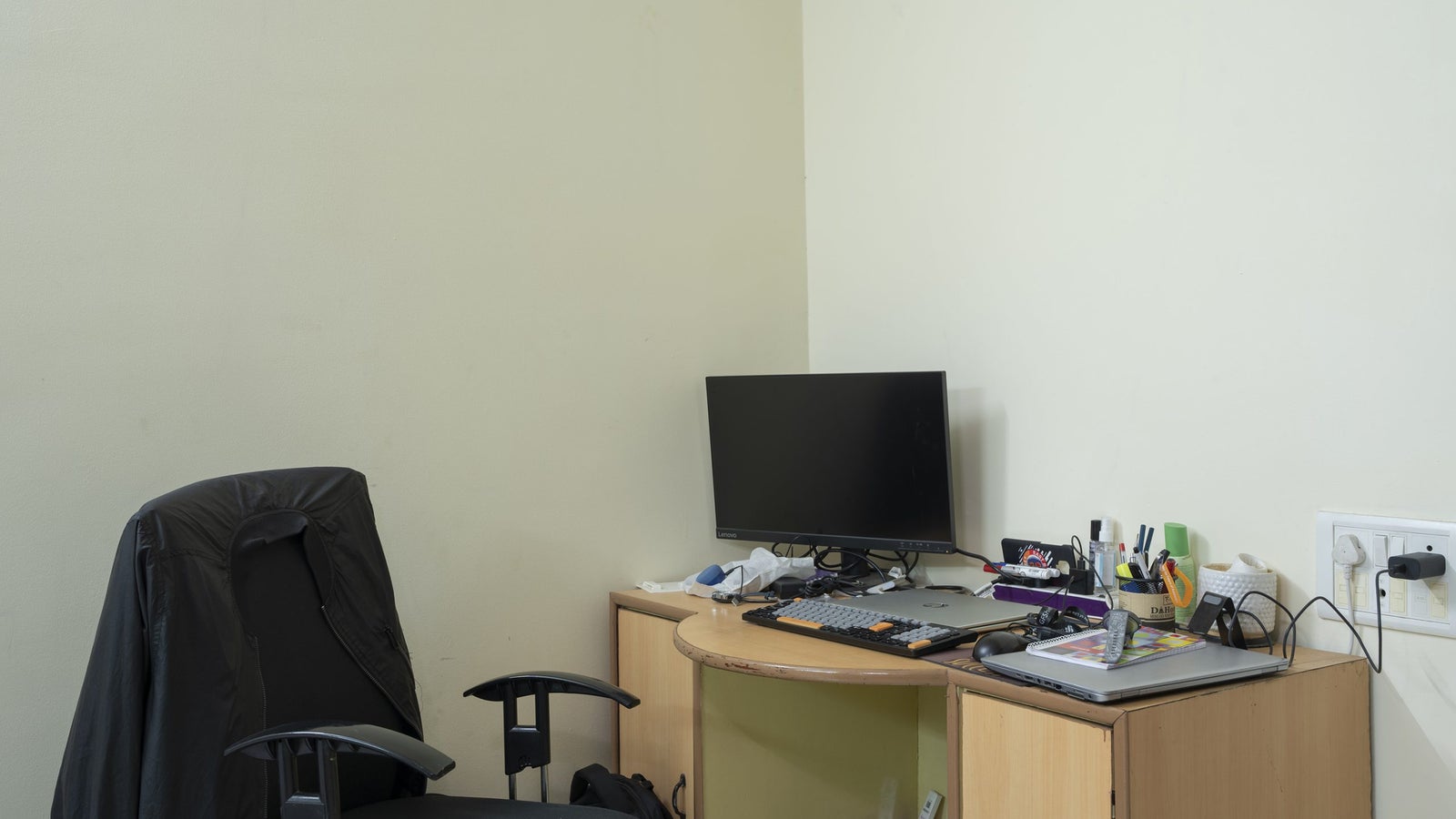
India’s IT industry is particularly vulnerable to AI disruption, experts told Rest of World. While the industry’s product-development sector is growing, its backbone remains outsourcing: providing cost-effective services via highly educated workers. U.S. firms have long brought down costs by using outsourced Indian workers to fill roles such as data analysts and entry-level programmers.
Many of those jobs are now being replaced by AI, and workers fear that mid-level project managers and maintenance engineers who fix bugs and make minor upgrades could be next. “The traditional consulting role in the service industry is going to be impacted much, much more than traditional product-development companies,” Aditya Vashistha, who leads the Global AI Initiative at Cornell University, told Rest of World. That makes India more vulnerable, he said.
[My] mind is always online.”
This would add to a longstanding labor surplus in India’s tech sector — which only promises to worsen since U.S. President Donald Trump has hiked the price of H-1B visas for American employers seeking to bring in Indian talent. Maheshwer Peri, a career counselling expert and the founder of edtech company Careers360, recently conducted a study of India’s top five IT firms. It found that entry-level salaries had increased by less than 10% over the previous 15 years, while costs of education, food, and housing rose exponentially. It is a matter of demand and supply, Peri told Rest of World: The number of students at Indian engineering colleges is continuously increasing, but there are fewer and fewer tech jobs.
In the fall of 2025, IT behemoth Tata Consultancy Services, widely considered to be India’s largest private-sector employer, cut nearly 20,000 jobs in its biggest ever layoffs as part of an AI-driven overhaul. Several other outsourcing companies followed suit, also citing AI realignment. Various startups, including Krutrim, cited AI disruption as they laid off more than 6,000 employees in 2025.
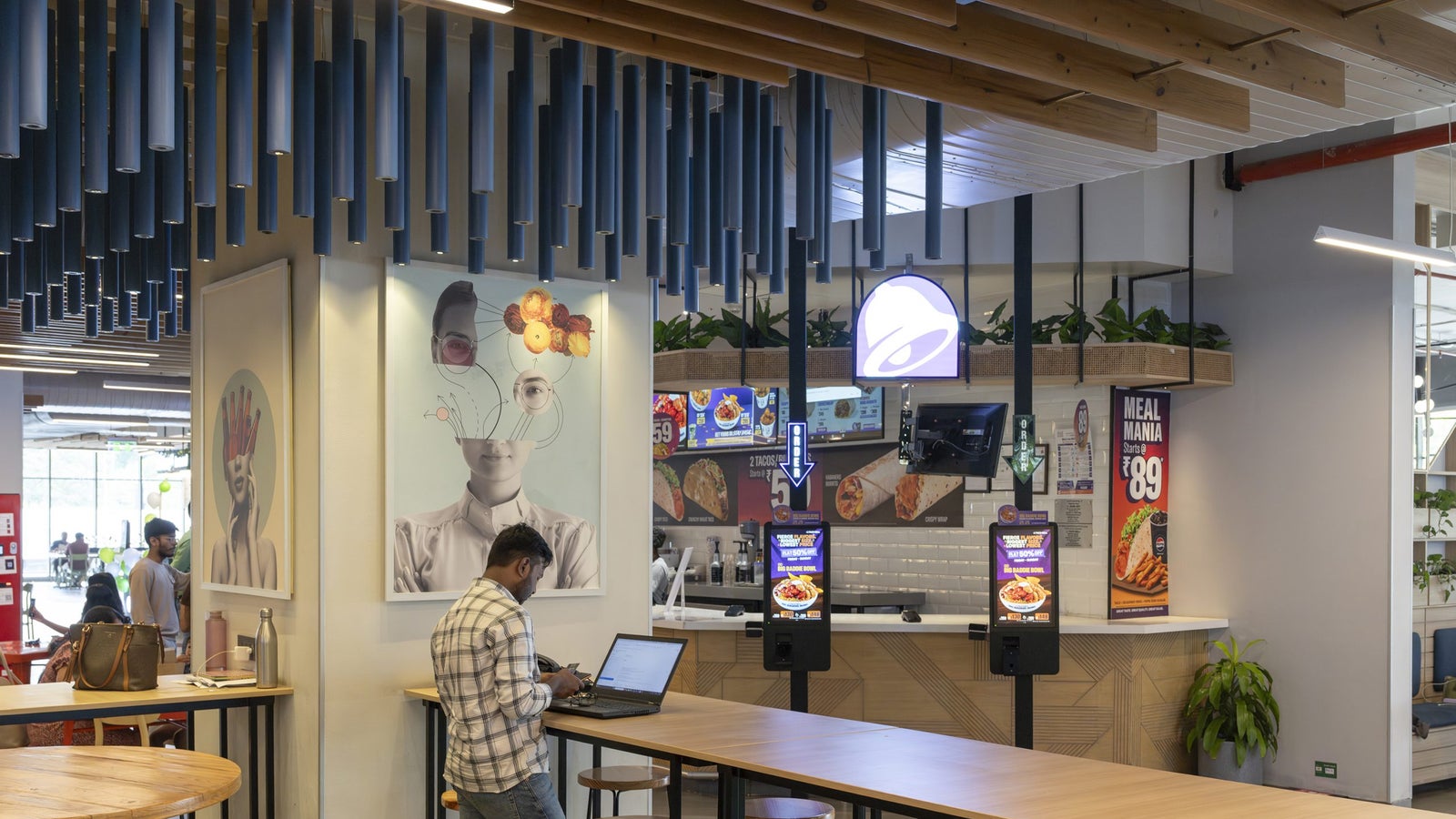
“With artificial intelligence, the industry is getting a new challenge,” VJK Nair, a veteran organizer who leads the top tech union in Bengaluru, told Rest of World. “[Tech companies] want to keep up the rate of profit while retrenching so many people. The remaining workers are put under extraordinary mental pressure to innovate.” Employees, he said, are reluctant to push for better conditions amid the jobs crunch: “They feel trapped.”
A software engineer working for the Indian arm of a major U.S. tech company — a dream job for many — said employees were being pushed to use AI to increase their productivity. Though he felt his job was senior enough to be safe from AI replacement, his ultimate goal of migrating to the U.S. on an H-1B visa felt more distant than ever. “They are trying not to bring any person from India [to the U.S.],” he said, speaking on condition of anonymity to protect his job.
A 22-year-old data analyst at an AI-focused startup in southern India told Rest of World her U.S.-headquartered firm was already using the AI tools she expected would replace her. But the company still needs her because the AI often makes mistakes, she said, requesting anonymity to avoid retribution. She expects her job to be in danger in two to three years’ time. In the meantime, she regularly works more than 12 hours a day. Employees who complain about unpaid overtime are told they could simply resign, she said, so she doesn’t speak up when her seniors ask her to keep working late from home: “[My] mind is always online.”
Somwanshi was born in a small village in western India in June 2000. Education was important to the family, and his parents sold their house and a portion of their farmland to pay for his and his sister’s tuition. The village didn’t have a high school with English instruction, so his father drove him on the back of his motorbike to a school that did, 40 minutes each way.
Somwanshi grew into an unassuming and bespectacled young man with a neatly shaped beard and mustache. Thanks to his diligent studies, after completing his engineering degree, he enrolled in the Indian Institute of Science in Bengaluru, one of the country’s top universities, to pursue his master’s in the fall of 2022. His thesis project included developing a chatbot in local Indian languages, which was funded by the Gates Foundation. Shortly after graduation, he landed a job at Krutrim.
His parents were overjoyed. “We were so proud when he got the job,” his father, Chotu Somwanshi, told Rest of World. “We thought all of our hard work had come to fruition, and that he would do what we were not able to do.”
-

Amol Patil, Somwanshi’s childhood friend, looks at old photos of him. -

A photo of Somwanshi (third from left) with friends from high school. Sameer Raichur for Rest of World
Founded by Bhavish Aggarwal, one of India’s top entrepreneurs, Krutrim was positioned as India’s answer to ChatGPT. Aggarwal has pushed an intense work ethic within the company. He derided work-life balance as “a Western cultural import” and advocated for a 70-hour workweek. “I have a strong belief that one generation will have to do tapasya [penance],” he has said, “so that we can build the number one country in the world.”
Krutrim has been criticized for its work culture, with one Indian outlet describing it as “toxic, unsustainable and mentally draining.” Last year, a 38-year-old engineer at Ola Electric, another of Aggarwal’s startups, reportedly wrote a 28-page note in which he blamed his seniors for harassment and withholding his salary. Then he consumed poison, and died by suicide. The man’s family filed a police complaint against Aggarwal and another senior executive.
Ola issued a statement saying it was “deeply saddened” by the employee’s death. The company said the employee had never raised formal complaints or grievances about his job, and that his role did not involve any direct interaction with top management. “Ola Electric is fully cooperating with the authorities,” the statement read, “and remains committed to maintaining a safe, respectful, and supportive workplace for all employees.” A police investigation is ongoing.
Somwanshi was a private person, family members recalled. He was the rare 24-year-old without an Instagram account or active presence on social media. He hoped to eventually become an entrepreneur in his own right and generate employment for young people in his village, making the path easier for those who came after him. “His idea was to make money with the job and raise capital for his own IT firm,” Amol Patil, a childhood friend, told Rest of World.

But the Krutrim job was far more difficult than Somwanshi had expected. He called his parents daily from Bengaluru, but never told them of the stress he was under. On a trip home two months before his suicide, however, Somwanshi caught up with Patil and shared some of his problems. Several colleagues had been fired or moved to other teams, and it added to his workload. Soft-spoken and polite by nature, he also struggled with the company’s culture. He felt lonely in Bengaluru, some 1,100 kilometers (680 miles) from home, where people didn’t speak his native Marathi. He was considering a move back to Pune — a tech hub in his home state, just an overnight bus ride from his village. “Come back,” Patil recalled telling his friend. “What are you doing living there all alone?” But Somwanshi worried it would disappoint his village and his family.
Abhishek Chauhan, Ola’s spokesperson, said the company declined to comment for this story. In a statement to an Indian newspaper after Somwanshi’s death, Krutrim said it was “deeply saddened by the tragic passing of one of our most talented young employees.”
The statement said Somwanshi was on personal leave at the time of the incident, which had been “promptly granted” the previous month. “Nikhil was a valued team member, and his absence will be deeply felt by all who knew and worked with him,” the statement read. “We are extending our full support to Nikhil’s family and our employees during this time of grief. We are also in contact with the relevant authorities and will continue to offer our assistance as needed.”
Seemant Kumar Singh, commissioner of Bengaluru police, told Rest of World that Somwanshi had drowned by suicide. The police investigation could not confirm whether work stress contributed to his death, Singh said, adding that Somwanshi had not filed any formal complaints about his job or treatment by the company.
Union leaders told Rest of World the work culture at Krutrim is not an exception in the industry. Nor is Aggarwal the only tech leader calling for employees to work even harder. Narayana Murthy, the billionaire co-founder of the IT titan Infosys, has called for a 70-hour workweek. SN Subrahmanyan, chairperson of the multinational L&T, has pushed for 90.
India’s bustling tech offices have always run on adrenaline — and a culture defined by the always-on mindset of the sector’s roots in outsourcing. The majority of outsourcing work involves providing services to overseas clients in different time zones, “which necessarily means you are on a 24/7 work cycle,” Krishnakumar Natarajan, a former chairperson of Nasscom, India’s top body representing the interests of IT firms, told Rest of World. “Normal work times really do not apply to the majority of IT work.” Even coders who can fix software when the clients are asleep, he noted, have to be available around the clock.
Natarajan, who co-founded Mindtree, an IT consulting company that was later acquired by L&T, said increased competition has only made conditions harder. “In the early 2000s, the industry was growing at a scorching pace,” he said, “and nobody was eating anybody’s lunch.” Since then, “the competitive intensity of the industry has gone up significantly.”

Remote work has also marked a disruption. Employees miss “the people at the next table or in that small physical space. There are people who used to just walk across and help you,” Natarajan said.
Bino Paul, a professor of human resources management at the Tata Institute of Social Sciences in Mumbai, said that Covid-19 was “a point of inflection.”
“The boundary between work and home got blurred. Workers’ family hours were impacted by work hours. It raises sustainability issues. It is not an enduring model,” he said.
A Bengaluru-based IT worker with a major outsourcing company in his early 30s told Rest of World he’d been working remotely since the pandemic and doesn’t miss the commute. On the other hand, he admitted, he struggled with the extended hours and isolation: “Especially when you have to deal with a situation late at night — nobody else is online. You’re all alone.”
He said he wished he could quit the profession, but needs the money. “When I started out in the industry, I could have much more time to myself as opposed to now,” he said. He’s noticed a trend of mid-level managers being fired and never being replaced: “Whenever that happens, the extra work mounts on the lower-level workers.”
But even as he takes on ever more work, he fears his job could be a thing of the past: “Once the AI integration increases, I could be redundant.” He said he now sees a psychologist to deal with work stress.
Once the AI integration increases, I could be redundant.”
Another engineer at a firm in Bengaluru also reported grueling hours. “At times, I have [gone to sleep] at 6:30 a.m. after working through the night and reported back at 10:30 a.m.,” he said. He has suffered from low blood pressure and been diagnosed with a fatty liver disease. He comes from a small village and sends money home monthly to help his parents. “This model isn’t sustainable,” he said. “It is exploitative, and drives workers towards breakdown.”
Last year, tech workers from firms across the industry staged a protest in Bengaluru for better working hours, enforcement of labor laws, and a “right to disconnect.” But India’s IT unions have just 30,000 members, which represents less than 1% of the sector’s 5 million employees. Legal protections for tech workers are weak, Christy Hoffman, general secretary of Uni Global Union, one of the world’s largest service unions, told Rest of World.
Indian IT firms blacklist employees who speak out, Hoffman and three Indian union officials said. “People are really scared to do anything that challenges their employer because not only will they be fired from that employer, they will never get a job in IT again,” Hoffman said.
Indian union officials told Rest of World that companies often compensate the families of suicide victims through corporate insurance policies. But families can also be reluctant to speak out for fear of jeopardizing that compensation, or being sued for defamation, said Suman Dasmahapatra, a union leader in Bengaluru. IT workers also typically sign nondisclosure and non-disparagement agreements with their employers, he said: “There is hardly anybody holding the companies accountable.”
There is hardly anybody holding the companies accountable.”
India’s Ministry of Labour and Employment did not respond to multiple emails and phone calls from Rest of World. Nasscom, the industry lobby, did not respond to questions about worker treatment and stress. “AI is fundamentally reshaping the structure of work across sectors, but the current disruption is better understood as role compression and redesign rather than broad-based job elimination,” a Nasscom spokesperson said in an emailed statement. The new labor marketplace prioritizes senior roles over “low-complexity” roles made up of “routine, entry-level tasks such as code generation, testing, documentation, and standardized customer service journeys,” the spokesperson said. “Hiring has therefore shifted from volume-led intake to skills-based, selective recruitment, with flatter headcount growth but rising revenue per employee, reflecting early non-linearity rather than contraction.”

In late July, Rest of World visited Somwanshi’s family in their village. His father, Chotu, sat on a plastic chair in the dimly lit two-room house of a relative. Somwanshi’s mother was at home after a hospital visit for her blood pressure. “She is frail,” Chotu said. “She stopped eating [after Somwanshi’s death].”
Chotu recalled his last meeting with his son, during a family trip to visit a temple southeast of Bengaluru in March. Somwanshi had acknowledged that his job was demanding and said some colleagues had been fired. He seemed tense, but just like during his phone calls, he didn’t reveal the level of stress he was under. “He probably didn’t want us to worry,” Chotu said.
Chotu wished he’d understood more. “We would have brought him back with us. Money isn’t everything.”
Soon after the suicide, Krutrim offered the family a compensation of 1.8 million rupees ($20,500), half of their son’s annual salary, which they accepted, Chotu said. He didn’t want to talk about the company in our conversation. Rather, he wanted to stress what a talented, sincere, and driven person his son had been. “We miss him all the time,” he said.
Sachin, Somwanshi’s cousin, reflected on the burden faced by many professional-class Indians who come from poor and rural areas. “You feel financially responsible for your family,” he said.
The IT sector, he noted, has long helped people like Somwanshi pull themselves up in society. “But what does it say about the tech industry if brilliant employees end up taking their lives?”