On paper, Singapore is a terrible location for a data center. With average temperatures hitting 33 degrees Celsius (91 degrees Fahrenheit) and relative humidity levels of above 80%, the country is also considered to be one of the most densely populated places in the world.
Data centers, meanwhile, can sprawl over vast areas, and operate most efficiently in cool climates. They contain servers, graphics processing units, and other equipment that needs large amounts of power and gives off intense heat. Cooling that equipment in hot climates raises costs, strains the electricity grid, and adds to emissions. Despite all that, Singapore is one of the densest data center clusters in the world, with more than 1.4 gigawatts of capacity. That makes it the fifth biggest market in the Asia-Pacific region — and the country plans to add 300 more megawatts of capacity.
Across the world, countries with hot climates are investing millions of dollars in building data centers to meet the growing demand for generative artificial intelligence while also storing data within their own borders. That’s why data centers are peppered around the world, rather than being concentrated only in cooler countries like Norway or Sweden.
Rest of World set out to document how many data centers globally are located in regions that are too hot for optimal operations. The industry standard for that range is 18 C to 27 C, recommended by the American Society of Heating, Refrigerating and Air-Conditioning Engineers, or Ashrae. Cooler temperatures improve server operation efficiency; in hotter temperatures, data centers face significant challenges in cooling their facilities.
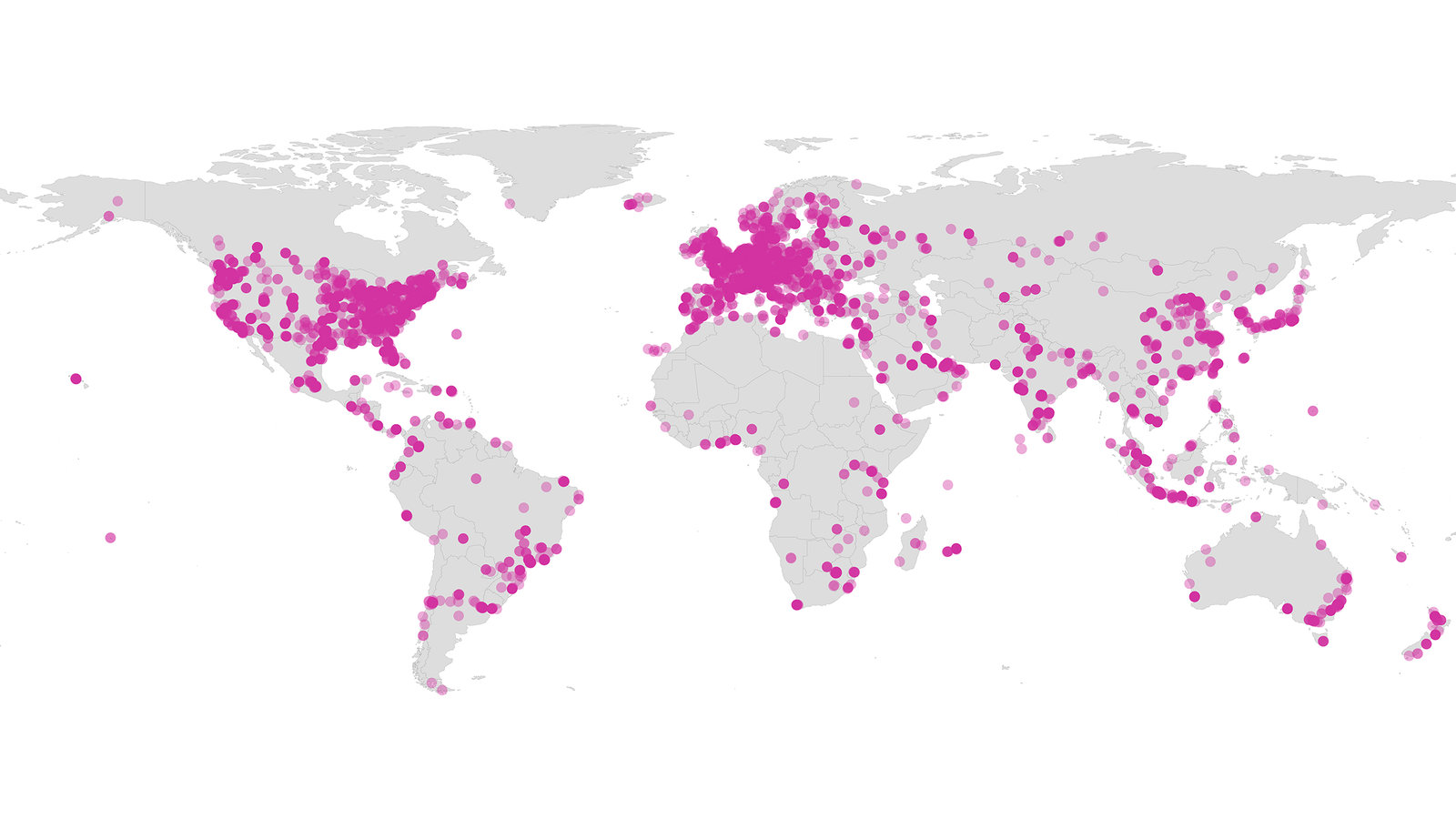
There are nearly 9,000 data centers in operation around the world, a figure set to triple by 2030.
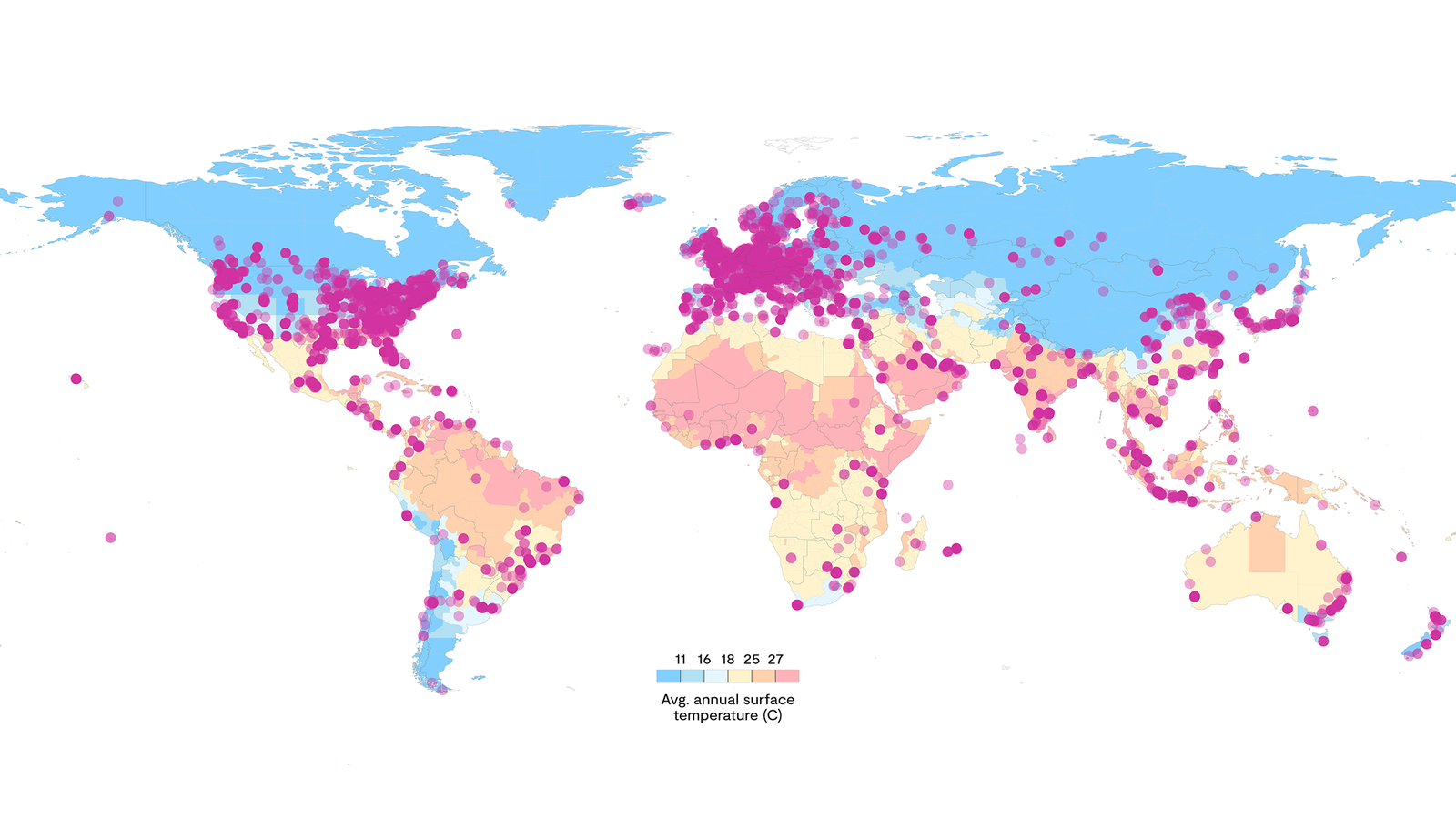
The ideal temperature range for data centers is 18 C to 27 C (64.4 F to 80.6 F). Hot temperatures, which require more expensive cooling, are among the biggest risk factors for data centers.
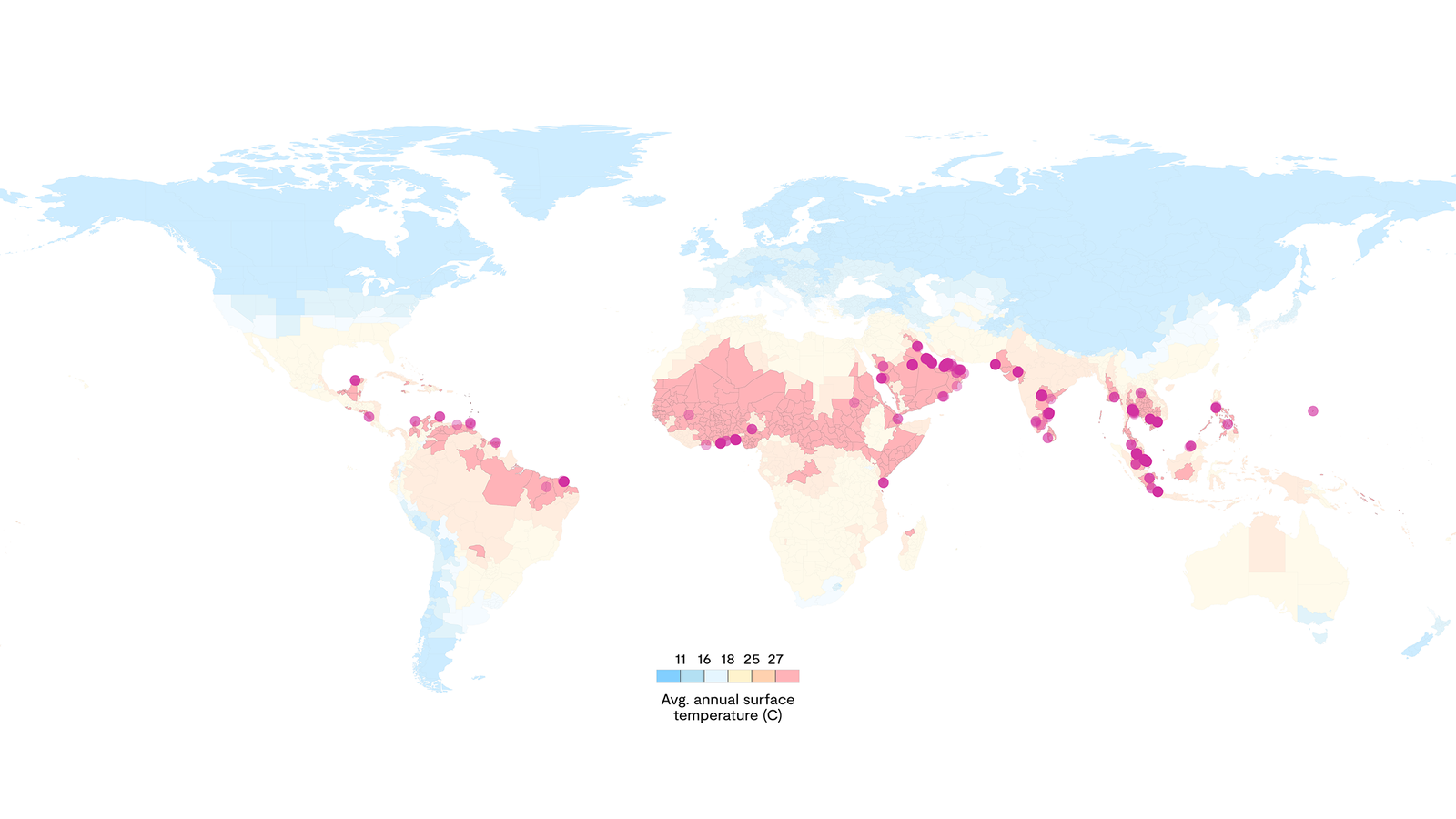
A growing demand for AI and the desire to store data within a country’s borders means that 600 data centers around the world are located in places that are considered too hot. In 21 countries, all the data centers are located in zones that experience average temperatures above 27 C.
We plotted temperature data from the Copernicus Climate Data Store, a project organized as part of the European Union’s efforts to open-source climate data against locations from Data Center Map, a widely referenced resource and marketplace for data center-related services. We found that of the 8,808 operational data centers worldwide as of October 2025, nearly 7,000 are located in areas outside the optimal range. The vast majority are in regions with average temperatures that are colder than the range. Only 600, or less than 10% of all operational data centers, are located in areas where average annual temperatures are above 27 C.
However, our analysis, conducted with the help of nonprofit Climate Central, showed that in 21 countries— including Singapore, Thailand, Nigeria, and the United Arab Emirates — all data centers are located in areas with average annual temperatures of above 27 C. Nearly all data centers in Saudi Arabia and Malaysia are in regions that are too hot. Nearly half of Indonesia’s 170 data centers are in hot places, while in India — a key market for big tech and social media companies — about 30% are located in overly hot regions.
Meanwhile, all data centers in Norway and South Korea, and nearly all data centers in Japan, are in regions with temperatures below 18 C.
High and very high temperatures are among the biggest risk factors to data centers, and can impact two-thirds of data center hubs by 2040 — including all hubs in the Asia-Pacific and the Middle East — according to risk intelligence firm Verisk Maplecroft. PS Lee, who oversees the Sustainable Tropical Data Centre Testbed in Singapore, grapples with the logistics of running a data center in a challenging environment. The 0.5-megawatt data center is located on the campus of the National University of Singapore, with more than 20 industry players including Dell, Intel, and Meta working with academia to develop cooling solutions specifically for hot and humid climates.
“In thermal terms, Singapore is almost ‘permanent peak summer’ for a data center,” Lee told Rest of World. “Cooling is both technically harder and structurally more energy-intensive here than in most other data center hubs. That is why Singapore has to radically improve efficiency rather than just build more of the same.”
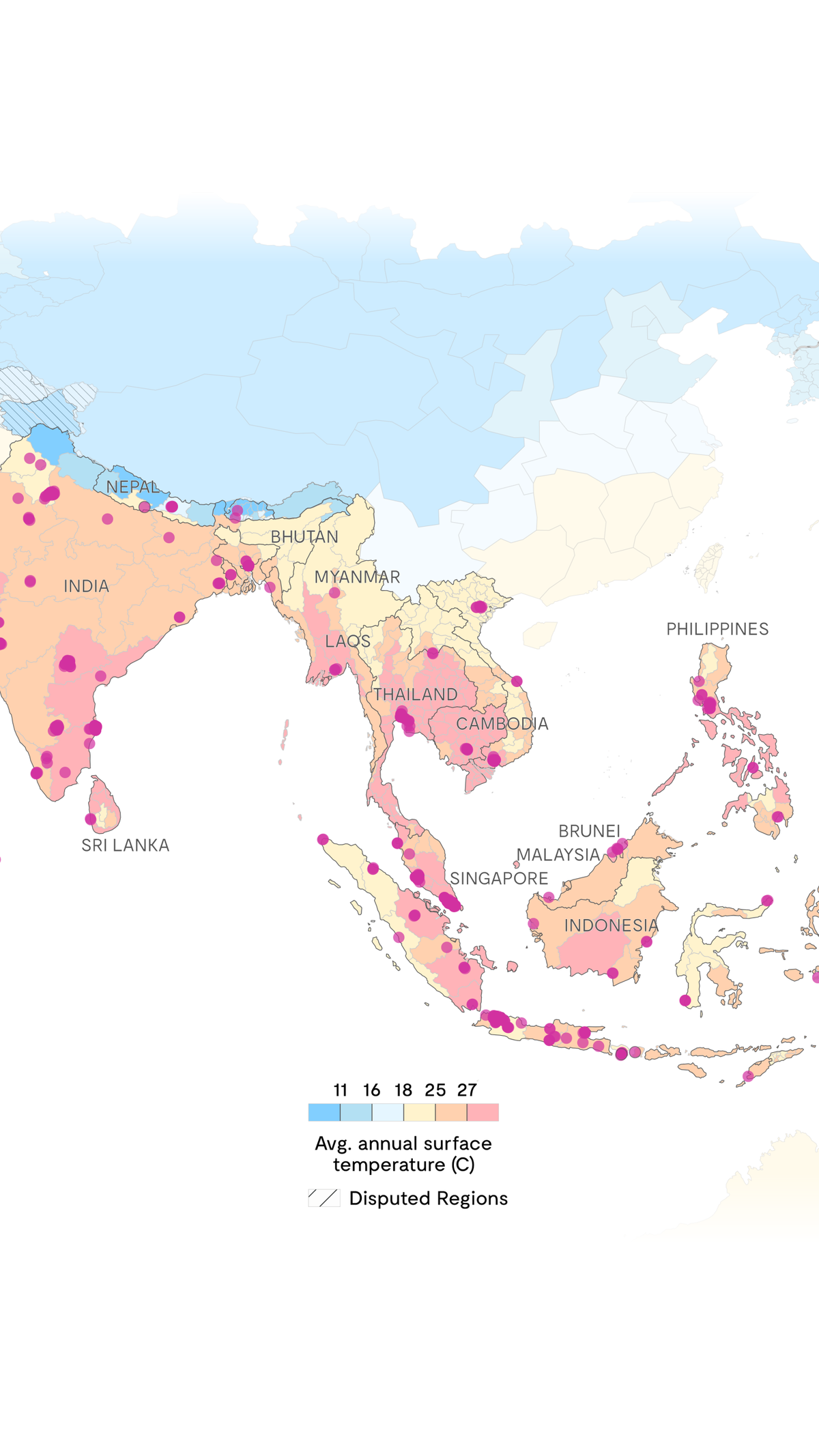
Asia is the fastest-growing market for data centers, led by demand in countries including India, Vietnam, and the Philippines.

All of Singapore’s 72 data centers are located in a climate that is too hot for optimal operation.
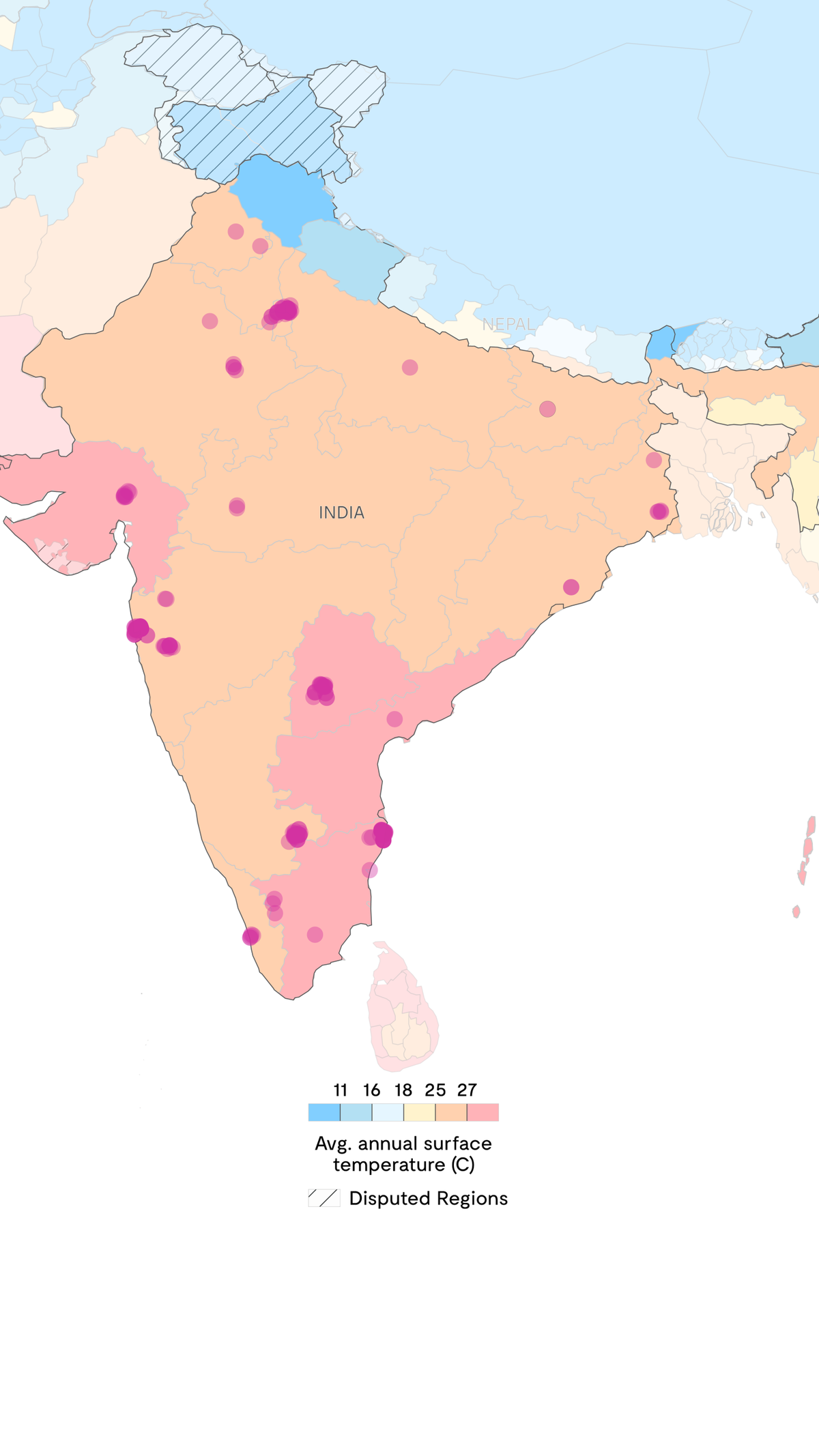
About one-third of India’s 213 data centers are located in very hot zones. An unstable electricity grid compounds the challenge of cooling the data centers.
The rise of data centre investment in hotter and more water-scarce locations like India, Singapore, and the UAE in part reflects a diversification beyond the previous investment concentration in North America and Europe, Laura Schwartz, senior Asia analyst at Verisk Maplecroft, told Rest of World. “Cooling data centres is particularly challenging in the hottest parts of the world, home to many growing data centre hubs.”
Extreme heat not only places a heavier burden on cooling systems, it also reduces the efficiency of power transmission, raising the risk of outages. Data centers’ electricity consumption totaled 415 terawatt hours, or about 1.5% of total global consumption in 2024, according to the International Energy Agency. That will likely more than double by 2030, with the U.S. and China leading the expansion.
In Singapore, data centers accounted for about 7% of electricity consumption in 2020, and that share could rise to about 12% by 2030 “without intervention,” Lee said. The government has mandated that data centers in the country must reduce their consumption of power and water.
Globally, the data center industry is largely air-cooled, and is moving toward a liquid-based solution, which is “energy efficient and can reduce water consumption,” Shaolei Ren, associate professor of electrical and computer engineering at the University of California, told Rest of World.
“In hotter places, hybrid cooling — using air cooling when appropriate and evaporative cooling when needed — may be more suitable to yield maximum combined benefits of energy saving and water conservation,” said Ren, who studies data centers’ resource use.
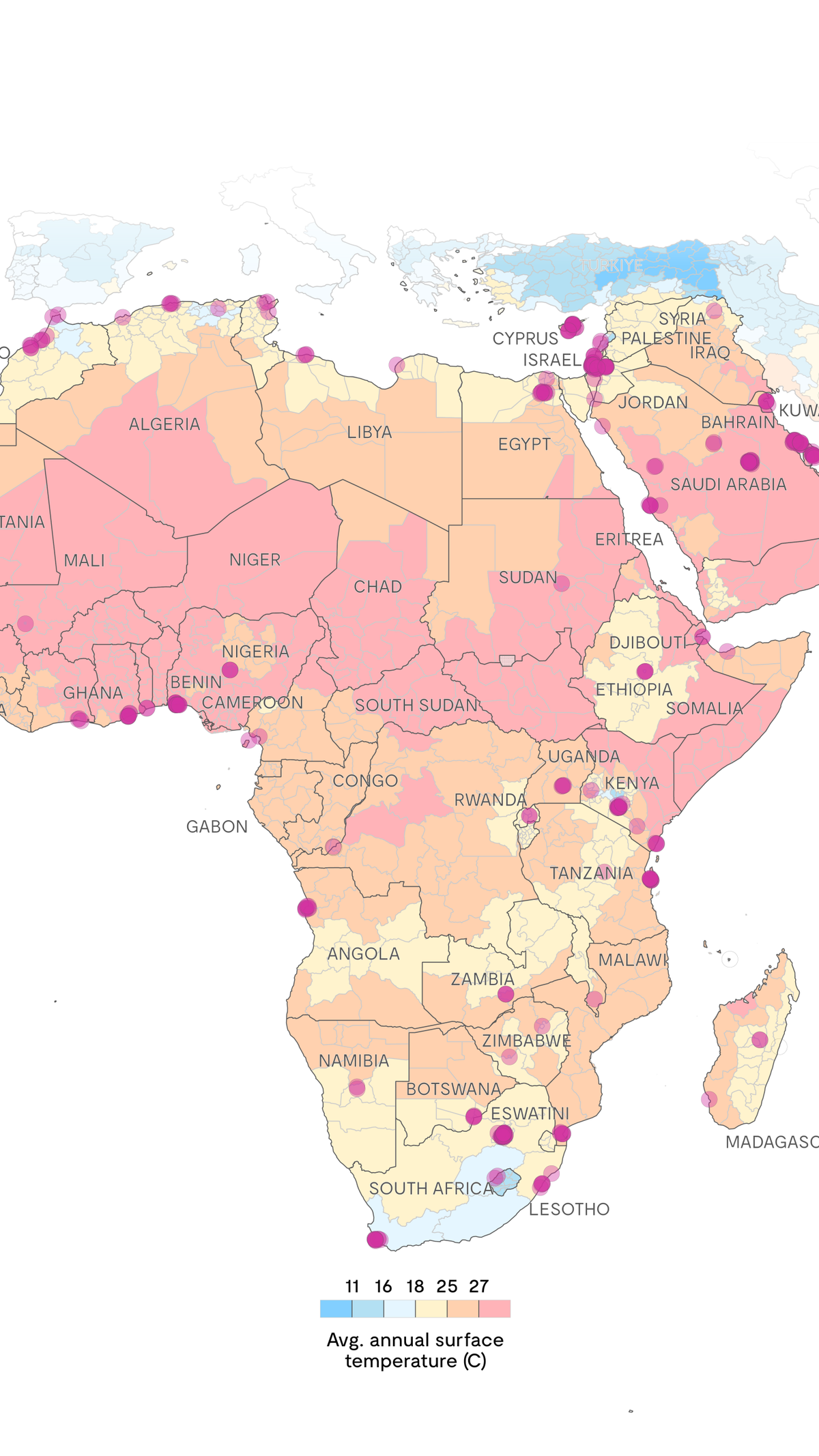
Data center operators in Africa and the Middle East have to contend with high temperatures, unreliable electricity, and other infrastructure constraints.
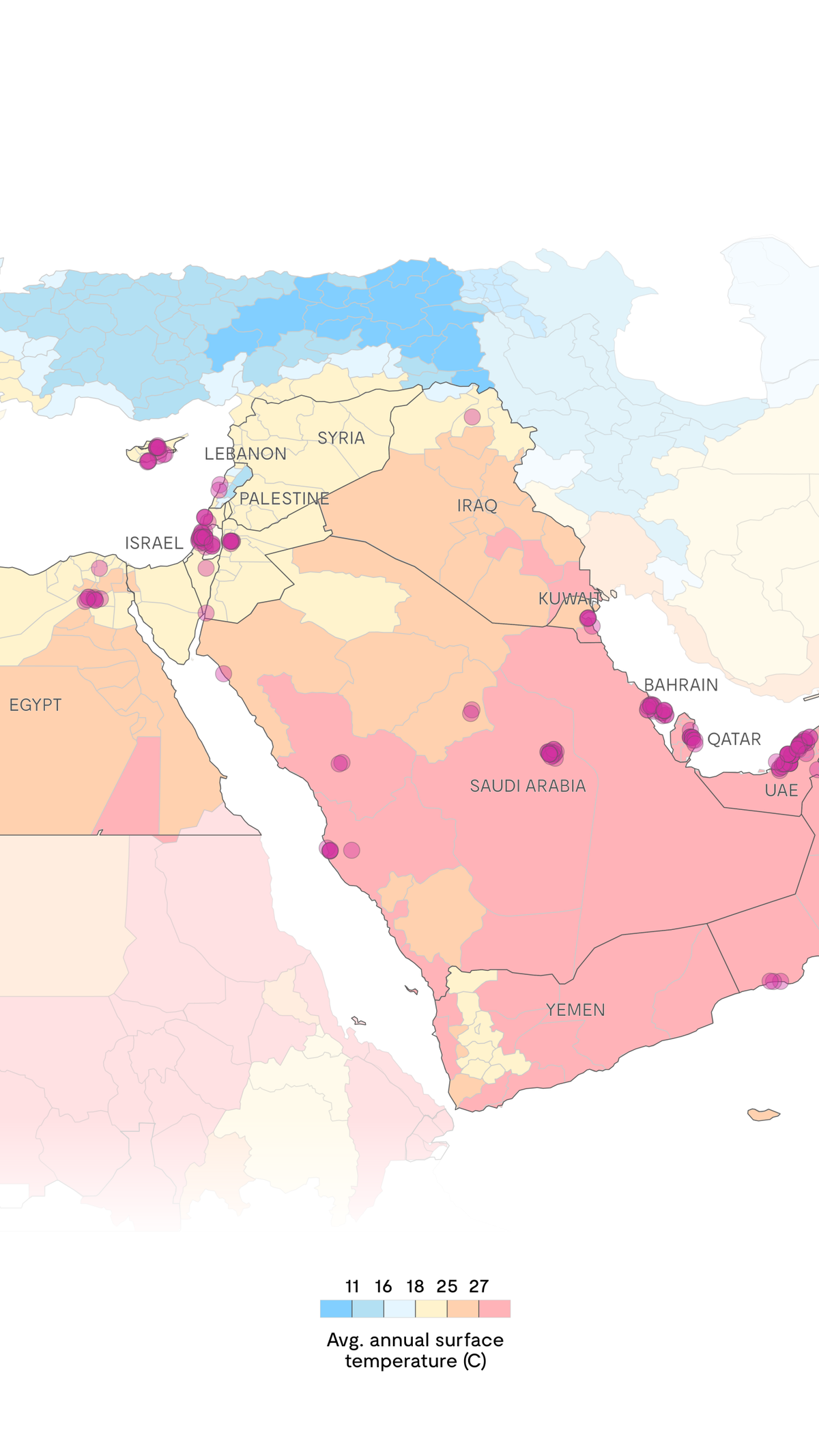
The Middle East is keen to establish itself as an AI hub, and is among the fastest-growing regions for data centers.
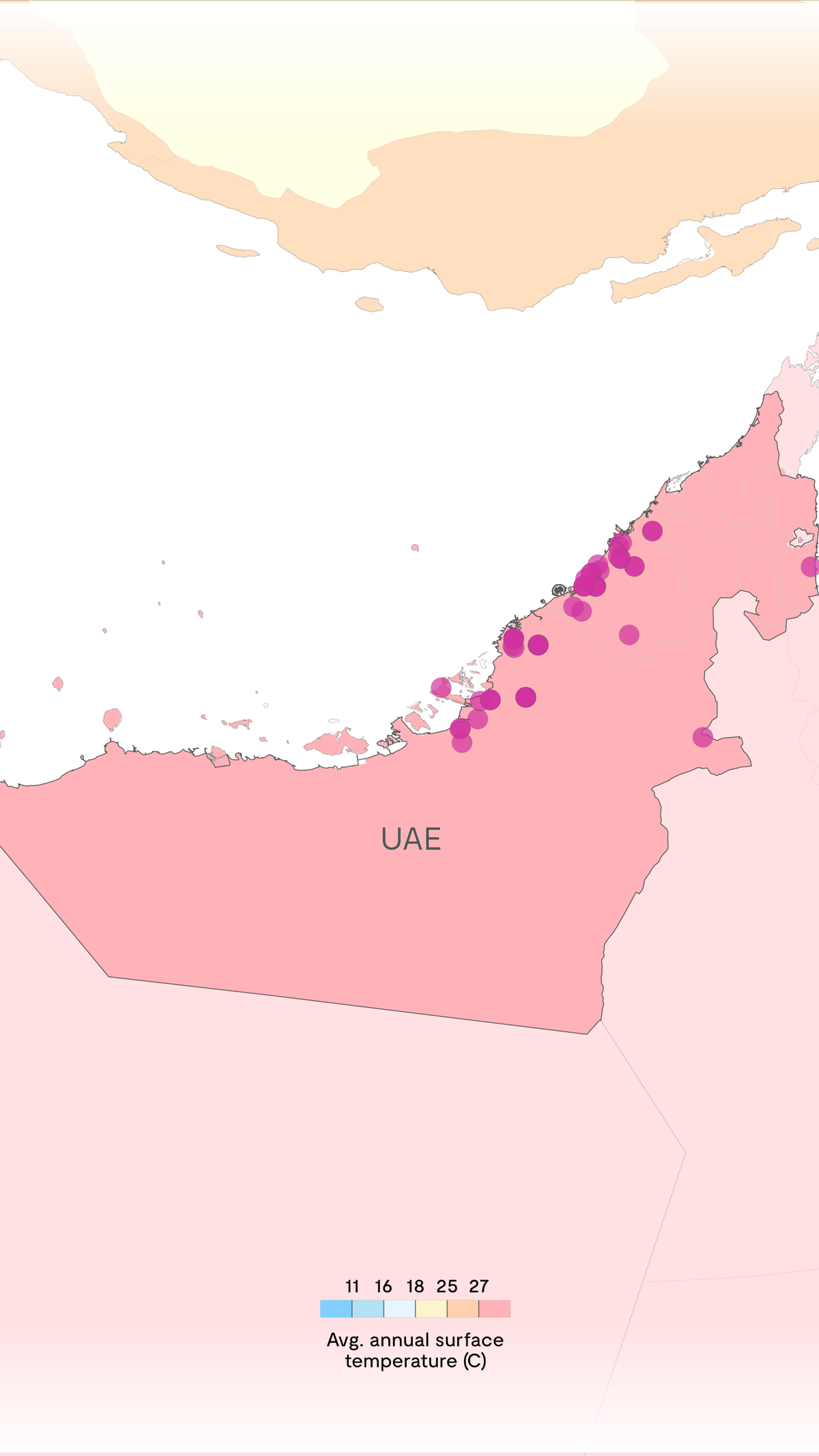
In places like the UAE, where all data centers are in overly hot regions, some manufacturers are considering building facilities underground.
At the test bed, Lee and his team are experimenting with direct-to-chip liquid cooling and immersion cooling, which can reduce energy use by up to 40% and water use by 30%–40%.
“The old model of unconstrained, air-cooled growth is simply unsustainable,” Lee said. These two technologies are already commercially viable for adoption, and in the next two to five years, “I expect these will become standard features rather than exotic add-ons,” he said. Over the next five to 10 years, “more radical approaches,” such as large-scale seawater cooling, will move from pilots to commercial deployment.
In China, nearly two-thirds of 361 operational data centers are in cooler temperatures, and the country is constructing one beneath the surface of the ocean to test better cooling efficiency. While in the Middle East, long-term solutions could include using nuclear energy and hydrogen fuel cells, and building data centers underground to handle extreme heat.
Big tech firms are also looking for solutions to cool their data centers more efficiently. By applying DeepMind’s machine learning to its own data centers, Google claims to have reduced the amount of energy used for cooling by up to 40%. Microsoft’s newest data centers are designed with in-chip microfluidic cooling systems. Tiny channels are etched directly on the back of the silicon chip, creating grooves that allow cooling liquid to flow directly onto the chip and remove heat more efficiently. Amazon also has a direct-to-chip liquid cooling system that can reduce mechanical energy consumption by up to 46% during peak cooling without increasing water usage.
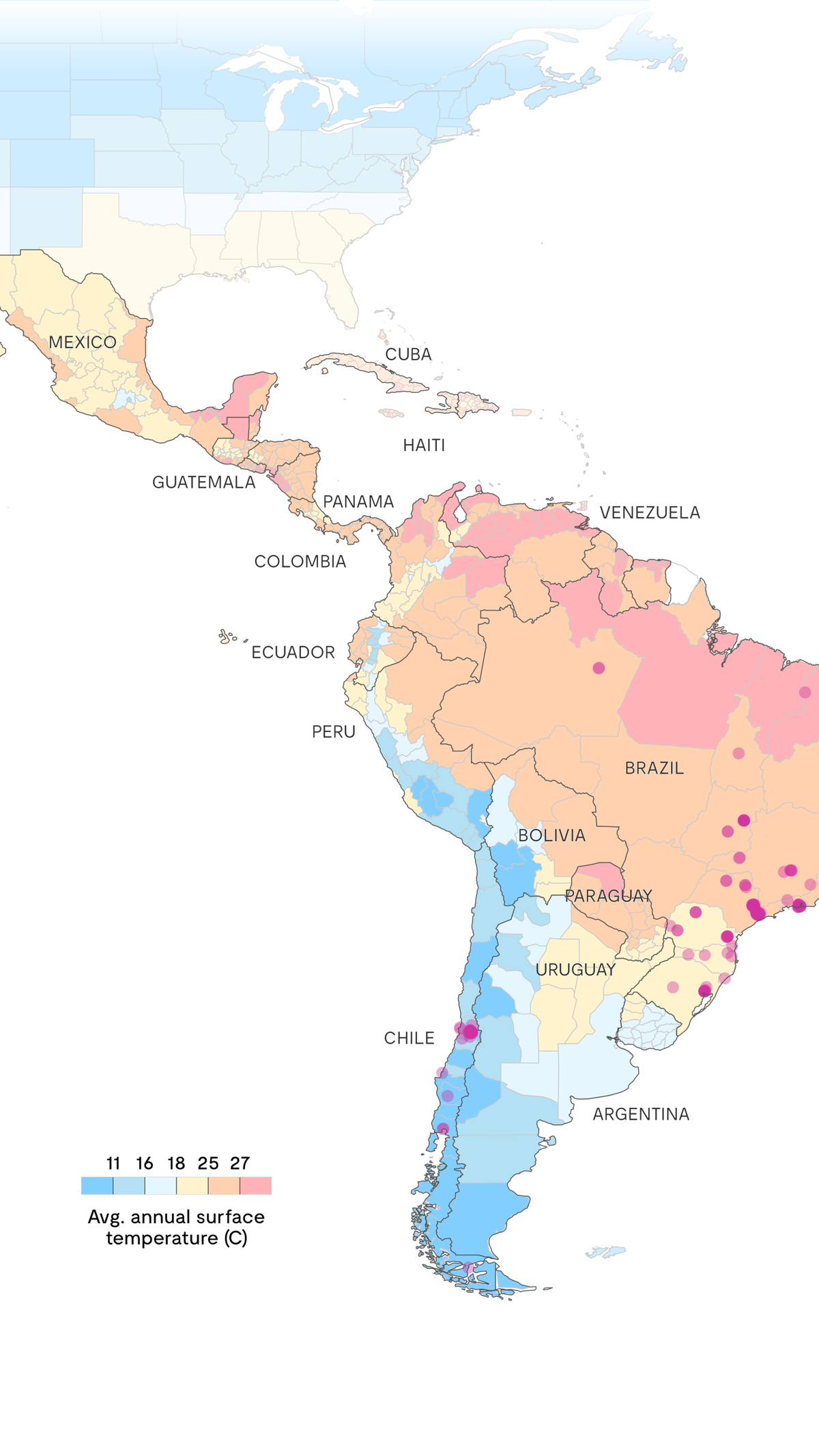
In recent years, South and Central America have also seen a boom in data center construction.
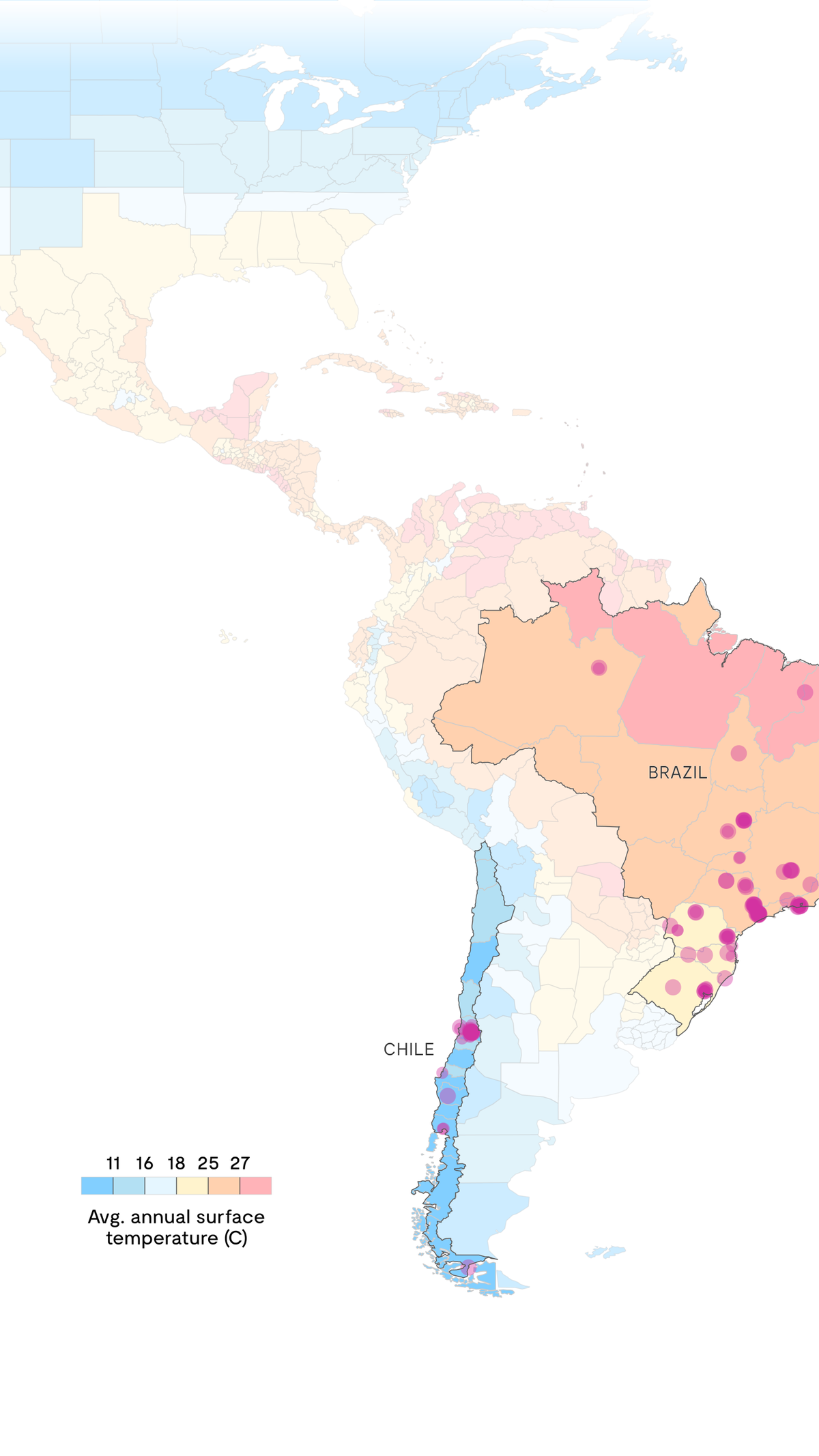
Thanks to their abundant renewable energy, Brazil and Chile, in particular, have seen an influx of data center construction.
Deploying new technologies, however, is often costly and easier to implement in new centers rather than in retrofits, “meaning that resilience and sustainability risks around existing data centre capacity in hotter and more water-scarce markets continue to be a concern,” said Schwartz.
Ashrae already recommends operating temperatures of up to 45 C for newer classes of data processors. For Lee, the goal is to have the technologies being piloted in the test bed working in the real-world environment, and adopted by others.
“Singapore’s situation is extreme but not unique,” he said. “Many of the world’s fastest-growing digital economies — such as Jakarta, Manila, Ho Chi Minh City, and Mumbai — share similar hot and humid conditions.”
“If we can show that data centers can run reliably, efficiently, and with low water and carbon footprints in Singapore’s climate, then there is no reason they cannot be adapted to the rest of the tropics and other climatic zones,” he said.