Olga de León looked confused as she walked out of a nightclub on the edge of Buenos Aires on a recent Tuesday afternoon. She had just had her iris scanned.
“No one told me what they’ll do with my eye,” de León, 57, told Rest of World. “But I did this out of need.”
De León, who lives off the $95 pension she receives from the state, had been desperate for money. Persuaded by her nephew, she agreed to have one of her irises scanned by Worldcoin, Sam Altman’s blockchain project. In exchange, she received nearly $50 worth of WLD, the company’s cryptocurrency.
De León is one of about half a million Argentines who have handed their biometric data over to Worldcoin. Beaten down by the country’s 288% inflation rate and growing unemployment, they have flocked to Worldcoin Orb verification hubs, eager to get the sign-up crypto bonus offered by the company.
A network of intermediaries — who earn a commission from every iris scan — has lured many into signing up for the practice in Argentina, where data privacy laws remain weak. But as the popularity of Worldcoin skyrockets in the country, experts have sounded the alarm about the dangers of giving away biometric data. Two provinces are now pushing for legal investigations.
I did this out of need.”
“Seeing that [iris scans have] been banned in European countries, shouldn’t we be trying to stop it, too?” Javier Smaldone, a software consultant and digital security expert, told Rest of World.
In March, Spain and Portugal temporarily banned Worldcoin. Last year, Kenya ordered the company to shut down operations, and Worldcoin has stopped offering its Orb services in India and Brazil. But in working-class neighborhoods around Buenos Aires, dozens of Worldcoin Orb scanning points have been set up — lines of people waiting to get their irises scanned snake out of nightclubs, cellphone repair shops, bars, theaters, and train stations. The greater Buenos Aires area, home to almost 16 million residents, has a poverty rate of 45%.
With nearly 60 centers set up across Argentina in under a year, Worldcoin’s expansion in the country has been swift and has come at a tumultuous time. Since taking office in December, President Javier Milei, a far-right economist, has laid off tens of thousands of public workers, eliminated social welfare plans and subsidies, and closed down public institutions aimed at helping the country’s poor.
“We’re seeing a shocking economic crisis,” Ignacio Carballo, head of alternative finance at market research firm Americas Market Intelligence, told Rest of World. “In economies under recession like ours, these kinds of phenomena [like Worldcoin] bloom.”
In January, the company announced it had already scanned the irises of more than 1% of Argentina’s population.
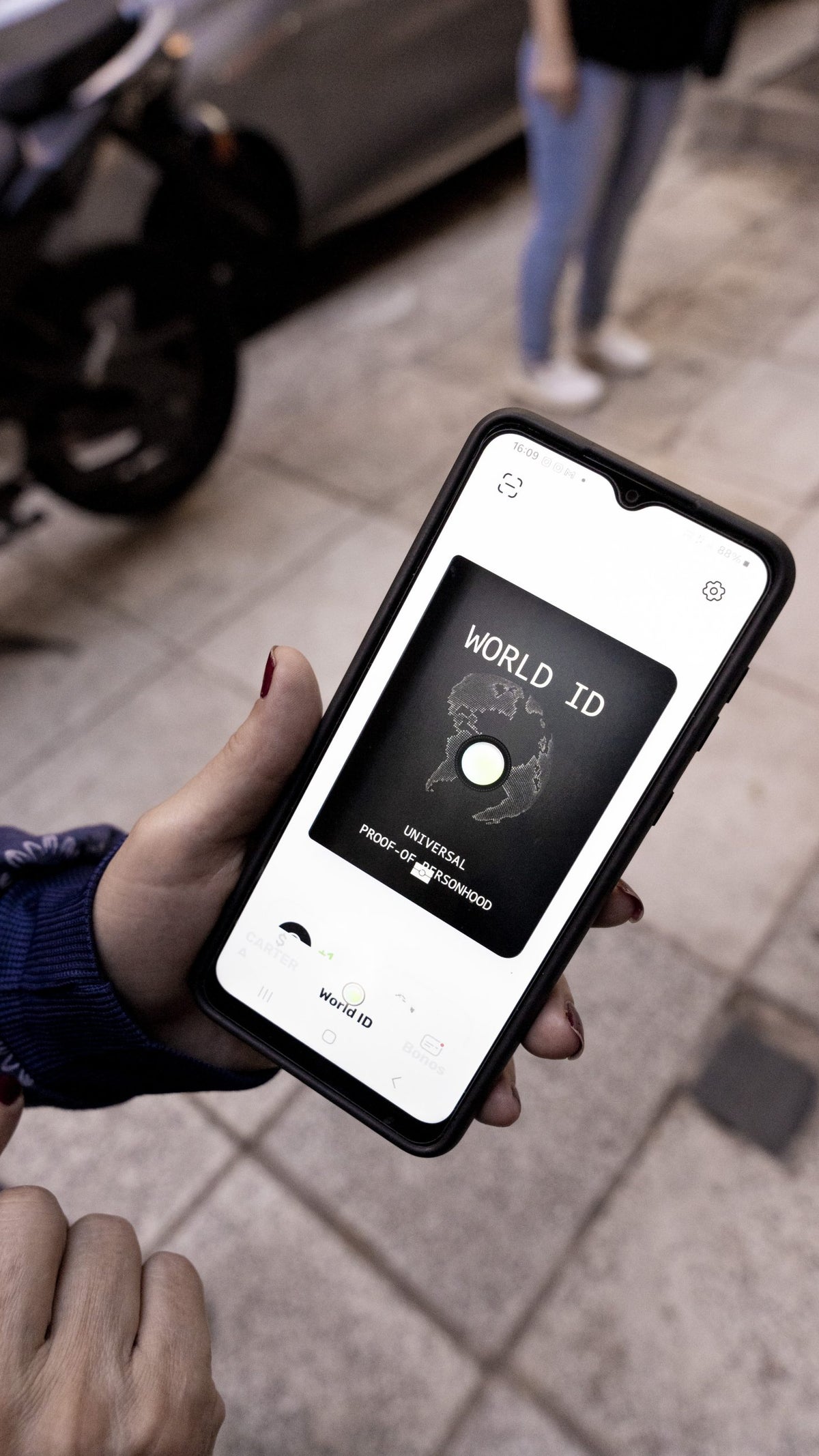
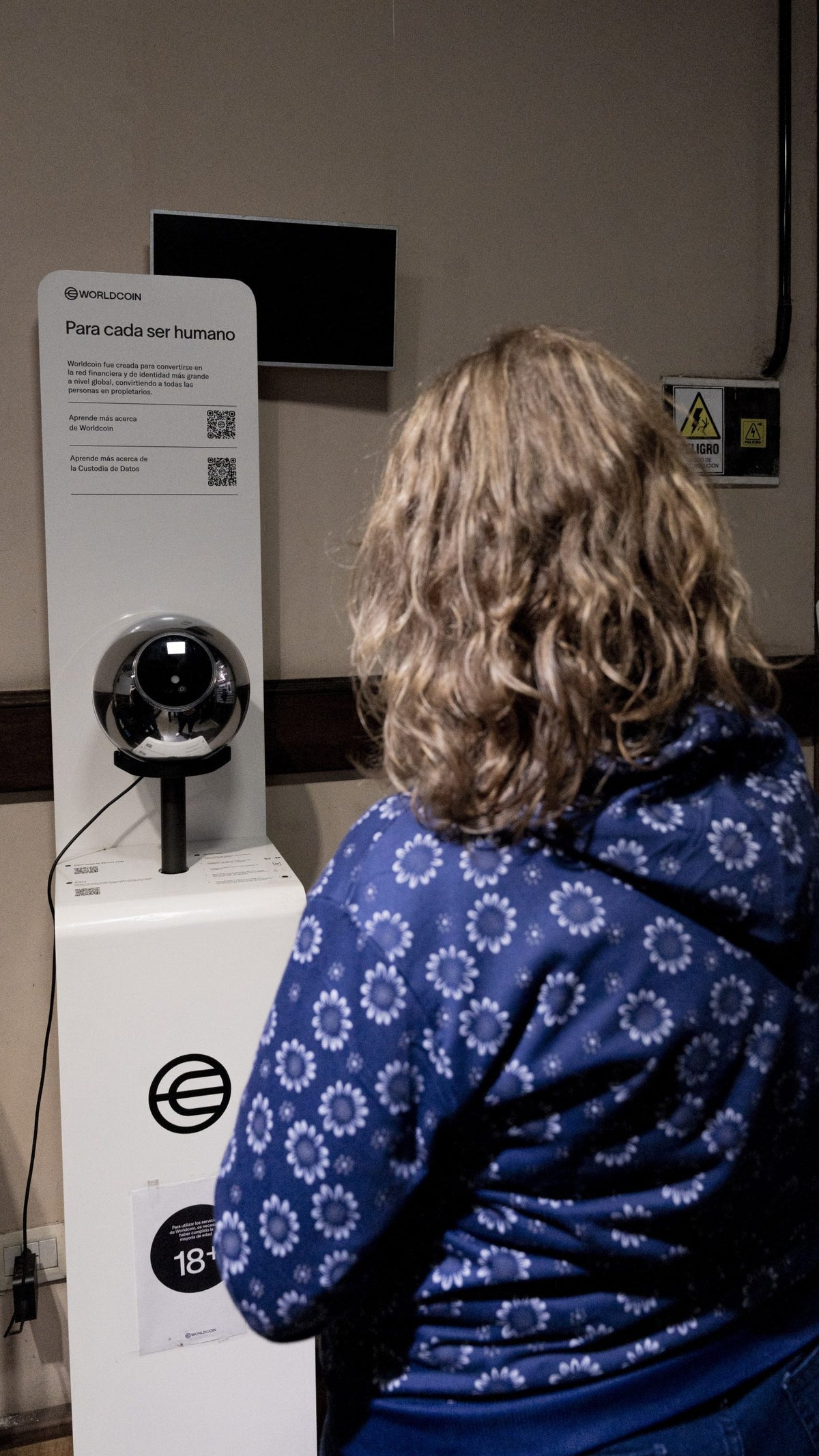
Authorities have taken notice. Last year, Worldcoin halted its operations in the central-western province of Mendoza, after a lawyer issued a complaint against the company for violating the data privacy law. In March this year, the province of Buenos Aires accused Worldcoin of failing to answer specific questions about “abusive clauses” in its terms and conditions.
A Worldcoin spokesperson told Rest of World the company responded promptly to all requests and aims to be “transparent about its practices.” Worldcoin recently announced that it was taking security measures to keep underage users from signing up.
Rest of World visited nine Orb centers in Buenos Aires, where an intermediary scheme has taken hold. Young people are now luring relatives and friends or approaching strangers on social media, pitching them the prospect of easy money.
Brian, a 29-year-old street sweeper, waited outside an Orb center for an elderly couple whom he had convinced to sign up for Worldcoin. Brian, who requested his last name be withheld due to fear of legal repercussions, told Rest of World he makes a profit by cashing in the WLD tokens given to new clients — most of whom have little knowledge of cryptocurrency. He then transfers the money to them in pesos using Mercado Pago, Argentina’s most popular digital wallet. Brian takes a cut, which varies depending on the client. “I keep more from the junkies,” he said.
At the time of writing, Brian said he makes about $114 every week. He estimated that there are “dozens” of intermediaries seeking out people in need of “easy money” amid economic turmoil. Rest of World found dozens of intermediaries on TikTok, Instagram, and Facebook, offering to exchange the WLD for the “best rate.”


Malena Saito, a writer and poetry teacher in Buenos Aires, began borrowing money from relatives about four months ago after her income dropped significantly. “I wanted to pay it back, and I had no quick way of getting money,” Saito told Rest of World. When a friend told her about Worldcoin, she downloaded the app immediately and headed to the nearest Orb center, located at a cellphone repair shop. Once there, she rushed to accept the terms and conditions.
She read them later that evening and immediately regretted signing up.
“A [foreign] company, no right to claim if anything happened with the data, and compensation of just up to $100 if anything happened,” she said. “I’m the kind of person who is generally aware of how risky these things are. Never in my life did I think I would do [something like] this.”
Last year, Worldcoin Orbs were available in 25 countries. Today, they are limited to Argentina, Chile, Germany, Japan, Singapore, Mexico, South Korea, and the U.S.
According to Smaldone, Argentina’s economic woes and weak privacy laws have created a fertile ground for Worldcoin — and a dangerous one for its clients.
“When you earn money by bringing people in, people are the product,” he said. “[Worldcoin] is taking away something much more valuable than cash.”