Last fall, school administrators at the University of Yucatán asked Abraham Slim, a 23-year-old medical student, to fill out a survey on his smartphone.
The questions on the survey did not relate to his subjects but probed into his mental health. They asked if he had “started to work out the details of how to kill” himself the previous month, and if he “intended to carry out this plan,” among other queries.
The questionnaire was part of an artificial intelligence-backed mental health care initiative launched by the southern Mexican state of Yucatán, whose suicide rate is double that of the rest of the country. The survey “made me think about my mental health in a different way,” Slim told Rest of World. The app’s goal of raising consciousness about mental illness could “have a real effect, especially in urbanized areas,” he said.
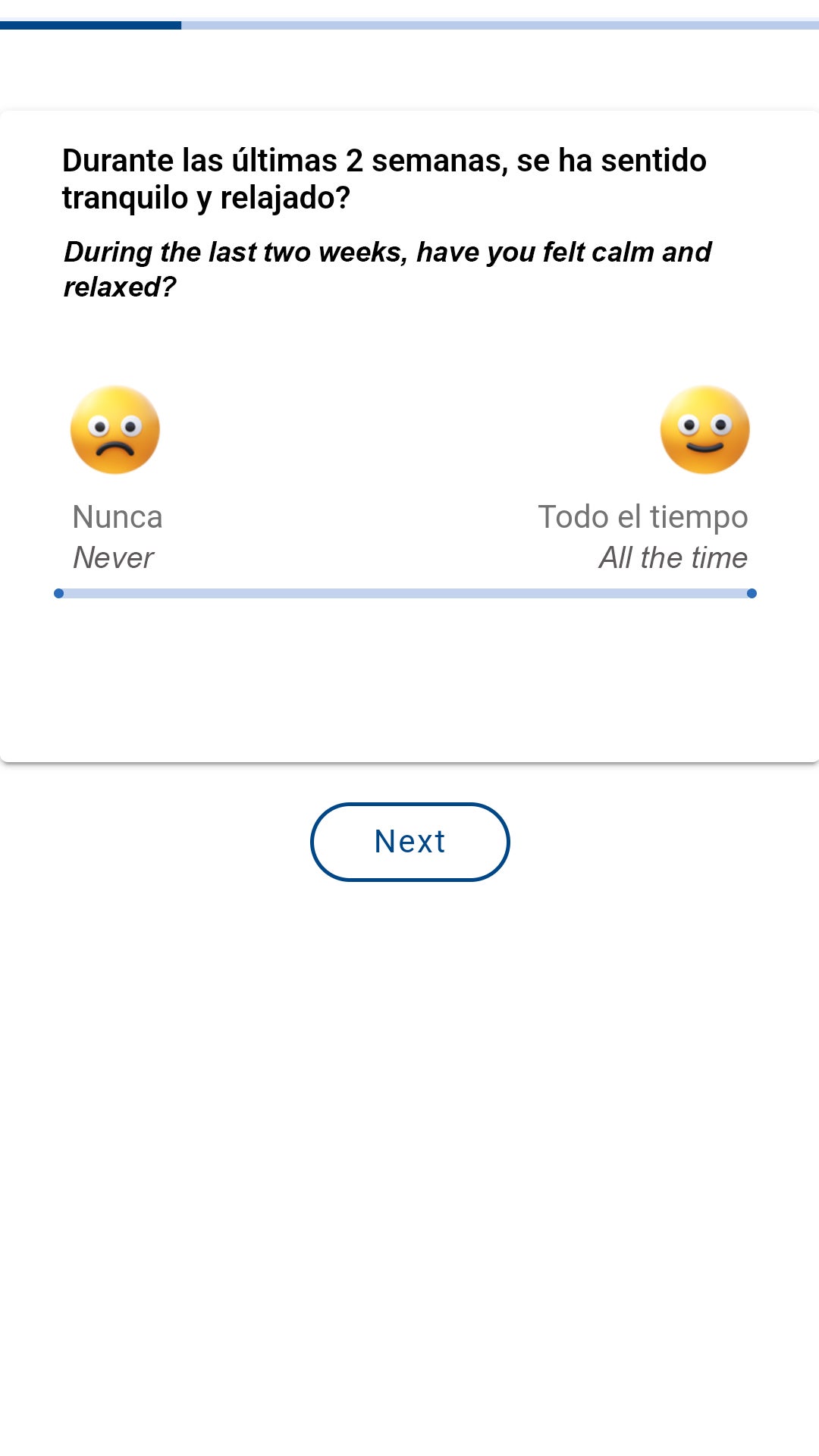
In 2022, the Yucatán government partnered with a smartphone app called MeMind, which embeds an AI diagnostic tool in its surveys to estimate suicide risk. In September, the government said the app had contributed to a 9% reduction in the suicide rate statewide. It now has 80,000 users, the MeMind team told Rest of World. The app’s success could have implications for the use of AI in combating a global mental illness epidemic among young people amid growing rates of depression, anxiety, and isolation, according to health experts.
MeMind and other smartphone apps could “provide additional accessibility, usability, and efficiency for community screening and inform public policy,” Ismael Martínez, a Mexican scientist who used MeMind as part of the methodology in a research study, told Rest of World.
In recent years, the use of AI has bloomed in the treatment of mental illness globally. Smartphone apps like Yana use generative AI-powered chatbots to serve as counselors, while other forms of AI help diagnose mental illness by tracking sleep patterns through microphone data and determining mood by analyzing written responses, eye movement, and vocal tones. Though the relative accuracy and effectiveness of these tools vary, they can reach people who may not otherwise have access to treatment and can be used by psychologists to confirm their own assessments.
Two months after its launch in Yucatán, then-governor of the state Mauricio Vila Dosal said during a public appearance that over 200 cases of people at “high risk of suicide” had been identified through MeMind.
According to Edgardo Flores, a psychologist working for the public health system in Mérida, the capital of Yucatán, many people are too self-conscious to seek treatment for mental health and most families hide the cause of death of their loved ones. “It’s a very conservative society,” he told Rest of World. “Strategies are really needed that can bring in the whole community.”
MeMind app users respond to a 15-minute mental health questionnaire which uses AI to track their responses and assign each person a risk category. The app detects small changes in behavior patterns and alerts the MeMind team about a possible suicide attempt in advance. Users placed in the three most severe risk categories are monitored through the app with personalized, periodic check-ins.
80,000 The number of MeMind app users.
The app keeps identifying information like names and addresses private unless the user agrees to meet with a health provider. Following a sign-off from users, the app shares their data with the Yucatán government.
Enrique Baca, a psychiatrist from the Autonomous University of Madrid in Spain who helped develop the technology for MeMind, told Rest of World the app’s Spanish-language version was tailored for Yucatán following a series of meetings with the state’s Department of Health. Survey questions revolve around issues of domestic violence, alcoholism, and substance abuse, which often coincide with suicidal ideation in the state.
Sonia Cuesta, a restaurant worker from Mérida, downloaded the app to manage intermittent depression. “I was impressed. The questions were so direct — that surprised me,” Cuesta told Rest of World. However, she said, there was a connectivity barrier: “In a lot of neighborhoods of Mérida, not everyone has a cellphone.”
Though the app was created for individual users, its goal is to provide information to the government on public health on a broad scale. According to Baca, 50% of the app’s users are still using it after six months. “We identified a necessity, which was to know what was going on in each community, and then to be able to give people tools,” he said. “Now we have large amounts of useful data on the population.”
Most suicides in Yucatán occur in people between the ages of 18 and 39 years. In 2023, 341 people in the state took their own lives.
Though Abraham was not deemed to be at high risk for suicide, he told Rest of World the survey reminded him to check in with himself more often. “Society is really set in its ways, and a lot of people think that going to a psychologist is only for people who have more complicated mental problems,” he said.
Over the past two years, MeMind has deemed 10,000 users in Yucatán to be at risk of suicide, and has given them information on treatment options, including talk therapy and support groups, said Baca. The app, however, can only track users if they log in and complete check-ins. Young men, the group most likely to die by suicide, are the least likely to use the app consistently.
Some health care providers worry that the app only provides a temporary fix, as patients often mention structural issues in the state, including economic stagnation, as causes for their depressive feelings.
According to Baca, MeMind has plans to add a chatbot therapy feature to the app. “When the questioning comes from another person, people can feel judged, but when it’s coming through the phone, a lot of times we feel more comfortable with the machine,” he said.
The most useful aspect of the app, Baca said, is its ability to discern dishonest answers. “We can see how long it takes people to respond to each question — we know [when] they’re telling the truth.”