In the fifth century, a Chinese Buddhist monk named Faxian walked from central China to India. It took him six years. When he reached the city then called Purushapura (modern Peshawar, in what is now Pakistan) he saw a building that he described as “the highest of all the towers” in the world.
This was the Kanishka Stupa, built in the second century CE by the Kushan emperor Kanishka to house relics of the Buddha. It was a genuinely colossal structure: around 400 feet tall by modern estimates, though the Chinese pilgrims who visited it over the centuries reported heights of up to 700 feet. Even at the lower estimate, it would have dwarfed almost anything standing in Rome or Constantinople at the same period.
The stupa had a stone base in the shape of a cruciform plinth, roughly 270 feet across. But the remarkable thing was what rose above it: a massive wooden tower, crowned with an iron pillar bearing thirteen gilded copper parasols or chatras, the disc-shaped ornaments that in Buddhist architecture symbolize the heavens.
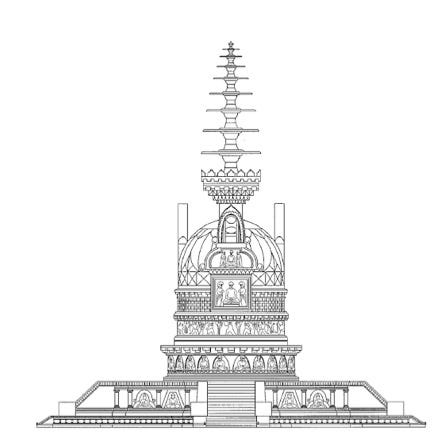
Beautiful as it may be, anyone who builds a 400-foot wooden tower and tops it with metal confronts a big problem.
You have created a very large lightning rod.
The Chinese pilgrim Song Yun, visiting the stupa around 520 CE, reported that it had already been struck by lightning at least three times, and rebuilt after each strike.1 This is entirely plausible. A tall wooden structure topped with a conductive metal finial, standing on an elevated platform in the Peshawar Valley (the site of frequent thunderstorms) would attract numerous lightning strikes. Each strike could easily ignite the wooden superstructure. And unlike a stone cathedral that might lose its roof timbers but retain its walls, a wooden tower that catches fire is simply gone.
This is likely what happened, over and over, until eventually no one rebuilt it. When the Chinese pilgrim Xuanzang visited in the 630s, he found the stupa damaged and partially repaired but still standing. By the time the Korean pilgrim Hyecho arrived in 726, the monastery was still there, though he reported that the stupa “constantly glows” — a detail that might refer to the gilded surfaces, or might preserve some memory of the fires. After that: nothing.
Today the site is an unpreserved neighborhood called Akhunabad on the outskirts of Peshawar. It was re-identified only in 2011.
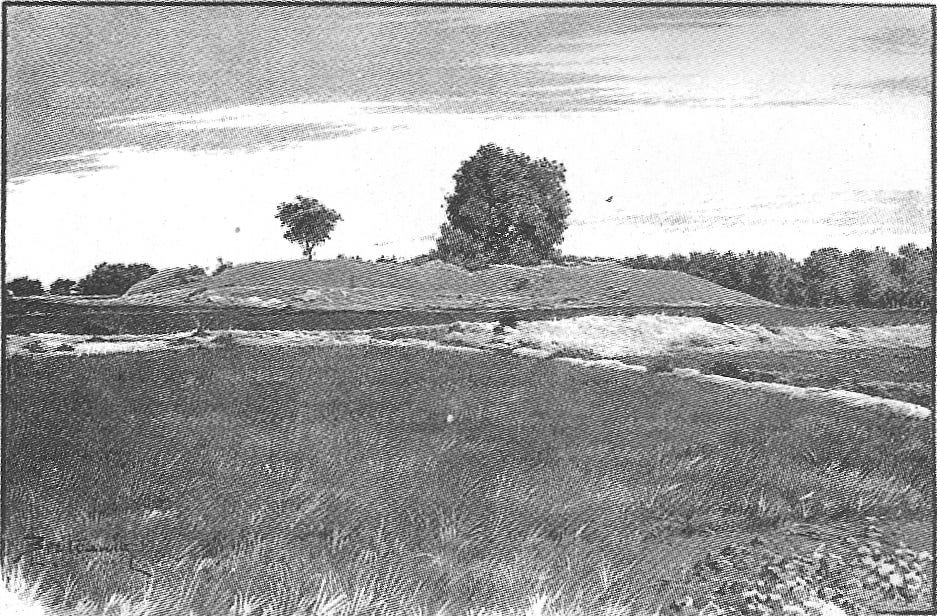

The rise and fall of the wooden stupa is a surprisingly significant event in history, because scholars believe it was the direct ancestor of the East Asian pagoda. The low hemispherical stupas of early Indian Buddhism gradually evolved in the Gandhara region (present-day Pakistan and Afghanistan) into taller, more vertical tower structures. Buddhism spread from Gandhara along the Silk Road into Central Asia and China, and the Gandharan stupa aesthetics traveled with it, merging with Chinese multi-story wooden watchtowers to produce the pagoda.
But today, the structures that inspired this architectural evolution are all gone.
We tend think of ancient history as being defined by stone. But the vast majority of buildings in the ancient world were made of wood, thatch, mud brick, and other perishable materials. What we see when we look at “the ancient world” is not a representative sample. It is whatever happened to be made of the most durable stuff.
I try to keep this sort of pattern in mind whenever I think about history (and, by extension, the present!)

The absent wooden stupa is an example of survivorship bias, like this internet-famous diagram illustrating Abraham Wald’s work on which WWII fighter planes survived anti-aircraft fire and which didn’t.
Going further: very often importance itself creates the reason why something fails to survive. A sacred image is smashed precisely because it is sacred. A text is censored or a letter is burned because it is important. A wooden tower is struck by lightning precisely because it is high.
When we look at what remains and call it “the historical record,” we are seeing the fire-resistant remnants of something immeasurably bigger than we can easily imagine.
The fire thing is partly a metaphor: not all erasures of the historical record are due to things burning down.
On the other hand, it really is striking to contemplate not just how many structures have burnt, but how many letters have. For instance, in the archives of William James at Harvard, there are large gaps in the letters between the philosopher/psychologist and his wife, Alice. It’s obvious from the context that whole months or even years of their correspondence was destroyed, likely either by Alice or by her children.
It’s also common when reading historical manuscripts to encounter drafts with whole pages that have been crossed out, like William James complaining bitterly in 1892 about the “repulsive” town of Pallanza, Italy (which looks pretty nice to me!)
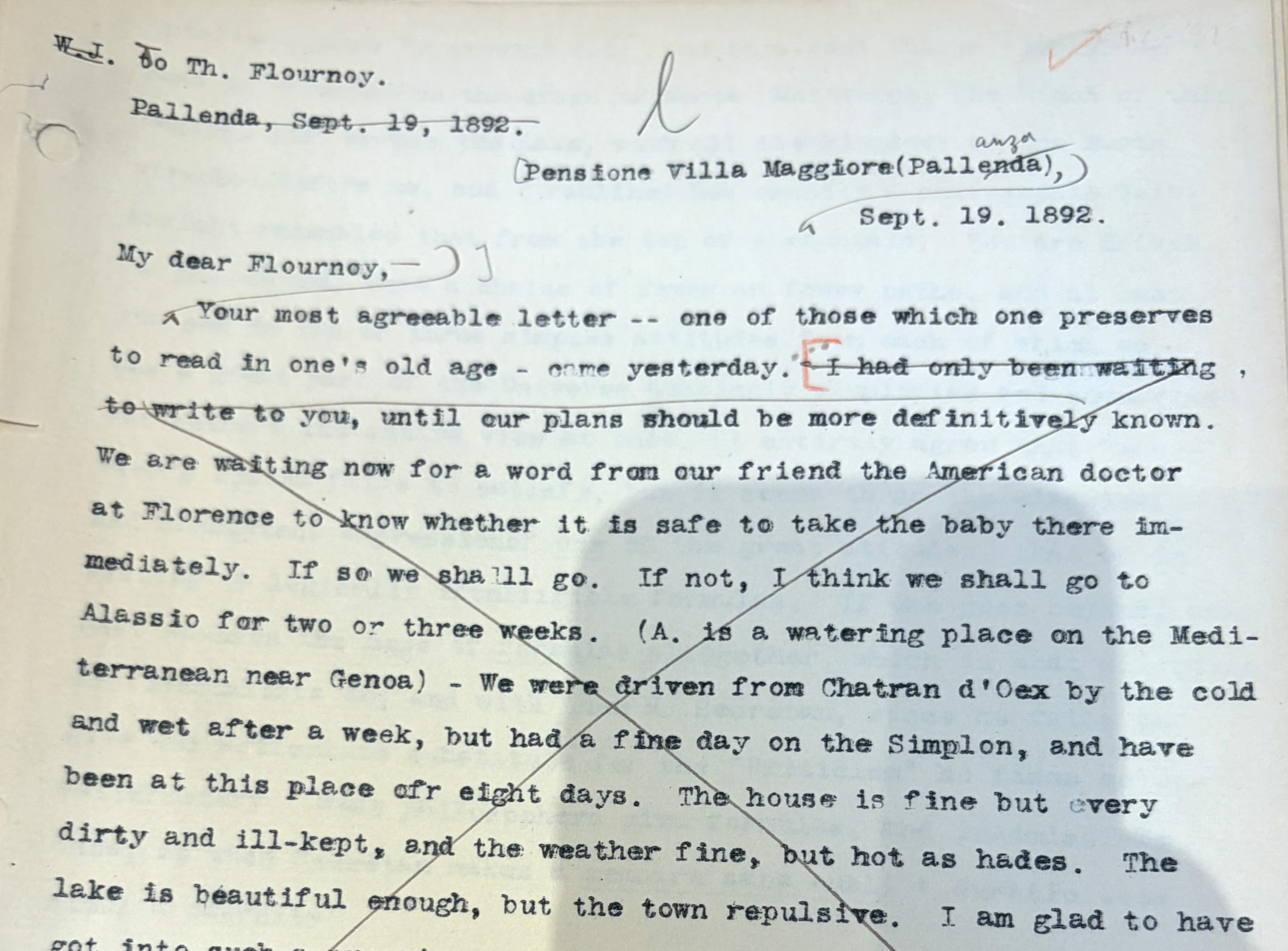
It’s a common experience, when in archive, to encounter traces of what is missing, the negative space around the texts. Wooden stupas have their counterparts all throughout the historical record.
The existence of so many hits for phrases like “destroy this letter” in Google Books is one example of this negative space. For every letter which survived this clear injunction to destroy it, imagine how many didn’t make it!
A final thought, inspired by William James. Perhaps we can think of historical emotions as wooden stupas too. For James famously argued that if we strip away the subjective experience of an emotion, we end up with nothing much at all:
If we fancy some strong emotion, and then try to abstract from our consciousness of it all the feelings of its characteristic bodily symptoms, we find we have nothing left behind, no ‘mind-stuff’ out of which the emotion can be constituted, and that a cold and neutral state of intellectual perception is all that remains… What kind of an emotion of fear would be left, if the feelings neither of quickened heart-beats nor of shallow breathing, neither of trembling lips nor of weakened limbs, neither of goose-flesh nor of visceral stirrings, were present, it is quite impossible to think.
Isn’t that precisely what we encounter when we read sources from the past, though? Sometimes when we read an account of something truly terrifying or emotional, we re-experience some of the emotions of the people involve. But that requires either context or artistry (art, of course, evokes emotions directly, and in a sense short-circuits things).
Most things in an archive, though, even when they persist, have their deep emotional context stripped away. Part of why I love history so much is that I do feel something when I see a displaced photograph like this, from the James archives:
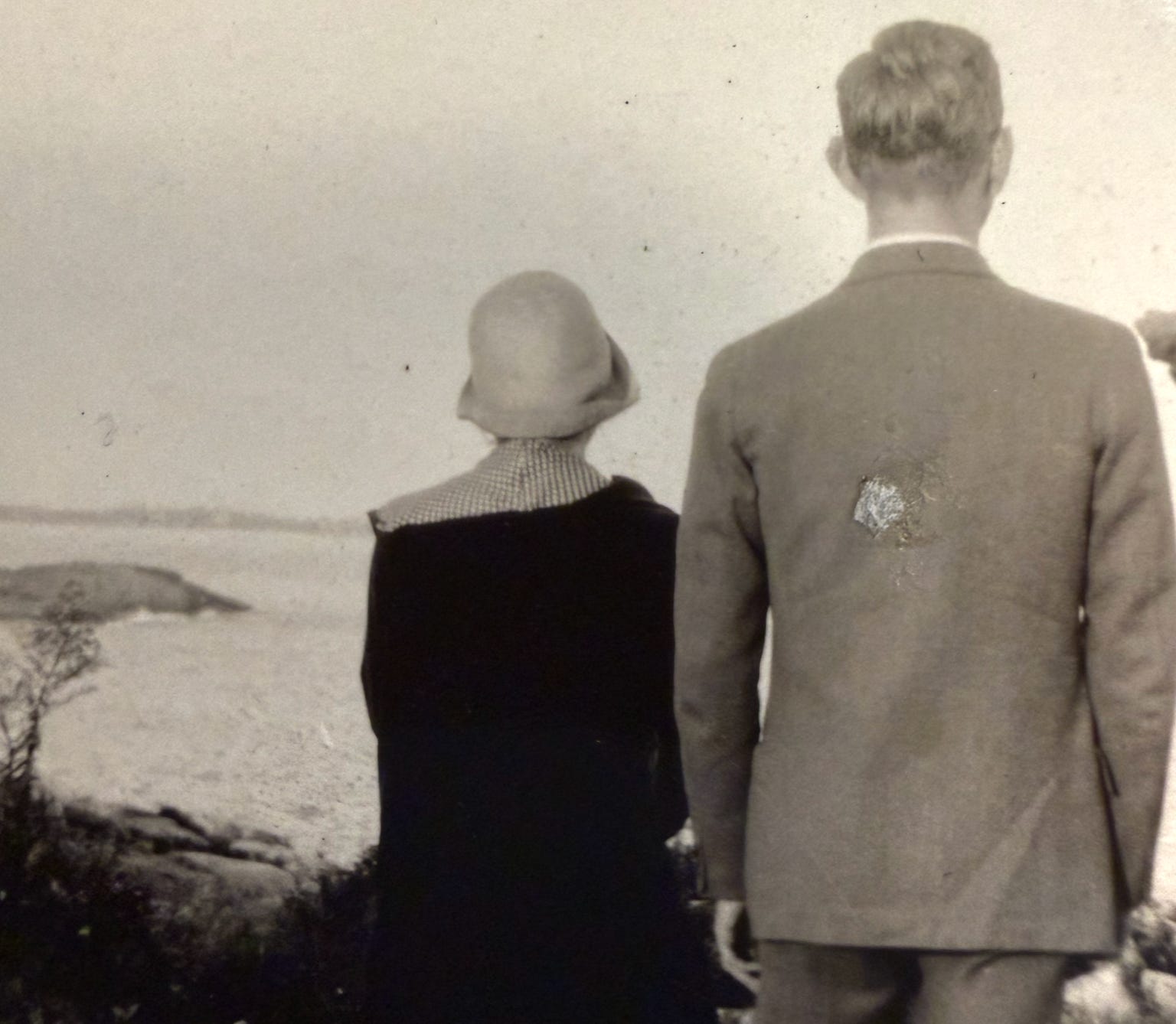
But it has very little relation to the ideas and emotions those people, whoever they are, would have actually felt. The wooden stupa effect of history is not just a question of burnt letters or destroyed monuments. It’s also about the gradual diminishing of our emotional connection and bonds to the non-famous people from the past.
The great artists, the famous thinkers, the people whose memoirs we read — they survive and continue to connect to our inner lives. They are the stone Chinese pavilions that were once accompanied by now-vanished towers made of things more burnable .
Ideologies, facts, and theories can still (sometimes!) be perceived through the written sources.
But the vast majority of feelings from the past are gone, like tears in rain. They mattered much more to people than the ideas which survived them. But they can be felt only at a remove, for instance through great art, as a shadow of the thing, never the thing itself.
• Two upcoming events for those in California: I’m going to be speaking on psychedelic history and the Shulgins at the Berkeley Alembic alongside a fascinating group of fellow speakers (including the creators of Erowid, in my opinion one of the greatest websites from the Internet’s golden age) on Sunday, May 17. More info here.
• And I’ll be speaking on a panel alongside various UCSC notables including Donna Harraway (who, I have on good authority, will be dressed as a giant blue mushroom — seriously) at a UCSC event on Tuesday, May 19 discussing Merlin Sheldrake’s wonderful book Entangled Life. I’ll also be interviewing Sheldrake on stage later in May.
• Proto-Elamite, one of the oldest ancient scripts, is being deciphered (New Scientist) and translations have been made available online via a collaborative archive. Not only do I love these sorts of heroic, multi-decade efforts to decode ancient scripts, I also really like how this particular archive highlights the material significance of the objects the words are inscribed on. Elamite art is one of the most underrated ancient cultural productions, in my opinion — it is similar to Mesopotamian and Egyptian styles in some ways, but also quite distinctive and extremely beautiful.
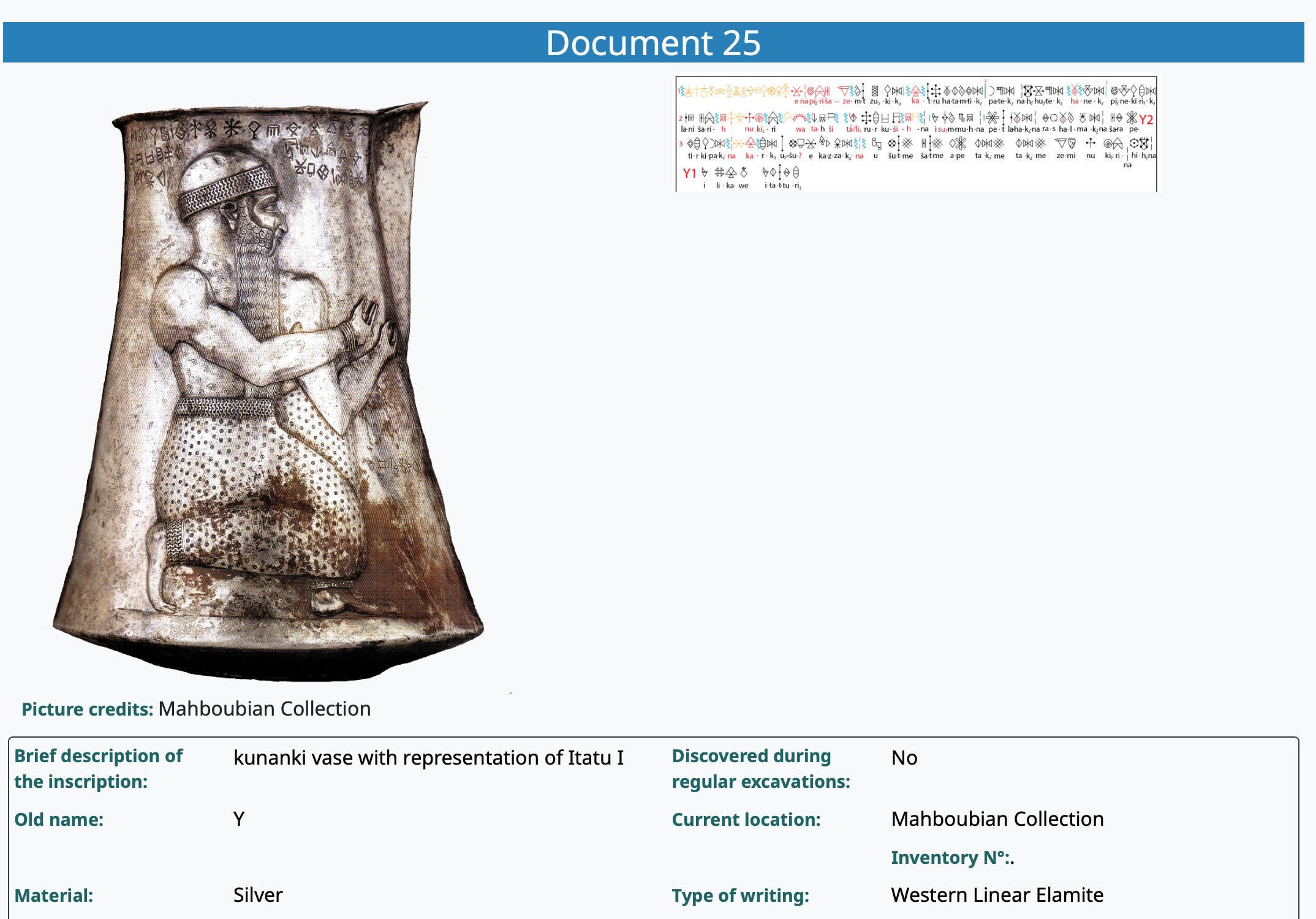
• New article in IEEE Spectrum about how language models have dramatically improved OCR for historical texts, featuring the work of Mark Humphries. I’m quoted a bit toward the end — apologies in advance to my classicist colleagues for seeming to imply that no one reads obscure texts in archaic languages, they very much do! My comments were in the context of a discussion about the opening up of those texts (like, say, Latin demonology manuals) to people (like undergraduate students) who previously lacked the requisite language knowledge. I think language models are well past the point of providing “good enough” transcriptions and translations for teaching, but that historians haven’t quite caught up to that fact yet.