While other industry names might come more readily to mind, few developers can claim to have shaped both the tools and philosophy of programming to the extent that Wouter van Oortmerssen has. A hugely influential figure during the Amiga-era, he crafted Amiga E and then went on to create at least nine more programming languages – alongside many smaller projects – over the course of a career that spans the past 35 years. He also worked at Crytek (Far Cry), Gearbox (Borderlands), and EA Maxis (Sim City), and was the primary author of FlatBuffers (a widely used cross-platform serialisation library) during his time at Google.
His most recent language, Lobster, is the basis for RPG and sandbox survival hybrid Voxile. It’s the debut release from VoxRay Games, a development studio founded by Van Oortmerssen, and currently in Early Access. But even with such a storied career, launching games is hard. In this interview we discuss the turbulent reality of being an indie studio with limited resources, finding an audience while trying to escape from Minecraft’s increasingly long shadow, the risks and rewards of building bespoke tools on a budget, and why there might just be a light at the end of the AI tunnel.

01
§ 01Why did you decide to start VoxRay Games?
Wouter van Oortmerssen: I was at Google at the time that I started experimenting with ray-traced graphics. I want beautiful graphics, but I don’t want to deal with the complexity of the modern graphics pipeline as you find them in most engines because it’s usually a lot of work to make. I wanted to see if we could do ray tracing, and to my surprise, it was actually fast enough. So I was like, ‘okay, I’m going to build a whole game on this’. What you’re seeing in Voxile is the first thing that I was researching.
At the same time I was thinking about what I want to spend the rest of my days doing. I enjoyed working with Google, but I was like, ‘okay, let’s just go build a game company because that’s really where my passion lies’. And so I started that with the idea to base it around this ray-tracing engine, and was able to attract some funding and hire some people.

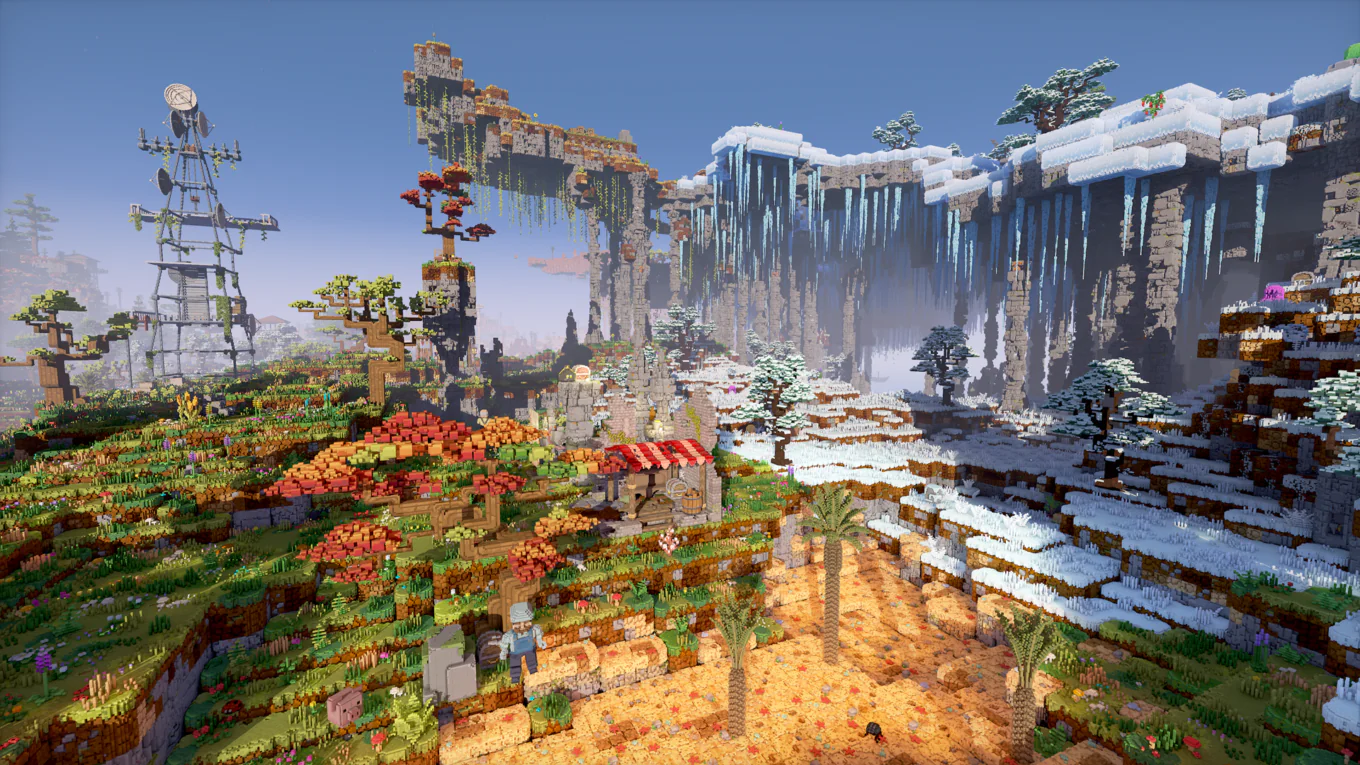
So we started building this game around my vision of the future that, when I play a regular triple-A game or whatever, that I want a game where everything is modifiable, breakable, or buildable. In most triple-A games I can walk around and shoot all the scenery as much as I want, but nothing even budges. And I feel that, with today’s technologies, why do we still have that? Why can I not destroy the entire world if I so choose? Why can’t I dig a hole anywhere? Of course, that sounds familiar for games like Minecraft, but for all other games it’s not a thing. I wanted to make a game that’s a little bit more of a ‘traditional’ game, but that also has this layer of ‘everything is breakable’. And building with voxels is a great fit for that.
I didn’t want to make a Minecraft clone. I was more thinking in the direction of big open-world games like Skyrim and Fallout – that’s too much for an indie team, of course, but at least going that direction a little bit more. So we started building that. And at some point we came into Early Access.
WVO: Our Early Access launch didn’t work so well for a couple of reasons. We were probably a bit on the early side, and we probably underestimated the amount of content and polish we needed to release. But in general, there were some bigger problems. I think the biggest one was player expectations. Like, the visuals we have, we can say all day long that our worlds are designed rather than procedurally generated, and that they have quests and guns and all these things that Minecraft doesn’t have. But 99% of the gamers that look at our game go, ‘it’s a prettier Minecraft’. And a lot of those people don’t care because they don’t necessarily want a prettier Minecraft, while the ones that do want that play our game and instead of finding Minecraft-style gameplay, they run up against all these quests and things like that. They’re like, ‘what the hell is this? I just want to build a base in the mountains’. [Laughs]
We had some other problems that were self-inflicted, too. For example, we released with really bad translations – we thought we could release in the Chinese market and other things like that, and people just left us negative reviews for our half-baked translations. And a lot of these players also didn’t have powerful PCs, so our ray tracing went slower for them.
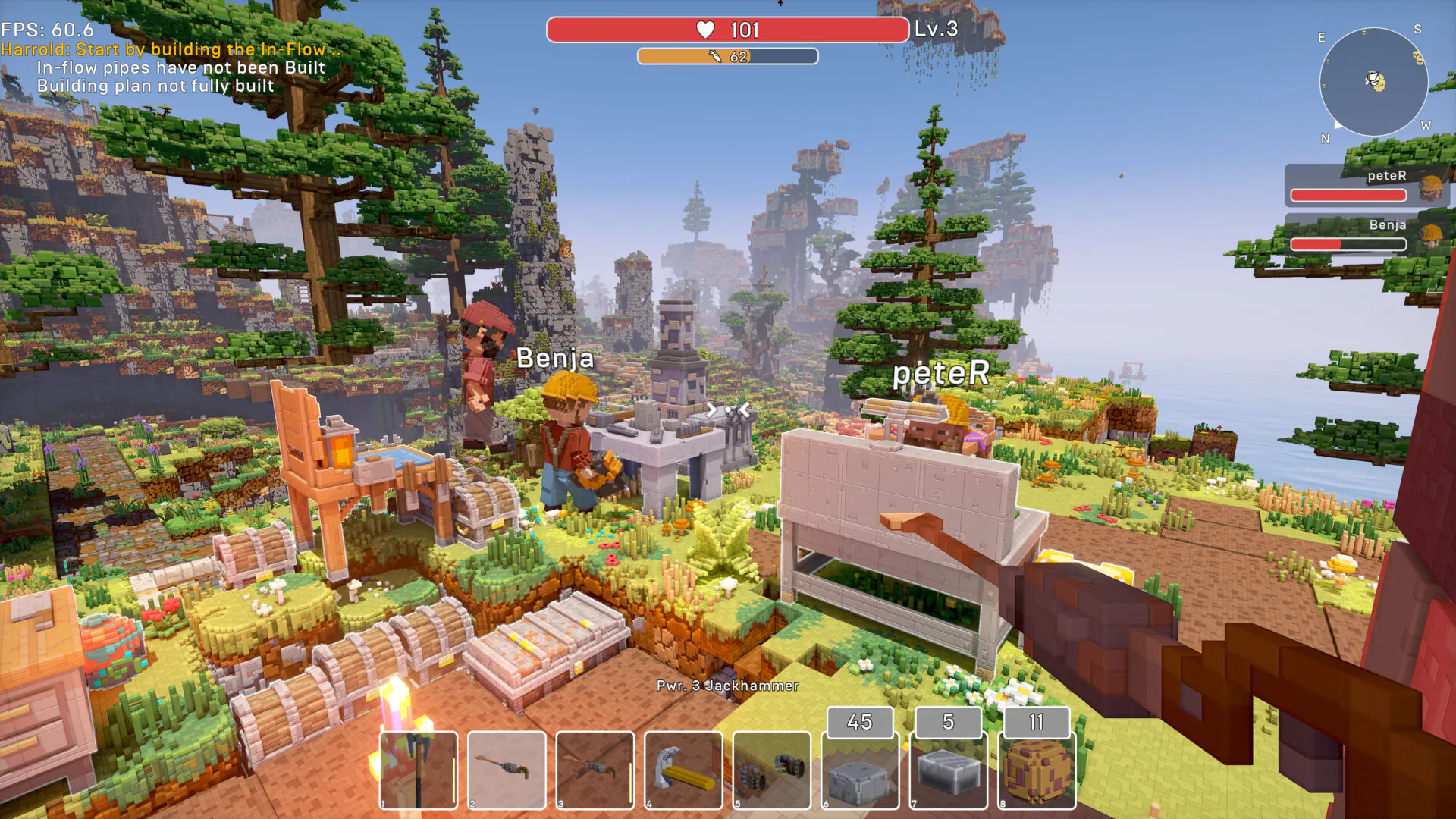
So anyway, we had all that and together it added up to a fairly bad launch basically. And so we’ve been building on that Early Access for over a year now, trying to bring out updates that would improve these things. The big thing we did is we did add on a survival mode that basically gives more of a Minecraft experience. It’s still our gameplay: there’s still quests, there’s still guns, and other things that Minecraft doesn’t have. But it’s open-ended. And since you’re in this world, you’re gonna go through the crafting tree, you’re gonna choose to fight monsters or not, or you can choose to build a base or not, and those kinds of things. It’s a very fun experience, but it’s still not designed to be a Minecraft clone.
03
§ 03So where did the idea for Hardhats: Some Survival Required come from?
WVO: Well, it turns out that when you have a bad launch on Steam it’s very hard to dig yourself out of that kind of thing. And in our latest updates, we noted that players love the building aspects of our game the most. So we thought, can we build this out to be a more explicit game around building? And so the idea of Hardhats was born. The start of that was thinking about what it’s like to build a Lego kit with friends, except rather than sitting on a tabletop you’re in the middle of a survival world, fighting off monsters and having to gather resources for your building and whatnot. We thought that was a brilliant combination of ideas.

We already have the quest-driven Adventure mode and the Survival mode in Voxile. But Hardhats is more co-op driven, and we thought it was sufficiently different to try to make it into a separate game. And we also had in mind that maybe a separate game would work better on Steam, basically.
04
§ 04What led to changing those plans and making Hardhats a Voxile mode?
WVO: Well, we did our announcement for Hardhats, but we found the reactions that we were getting on that game were hardly anything different from before – this issue of, ‘oh, it’s just another Minecraft because of the way it looks’ has persisted. So it doesn’t look like that’s going to change things for us in a major way, and at the same time, you know, we’ve been at this for a while and we are kind of running out of money.
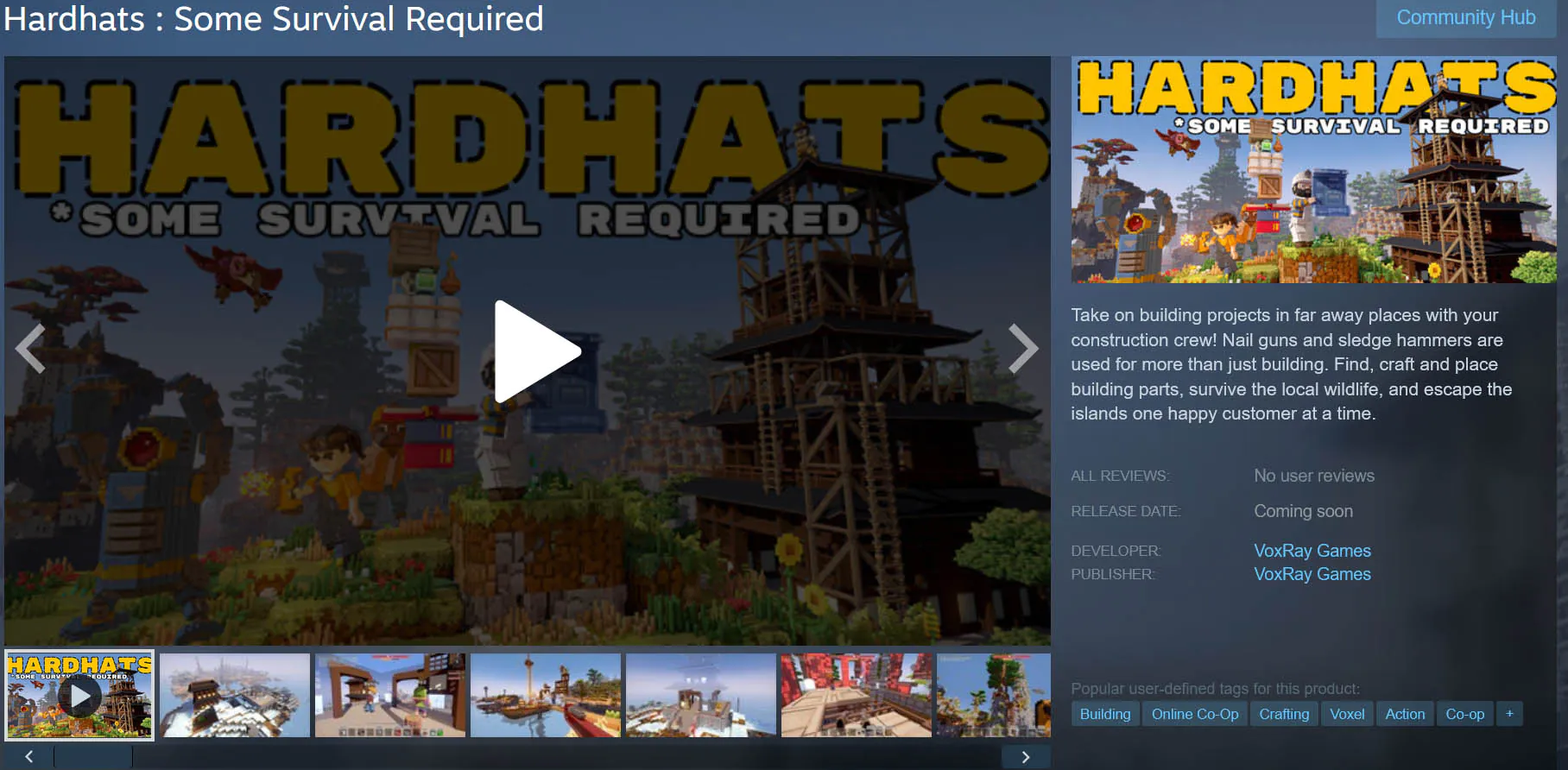
So, if this new game can’t bring us to success then it’s probably better that the new content sits in the existing game, and the people who have bought it basically get all this content for free. That seems a more sympathetic way to do things rather than try to ask them for more money, and especially if that money is not going to significantly move the needle anyway. It’s a little bit confusing, but all the modes are a lot of fun to play and Voxile has a ton of content – and we have a whole bunch of unreleased content which we’ll be bringing out, too. At least the people that are fans of our game will have access to a lot of stuff to play with. I think that is just a better way to go.
So yeah, all of that is to say that it has been a journey! It’s really hard for indies to attract attention, or even let people know you exist. Getting people to give you a chance and try your game is not particularly easy, so we’re working on that.
05
§ 05Are you seeing any improvement?
WVO:There are plenty of examples of that – I think Subnautica spent three years in early access and very slowly ramped up. I’m not sure if you want to spend that long ideally, or even if we have time to hang around that long with a smaller team. But certainly, it’s a good example that if you want to be successful with something new like this then you just have to slowly iterate on it, and that’s kind of where we’re at right now I guess.
06
§ 06Are you able to sustain a development team on the income from an Early Access project with the challenges that you've highlighted?
WVO: So that’s hard, to be honest. We’re more like a skeleton crew at the moment, fewer people working way fewer hours only doing what’s necessary. Basically trying to hang in there to see if we can push the game forward to be more successful. We’ll have to see how that goes – but if you give up then for sure it won’t work out, so sometimes to find success the number one thing is to make sure that you’re around for it. So that’s what we’re trying right now and just listening to our players and trying to fix the most important things.
It seems to be working. We’re slowly creeping up in the ratings, and have just hit Mostly Positive on Steam rather than Mixed, which we were in for a while after Early Access. And generally people are enjoying our game more, but it’s still a trickle so we need to work on that. I’m not sure how long we can sustain it, but hopefully it just needs time for us to slowly grow into a more successful game.
07
§ 07So how do you get past the preconceptions that an open-world, voxel-based game is a Minecraft clone?
WVO: Well, I’d like other people to tell me the answer to that question! [Laughs]. So first of all, like I said but it’s worth repeating, it was never my plan to be anywhere close to being a Minecraft clone, and not only is the gameplay very different, we also have way smaller voxels. There’s so much different about our game, once you play it most people will probably realise that it’s a thing on its own.
But I will say that I was a little bit naive. Obviously I saw that there was a relationship to Minecraft, but I thought Voxile was different enough. And as Minecraft tends to skew towards a younger audience because it has no goals, and people just like to be creative and do whatever, I thought maybe we could be the game that people who grow up with Minecraft graduate to.
My assumption was once you spend a sufficient amount of hours in Minecraft you’re going to be disappointed at those triple-A games that don’t let you modify anything about the game world, so what if there’s a slightly more mature game that gives you that more structured gameplay that you want at that point in your life? Again, more Skyrim, Fallout kind of stuff. Voxile is higher detail, looks more beautiful, but it still brings over the most important things from Minecraft. I was like, ‘yeah, we’ve nailed it perfectly,’ assuming that there was going to be this market of people that would appreciate that combination of elements.

That still might be the case, but we have underestimated just how strong the gravitational pull of Minecraft itself is – not only do people confuse our game but some also don’t necessarily want to try it because they’ve already moved on from Minecraft to more serious-looking games. Those that do want to try it, they already have their friends in Minecraft and have their whole range of mods and shaders that they love.
There’s also a lot of push/pull there, why someone might be much more cautious jumping in. I understand that, but it’s different from my earlier assumptions about this game. What if you want that kind of survival gameplay, but somewhere in between the easy going survival of Minecraft and the hardcore stuff that most other survival titles deliver? That generally doesn’t exist – I could play another Minecraft clone like Hytale, or something more hardcore like Day Z. There probably is that market, but we have to somehow figure out how to reach those people.
Another challenge is that, as a game developer my Steam library has thousands of games in it and I buy and try games almost every day because I’m just so excited about games and want to see all of them, and see what they do. You think that everyone is like that, but it turns out that’s not how it is. The statistic is that the average Steam gamer only buys maybe four games a year, or something like that. Most gamers are much more conservative, in that they want one game they can focus on that is really perfect for them, or maybe simply the ones their friends are currently playing.
08
§ 08Do you think the proliferation of service games has made it harder for indie developers to find an audience?
WVO: A little bit. Certainly, there are a lot of people who have their forever game – they become a Fortnite gamer with their friends, and they just stick with it forever. But those probably weren’t the audience for a dorky voxel-destruction game in the first place, right? So I’m not sure.
I also think there’s been a little bit of a backlash against service games – there was a while when people saw the success of games like Fortnite and whatnot and then all these big publishers and developers we’re like, ‘okay, we’ve got to change our plans and everything has to suddenly be a live service game’. But it turns out there’s only space for a few live service games and we’ve seen some big failures in recent times in that direction.
I think game developers are now getting the picture that this whole ‘live service forever’ game works for some games, and for others you’re better off focusing on providing a really good experience for a one-off purchase – either that people play in single player for a while, or this big trend of friendslop multiplayer games that tend to be short, and you just play them for a bit. I played Peak for a while, for example. It was super fun, but I’ve probably had my fill and I might not ever go back because now I know what it feels like to climb a mountain with my friends – that game had zero live service or things to keep you in there, and that’s just fine. It’s a great way to make money in the market.
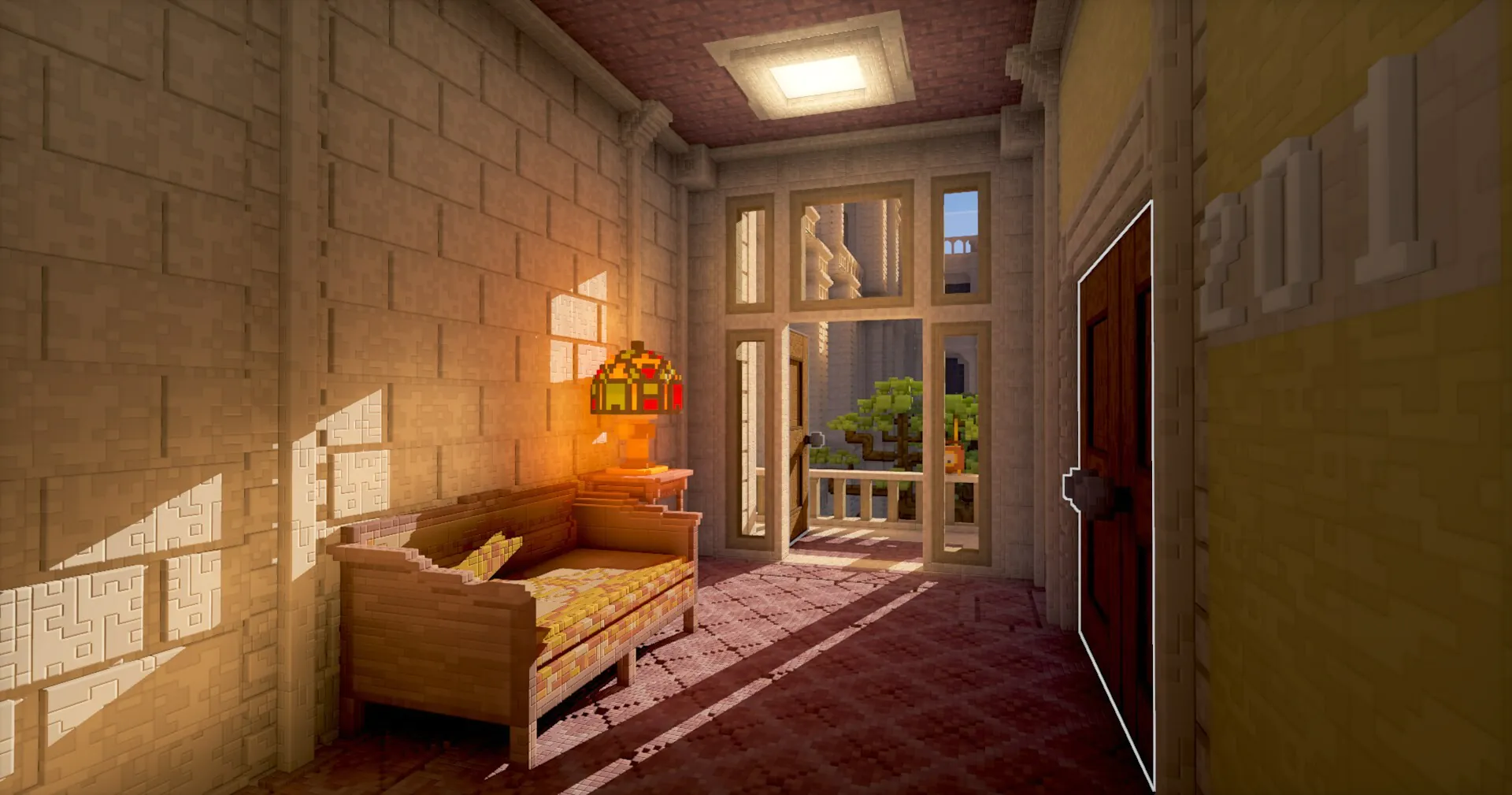
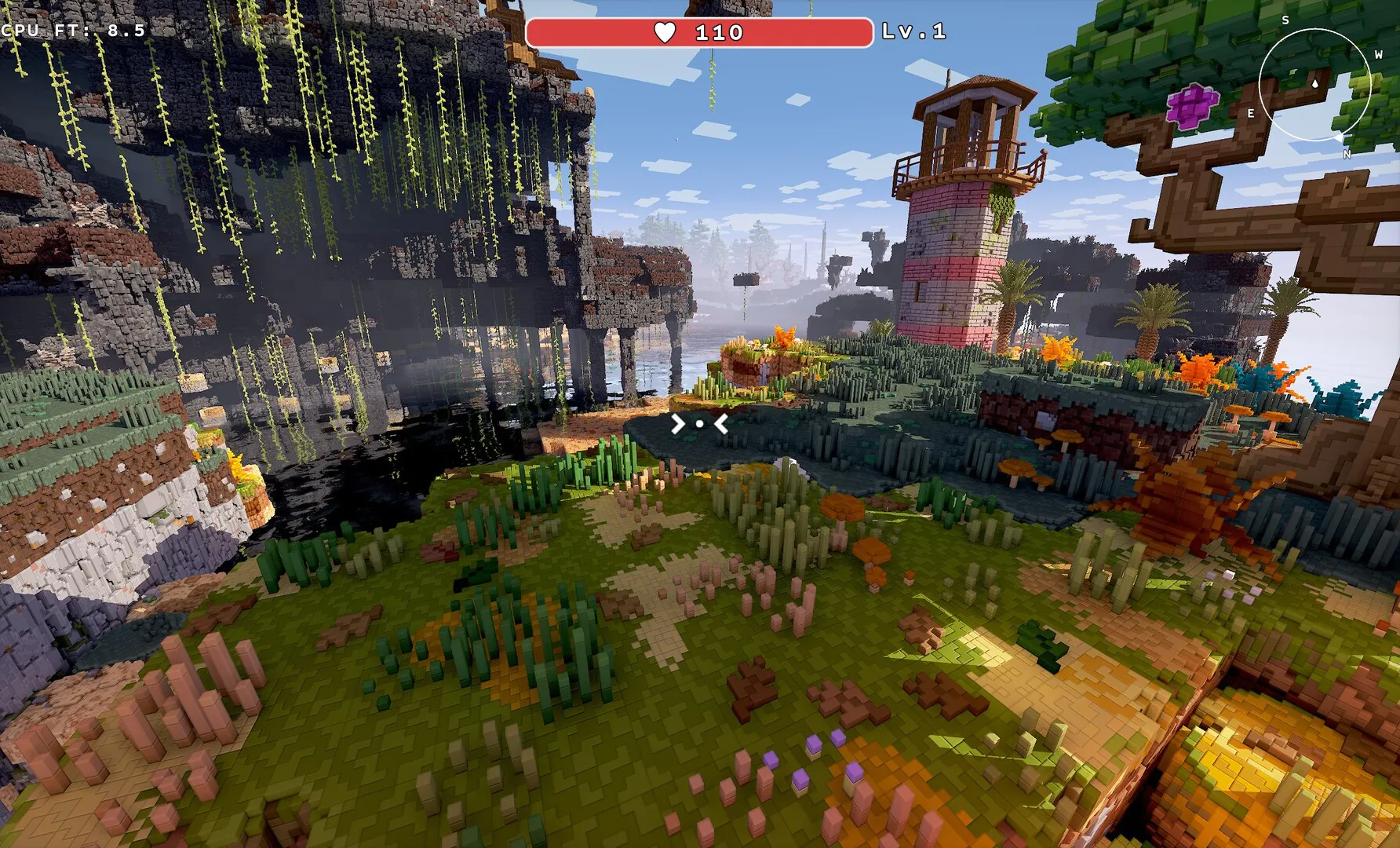
So yeah, I’m not too worried about live service games, and if anything I feel that’s going to be less of a role going forward – I think more games are going to hold off doing the live-service part until they’ve reached a certain size, which, again, doesn’t happen for most games.
09
§ 09Given all that, electing to use your own programming language and create your own engine in an industry that’s coalesced around three or four big hitters feels extremely risky – especially for an indie dev.
WVO: So to start with, I think for most people it’s absolutely true that this path would be a very dumb decision. If you just want to get a game out, just using Unity or Unreal seems a lot smarter!
Definitely the dumbest decision that a game dev could make is to create their own programming language. But in my case I had already started the language that everything is based on. I’ve been working on that since 2010, and the Voxile starting off the game company was 2022 so it was 12 years later at that point, and the language was already very mature and had been used for game prototypes for many years. So it wasn’t like I was making an entirely new programming language for this project – I had it available and I was super familiar with it. The ray tracer was built on top of that as well.
So when I started the company there was a brief moment where I asked myself, ‘okay, we’re going to be a serious game company, should I use a different language or a different engine?’. But when I analysed it, I reasoned at that point that the language really is quite mature and very productive for me.
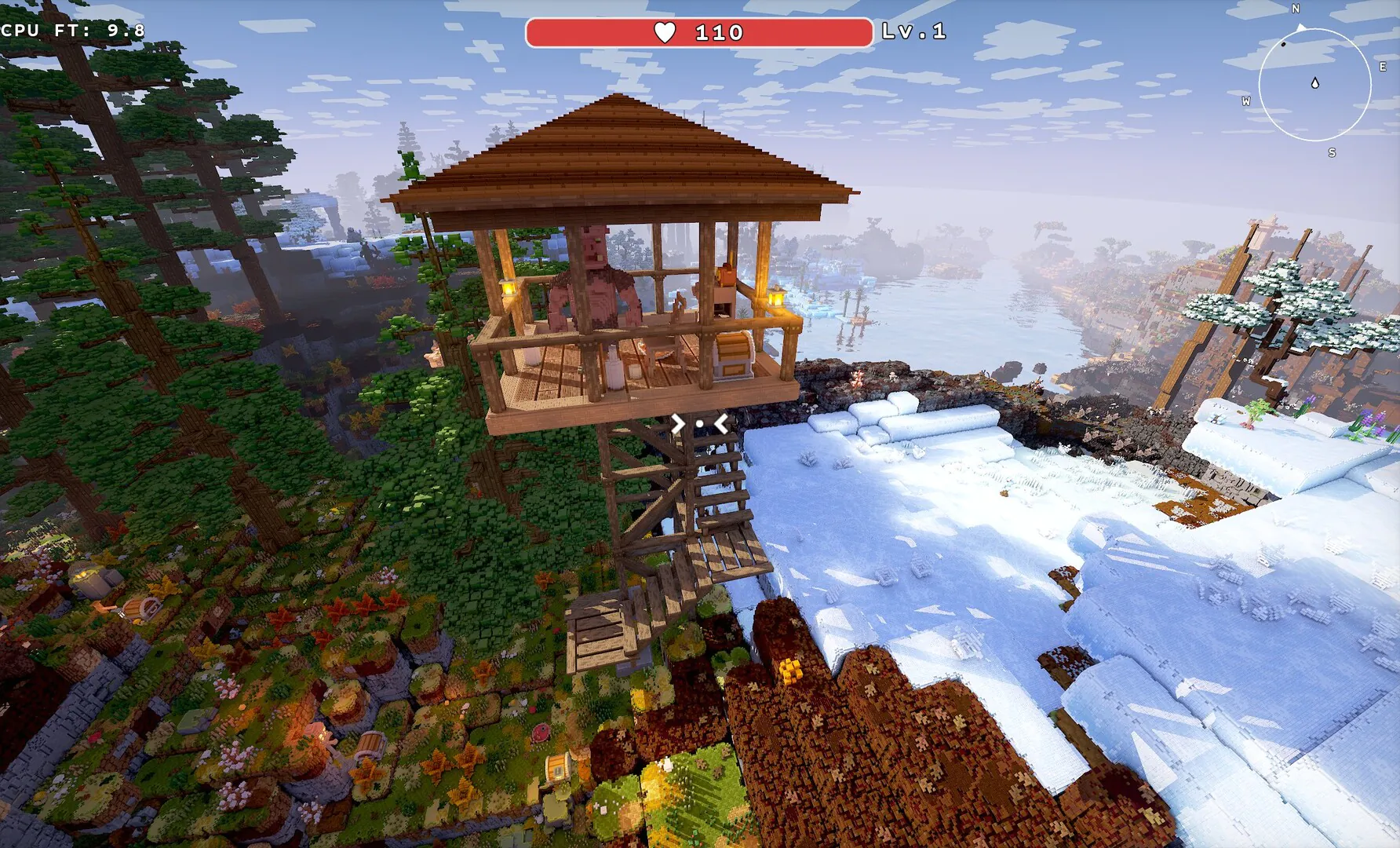
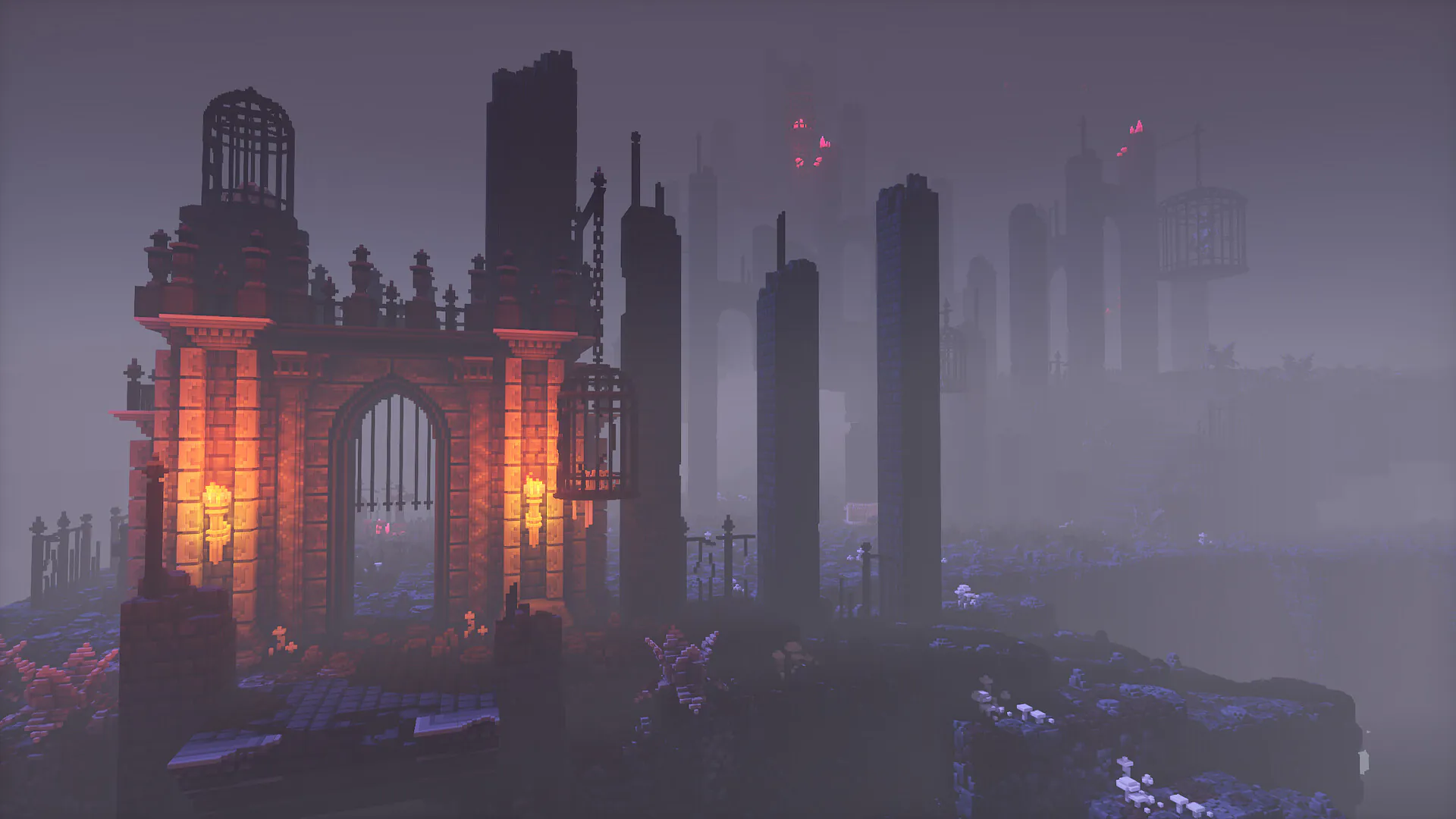
The engine is another topic. I think it comes down to the level of uniqueness – if you’re going to make a game with Unity and it uses Unity polygons and Unity’s built-in shadows and all these kinds of things, it’s going to look like a Unity game. The other thing is that if you want everything to be destructible at a voxel level you’re going against the grain of what Unity provides. You can do a whole bunch of work where essentially you’re building an entirely new renderer on top of Unity – you say like, ‘Unity, sorry keep all your polygon stuff away, just give me a single quad where I’m just gonna render all my ray tracing’. So then you’re only using the framework of Unity, not everything else.
I’d already written that ray tracer, so to some extent I didn’t have a lot of use for that. There’s also downsides to using one of these big engines: for example, in our current engine, because it’s written on top of this language and this language compiles and runs very fast, in my editor I can be making changes and I can press a key and the whole of the engine compiles in 0.3 seconds, and I can be in the engine in like one or two seconds or something like that, and testing something. A lot of these bigger engines take a lot of time to start up.
When I was working on Borderlands 2 at Gearbox, which used the Unreal Engine, I was in charge of optimising a whole bunch of stuff for it. While I was there my biggest thing was that every time I wanted to boot up the game to see if things were working or running faster I had to sit there for a whole minute waiting. Part of that, of course, is that Borderlands is a pretty big and heavy game, but you know generally fast iteration for me as a game developer changes everything – having to wait changes it from fun to a slog, and if I’m going to be running my own game company I want something with the absolute fastest possible iteration on what I’m doing.

We also have our own in-game editor that’s specific to the voxels, another thing that Unity can’t provide because it thinks in terms of polygonal objects. So yeah, the more custom stuff you’re doing the more it pays off to have your own stack.
Our stack provides that, and it’s fast. Yes, it did mean we had to do a whole bunch of stuff ourselves and implement our own path finding and whatnot. But it also meant we could make it very tailored to Voxile, so rather than generic path finding we have path finding that knows about the voxel structure of the world and therefore is able to do things better. So yeah, again for most people it’s a dumb idea, but for us it really allowed us to make a game that feels unique. When you play it, you see that not only does it look unique it feels unique – it’s not like your average Unity game. We wanted to make something that felt special.
10
§ 10Voxile runs surprisingly well on relatively modest hardware. Where on the sliding scale between full path tracing and traditional shaders does your ray tracing sit?
WVO: We do more ray tracing than other games today. Most other games, like famously Cyberpunk 2077 etc., use it for things like reflections, which of course it’s really good at. But the main scene is still rendered with normal polygons, forward rendering, and things like shadows may also still be done in a traditional way because it’s just faster. We do everything with ray tracing, we don’t even draw any polygons for the scene – every ray gets traced from every pixel on the screen to just see what kind of voxels get hit in the scene, and from there we do additional rays to trace the shadow and reflections, and maybe some other things.
So we’re 100% ray tracing, unlike any of these games. Why is it fast? Well for two reasons. One ray tracing is associated with RTX, which Nvidia invented and which is a particular kind of API designed to accelerate polygons. Well, we’re not doing polygons, we’re doing voxels, which in theory are much easier to ray trace because it’s just a bunch of boxes. And as you can imagine, tracing a ray against a bunch of cubes that are all aligned is much easier than the arbitrary polygon soup that most games are made of.
We don’t even use the RTX APIs, we do our own ray tracing algorithms purely in a compute shader, which also has the advantage that it works on cards that don’t even have RTX – it works better on AMD cards, for example, and on pretty much anything that’s fast enough in general.
But I think the speed is mostly explained by the fact that it’s just really dumb and simple. Our rays get tested against what’s called an octree. Some of your readers will understand what that is, but basically it’s an acceleration structure for the scene. And that’s pretty much it – there are some other details, but I’m going to keep it simple for now.
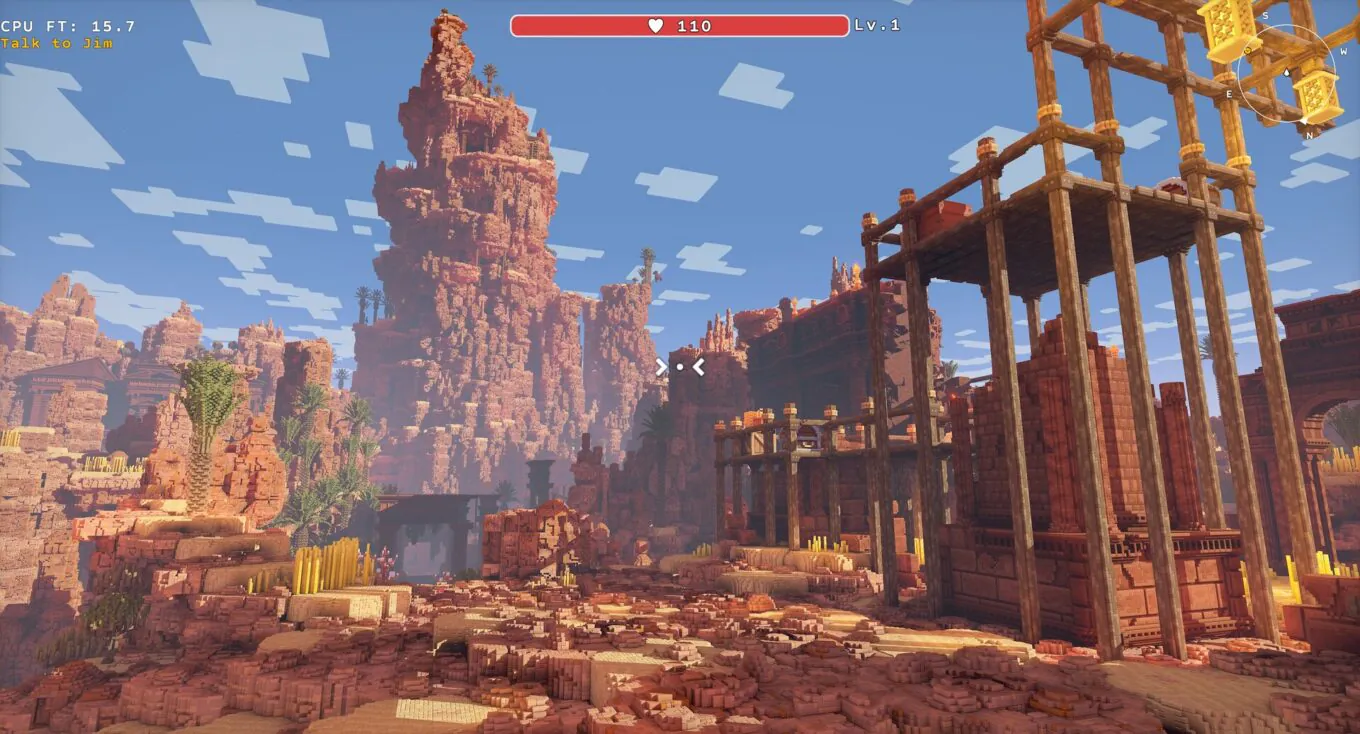
Pretty much everything we do in the game builds on that. So for example we have only one way to do sprites, which are like arbitrary oriented blocks in the world which we use for monsters, but we also use those for, say, particles or graphical effects. We even use that in the editor when you have these selection boxes – those are yet more sprites in the world, and they even cast shadows, which normally you don’t want to do! But basically our engine just does one thing and it does it really well, and then we implement absolutely everything with it, including all the editor tools and things like that. That keeps it simple and it keeps it fast.
It turns out GPUs are just very good at very regular work, so if you keep everything exactly the same, every pixel and screen does the exact same code, then they return at maximum speed and that’s what our code does.
The downside is graphically we are sometimes a little bit limited when we want something new and it’s actually a lot of work. For example for the building we have this system called building plans where you can see this kind of blue overlay for what you’re gonna go build, which is a lot of fun. In a normal engine that would just be rendering some transparent polygons and you’d be done, it would be super simple. But in our case because we have a ray tracer it needs to go through those transparent blue things and register that it did so, so it was actually kind of complicated! [Laughs]. So doing new rendering features is not always easy if they’re not already possible, but it’s fine – anything you normally want in a game is present in Voxile, so mostly it works!
11
§ 11Why do you think ray tracing hasn’t yet proliferated in line with the level of hype around the tech?
WVO: Well, it’s funny. One of the reasons why ray tracing in traditional games is not quite as successful is actually due to how amazingly well we’ve been faking it until ray tracing came on the scene. A modern engine like Unreal or any other high-end triple-A engine, we’ve been doing it so well that you see a screenshot of, again, let’s say Cyberpunk with no ray tracing, and there are so many effects going on. Not just shadows and reflections, but ambient occlusion, and skin shaders, and hair shaders and more. It looks so detailed and so beautiful, and then you look at that same picture with ray tracing on and all they’ve done really is turn off the fake reflections and put real ones in. And in some cases it even doesn’t look quite as good, it just looks different.
So this is mostly to the credit to all those graphics programmers who’ve been spending all that time until RTX came onto the scene doing things the hard way, in a really amazing way. Personally, when I play a triple-A game I couldn’t care less whether RTX is on or off because the worlds generally are so beautiful because of the art, and because there’s already that range of graphical effects making things look great.
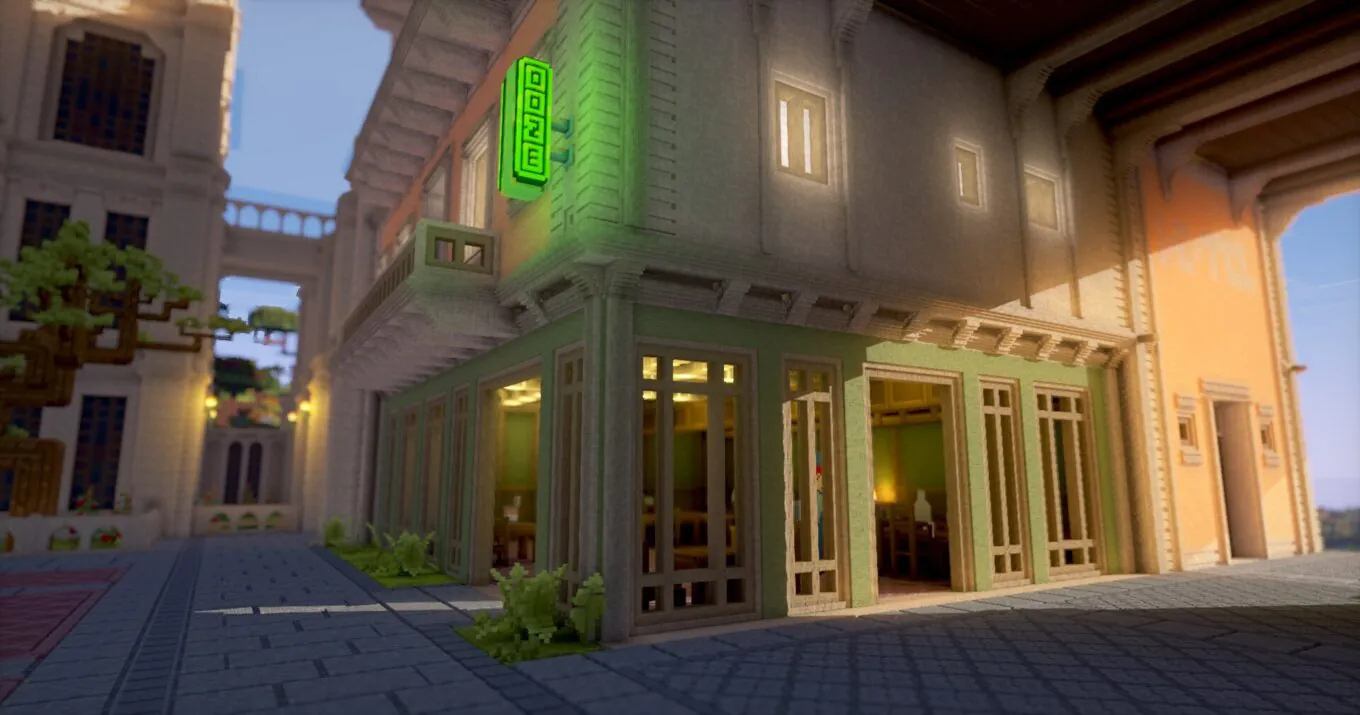
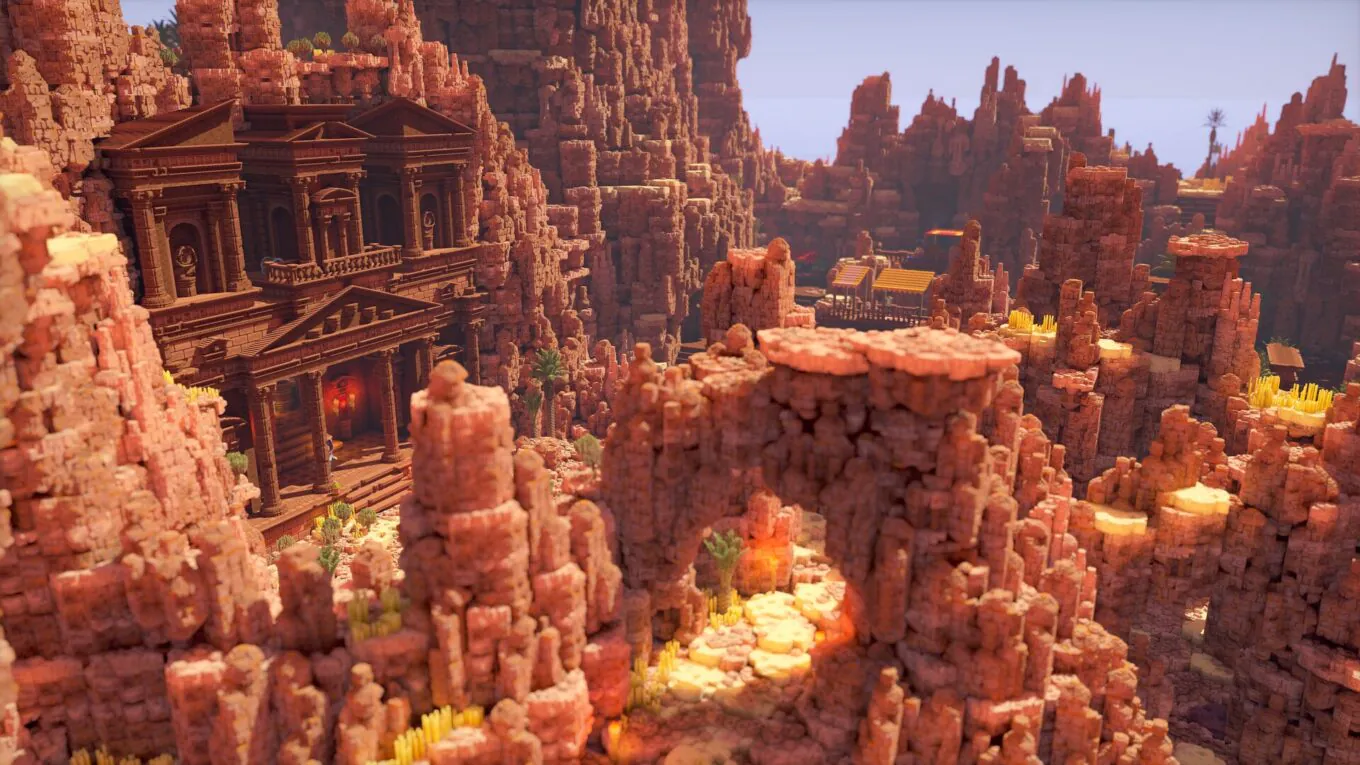
It’s a bit different for us because we’re doing this with ray tracing from the ground up and so everything is built around that. Minecraft voxels are famously, like a meter high right? The smallest voxels we have are about five centimeters or two inches, so they’re tiny. The amount of those we have in our worlds if you turned them all on is something like six trillion. Now imagine all of those are polygons, and you’d probably bring even the biggest cards to their knees.
And maybe Nanite could do it, but most modern engines would not be able to cope. If you then want to ray trace those it would be like piling inefficiency on inefficiency. What I’m trying to say here is if you’re going to go with ray tracing, you might as well do your engine a whole bunch differently even if you want to do polygons. If someone made an engine and they said we’re going to do absolutely everything with RTX they’d end up with an engine that looks quite different, but the problem is you can’t because that is still too expensive, and making a game that only people with a 5090 can play would not be a good idea.
Right now if you want to go full ray tracing you have to go for a simpler scene representation. It doesn’t have to be voxels necessarily, but probably some kind of volumes that are subdividable in some kind of way. That’s because it completely changes the look and the kind of game you want to make, and most people still want to make games with polygons – which I understand now, because apparently voxels are pretty polarising! It looks beautiful but it’s associated with this one game that nobody can get out of their mind somehow [laughs].
12
§ 12Whatever happened to ellipsoids? Ecstatica looked amazing.
WVO: Those games in the ‘90s, that was such different technology because they were still doing software rendering, essentially. They weren’t even using GPUs much. Like Doom and the first versions of Quake didn’t use GPUs and they had to invent how to fill the screen with stuff. At that time doing polygons with the CPU was fairly expensive.
So at that point ellipsoids were cheaper because you could make a character out of fewer ellipsoids than polygons. The minimum polygon count for a character would be like 200 or something, but with ellipsoids you can probably make one out of 20. The other thing is that ellipsoids are sort of orientation agnostic, so if you have a particular perspective on the game world you can probably render the ellipsoid straight up and if you then rotate around – the ellipsoid’s still going to look the same, right? So you can almost fake it a little bit and make an ellipsoid represent what’s essentially a 2D rendering that gives the impression of a 3D character or shape.

But that tech is very specific to that time, and wouldn’t hold up now. That said, it’s worth mentioning gaussian splats, which are essentially an ellipsoid revival. They’re not quite the same as what you’d see in Ecstatica, but they’re still an alternative primitive to build a world from. If you’re going to generate 2D or video visuals, or you’re going to sample it from photographic material, it’s easier to turn those into splats than directly into polygons.
But I’m waiting for the moment when there’s going to be just like a regular 3D video game coming out that’s entirely built around gaussian splats. They are more expensive than polygons on average because they tend to have transparencies and other things going on, but they give a very different look. There are web demos where you can see scenes running in gaussian splats, and they make everything look kind of soft and stuff blends into stuff. I think that would be a great visual style for a game to tap into, so we’re probably going to see more of that going on especially as people try to use AI to build these scenes.
13
§ 13As someone who has spent their career creating languages and striving to help people to program intuitively, how do you feel about the paradigm shift that AI is bringing about?
WVO: Yeah, that’s a good question! So with these things I feel there’s always two answers. There’s where I think the industry is actually going, versus where I wish things were going, either that would benefit me more or that I think would be better for the industry. And obviously, from what I understand of AI as it is already today, my personal view is that it’s going to keep on exploding into everything and that’s just a fact of the world whether you like it or not.
However, I’m a little more conservative when it comes to how I feel about it. Our game is made with 100% human-made art, design, and code. Though to some extent I made this game with voxels because the art is so easy to create, and because our game contains an editor I want people to make their own worlds, potentially with custom voxel art. So how do you all make that so that the player can actually do it? I think we’ve solved that in a traditional way.
I’ve experimented with having AI generate worlds, for example. It’s impressive that it can do it at all because this is with an LLM, which doesn’t really think in 3D necessarily. But you can ask it to make a castle, and it makes a castle. That’s very, very impressive, but the gap between that and some of the human designers I’ve worked with, and how they can build a world – it’s night and day, to the point where there’s really not a lot of point using AI yet. That might change in the future, of course.
In terms of languages specifically, I’m a bit sad that one of my biggest hobbies – and the things that I’ve achieved, like inventing new programming languages and thinking really hard about how can we make languages that help humans cognitively wrap their head around code, and write better code that they find easier to read, maintain, and refactor – has been a large part of my life and I feel now that the need for that is it’s obviously diminishing! [Laughs].
I think that the sad part of AI is that, all these terrible languages and terrible technologies and terrible APIs, we’re just going to not need to fix those quite as hard because you can just have the AI deal with it. I try to be very pragmatic, but a computer science purist at heart, deep down doesn’t like that part.
At the same time it’s also quite exciting. I’m the kind of person that comes up with a million new ideas for games and engines at a time, and nowadays I can often just ask an AI for a prototype and one shot it. Particularly with graphics, and finding some new way of putting geometry together, it’s really quite complicated because there’s all these edge cases and all these little things to worry about, and it would probably take me a week to make a prototype. If I just want to see what it looks like, I don’t really care if it’s good or efficient, so I just describe the way to put that geometry together to the AI and it makes me a WebGL demo of the thing that I can see. Now I have the information to further my thinking and if it didn’t look very good I can quickly throw the idea away and move on.
That’s kind of a superpower nowadays, so I’m enjoying that aspect. But I’m not sure to what extent that would translate if I wanted to actually build a next-gen game or engine. I’d probably be quite traditional and still start the old-fashioned way to give some clear structure to things. It seems that if you’re the kind of person who understands what you’re doing, then with vibe coding you can get very far, and probably going forward I might use vibe coding for unimportant things, like if I just need a tool and I don’t care.

But I still feel there’s room for very disciplined engineering. Particularly if you’re doing something very new, because you know, AI knows very well how to write the JavaScript that goes into a web page, because it can look at millions of examples. But to do an entirely new kind of program design that has never been seen before, it’s gonna struggle a bit more. That’s also probably going to change – the progress has been relentless so probably what I’m saying right now is going to be hugely outdated a couple months from now, but we’ll see!
14
§ 14It will likely get worse before it gets better, but on the other side of that my hope is that there will be a renewed understanding of the value of human auteurs. Perhaps it will be like the resurgence of vinyl in the face of Spotify’s low bitrates and the lack of ownership that comes with a subscription.
WVO: Yeah! I know it’s gonna keep moving like a freight train through the world, so we somehow have to deal with that, but I like what you’re saying and I’ve joked before that we’re gonna have this thing called ‘artisanal coding’, where basically someone says ‘I promise you every line of code in this thing was written by hand’. The same with art and all the other components that the project may have, and people are gonna love that much like they’ll have their artisanal coffee or, yeah, vinyl. They’re gonna appreciate that kind of stuff, so it’s not going to go away, but at the same time it’s not going to be quite the volume as what was there before.
Initially, when AI was getting to higher and higher levels of ability, I thought, ‘oh shit! I better make it as a company owner or game designer because I’m not going to have any work as a programmer anymore!’ But then I saw it, and wow, if you’re a programmer that understands what a good result looks like in terms of code and performance and all the other things like I obviously do, you are so far ahead compared to someone that doesn’t actually know programming and is going to get stuck because they keep asking the AI and it keeps patching it up in some weird way, then before you know it’s just impossible to modify. So I don’t fear it. People will work that way, and we’ll see interesting results, but I’m just going with that flow because trying to swim against it is impossible.
15
§ 15It’s a nuanced topic, but do you think that the reliance on fewer languages and engines is in any way limiting for the industry? And if so, does the democratisation that comes with that scale outweigh those disadvantages?
WVO: That’s an interesting topic. I think, on the whole, not. The lobster language that we’re using, I mean it’s cool because it’s tailored towards game making specifically – it has a ton of features that are specifically about game making. But it’s a statically typed language which means it’s adjacent to something like C# and frankly C# with its enormous ecosystem is an equally viable language to do almost everything that we’re doing. So I would not say that there is that much advantage to going to a custom language there, and an existing language would work just fine I think.
But I think the larger ecosystem of computer science as a whole benefits a lot from there being a lot of new and custom languages, and figuring out how to do things better. Game programming specifically maybe not quite as much as it’s fairly well known how you want to do things. Also we now have this new development that’s going to counteract there being a need for new programming languages in this whole AI movement which, if anything is going to mean there’s a lot less need to invent new programming languages because there’s going to be a lot more people that won’t be looking at the code quite as much as they did before.
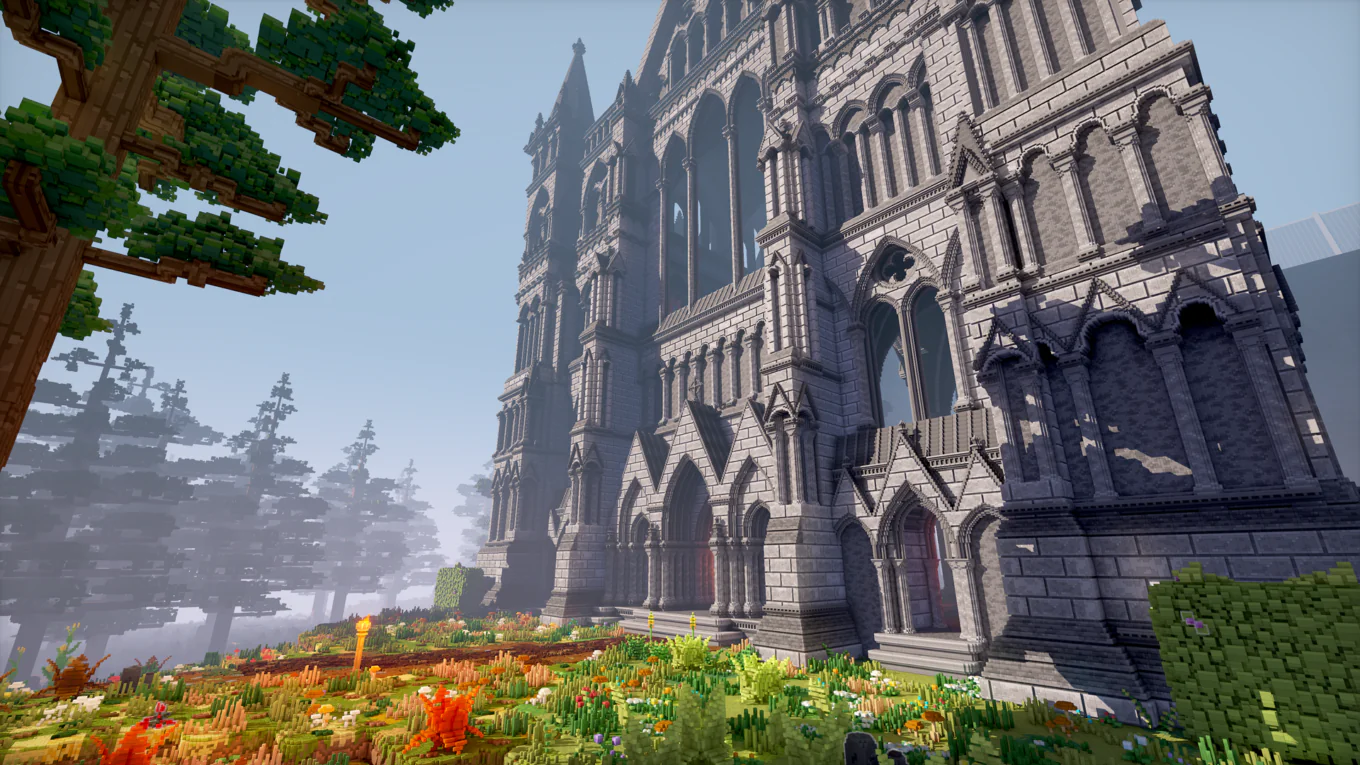
So the fact that maybe something is clumsy to implement in C# or some existing language is going to matter even less than it did before. And like you alluded to there are advantages to there being fewer ecosystems in general, right? I mean if you can bring in code from a lot of places and it all works because it all works with C#, or it’s all in the C++, or Rust, or JavaScript, or whatever ecosystem, that just generally makes things easier. A lot of projects are painful because you have a Ruby server talking to a JavaScript frontend and a C++ database, and it’s just like it’s a mess!
I personally love it if it’s fewer languages, but our project does actually include three different languages, which are the aforementioned Lobster, then there’s C++ which is for all the hardcore engine parts that we use – but those are more like library functions to the Lobster code – and then finally we have GLSL, which in our case is a fairly big component because the ray tracer is such a beast of a thing. So those three languages we touch, but mostly work very well together, so it’s not as big a deal.