Recon Wave
To our initial surprise, hundreds of people and organizations store RSA private keys in DNS TXT records. Is that a leak, software error, some kind of misconfiguration or is there a legitimate reason? The answer might surprise you as there is a perfectly valid reason to store private keys publicly in DNS. Come along as we explore this topic.
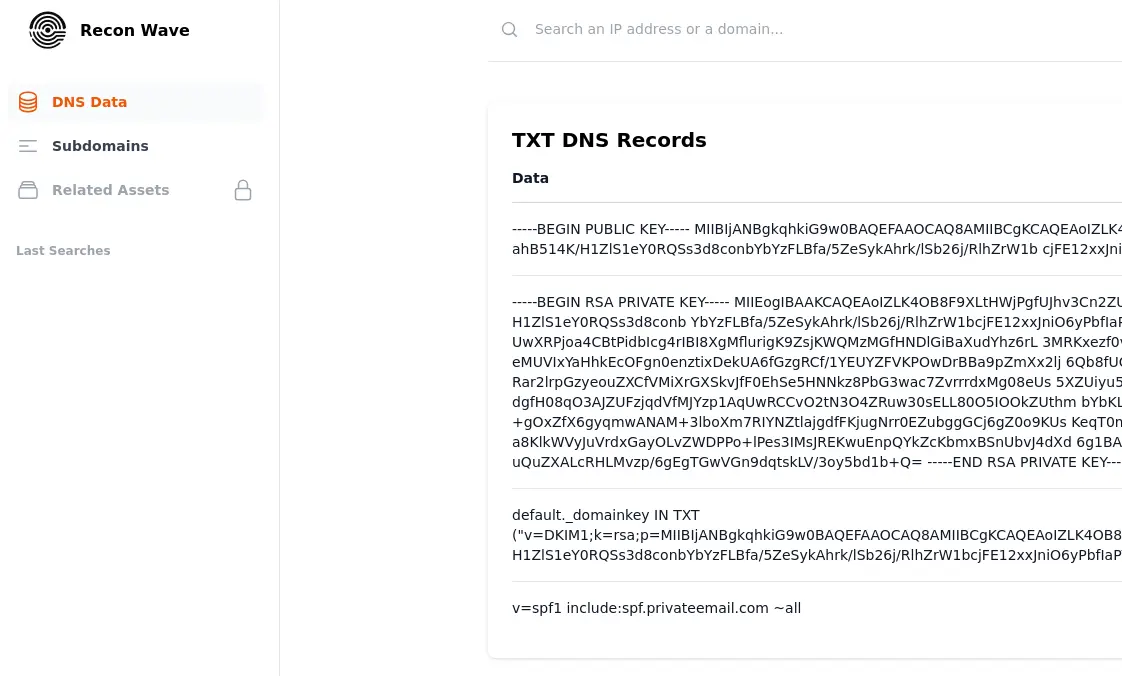
Our team has recently discovered several hundred RSA private keys in TXT records in our global DNS dataset. We started acting immediately to understand what's going on and whether we should disclose the discovery to responsible personnel. To our surprise, the affected domains had nothing in common. They resolved to different IP addresses, were managed by different authoritative nameservers, and belonged to different TLDs. Could all the domain owners make the same mistake?
After a long brainstorming session about legitimate reasons to put private keys in DNS, we concluded that there are none. A basic principle that people learn about asymmetric cryptography is that private keys should always remain private no matter what. Publishing the secret keys is similar to publishing your passwords - it immediately undermines the integrity and security of any system or data it protects. So what are we looking at? A data leak? A misconfiguration? A software bug?
During an ongoing discussion, we have stumbled upon an article that gave us all the answers we needed and left us amazed. There is a perfectly valid reason to put private keys in DNS and it is related to DKIM.
DKIM (DomainKeys Identified Mail) is an email authentication method used to verify the sender domain of an email. The sender adds a unique digital signature in the email headers, which recipients' mail servers can verify using the public key published in the sender's DNS records. This process ensures that the message was not altered during transit and that it legitimately originated from the claimed domain, helping to prevent email spoofing and phishing attacks.
DKIM successfully fulfills its goal of reducing email-based fraud, such as phishing and spoofing. However, the side effect is that anyone can cryptographically verify the authenticity of an email even many years after it was sent - including leaked or stolen emails. If an organization wants to prevent that, it can rotate DKIM keys and release the old secret keys. This way, any future email with valid signature can be denied as a forgery which gives the organization plausible deniability.
We are relieved that hundreds of organizations did not leak their private keys by accident. Feel free to browse our DNS dataset using our free web interface available at search.reconwave.com to discover more interesting findings or records of your organization.
Organizations usually forget all the assets they own, which attackers take advantage of. In case you want to have your attack surface under control, get in touch with us at Recon Wave to prevent future cybersecurity incidents.
We hope you've learned something new—as we did—since it was difficult for us to find any relevant information about this topic online. Don't forget to follow us on X or LinkedIn to stay up to date with all the news and other upcoming blog posts.
Be safe and ride the Recon Wave with us! 🌊