We’ve had a lot of coverage recently of the energy, water and carbon cost of using AI models, but how about using Sora 2, OpenAI’s social media platform for AI-generated videos? [scroll down if you’re here for the technical details]
Generating high definition video is one of the most energy intensive things you can do with AI, so finding out how much compute Sora 2 takes is critical for weighing up the environmental impact of AI.
Well, based on recent highly informed estimates in Forbes Magazine on the financial costs of running Sora 2 – which are already prodigious - I’ve made make some (I think) pretty good estimates on the environmental impact.

Every 10 second video takes nearly 1 kilowatt hour - .936 Kwh, to be precise - more than boiling 4 full kettles of water.
Speaking of water, each of those videos will also need just over 4 litres of the fresh stuff.
(This is a very conservative estimate, by the way – based on Shaolei Ren’s research, which sets the standard on matters AI and water)
And every video will emit approximately 466 grams of carbon dioxide into the atmosphere - about the about the same as 15 boiled kettles, if they’re boiled in the UK, that is.
That’s because under 30% of the UK’s electricity is fossil based, while virtually all the new US grid capacity that is being added to meet AI’s power demand is coming from gas.
As it turns out, badly…..
Above we’ve covered just one video; but Sora 2, like all AI platforms, is a massive industrial system – and we can only get so far thinking about 1 very dodgy fake cat video. Or duck video.

The analysts estimated there are 11.3 million Sora 2 videos created each day. They reckoned each video costs around $1.30 in “compute” – that adds up to a whopping $ 5.3 billion a year.
And of course Sora 2 is generating virtually no revenue; it’s burn all the way. AI Bubblenomics is a wonderful thing.
But the overall planetary cost is even more breathtaking.
Each Sora video requires 40 minutes of one massive Nvidia H100 chip. These chips are the workhorses of AI data centres; each one requires 1300 watts of power, when you include cooling.
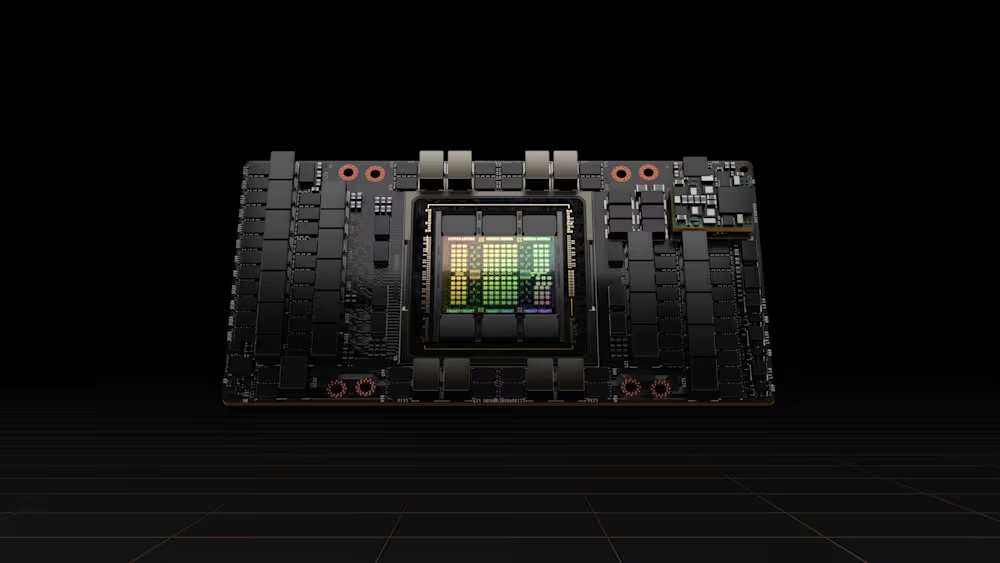
OpenAI requires at least 313,888 AI GPU chips to keep Sora 2 going - that could be as much as one third of openAI’s entire AI data centre capacity.
In total those chips will need a staggering 408MW of power.
That’s roughly a third of the electricity demand of Berlin - and its 4 million people.
A lot of people have recently dismissed widespread concern about AI’s water demand, They’re hopelessly wrong - often because they count historic water demand of data centres, or smaller chip configurations and extrapolate from that. Large AI data centres’ water demands are a different ball game.
Sora 2 requires 44,316 tonnes/cubic metres of water a day; that’s about 10 per cent of Berlin’s total water demand.
And BTW newer AI chips are way more water intensive than these H100 chips; because they require full immersion liquid cooling….so water demand will be spiralling ever upwards for the foreseeable future.
In total Sora 2 will emit about 1.9 million tonnes of carbon a year, which is about 23 per cent of Meta/Facebook’s entire carbon emissions for 2024.
That’s just “inference” by the way, i.e. generating the videos; we have no idea how much energy was required to train Sora 2, but it was also likely to be truly immense.

And for what exactly?
We hear a lot about AI and jobs.
But Sora 2 is unlikely to impact anybody’s job. This is an app with zero wider economic or social value; all Sora is doing is switching people’s attention from one toxic social media platform that spits out substantially fake content – most likely TikTok - to another toxic social media platform that spits out entirely fake content. Except Sora 2 is also vastly more energy, water and carbon intensive.
BTW, to give you an idea of the quality of output, one popular Sora video depicts Stephen Hawking being beaten up in a boxing ring. Lovely.
So Sora 2 actually has negative economic, social, and also environmental value.
This is what progress is all about.
And so at this point we should ask; why is OpenAI putting so much of its resources into making really awful fake videos that nobody needs, and probably nobody wants?
If the previous tech era was defined by Surveillance Capitalism, then maybe AI is the age of Distraction Capitalism….
If you liked this, please share
Thanks for reading … this one is shorter than usual - next stop I’ll be looking at the COP climate summit, which is about to wrap up in customary acrimony, embarrassment, and of course steely resolve to achieve even less next year.
TL;DR - skip this bit unless you really want to know all the details….
The workings, of this estimate are based on this report in Fortune´:
OpenAI Could Be Blowing As Much As $15 Million Per Day On Silly Sora Videos
An analyst, Deepak Mathivanan, checked with AJ Kourabi of Semi Anaylsis – which is a highly regarded AI hardware newsletter (very geeky – but interesting if you like that kind of thing)
They reckoned each video would take 40 minutes of an AI GPU – their cost for that was $1.30. Which tallies with market rates for an Nvidia H100.
The H100 was Nvidia’s the top of the range AI chip in 2022 – but these days its very ordinary, and they’ll probably be e-waste by 2027.
That said, H100s are still widely used, largely because they require a lot less set up than the latest GB300 chips – which require a lot more energy and massively more water - and specialist infrastructure to cope with them.
The spec power demand for an H100 is 700 watts. But when you put them in a rack, you also need cooling, which is hugely energy and water intensive. So according to Semi Analysis, you need around 1300 watts per H100 in total.
Watts measure the stream of electricity at any given time, like the current in a river – but you need to convert that to watt hours to get the total amount of electricity used for a given task– and it’s exactly what it sounds like: 1 watt hour is a current of 1 watt for 1 hour.
So 40 minutes give us 936 watt hours or .936 Kilowatt hours.
Boiling a kettle requires .22 Kwh , apparently (who knew?) – I got that here:
https://www.ecoflow.com/au/blog/kettle-wattage
For the carbon emissions, I made the sweeping assumption that Sora 2 is entirely gas powered.
This is because AI data centres are to all intents and purposes gas powered.
Some are powered by their own turbines – as in Elon Musk’s Colossus data centre.
Some now are even being powered by converted jet engines, which are wheeled in on trucks – which is actually twice as carbon emitting and polluting as a gas turbine.
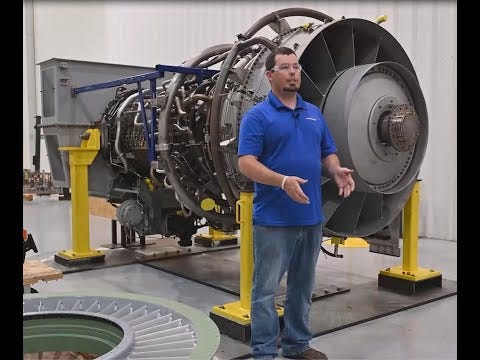
Data centres could also powered by the grid, where there is a mix of energy sources, including wind, hydro and solar. But as the shortfall in energy supply that AI is creating is almost entirely being filled with gas – its basically amounts to same thing: pure Gas.
And that makes it simple; carbon emissions for gas electricity are around 500 grams of carbon per Kwh. This could vary from country to country, here’s a guide in the US
Or it’s a round kilo if you’re firing up a jet engine. Nice.
Water is a lot more complex to work out; our understanding of water demand for data centers is hazier. Shaolei Ren at UC Riverside is widely regarded as the go to AI data cenre water guy.
A paper Shaolei and others published earlier this year calculated that training GPT3 required 1287MWh of electricity and used 5.4 million litres of water .
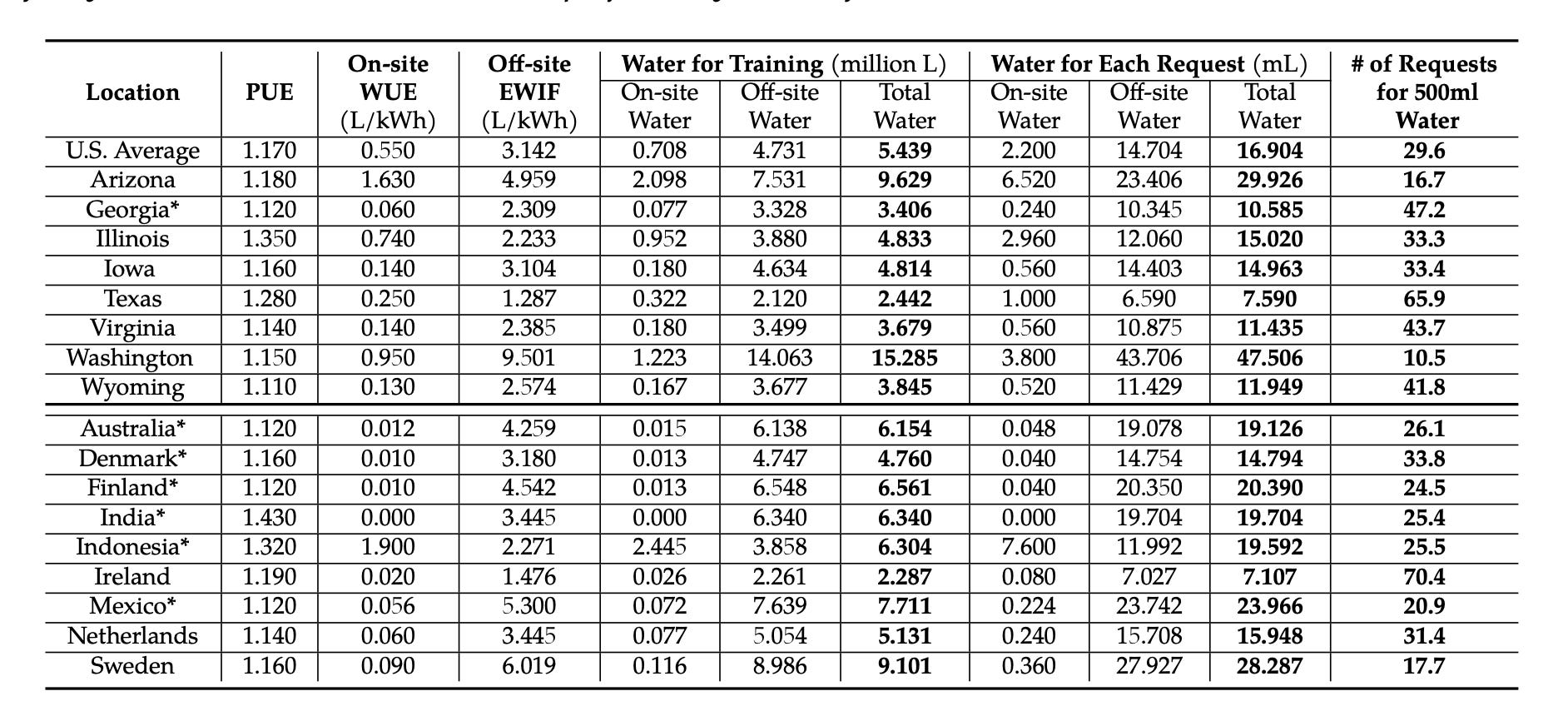
This paper makes the assumption that “inference”, that is running ChatGPT, requires about the same water per MWh as training. Which seems fair.
And I’m assuming the same for Sora 2.
That translates to around 4.19 litres per Kwh. But it could very well be more – that’s based on Microsoft’s average across all its data centres, but AI compute is much more water intensive than other data center tasks.
And with the latest chips like the monster GB300, which is actually 3 massive chips on a plate the size of a bread board, AI will be even more energy and water intensive.
Scaling up to the total impact of the Sora2 system is straightforward.
The analysts came to a figure of 11.3 million videos, based on 4.5 million users and 25% of posting 10 videos a day - and I’m sticking with that.
The overall system is likely to require a lot more than 313,888 GPUs – as that assumes 100 per cent workload 24 hours a day – which is highly unlikely.
But we’ll go with it.
i think that’s it -i’m open to questions - if you think I’ve got something wring, let me know (nicely please) - I’ll be happy to correct.
If you have any detailed hands-on knowledge of running AI racks I’d love to hear from you - especially if you know about water demands…