Original hardware
A physical Roland TR-808 is named in a first-person account or release credit.
· Raygum ·
Section 01 · Recorded music and influence
Early records used the physical machine. Musicians then sampled, reversed and layered its sounds. Later software and new hardware recreated it. The name “808” is now also used for a type of bass sound.
These uses are related, but they do not describe the same process. The chronology below labels each one clearly.
A physical Roland TR-808 is named in a first-person account or release credit.
A documented hardware performance was captured, reversed, layered or replayed.
An 808-derived recording or PCM source appears without the original machine in the room.
A clone, recreation or software workflow is explicitly identified by the producer.
Documented uses · 5 periods
Browse the periods below, then open an entry to read its sources, quotations and any limits on the finding.
36 of 36 findings shown
Open an entry to see its supporting details.
Roland launched the TR-808 in 1980. Within two years, musicians in electronic music, soul and electro were using it in different ways.
Roland on YMO and the 808 revolution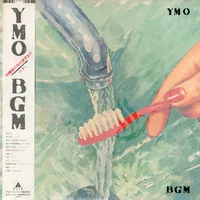
Roland documents the TR-808 as a crucial part of the BGM sessions after YMO had demonstrated the machine live in 1980.
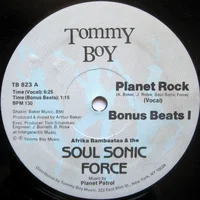
Original hardwareEvidence A1982
Afrika Bambaataa & Soulsonic Force
single · Electro / hip-hop
Afrika Bambaataa describes the TR-808 as the source of the extra low-end weight that the production team built into Planet Rock.
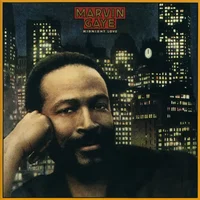
Recording engineer Mike Butcher recalls Gaye arriving with songs programmed on the TR-808; the first Sexual Healing demo was built from the machine.
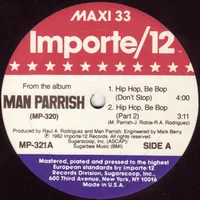
Man Parrish says he built the experimental track around a TR-808 because he wanted a synthetic drummer rather than realistic drum sounds.
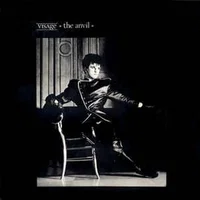
Visage drummer Rusty Egan directly identifies the TR-808 as part of The Anvil sessions.
Production ended as the number of records using the TR-808 grew. Lower used prices helped it spread through hip-hop, electro, R&B, pop and rock.
Smithsonian history of the TR-808PCM cards, samplers and studio processing made it possible to use TR-808 sounds without the original machine. The entries distinguish original hardware from sampled and derived sounds.
MusicRadar on Aphex Twin’s sampled workflowMusicians used original machines alongside samples, heavily processed sounds and software recreations. Each entry identifies the method described by its source.
Roland now offers official hardware and software recreations, while musicians continue to use original machines. The name “808” can refer to a machine, sample, clone or tuned bass sound, so each entry labels the type of use.
Roland at 45 years of the 808Section 02 · How it works
A drum machine creates and repeats percussion patterns. On the TR-808, the 16 coloured buttons represent 16 moments in a bar of music. Choose a sound, light the moments when it should play, then let the bar loop.
Instead of playing recordings of kick drums, snares or cymbals, its circuits make each hit when it is triggered. This gives the TR-808 its electronic sound.
Bass drum, snare, clap, cowbell or another sound.
Switch on any of the 16 moments in the bar.
Adjust tone, tuning, decay, level or accent.
Hear the pattern repeat, then change it in real time.
Controls · three views
The left side selects the pattern and instrument. The centre adjusts each sound. The coloured buttons place sounds across sixteen steps.
 01 · Programme
 02 · Voice bank
 03 · Sixteen steps
Photograph by 1904.CC at the Swiss Museum and Centre for Electronic Music Instruments, 14 January 2026. Cropped and compressed by Raygum.
Hear the basic idea
Press Start. Each lit pad is a moment in a looping bar; switch steps on or off to rewrite the rhythm.
Try it for yourself
16-step programmer
120 BPM · Stopped
Choose a sound · turn steps on or off · start the loop
Pattern 82a008080008aaaa
Nameplate · documented origin
The people who built the TR-808 explained two parts of its name. The surviving records do not explain the remaining part.
Inherited prefix
TR
The letters belong to Roland’s 1970s rhythm-machine lineage, when the move from vacuum tubes to transistors still defined the industry’s progress. Roland kept “TR” for the new machine even though a microcomputer now stored and scheduled its patterns.
Original R&D teamRoland accountCompany chronologyNew family
0
The development team says Roland founder Ikutaro Kakehashi put a zero in the middle to distinguish the new generation from previous models. They called the resulting family the “Mid-O Series”: TR-808, TR-606, TR-909, TB-303, MC-202 and SH-101.
Original R&D teamNot documented
8·8
Neither the team’s first-person account nor the Roland sources reviewed here explain why 8 appears on both sides. They do not connect “808” to the 1980 launch year, a voice count or a circuit specification.
Original R&D teamSound circuits · Eleven analogue voices
Sample memory was too expensive, so a small analogue circuit creates each hit. Choose a voice to see and hear a simplified explanation.
Section 03 · Design and development · Japan · 1978–82
Roland wanted to make a programmable rhythm machine for musicians recording demos. Sample memory was too expensive, so the team used circuits to synthesise each drum sound instead.
Tadao Kikumoto led the development team and Hiro Nakamura designed the analogue voice circuits. Ikutaro Kakehashi later explained that the design used a selected transistor for its noise circuit and that Roland eventually could no longer buy the part.
BRIEF
Roland asked a team led by Tadao Kikumoto to turn the CR-78 concept into a programmable rhythm machine for professional musicians making demos. Hiro Nakamura developed its analogue voice circuits.
Roland: the TR-808 storyCIRCUIT
Memory for sampled drums was too expensive, so the engineers synthesised each voice with analogue circuitry. The machine sounded unlike an acoustic kit because realism was beyond the affordable technology of the brief.
Roland: the TR-808 storyNOISE
Roland selected 2SC828-R transistors that fell outside their normal specification because their behaviour suited the noise-generating circuit. These parts are sometimes described as “faulty,” but that is not the precise engineering description.
Roland: the TR-808 storyRUN
Roland reports an official 1980–82 production run of roughly 12,000 units. When the selected transistor supply disappeared, the original sound-generating design could not simply be put back into production.
Roland: the TR-808 storyOral history · In their own words
Its makers describe the decisions behind the design. Musicians explain how they used the machine and what they valued in its sound.
Producer & userRoy Davis Jr. · Chicago
“There’s nothing that compares to the original warmth of the 808.”
Roy Davis Jr.
On why samples did not replace the physical machine for him.
Quotations are excerpted from first-person interviews, authored reviews and the documentary 808. Open each source for the full account and its original context.
Production file
CHASSIS
Roland’s exploded service drawing separates the machine into main, voicing, switch, jack A, jack B and power-supply board assemblies, joined by a flexible PCB and mounted beneath a steel top panel. The sound circuitry could be serviced as a distinct voicing board rather than a sealed module.
Roland TR-808 Service NotesMARKET
The parts list specifies separate 100 V, 117 V and 220/240 V power switches and transformers, plus supply-board variants for 100/117 V and 220/240 V markets. A museum-held 220 V example is rated at 8 W.
Roland TR-808 Service NotesThe Henry Ford: TR-808, 1981ORIGIN
The rear plate of the Henry Ford’s 1981 example reads “Made in Japan”. Roland’s chronology confirms that it operated factories in Hamamatsu during this period, but the sources reviewed here do not identify which plant assembled the TR-808. Naming a specific factory would go beyond the evidence.
The Henry Ford: TR-808, 1981Roland corporate historyREVISION
The service notes list serial-numbered changes for clock calibration, board clearance, clap level, noise-generator offset, trigger stability, memory protection and LEDs. They also say some earlier machines received modifications at the factory. Later circuit analysis notes ±20% capacitors and ±5% resistors in the voice circuits, another reason two originals need not be electrically identical.
Roland TR-808 Service NotesA Physically-Informed Model of the TR-808 Bass Drum| Serial | Area | Factory change |
|---|---|---|
| Serial000300 | AreaClock & cowbell | Factory changeAdjusted interrupt-clock capacitance and widened the internal cowbell tuning range. |
| Serial010500 / 051850 | AreaBoard clearance | Factory changeChanged Q1–Q4, then Q5–Q8, to shorter transistor packages so their tops cleared the switch board. |
| Serial010600 | AreaAudio & control | Factory changeReduced clap gain; revised battery drain, DIN input rejection, the noise-generator offset, voice-gate drive and common-trigger filtering. |
| Serial020800 | AreaPattern memory | Factory changeAdded switching around start/stop and CPU lines to prevent memory disturbance during power cycling. |
| Serial031100 | AreaStep display | Factory changeSubstituted lower-sensitivity red LEDs to prevent unintended illumination from driver-transistor base current. |
Roland notes that some earlier machines were modified at the factory before these thresholds. A serial number identifies a likely revision state, not an untouched circuit—and the threshold is not a count of units manufactured.
Production records
RUN
Roland’s dedicated history gives a two-year production span and a run of around 12,000 machines. It is the clearest manufacturer account of the total, but not Roland’s only published date range.
PART
Roland’s 1981 parts list verifies that Q35 was a selected-noise 2SC828(R). The later company account says out-of-specification parts were bought deliberately and that their exhaustion helped end production. The service document does not itself record that purchasing history.
VARIANCE
One repairer reports finding paint-marked 2SC536 and 2SC945 parts apparently installed as original noise transistors in two machines. It is useful evidence of possible late substitution, but the author labels the listening tests preliminary; it cannot establish how common the change was.
Technical sources
Primary documentRoland TR-808 Service NotesFirst edition, 15 June 1981; second printing, 12 July 1983Primary documentRoland TR-808 Operation ManualOriginal operating instructions and connection diagramsManufacturerRoland: The TR-808 StoryManufacturer history and production accountManufacturerRoland TR-808 technical specificationsOfficial support record; labels the model 1981–1983ManufacturerTadao Kikumoto: An Exclusive ConversationRoland interview with the development lead, 2020Primary documentRoland Keyboard Catalogue, Vol. 5February 1983 catalogue; TR-808 listing on printed page 10Technical paperA Physically-Informed Model of the TR-808 Bass DrumWerner, Abel and Smith, DAFx-14Technical paperThe TR-808 Cymbal: a Physically-Informed ModelWerner, Abel and Smith, ICMC/SMC 2014; CC BY 3.0Museum recordThe Henry Ford: TR-808, 1981Museum object record and rear-panel transcriptionCorporate historyRoland corporate historyCompany chronology and Japanese factory milestonesBench reportTR-808 noise transistor updatePreliminary repair-bench observations, 2018
Section 04 · How the price changed · 1980—2025
The TR-808 started as expensive professional equipment. Used prices later fell, then rose as original machines became scarce. These are sourced snapshots rather than an annual price index, so the broken line shows where yearly data are missing.
Section 04 · Lower prices and wider use
Lower second-hand prices made the TR-808 available to more musicians.
As used prices fell, more musicians could get hold of one. Eleven separate outputs let them record, distort, reverse, gate, layer and tune each part of the beat.
Photograph by fr4dd, Drøn studio, 2009.
Epilogue · Your turn
Program all eleven synthesised voices, switch between A and B variations, write fills, and save your patterns in this browser. Start with the lit steps, then make the rhythm your own.
Swipe across the hardware panel to reach every control →
ReadyStarter memory loadedMemory protected
Bass drumBasic rhythm 1A1st part · 16 steps
Your saved patterns stay in this browser. Open the standalone instrument whenever you want to return to them.
Open the instrument page