-
Here’s how fast ● designmodo.com
is loading around the world
How can I check if my website is down for everyone or just for me?
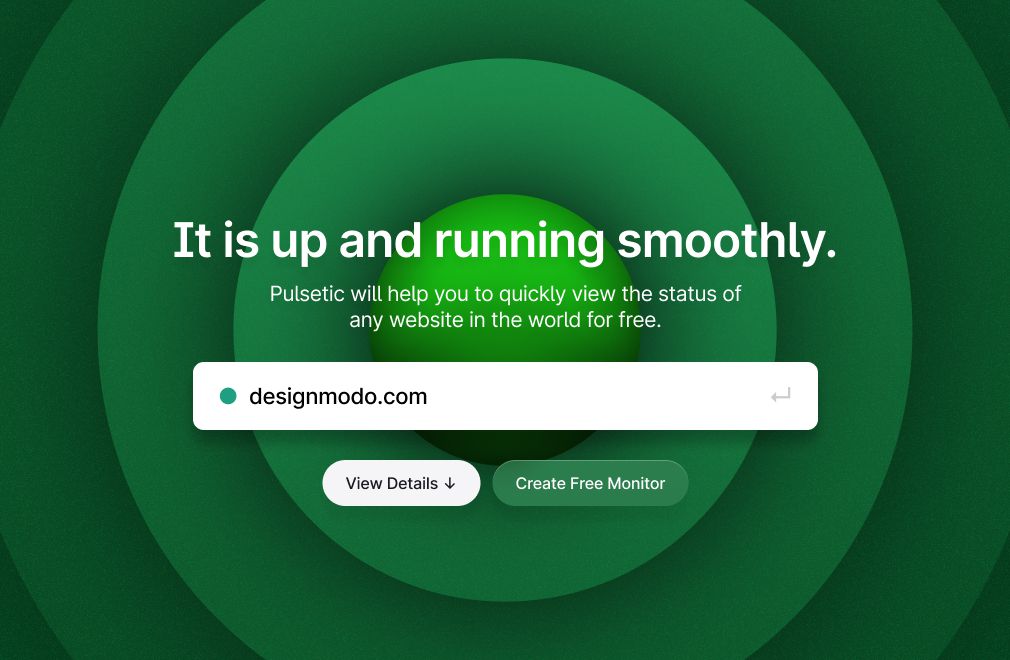
We can alert you when your website is down
-

Monitor from around the world
Pulsetic checks your website every minute from 15 locations across 5 continents. Our distributed nodes localize outages instantly, showing you exact response times and availability by region so you know whether your website is down globally or only in specific areas.
-

Get alerts the way you prefer
Get instant downtime alerts via email, SMS, phone call, Slack, Microsoft Teams, Telegram, PagerDuty, or webhooks. Stay informed the moment your website goes down and recover faster with multi-channel notifications that reach you wherever you are.
-
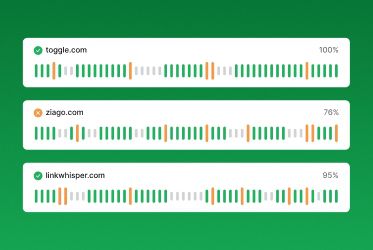
Make personalized Status Pages
Create a branded public status page to keep users informed during downtime. Set your own domain, colors, and logo, then share live incident updates with email subscribers to reduce support load and maintain customer trust when your website goes down.
FAQ (Why is Website Down?)
-
How can I check if my website is down?
Enter your URL in the checker above and Pulsetic tests it live from 15 locations across 5 continents in seconds. Each location reports the response time and the HTTP status code it received, so you can see whether the site is down everywhere or only in certain regions. Running the test from outside your own network also rules out local causes such as a stale DNS or browser cache.
-
What causes a website to go down?
Common causes include server and hosting outages, expired domains or SSL certificates, DNS misconfiguration, traffic spikes that exhaust resources, failed deployments, and DDoS attacks. The status code is a strong clue: a 500 points to an application error, a 502 or 504 to a failing upstream or gateway, and a 503 to an overloaded or maintenance-mode server. Pinning down when the outage started usually leads you to the cause fastest.
-
How often should I check my website's status?
Manual spot checks miss most outages because downtime is short and unpredictable, so continuous monitoring is the only reliable approach. Pulsetic can check as often as every minute from every location. The interval matters more than it sounds: 99.9 percent uptime still allows almost 9 hours of downtime a year, and a shorter check interval shrinks the window of an outage that goes unnoticed.
-
Can my website experience temporary downtime without any major issues?
Yes. Brief blips happen during deployments, server restarts, DNS changes that have not finished propagating, or planned maintenance, and visitors may never notice. The key is telling transient from serious: a single failed check that recovers on the next run is rarely a problem, while repeated failures across regions are. For planned work, returning a 503 status with a Retry-After header tells search engines the outage is temporary.
-
How can I minimize website downtime?
Start with reliable hosting and a CDN to absorb traffic spikes, keep automated backups, and renew domains and SSL certificates well before they expire. Roll releases out in stages so a bad deploy can be reverted quickly. Most importantly, monitor continuously from multiple locations: you cannot fix what you do not know is broken, and faster detection directly shortens every outage.
-
Are there any warning signs before a website goes down?
Often, yes. Climbing response times, intermittent timeouts, a rising share of 5xx errors, server memory or CPU near their limits, and an SSL certificate close to expiry all tend to appear before a full outage. Watching response time as a trend rather than a single reading lets you catch the slow degradation that usually comes before a hard failure and act before visitors are affected.
-
Can I receive notifications when my website goes down?
Yes. Pulsetic sends instant alerts by email, SMS, phone call, Slack, Microsoft Teams, Telegram, PagerDuty, and webhooks, so the right person is reached wherever they are. Because every incident is confirmed from several locations before an alert is sent, you hear about real outages quickly without being woken by false alarms from a single failed check.
-
Can I communicate with my customers during website downtime?
Yes. A branded public status page lets you post the current status, the cause, and live updates on the fix, all on your own domain, colors, and logo. Visitors can subscribe to email updates, which cuts the flood of support tickets during an incident. Being open about an outage consistently does less damage to trust than staying silent.
-
Can website downtime affect my SEO ranking?
It can. When Googlebot repeatedly meets 5xx errors on a site that is down, it may temporarily drop the affected pages from results, and prolonged outages erode the page-experience signals tied to availability and speed. A short blip handled with a 503 status is usually harmless, but frequent or extended downtime hurts both rankings and revenue, so reliable uptime protects both.
-
Can I track historical website downtime data?
Yes. Pulsetic keeps a full history of incidents, response times, and uptime percentage, so you can spot recurring patterns such as failures at peak traffic or right after a deployment. That record also backs SLA reporting and shows whether reliability is improving over time, instead of leaving you to reconstruct what happened from memory.
Trusted by teams at companies around the world