The Role of Diet on the Gut Microbiome, Mood and Happiness
Sydney E Martin et al. medRxiv. .
Abstract
The gut microbiome may be both helpful and harmful, and not only is it affected by diet, it has also been shown to affect mental health including personality, mood, anxiety and depression. In this clinical study we assessed dietary nutrient composition, mood, happiness, and the gut microbiome in order to understand the role of diet in the gut microbiome and how that affects mood and happiness. For this pilot study, we enrolled 20 adults to follow this protocol: recording a 2-day food log, sampling their gut microbiome, and completing five validated surveys of mental health, mood, happiness and well-being, followed by a minimum 1 week diet change and repeating the food log, microbiome sampling and the 5 surveys. The change from a predominantly Western diet to vegetarian, Mediterranean and ketogenic diets led to changes in calorie and fiber intake. After the diet change, we observed significant changes in measures of anxiety, well-being and happiness, and without changes in gut microbiome diversity. We found strong correlations between greater consumption of fat and protein to lower anxiety and depression, while consuming higher percentages of carbohydrates was associated with increased stress, anxiety, and depression. We also found strong negative correlations between total calories and total fiber intake with gut microbiome diversity without correlations to measures of mental health, mood or happiness. We have shown that changing diet affects mood and happiness, that greater fat and carbohydrate intake is directly associated with anxiety and depression and inversely correlated with gut microbiome diversity. This study is an important step towards understanding how our diet affects the gut microbiome and in turn our mood, happiness and mental health.
Figures
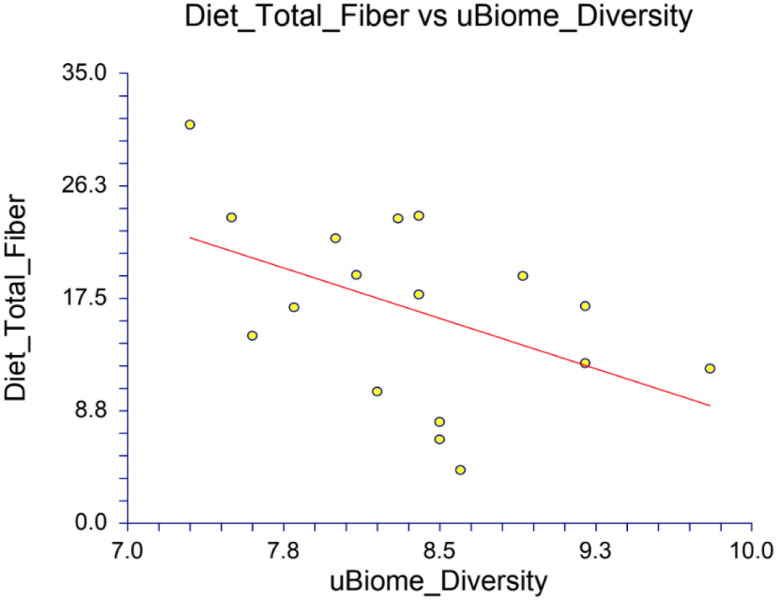
Correlation between uBiome diversity and total fiber for all timepoints (p=0.0533)
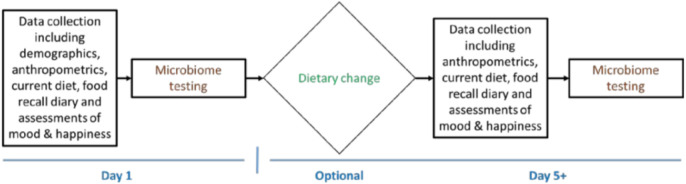
Timeline for participant completion of the study.
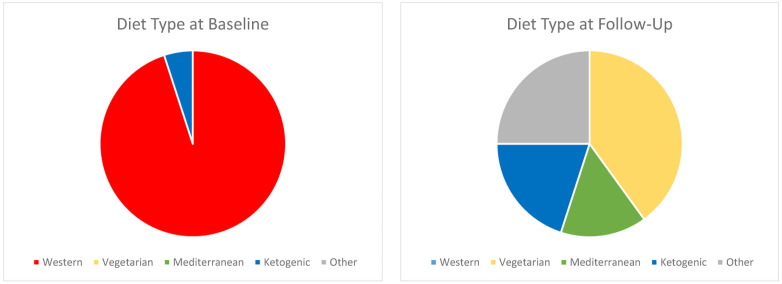
Diet Types at Baseline and at Follow-Up
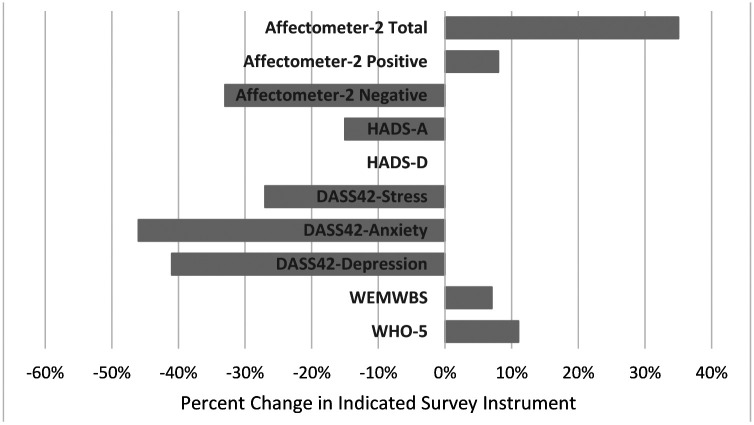
Changes in Mood and Happiness after Diet Change
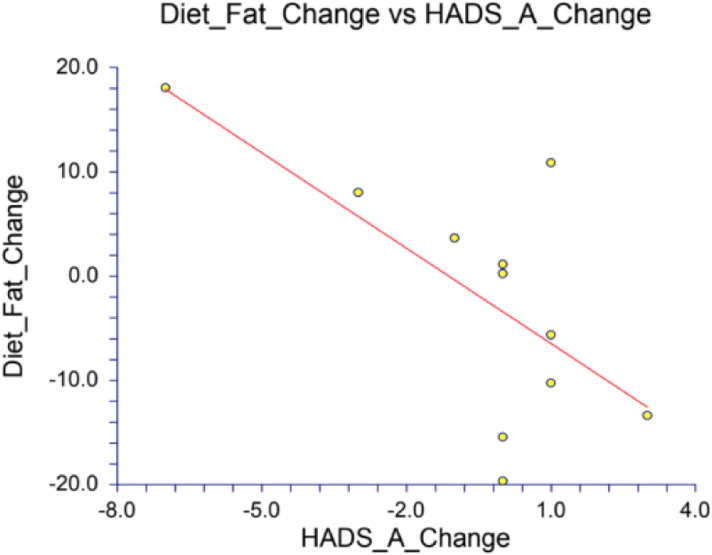
Change in HADS Anxiety correlation with change in percent fat (p-value of 0.0239)
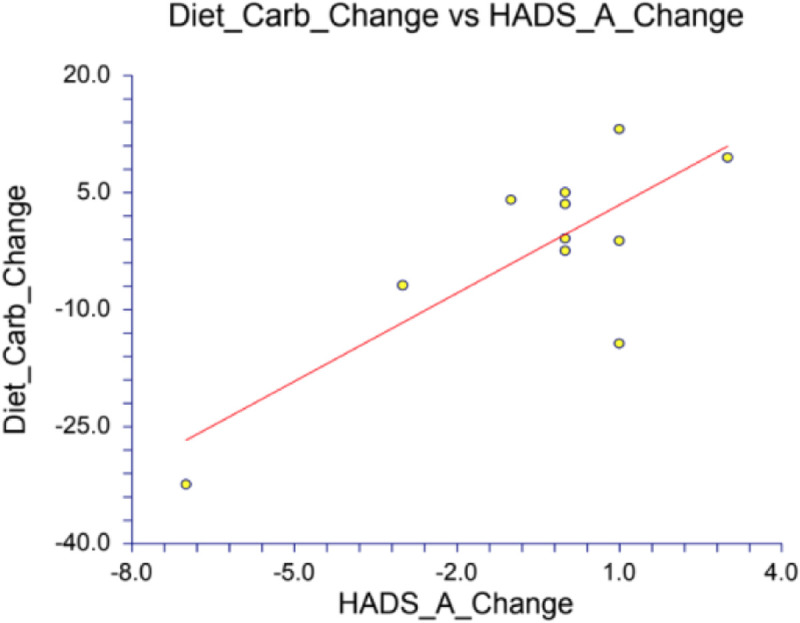
Change in HADS Anxiety correlation with change in percent carbohydrates (p-value of 0.0041)
References
-
- Tillisch K, Labus I, Kilpatrick L, Jiang Z, Stains I, Ebrat B, Guyonnet D, Legrain-Raspaud S, Trotin B, Naliboff B, Mayer EA. Consumption of fermented milk product with probiotic modulates brain activity. Gastroenterology. 2013; 144(7):1394–401, 1401.e1-4. doi: 10.1053/j.gastro.2013.02.043. - DOI - PMC - PubMed
Publication types
LinkOut - more resources
Full Text Sources