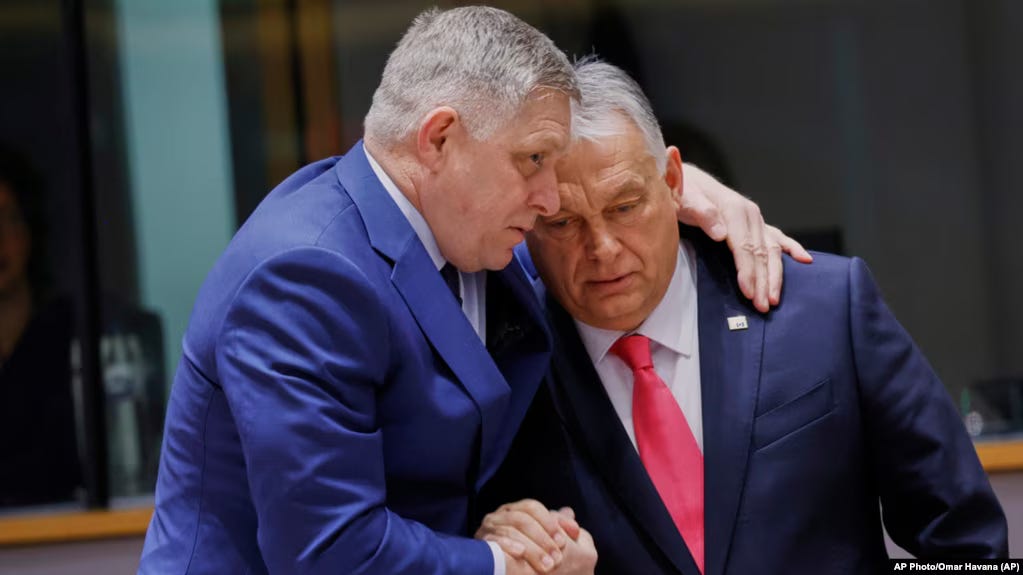
Populist leaders often attempt to shift focus away from the fact that their domestic governance is not successful. This is exactly what Robert Fico and Viktor Orbán have been doing, as their countries have slipped to the bottom of the European Union. This is partly why they have talked so much about Ukraine in recent years.
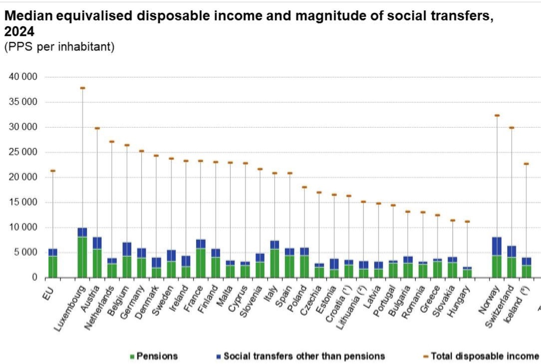
Let us take a look at the most relevant indicator. Disposable income means the amount of money citizens can actually spend. Median is a better measure than average, as averages hide the fact that a few people might have very high incomes while many people might have low incomes. Median highlights the person at the middle of the distribution ranging from lowest to highest - it is therefore more typical than the average. Finally, PPS (Purchasing Power Standard) means that these incomes have already been adjusted to local price levels, that is, the ranking already takes into account the fact that the same amount of money might buy different amounts of goods in different countries at different price levels.
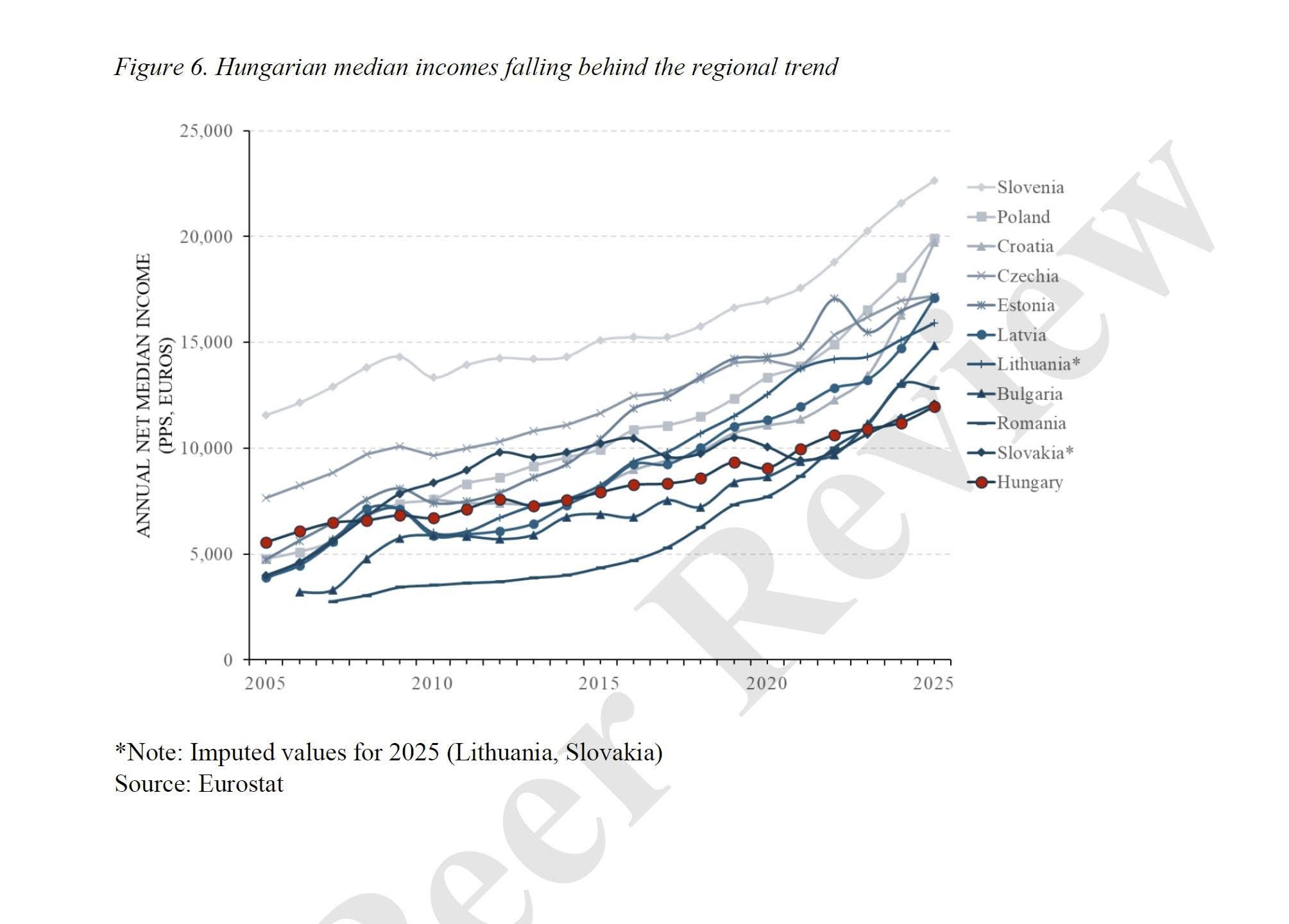
Having considered all of these methodological issues, let us take a look. It can clearly be seen that Hungary is at the very end of the ranking, while Slovakia is just above.
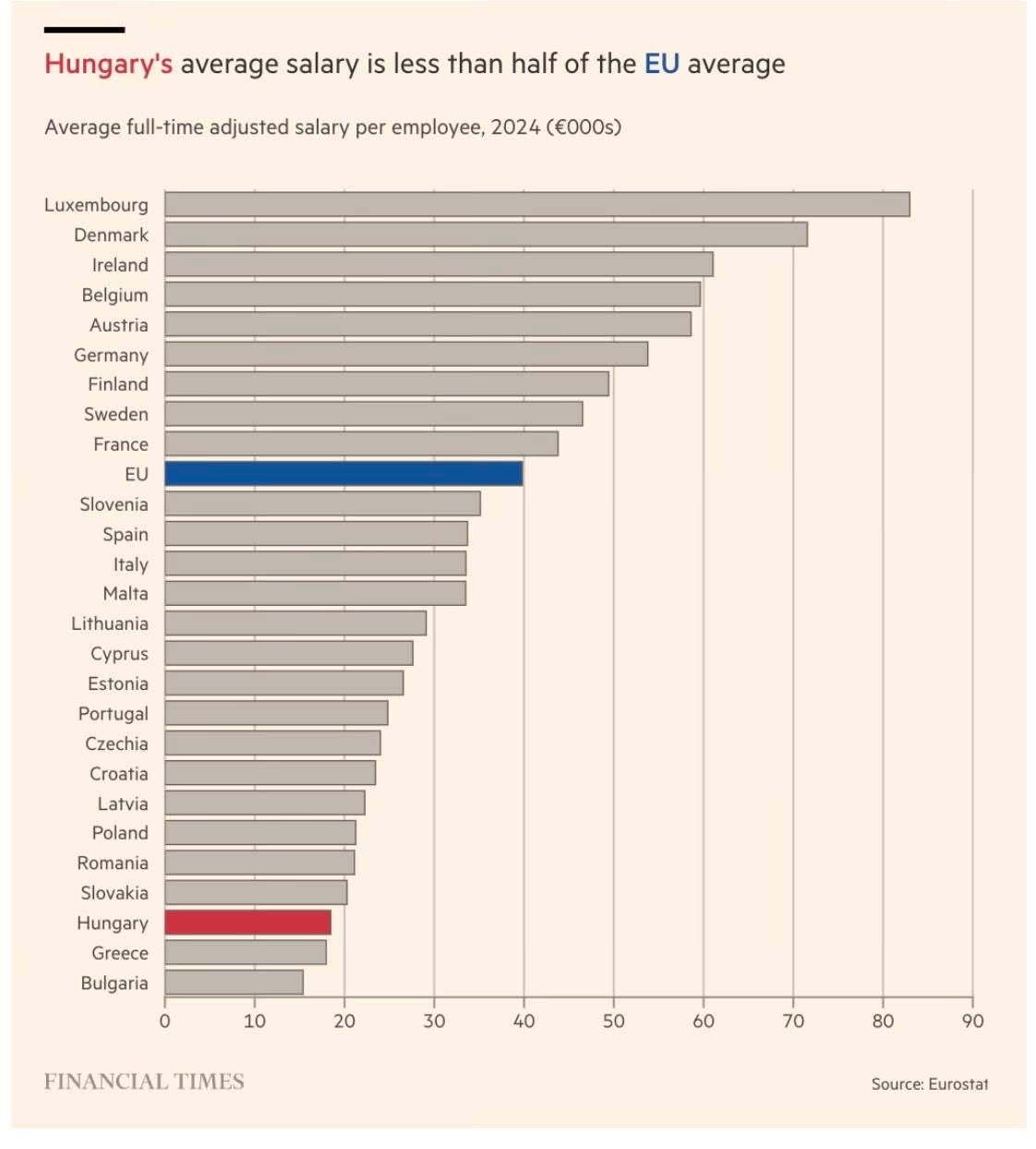
To understand how bad it is, we must mention that in nominal terms (without adjustment to prices), Hungarian salaries have slipped to less than half of the EU average.
If we compare Hungarian incomes with the rest of the EU, we find that the lower end of the lower middle class in Europe (position 25/100 in income deciles, Y-axis) corresponds to about position 66/100 on the Hungarian income distribution. These figures are once again adjusted to local prices.
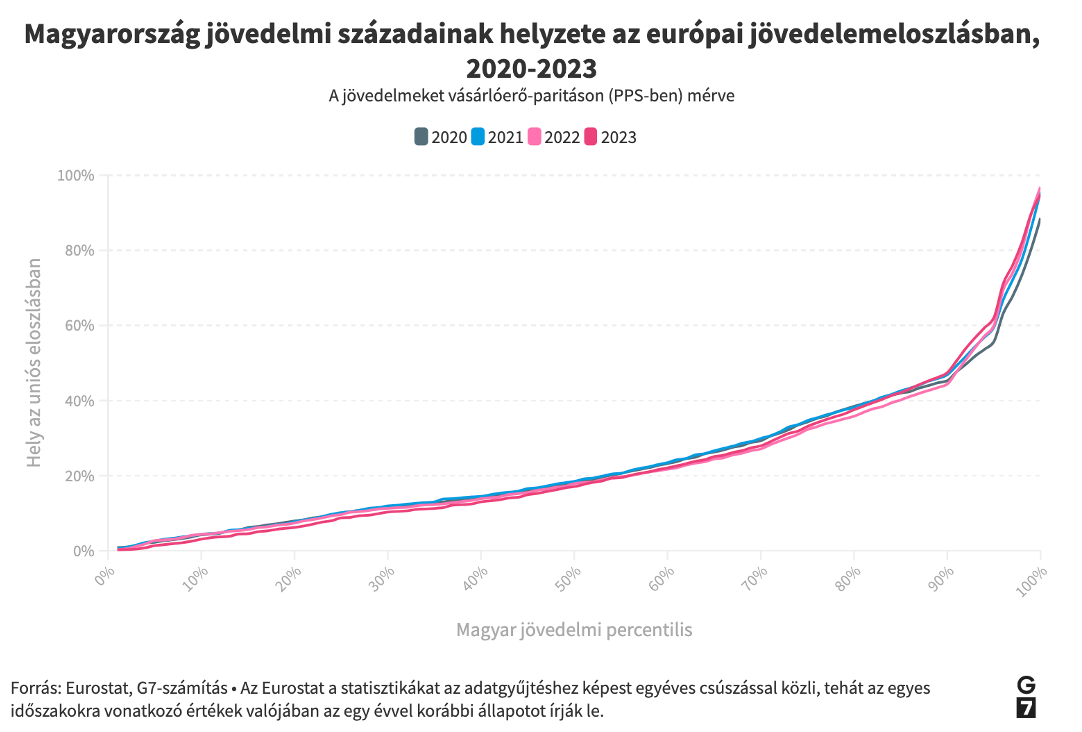
No matter how much Fidesz had talked about the middle classes - they no longer do- this means that about 2/3 of Hungarians are not middle class. They are poor. Orbán has not strengthened the middle classes. He has ruled a country of dominantly poor Hungarians.
When did this slippage happen in Hungary? Clearly during the rule of the Destructive Duo of Hungarian politics, Ferenc Gyurcsány of the Socialist Party (PM from 2005 to 2009) and Viktor Orbán (PM from 2010 to 2026).
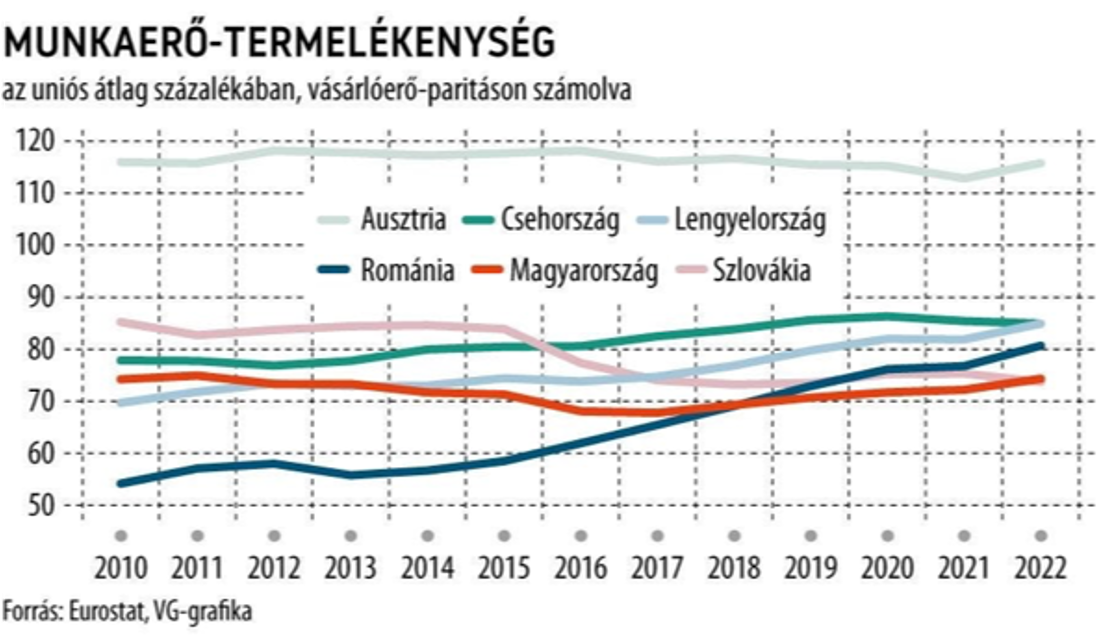
One part of the explanation is that productivity (value added per hour) has not really converged in Hungary to the EU average, while Poland (Lengyelország) and Romania have seen incredible convergence. Slovakia has even slipped.
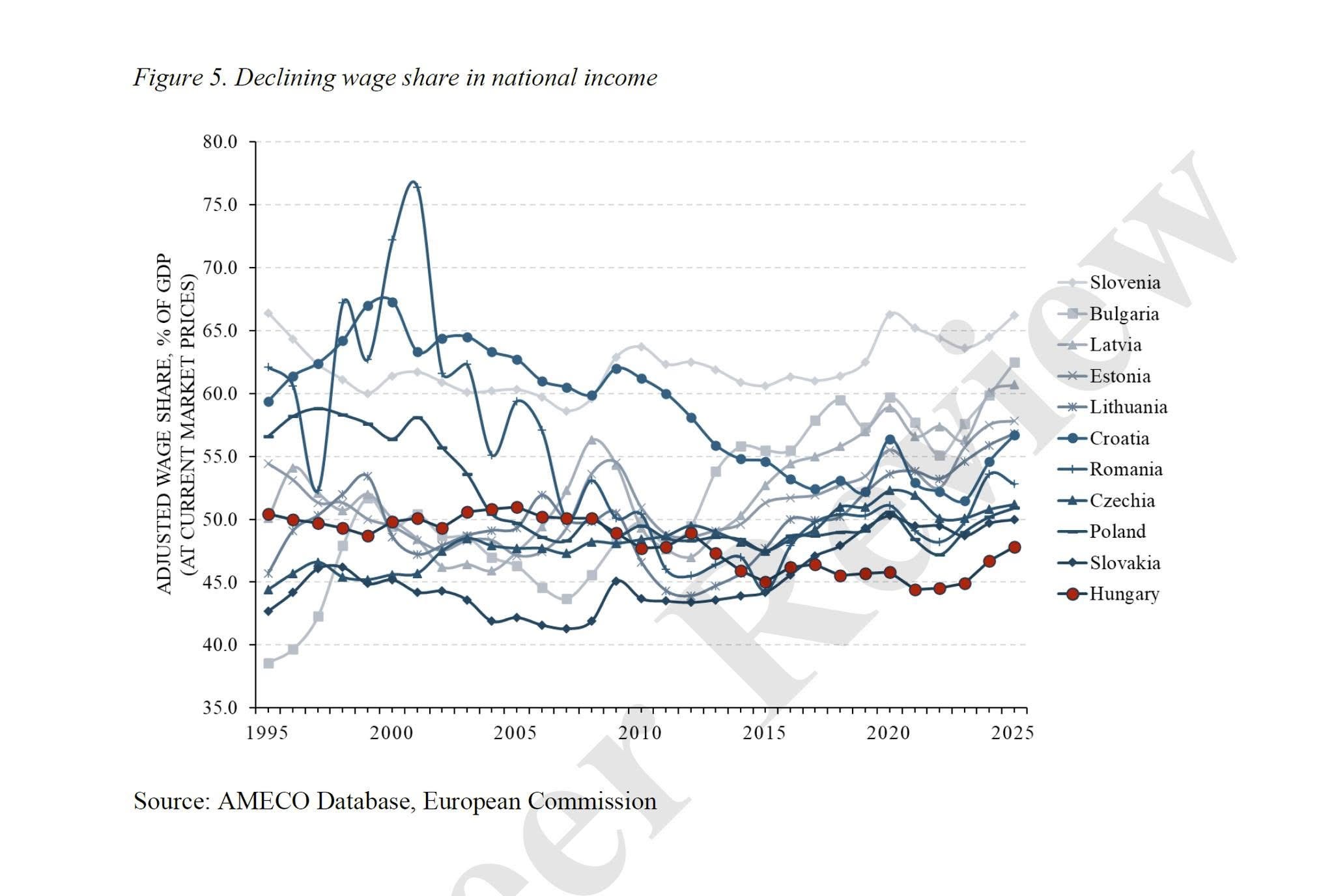
Political economist Gábor Scheiring draws attention to the fact that the wage share of national income has also slipped. In Hungary this is due to the Orbán government strongly favouring capital to labour, resulting in an extreme weakening of labour rights.
Conclusion: the two troublemakers in the EU are also the two poorest. No surprise they prefer to talk about foreign policy rather than their domestic economic failures.