The author determines the content, the reader determines its presentation.
A decentralized social network that uses plain text files over HTTP.
No algorithms. No ads. No data harvesting.
But not just microblogging.
With rich about sections and multi-page feeds, it's a full blogging
platform.
Write short posts, long essays, organize by topics.
All in plain text.
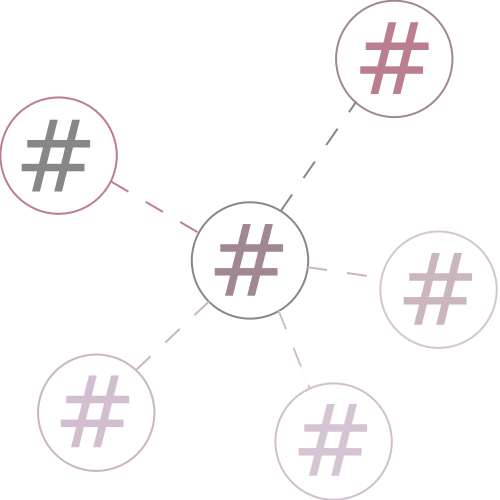
Why plaintext.casa?
🏠 You Own Your Content
Your posts live on your server, under your domain. No platform can delete your account, shadow-ban you, or hold your content hostage. Want to move? Just move your text file.
🌐 Truly Decentralized
No central servers. No single point of failure. No company to go bankrupt or sell out. Each person hosts their own feed. The network is as resilient as the web itself.
📝 Plain Text Forever
Write in Markdown, Org,
AsciiDoc, or plain .txt. Human-readable,
machine-parseable. No proprietary formats. Works with any text
editor. Your content will be readable in 10, 20, 50 years.
🎨 Presentation is Separate
You write content. Readers choose how to view it: CLI, web app, mobile app, RSS reader, whatever. No forced "experience", no tracking, no barriers. Pure separation of concerns.
🔒 Privacy by Default
No analytics. No tracking pixels. No "telemetry." Just static files served over HTTP. Want encryption? Use HTTPS. Want authentication? Use HTTP auth. It's just the web.
⚪ Radically Simple
All you need is one text file hosted somewhere on
the internet. No database. No build process. No JavaScript
required. No npm packages to maintain. Edit with vim,
nano, emacs, or any text editor.
⚡ Extensible
Start simple with microblogging, grow into a full blog. Add pages to organize posts by topic. Projects? Ideas? Journals? Use custom metadata fields for anything you need. The spec defines the basics; you define what matters to you. No limits, no restrictions.
How It Works
1. Create Your Feed
Write a plain text file with your profile info and posts. That's it.
# Alice's Feed
:author: Alice
:description: I write about technology and decentralization
:link: https://alice.example
:follow: Bob https://bob.example/feed.md

Hi! This is my about section where I can write whatever I want.

**
:id: 2025-10-26T12:00:00Z
:tags: plaintext decentralization

Just discovered plaintext.casa. This is exactly what social media should be!

**
:id: 2025-10-27T09:30:00Z
:tags: technology freedom

No algorithms deciding what I see. No ads interrupting my reading.
Just people sharing thoughts. Beautiful.
2. Host It
Upload your file to any web server. GitHub Pages, Netlify, your own VPS, a shared hosting account—anywhere that serves static files over HTTP.
3. Share Your URL
Give people your feed URL: https://alice.example/feed.md
They add you to their follows. You add them to yours. That's the
network.
4. Read Your Timeline
Use the CLI tool, a web client, or build your own reader. Your timeline assembles posts chronologically from everyone you follow. No algorithm deciding what's "engaging" unless you want to build it that way.
Follow me, if you want: koehr.ing/feed.md
Get Started
Option 1: Command Line Tool
Casa is the reference CLI tool that lets you view timelines and add posts from your terminal. It's still in early stages but you can already use it to read your timeline and add posts to your feed.
# Install
bun install
bun run build

# View your timeline
./casa feed.md

# Add a new post
./casa --add feed.md
Option 2: Manual Creation
You don't need any tools. Just create a text file with your favorite editor:
- Add header metadata (title, author, who you follow)
- Write an optional about section
- Add posts with
**separator and metadata - Upload to your web server
Option 3: Build Your Own Client
The format is intentionally simple to parse. Build a web app, mobile app, or integrate it into your existing tools. The spec is open and flexible.
Philosophy
Social media should be simple. Not "simple to use" but simple in architecture. A text file is simple. HTTP is simple. Static file hosting is simple.
Social media should be boring technology. Text files always work everywhere. Web servers are solved problems. Why not use them?
Social media should respect users. You own your content. You control your data. You decide who to follow. You decide how you consume content.
Social media should be sustainable. Hosting a text file costs nothing. There's no VC funding to run out. No ads needed to pay for servers. Just the web, working as designed.
Acknowledgements
plaintext.casa is inspired by:
- Org Social - Social media using Org files
- twtxt - Decentralized microblogging
- RSS/Atom - The original decentralized content
The spec is designed to be flexible enough to support multiple text formats while remaining simple enough to implement from scratch in an afternoon.